Get Premium
Dark mode theme is available exclusively for premium users. Learn more about the benefits of subscribing.
No fees, cancel anytime.

 Dark Mode Ad-Free Browsing Unlimited Content
 Ad-Free Browsing Unlimited Content Dark Mode
Join 1.2 million Panda readers who get the best art, memes, and fun stories every week!
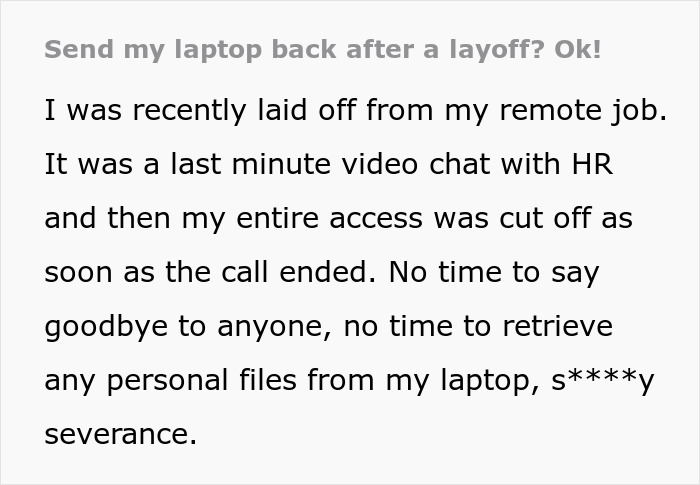
Losing a job is an emotional experience. Not only does this put your competence in question but it also damages your financial security. Furthermore, sometimes you’re told to leave even when there’s no fault of your own, which is exactly what happened to Reddit user TulThrowMeAway.
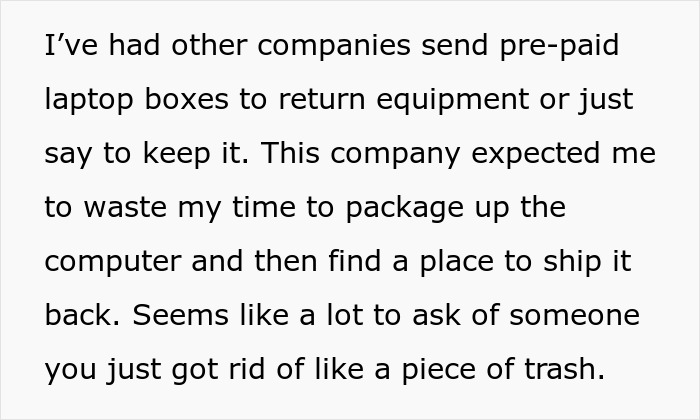
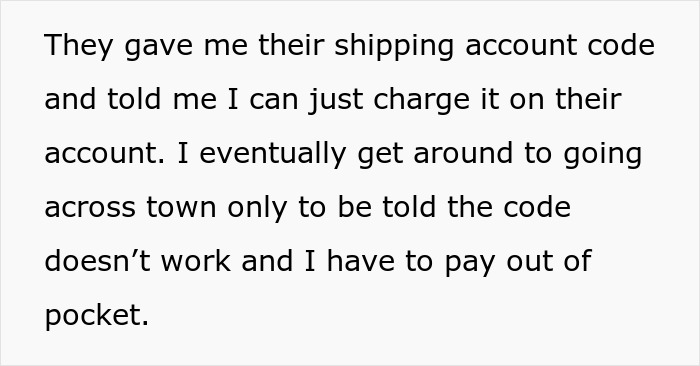
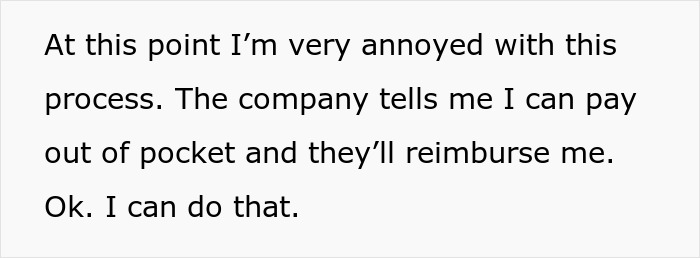
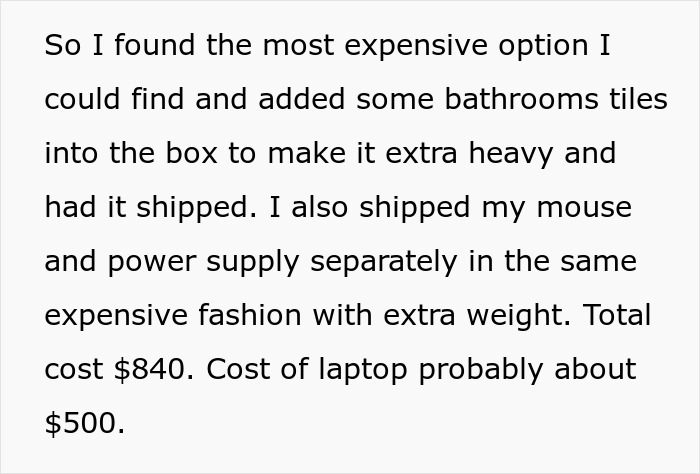
The story was simple. They were working remotely and everything seemed fine until it didn’t. The higher-ups informed them about the decision and asked them to ship back the $500 laptop that they were provided with. However, the employee decided to make the shipment as dreadful and as expensive for the company as possible.
Afterward, they made a post on the subreddit ‘Malicious Compliance,’ detailing how it all went down.
Image credits: Yan Krukau (not the actual photo)
Image credits: Liza Summer (not the actual photo)
Image credits: tulthrowmeaway
The awkward situation that the Redditor found themselves in is somewhat common, largely due to the fact that businesses often do not standardize the procedures of getting back their stuff.
“The shift to remote work has resulted in many employees working from their homes using company-provided equipment such as laptops, phones, and other devices, as well as office furniture such as standing desks and chairs,” explains Dr. Gleb Tsipursky, who helps HR leaders use hybrid and remote work to improve retention and productivity.
“This process can be challenging, both in terms of time and cost, especially if the equipment is not returned promptly. It is crucial for companies to have clear guidelines in place to ensure the process runs smoothly and efficiently.”
Tsipursky agress that (as this story clearly demonstrated) returning equipment, especially furniture isn’t always cost-effective for the company.
He said that in such instances, the leadership could let the employee keep it, but there are solid reasons why they choose to have it back. “The tax authorities may consider it as payment to the employee, subject to taxation. This can result in a significant tax bill for the employee, causing negative impacts for both the employee and the company, including negative media attention,” Tsipursky said.
But there is a simple and wholesome workaround to all of this. “What my clients and I have discovered is that HR can instruct laid-off employees to donate the furniture and any equipment that is not cost-effective to return to a local charity,” Tsipursky said.
“This eliminates any involvement from the IRS as the furniture would not appear on the employee’s W-2 form. While most employees may not actually make the donation, the solution effectively resolves the tax issue.”

Well that's kind of pathetic. What if this was about a company car? Crash it into their office just because you're mad at them?

Thank you. It just seemed needlessly petty. The computer and accompanying accoutrements belong to the company; just send them back and move on.
Load More Replies...
It's her comment she has had other companies send her prepaid laptop boxes or said to just keep equipment. How often is she getting fired?

That's what I thought, too. Which was right after: "Why would anyone put personal files on a company computer?"
Load More Replies...
This is a real stupid story. I stopped reading when she put bathroom tiles in the box. Just send the damn computer back. And if it's too much trouble, tell them why, and tell them to come fetch it.
Well that's kind of pathetic. What if this was about a company car? Crash it into their office just because you're mad at them?
Thank you. It just seemed needlessly petty. The computer and accompanying accoutrements belong to the company; just send them back and move on.
Load More Replies... It's her comment she has had other companies send her prepaid laptop boxes or said to just keep equipment. How often is she getting fired?
That's what I thought, too. Which was right after: "Why would anyone put personal files on a company computer?"
Load More Replies... This is a real stupid story. I stopped reading when she put bathroom tiles in the box. Just send the damn computer back. And if it's too much trouble, tell them why, and tell them to come fetch it.


































 No fees, cancel anytime




















62
54