Get Premium
Dark mode theme is available exclusively for premium users. Learn more about the benefits of subscribing.
No fees, cancel anytime.

 Dark Mode Ad-Free Browsing Unlimited Content
 Ad-Free Browsing Unlimited Content Dark Mode
Join 1.2 million Panda readers who get the best art, memes, and fun stories every week!
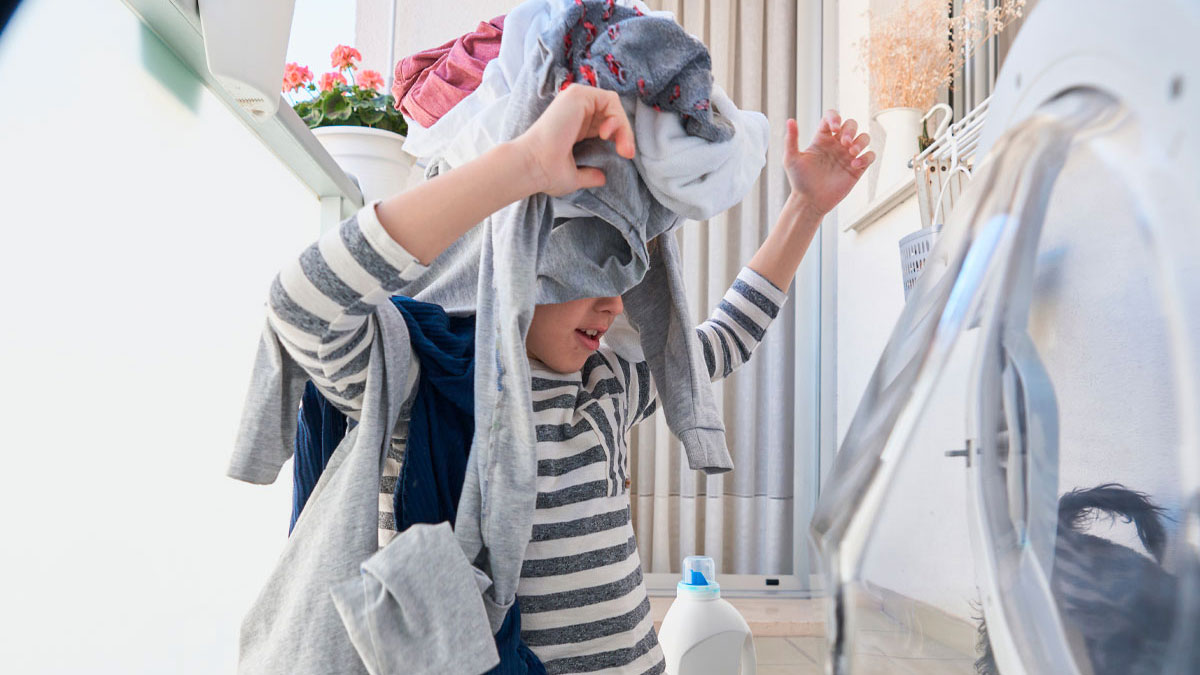
One of the best things any parent can do for their children is support their independence. This will not only help the family at home, but also teach them all-important practical skills they’ll need when they grow up.
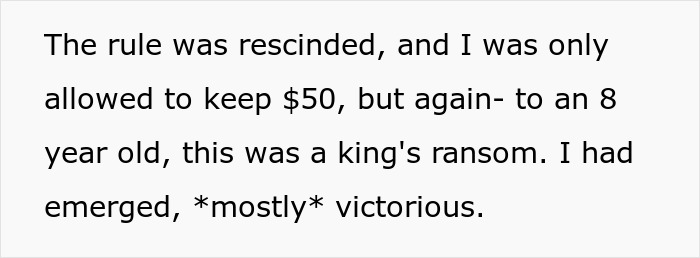
In some cases, parents motivate their kids with money. However, this can become comically expensive. Case in point, redditor u/Baileythenerd recently amused the r/MaliciousCompliance online community with a tale from their childhood about how their help doing the laundry netted them a jaw-dropping $200. Scroll down for the brilliant story, as well as other people’s priceless reactions.
(Bored Panda contacted u/Baileythenerd, and they were kind enough to share their thoughts with us on the advantages of parents teaching their kids to do chores from early on. You’ll find their insights below.)
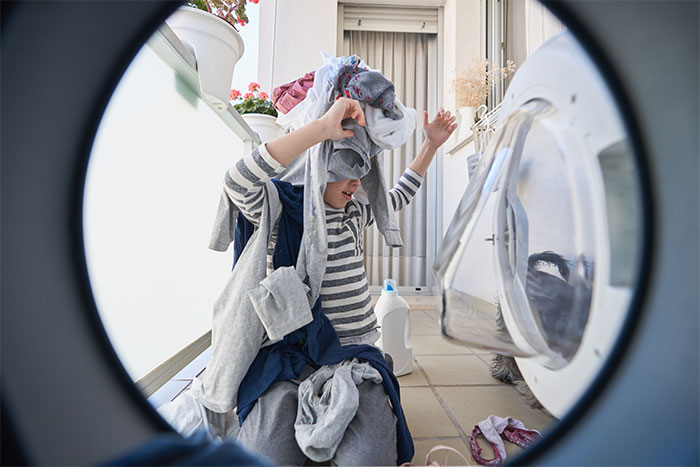
Image credits: ADDICTIVE_STOCK / Envato Elements (not the actual photo)
Image credits: LightFieldStudios / Envato Elements (not the actual photo)
Image credits: annann_9 / Envato Elements (not the actual photo)
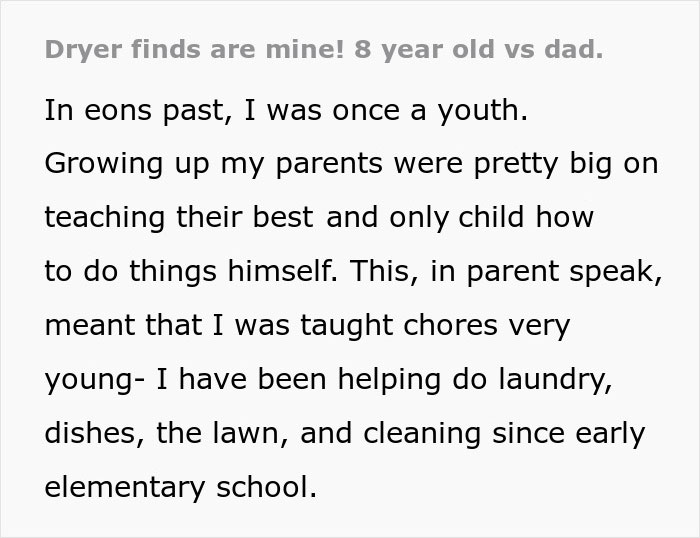
Image credits: Baileythenerd
Bored Panda got in touch with the author of the story, and we were curious to hear their take on whether children who never learn to help with chores end up at a disadvantage when they eventually grow up.
According to u/Baileythenerd, in these scenarios, the kids would have a harder time in the future.
“It is to the benefit of both the child and the parent to involve them with daily chores and tasks,” the OP said, sharing their thoughts with us.
“The value of this goes beyond the individual skills the child learns; it also impresses three very important mindsets/ideas in individuals,” they said.
First of all, u/Baileythenerd stressed that teaching kids to tackle chores from early on impresses upon them that “no daily task is beneath anyone to do.”
Next, they pointed out that parents teach their children that the necessary skills can and must be learned. “As children, it’s easy to assume the adults around you were just born knowing how to do the tasks they do every day,” the author told Bored Panda.
Lastly, this approach also supports self-sufficiency and independence. “Eventually, going out on your own is terrifying,” u/Baileythenerd said. “Even more so when you realize that you don’t know how to do many of the things that need to happen in any household.”
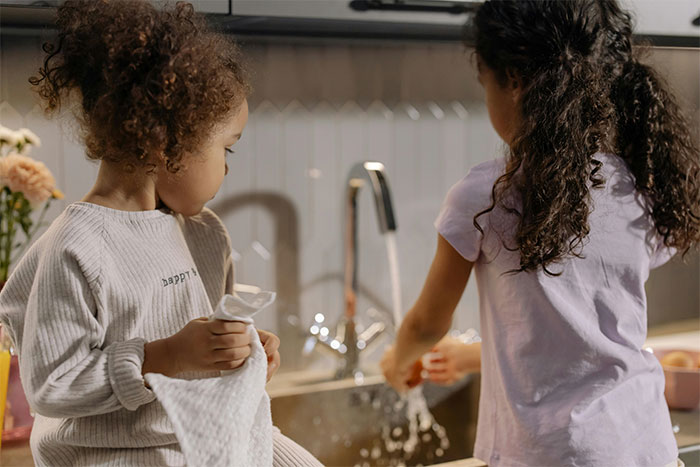
Image credits: cottonbro studio / Pexels (not the actual photo)
Many of us probably wish that we had developed healthier habits and learned practical skills from an earlier age. For some of us, that might mean regular exercise and eating a nutritious diet. For others, it’s learning to cook and clean at home.
While it’s never too late to learn something new or to change your life, it takes a while for the habit to become automatic. Though all our brains are capable of change through neuroplasticity, it’s easier to learn new behaviors when we’re young and have someone guiding and motivating us.
The reality is that it can take a vastly different amount of time to form a habit, depending on the type and complexity of the activity. As Verywell Mind points out, it can take anywhere from 18 to a whopping 254 days to form a new habit. The average, however, is around 66 days for a behavior to become automatic.
Let’s be real, though, developing some habits can be a huge pain. Especially if we find them deeply unpleasant. Some people hate vacuuming. Others think doing the dishes is worse than all the other housework put together.
If we don’t have strong internal motivators (e.g., keeping a clean home or taking pride in helping our loved ones), we need to rely on external ones.
Naturally, it gets easier for us to do the chores we have to do if someone pays us or rewards us in some other way, like by praising us. However, money should not be the only reason we do these things.
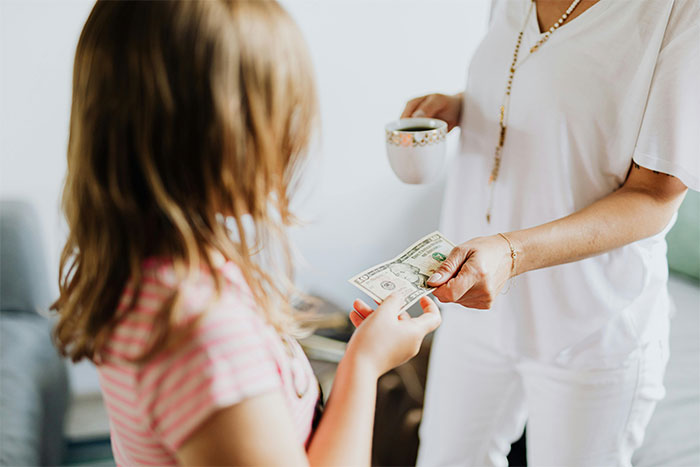
Image credits: Karolina Grabowska / Pexels (not the actual photo)
So it’s vital that parents talk to their kids about why their help is so important. It’s essential that they grasp that they’re helping out for reasons that go beyond the financial. There’s a lesson to be learned here about being independent, pulling one’s own weight, fulfilling promises, and doing tasks from start to finish.
As reported by The Washington Post, some experts believe that chores should not be connected to kids’ allowances at all.
However, the Preferred Medical Group notes that cash rewards are fine, so long as they’re reasonable and age-appropriate. The more difficult the task, the higher the reward. However, mundane tasks should not be overvalued.
The rewards that work best will vary from family to family and child to child. Some kids prefer getting compliments for all their hard work. Others enjoy the freedom to do what they want after they finish their chores. Still, others prefer getting a tangible reward, whether it’s cash or a small gift.
Meanwhile, Bright Horizons suggests that parents try to involve the entire family in the chores to show the kids that everyone’s actively participating. It also helps when everyone tries to make housework fun in some way, rather than a dreary activity they’re forced to do.
In our experience, dividing chores according to personal preferences is a good way to address who does what. We don’t mind doing some chores. Some of them are even soothing and meditative.
So when we focus on those instead of the ones that we loathe, it’s less of a drag. However, if there are chores that everyone in the household hates with a fiery passion, it might be best to set up a timetable and divide them equally among household members. Unless… there’s a large reward involved?

By entering your email and clicking Subscribe, you're agreeing to let us send you customized marketing messages about us and our advertising partners. You are also agreeing to our Privacy Policy.
Thank you! You've successfully subscribed to newsletters!

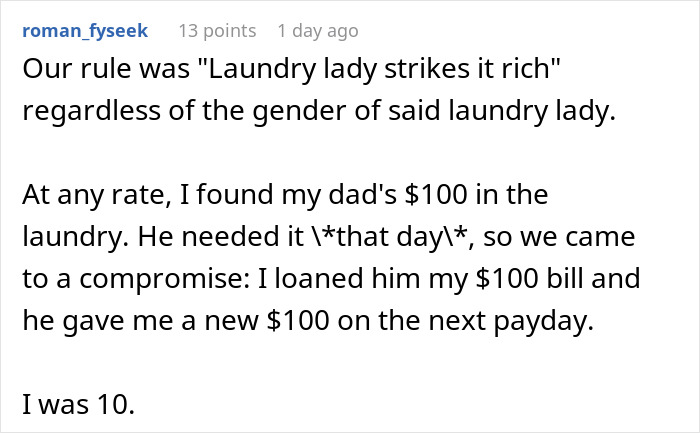
So dad was a dïck keeping the kid's money a s dïck again when he lost his own. Kid should have gotten the $200.

'Rules for me but not for thee', everything that's wrong with this country in a nutshell.
Load More Replies...
My mom had the same rule except she would move my backpack to grab the pants I was wearing during the night or while I was showering. My wallet would go through as well and the $1-5 I had at age 8 would be lost to her. One day I was washing the clothes in the hamper and when I was pulling them out I came across 150 dollars so by her rule I got the money. I stashed it into my piggy bank and went along my day. When I got back with dad shopping, my bank was shattered and she slapped me across the face for stealing. My Dad asked how she knew it was me. She told him she accidentally left the money in her pants and tossed it in the laundry and I had done the was so she was getting her 150 back and the 80 I had saved up as punishment. My Dad threatened to divorce her and take me with him if she pulled any of that again. So the law of money got revoked and I started putting any clothes I wanted to wear with my stuff in it under my mattress.

$10 to a kid that age is basically $200 to an adult because of varying earning ability. That Dad taught his kid that the rules apply to him but not to others. This is exactly what went wrong in America.
So dad was a dïck keeping the kid's money a s dïck again when he lost his own. Kid should have gotten the $200.
'Rules for me but not for thee', everything that's wrong with this country in a nutshell.
Load More Replies... My mom had the same rule except she would move my backpack to grab the pants I was wearing during the night or while I was showering. My wallet would go through as well and the $1-5 I had at age 8 would be lost to her. One day I was washing the clothes in the hamper and when I was pulling them out I came across 150 dollars so by her rule I got the money. I stashed it into my piggy bank and went along my day. When I got back with dad shopping, my bank was shattered and she slapped me across the face for stealing. My Dad asked how she knew it was me. She told him she accidentally left the money in her pants and tossed it in the laundry and I had done the was so she was getting her 150 back and the 80 I had saved up as punishment. My Dad threatened to divorce her and take me with him if she pulled any of that again. So the law of money got revoked and I started putting any clothes I wanted to wear with my stuff in it under my mattress.
$10 to a kid that age is basically $200 to an adult because of varying earning ability. That Dad taught his kid that the rules apply to him but not to others. This is exactly what went wrong in America.





















 No fees, cancel anytime









27
12