Get Premium
Dark mode theme is available exclusively for premium users. Learn more about the benefits of subscribing.
No fees, cancel anytime.

 Dark Mode Ad-Free Browsing Unlimited Content
 Ad-Free Browsing Unlimited Content Dark Mode
Join 1.2 million Panda readers who get the best art, memes, and fun stories every week!

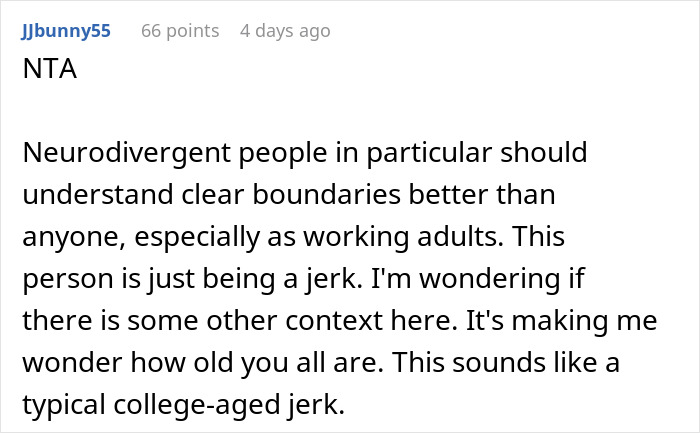
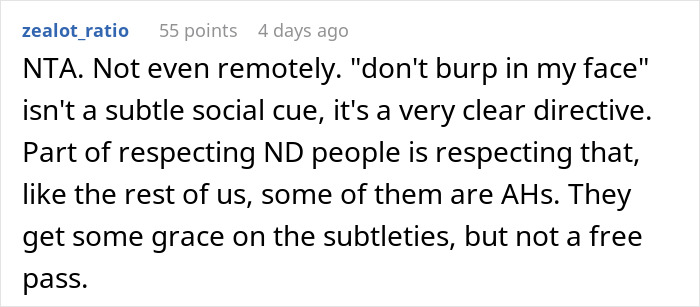
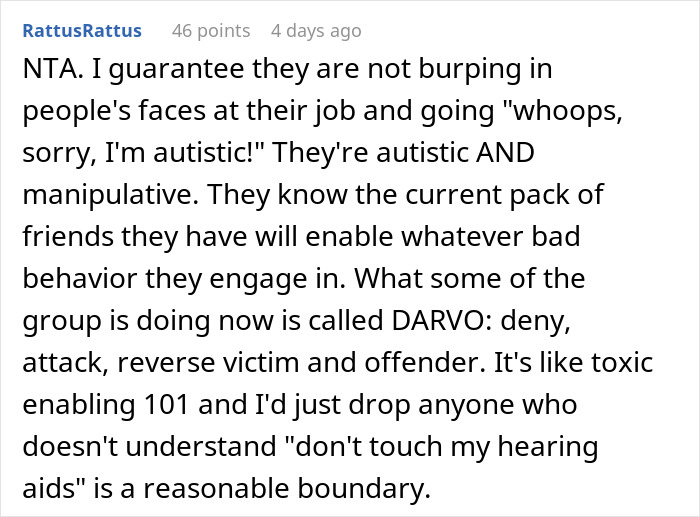
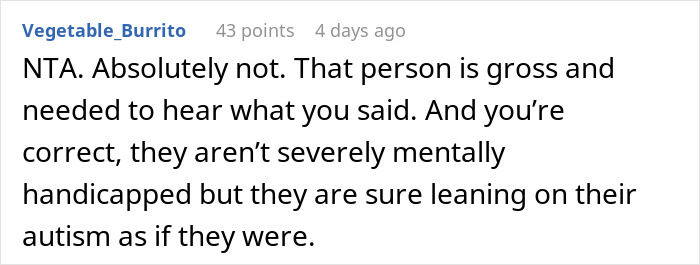
Some people’s brains work differently, but that doesn’t mean that they should be treated fundamentally differently from the rest. While neurodiverse people often require support and understanding, overly special exceptions and privileges reinforce misconceptions about them that can limit their growth.
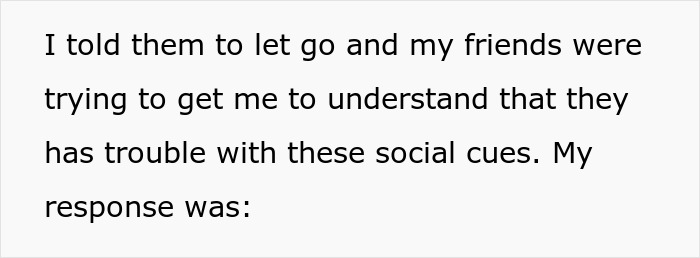
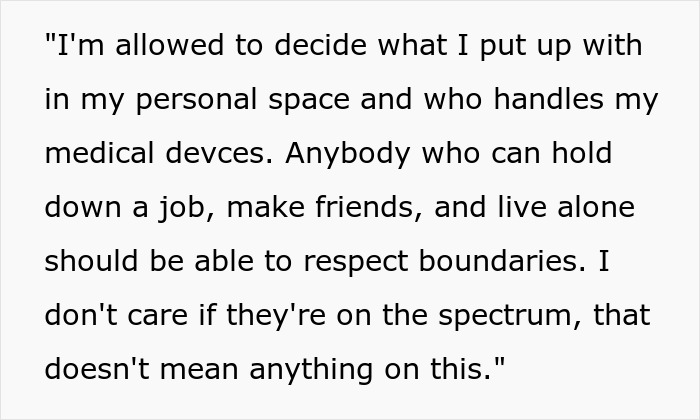
This man treated his neurodivergent friend just like anyone else by setting boundaries whenever he felt he needed them. But since the buddy was on the spectrum and struggled with that, it was harder to do so. Recently, he shared how he was pushed over the edge by it and even got shamed by his friends for it.
Scroll down to find the full story and conversation with Dr. Amy Nasamran, a licensed psychologist and founder of Atlas Psychology, and Dr. Matthew J. Zakreski, founder and lead psychologist at The Neurodiversity Collective, who kindly agreed to tell us more about neurodivergent people and boundaries.
Image credits: seventyfourimages / envatoelements (not the actual photo)
Image credits: gstockstudio / envatoelements (not the actual photo)
Image credits: freepik (not the actual photo)
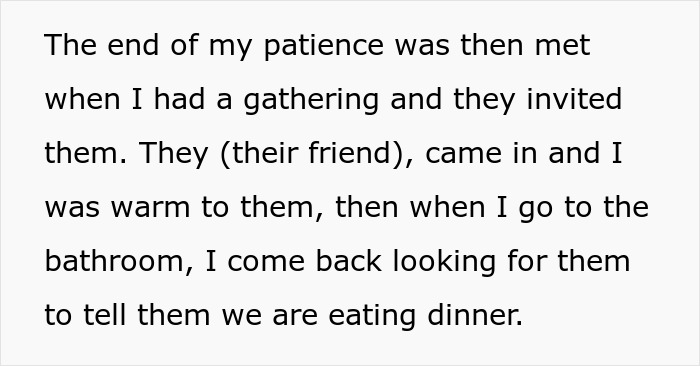
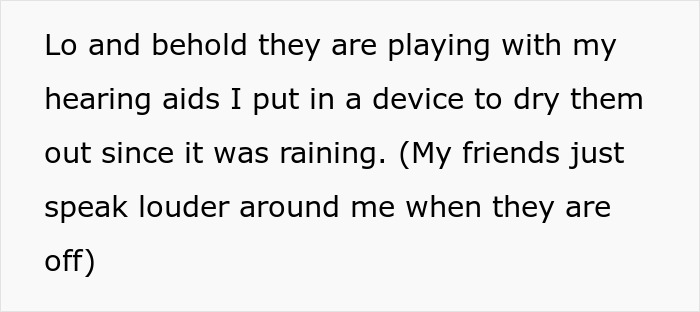
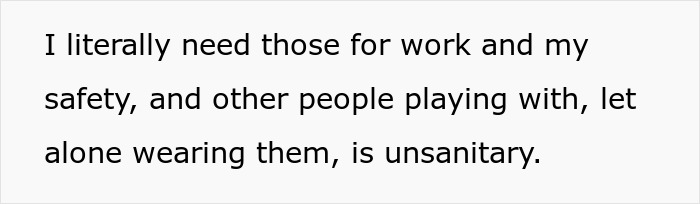
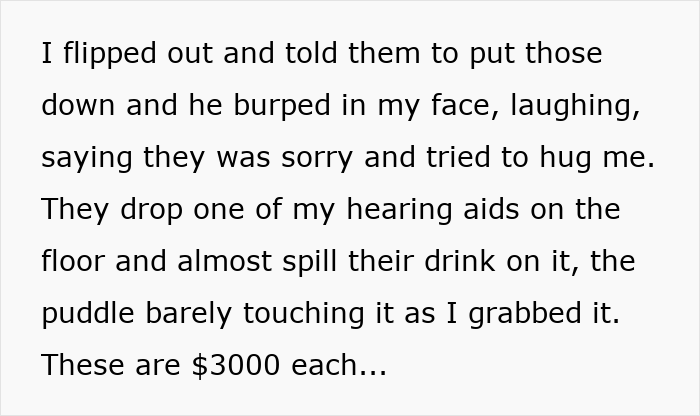
Image credits: Cat_of_the_woods
Image credits: freepik (not the actual photo)
Both our interviewed experts agree that boundaries are important when interacting with neurodivergent people.
“Some neurodivergent brains really appreciate clear and concrete information, as this helps them understand and know exactly what’s expected of them in a given situation, and neurodivergent brains often love to follow clear rules and boundaries,” says Dr. Amy Nasamran, a licensed psychologist and founder of Atlas Psychology.
“Additionally, sometimes a neurodivergent brain is working on overdrive—or it requires a lot of effort—to try to figure out language, social cues, and social expectations. So boundaries help make these expectations clear, give neurodivergent brains concrete expectations to follow, and help protect needs, space, and respect for everyone involved.”
In a world where most unwritten and written social norms are tailored for neurotypical people, it’s necessary to teach neurodivergent people where typical boundaries are drawn and why they exist, says Dr. Matthew J. Zakreski, founder and lead psychologist at The Neurodiversity Collective. “When we have healthy, appropriate, and clearly stated boundaries, it helps all people involved have a better, safer relationship.”
Some people might be hesitant to set clear boundaries with neurodivergent people because they’ve been socialized not to ask the hard questions and be polite, even at the cost of their comfort, notes Dr. Zakreski. But with neurodivergent people, they have to get out of their comfort zone and communicate their needs directly, as a more blunt style of communication works more effectively with them.
Image credits: EyeEm / freepik (not the actual photo)
To ensure that a boundary is clearly communicated to a neurodivergent person and understood by them, Dr. Zakreski advises avoiding any ambiguities like slang or metaphors, as they can be easily misinterpreted.
“The biggest thing with neurodivergent people is to ‘say what you mean and mean what you say.’ For a neurodivergent person, who tends to be more concrete in their thinking and language usage, the direction ‘sit down’ could be read as ‘sit down exactly where you are.’ And if they do so, it can create a power struggle with the person in charge, because now we’re arguing about semantics (the implied meaning of something) rather than the words themselves,” he further explained.
“You can avoid many of these challenges by being very clear in your communication and avoiding slang, metaphor, and other verbal shortcuts until you’ve assessed how much of that kind of language this person can use. And when you do make a mistake, be authentic and own the confusion and talk about how you can both do better next time.”
“Sometimes neurodivergent brains don’t pick up on subtleties, social cues, body language, or facial expressions as quickly as we might expect, so instead of hoping for them to read between the lines, sometimes it is more helpful to clearly state the boundary you are trying to communicate using clear expectations and language,” agrees Dr. Nasamran. Once a boundary is clear, a neurodivergent brain sticks to it, as they really tend to appreciate and adhere to ‘rules.’
While setting boundaries, Dr. Nasamran also recommends avoiding criticism, shaming, or blaming. “Neurodivergent people have big hearts, and they often care a lot about their relationships with others, so if they’re crossing boundaries, they’re likely unaware of it or how it’s affecting you. I’m also willing to bet they have already thought a lot about how to behave, what to say, and how to interact in that situation, so they are not maliciously trying to cross a boundary. They need further and clearer direction from you.”
A relationship with a neurodivergent person can be full of trial and error, but it’s important to approach it with positive intent. “Guide and teach them; call them in rather than calling them out. No one has ever been shamed into long-term growth,” concludes Dr. Zakreski.

By entering your email and clicking Subscribe, you're agreeing to let us send you customized marketing messages about us and our advertising partners. You are also agreeing to our Privacy Policy.
Thank you! You've successfully subscribed to newsletters!
52Kviews
Share on Facebook

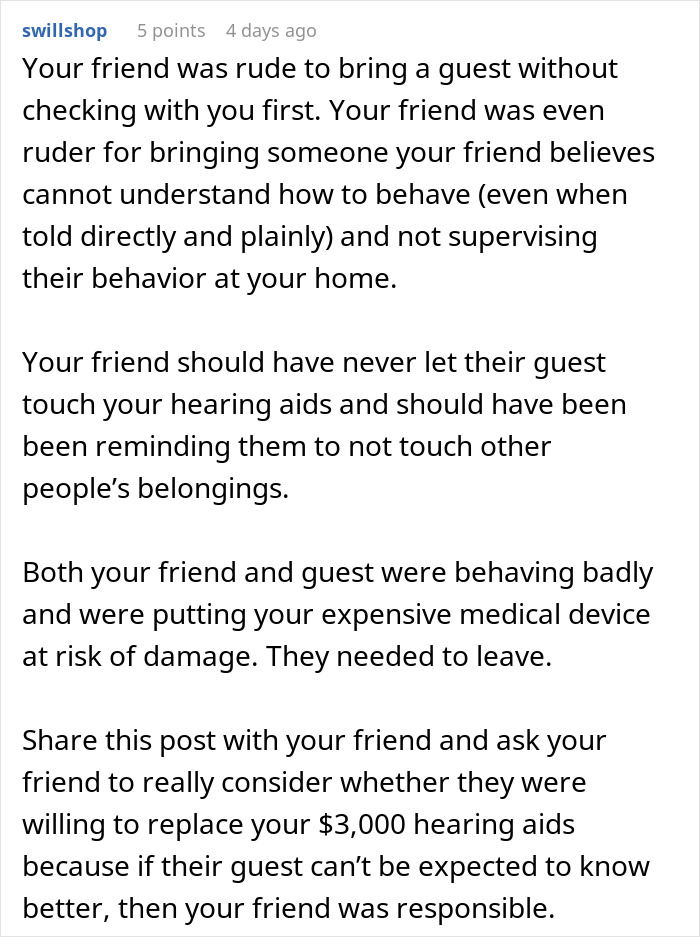
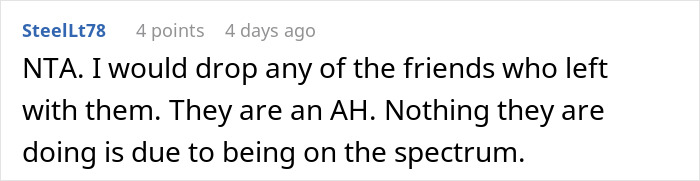
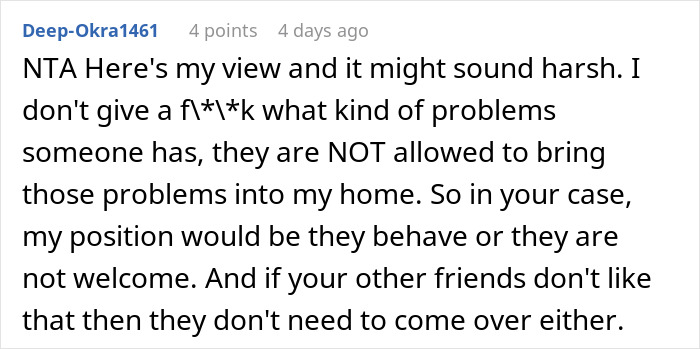
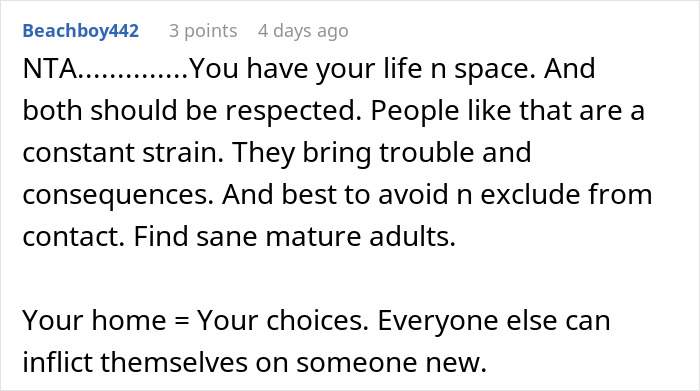
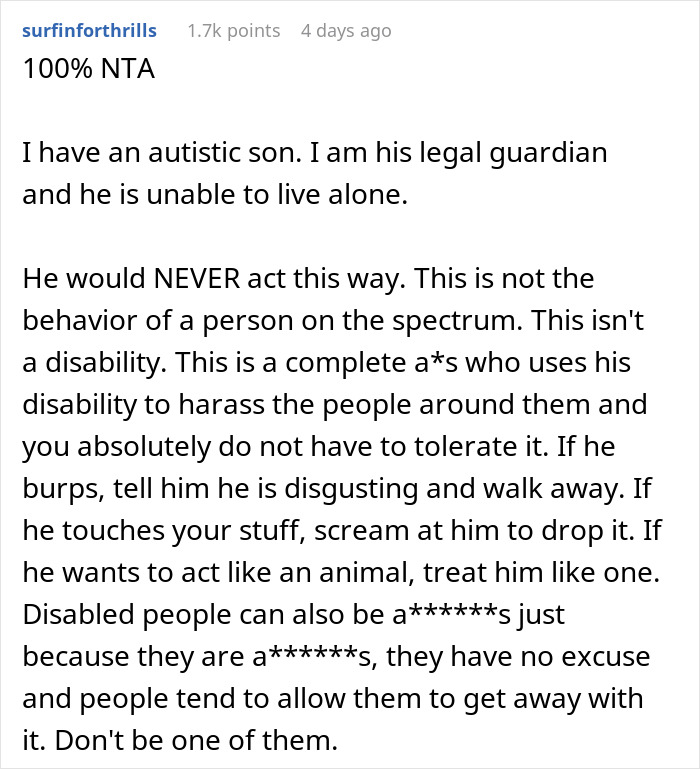
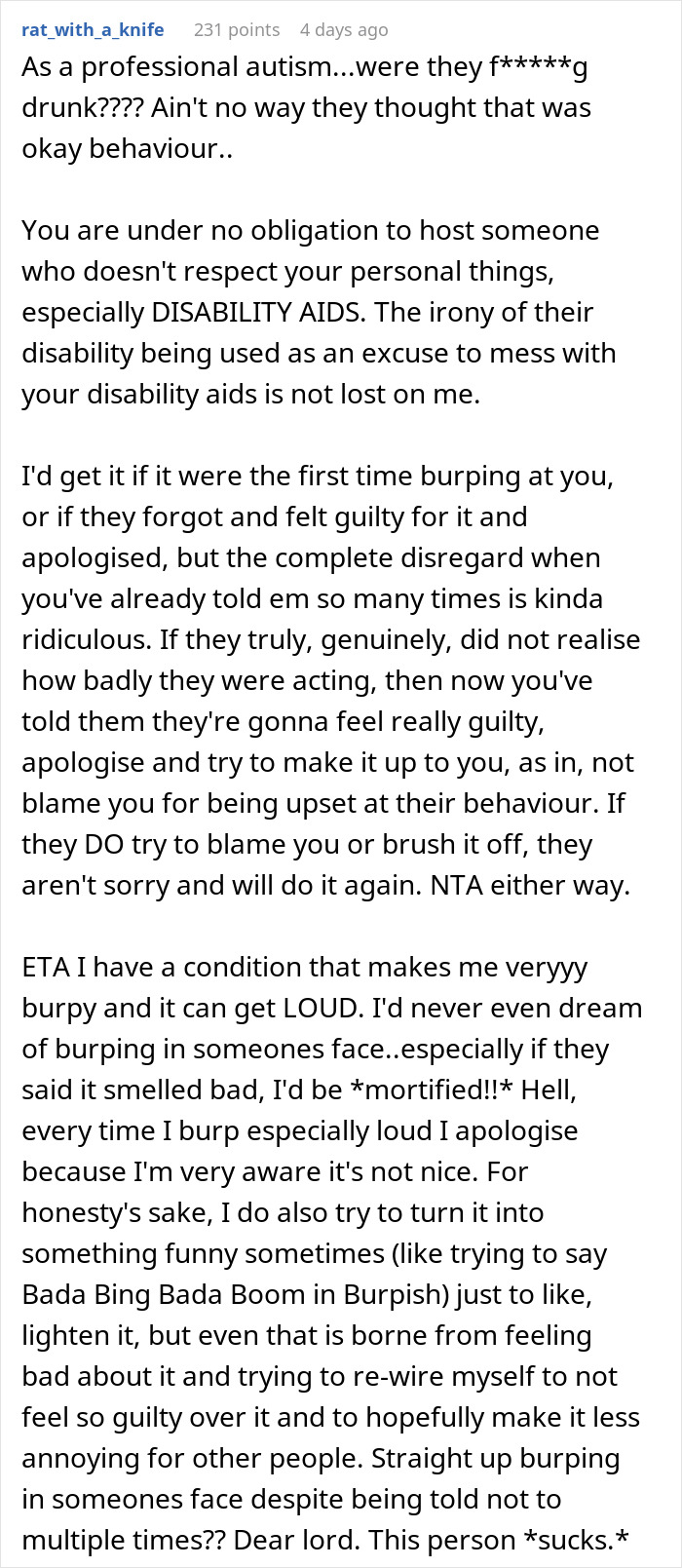
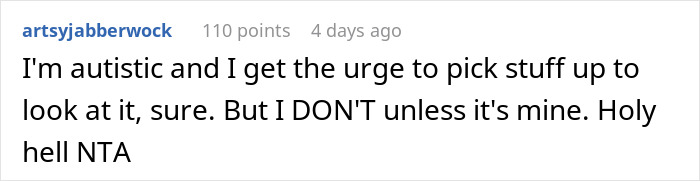
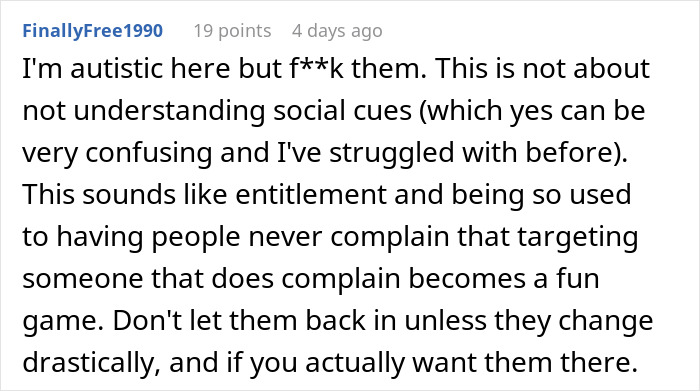
A coworker who was on the spectrum, a brilliant and interesting guy, consistently checked in with his team to make sure he was behaving in a professional manner. He was so uncomfortable in many situations but wanted to make sure we were comfortable and let us know how we could accommodate his needs. I so admired him. This guy ... he gets off on making people uncomfortable, using his autism as an excuse. He needs consequences, and cutting him off is the appropriate one.

Your coworker sounds like a gem. This guy is a jerk. I'm wondering how this jerk can hold down a job. Does he continually burp in his coworkers or before his boss? Doubt it. If he can behave in one situation, he can behave in another. And if he's told that it's appropriate and continues to do it, then he needs to leave and not return. As for the hearing aids--I'm sure he doesn't handle things at work that he's supposed to keep his hands off, so he does know the difference in what's appropriate. Again, he was asked not to touch and didn't listen. GTFO then
Load More Replies...
Somebody can be neurodivergent, handicapped, etc. and still independently be an a**hole.

Hi. That's me. But for the most part I'm able to control it. Stroke makes it iffy on occasion
Load More Replies...
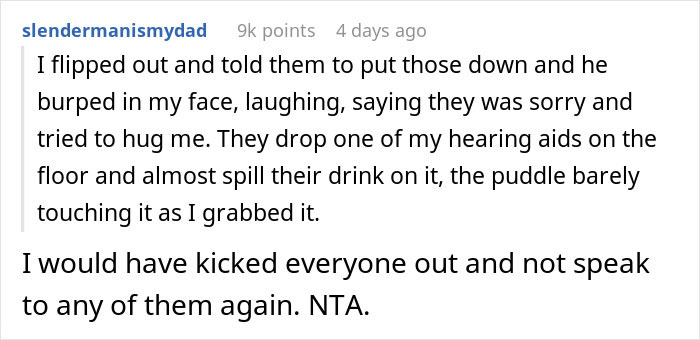
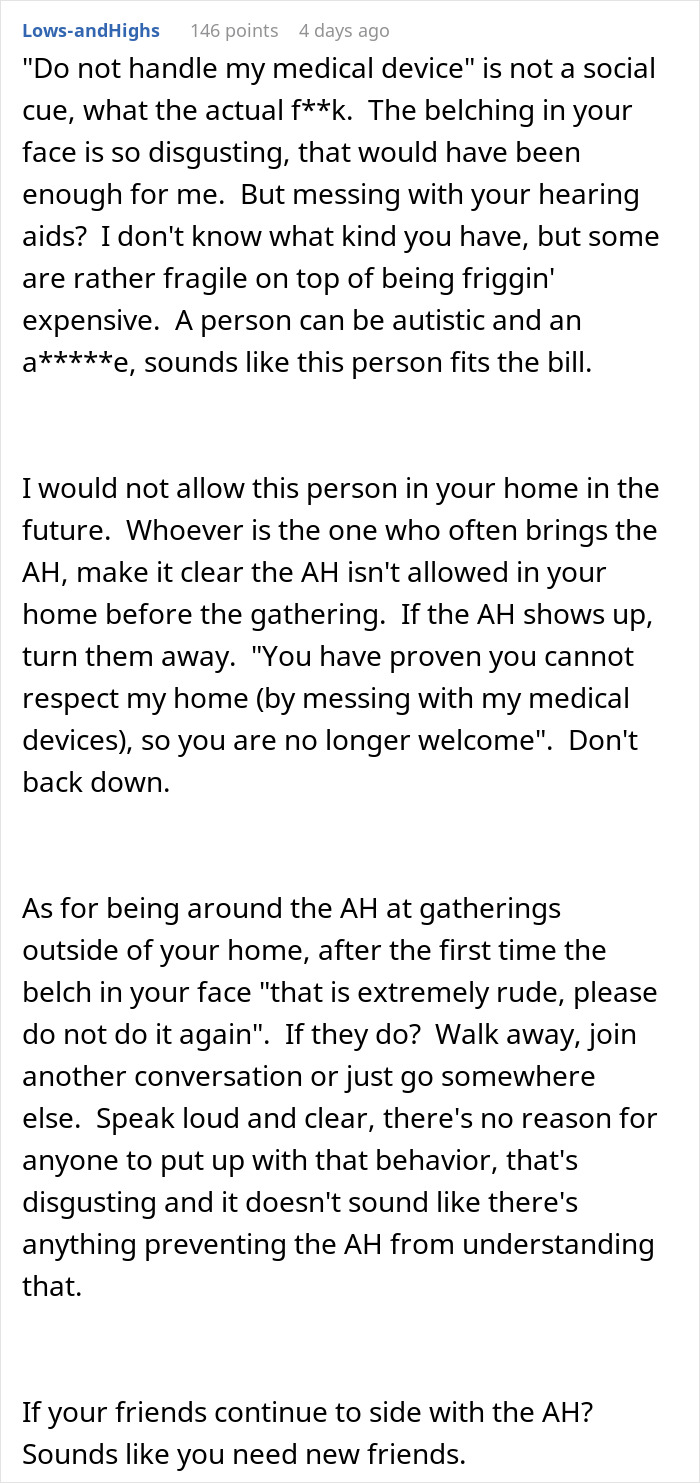
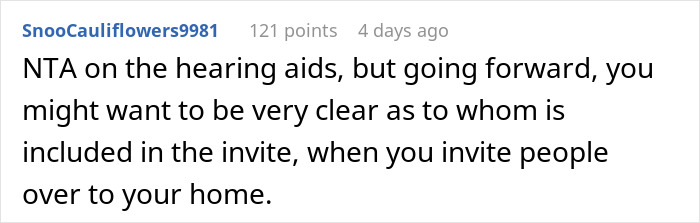
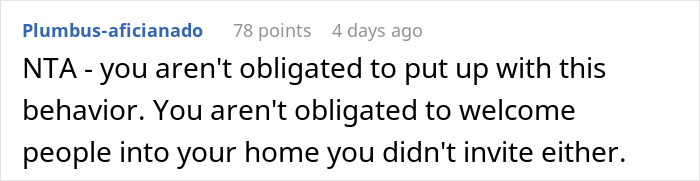
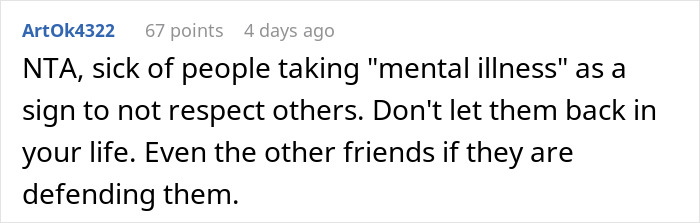
Being ND and being an AH are not mutually exclusive. You can be both. It sounds like the friends coddle the ND person "because he's ND/doesn't understand/sees things differently", which sure -- someone on the spectrum does see things differently and may take longer to understand some things, but "do not touch my things" and "do not burp in my face" are not particularly hard for anyone to understand -- they're not social cues; they are requests/orders/there's nothing to misinterpret -- and frankly if the friends treat every ND person like the ND person here I hope a decent chunk of them would be insulted, because that's just infantilising to them to think otherwise. They're autistic. Not stupid. Also, the ND person is foul, because burping in someone's face is rude and gross. Especially so after being asked to stop and not.

A coworker who was on the spectrum, a brilliant and interesting guy, consistently checked in with his team to make sure he was behaving in a professional manner. He was so uncomfortable in many situations but wanted to make sure we were comfortable and let us know how we could accommodate his needs. I so admired him. This guy ... he gets off on making people uncomfortable, using his autism as an excuse. He needs consequences, and cutting him off is the appropriate one.
Your coworker sounds like a gem. This guy is a jerk. I'm wondering how this jerk can hold down a job. Does he continually burp in his coworkers or before his boss? Doubt it. If he can behave in one situation, he can behave in another. And if he's told that it's appropriate and continues to do it, then he needs to leave and not return. As for the hearing aids--I'm sure he doesn't handle things at work that he's supposed to keep his hands off, so he does know the difference in what's appropriate. Again, he was asked not to touch and didn't listen. GTFO then
Load More Replies... Somebody can be neurodivergent, handicapped, etc. and still independently be an a**hole.
Hi. That's me. But for the most part I'm able to control it. Stroke makes it iffy on occasion
Load More Replies... Being ND and being an AH are not mutually exclusive. You can be both. It sounds like the friends coddle the ND person "because he's ND/doesn't understand/sees things differently", which sure -- someone on the spectrum does see things differently and may take longer to understand some things, but "do not touch my things" and "do not burp in my face" are not particularly hard for anyone to understand -- they're not social cues; they are requests/orders/there's nothing to misinterpret -- and frankly if the friends treat every ND person like the ND person here I hope a decent chunk of them would be insulted, because that's just infantilising to them to think otherwise. They're autistic. Not stupid. Also, the ND person is foul, because burping in someone's face is rude and gross. Especially so after being asked to stop and not.




























 No fees, cancel anytime













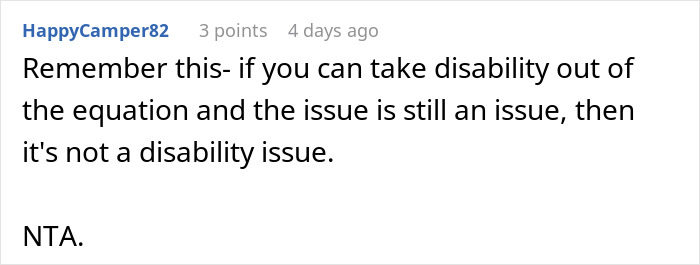
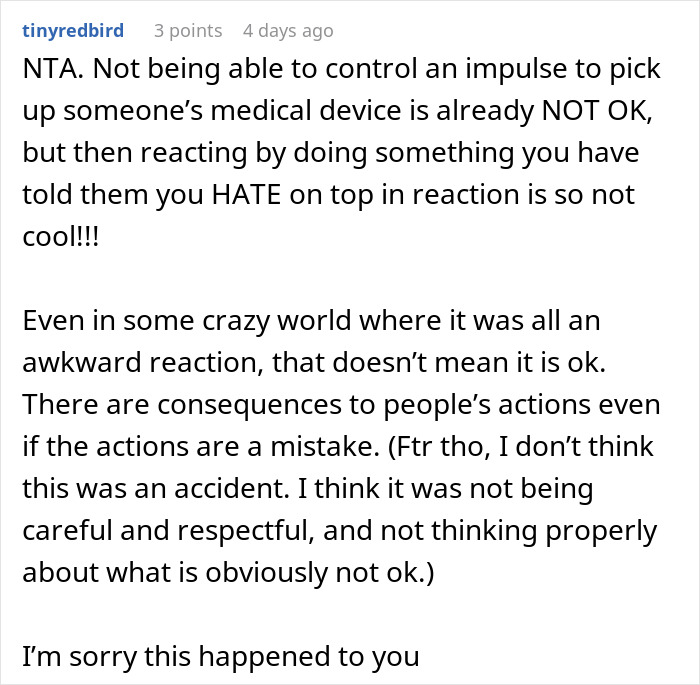
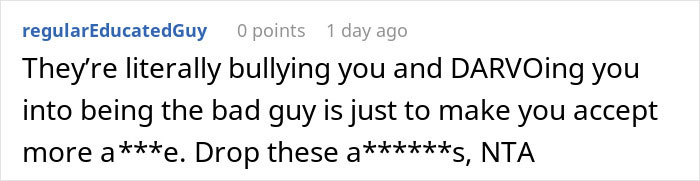
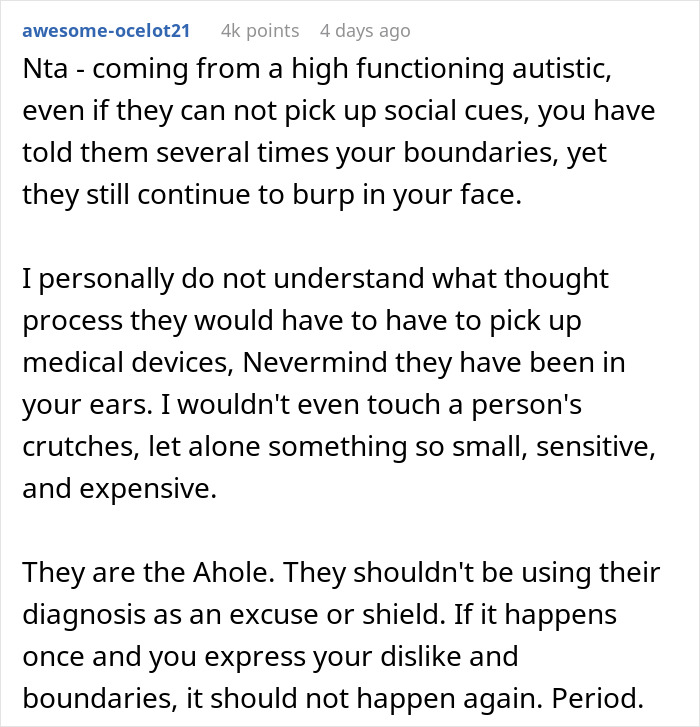




51
44