Get Premium
Dark mode theme is available exclusively for premium users. Learn more about the benefits of subscribing.
No fees, cancel anytime.

 Dark Mode Ad-Free Browsing Unlimited Content
 Ad-Free Browsing Unlimited Content Dark Mode
Join 1.2 million Panda readers who get the best art, memes, and fun stories every week!

We’ve all heard the stories about managers pushing people to stay late, work longer hours, or constantly “go above and beyond.” Sometimes that pressure is baked into the job. But other times, it doesn’t even come from the boss. It comes from that one coworker who acts like a self-appointed supervisor. No title, no authority—just opinions. And somehow, they feel very comfortable judging how everyone else does their job.
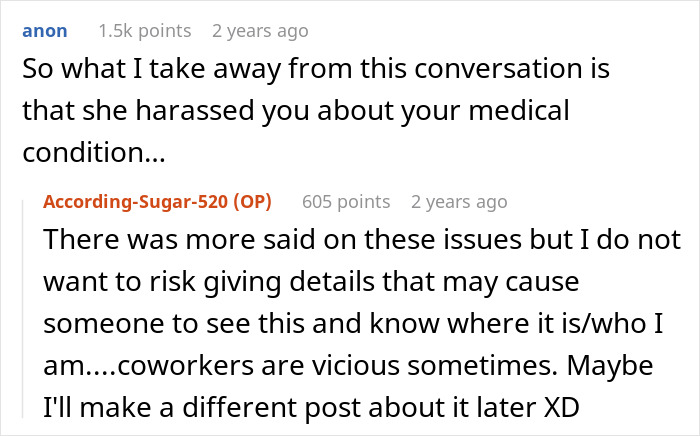
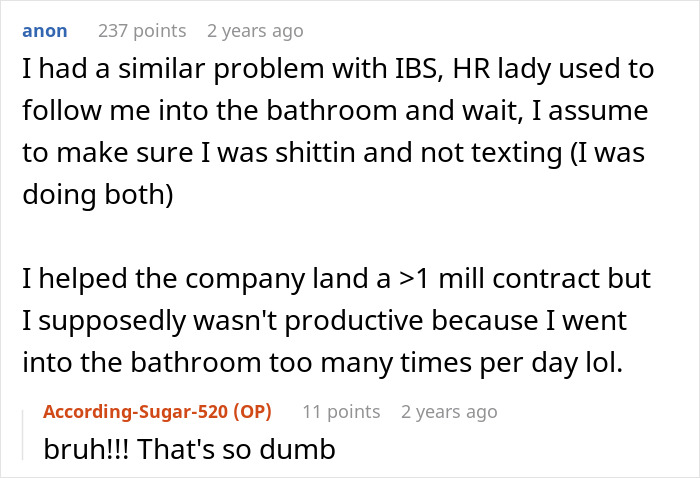
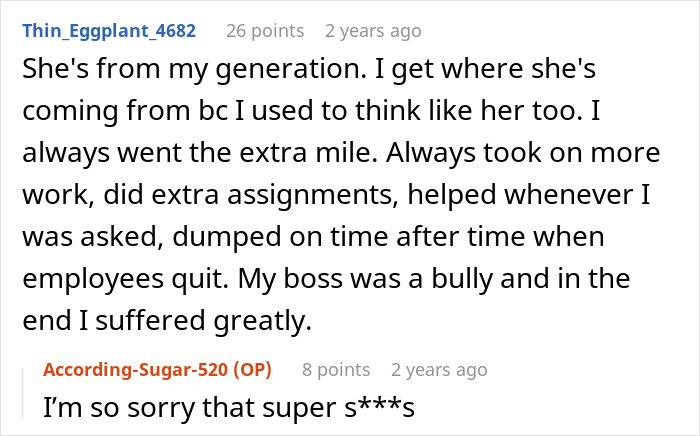
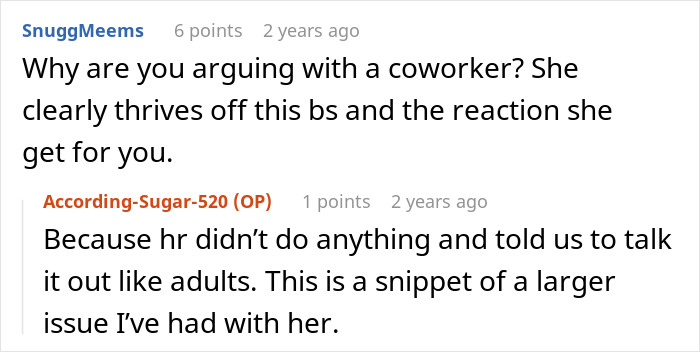
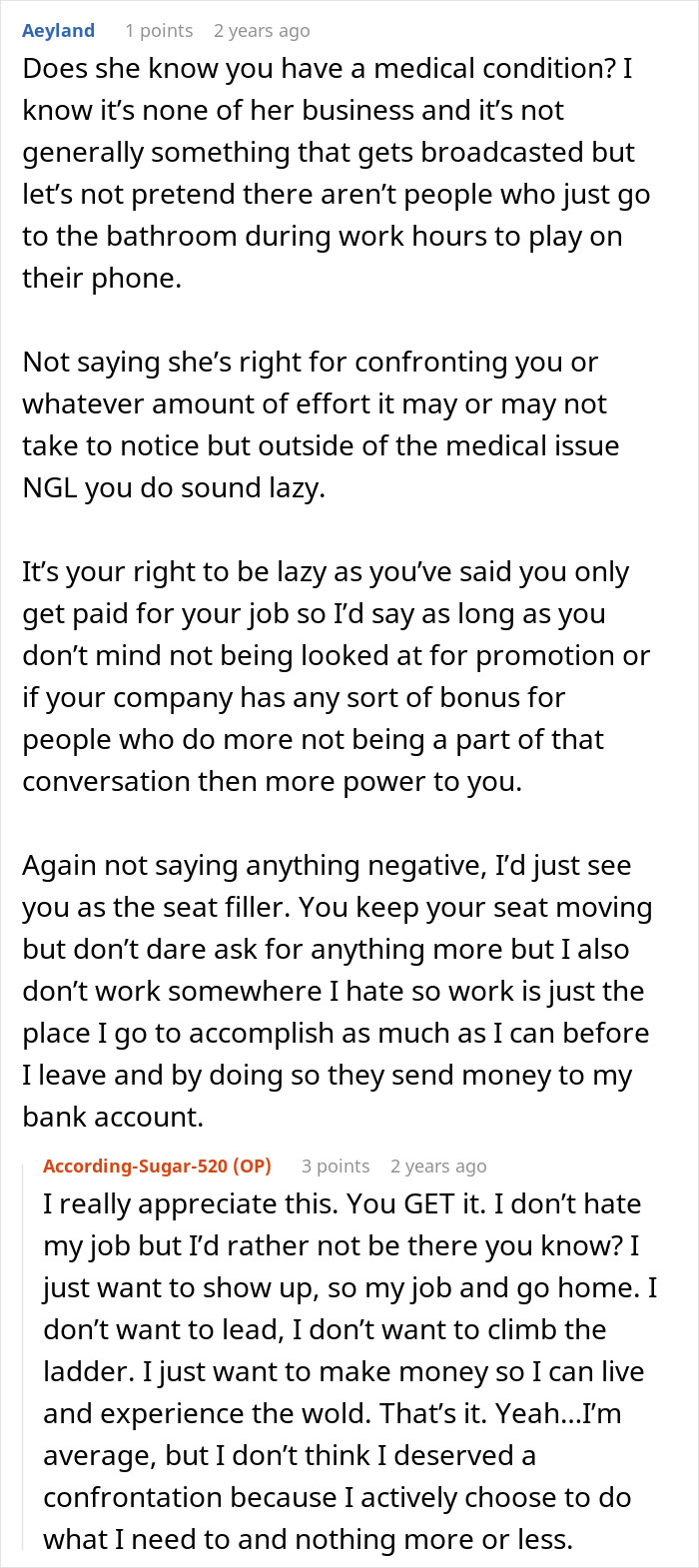
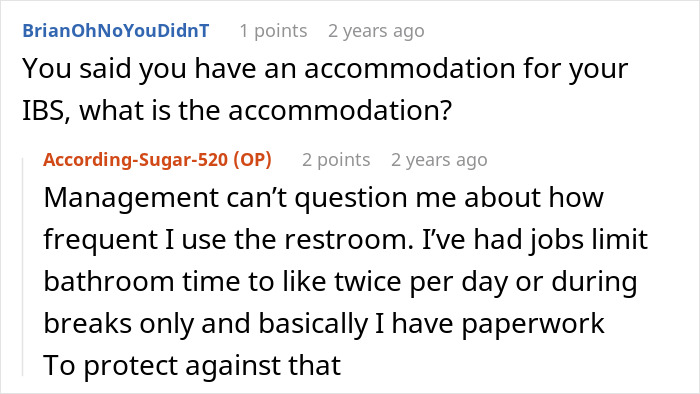
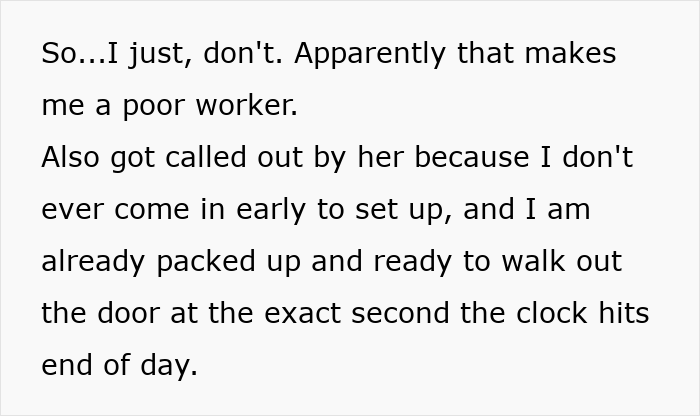
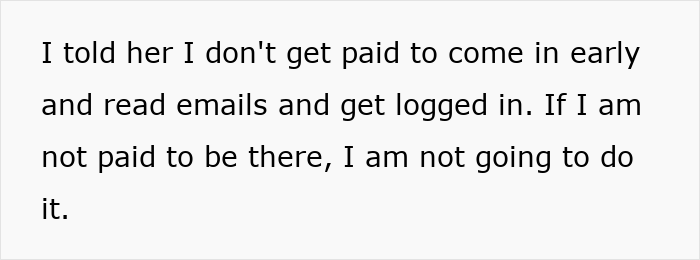
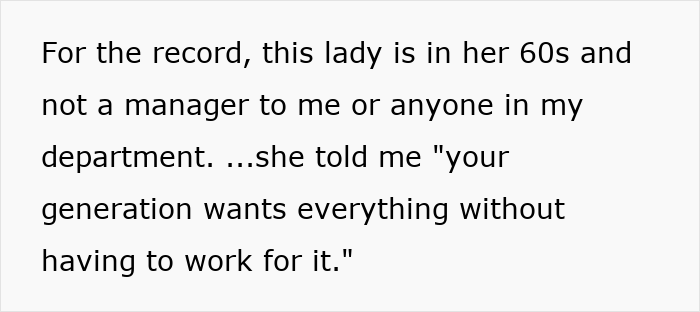
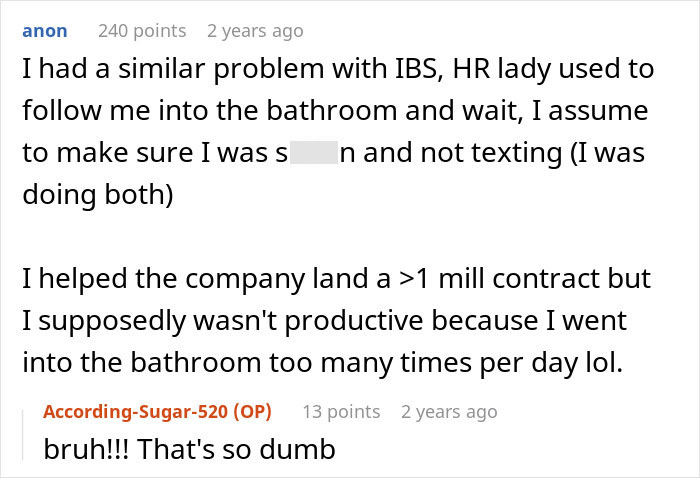
In this case, one employee shared how a 60-year-old coworker labeled them a “lazy worker” for taking frequent bathroom breaks and refusing to do extra work for free. What she didn’t consider was that those breaks were medically necessary and completely allowed. Keep reading to see how the situation unfolded and how the internet reacted.
Image credits: www.kaboompics.com / Pexels (not the actual photo)
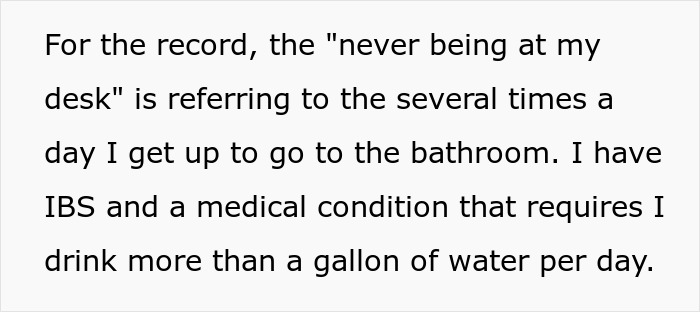
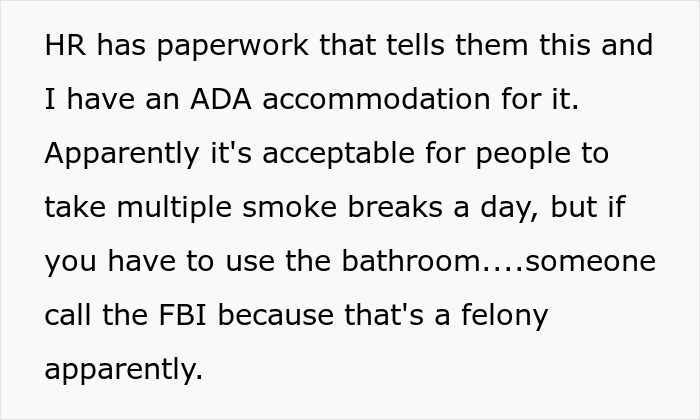
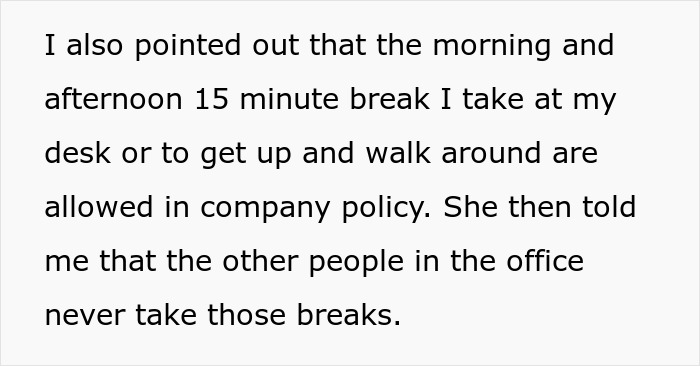
Image credits: http://www.kaboompics.com/ / Pexels (not the actual photo)
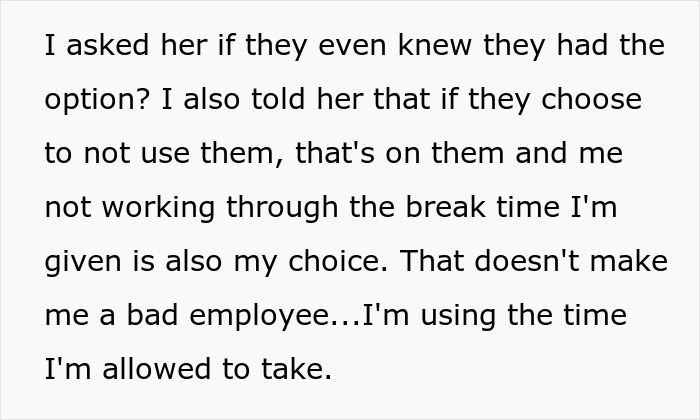
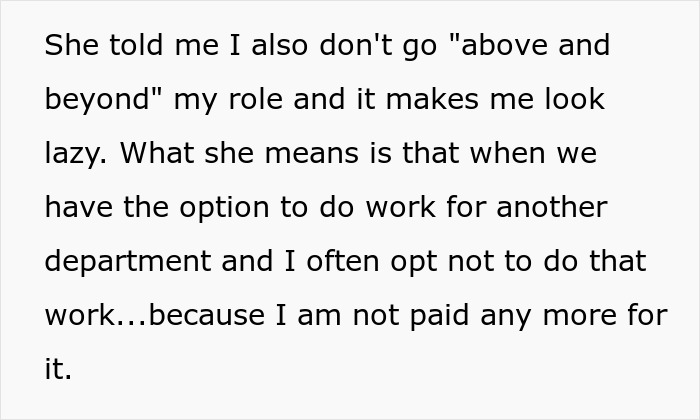
Image credits: Yan Krukau / Pexels (not the actual photo)
Image credits: According-Sugar-520
Image credits: fauxels / Pexels (not the actual photo)
Over the years, what counts as “normal” at work has changed dramatically, and for many employees from the baby boomer generation, staying late and putting in unpaid overtime was considered just part of the job rather than something exceptional. Hustle was worn like a badge of honor, leaving precisely at the end of the workday could make you look lazy, and questioning authority was rarely encouraged. Boundaries between work and personal life were often nonexistent, and loyalty was measured by how many hours you put in rather than the quality of your output. This mindset shaped decades of workplaces, setting expectations that linger in subtle ways even today.
Gen Z, however, approaches work with a completely different mindset, viewing balance not as a luxury but as a necessity, and they refuse to treat burnout as a rite of passage or a badge of dedication. According to McKinsey, 77% of Gen Z workers consider work-life balance a major factor when deciding which job to take, and for them, time outside work is just as important as the paycheck itself. They value flexibility and boundaries, logging off at the end of the day without guilt, seeing rest as something that fuels productivity rather than laziness, and they approach work as one part of life rather than its entirety.
Mental health awareness is another defining feature of Gen Z in the workplace, as this generation has grown up in an era where conversations around therapy, burnout, anxiety, and emotional well-being are no longer taboo. They are comfortable speaking up when they feel overwhelmed and understand that taking mental health days isn’t dramatic or indulgent—it’s responsible and necessary for long-term productivity. Older coworkers are sometimes surprised by this openness, but for Gen Z, keeping struggles hidden simply to appear “professional” feels outdated and unnecessary, and they actively seek workplaces that understand and accommodate these needs.
Image credits: olia danilevich / Pexels (not the actual photo)
Technology plays an equally critical role in how Gen Z approaches work, as they’ve grown up in a world where digital tools are the norm rather than an option. They expect workplaces to have systems that are efficient and intuitive, and clunky, outdated processes can feel like a frustrating waste of time. Automation and AI aren’t scary; they’re welcome, especially when they take care of repetitive, low-value tasks. For this generation, technology isn’t a perk; it’s essential infrastructure that allows them to focus on the work that actually matters, and they quickly notice when companies fall short in providing it.
Diversity and inclusion are not just buzzwords for Gen Z—they’re a core expectation, and they want to see workplaces that genuinely reflect the world they’ve grown up in. Representation matters at every level, from entry-level roles to leadership positions, and empty gestures or tokenism don’t go unnoticed. They’re looking for authentic policies, fair practices, and real opportunities for everyone, regardless of background, and they place significant weight on whether an organization’s actions match its stated values. To them, inclusion isn’t optional; it’s part of how a workplace earns trust and loyalty.
Communication is another area where Gen Z prefers efficiency and clarity over formality, often favoring short, direct messages over long, drawn-out emails. If taking a day off is allowed, they do so without feeling the need to overexplain or apologize excessively, and they expect coworkers and managers to respect that choice. Tools like Slack and Teams replace lengthy chains of emails, and transparency, honesty, and mutual respect are valued far more than politeness for politeness’ sake. They’re pragmatic, understanding that time is finite and communication should be clear, concise, and actionable.
Collaboration is prioritized over hierarchy, as Gen Z thrives in environments where ideas and feedback can flow freely, regardless of title. They respect managers who listen, who engage in two-way conversations, and who value empathy as much as authority. Being spoken with rather than spoken at creates loyalty and trust, while rigid hierarchies and top-down commands without context often lead to disengagement. For them, respect isn’t automatically granted based on title, it’s earned through how leaders treat their team and how the workplace fosters collaboration.
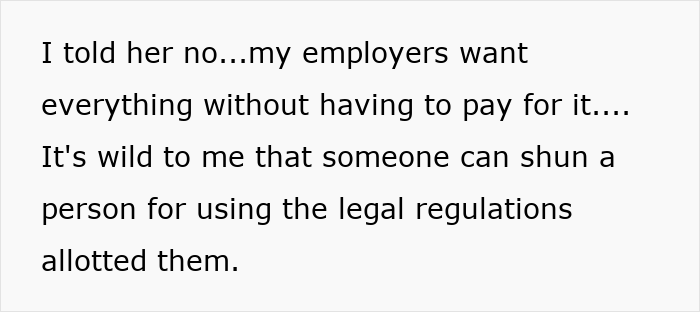
Of course, this shift in work culture hasn’t been universally welcomed, as many older employees view Gen Z’s habits as “lazy” or “entitled.” Leaving on time, saying no to extra unpaid work, or openly discussing mental health can draw side-eye and criticism, yet what appears as laziness is often just thoughtful boundary-setting, and what seems like disengagement is usually intentional prioritization. Generational differences in workplace expectations can create tension, but different doesn’t mean wrong—it simply reflects the evolving nature of work and how we define dedication.
Whether you’re Gen Z, a seasoned professional, or somewhere in between, there are clearly workplace norms that deserve rethinking. Expecting employees to work unpaid overtime shouldn’t be standard. Treating exhaustion as proof of dedication is outdated and harmful. Respecting personal time, mental health, and life outside work should never be controversial.
In this particular case, it really seemed like the author was simply doing the job they were hired and paid to do. They followed company policy, used the breaks they were entitled to, and met their responsibilities. Being judged for not doing extra, unpaid work feels unfair. “Going above and beyond” shouldn’t be an unspoken requirement just to avoid criticism. Showing up, doing your work well, and respecting boundaries should be enough. What are your views on this situation?



By entering your email and clicking Subscribe, you're agreeing to let us send you customized marketing messages about us and our advertising partners. You are also agreeing to our Privacy Policy.
Thank you! You've successfully subscribed to newsletters!

Usually when a person criticises me I listen carefully. Because they're actually criticising themself. When they say "you're lazy" they actually mean "I'm lazy". A certain President of the US does this all the time, but it's actually endemic throughout the population.

Two thoughts: if someone has IBS you don't want them staying at their desk even to fart. Indeed, a few fully noxious guffs might persuade Karen to feel differently about OP going to the bathroom. Secondly, all the evidence says skipping breaks reduces productivity. You may be present for longer but overall you get more done when you get a few minutes off regularly. We fight this in healthcare where exhausted staff who don't get breaks are a serious risk to patient care.
Usually when a person criticises me I listen carefully. Because they're actually criticising themself. When they say "you're lazy" they actually mean "I'm lazy". A certain President of the US does this all the time, but it's actually endemic throughout the population.
Two thoughts: if someone has IBS you don't want them staying at their desk even to fart. Indeed, a few fully noxious guffs might persuade Karen to feel differently about OP going to the bathroom. Secondly, all the evidence says skipping breaks reduces productivity. You may be present for longer but overall you get more done when you get a few minutes off regularly. We fight this in healthcare where exhausted staff who don't get breaks are a serious risk to patient care.
































 No fees, cancel anytime












29
7