Get Premium
Dark mode theme is available exclusively for premium users. Learn more about the benefits of subscribing.
No fees, cancel anytime.

 Dark Mode Ad-Free Browsing Unlimited Content
 Ad-Free Browsing Unlimited Content Dark Mode
Join 1.2 million Panda readers who get the best art, memes, and fun stories every week!

There’s a certain comfort in having a procedure to follow. After all, why reinvent the wheel if someone’s already figured it all out? When it comes to work, having clear instructions for each task—knowing which commands to use, which boxes to tick, or which settings to change—can certainly help things move faster. But that doesn’t mean we should follow them blindly…
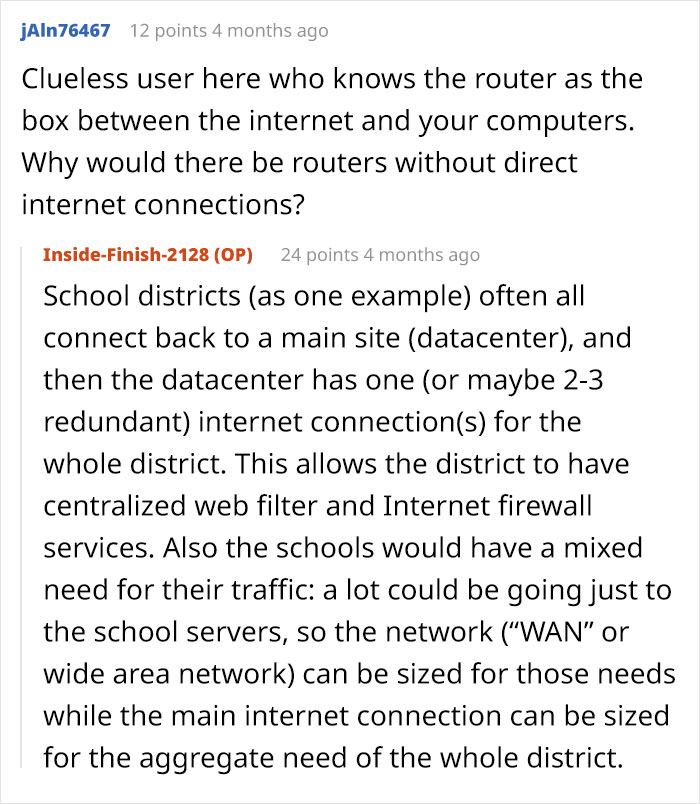
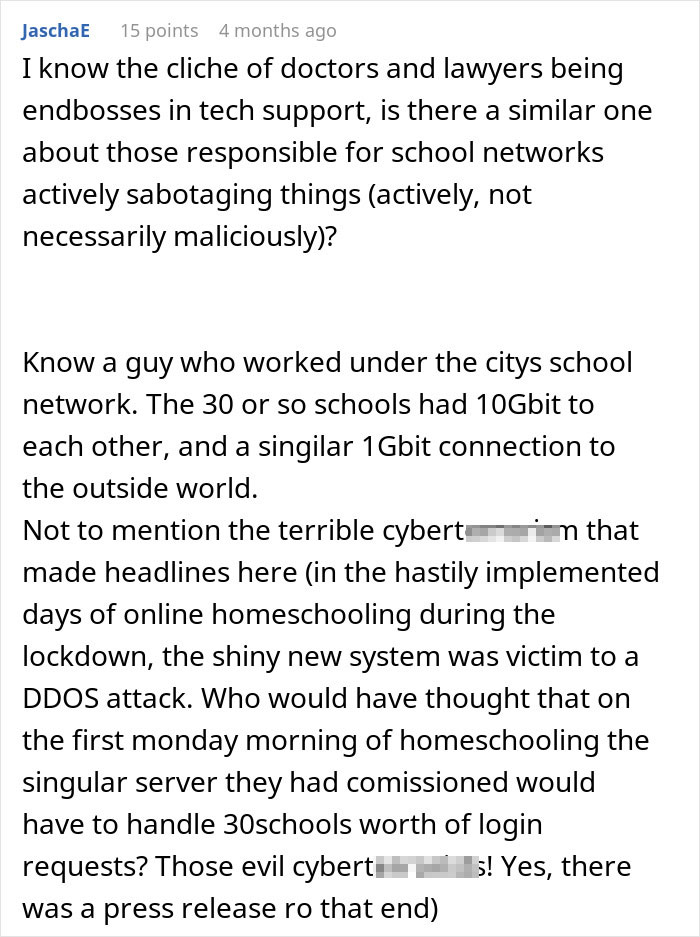
In fact, one IT worker on Reddit discovered just how far things can go when a networking command is used without anyone fully understanding what it does. They shared their story on r/talesfromtechsupport, and for tech whizzes and technophobes alike, it’s a reminder that copy-pasting from an outdated template can mean not only repeating a mistake but also scaling it. And if we don’t learn from these kinds of errors, well, we could end up leaving an entire school district without internet.
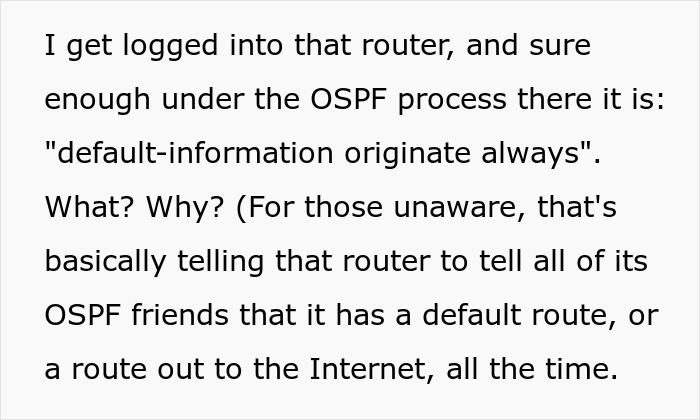
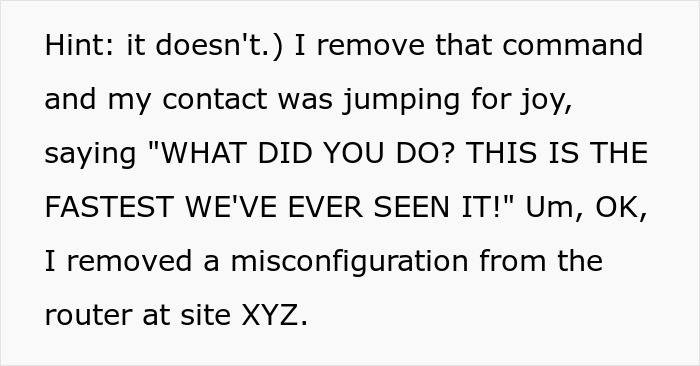
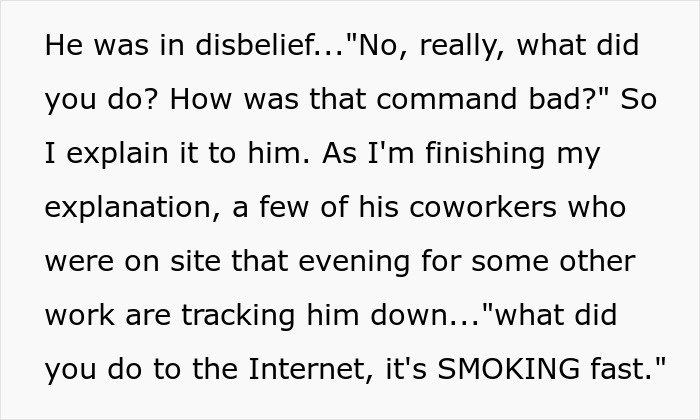
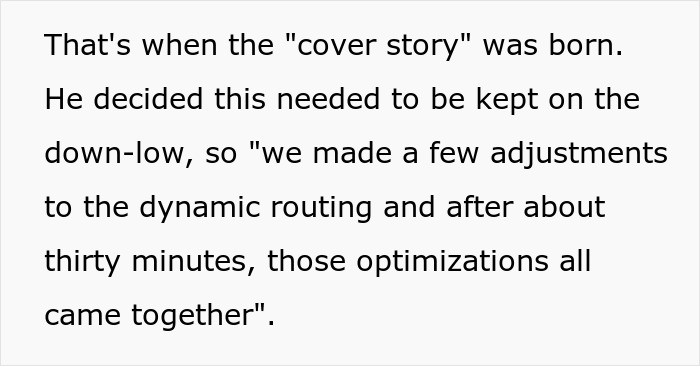
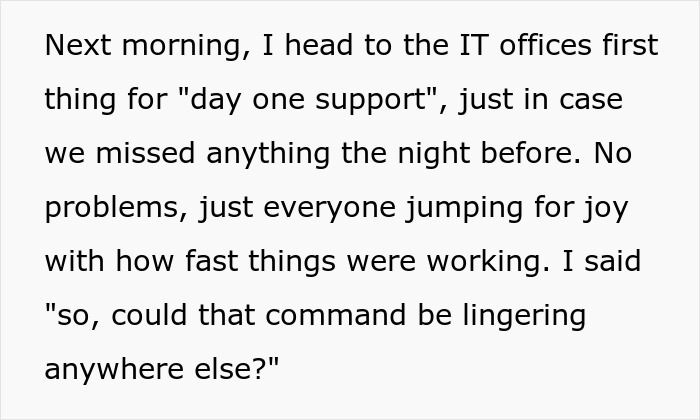
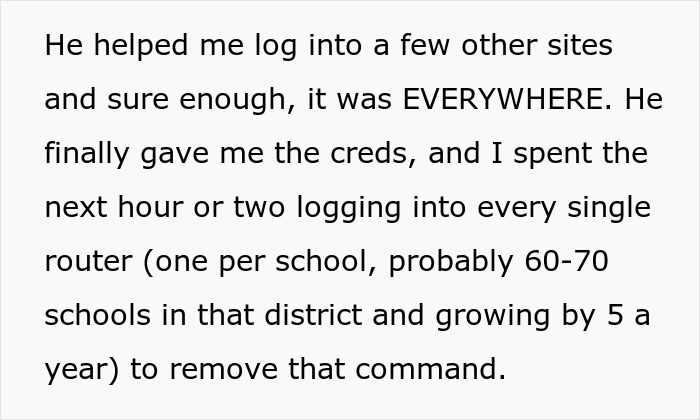
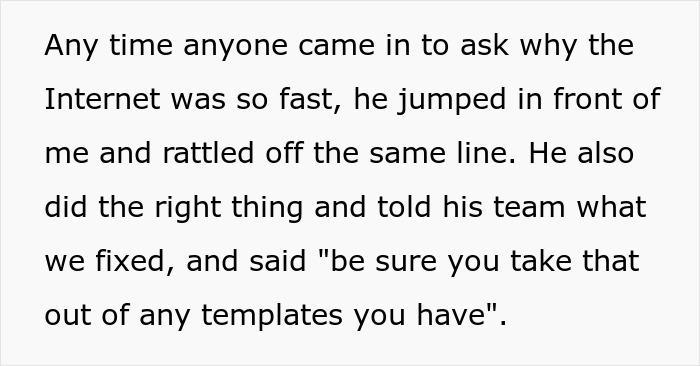
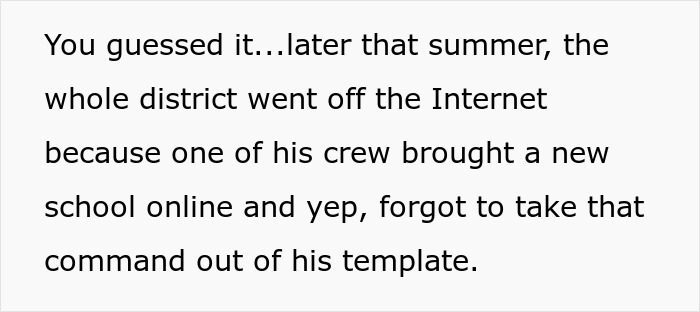
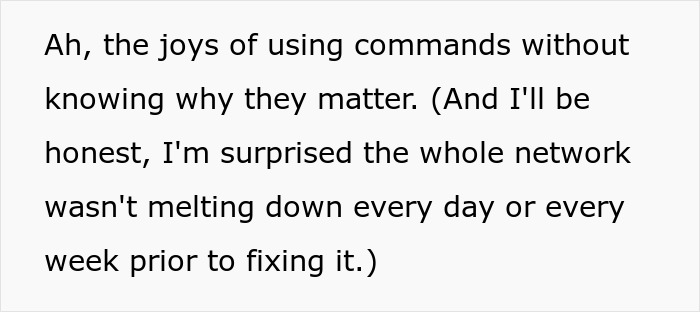
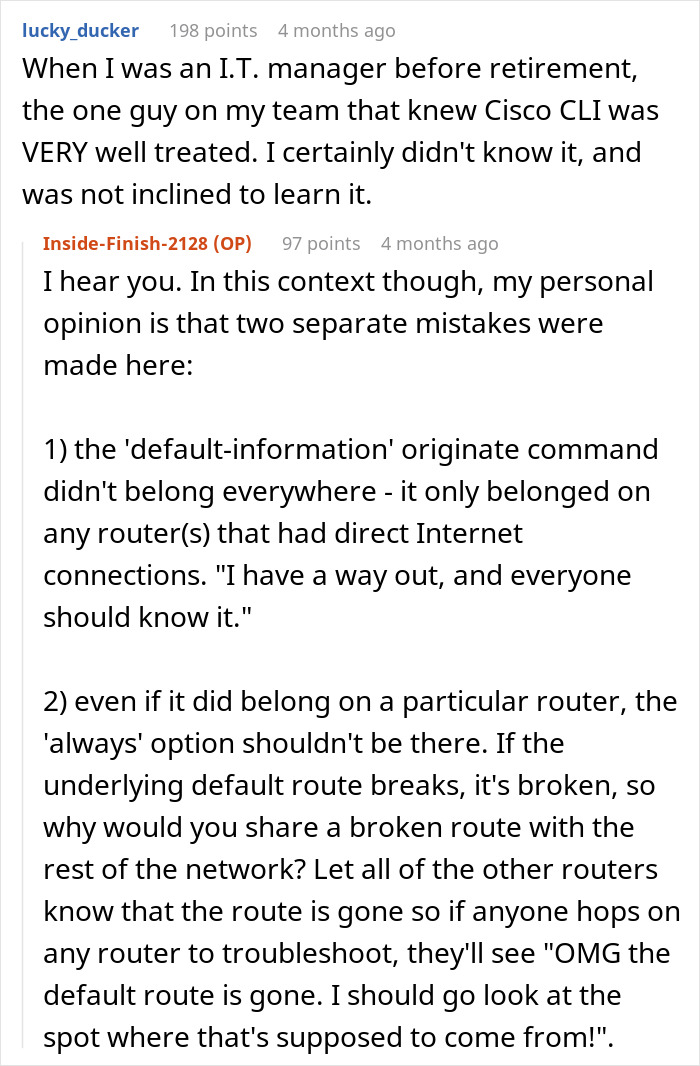
If all the initialisms and terms like “Catalyst 6509” had your head spinning while reading this, you’re not alone. I admit I’m no tech fundi either, and it wouldn’t be wise to pretend I understood everything the poster was talking about. But there’s an interesting broader lesson to take from this story nonetheless.
Put plainly, the problem the poster uncovered was that one router was effectively telling the others, “I can get you to the internet,” even though it didn’t actually have a working route out. What’s worse, the “always” option meant it kept making that claim regardless. As a result, internet traffic could end up going through the wrong router, helping to explain the district’s sluggish connection—and why, after the poster removed the command, the internet suddenly became super fast.
The initial fix seemed simple enough, but the bigger problem was that this wasn’t an isolated mistake. As the poster discovered the next day, the same command had been added to routers across the district, apparently through the use of templates, and this meant they had to log into the routers of 60 to 70 schools to remove it.
What this illustrates for all of us is how a small detail or technical error can snowball into a much bigger organizational problem. It’s one thing to make an isolated mistake, but it’s a whole other story when that mistake is built into a template. Because, really, how often do any of us stop to question those? Most of us use them without thinking, so if there’s a flaw, it’s reproduced over and over again—sometimes even at a much larger scale.
But that isn’t to say that templates are all bad. Far from it. They can save time and help ensure that the same work is done consistently. The poster was working for a Cisco reseller at the time, so it’s perhaps fitting that Cisco recommends using solution templates “to define standard modular network solutions.” However, the company also notes that these should be defined, tested, and documented “to help ensure that similar deployments can be carried out in exactly the same way.” This, it explains, “ensures that future changes occur at a much lower risk level to the organization since behavior of the solution is well defined.”
In other words, standardization isn’t the problem. A process can make the right thing easier to do, but it can also make the wrong thing remarkably easy to repeat.
This leads us to another interesting detail in the story. Once the poster had removed the problematic command, the internet connection suddenly improved dramatically. This, predictably, had everyone “jumping for joy.” But rather than explain what had actually happened, the poster’s contact was pretty quick to jump in with his own version of events, rattling off the same plausible-sounding but decidedly vague line each time: “we made a few adjustments to the dynamic routing and after about thirty minutes, those optimizations all came together.” So much for giving credit where it’s due, hey?
To be fair, the contact did tell his team what the real problem had been and instructed them to remove the command from any templates they had. And you’d think that would’ve been the end of it. But, like any good tech tale, there was one more twist: Later that summer, someone brought a new school online and forgot to remove the command from the template. The result? The entire district went offline.
And, really, the poster probably summed it up best: “Ah, the joys of using commands without knowing why they matter.” Because sometimes the important part of following a procedure isn’t knowing what to do, but understanding—or at the very least remembering—why you’re doing it.


By entering your email and clicking Subscribe, you're agreeing to let us send you customized marketing messages about us and our advertising partners. You are also agreeing to our Privacy Policy.
Thank you! You've successfully subscribed to newsletters!

I'm decently tech-savvy and the terms and abbreviations in this one were mostly beyond me. Maybe BP authors should realize that the majority of their readership aren't IT professionals and should choose less jargon-packed posts to steal from Reddit...

I think this reads: Internet was way slow. IT guy discovered a code that didn't belong and removed it. Internet is now wicked fast. IT guy makes a report. Higher up Muckety-muck, who probably added the code in the first place, took credit for the repair and told IT guy to not tell anyone. IT guy then said to make sure that code is not in your set up instructions for if you upgrade or get new equipment. Muckety-muck fails to remove code. School system gets new toys and crashes again because of bad code still being in set up instructions.
I'm decently tech-savvy and the terms and abbreviations in this one were mostly beyond me. Maybe BP authors should realize that the majority of their readership aren't IT professionals and should choose less jargon-packed posts to steal from Reddit...
I think this reads: Internet was way slow. IT guy discovered a code that didn't belong and removed it. Internet is now wicked fast. IT guy makes a report. Higher up Muckety-muck, who probably added the code in the first place, took credit for the repair and told IT guy to not tell anyone. IT guy then said to make sure that code is not in your set up instructions for if you upgrade or get new equipment. Muckety-muck fails to remove code. School system gets new toys and crashes again because of bad code still being in set up instructions.







































 No fees, cancel anytime













35
3