Get Premium
Dark mode theme is available exclusively for premium users. Learn more about the benefits of subscribing.
No fees, cancel anytime.

 Dark Mode Ad-Free Browsing Unlimited Content
 Ad-Free Browsing Unlimited Content Dark Mode
Join 1.2 million Panda readers who get the best art, memes, and fun stories every week!

Screen time often carries a negative connotation. When we talk about scrolling on our phones, many may immediately think of wasting hours on social media and consuming brain-rot content.
That isn’t always the case, though. Sometimes, spending time online can enrich our knowledge, like scrolling through the Genuine History Instagram page. It features easily digestible facts that can either send you down a rabbit hole of research or give you something to think about for the coming days.
Here are some of the posts from the page that caught our attention. Be sure to upvote those that intrigued you the most!
This post may include affiliate links.
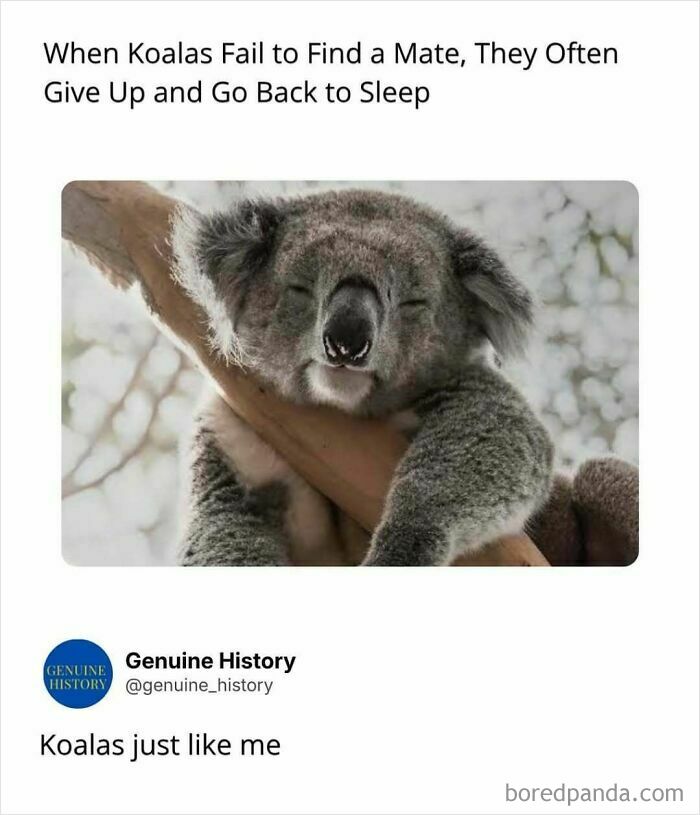
When koalas fail to find a mate, they often give up and go back to sleep. Sounds lazy, but it’s actually survival strategy. Koalas sleep 18-22 hours a day because eucalyptus leaves have almost zero nutrition and tons of toxins. Their bodies run on energy-saver mode. Chasing romance burns calories they literally can’t afford. So if dating fails, napping wins. Nature’s version of “if it’s not working, rest and try later.” Psychology calls this “energy conservation” - organisms prioritize what keeps them alive over what feels good short-term. Koalas are low-effort legends because their diet forced them to be. They’re not unmotivated, they’re optimized. That face says it all: zero stress, zero FOMO, 100% sleep. Be honest, are you team koala and just go back to sleep when things get tough?
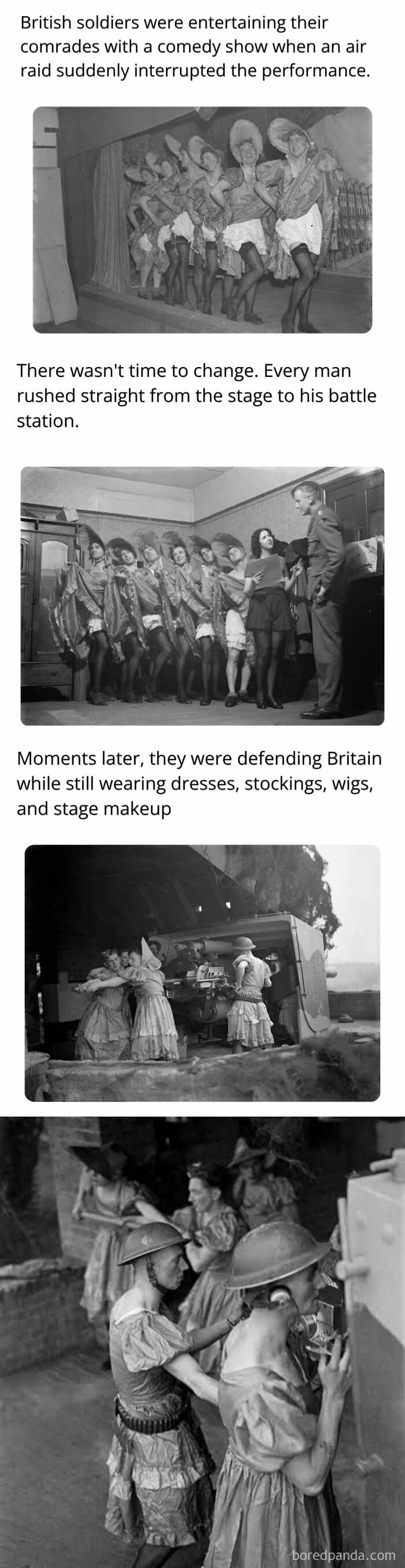
World War II. Britain. British soldiers put on a comedy show to lift morale. Wigs, dresses, big hats. Full drag revue for their comrades on stage. Mid-performance, air raid sirens went off. The show stopped. Everyone ran for cover. Because even in the middle of a war, people still needed to laugh. And even when they were laughing, the war wasn’t done with them yet. History really does have the best plot twists.
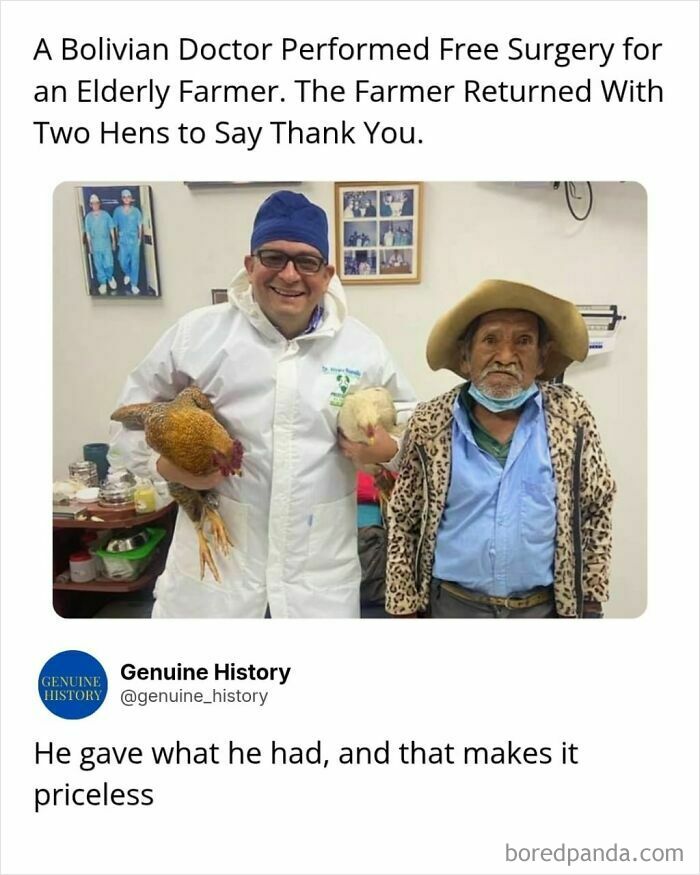
_This is how gratitude looks when you have no money._ The photo shows a Bolivian doctor in a white coat holding two hens. Next to him stands an elderly farmer in a wide-brimmed hat and leopard print jacket. Text above: A Bolivian Doctor Performed Free Surgery for an Elderly Farmer. The Farmer Returned With Two Hens to Say Thank You. Caption below: He gave what he had, and that makes it priceless. This is reciprocity, not transaction. Anthropologists call it “generalized exchange.” In rural communities where cash is scarce, value is measured in labor, food, and livestock. A hen is eggs. Eggs are food. Food is time. When the farmer brings two hens, he is returning the most valuable capital he owns. The gesture is older than clinics. For centuries, healers were paid in grain, cloth, or animals. The doctor refused payment for surgery. The farmer refused to leave the debt unpaid. Both sides chose honor over accounting. Money can be counted. Meaning cannot. _What’s the most meaningful thank you’ve ever received?_

This explains the surgeon's new jingle "If you got a chicken, I be a stichin'".
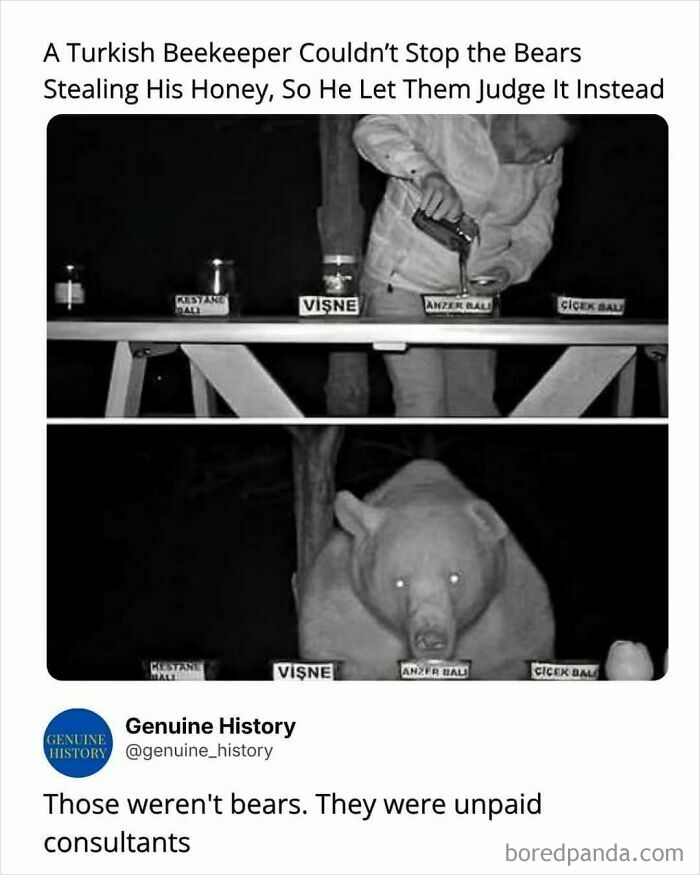
This happened in Turkey around 2019. Beekeeper Ibrahim Sedef was losing honey to bears every night. Fences, noise, guard dogs - nothing worked. So he tried something different. He set out 4 jars labeled with different honey types: Anzer, Chestnut, Flower, and Sour Cherry. Then he let trail cameras record what happened. The bears showed up and went straight for the Anzer honey. It’s a rare, high-altitude honey from the Black Sea mountains that sells for over $100/kg. They ignored the rest. Sedef joked that bears became his “taste testers.” Problem solved? Not quite. But it proved something: bears have preferences. Even in the wild, quality wins. He couldn’t stop them, so he made them his unpaid consultants. Sometimes the smartest move isn’t fighting nature - it’s letting it judge the product.
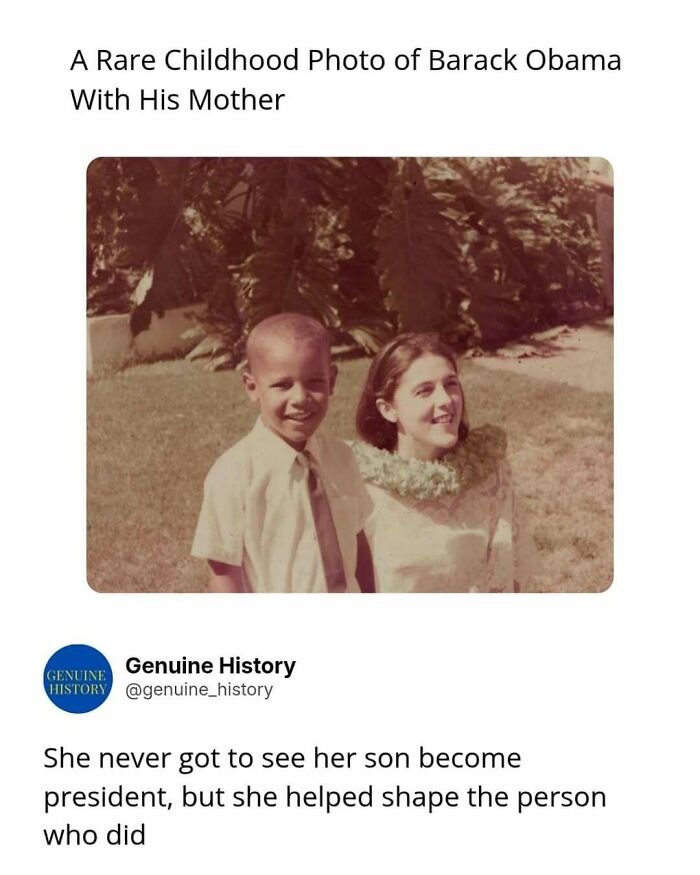
*The woman behind the president.* This is a childhood photo of Barack Obama with his mother, Stanley Ann Dunham, likely taken in Hawaii in the mid-1960s. He’s wearing a shirt and tie. She’s wearing a lei. The caption notes she died before his presidency. Ann Dunham was an anthropologist who raised Obama between Hawaii and Indonesia. She died of ovarian cancer in 1995, 13 years before he was elected in 2008. Dunham shaped Obama’s worldview more than any political advisor. She was white, from Kansas. His father was Black, from Kenya. She insisted he understand both sides of his heritage. In Indonesia, she woke him at 4 a.m. for English lessons before school. She taught him about civil rights, took him to see documentaries on the American South, and gave him books on Mahatma Gandhi and Martin Luther King Jr. Obama called her “the dominant figure in my formative years.” Psychologists call this “intergenerational transmission.” A parent’s values, especially around empathy and justice, get coded early. Her fieldwork in rural Indonesia also exposed him to poverty and global inequality firsthand. Presidents are made in living rooms before they’re made in ballot boxes. *Who taught you the belief you still won’t compromise on?*
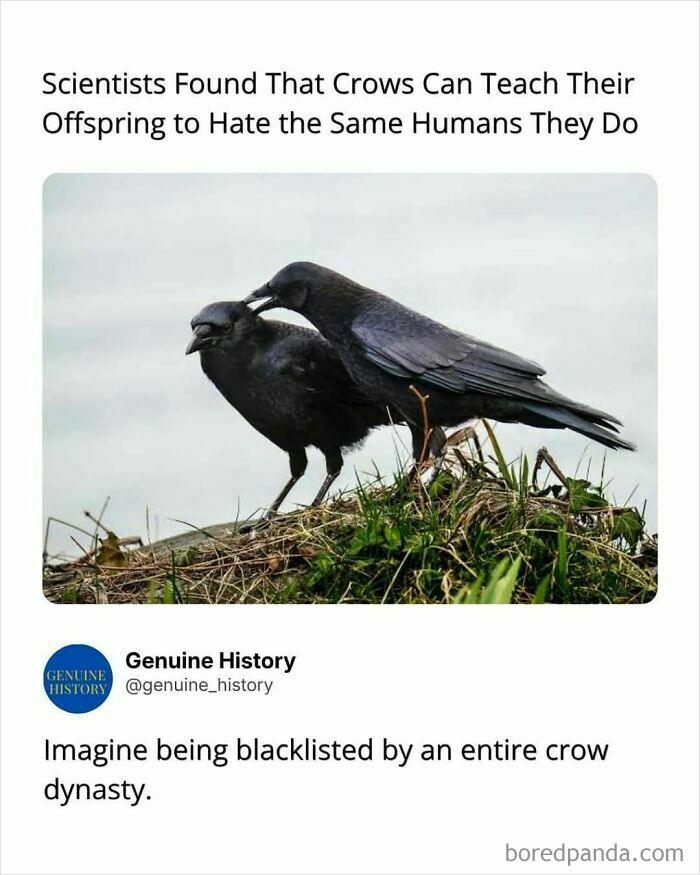
Crows don’t forget a face. University of Washington researchers proved it in 2008. They wore “dangerous” masks while trapping and tagging crows. Years later, crows that were never caught would still dive-b**b and scold anyone wearing that mask. Even crows born after the study learned to hate the same face. They teach it to their kids. It’s called “cultural transmission.” Basically crow gossip that lasts for generations. One bad interaction can blacklist you with the whole local m****r of crows. They remember, they warn each other, and they pass it down. So if a crow ever seems personally offended by you… it might be family tradition. Be nice to crows. Their grudge game is stronger than yours. Ever had a crow side-eye you for no reason?

Thank you for the "University of Washington" reference. In Australia, northern NSW, crows successfully avoided the traps that had caught their ancestors 70+ years earlier. The later researchers report that the crows hung around the nearby trees laughing at them as they put the traps out.
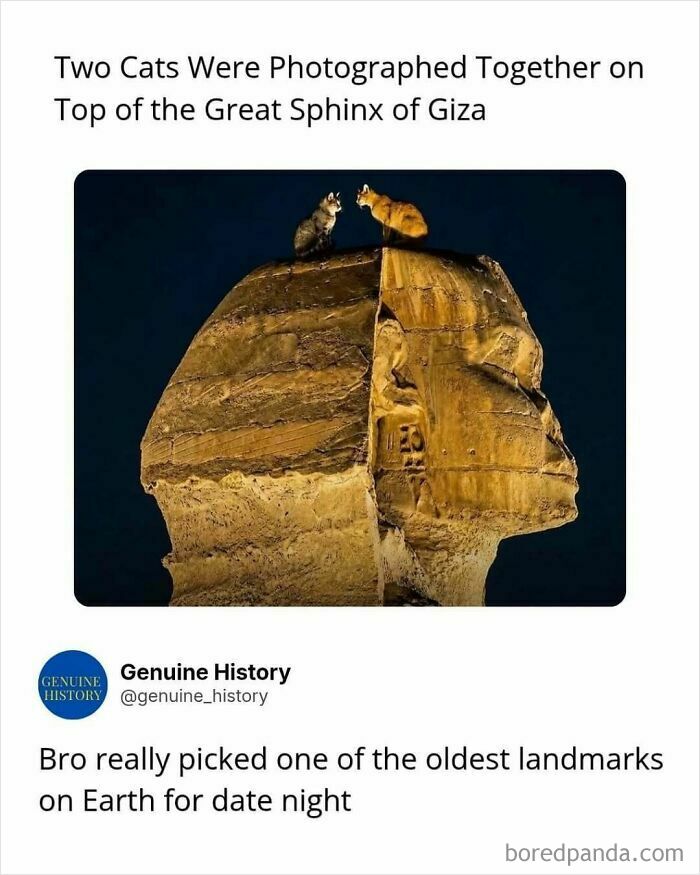
Giza, Egypt. Night. The Great Sphinx. Carved around 2500 BCE. Stone. Wind. Thousands of years. Two cats. On top of the head. Looking out over the desert. Pharaohs built it to last forever. The cats picked it for a perch. Bro really picked one of the oldest landmarks on Earth for date night

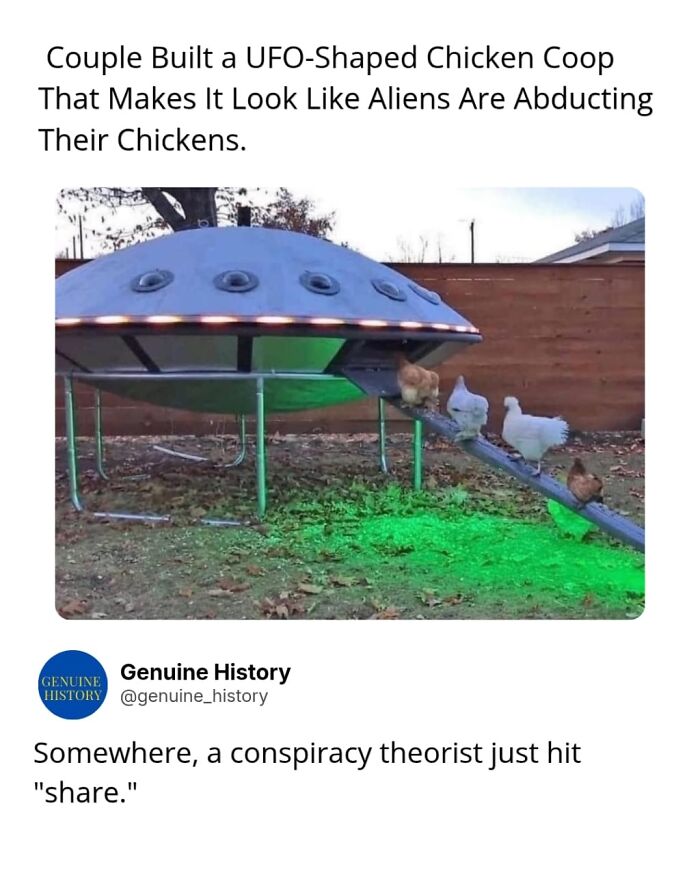
This is how a joke becomes yard art. The image shows a silver UFO-shaped coop on legs, with a ramp lit by green LEDs. Chickens walk up the ramp into the saucer as if being beamed aboard. Text above: Couple Built a UFO-Shaped Chicken Coop That Makes It Look Like Aliens Are Abducting Their Chickens. Caption: Somewhere, a conspiracy theorist just hit “share.” The coop went viral in 2021 after a Utah couple posted it on Reddit. They built it from a satellite dish, LED strips, and trampoline legs. Functionally it’s a standard elevated coop with ventilation and predator protection. Visually it’s an optical illusion. The green light mimics the “tractor beam” from 1950s sci-fi. Psychology calls this playful incongruity. Our brains love mismatched concepts that still make sense. Chickens and UFOs don’t belong together, which is exactly why the image sticks. It’s called the humor of violated expectations. You expect a red barn, you get Area 51. The internet runs on chickens boarding spacecraft. What ordinary thing would you redesign just to make people do a double take?

Probably cheaper, and definitely safer than replacing the trampoline mat .
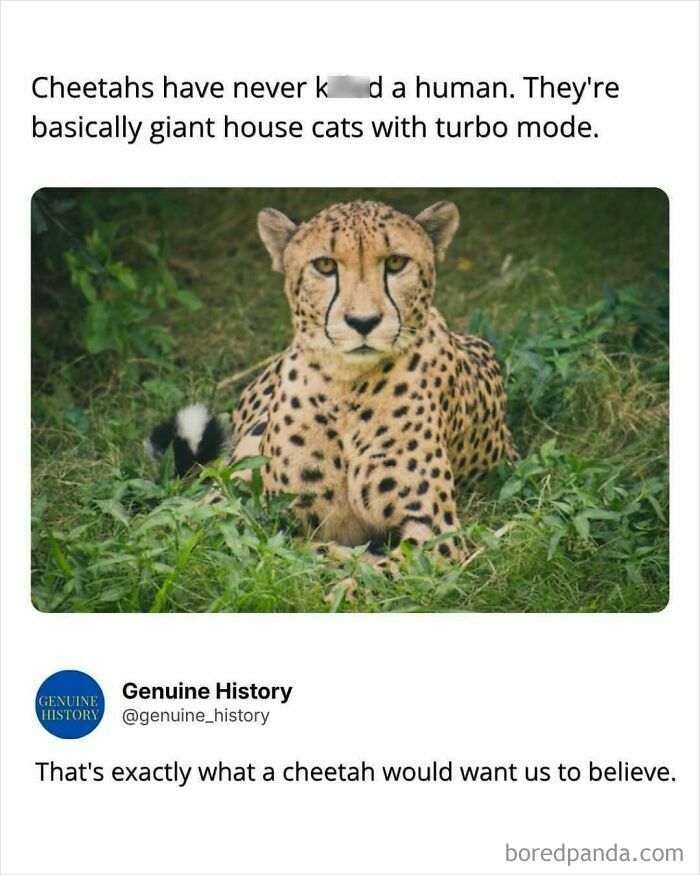
Cheetahs are the fastest land animals on Earth, capable of reaching speeds of up to 70 mph (113 km/h). Unlike lions, tigers, and leopards, they are generally shy and avoid confrontations with humans. Their lightweight build, small jaws, and preference for fleeing danger over fighting make them one of the least aggressive big cats toward people. That said, cheetahs are still powerful wild predators and should never be approached in the wild. Their calm reputation comes from their behavior, not a lack of strength. So while the internet loves calling them “house cats with turbo mode,” it’s probably best to admire these speedsters from a safe distance.

Apparently, lions are similar. Tigers are the ones that will eat humans.
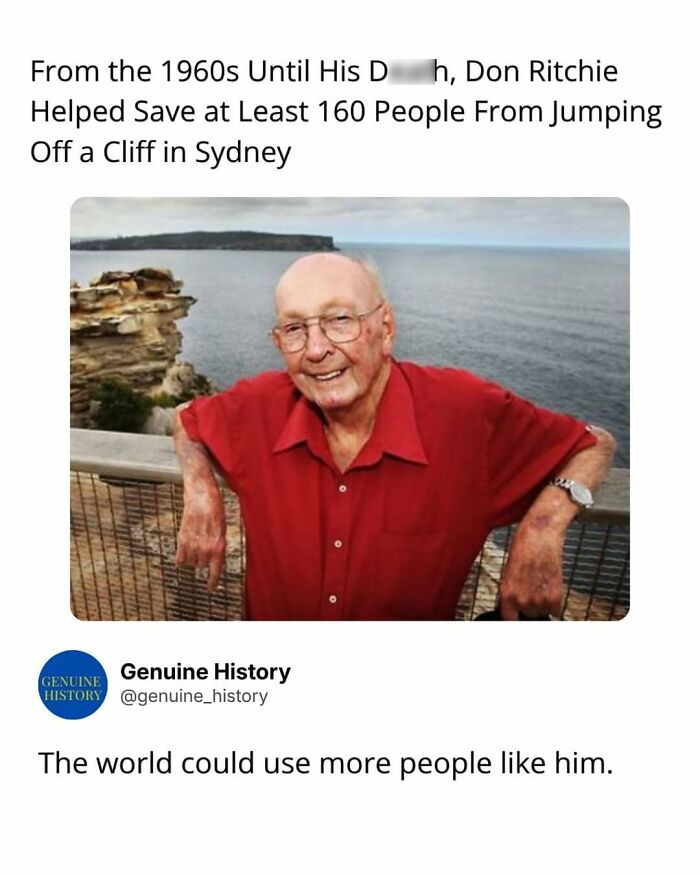
Sydney. The Gap. 1960s to 2012. Don Ritchie. Retired insurance salesman. Lived across from a cliff. For decades he watched the edge. He talked to strangers. Offered tea. Invited them inside. At least 160 people walked away because he was there. The world could use more people like him
I lived in Sydney during the first two decades of this. "The Gap" is a high sea cliff infamous for suicides. Before that time, it was infamous for shipwrecks, as incoming tall ships and steamships mistook The Gap for the entrance to Sydney Harbour.
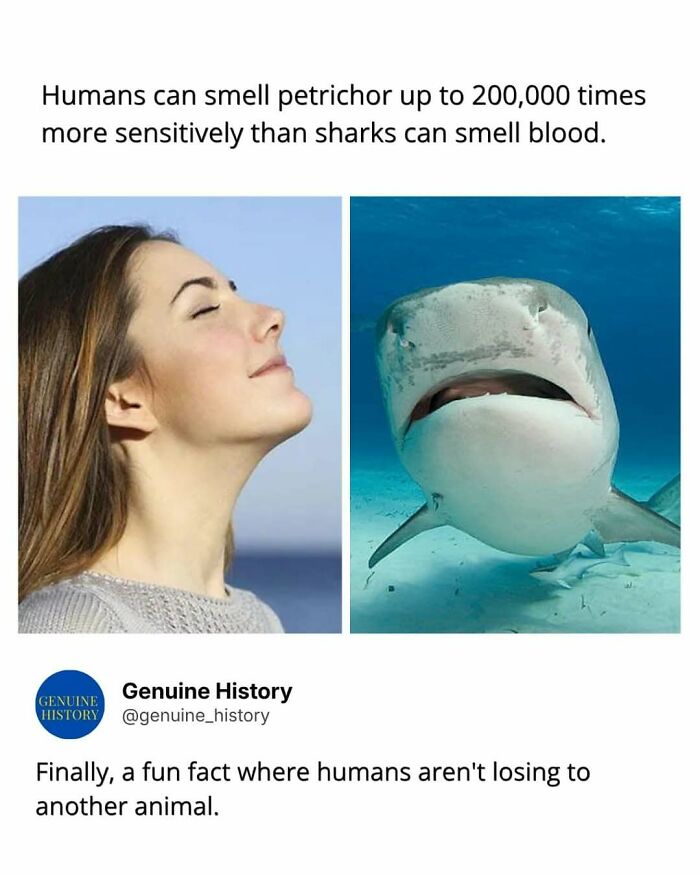
Petrichor is that clean, earthy smell you get right after rain hits dry soil. It’s caused by a compound called geosmin, released by soil bacteria when raindrops crash into the ground. Humans can detect geosmin in concentrations as low as 5 parts per trillion. That’s why the first drop of rain on hot pavement hits you instantly. Sharks are famous for detecting blood, but even their insane sense of smell needs about 1 part per million. So yeah, our noses win this round by a ridiculous margin. Why do we have this superpower? Evolution probably wired it into us. For early humans, smelling rain meant fresh water was coming. It signaled food, survival, and a break from drought. Sharks needed blood-sensing to hunt. We needed rain-sensing to live. So next time you tilt your head back and breathe in after a storm, you’re literally using a 200,000x upgrade that kept our ancestors alive.
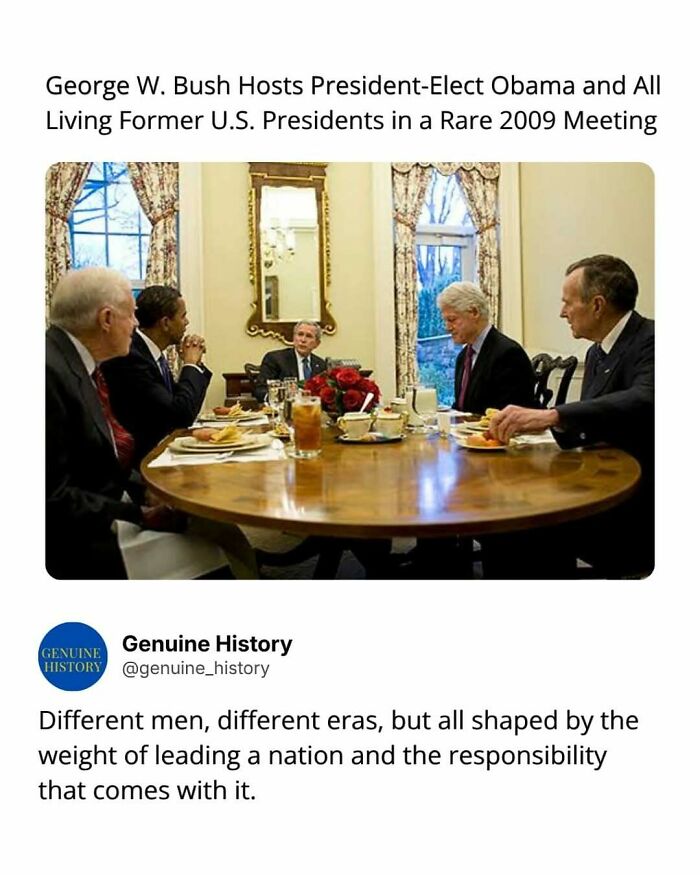
This is January 7, 2009. George W. Bush hosted a private lunch at the White House with every living former U.S. president: Jimmy Carter, George H.W. Bush, Bill Clinton, plus President-Elect Barack Obama. It was just weeks before Obama’s inauguration. No press, no staffers in the room. Just five men who’d all carried the same job and the same weight. Bush called it a “moment of unity” - not political, just human. Think about what that table represented. Carter took office after Vietnam and Watergate. Bush 41 ended the Cold War. Clinton faced impeachment. Bush 43 led after 9/11. Obama was about to take the country through the 2008 financial crash. Different parties, different eras, different crises. But for one lunch, the politics dropped. They were just the only people in the world who truly understood what the desk in the Oval Office does to you. That’s rare. That’s history.
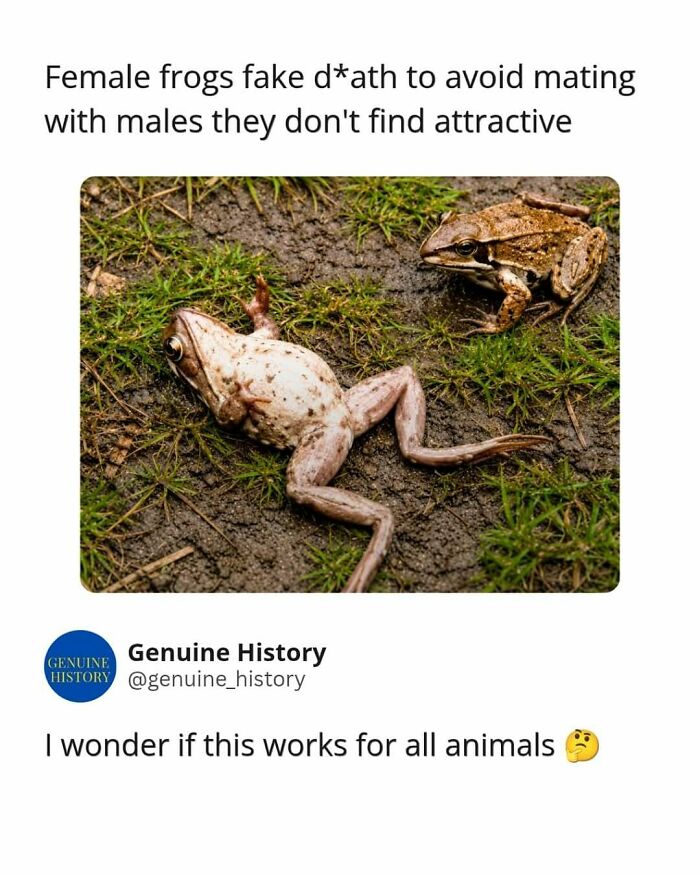
Sometimes, doing absolutely nothing is the best escape plan. 🐸 During the breeding season, female European common frogs can find themselves surrounded by multiple males at once. These chaotic mating groups can become so crowded that females risk being injured or even drowning. To escape, some females use a remarkable defense called tonic immobility. They go completely limp, stretch out their limbs, and appear dead. Others make deep vibrating calls that mimic male frogs or twist their bodies to break free. Researchers found that these survival strategies helped nearly half of trapped females escape, challenging the long-held belief that female frogs are simply passive during mating season.
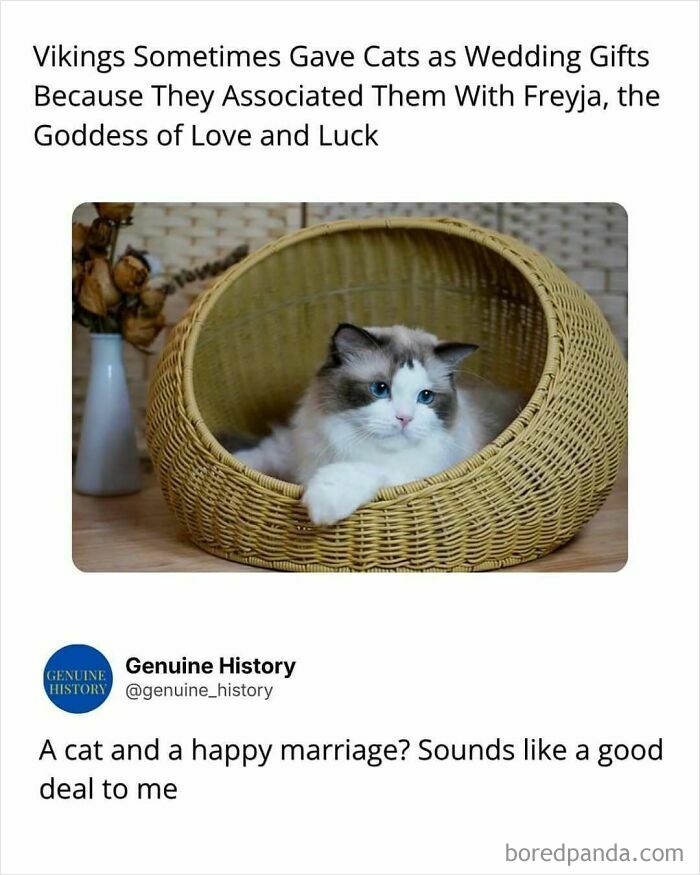
Vikings didn’t give toasters at weddings. They gave cats. Norse mythology tied cats to Freyja, goddess of love, beauty, and fertility. She rode a chariot pulled by two massive cats. So gifting a cat to a newly married couple wasn’t random - it was a blessing for luck and a strong marriage. Plus, cats kept ships and homes free of rats and mice. Practical and sacred. That’s Viking efficiency. A cat and a happy marriage? Sounds like a good deal to me. Psychology backs it up too. Studies show petting cats lowers cortisol, your stress hormone. So the Vikings accidentally nailed relationship advice 1000 years early: start a marriage with less stress, more purring. Freyja would approve. Love and luck, wrapped in fur. If you got a cat as a wedding gift, what would you name it?


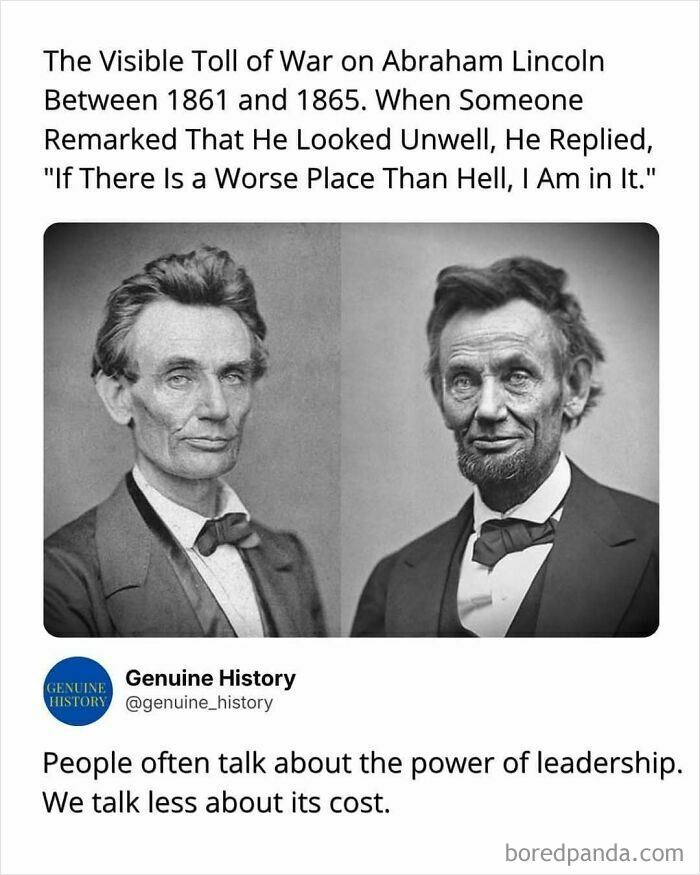
No US president EVER was 100%, absolutely good, but at least he was one of the rare exceptions who did more good than bad in life.
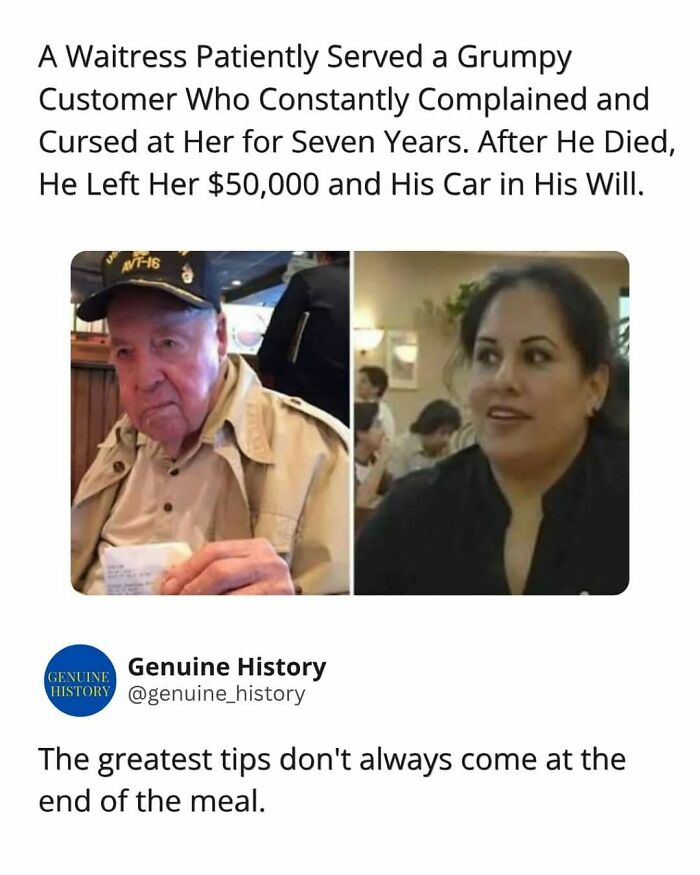
For nearly seven years, Luby’s waitress Melina Salazar served Walter “Buck” Swords, an 89-year-old World War II veteran known for being demanding. He insisted his food be served piping hot, frequently complained, and sometimes even cursed at her. Despite his reputation, Salazar continued treating him with patience, kindness, and respect every time he came in. When Swords passed away in 2007, Salazar received a surprise she never expected. Just before Christmas, she learned that Buck had included her in his will, leaving her $50,000 and his 2000 Buick. She later said she had no idea he had been planning such a generous gesture, proving that even the smallest acts of kindness can leave a lasting impression.

Did her boss at the restaurant try to make her split it with the other staff?
Imagine for a moment you were born in the year 1900. At age 14, World War I breaks out, ending at age 18, leaving 22 million dead. Shortly after, a global pandemic appears, the Spanish flu, which k**ls 50 million people. And you survive, at 20 years. At 29, you survive the global economic crisis that starts with the fall of the New York Stock Exchange, causing inflation, unemployment and hunger. At age 33, N*zism comes to power. When you’re 39, World War II starts and ends when you’re 45, with 60 million dead. At 52 years old, the Korean War begins. When you’re 64 years old, the Vietnam War starts and ends when you’re 75. Then a person born in 1985 thinks that their grandparents have no idea how difficult life is, not knowing that they have survived several wars and disasters.

NGL at first glance I thought this was a wall of washing machines
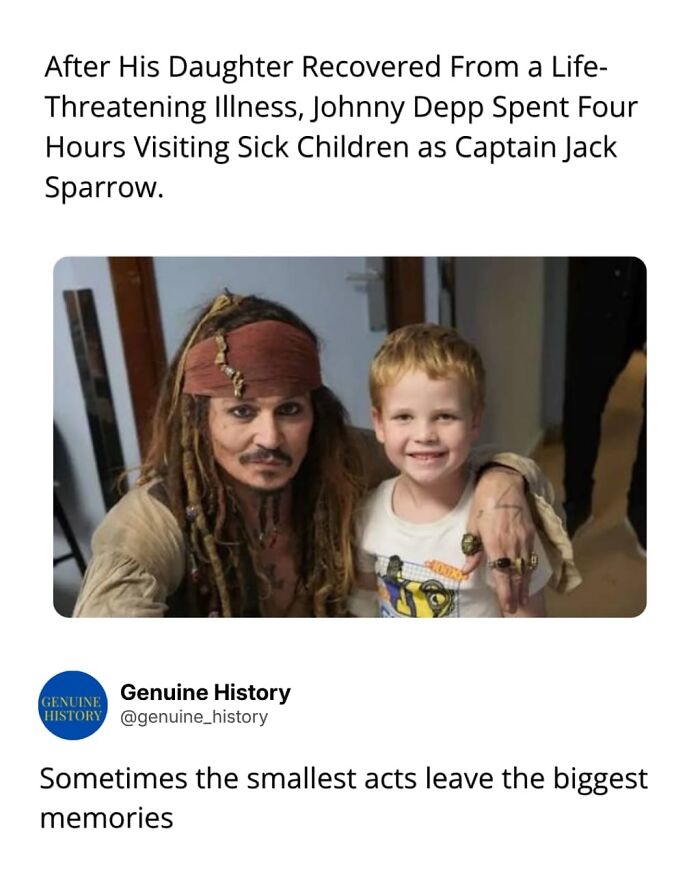
This is how gratitude wears a costume. The image shows Johnny Depp in full Captain Jack Sparrow gear with his arm around a smiling boy in a hospital. Text above: After His Daughter Recovered From a Life-Threatening Illness, Johnny Depp Spent Four Hours Visiting Sick Children as Captain Jack Sparrow. Caption: Sometimes the smallest acts leave the biggest memories. In 2007, Depp’s daughter Lily-Rose was hospitalized for nine days with E. coli poisoning that caused kidney failure. After she recovered, he started making surprise visits to children’s hospitals. The photo here is from a 2015 stop at BC Children’s Hospital in Vancouver. He stayed in character for four hours, telling stories and posing for photos. No press release. Staff weren’t told in advance. Psychology calls this reciprocity under stress. When people survive a crisis, many feel a debt to “pay forward” the relief they felt. For kids, meeting a character from a film isn’t just fun. Research on therapeutic play shows that fantasy can reduce anxiety and pain perception during treatment. Sparrow isn’t a doctor, but for a few hours he outranked fear. Some heroes don’t need a ship. Just a hallway. What’s one promise you made after a hard moment passed?
Reminds me of how Mark Hamill spend hours with a terminally ill boy who could no longer distinguish reality and fiction, completely in-character as Luke Skywalker
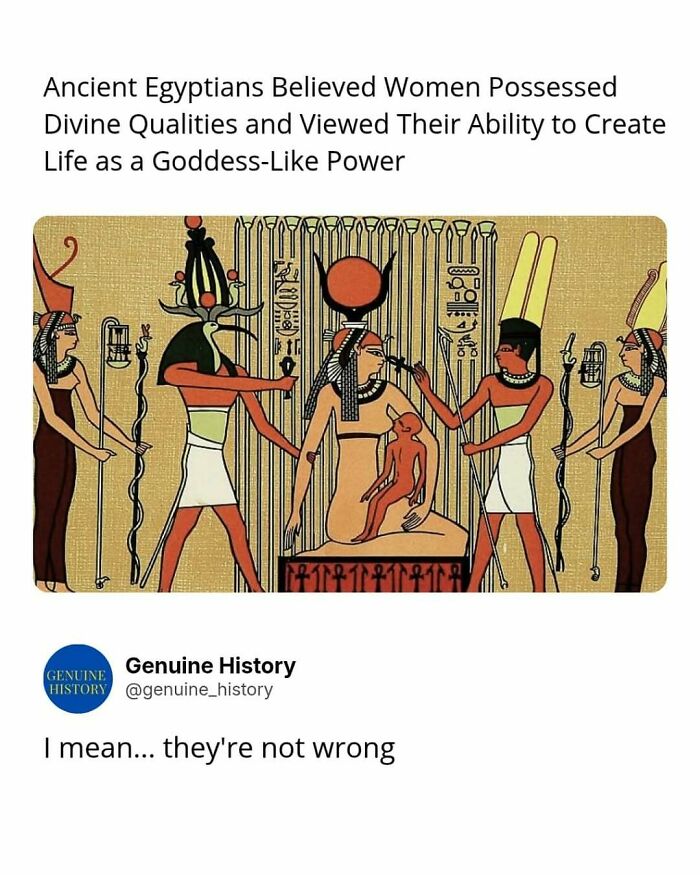
Ancient Egyptians believed women possessed divine qualities and viewed their ability to create life as a goddess-like power. In art and myth, goddesses like Hathor, Isis, and Mut weren’t side characters - they were central to creation, protection, and rebirth. Women could own property, initiate divorce, and serve as priests. The power to give birth was literally framed as magic. I mean... they’re not wrong. There’s a reason so many cultures tied motherhood to divinity. From a psychology angle, humans have always tried to explain the “impossible” through the sacred. Creating life from nothing visible? That feels godlike. The Egyptians just said it out loud and carved it in stone. What modern “power” do you think future cultures will call divine?
Now THAT'S a culture with good and correct views about women. I'd just add that women are divine even if they can't / decide not to create life.
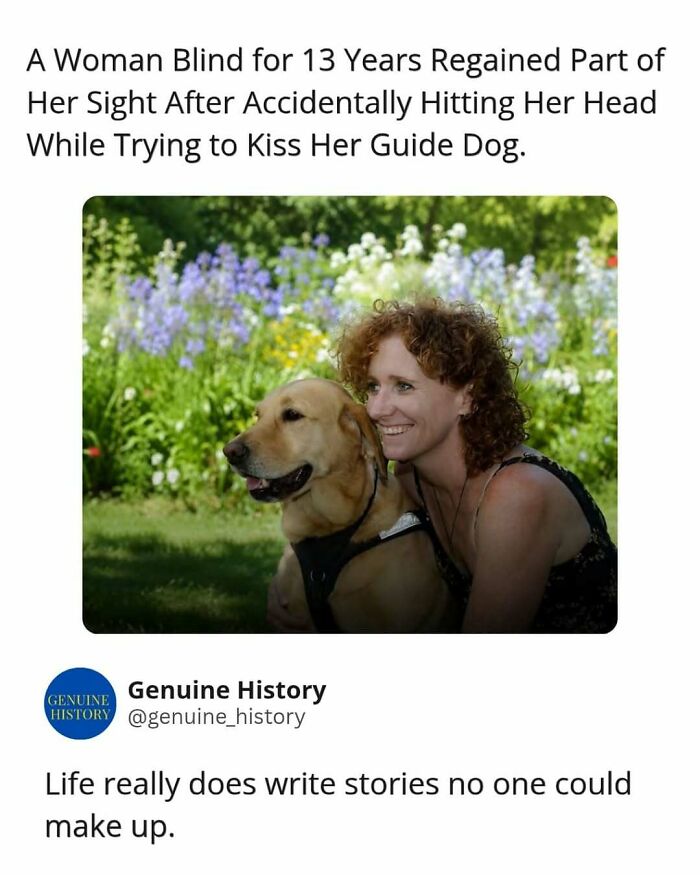
She wasn’t trying to change her life. She was just saying goodnight to her guide dog. ❤️ After losing her sight at just 11 years old because of a brain tumor pressing on her optic nerve, Lisa Reid spent the next 13 years blind. Then, in November 2000, while bending down to kiss her guide dog, Ami, goodnight, she lost her balance and hit her head on a coffee table. She went to bed thinking nothing of it. The next morning, she woke up able to see again. Doctors believed the impact may have shifted the tumor or relieved enough pressure on her optic nerve to restore part of her vision. Although she remained legally blind, regaining any sight after 13 years was considered extraordinary.
Reminds me of that heavily schizophrenic guy who got so desperate he shㅤot himself in the head; inadvertently, he destroyed the part of his brain responsible for the illness and made full recovery.
_This is how you make a lizard a guitarist._ The photo shows a Boyd’s Forest Dragon perched on a branch. It’s holding a long green leaf against its body with one claw on the leaf, one foot propped up. Caption: Just a lizard, a guitar, and not a single worry in the world. It’s pareidolia in motion. The human brain is tuned to find familiar patterns, especially people and objects, in random shapes. Two limbs and a leaf become a musician. A mossy log becomes a stage. We do this because social recognition was a survival skill. Seeing a face or a pose in nature meant safety, story, and connection. Boyd’s Forest Dragons are native to Queensland’s rainforests. They bask, hunt insects, and freeze still to blend in. The photographer just waited for the exact angle where biology looked like art. No training. No guitar. Just timing. Nature doesn’t perform. We frame it until it does. What animal photo looked human to you?
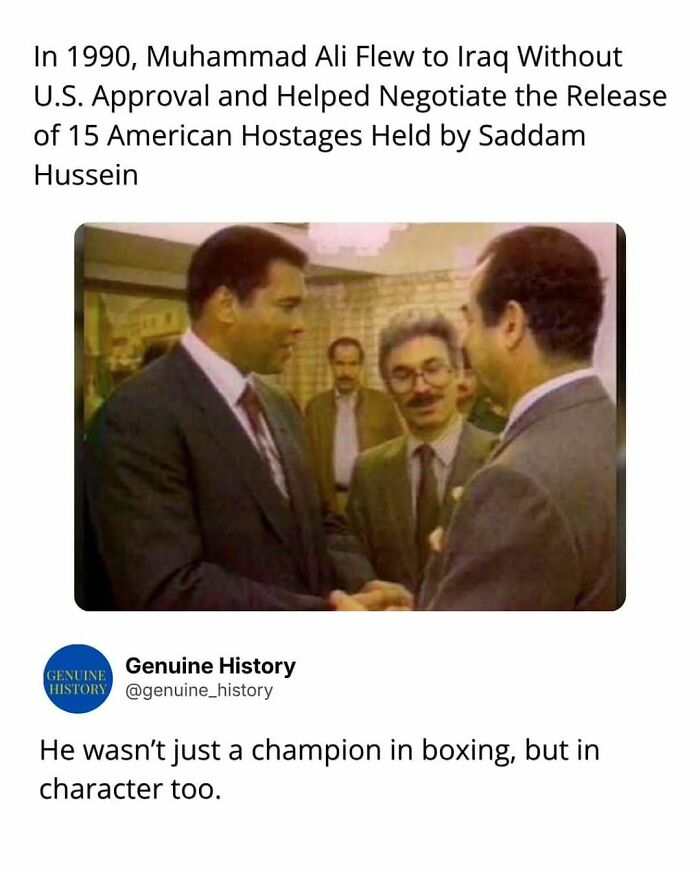
In 1990, Muhammad Ali flew to Baghdad without U.S. approval and negotiated the release of 15 American hostages held by Saddam Hussein. Right before the Gulf War, he used his global fame, his Muslim faith, and pure nerve to walk into hostile territory. No diplomats, no army - just Ali talking man to man. He left with the hostages and a handshake from Saddam. The champ didn’t just fight in the ring. He fought for lives. He wasn’t just a champion in boxing, but in character too. Psychology calls this “moral courage” - acting when it’s risky and no one ordered you to. Ali risked his own safety because he believed “service to others is the rent you pay for your room here on earth.” Power isn’t just punches. Sometimes it’s using your name to open doors diplomacy couldn’t. Do you think athletes today still have that kind of influence to change things off the field?
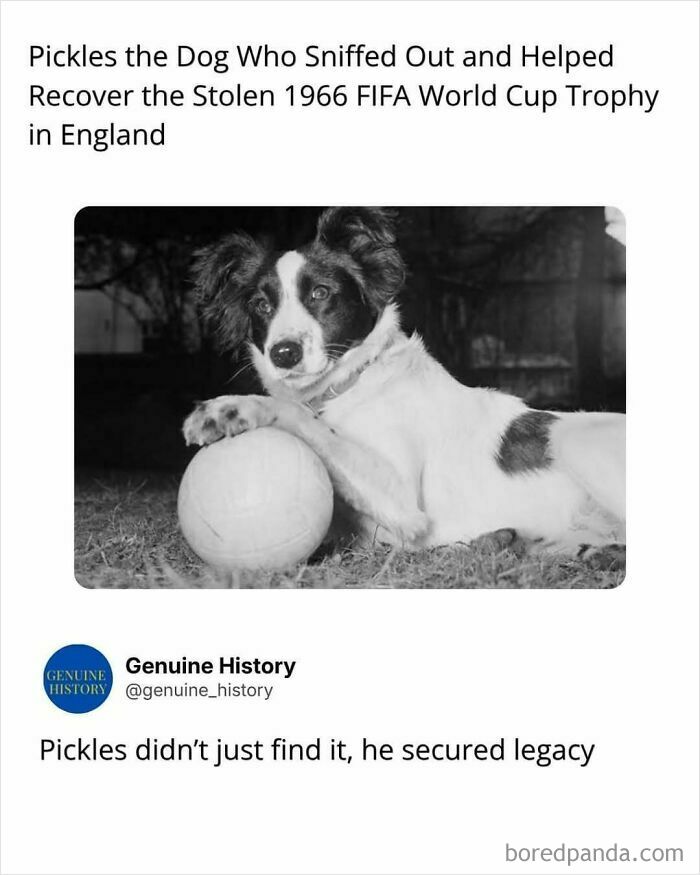
In 1966, the Jules Rimet Trophy was stolen from an exhibition in London, 4 months before the World Cup. Police searched everywhere. Then Pickles, a mixed-breed dog, sniffed it out wrapped in newspaper under a hedge while on a walk with his owner David Corbett. The trophy was recovered, England went on to win, and Pickles became a national hero overnight. He even got a medal and appeared on TV. Pickles didn’t just find it, he secured legacy. Psychology calls this “accidental heroism” - ordinary beings stepping up at the exact moment history needs them. No training, no badge, just a dog doing dog things. Yet without him, football history changes completely. Proof that impact isn’t about status. It’s about showing up when it matters. What’s the wildest “right place, right time” story you’ve heard about an animal?
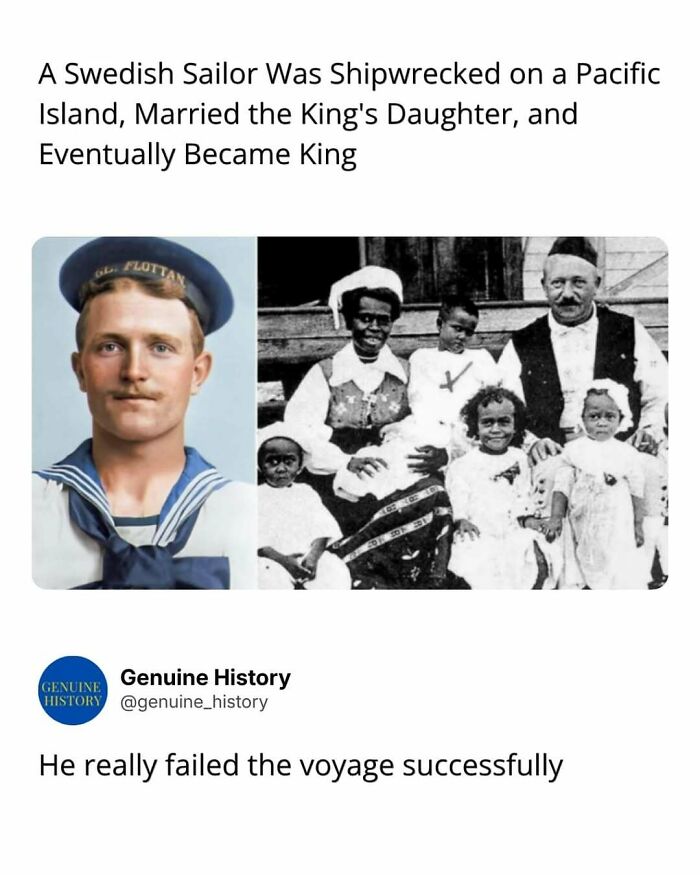
Pacific Ocean. Early 1900s. Carl Emil Pettersson. A Swedish sailor. His ship wrecked near the island of Tabar in Papua New Guinea. He stayed. Married Singdo, the king’s daughter. Learned the island. Built a business trading copra. When the king died, the islanders chose Pettersson to rule. From shipwreck to king. He really failed the voyage successfully
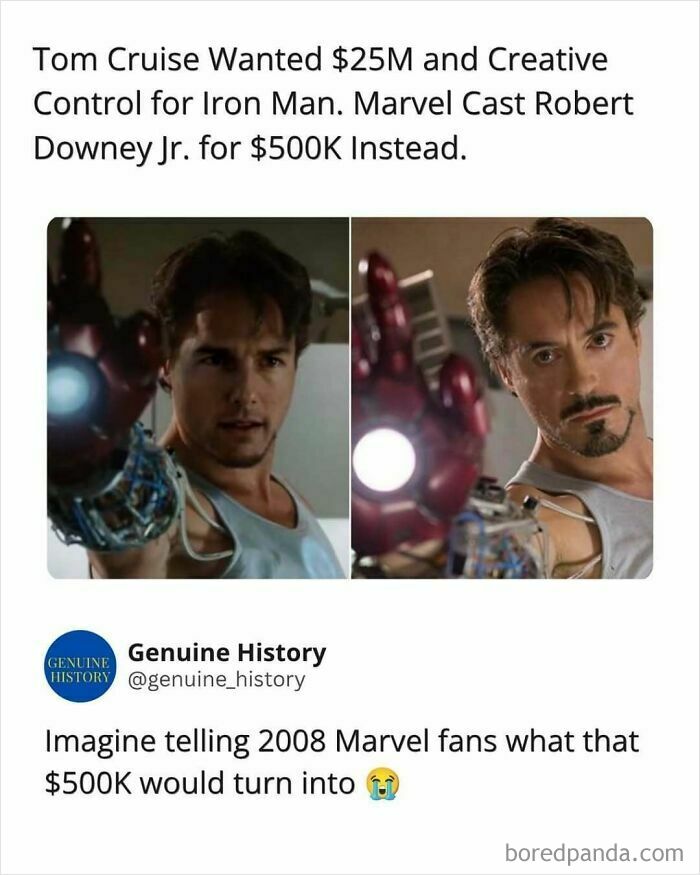
Before Robert Downey Jr. became Iron Man, Tom Cruise was one of the biggest names linked to the role. Cruise was attached to various Iron Man discussions while the character’s film rights were still outside Marvel Studios, but the project never moved forward. By the time Marvel regained the rights and began developing Iron Man (2008), director Jon Favreau championed Robert Downey Jr. despite concerns about his troubled past. Downey Jr. reportedly received a base salary of around $500,000 for the first film, a relatively modest amount for the lead in a major superhero movie. The gamble paid off. Iron Man became a global success, launched the Marvel Cinematic Universe, and transformed Downey Jr. into one of Hollywood’s highest-paid actors through later films and backend deals. Looking back, it’s difficult to imagine anyone else introducing the MCU as Tony Stark.
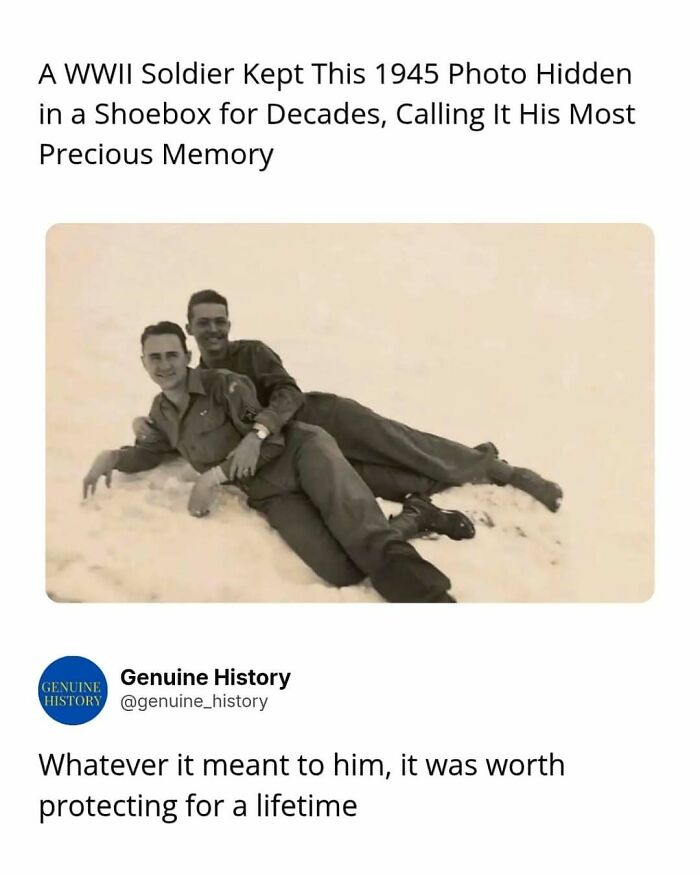
Europe. 1945. Near the end of WWII. Two American soldiers. Lying in the snow. Smiling for a camera. One of them kept this photo hidden in a shoebox for the rest of his life. He called it his most precious memory. We don’t know their full story. Only that it mattered enough to protect, through decades, through silence. Whatever it meant to him, it was worth protecting for a lifetime
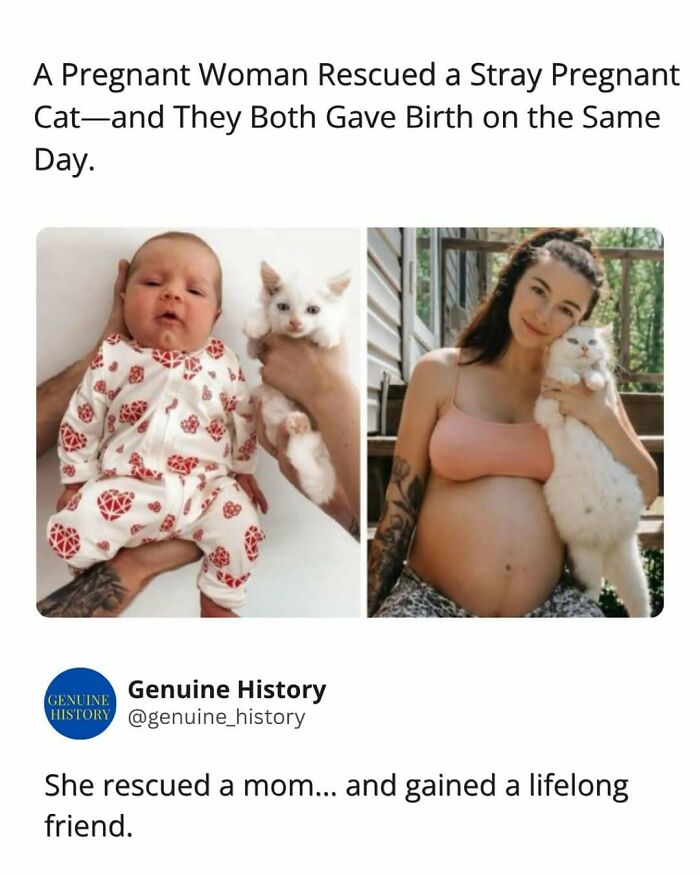
This is what parallel motherhood looks like. The headline is real, but here’s the nuance. In 2022, a pregnant woman in the U.S. took in a stray pregnant cat. Weeks later, they went into labor within hours of each other. Both delivered healthy babies the same day — a human daughter and a litter of kittens. Why it hit so hard: 1. Timing. Human gestation is ∼40 weeks. Cat gestation is ∼9 weeks. The odds of labor syncing are low. 2. Stress response. Animals in safe environments often delay or trigger birth. The cat likely felt secure enough to deliver once inside. 3. Instinct. The woman recognized another vulnerable mom and acted. No rescue org, no paperwork. Just empathy. What happened next: The family kept the mom cat and one kitten. The rest were adopted. The babies grew up side by side — two species, one nursery. This is “biological synchrony.” Shared hormones, shared space, shared purpose. Sometimes rescue is mutual. You save them, they ground you.

My mom and our cat, Marcie, had a hysterectomy on the same day 🙀. Or, my mom and our cat, Marcie, were both spayed on the same day 😹.
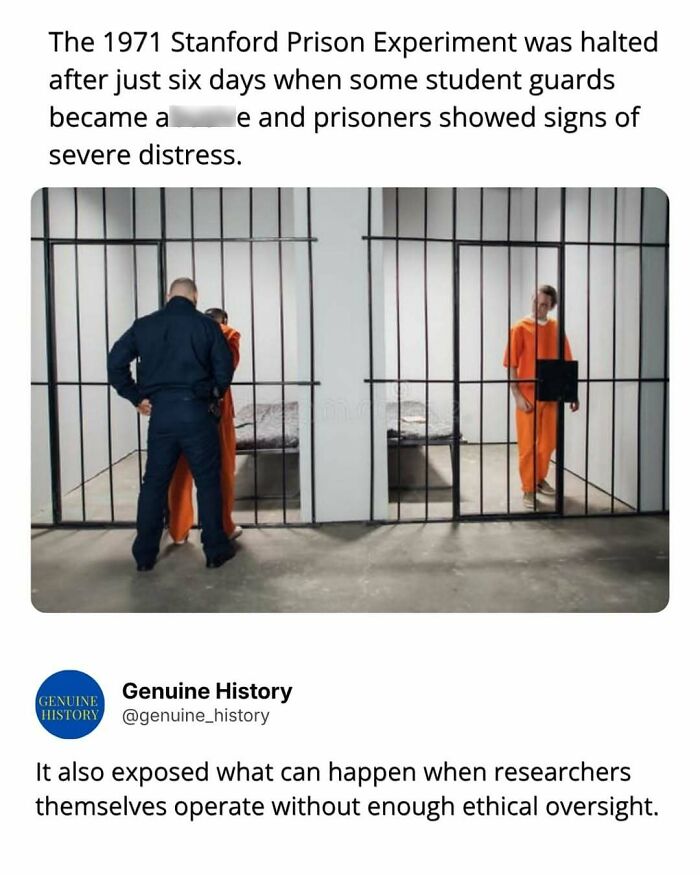
In 1971, psychologist Philip Zimbardo launched the Stanford Prison Experiment to study how people adapt to positions of power and authority. College students were randomly assigned to be either guards or prisoners in a simulated prison, but the situation quickly spiraled out of control. Within days, some guards began displaying ab*sive behavior while several prisoners experienced severe emotional distress. The experiment was originally planned to last two weeks but was terminated after just six days. It became one of the most famous studies in psychology, raising important questions about human behavior, power dynamics, and research ethics. Today, it remains a powerful reminder of how social roles and environments can influence actions in ways many people never expect.

Two questions I've never heard answered: Did anyone talk to the students involved and ask them what, if anything, they would have done differently and did anything they did or that happened to them change their life going forward?
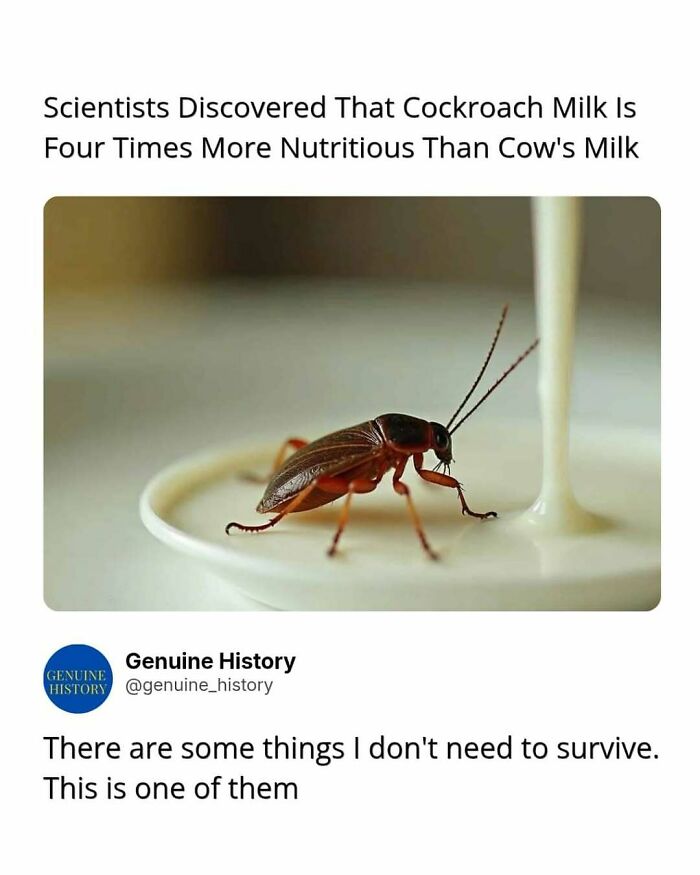
Cockroach milk sounds like a prank, but it’s real science. Researchers studying the Pacific beetle cockroach found it produces protein crystals to feed its babies. Those crystals are packed with protein, fat, and sugar. Lab analysis said it’s about 4x more calorie-dense than cow’s milk by weight. Nature went full overkill on baby nutrition. “There are some things I don’t need to survive. This is one of them” sums up the reaction perfectly. Scientists aren’t telling you to milk roaches. They’re studying the protein structure to maybe create lab-grown versions someday. Because farming insects uses way less land and water than dairy cows. It’s fascinating biology, questionable beverage. Would you try it if it came in a chocolate flavor, or is this a hard pass for you?
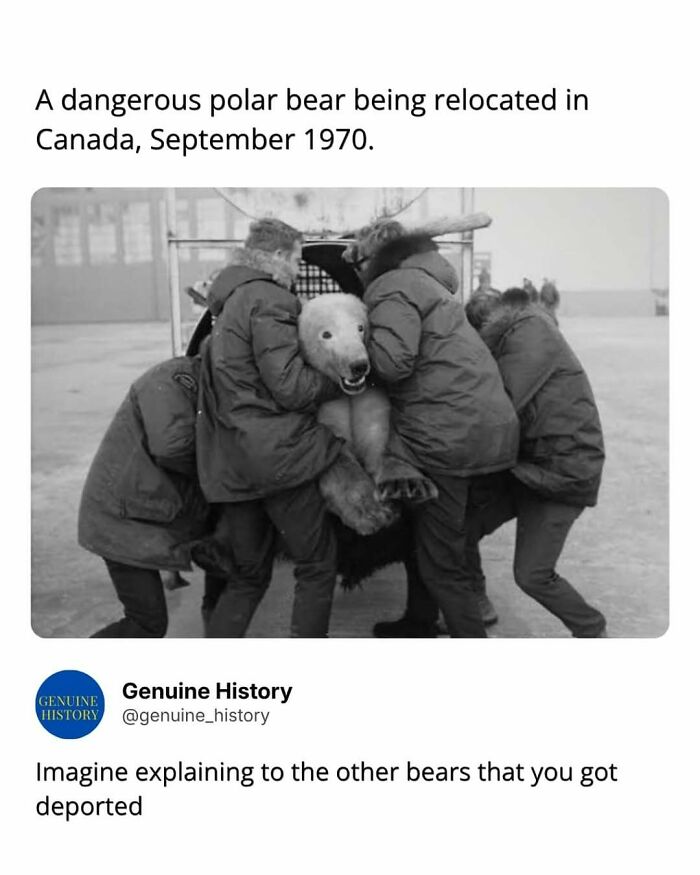
This photo from September 1970 shows wildlife officials in Canada physically carrying a sedated polar bear into a transport crate for relocation. Back then, when polar bears wandered too close to northern communities, the standard response wasn’t tranquilizer darts and helicopters like today. It was raw manpower, heavy parkas, and a lot of risk. The bear was likely deemed a threat after getting into food supplies or showing aggressive behavior, so it had to be moved far away from people to prevent conflict. What’s wild is how much this reflects the gap between human safety and animal behavior in the 1970s. There were no GPS collars, no satellite tracking, no conservation protocols. Just a group of people deciding this bear’s territory wasn’t going to be here anymore. Today we call it wildlife management, but in 1970 it looked like four guys wrestling a 600-pound predator. And yeah, if bears could talk, “I got deported for dumpster diving” would be a tough story to live down.
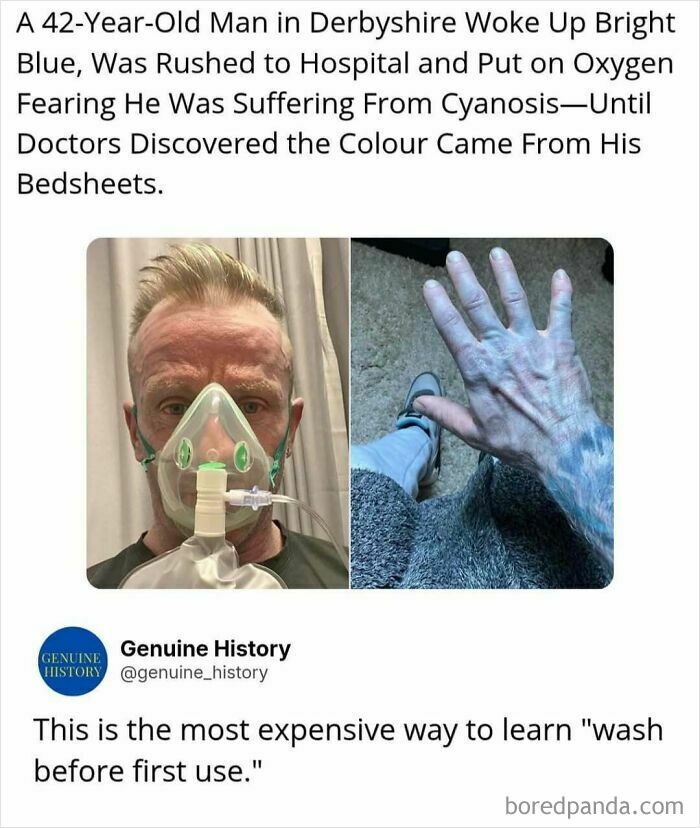
This is how your bedsheets can send you to the ER. The image shows two photos. Left: a man wearing an oxygen mask. Right: his hand stained blue. Text above: A 42-Year-Old Man in Derbyshire Woke Up Bright Blue, Was Rushed to Hospital and Put on Oxygen Fearing He Was Suffering From Cyanosis — Until Doctors Discovered the Colour Came From His Bedsheets. Caption: This is the most expensive way to learn “wash before first use.” Cyanosis is real and serious. It’s a bluish tint to skin caused by low oxygen in the blood. Paramedics are trained to treat it as a critical symptom. So when a patient shows up blue, oxygen goes on first, questions later. In this case, the culprit was dye transfer. New, unwashed fabrics can leach excess pigment, especially with night sweats. The color mimicked a medical emergency. Psychology calls this base rate neglect. We default to the dangerous explanation when stakes are high. Doctors ruled out heart and lung failure before spotting the dye on his skin. Sometimes the diagnosis is just laundry. What harmless thing made you panic for a second?

He's not American, so not "most expensive." Just time consuming and embarrassing.
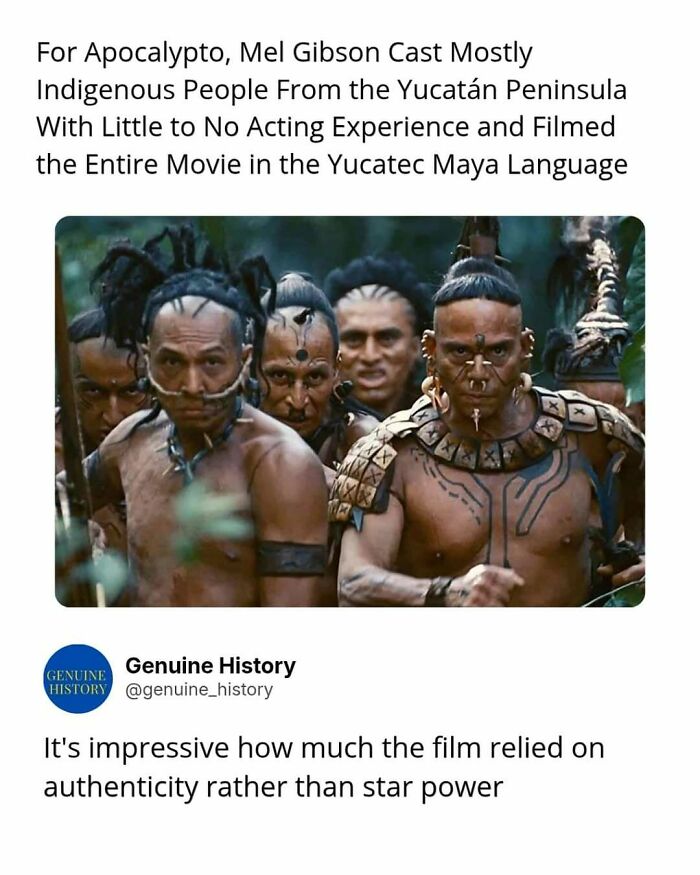
For _Apocalypto_ in 2006, Mel Gibson cast mostly Indigenous people from the Yucatán Peninsula with little to no acting experience. No Hollywood stars. The entire film was shot in Yucatec Maya, a language spoken by only a few hundred thousand people today. Dialogue coaches worked on set to help non-actors deliver lines in a language most viewers wouldn’t understand without subtitles. It’s impressive how much the film relied on authenticity rather than star power. The scars, tattoos, body language - it all feels lived in because many cast members had ancestral ties to Maya culture. Psychology shows we trust “real” faces more than polished performances. Gibson gambled that raw presence would hit harder than fame. Did it work for you, or would you have preferred big-name actors?
Authenticity and plot instead of overpriced actors and special effects? How could that possibly work?
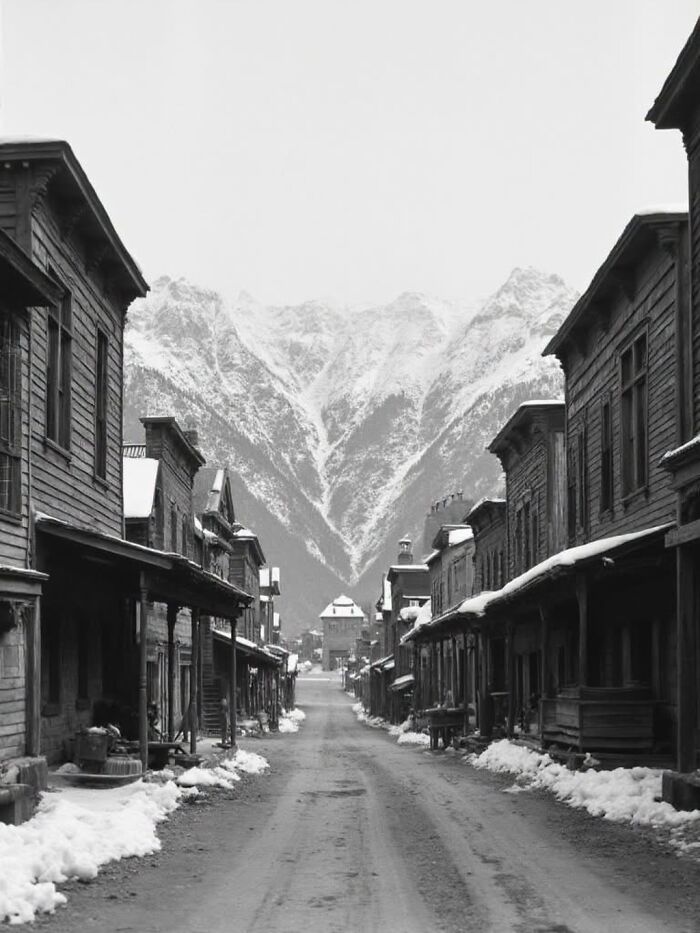
High in the rugged San Juan Mountains of Colorado lies Animas Forks, one of the highest mining towns ever established in the American West. Sitting at an elevation of over 11,000 feet, this striking ghost town offers visitors a rare chance to step back into the era of Colorado’s great mining boom, all while being surrounded by some of the most dramatic mountain scenery in North America. Founded in the 1870s following the discovery of valuable minerals in the region, Animas Forks quickly grew into a thriving mining community, drawing prospectors, entrepreneurs, and families hoping to build a future in the high country. Over time, however, harsh winters, isolation, and the eventual decline of mining forced residents to abandon the town, leaving behind the well-preserved remnants that stand today as a powerful reminder of ambition, hardship, and life on the edge of survival.
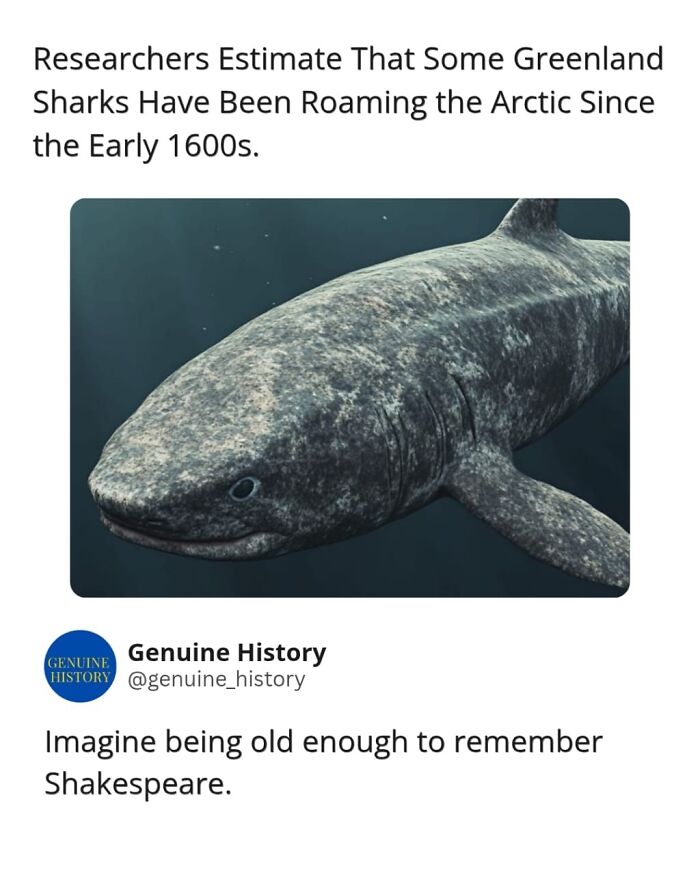
This is what a 400-year-old memory looks like. The headline is real, but here’s the nuance. In 2016, researchers radiocarbon-dated Greenland shark eye lenses and found one female was ∼392 years old, give or take 120 years. That puts her birth between 1501 and 1744. The early 1600s is right in the middle. She could have been alive when Shakespeare wrote _Macbeth_. Why they live so long: 1. Cold and slow. Arctic water is -1°C. Their metabolism crawls at 1 cm growth per year. 2. Deep pressure. They live 2000m down. Less oxidative stress = slower aging. 3. Late maturity. They don’t breed until ∼150 years old. Evolution favors the patient. Why we know: Shark eyes form before birth and the lens center never changes. Scientists used nuclear b**b carbon-14 as a time stamp to that outlive us.* If you lived 400 years, what would you want to see change?
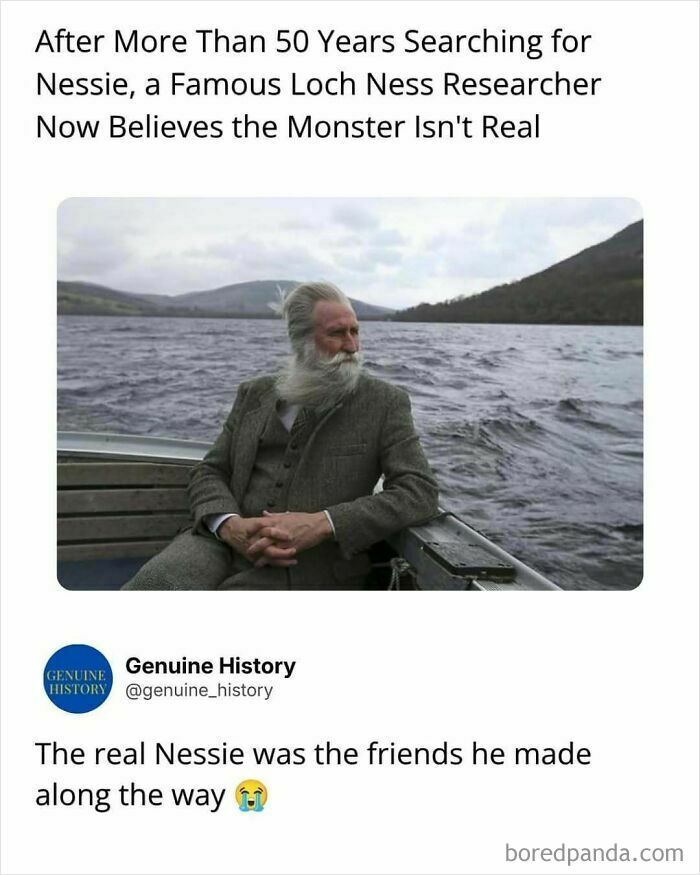
Loch Ness. Steve Feltham has been here since 1991. Over 50 years scanning the water for Nessie. Cameras, sonar, decades of watching. He quit his job, moved to the loch, and made the search his life. In 2023 he said it plainly: he no longer believes the monster is real. No evidence. No sighting. Just water. The real Nessie was the friends he made along the way 😭
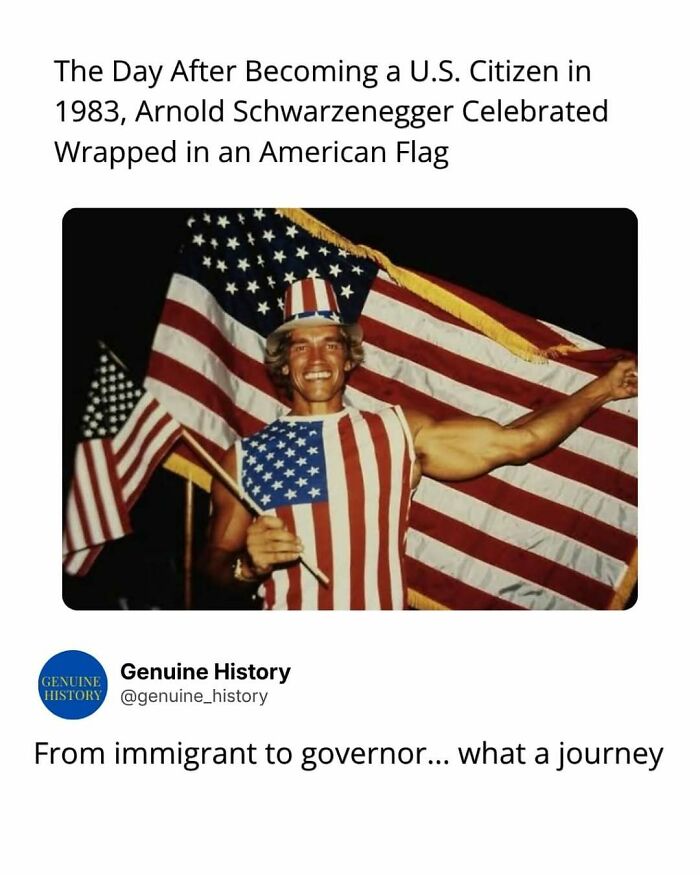
United States. 1983. The day after becoming a U.S. citizen, Arnold Schwarzenegger celebrated. Stars and stripes. Flag vest. Uncle Sam hat. Another flag in his hand. Big grin. He arrived from Austria with almost nothing. Years later he’d become Governor of California. From immigrant to governor... what a journey
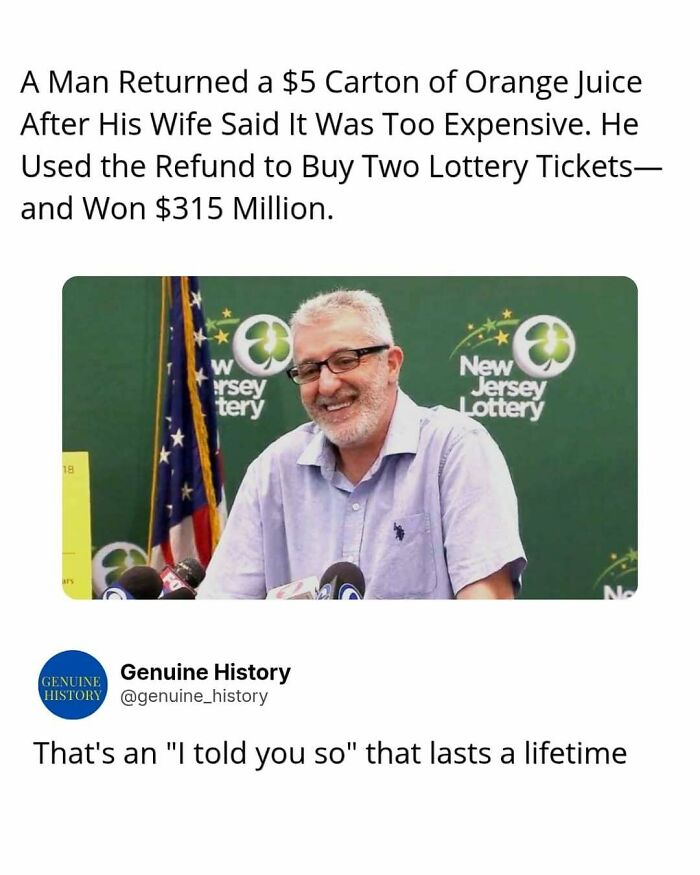
This is how frugality accidentally buys a fortune. The image shows a man smiling at a New Jersey Lottery press conference, with an American flag behind him. Text above: A Man Returned a $5 Carton of Orange Juice After His Wife Said It Was Too Expensive. He Used the Refund to Buy Two Lottery Tickets — and Won $315 Million. Caption: That’s an “I told you so” that lasts a lifetime The story is from 2018. A New Jersey man returned the juice, bought two Mega Millions tickets with the $5, and one hit the jackpot. The odds of winning Mega Millions are about 1 in 302.6 million. Returning groceries doesn’t change probability. But it changes exposure. You can’t win if you don’t play. Psychology calls this outcome bias. We judge decisions by results, not logic. Returning a $5 item was rational. Buying lottery tickets isn’t an investment strategy. Yet the win rewrites the whole chain as destiny. Luck needs a ticket. But the ticket needs a reason to exist. What small decision changed your life more than it should have?
I would have bought two cartons afterwards to show my wealth (and make a bad joke towards my wife)
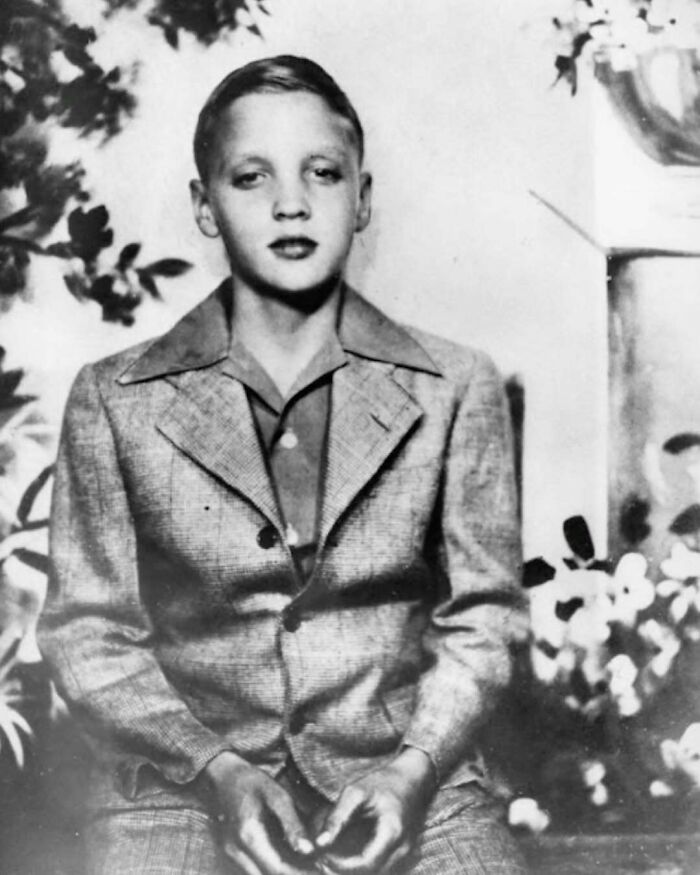
This photo shows a 13-year-old Elvis Presley in 1948, years before he would become the “King of Rock and Roll.” Born in Tupelo, Mississippi, during the Great Depression, Elvis grew up in a humble two-room house with a family that often struggled financially. His childhood was shaped by hardship, faith, and music, especially the gospel songs he heard in church and the country and blues sounds that surrounded him in the American South. One of the most famous stories from his youth involves his first guitar. When Elvis was 11 years old, his mother, Gladys, reportedly bought him a guitar instead of the bicycle or rifle he had hoped for. That simple $12.95 purchase would ultimately change music history. Looking at this photo today, it’s remarkable to think that this quiet teenager from a poor Mississippi family would grow up to become one of the most influential entertainers the world has ever seen.
*Ethiopia. The Danakil Depression. Nightfall.* It looks like blue lava. It isn’t. It’s sulfur. Underground heat pushes sulfur gases up through cracks in the volcano. When they hit the air, they ignite. The flame burns electric blue. So you get rivers of fire that don’t look like fire at all. Just glowing blue liquid snaking across black rock. It’s one of the hottest, lowest, most toxic places on Earth. Sulfur fumes. 50°C heat. No plants. No rain. *It’s stunning... and one of the last places you’d want to breathe.*
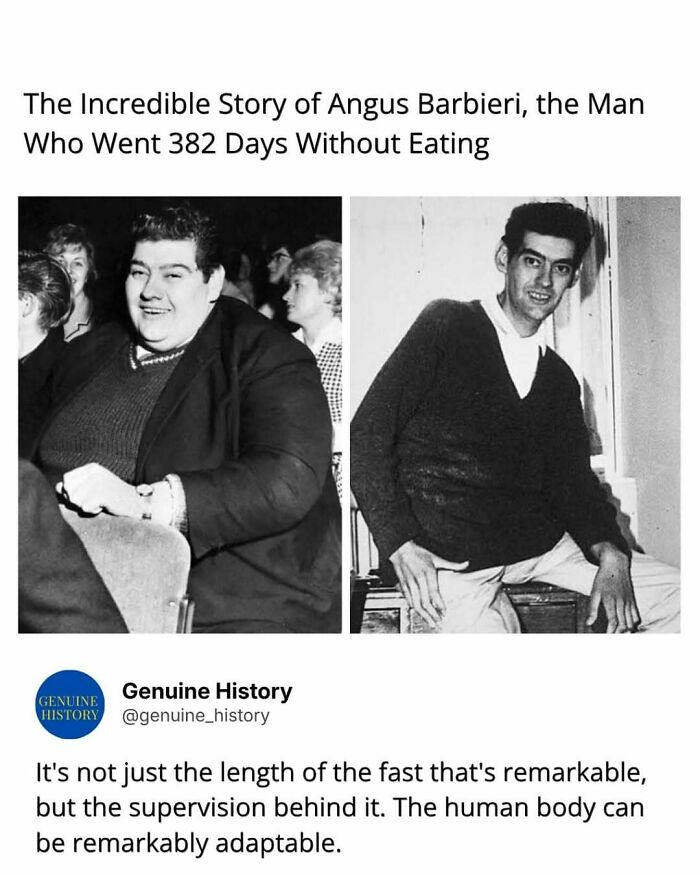
This is Angus Barbieri in 1965-66. He started a fast at 456 pounds and didn’t eat solid food for 382 days. He only had water, tea, coffee, vitamins, electrolytes, and yeast. Under medical supervision at Maryfield Hospital in Scotland, he dropped to 180 pounds. Doctors monitored him constantly with blood tests and checkups. When he finally broke the fast, his first meal was a boiled egg, a slice of bread with butter, and black coffee. He kept the weight off for years after. It’s not just the length that’s wild, it’s what it shows about human adaptability. The body can switch to burning fat stores for fuel when food isn’t coming in. But this wasn’t some internet “water fast” challenge. No one should try this without doctors. Angus had 24/7 medical care because fasting that long can cause heart issues, nutrient crashes, and organ failure fast. The real lesson: your body is tougher than you think, but it’s not invincible.
The after picture makes me think he should have just stopped for an even year.
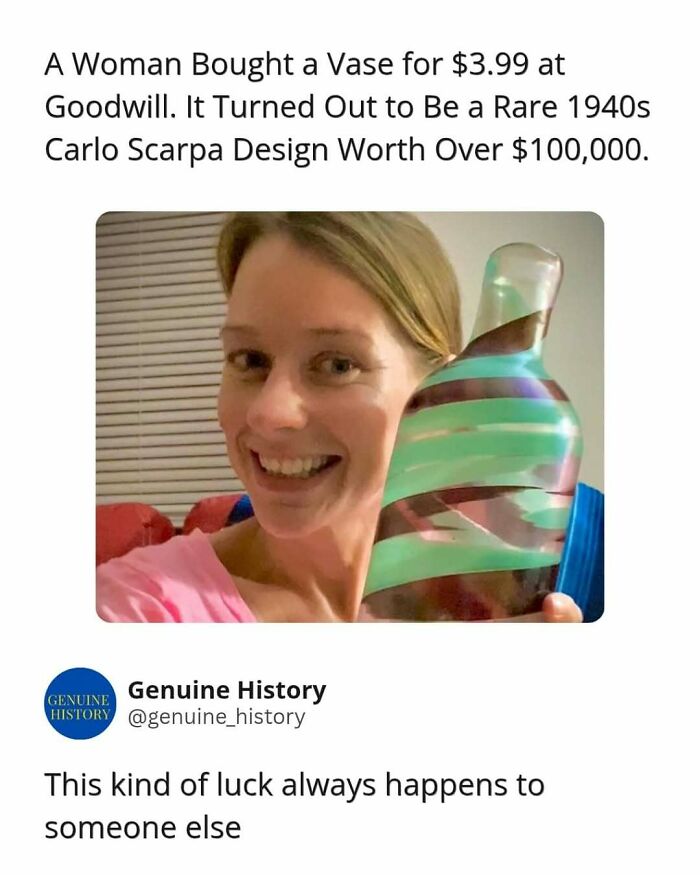
This is what a 2,500,000% return on investment looks like in your living room. It Turned Out to Be a Rare 1940s Carlo Scarpa Design Worth Over $100,000. Caption: This kind of luck always happens to someone else. The headline is real, but here’s the nuance. In 2023, Jessica Vincent was thrifting in Hanover County, Virginia when she spotted the vase. She paid $3.99. She later learned it was a “Pennellate” vase designed by Italian architect Carlo Scarpa for Venini in the 1940s. Only a handful are known to exist. It sold at auction with Wright Auction House for $107,100. Two things matter: 1. Scarpa was a master of Murano glass. His 1940s Venini pieces are prized for complex techniques — layering color, embedding gold leaf, creating depth you can’t fake. 2. This wasn’t random luck alone. Vincent noticed the faint “Venini” mark on the base and felt the weight and quality. She had an eye. Why does this story stick? Behavioral economists call it “survivorship bias.” We see the one thrift-store miracle and forget the 50 million people who walked out with a $4 candle holder. The U.S. resale market is worth $177 billion, but stories like this are statistical lightning. Still, they work. They prove value can hide in plain sight. Scarpa believed glass should be architecture you could hold. The Pennellate series used a “painted” technique, dragging colored rods through molten glass to make those swirling bands. It was labor-intensive, fragile, and discontinued. Most were lost or broken. That’s why museums and collectors hunt them.

This is the kind of item that appears on Antiques Roadshow, where I shout "Sell!" at the TV.
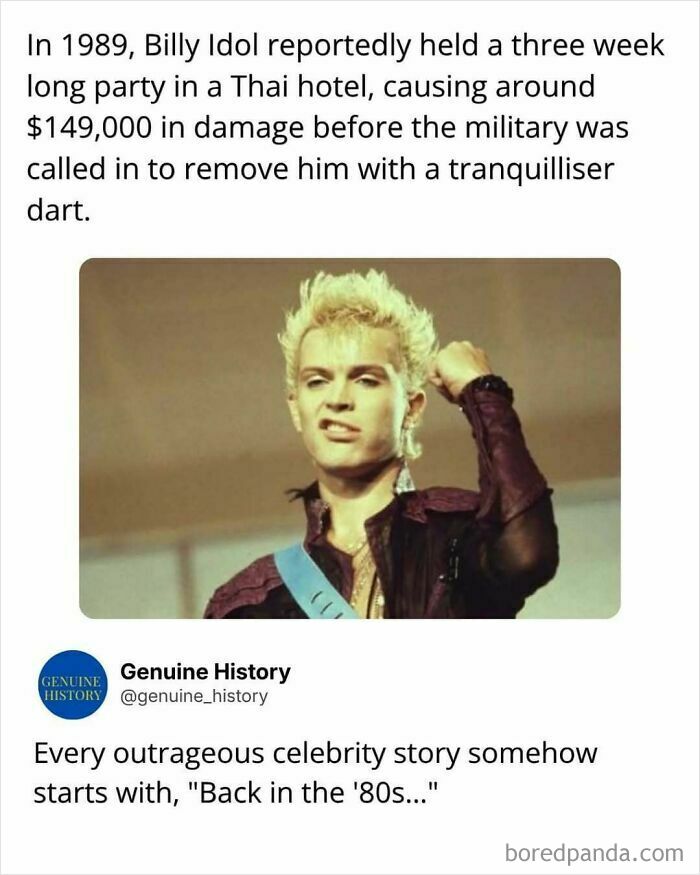
This is how rockstar excess becomes legend. The image shows Billy Idol with bleached spiked hair, mid-performance, fist raised. Text above: In 1989, Billy Idol reportedly held a three week long party in a Thai hotel, causing around $149,000 in damage before the military was called in to remove him with a tranquilliser dart. Caption: Every outrageous celebrity story somehow starts with, “Back in the ‘80s...” The incident happened at the Royal Cliff Hotel in Pattaya. Idol refused to leave his penthouse suite after trashing it for weeks. The hotel called the Thai army. Soldiers carried him out on a stretcher. He later confirmed the story in interviews, though the “tranquilizer dart” detail is disputed. Idol says he was sedated, just not shot with a dart. The 1980s cemented a specific brand of celebrity immunity. Record sales and tour money meant fines were just another expense. Psychology calls this moral hazard. When consequences don’t scale with behavior, behavior escalates. Hotels started adding “Idol clauses” to contracts for high-risk guests. Sometimes the rebellion sells more records than the music. What wild story from your past got better every time you told it?
The 80s? Back in the 60s, 70s... The Stones, among others, were famous for leaving their impression in hotels.
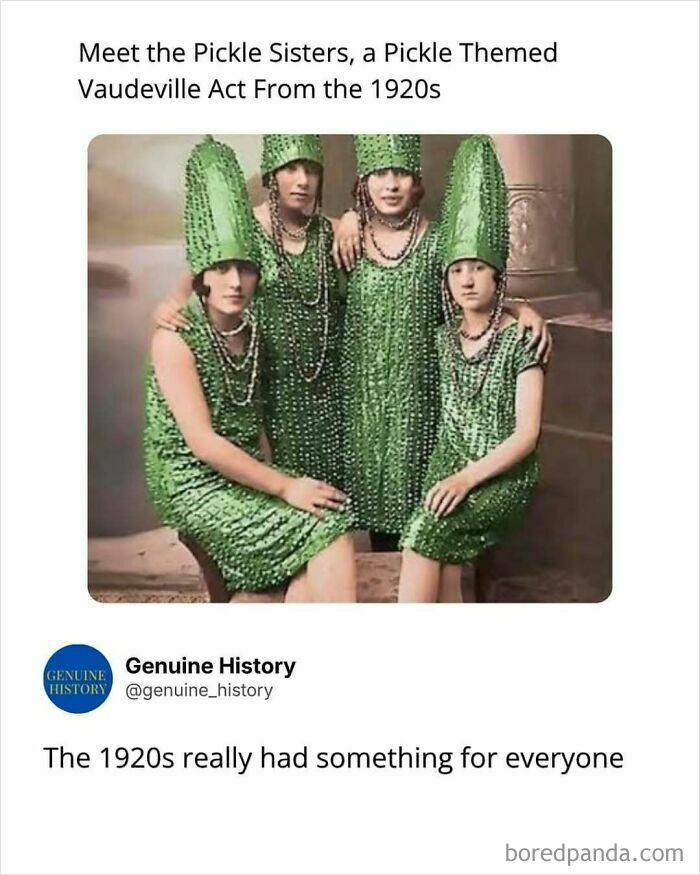
The Pickle Sisters were a novelty vaudeville act from the 1920s. They weren’t actually sisters. It was a rotating cast of performers booked by the Gus Sun Circuit and other small-time vaudeville promoters. Their gimmick was full pickle regalia: sequined green dresses and towering pickle hats. Acts like this were called “sight acts” or “dumb acts” because they relied on visual absurdity more than singing or dancing. Vaudeville in the 1920s was oversaturated. With radio and film cutting into ticket sales, managers demanded ever stranger hooks to fill seats. Food costumes, midget acts, and trained animals were common. The Pickle Sisters toured Midwest opera houses and county fairs. Their bit likely involved synchronized movement, pickle puns, and a song like “I’m Just a Pickle Looking for a Brine.” By 1932, vaudeville had mostly collapsed. Most novelty acts vanished with it. This is “differentiation through absurdity.” The 1920s entertainment market was ruthless. Thousands of acts competed for the same 20 minute slots. If you looked normal, you were forgotten. Psychology calls this the Von Restorff effect. We remember what stands out. Dressing as a giant pickle guaranteed that. It also gave audiences permission to laugh at the sheer ridiculousness of modern life. Post WWI, Prohibition, and rapid industrialization left people craving escapism. The stranger the act, the better the release. The Pickle Sisters weren’t high art. They were a pressure valve. If you had to make a living on the vaudeville circuit in 1925, what ridiculous costume would you pick to make sure nobody forgot you?
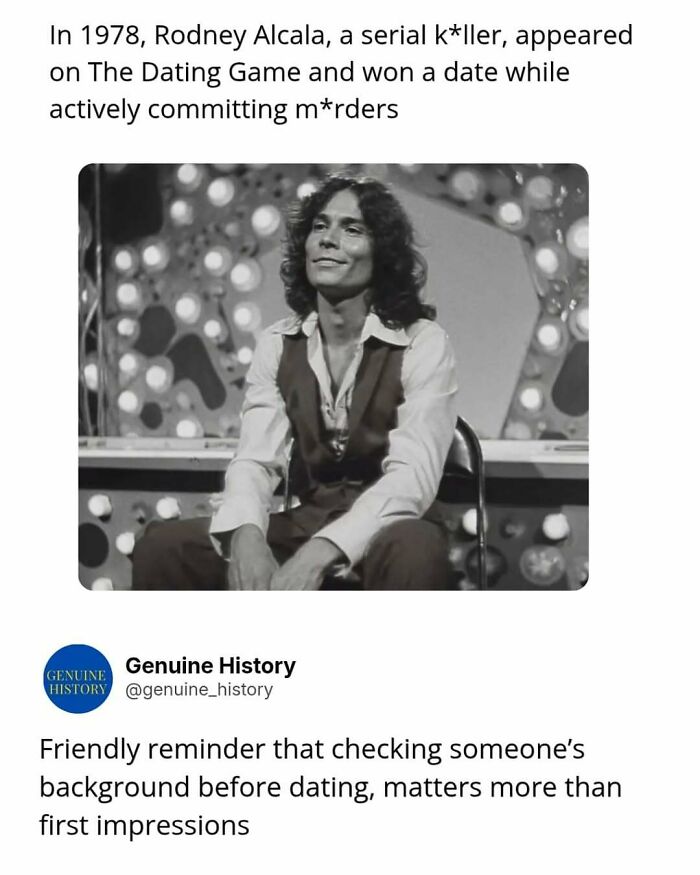
In 1978, Rodney Alcala appeared on _The Dating Game_ as Bachelor Number One. He smiled, joked, and won the date with Cheryl Bradshaw. At the time, he was already a convicted offender and actively committing m*****s. Bradshaw later refused the date because she found him “creepy.” That instinct may have saved her life. Alcala was arrested in 1979 and later convicted of multiple m*****s across several states. The show had no background checks. Charm was the only vetting process. This is why psychologists study the “halo effect.” We assume attractive, confident people are safe or good. Alcala weaponized that bias. He used normalcy as camouflage on national TV while law enforcement hadn’t yet connected his crimes. It’s a brutal reminder that first impressions measure performance, not character. The most dangerous people often know exactly how to look harmless. What red flag do you think people ignore most often because someone seems charming?
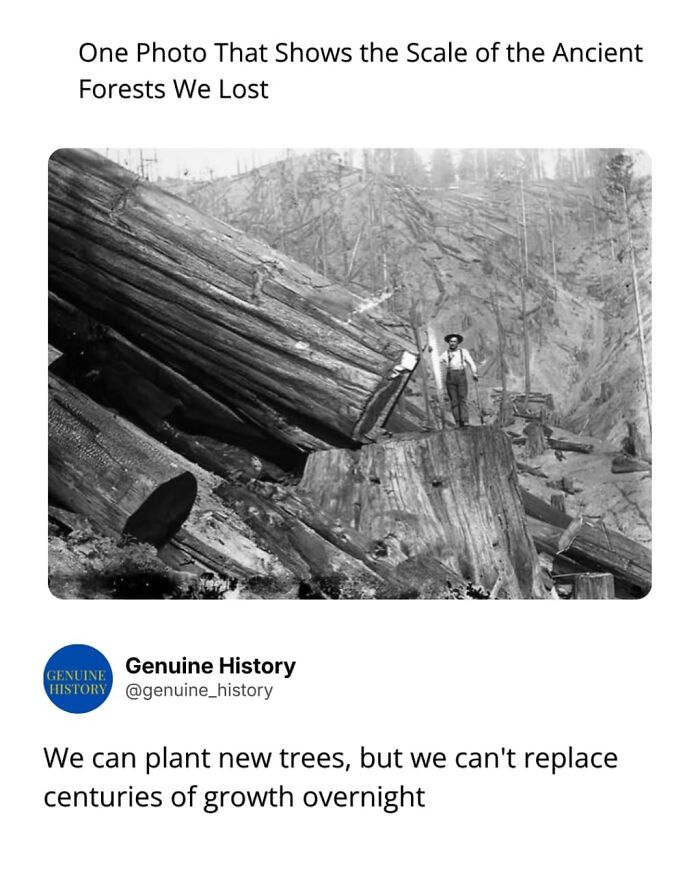
A man, and a tree that outlived empires. Look at the scale. The logger standing on a stump is dwarfed by the fallen giant next to him. Those rings aren’t decades. They’re centuries. Some of these coastal redwoods and Douglas firs were alive before Columbus. Late 1800s logging in the Pacific Northwest cut through forests that took 500-1000 years to build. The photo isn’t just timber. It’s time, turned into planks. We can replant. We can’t rewind. A sapling won’t be this tree in your lifetime, or your grandkids’. *What’s one thing from the past you think we should’ve never traded for speed?*

The Joyce Kilmer National Forest in the southwest corner of North Carolina has the only remaining old growth giant poplar trees in the eastern half of the United States. All the other old trees were cut down over the years to build our houses.
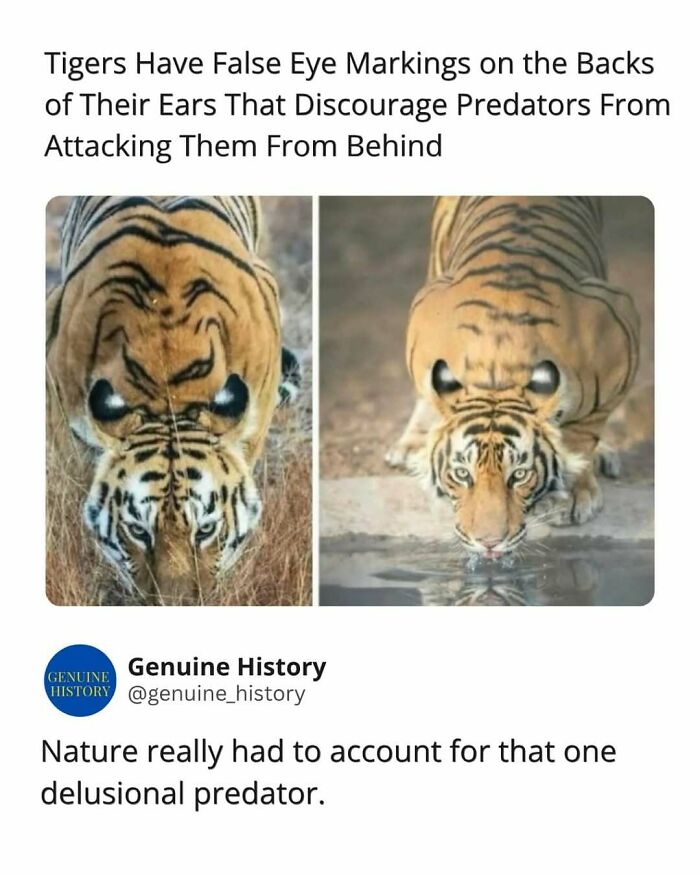
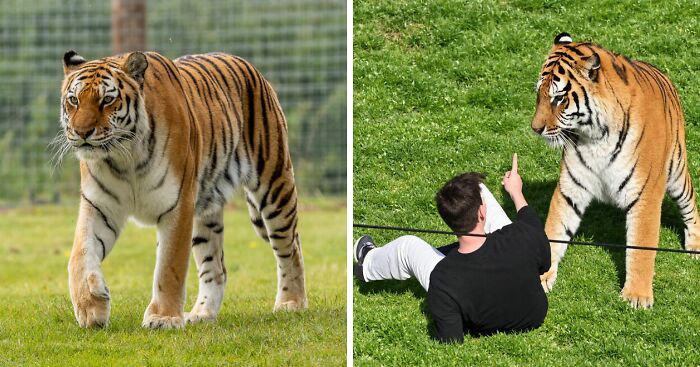
This is what a billion-year arms race looks like. The headline is real, but here’s the nuance. Those white spots are called “ocelli.” Every tiger subspecies has them. They’re not perfect eyes — they’re deterrence. It’s called Batesian mimicry. Harmless patterns that copy dangerous signals. Butterflies do it. Owls do it. Tigers do it with style. What “false eyes” do you use to protect yourself?

I'd love to know what predator(s) could have driven this genetic adaptation!
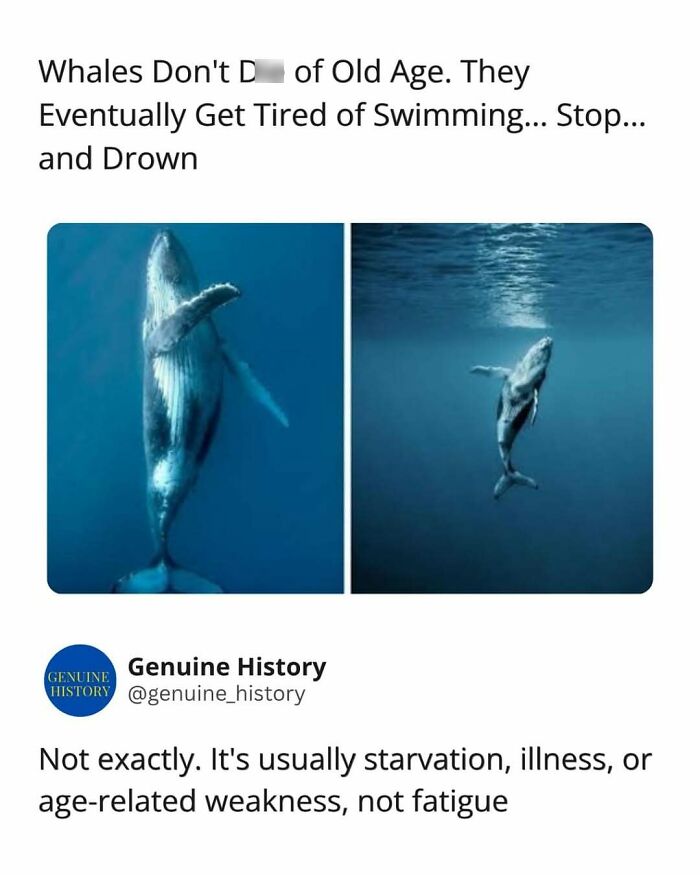
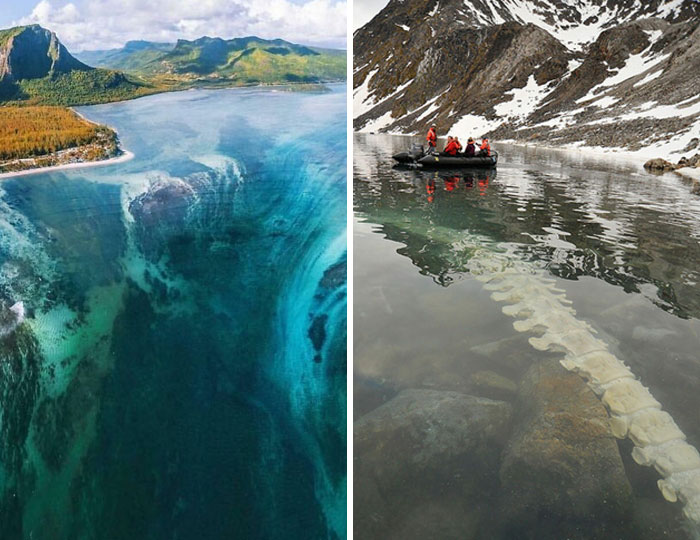
A viral post claimed that whales simply grow tired of swimming and eventually drown from old age. While the idea spread widely online, marine biologists say the reality is more complex. As whales age, illness, injury, or difficulty finding enough food can weaken them over time, causing them to lose the body fat that helps them stay buoyant. Because whales are mammals that must regularly surface to breathe, a severely weakened whale may eventually become unable to reach the surface for air. It’s a reminder that even the largest animals on Earth are still vulnerable to the challenges of aging and survival in the wild.
When they d*e, they create a natural habitat for a gazillion species. Simply amazing! 😌
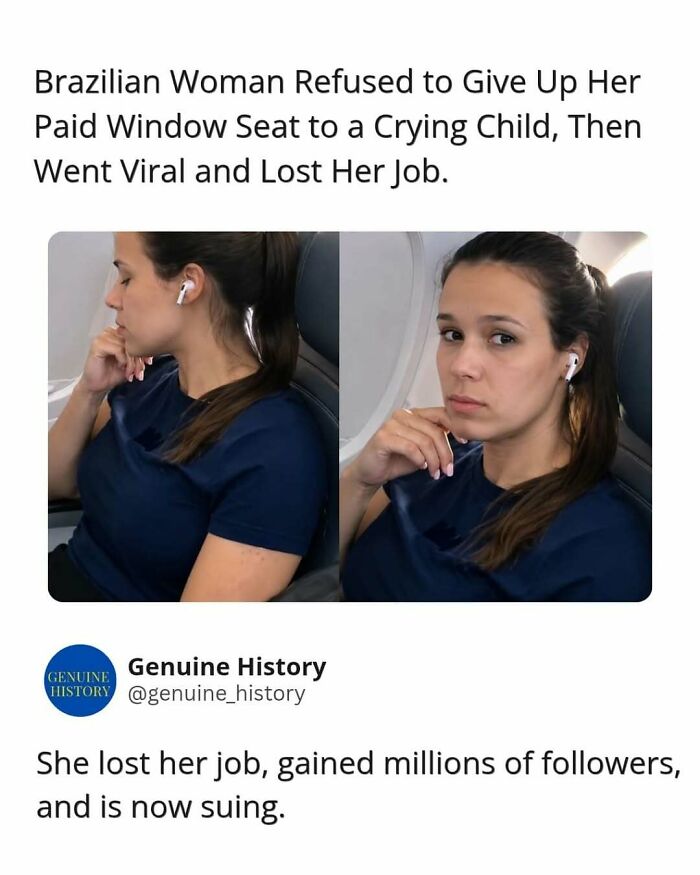
In December 2024, Brazilian banker Jeniffer Castro went viral after refusing to give up the window seat she had paid for to a crying child on a domestic flight. The encounter was filmed by another passenger and quickly spread across social media, sparking a global debate over whether passengers should be expected to surrender seats they specifically purchased. The attention dramatically changed Castro’s life. She said the backlash contributed to her losing her job, later gained millions of followers online, and filed legal action against the airline and the passenger who recorded her without permission. The incident remains one of the internet’s most divisive travel debates in recent years.
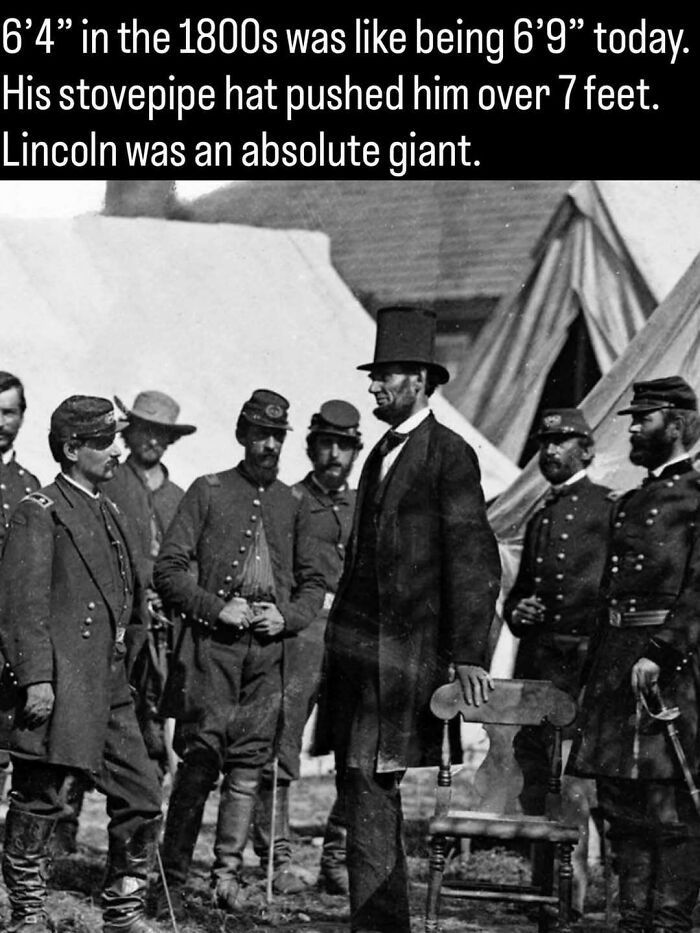
At 6 feet 4 inches, Abraham Lincoln remains the tallest president in American history, and few photographs capture that better than this one. This was taken at Antietam, Maryland, on October 3, 1862, just weeks after the bloodiest single day battle in U.S. history. Lincoln had traveled to visit the Army of the Potomac and meet with General George B. McClellan following the Battle of Antietam. Standing beside a chair among Union officers and tents, Lincoln’s height is impossible to ignore. Even surrounded by military men, he visibly towers over nearly everyone in the frame. The photograph has become a famous visual reminders of how physically imposing he appeared in person. Witnesses often described Lincoln as awkward, gaunt, and unusually long limbed, but they also noted that his presence could dominate a room. Lincoln’s visit to McClellan came during growing frustration over the general’s reluctance to aggressively pursue Confederate forces after Antietam. Just over a month later, Lincoln would remove McClellan from command. Added fact: The men in the photo include General George B. McClellan and several Union officers, and it was taken outside McClellan’s headquarters tent at Antietam. Lincoln’s famous stovepipe hat likely pushed his visible height to around 7 feet, making him even more striking in crowds.
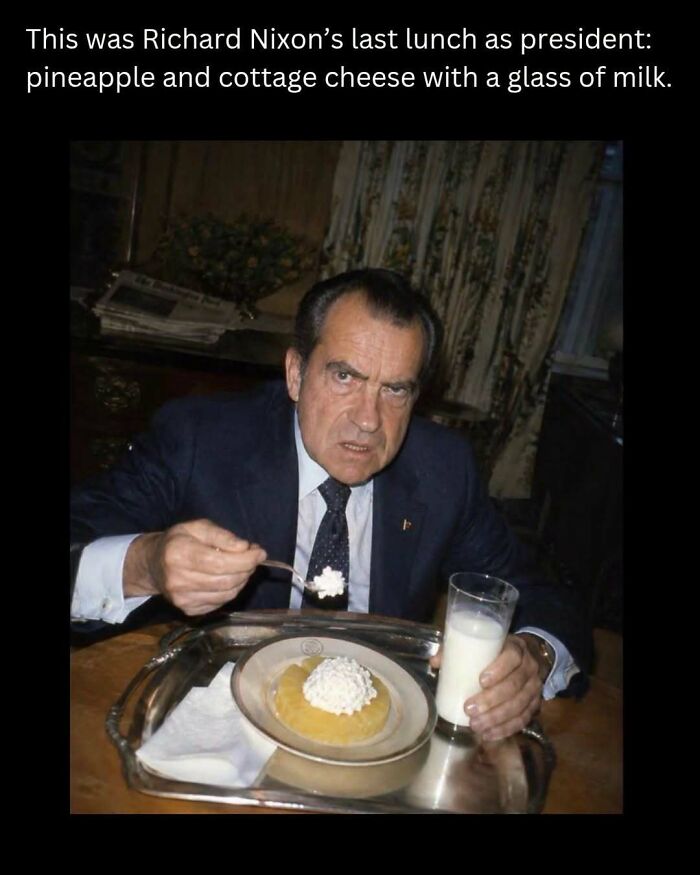
The meal was one of his longtime favorites: cottage cheese topped with pineapple chunks, a simple low-calorie lunch he ate so often that it became closely associated with his public image. Nixon preferred plain, repetitive meals over elaborate White House cuisine, and journalists frequently commented on his fondness for cottage cheese during his presidency. Just hours after this photo was taken, Nixon addressed the nation on television and announced his resignation in the wake of the Watergate scandal, becoming the first U.S. president in American history to step down from office.
The good days where the US presidents actually left the office after doing something shiㅤtty
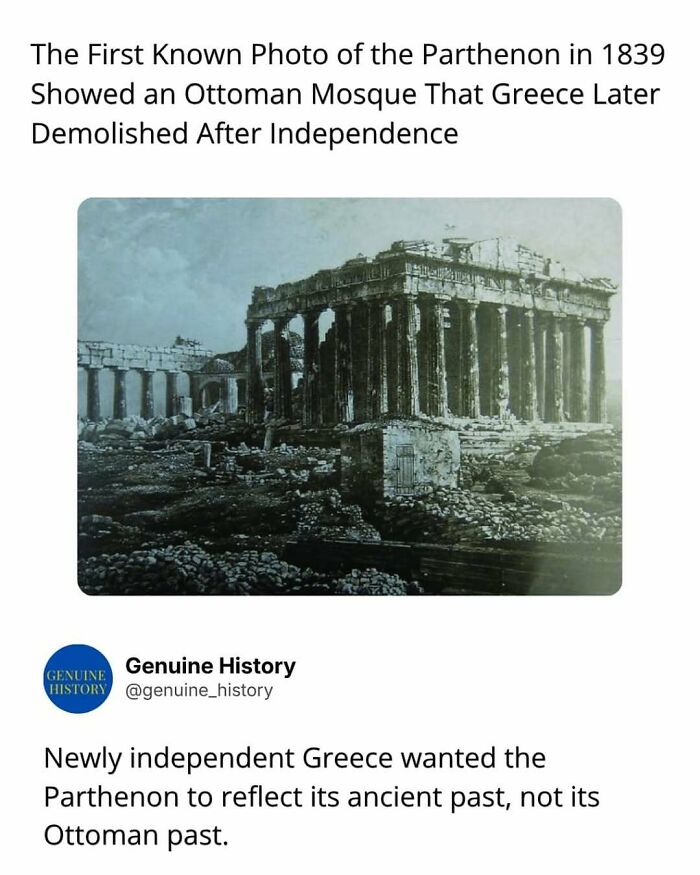
*Monuments remember what nations choose to forget.* This is the first known photo of the Parthenon, taken in 1839 by French artist Joly de Lotbinière. Look inside the columns. There’s a mosque. After the Ottomans captured Athens in 1458, they converted the Parthenon into a mosque and added a minaret. It stayed that way for nearly 400 years. Greece gained independence in 1830. In 1843, the new Greek state demolished the mosque to “restore” the site to its 5th-century BCE state. This wasn’t preservation. It was nation building. Newly independent states often purge architecture that ties them to former rulers. The Parthenon had been a Greek temple, then a Christian church, then an Ottoman mosque. Each era layered itself onto the marble. Greece erased the Ottoman layer to link itself directly to Pericles and democracy, not to sultans. Historians call this “strategic antiquity.” It’s why the minaret came down but the Venetian cannonball damage from 1687 stayed. One story was useful. The other wasn’t. The mosque’s foundations are still there, buried under the tourist site. Every ruin is an argument about which past deserves to survive. *If you could restore one erased building in your city, what would it be?*

Check out David Brewer "Greece: The Hidden Centuries" (2010) for an interesting read about 400 years of history that modern Greece would rather not talk about for obvious reasons.
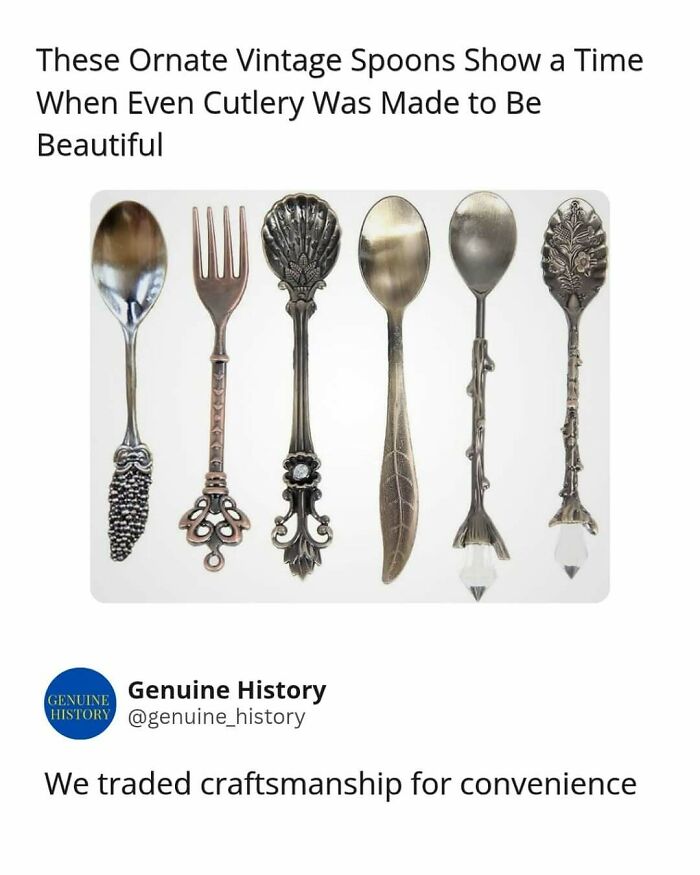
This is what dinner looked like before mass production. From the 1850s to 1920s, ornate silverware wasn’t just tools. It was status, art, and marketing. The Industrial Revolution made die-stamped patterns cheap enough for the middle class. Suddenly every household could own “heirloom” designs. Why it was ornate: 1. Victorian display culture. Dining rooms were stages. Intricate cutlery showed wealth and taste to guests. 2. Souvenir spoons. Starting in 1889, cities and expos sold commemorative spoons. Collecting them became a craze. 3. Material truth. Sterling silver and plated brass were soft. Details hid dents and wear. Why we stopped: 1. World Wars. Metals rationed. Factories switched to weapons, not grapevine handles. 2. Dishwashers. Post-1950s, ornate crevices trapped food and corroded in machines. 3. Minimalism. Bauhaus and mid-century design k****d ornament as “crime.” Convenience won. We didn’t lose craftsmanship. We outsourced it. Today, artisans still hand-forge pieces like these. IKEA just doesn’t.
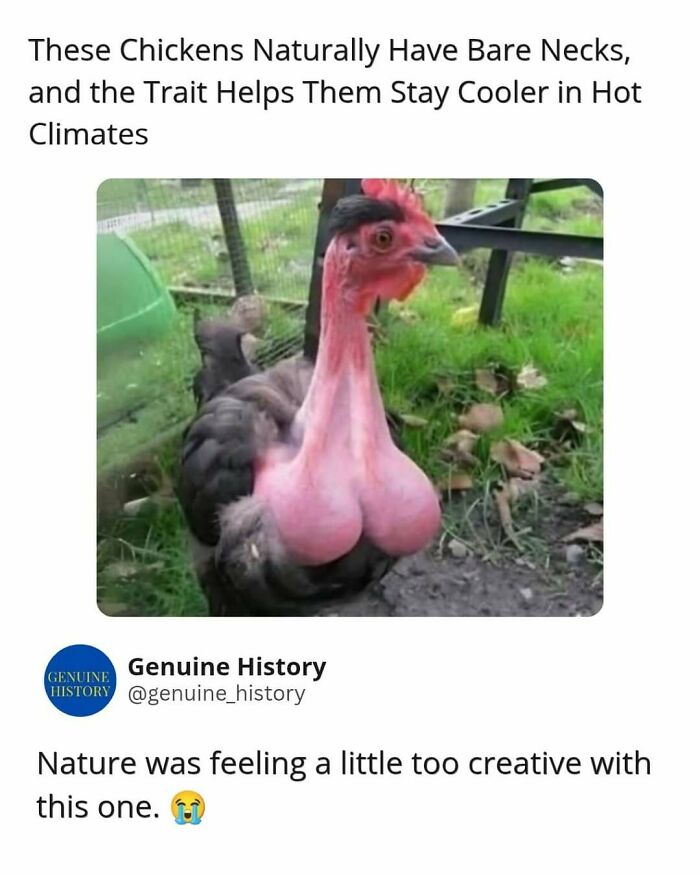
Despite the name, Naked Neck chickens aren’t sick or missing feathers. Their bare neck is caused by a naturally occurring dominant gene that reduces feather growth in that area, helping them release body heat more efficiently in warm climates. The breed is especially well suited to hot environments, and the reduced feathering also makes them easier to manage in poultry farming. What looks unusual is actually a practical adaptation shaped by nature.

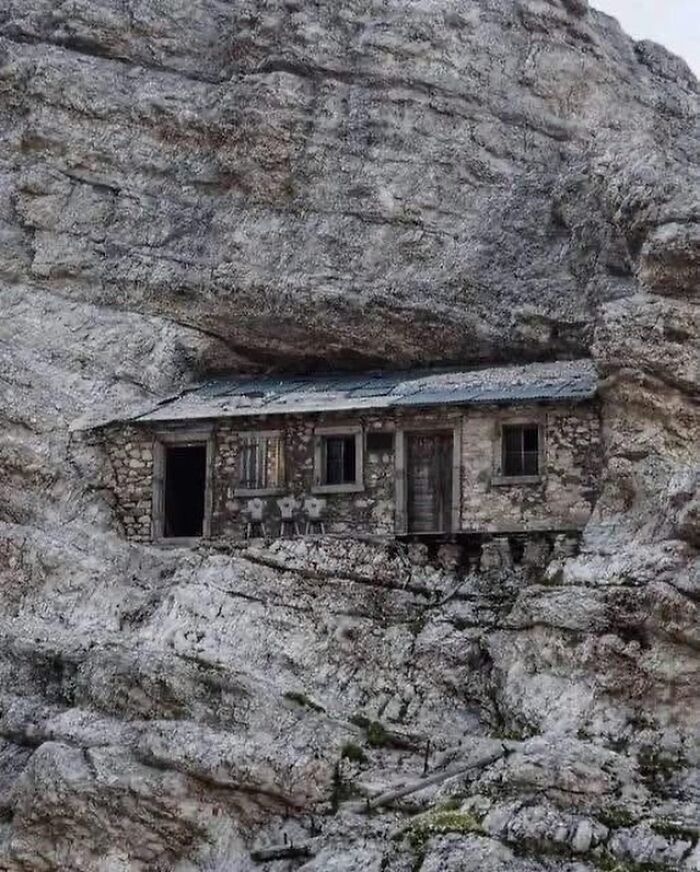
One of the most striking remnants of World War I in Italy’s Dolomite Mountains is a compact alpine shelter built more than 2,700 meters above sea level. Constructed in an extreme high altitude environment, it stands as a reminder of the harsh conditions soldiers endured while fighting in the mountainous front between Italy and Austria Hungary.

Mark Helprin wrote a wonderful novel about this. It’s called A Soldier of the Great War.
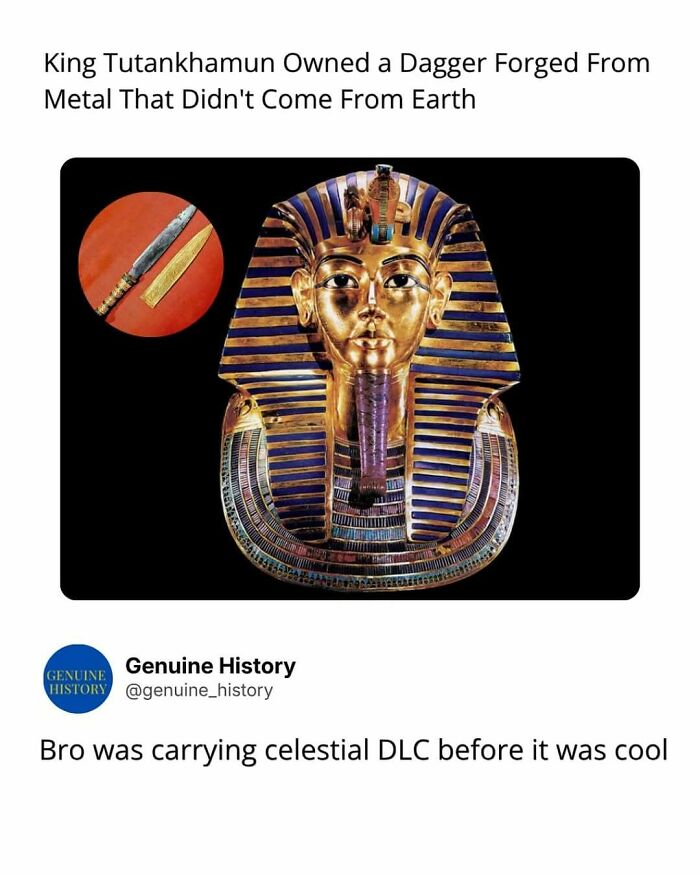
King Tutankhamun owned a dagger forged from metal that didn’t come from Earth. Found wrapped in his mummy’s bandages, the iron blade predates Egypt’s Iron Age by centuries. X-ray scans in 2016 confirmed it was made from meteoritic iron - the same nickel-iron alloy found in space rocks. Egyptians called iron “metal from the sky” and treated it as rarer than gold. Bro was carrying celestial DLC before it was cool. In 1323 BCE, having a weapon from a meteor was basically owning a divine artifact. Psychology shows we’ve always assigned power to things that “fall from the heavens.” To Tut, that dagger wasn’t just a tool. It was proof the gods marked him. Three thousand years later, we’re still studying it. If you could own one object from ancient history, would you pick something practical like this dagger or something symbolic like Tut’s mask?
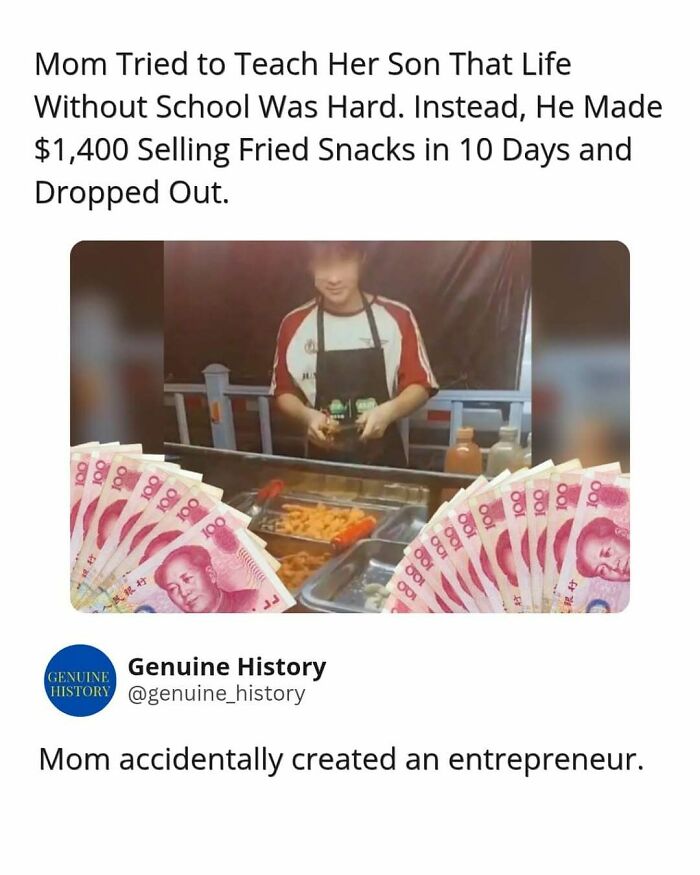
A mother in Jiaxing, China, thought she had the perfect lesson for her 17-year-old son after his grades began slipping at culinary vocational school. Hoping to show him how difficult life without an education could be, she put him to work at her roadside fried chicken and snack stall, expecting the demanding hours and hard work would send him running back to the classroom. Instead, the plan completely backfired. Shen thrived at the business, reportedly earning about $1,400 in just 10 days, and decided he wanted to leave school and sell snacks full time. The story has since sparked debate online, with many asking whether practical success at a young age should outweigh finishing school, or whether education still offers long-term opportunities that short-term earnings can’t replace.
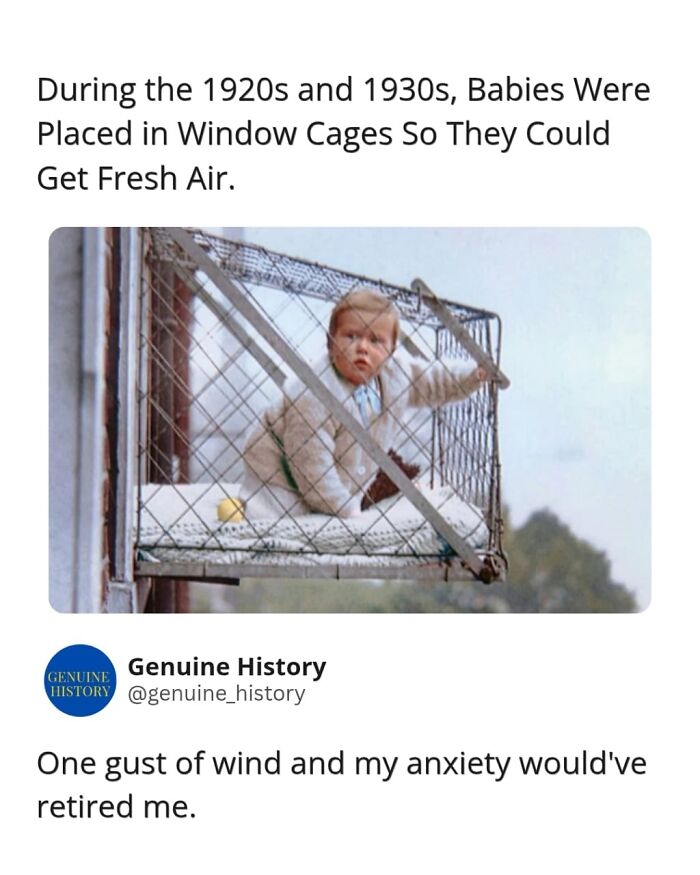
Although they look alarming today, baby window cages were once used by some families living in crowded cities during the 1920s and 1930s. At the time, many doctors believed regular exposure to fresh air and sunlight helped protect children from illnesses such as tuberculosis and rickets, especially in apartments with little outdoor space. As medical understanding improved and safer alternatives became available, the practice gradually disappeared. Today, these unusual structures are remembered as a striking example of how parenting advice—and ideas about child safety—can change dramatically over time.
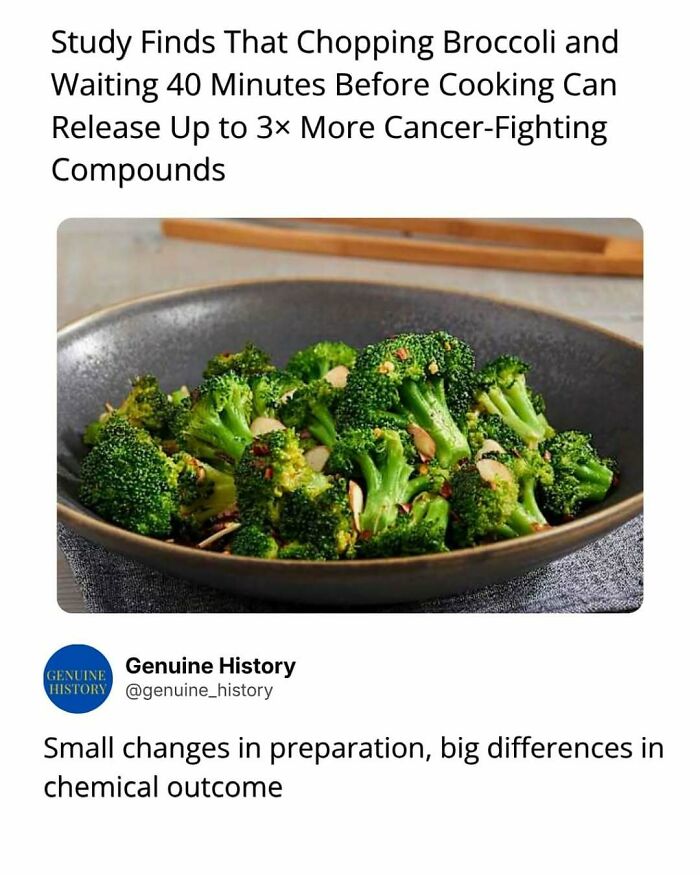
Broccoli has a secret weapon called sulforaphane, a compound linked to cancer-fighting effects. But there’s a catch: it only forms when you chop the broccoli and let it sit. Chopping breaks cell walls and activates an enzyme called myrosinase. Give it 40 minutes and that enzyme can release up to 3x more sulforaphane before heat from cooking shuts it down. Small changes in preparation, big differences in chemical outcome. No extra ingredients, no fancy gadgets. Just cut it, set a timer, then steam or sauté. It’s chemistry you can actually use at dinner. Nature built the defense system, we just have to wait for it to turn on. What other food “hack” changed how you cook?

Sorry, but I can't wait that long to devour those delicious little green trees. I'll take my chances.
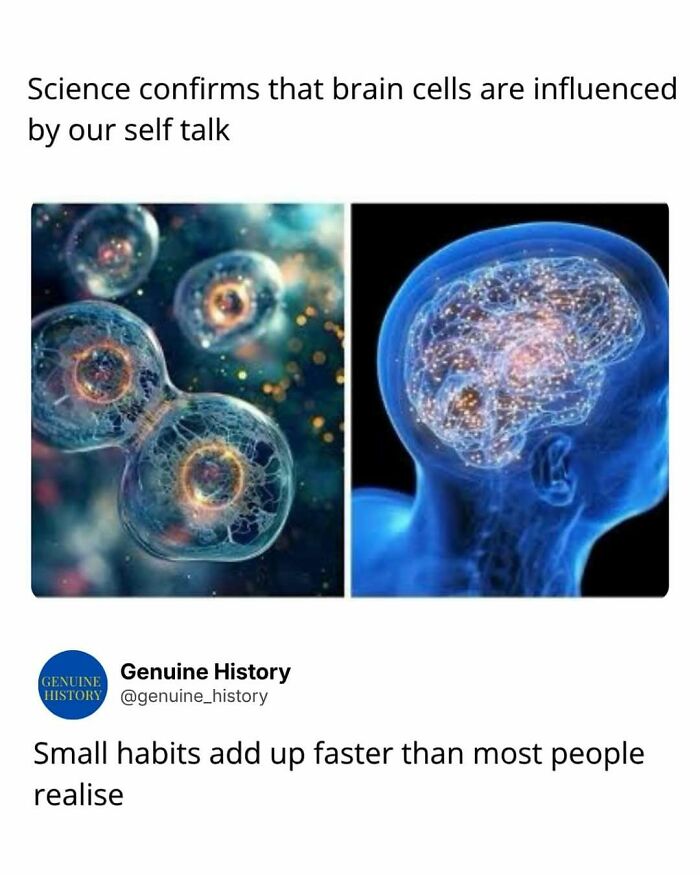
Lab. Present day. Left: Brain cells dividing under a microscope. Glowing. Connected. Right: A brain lighting up with thousands of signals. Science confirms it. Your self talk changes your brain cells. What you repeat to yourself rewires you. Small habits add up faster than most people realise
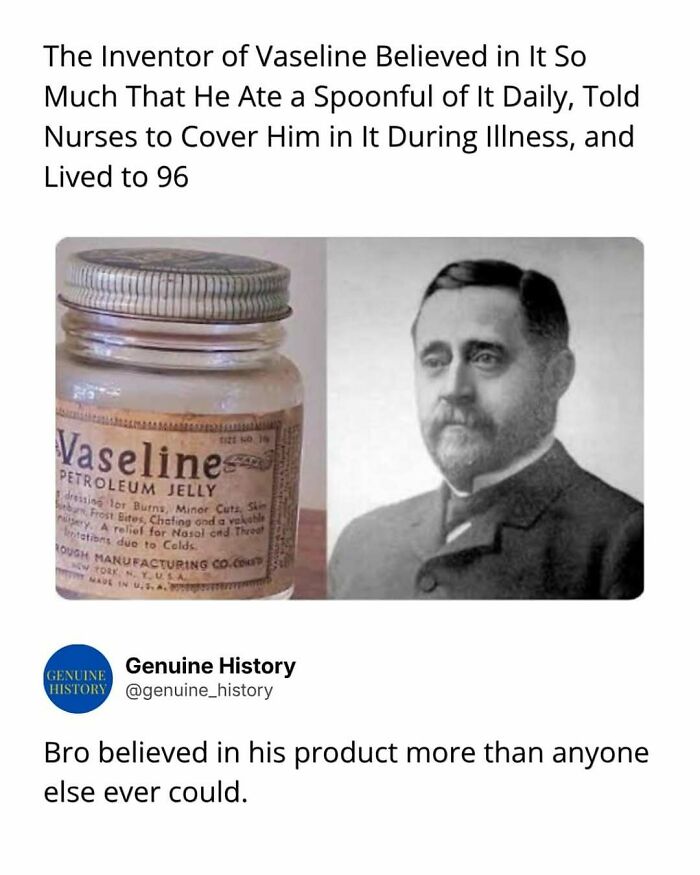
He ate it. He wore it. He sold it. This is Robert Augustus Chesebrough. 1839. He invented Vaseline by scraping the “rod wax” off oil rigs in Pennsylvania. Workers said it healed cuts and burns, so he purified it, bottled it, and named it. Then he became his own testimonial. Ate a spoonful every day. Had nurses cover him head to toe in it when he got sick. Said it was the reason he made it to 96. 1900s marketing didn’t need influencers. It had the founder putting it on his toast. *Would you eat a spoonful of your own invention to prove it works?*
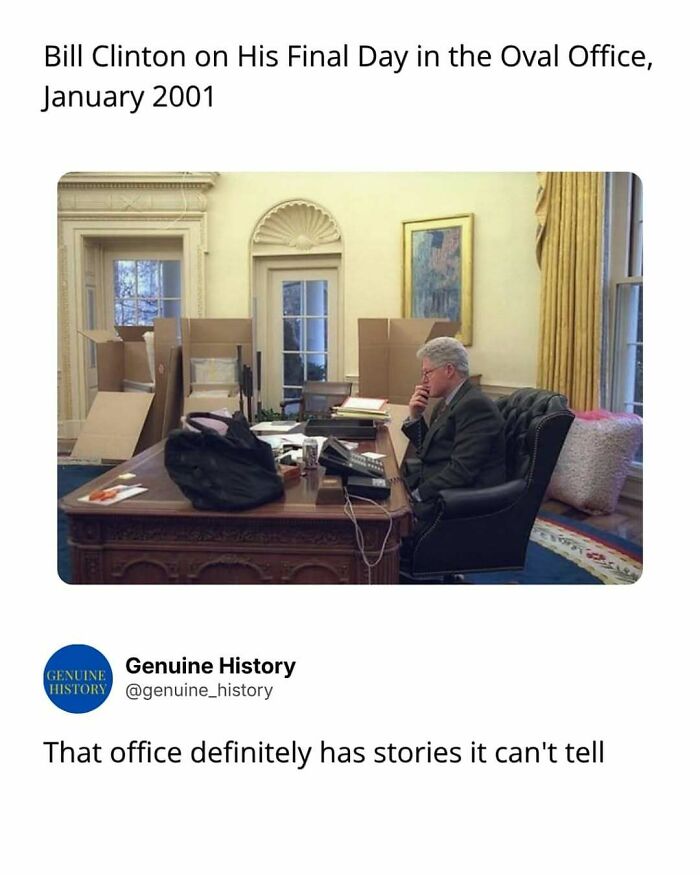
Power doesn’t leave quietly. It packs boxes. January 2001. Bill Clinton’s last day in the Oval Office. The Resolute Desk is still there. The man is still on the phone. But the room behind him is already moving out. Cardboard, bubble wrap, and 8 years of decisions being boxed up. The presidency doesn’t end with a speech and stay for dinner. It ends with movers, deadlines, and one final call from a chair that won’t be yours tomorrow. The Oval Office keeps its furniture. Presidents take the memories, the phone calls, and the silence after. *What room in history do you think holds the most untold stories?*
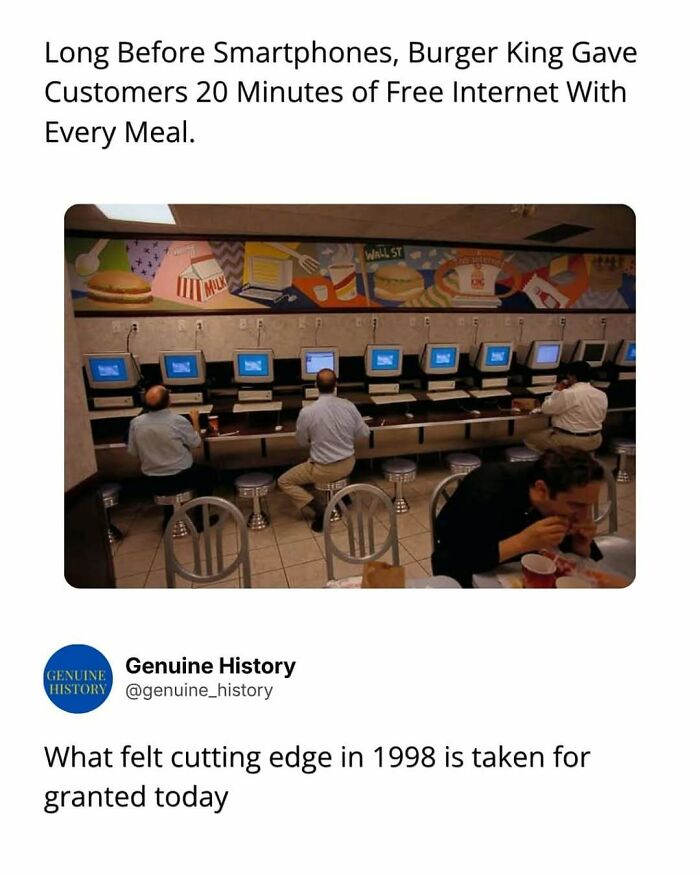
1998, New York. Some Burger King locations tested “WhopperNet” and similar pilot programs, installing rows of bulky desktop PCs with dial-up. Buy a meal, get a code for 20 minutes of internet time. You checked email, browsed early Yahoo, maybe printed MapQuest directions. The murals said “Free Internet” like it was magic, because it was. Home internet was still under 40% in the US and smartphones didn’t exist. Fast food became a cyber café. Kids did homework while parents ate Whoppers. Businessmen checked stock tickers next to ketchup packets. This is “technological re-contextualization.” New tech feels most valuable when it shows up in familiar places. A computer at work was normal. A computer next to your fries felt like the future. Scarcity drove behavior too. 20 minutes wasn’t much, so people used it with focus. No doomscrolling. No notifications. You walked in for a burger and left with directions to your cousin’s house printed on thermal paper. By 2003, Wi-Fi k****d the model. Everyone’s phone became the terminal. What’s a piece of “cutting edge” tech from your childhood that kids today wouldn’t even recognize?
I'm at that strange age where I've experienced both internet cafés where you paid for internet surfing, and the current situation of everyone carrying the entirety of human knowledge in a small pocket device. Can't say which one was better. Both had its ups and downs.
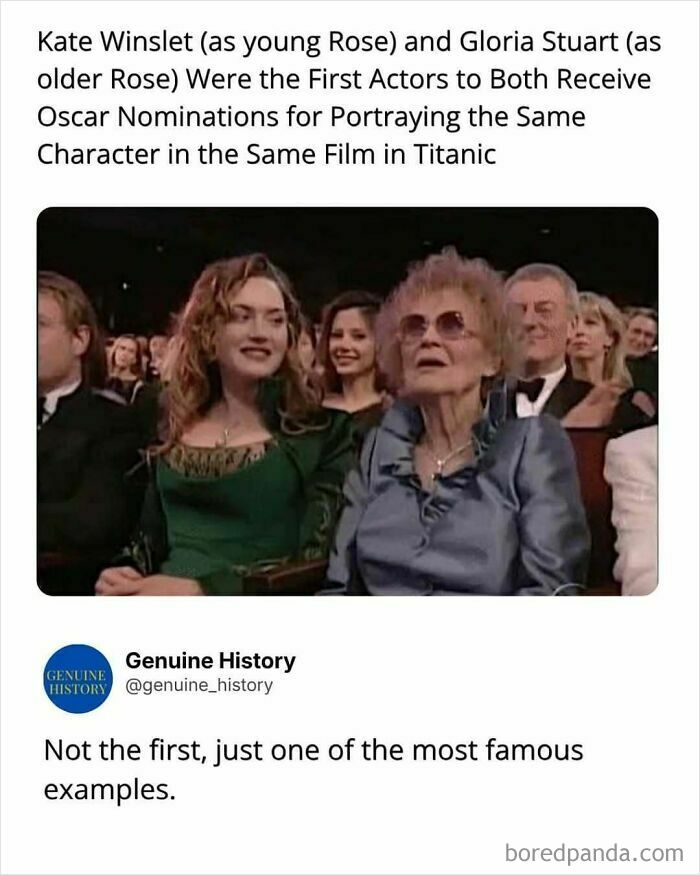
1998 Oscars. Kate Winslet at 22 and Gloria Stuart at 87, both nominated for playing Rose DeWitt Bukater in _Titanic_. Young Rose chasing freedom on a doomed ship. Old Rose remembering it all 84 years later. Two actresses, one character, one film. It was the first time the Academy nominated two actors for the same role in the same movie. Gloria Stuart hadn’t been nominated in 60 years. She got her first Oscar nod playing the older version of the girl Kate brought to life. When the camera panned to them sitting together, you saw time in one frame. Past and present, memory and youth, side by side. They didn’t win, but they made history just by being there. Same character, different lifetimes. Which film duo pulled off “same person, different age” better than this?
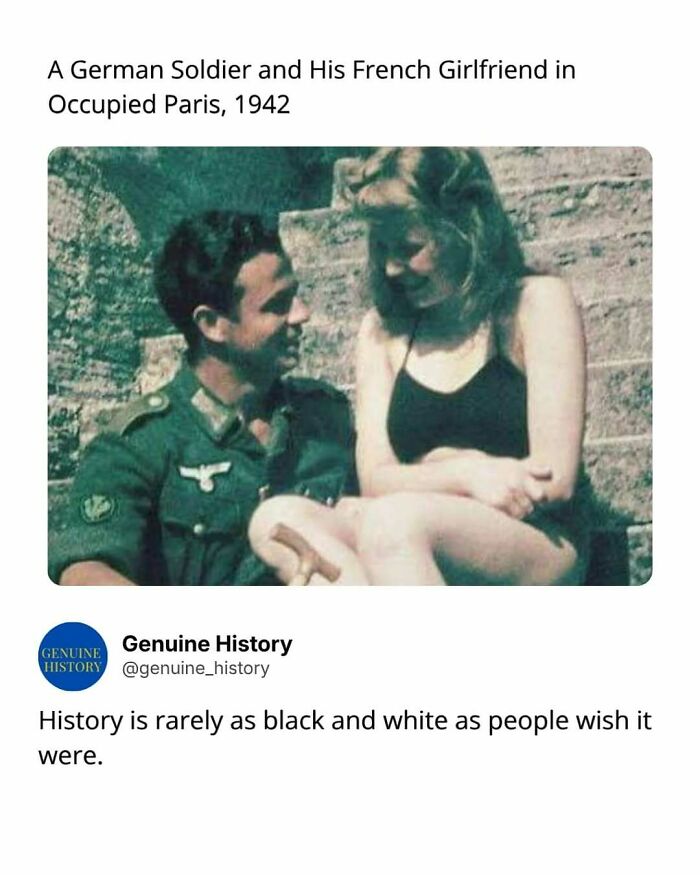
Paris, 1942. The city was under N**i occupation. This photo shows a German soldier and a French woman sitting together. In the middle of war, checkpoints, and curfews, human relationships still happened. Not all of them were simple. Some were love. Some were survival. Some were coercion. The camera doesn’t tell us which one this was. After the war, women who’d been close to German soldiers were called “horizontal collaborators.” Many were publicly shamed - heads shaved, paraded through streets, cut off from their communities. The moral lines got messy fast. Occupation forced impossible choices. This photo isn’t an endorsement or a judgment. It’s a reminder: real history is full of gray. People don’t stop being people, even when the world around them turns brutal.
Soldiers are only humans, too. While war is inhumane there are enough stories and reports that show that the majority of people generally would rather not k**l. And in the end it's an institution that dictates how things are handled and not Hans, John or Pjotr standing in a trench instead of sitting in their kitchens
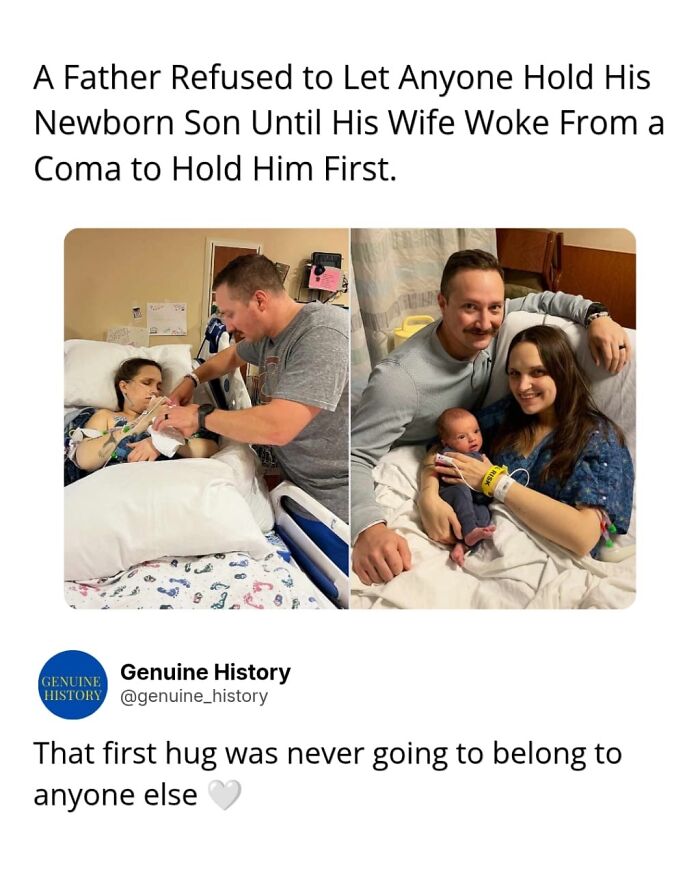
This is how love guards a first moment. The image shows two hospital photos. Left: a man guides a newborn’s hand to a woman in a hospital bed with tubes and monitors. Right: the same couple smiles together, the woman awake and holding the baby. Text above: A Father Refused to Let Anyone Hold His Newborn Son Until His Wife Woke From a Coma to Hold Him First. Caption: That first hug was never going to belong to anyone else. This story went viral in 2020. The mother had complications after childbirth and entered a medically induced coma. For two weeks, the father handled all newborn care but told family no one could hold the baby until she could. When she woke, he placed their son in her arms first. Psychology calls this symbolic integrity. Humans assign meaning to “firsts” because they mark transitions. First steps, first words, first holds. They become anchors in memory. For this family, preserving that first was a way to protect her role as mother when she couldn’t defend it herself. Medical staff noted that touch and voice from loved ones can aid recovery from coma. Whether she heard him or not, he acted like she would. Some promises are kept in waiting rooms. What moment would you wait for, no matter how long it took?

So for its first TWO WHOLE WEEKS that poor child was never held or hugged at all. What kind of selfishness is that. A fathers hug is just as good as the mothers.
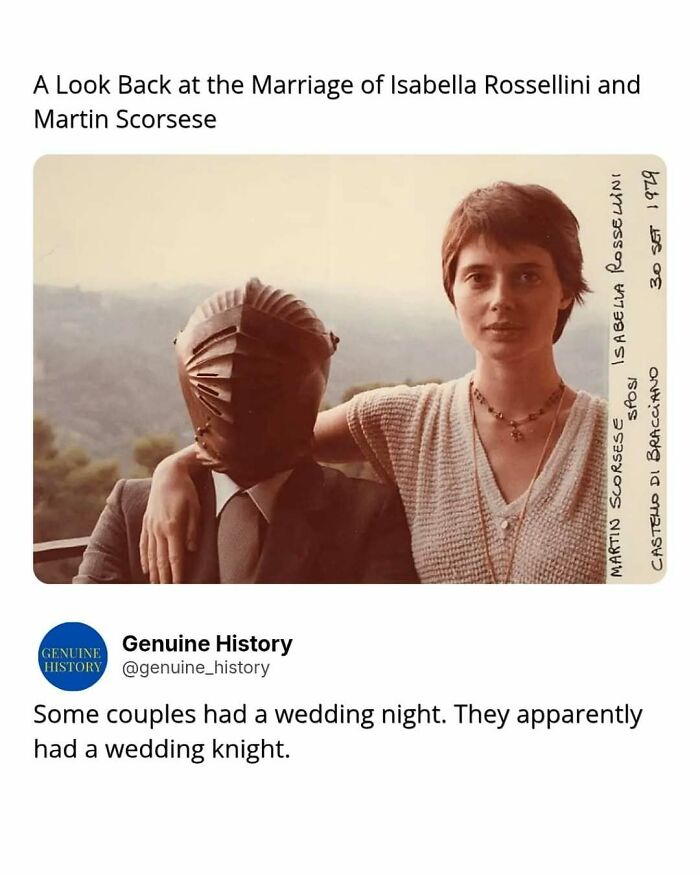
This photo was taken on September 30, 1979, at Castello di Bracciano near Rome. It’s Isabella Rossellini and Martin Scorsese on their wedding day. Isabella’s mom was legendary actress Ingrid Bergman and her dad was director Roberto Rossellini, so film was basically in her DNA. Martin was already the guy behind Taxi Driver and Mean Streets. Two film dynasties merging, Italian style. And yes, that’s Martin Scorsese wearing a medieval knight’s helmet for the wedding photo. No one knows exactly why, but with Scorsese you can bet it wasn’t an accident. He’s always been obsessed with imagery, history, and a little drama. Isabella looks calm, amused, and totally in on the bit. They divorced in 1983, but this one photo proves their marriage had personality from day one. Some couples cut the cake. They cut to a scene.
Without the context, I'd be 110% adamant this is Mon Mothma and Marrok the First Brother.
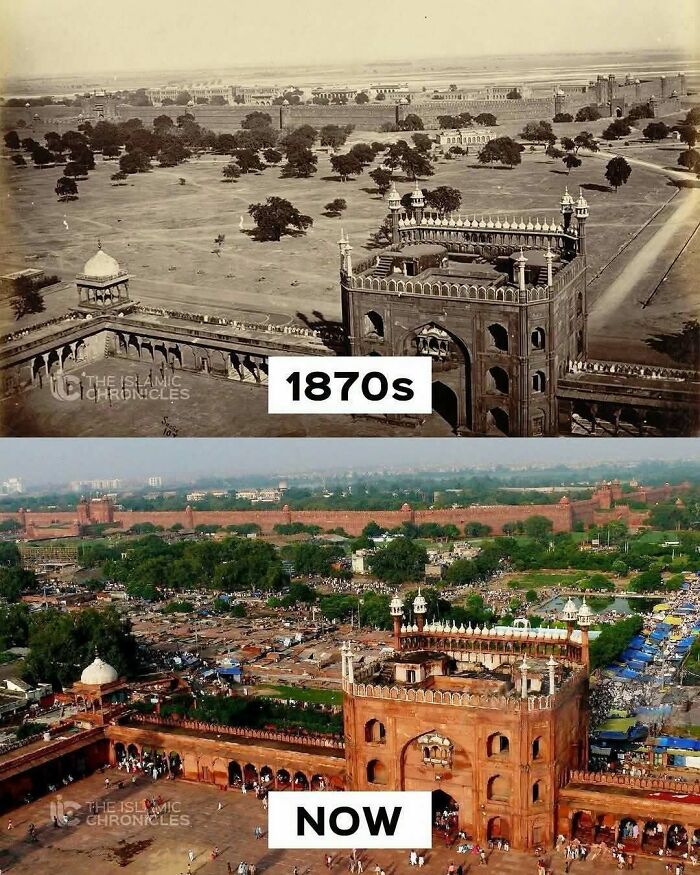
The view of Red Fort from Jama Masjid in the 1870s vs 2010s The top image from the 1870s shows the Red Fort and Jama Masjid surrounded by open grounds and sparse vegetation. Fast forward to the present day, and the bottom image reveals a bustling urban landscape with dense buildings and greenery. These historic sites continue to stand tall, reflecting the rich heritage and dynamic evolution of Delhi. The first photo was captured by European photographer John Edward Saché.
Nowadays you don't need vast, clear areas infront of it since optimal firelines aren't a thing there anymore
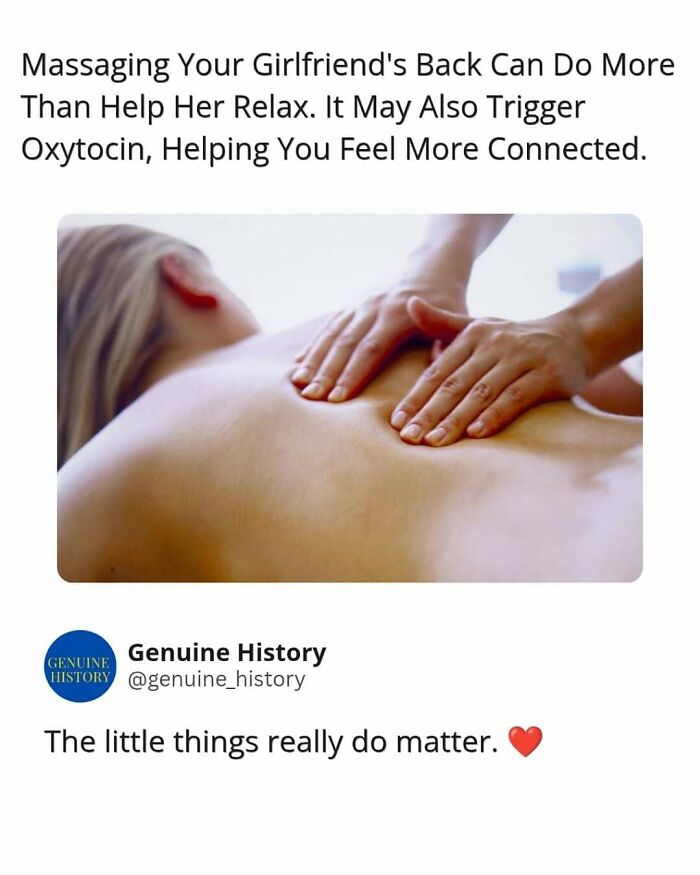
A back scratch might feel like a small gesture, but your brain treats it as much more. Gentle, caring touch can trigger the release of oxytocin, often called the “bonding hormone.” Oxytocin is associated with trust, emotional connection, and reduced stress, which is one reason affectionate touch can feel so comforting. Research also suggests that simple acts like a back scratch, hug, or shoulder rub can strengthen social bonds by reinforcing feelings of care and safety. Sometimes, the smallest gestures have the biggest impact.
I can't wait to try! I only need one more little thing: a girlfriend!
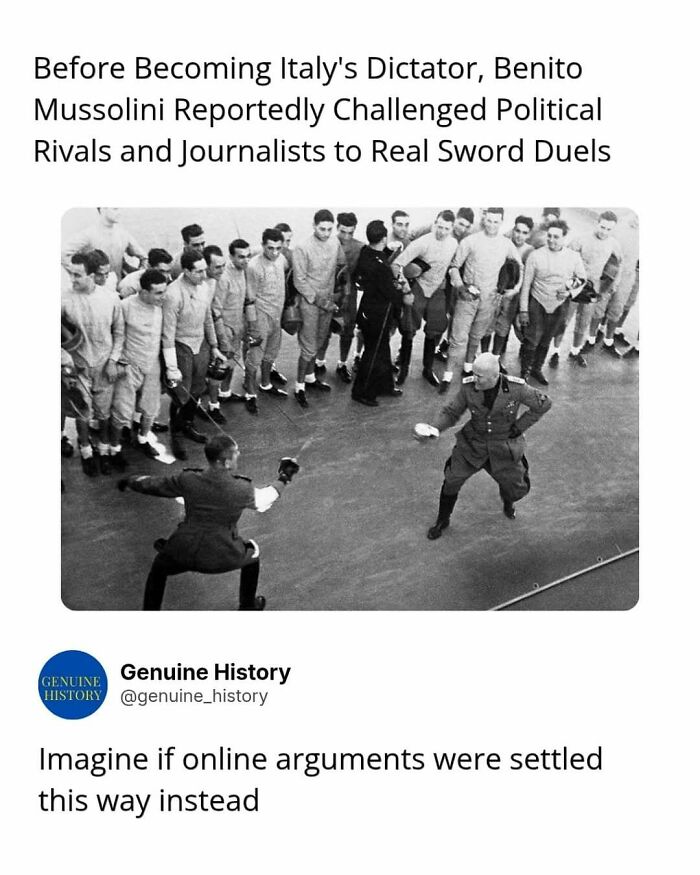
Italy. Early 1900s. Before power. Benito Mussolini. Journalist. Political agitator. He reportedly challenged rivals and critics to real sword duels to settle disputes. Blade against blade. No speeches. Later the photo ops looked different. Uniform. Fencing gear. A crowd watching. Imagine if online arguments were settled this way instead
There was a culture of fencing on universities called "Mensur" here in Germany. Banned under being a duel in the Empire and Weimar Republic it was legalized again in 1933 - that's why a lot of german officers had scars on their face. Funny enough it is still legal since 1953 as both parties agree to the risk of getting injured. (Nobody does it nowadays though)
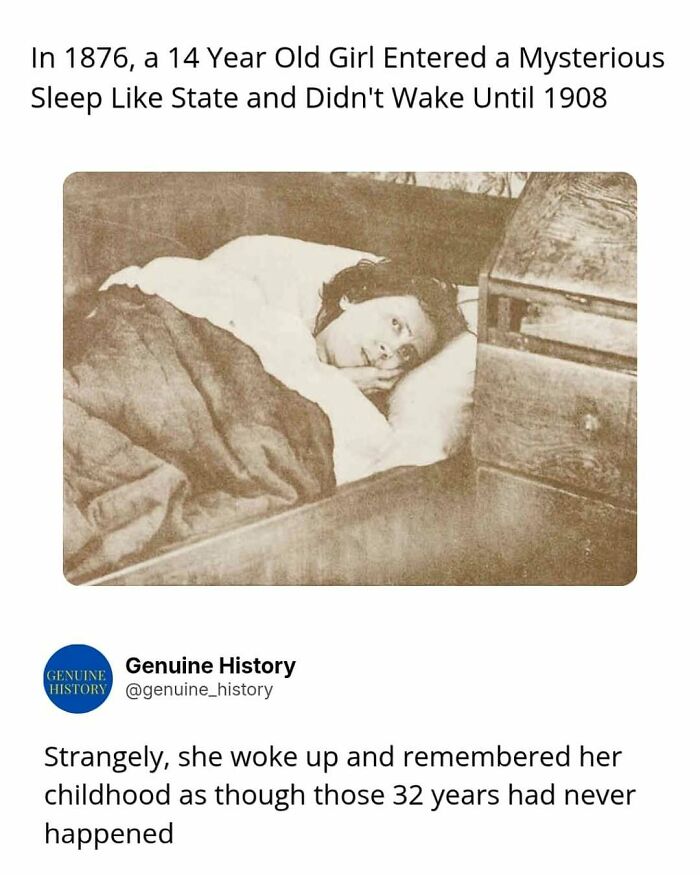
Oknö, Sweden, 1876. Karolina Olsson, age 14, complained of a toothache, went to bed, and allegedly stayed there for 32 years. She was fed milk and sugar water by her mother and did not wake until April 1908. Newspapers reported she woke up thin and pale, believed it was still 1876, and had no memory of the decades she’d missed. Doctors documented her case, but never agreed on a diagnosis. Theories ranged from encephalitis lethargica to severe depression or catatonic schizophrenia. Some modern historians suspect Munchausen by proxy or family fraud, since the household received donations from visitors. Karolina lived until 1950, healthy and lucid after she woke. No autopsy was done. The truth of her “sleep” died with her. The case hits on “chronological displacement” and collective memory. Waking up 32 years later means losing everyone you knew to time. Friends aged, technology changed, wars ended. Your mind stays 14 while your body is 46. Psychologists call it temporal dislocation trauma. Similar symptoms appear in long-term coma patients. The brain keeps childhood intact because it was the last stable memory before the break. Whether Karolina’s sleep was medical, psychological, or staged, the story survives because it terrifies us. Time moves without permission. If you slept through 32 years of history, what’s the first thing you’d ask about when you woke up?
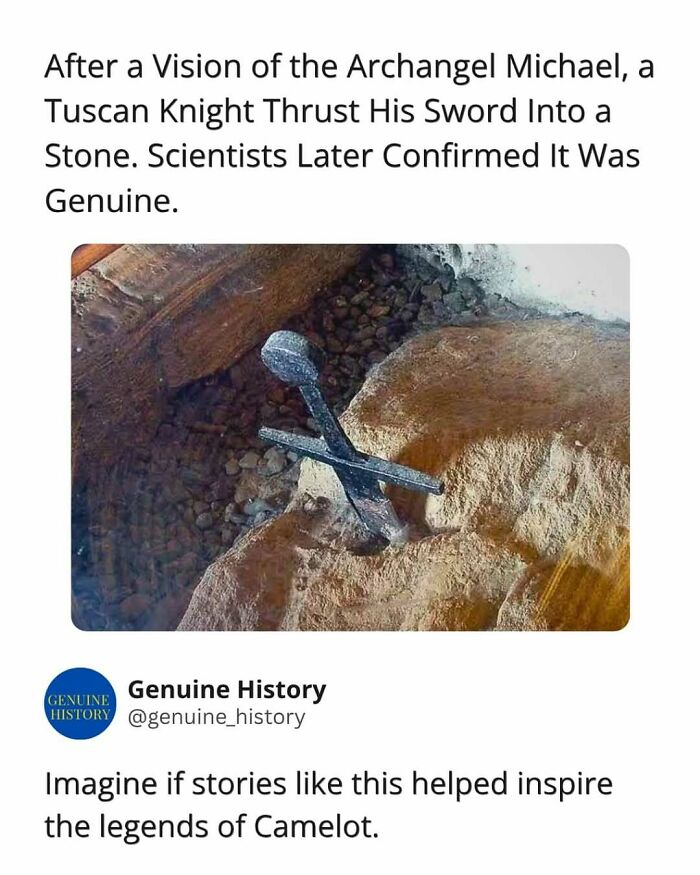
Long before King Arthur’s famous legend, Italy already had its own “sword in the stone.” According to tradition, 12th-century knight Galgano Guidotti experienced a vision of the Archangel Michael that completely changed his life. Renouncing violence, he thrust his sword into a stone as a symbol of leaving behind his life as a warrior. That sword still remains in the stone today at the Chapel of Monte Siepi in Tuscany, Italy. In 2001, researchers examined the artifact and concluded that the visible blade and the portion embedded inside the stone are part of the same genuine medieval sword, not separate pieces joined together. Whether viewed as a religious symbol, a historical artifact, or an enduring legend, Saint Galgano’s sword continues to attract visitors more than 800 years later. 📍Monte Siepi, Tuscany, Italy 📰
I'm sorry, "Long before King Arthur's famous legend"? Galgano Guidotti's life is dated 1148-1181, and while the canonization process that began within a few years of his d3ath did investigate his life and legend, published versions of his hagiography seem to date from the 14th-century on. Meanwhile, the earliest version of the Arthurian 'sword in the stone' story is from a French poem written circa 1200. It's certainly not impossible that the former influenced the latter, through oral accounts, but if so that story travelled and was adapted within two decades, which is hardly consistent with "long before."
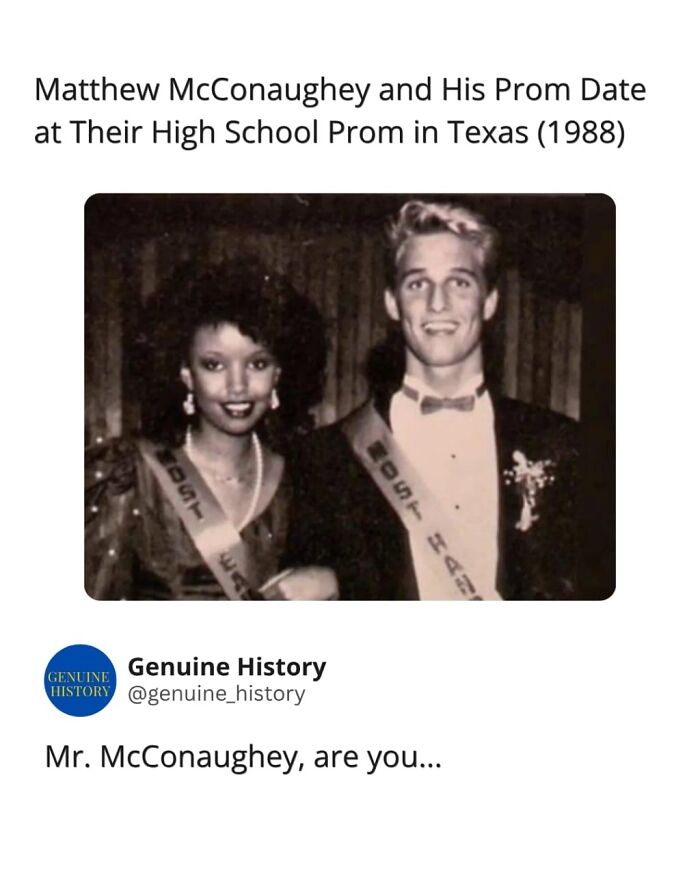
Long before he became an Academy Award-winning actor, Matthew McConaughey was just another high school senior attending prom in Texas. This photo, taken in 1988, shows the future Hollywood star with his prom date, proudly wearing a sash that reads “Most Handsome”—a title many would say aged remarkably well. Years before Dazed and Confused, Interstellar, and Dallas Buyers Club, McConaughey already had the charm and confidence that would later make him one of Hollywood’s most recognizable actors. Sometimes, the signs of future stardom show up long before the spotlight ever does.
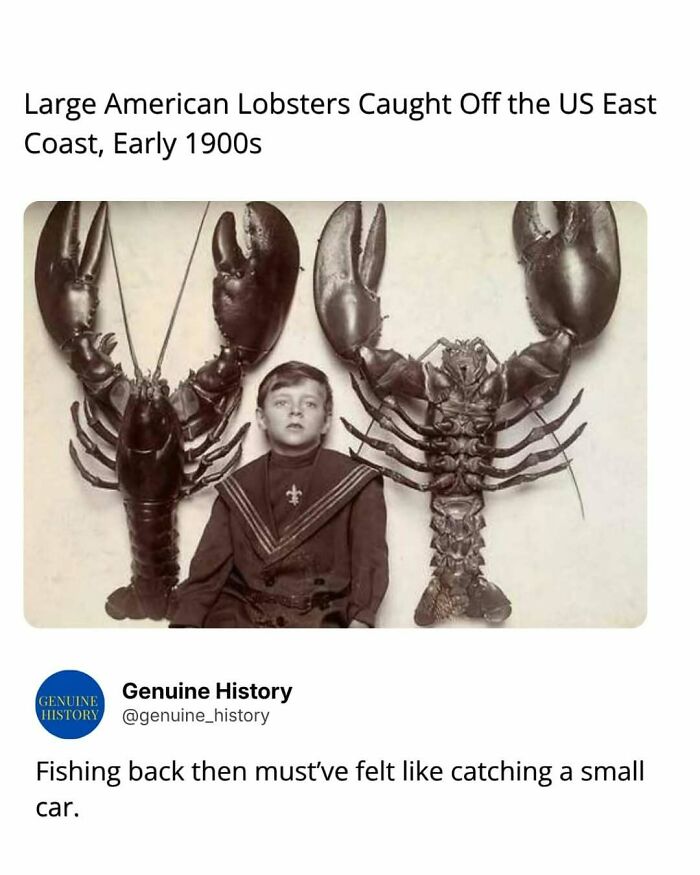
This photo from the early 1900s shows American lobsters caught off the US East Coast that are nearly as big as the kid sitting between them. Back then, lobsters commonly hit 20-30 pounds because there was almost no commercial fishing pressure. The ocean was full, the lobsters lived for decades, and they just kept growing. Some records from that era list lobsters over 40 pounds with claws bigger than a human forearm. Today a “large” lobster at the market is usually 1.5-2 pounds. The reason they’re so rare now comes down to math. Lobsters don’t stop growing as they age, and they can live 50+ years. But modern fishing catches them way before they hit that age. Combined with habitat changes and warming water, we just don’t see century-old sea bugs anymore. So yeah, fishing back then must’ve felt like reeling in something closer to a small car than dinner. That’s how depleted the oceans have become in just 100 years.
I found this: "Lobsters were once so incredibly abundant and cheap that they were considered the ultimate "poor food" in colonial America. In fact, they were nicknamed the "cockroaches of the sea" and "poor man's protein." One reason for their bad rap however is the way they were prepared back then. Lobsters weren't sold live--if they were sold at all.
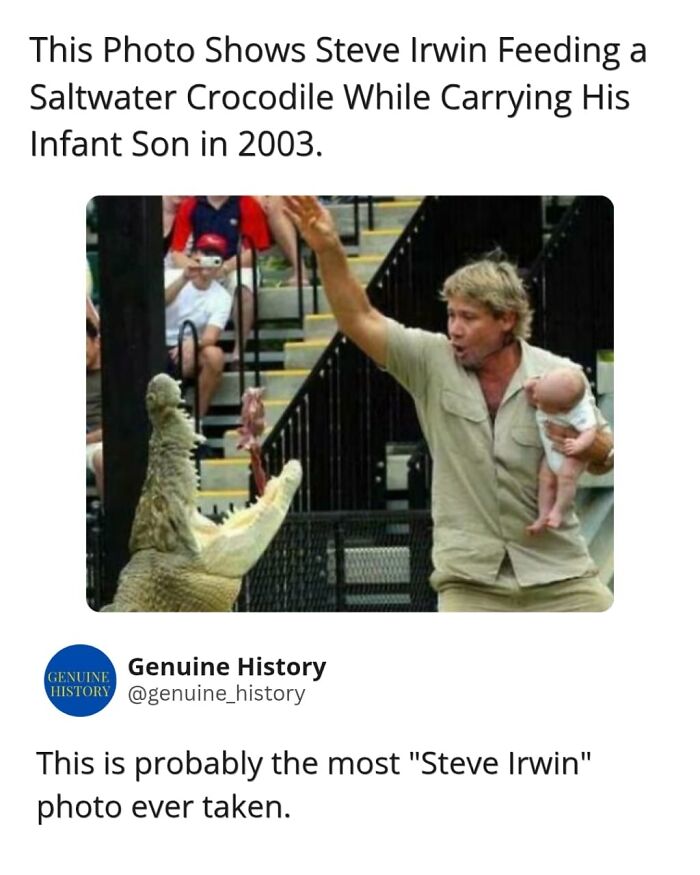
On December 1, 2003, Steve Irwin celebrated his 41st birthday by leading a crocodile feeding demonstration at Australia Zoo while holding his one-month-old son, Robert. The image quickly made headlines around the world, with many questioning whether the situation placed the infant at unnecessary risk. Although Queensland child welfare authorities reviewed the incident, no charges were filed. Irwin maintained that he had complete control of the crocodile and never believed his son was in danger. More than two decades later, the photograph remains one of the most debated moments of his career.
Has it ever happened to you that you finished a yoghurt, put the empty container into the sink and threw the spoon into a trashcan? Just saying...
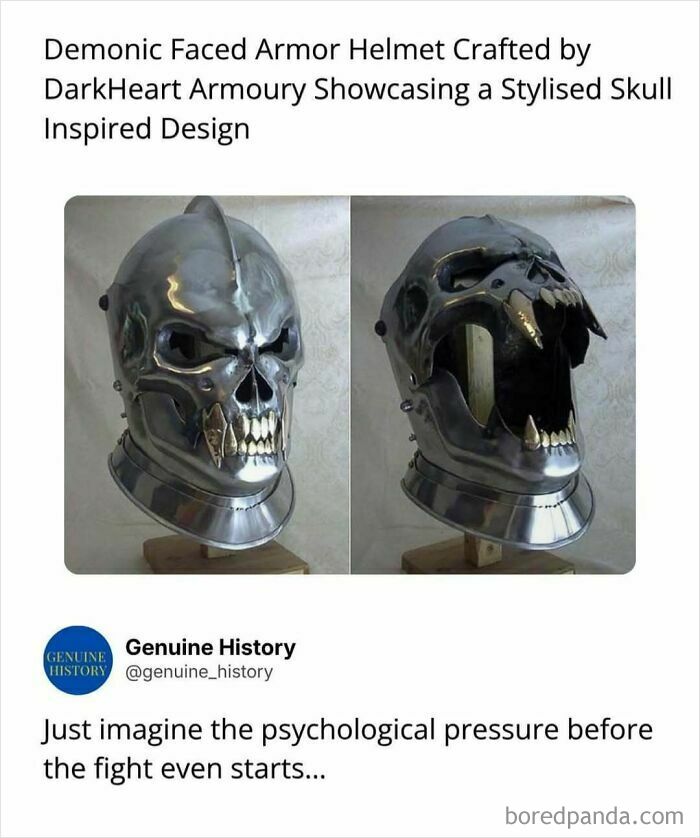
This demonic-faced helmet by DarkHeart Armoury turns armor into psychological warfare. Crafted as a stylized skull with bared fangs, it’s designed to do more than protect. Before any sword swings, it hits the enemy with fear. The polished steel catches light, the hollow eyes stare, and the jaw looks ready to bite. Medieval armor wasn’t just defense - it was intimidation. Just imagine the psychological pressure before the fight even starts. You’re facing a wall of soldiers, and one of them looks like death itself walked onto the battlefield. That’s the point. Armor like this weaponizes your mind against you. Fear can break a formation faster than any blade. If you had to choose a helmet design to unnerve your enemies, what would it be?
This is not history, this armory is a totally modern creator of "fantasy armour". I suspect this armour has a surface coating of aluminium because their fantasy armour often has.
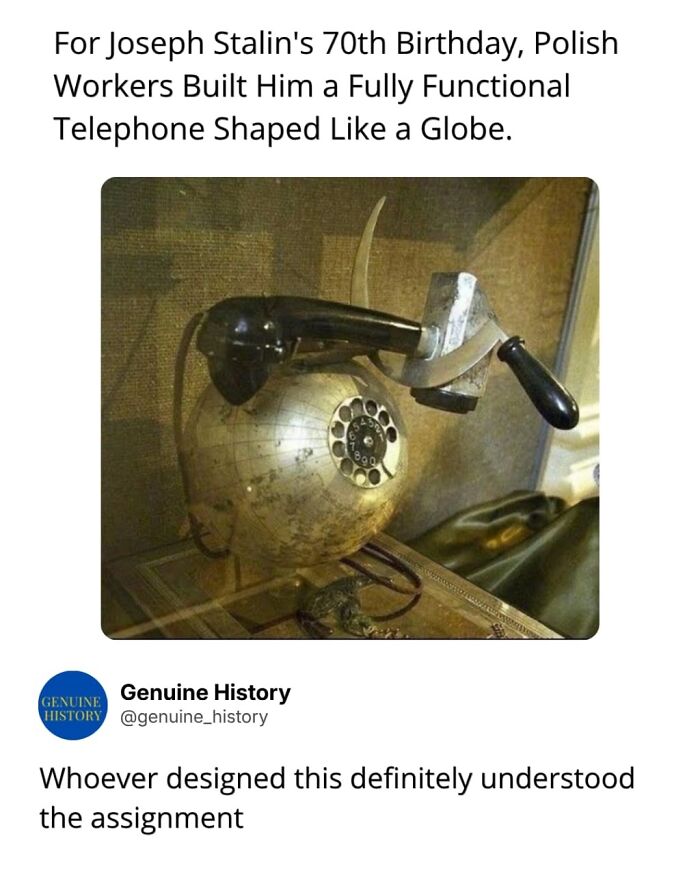
This is how flattery becomes hardware. The image shows a rotary phone built into a metal globe, with a hammer-and-sickle receiver rest. Text above: For Joseph Stalin’s 70th Birthday, Polish Workers Built Him a Fully Functional Telephone Shaped Like a Globe. Caption: Whoever designed this definitely understood the assignment. In December 1949, world leaders sent Stalin gifts for his 70th birthday. Poland sent this. The globe is silver, the receiver sits on a hammer and sickle, and the rotary dial is set into the Northern Hemisphere. It worked. You could actually call someone on it. The message was not subtle: the USSR had the world in its hand, and Stalin had the phone. This is political symbolism as design. Anthropologists call it a propaganda artifact. Gifts to dictators were rarely just gifts. They were loyalty tests, ideological billboards, and insurance policies. Under Stalin, failing to praise him publicly was dangerous. So workers and officials competed to make the most elaborate tributes. Mao sent two train cars of gifts. Kim Il-sung sent a full orchestra. Sometimes a phone isn’t for calling. It’s for answering to power. What’s the most on-the-nose gift you’ve ever seen?
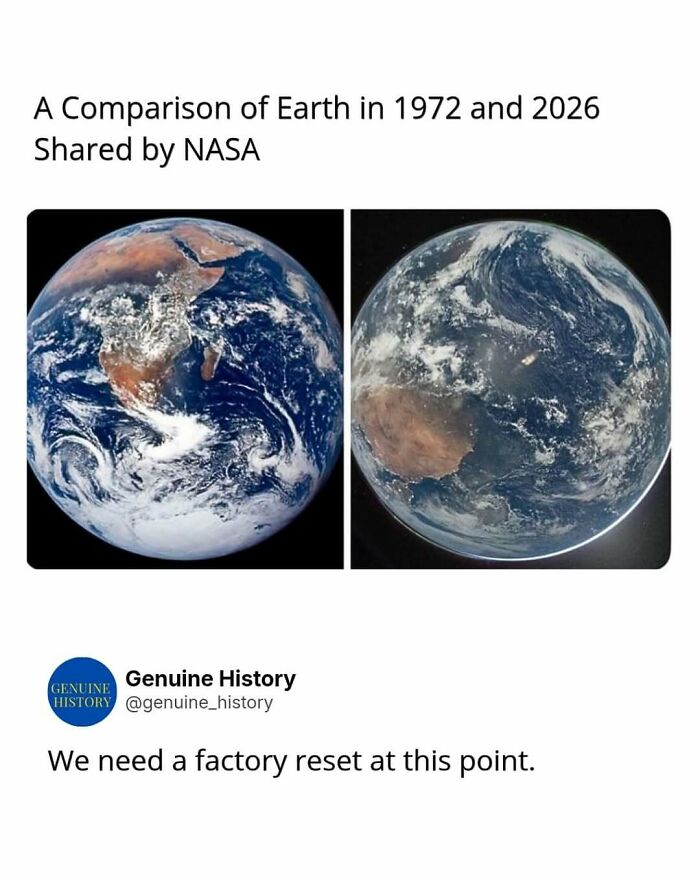
Left: “The Blue Marble,” taken by Apollo 17 astronauts on December 7, 1972. It’s one of the most reproduced photos ever. For the first time, humanity saw Earth as one system - no borders, just oceans, clouds, and continents floating in black. It changed how we thought about the planet. Fragile. Whole. Shared. Right: A 2026 view from modern satellites. More data, more detail, more monitoring. But the message is the same. The oceans are still blue. The clouds still swirl. The land still looks small. 54 years between them, and the Earth hasn’t moved. We have. Population doubled, tech exploded, climate shifted. “Factory reset” is a joke, but the photo isn’t. It asks the same question both times: what are we doing with this one home we’ve got?

This is both different seasons and the second photo was taken from the other side of the globe, which means they had to add filters to make the picture brighter and visible, which dulled the colours.
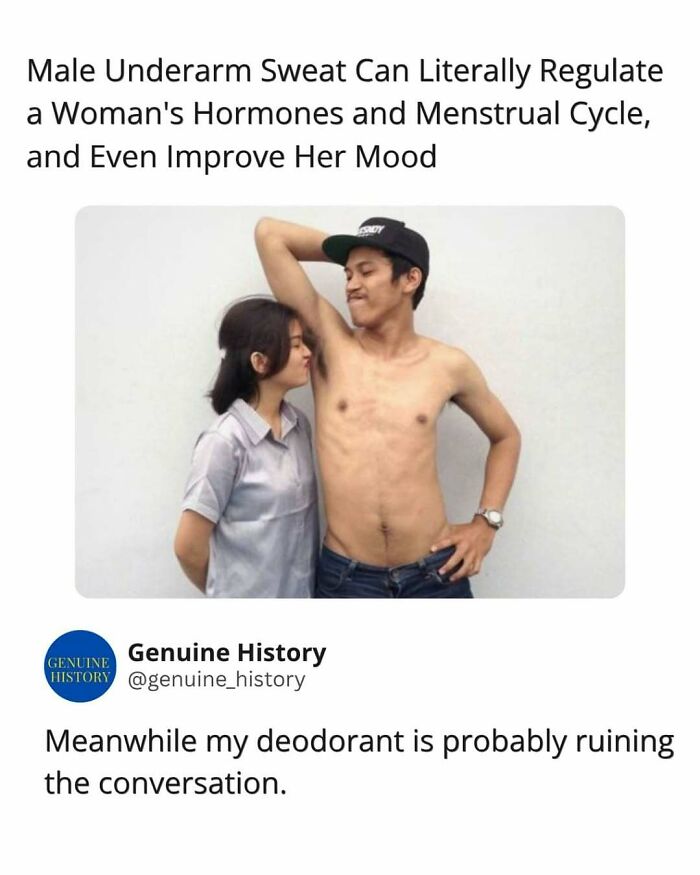
It sounds like an internet myth, but scientists have actually spent decades studying whether chemicals in human body odour can influence other people. Researchers have identified compounds in male underarm secretions, including one called androstadienone, that may affect mood, stress hormones, or certain physiological responses under controlled laboratory conditions. Some studies have reported subtle changes in cortisol levels or mood after exposure. However, these effects are generally small, have not been consistently replicated across all studies, and remain an active area of research. Scientists also disagree about whether humans have pheromones in the same way many other animals do. So while human scent may influence us more than we realize, it’s a long way from saying underarm sweat can reliably regulate someone’s hormones or menstrual cycle in everyday life.

Is there a woman in the world who likes the smell of male underarm sweat?
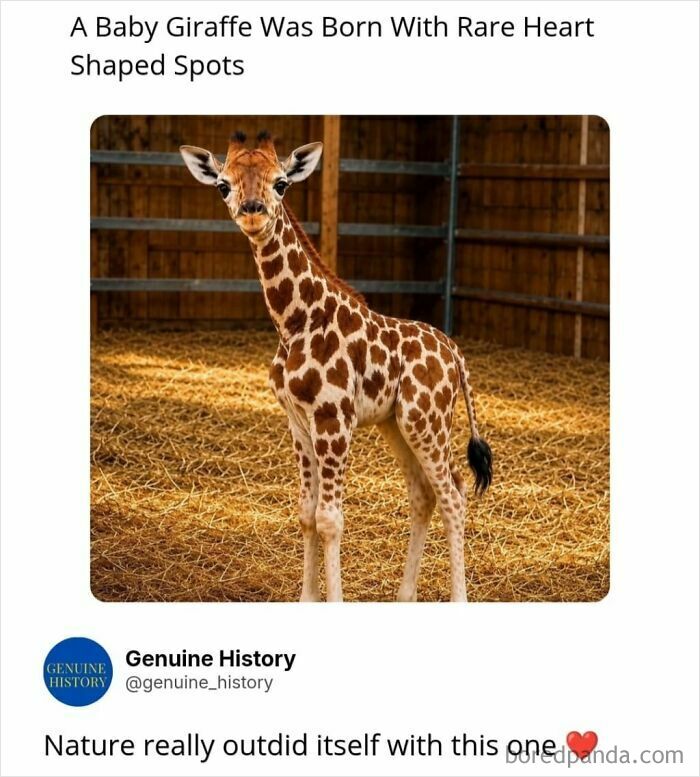
*Nature doesn’t do random.* This baby giraffe was born with heart-shaped spots instead of the usual jagged patches. Giraffe coat patterns are set before birth and stay unique for life, like fingerprints. Each subspecies has a different template: Masai have star shapes, Reticulated have clean nets, Rothschild’s have brown rectangles. Hearts are not a standard variant. Vets think it’s a rare genetic or developmental quirk during fetal pigment cell migration. We see hearts because our brains are wired to. It’s called pareidolia. Humans detect faces, symbols, and meaning in natural patterns to make sense of the world. The spots still function as camouflage in dappled savanna light. The heart shape gives us no survival advantage, but it gives us a story. That’s why the photo went viral. Biology provides variation. Culture decides which variations matter. A “rare” calf becomes valuable because it fits a human symbol. Mutation makes the pattern. Attention makes it rare. *What animal trait would you want if you could design one?*
I did a Google image search and its AI reported that it was an AI-generated image that has gone viral over social media sites like Reddit and Instagram. I tried searching for information from news sites on this image and came up with articles on other giraffes that had one or two roughly heart shaped spots, but nothing on a giraffe with a large number of uniformly heart-shaped spots. If anyone can find a news story about this that's from a credible non-social media source, please post key search words that leads to it.
It takes an incredible amount of patience and creativity to train a commenting AI to be so uncreative, bland and unfunny.
It takes an incredible amount of patience and creativity to train a commenting AI to be so uncreative, bland and unfunny.
















 No fees, cancel anytime