Bored Panda works better on our iPhone app
Continue in app Continue in browser

The Bored Panda iOS app is live! Fight boredom with iPhones and iPads here.

I Make Early Astrological Instruments From Porcelain And Gold
User submission

I Make Early Astrological Instruments From Porcelain And Gold

1

ADVERTISEMENT

Across cultures and time people have treasured different objects from which to gain understanding about life, the world, and the mysteries beyond it.

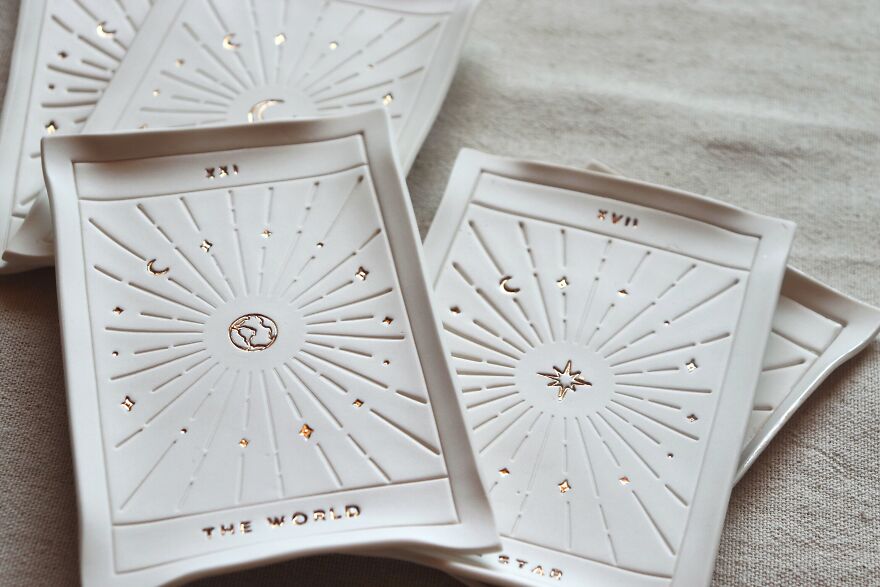
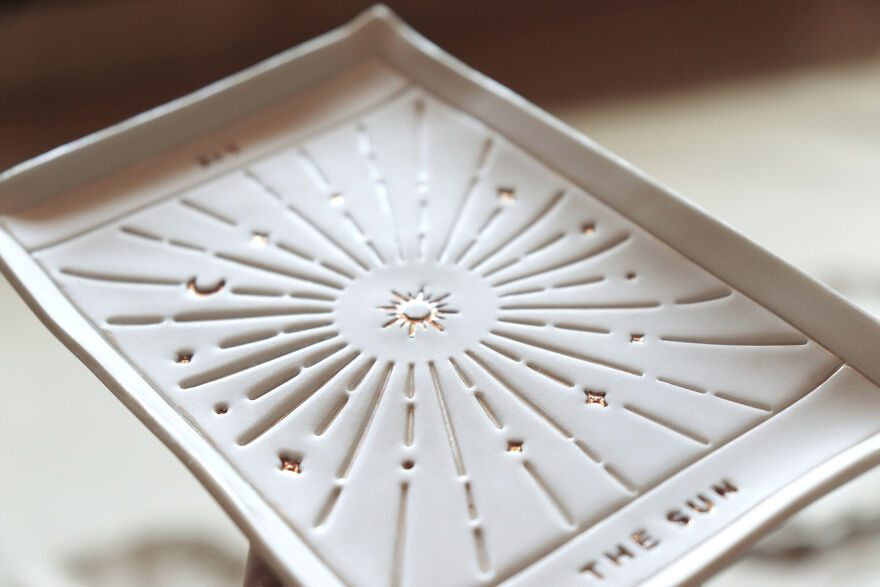
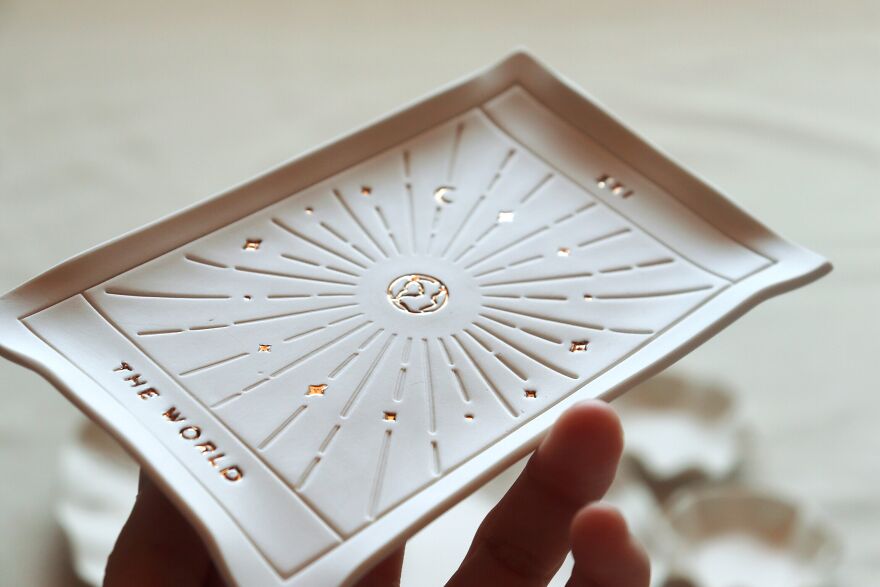
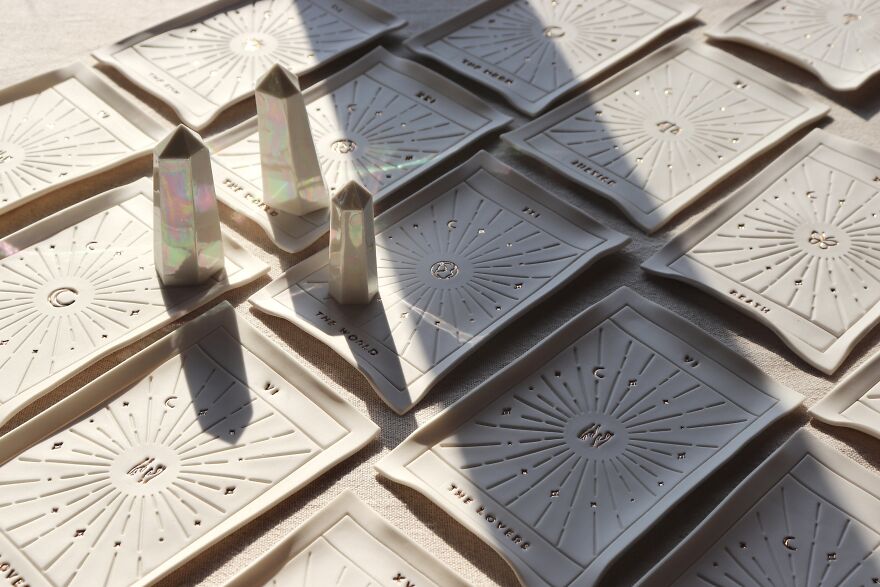
Tarot cards were crafted in the 15th century with illustrations representing various characters, forces, vices, and virtues to explore questions about the self and one’s path in life. That is where I began my work with porcelain – creating decks of tarot cards finished with gold. Though it appears fine and delicate, porcelain is considered one of the strongest and most durable ceramic materials, capable of surviving for thousands of years. Gold is an earthly element once believed by alchemists to represent human renewal and heightened alignment of the mind, spirit, and soul.

Some might consider tarot cards a tool, others a guide, others a source of wonder. For me, making tarot cards from porcelain and liquid gold is a way to help the meaning they hold withstand the passing of time. I became curious about other objects throughout history with which people asked questions – about their place in the world and, perhaps, in the galaxy beyond that. Objects that may have been forgotten but that certainly should not be lost.

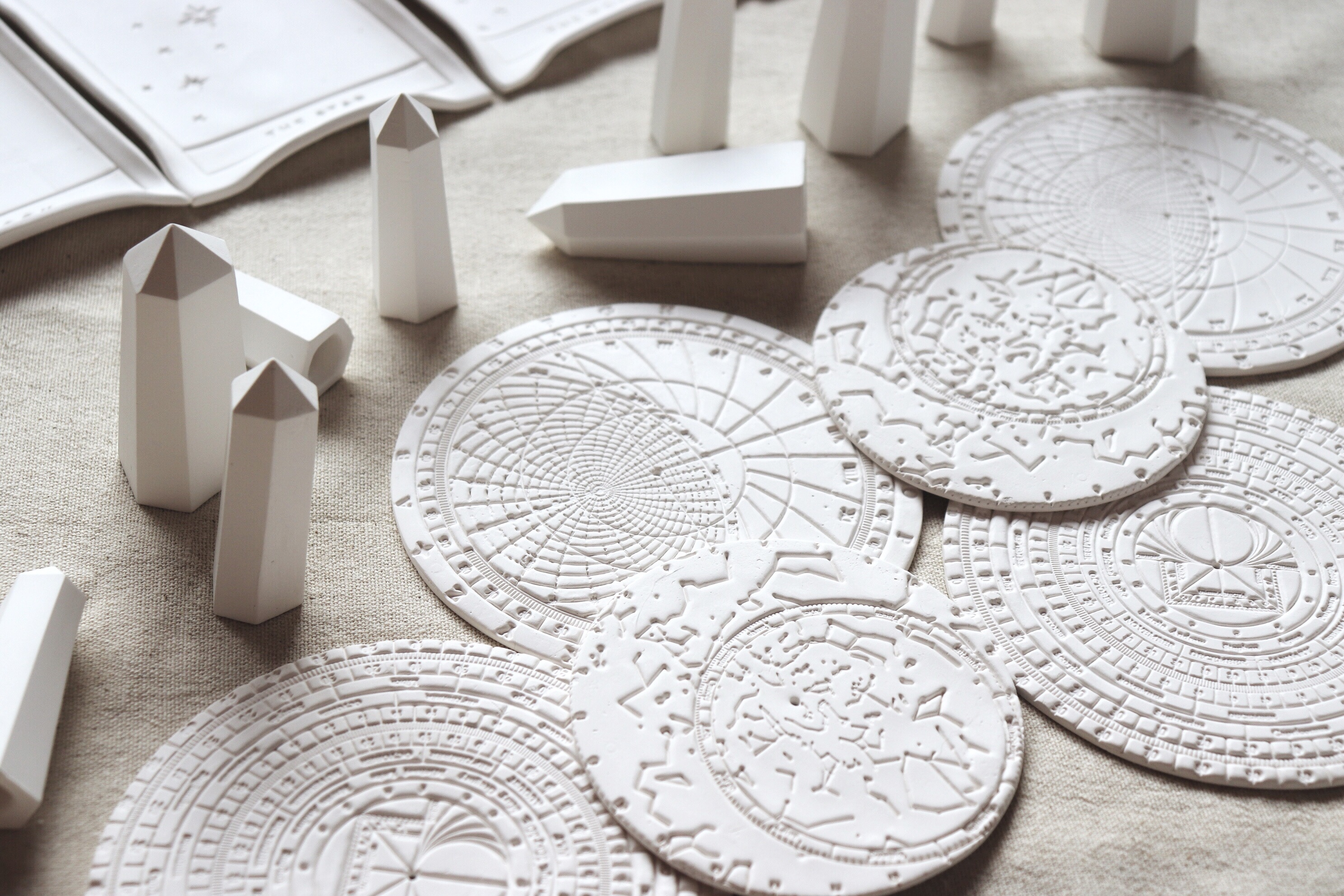
The word ‘astrolabe’ comes from the Greek meaning ‘star holder.’ It is an early observational and navigation instrument using astral bodies like the sun and stars to measure time, positions, and celestial events. The volvelle is the astrolabe’s early cousin, created to calculate phases of the sun and moon in the zodiac. Utilized by mystic philosophers and medieval astronomers, the volvelle was said to contain ‘secret’ knowledge with the potential to predict the future.

ADVERTISEMENT

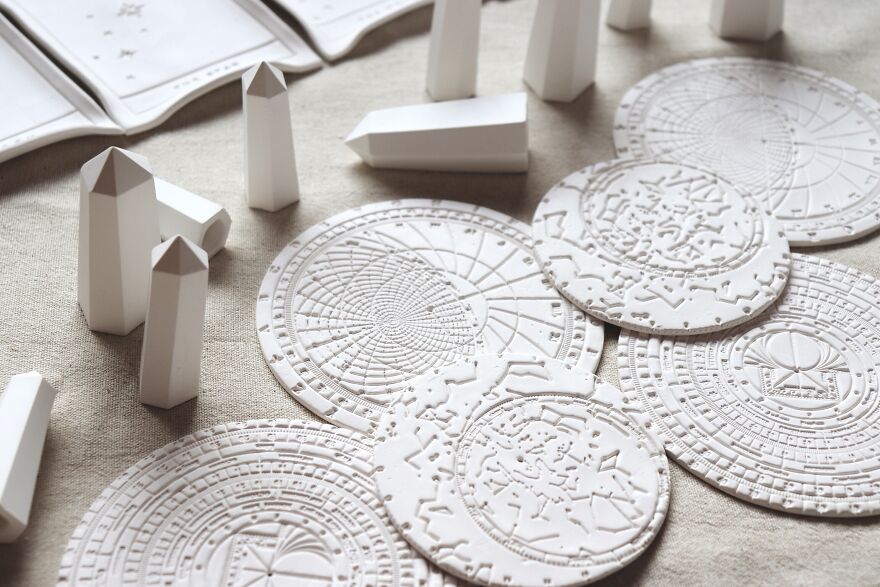
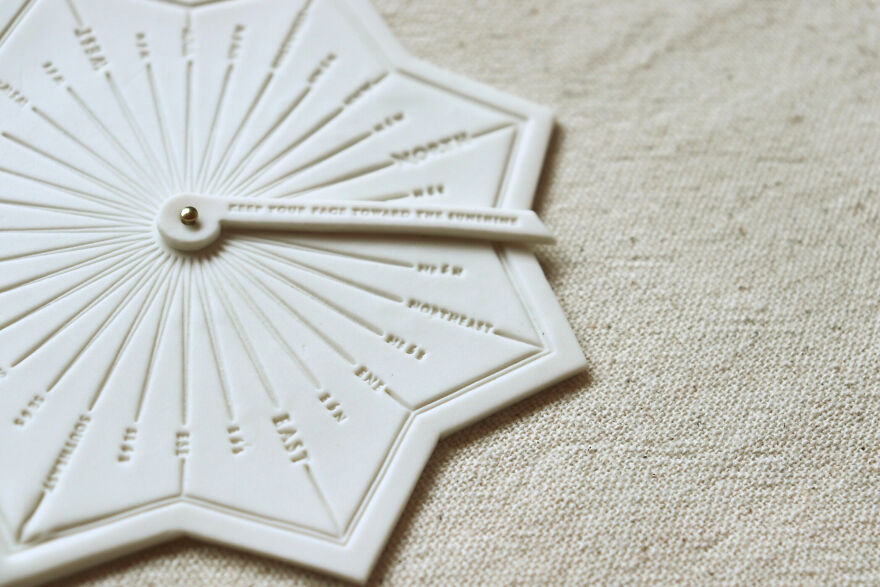
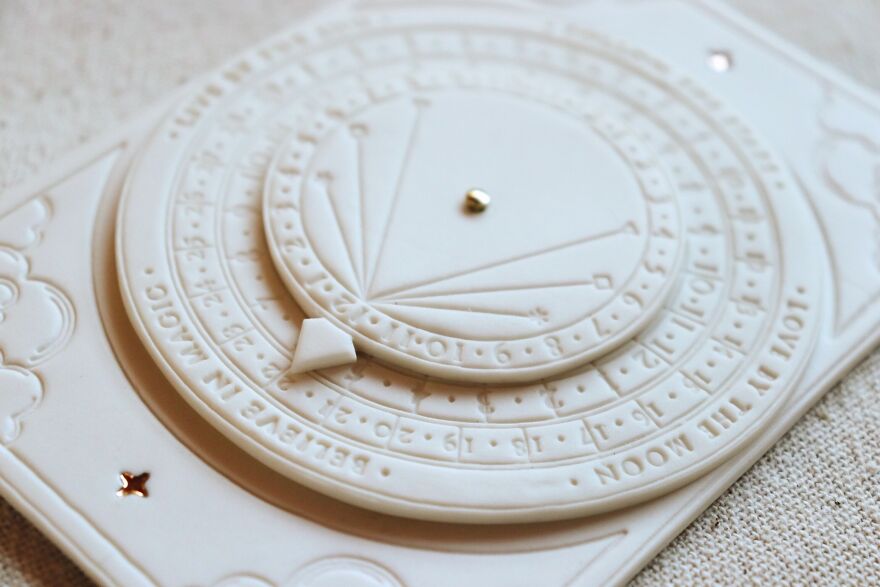
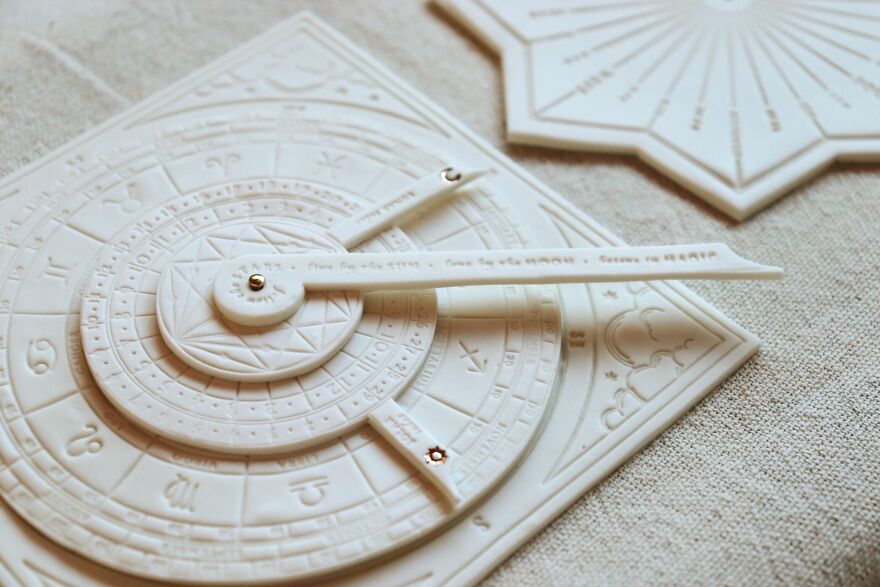
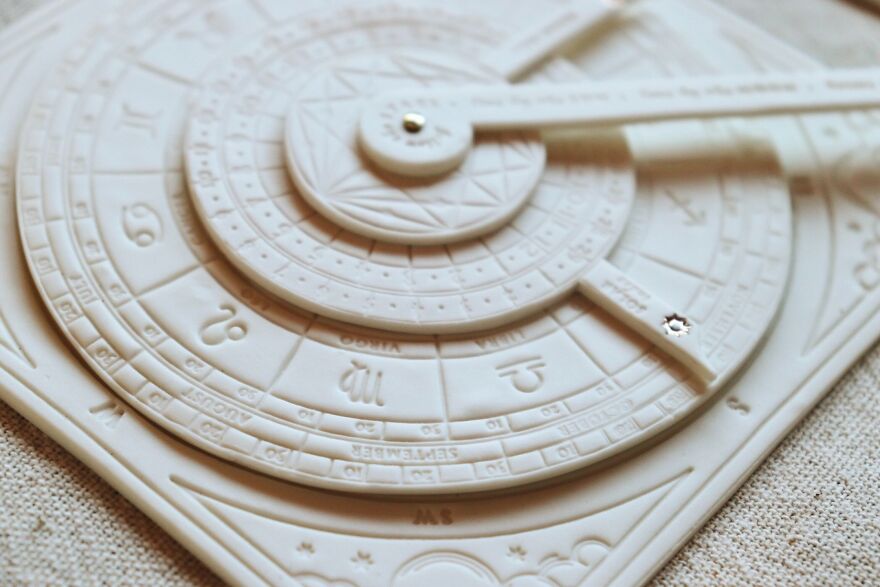
My version of the volvelle is made of five spinning parts: the base compass, the zodiac disc, the sun disc, the moon disc, and the pointer connected by a central pivot. Together, the discs convey different bits of information – like the positions of constellations in the sky, the lunar phase in a given night, the distance of the sun above the horizon in a given day, and the solar time using the moon’s shadow. Each instrument was unique to its maker, and mine has quirks of its own. I can’t claim to know the future, but I’m happy to put the pieces together, look to the stars, and give it a spin.

Looking up and wondering about the night sky is an experience shared by people throughout all times and all places. Today, we may have a better idea of what exists beyond us than those who came before us. But I hope and I believe there will be always be questions to be asked and new meaning to be found.

More info: Instagram
RELATED:

    Across cultures and time people have treasured different objects from which to gain understanding about life, the world, and the mysteries beyond it.

    ADVERTISEMENT

    Tarot cards were crafted in the 15th century with illustrations representing various characters, forces, vices, and virtues to explore questions about the self and one’s path in life. That is where I began my work with porcelain – creating decks of tarot cards finished with gold.

    Though it appears fine and delicate, porcelain is considered one of the strongest and most durable ceramic materials, capable of surviving for thousands of years. Gold is an earthly element once believed by alchemists to represent human renewal and heightened alignment of the mind, spirit, and soul.

    ADVERTISEMENT

    Some might consider tarot cards a tool, others a guide, others a source of wonder. For me, making tarot cards from porcelain and liquid gold is a way to help the meaning they hold withstand the passing of time.

    I became curious about other objects throughout history with which people asked questions – about their place in the world and, perhaps, in the galaxy beyond that. Objects that may have been forgotten but that certainly should not be lost.

    ADVERTISEMENT

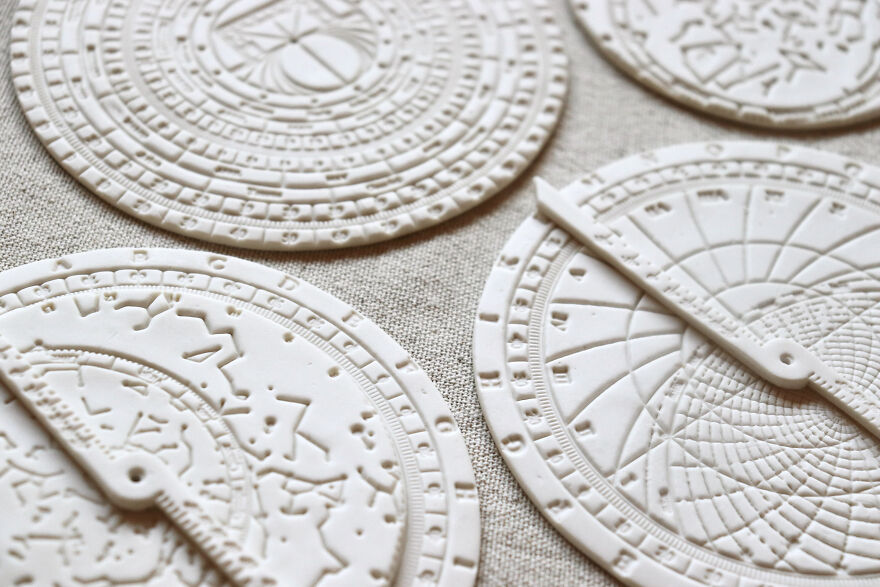
    The word ‘astrolabe’ comes from the Greek meaning ‘star holder.’ It is an early observational and navigation instrument using astral bodies like the sun and stars to measure time, positions, and celestial events.

    ADVERTISEMENT

    The volvelle is the astrolabe’s early cousin, created to calculate phases of the sun and moon in the zodiac. Utilized by mystic philosophers and medieval astronomers, the volvelle was said to contain ‘secret’ knowledge with the potential to predict the future.

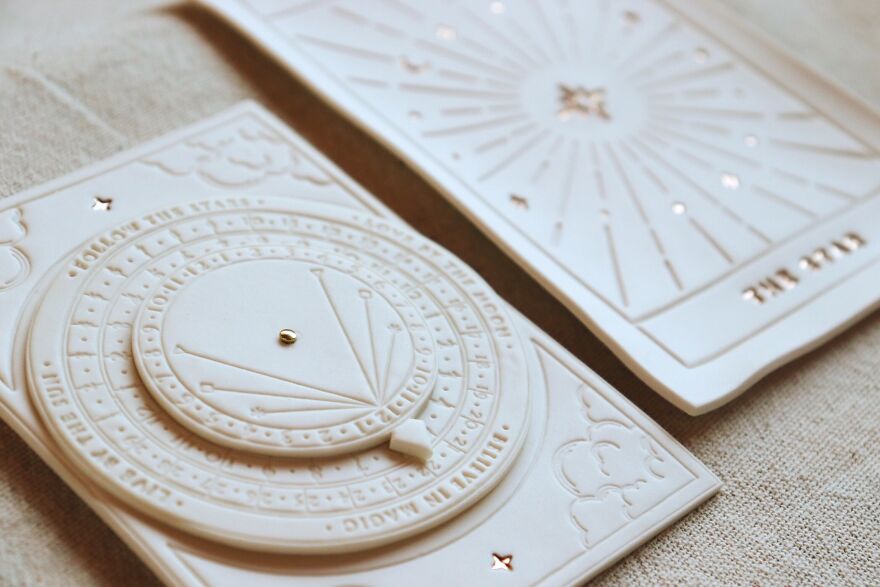
    My version of the volvelle is made of five spinning parts: the base compass, the zodiac disc, the sun disc, the moon disc, and the pointer connected by a central pivot.

    ADVERTISEMENT
    ADVERTISEMENT

    Together, the discs convey different bits of information – like the positions of constellations in the sky, the lunar phase in a given night, the distance of the sun above the horizon in a given day, and the solar time using the moon’s shadow.

    Each instrument was unique to its maker, and mine has quirks of its own. I can’t claim to know the future, but I’m happy to put the pieces together, look to the stars, and give it a spin.

    Looking up and wondering about the night sky is an experience shared by people throughout all times and all places. Today, we may have a better idea of what exists beyond us than those who came before us. But I hope and I believe there will be always be questions to be asked and new meaning to be found.

    ADVERTISEMENT
    Share on Facebook
    Lauren Rundquist

    Lauren Rundquist

    Author, Community member

    Read more »

    Curiosity. Intentionality. Humanity. Sunshine.

    Read less »
    Lauren Rundquist

    Lauren Rundquist

    Author, Community member

    Curiosity. Intentionality. Humanity. Sunshine.

    Diana Lopetaitė

    Diana Lopetaitė

    Writer, Community member

    Read more »

    Hey there, Pandas! My name is Diana (though some people call me Diane, Deanna, or even Liana sometimes), and I am an Artist Ventures Lead at Bored Panda. In my role, I work closely with artists and creators from all over the world, helping bring their work to a wider audience and highlighting the incredible things people create. A big part of what I do is connecting talented artists with the platform and making sure their projects, stories, and visuals get the recognition they deserve. Outside of work, you can usually find me brewing a nice cup of coffee, making pizza from scratch, or baking brownies. I also love traveling, going to concerts, and spending time with my cats (heavy on that one, because I’m definitely a cat mom).

    Read less »

    Diana Lopetaitė

    Diana Lopetaitė

    Writer, Community member

    Hey there, Pandas! My name is Diana (though some people call me Diane, Deanna, or even Liana sometimes), and I am an Artist Ventures Lead at Bored Panda. In my role, I work closely with artists and creators from all over the world, helping bring their work to a wider audience and highlighting the incredible things people create. A big part of what I do is connecting talented artists with the platform and making sure their projects, stories, and visuals get the recognition they deserve. Outside of work, you can usually find me brewing a nice cup of coffee, making pizza from scratch, or baking brownies. I also love traveling, going to concerts, and spending time with my cats (heavy on that one, because I’m definitely a cat mom).

    What do you think ?
    You May Like
    Related on Bored Panda
    Popular on Bored Panda
    Trending on Bored Panda
    Also on Bored Panda
    ADVERTISEMENT