Get Premium
Dark mode theme is available exclusively for premium users. Learn more about the benefits of subscribing.
No fees, cancel anytime.

 Dark Mode Ad-Free Browsing Unlimited Content
 Ad-Free Browsing Unlimited Content Dark Mode
Join 1.2 million Panda readers who get the best art, memes, and fun stories every week!

Navigating a partner’s feelings when they won’t communicate is much like walking through a minefield, because a misstep can just end the entire thing. But people shouldn’t suffer in silence, so figuring out how to work on one’s relationship sometimes takes some planning.
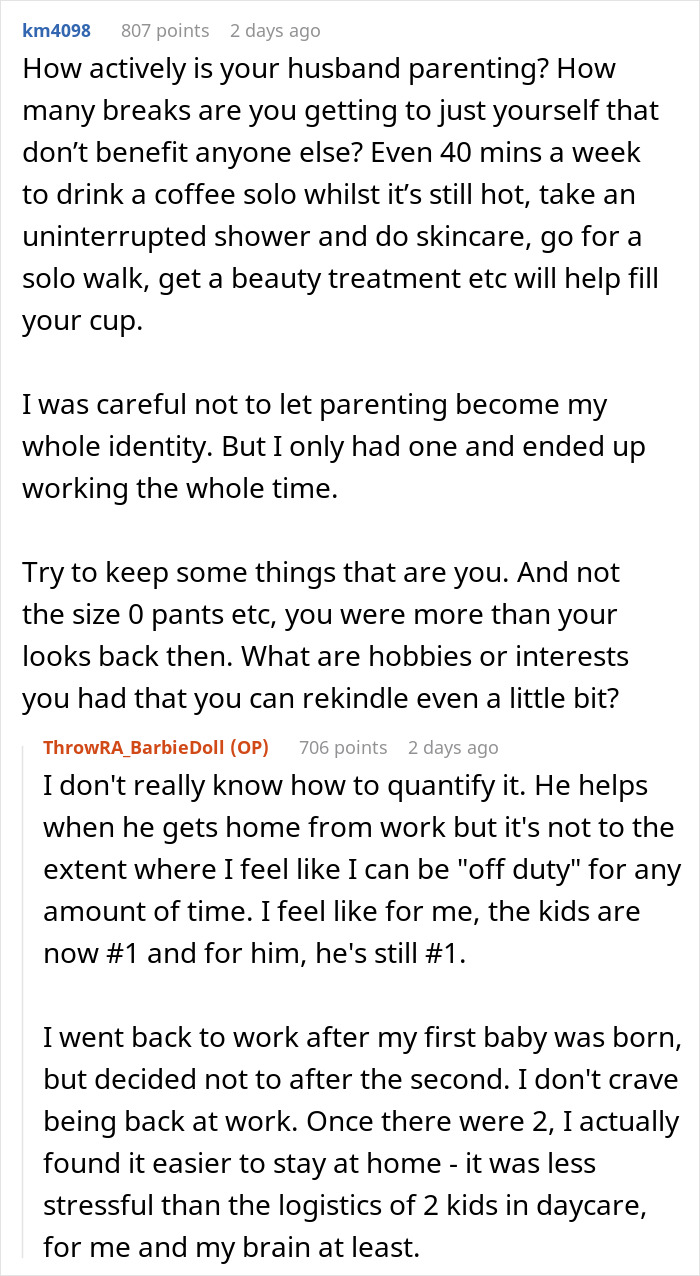
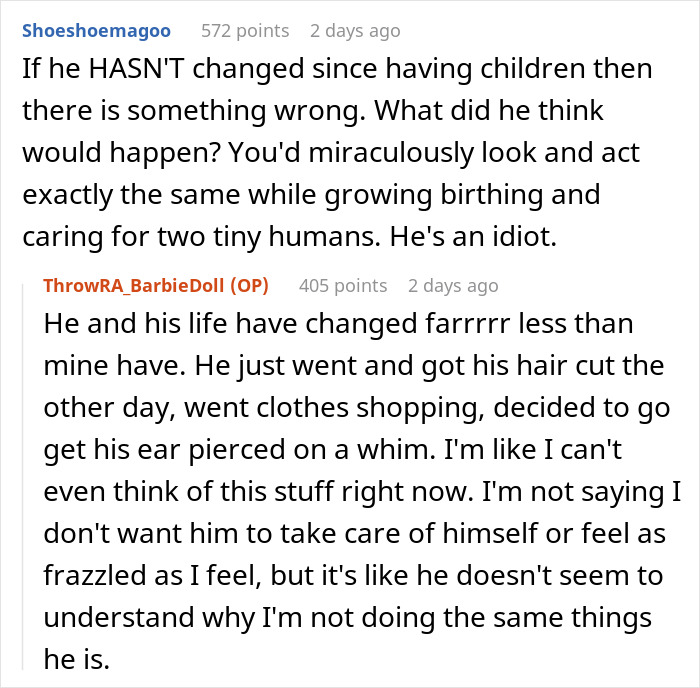
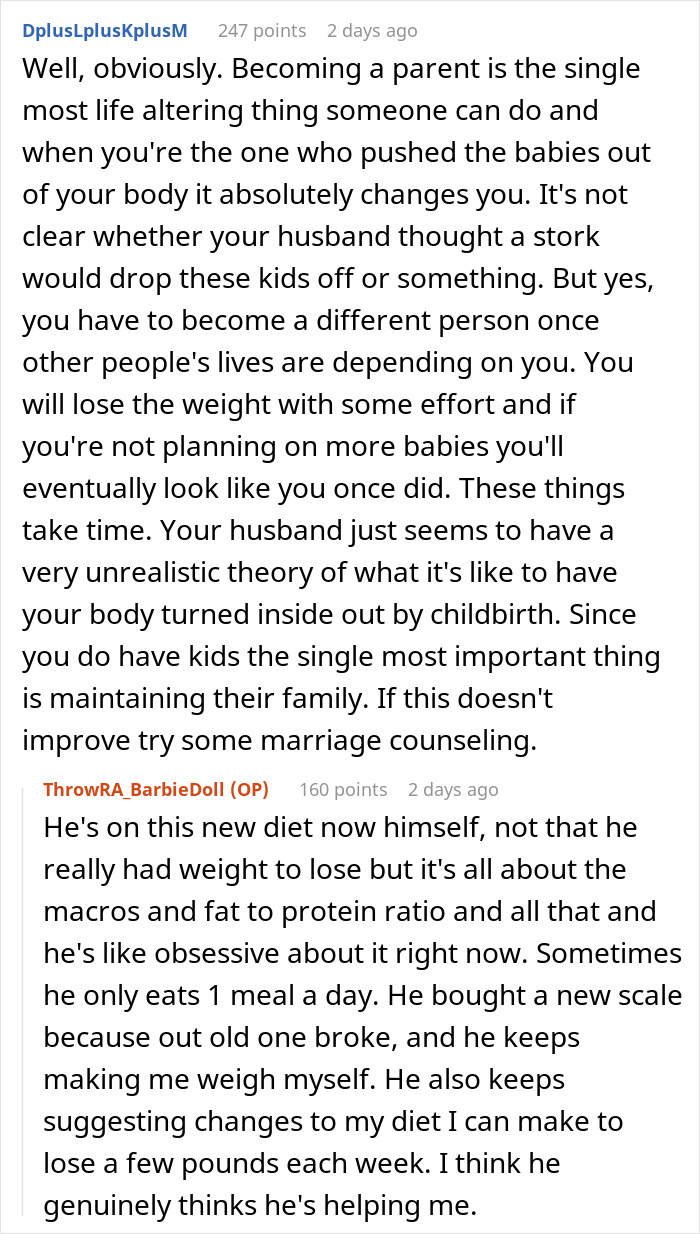
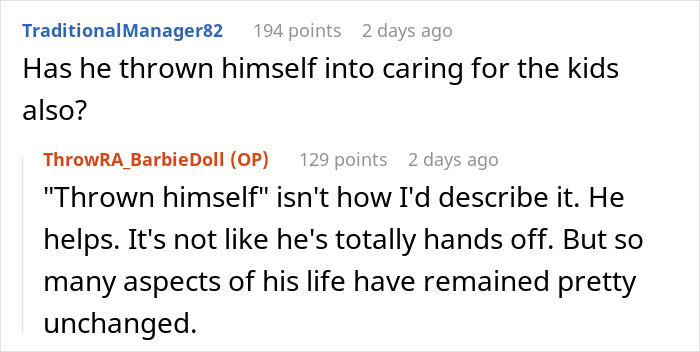
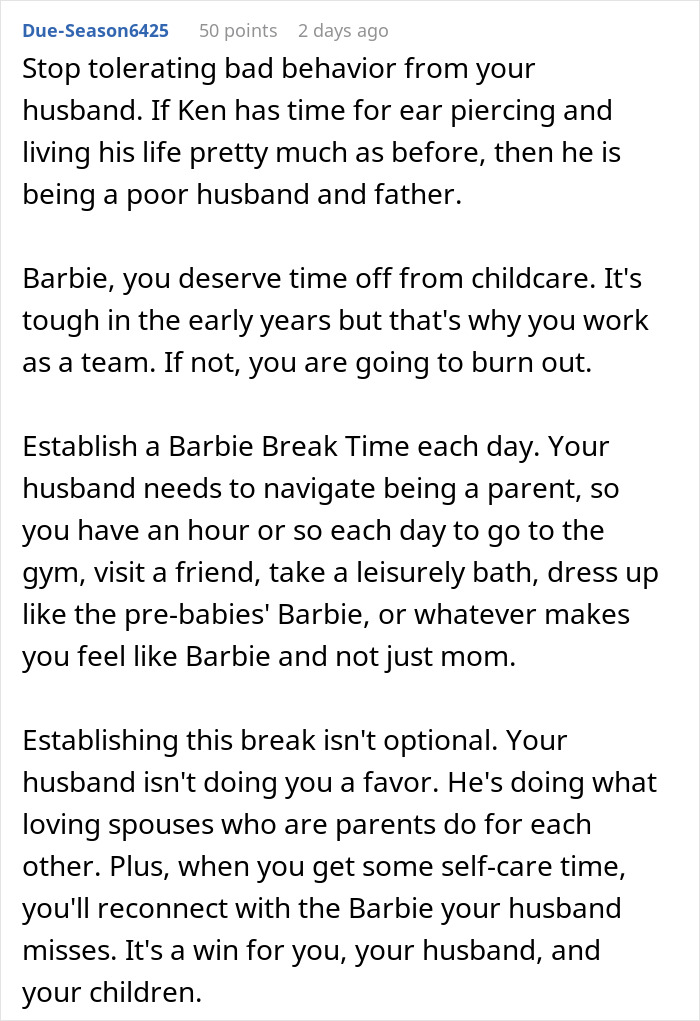
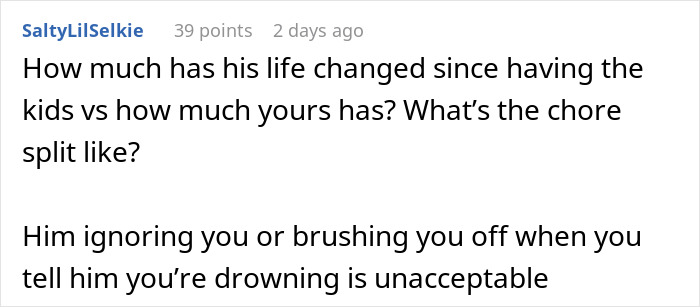
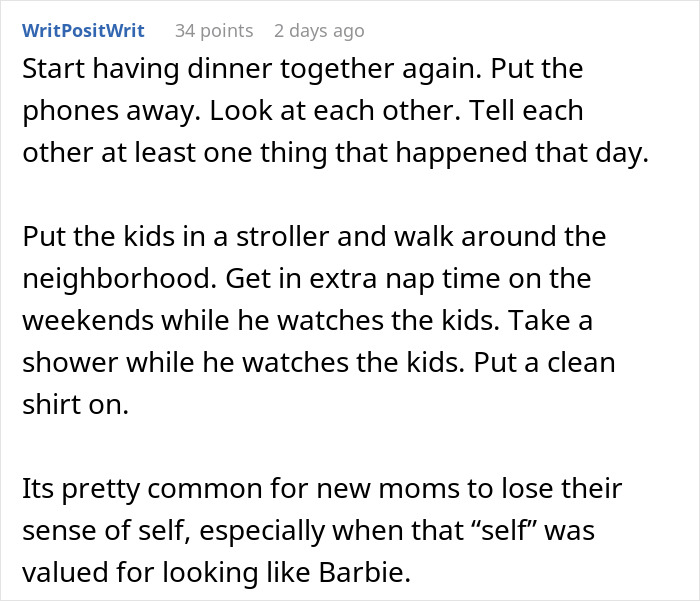
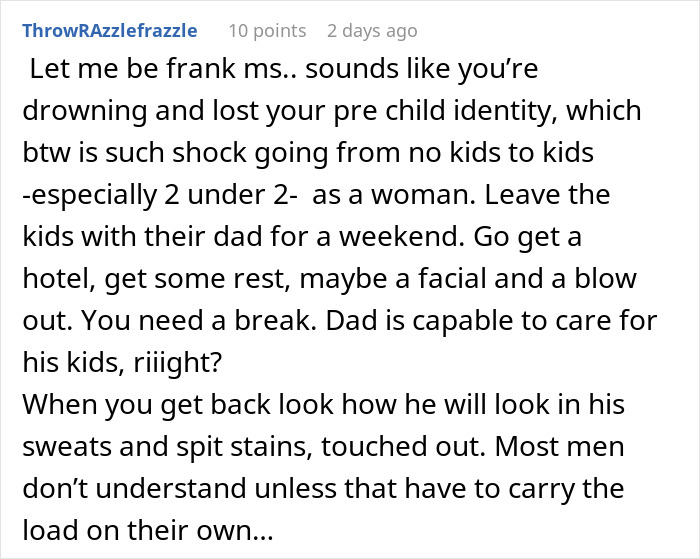
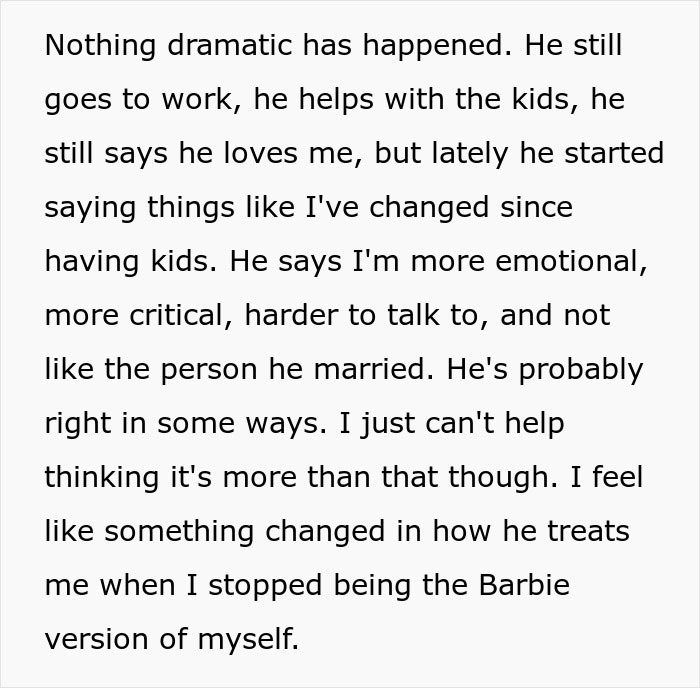
A woman went online to ask for advice on how to handle her husband’s behavior. After their second child, she noted that suddenly he didn’t want to talk much or even interact and she reflected that he maybe simply wanted an older version of her back. Netizens shared some similar stories and gave what advice they could.
Image credits: Natalia Blauth / Unsplash (not the actual photo)



Image credits: Magnific (not the actual photo)
Image credits: The Yuri Arcurs Collection / Magnific (not the actual photo)
Image credits: ThrowRA_BarbieDoll
The transition into parenthood is one of the most disorienting things a couple can go through together, and it tends to work like a pressure test on whatever was already there. What holds stays. What was always a little shaky tends to crack. The difficulty is that it’s genuinely hard to tell which one you’re looking at while you’re still in the middle of it.
When two young children arrive in rapid succession, the relationship doesn’t just get put on pause. It gets restructured from the ground up. Sleep deprivation alone can make someone feel like a completely different person. Add to that the identity upheaval that comes with a body that’s changed, a schedule that’s been swallowed whole, and a sense of self that used to feel fixed and now doesn’t, and you’re looking at someone going through something genuinely significant. Being more emotional, more critical, more frayed at the edges isn’t a character flaw in that context. It’s a predictable response to an objectively overwhelming situation.
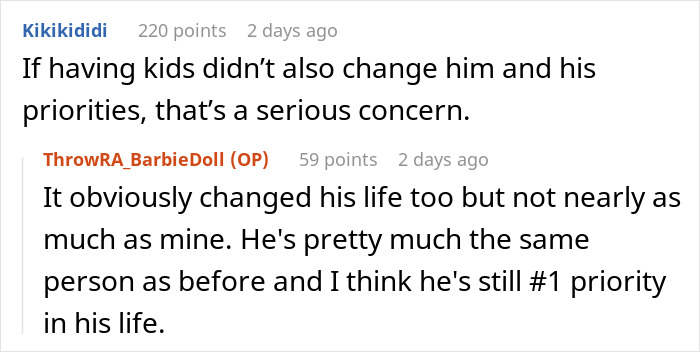
That said, it’s worth being honest about the other partner’s experience too. Someone who isn’t the primary caregiver in those early months can feel just as lost, just in a different way. They’re often watching someone they love struggle and not knowing how to fix it, falling back on the only tools they have, which sometimes aren’t the right ones. Telling someone to sleep more when they can’t sleep more isn’t necessarily callousness. It might just be someone who doesn’t know how to sit with a problem he can’t solve. The conversations drying up, the dinners eaten standing at the kitchen counter, these things can reflect someone withdrawing out of helplessness as much as anything else. That doesn’t make it acceptable, but it does make it understandable.
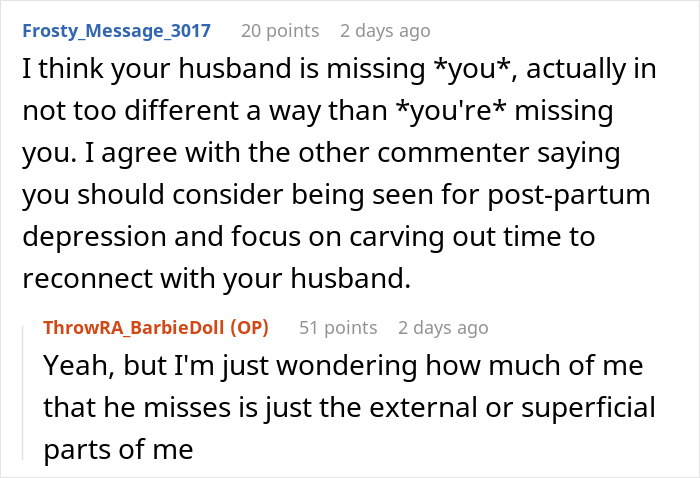
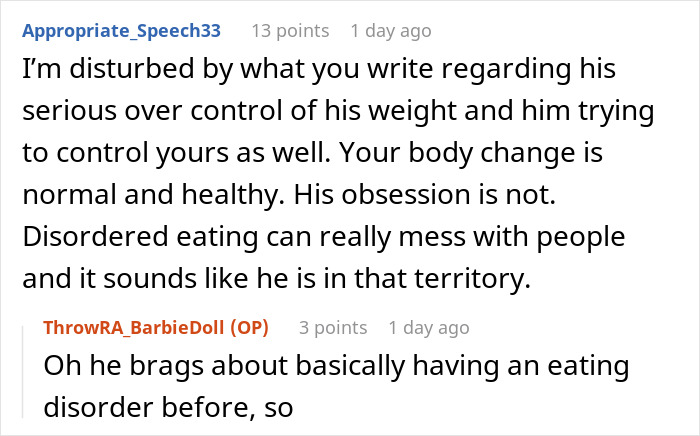
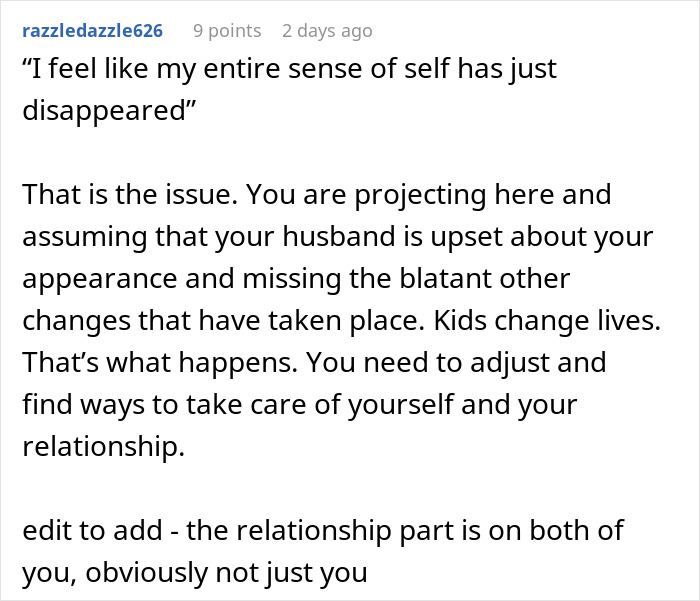
The harder question is whether a relationship was ever built on something real. And that question deserves to be taken seriously rather than dismissed as new-parent anxiety. A relationship that was always more about an image than a connection will show that under pressure. But it’s also true that almost every couple, given two babies under two, a loss of physical confidence, a communication breakdown and chronic exhaustion, would look a little hollow from the inside. The conditions described here would strain relationships that are deeply and genuinely loving.
One useful thing to look for is whether the distance is directional or mutual. A partner who is pulling away specifically because someone has stopped performing a certain version of themselves is doing something different from a partner who is equally lost and disconnected from the situation as a whole. The first is a signal about what the relationship was built on. The second is a signal about coping style and communication skills, which are fixable problems. The two can look similar from the inside, but they tend to feel different. One feels like being evaluated. The other feels like being left alone in a room you’re both standing in.
It’s also worth noting that there is no clean timeline for when the adjustment period ends and the new normal begins. Couples therapists who work with new parents will often say that the first two years after a baby arrives are among the most statistically stressful for relationships. Two babies in under two years compresses that even further. Expecting clarity about the state of the relationship right now is a little like trying to assess how a house is holding up while it’s still under construction.
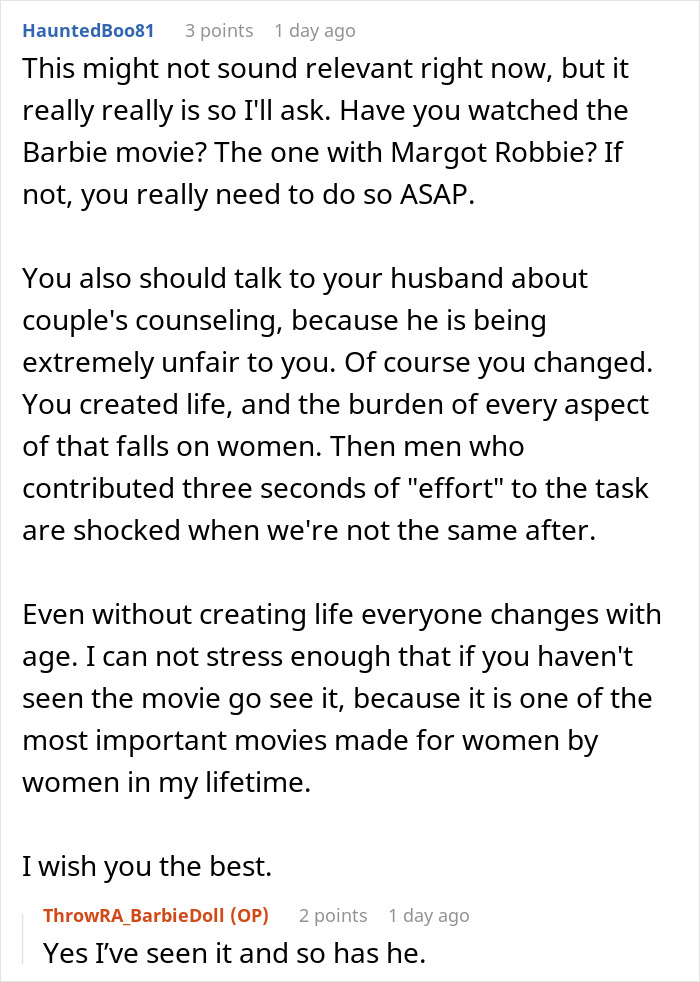
What the situation calls for is a direct conversation, not about logistics and not about who’s more tired, but about what both people actually need and whether they’re willing to show up for each other when neither of them is at their best. That conversation, and what happens during and after it, will be far more revealing than the silence that’s been filling the space between them.










By entering your email and clicking Subscribe, you're agreeing to let us send you customized marketing messages about us and our advertising partners. You are also agreeing to our Privacy Policy.
Thank you! You've successfully subscribed to newsletters!



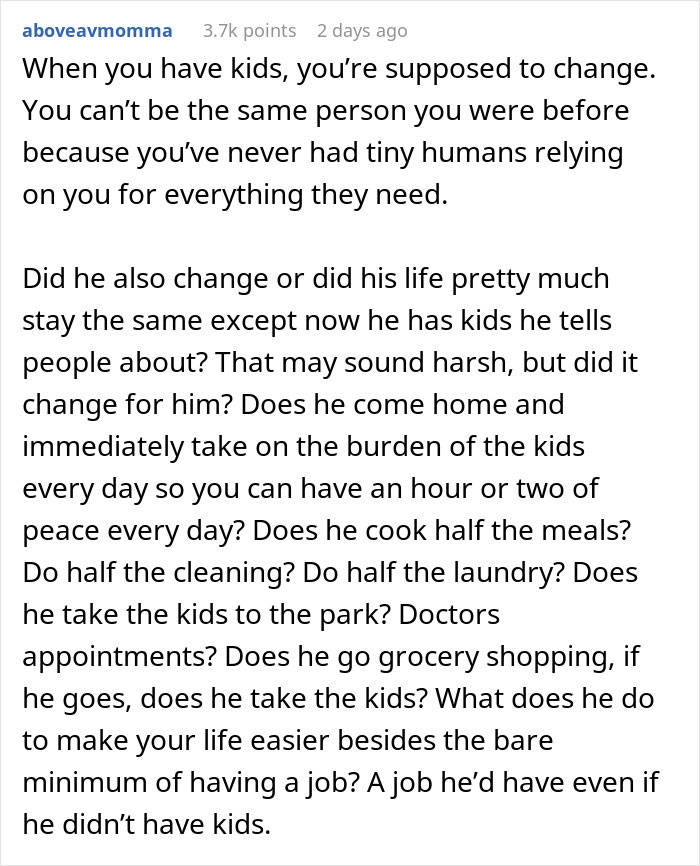
If she tries to have a weekend away, she needs to be sure to tell her parents and his, as well as any other family member, that they are NOT to help him out at all. He NUST do everything HIMSELF. The most they can do if he calls is give advice over the phone, but NOT in person. He must bear 100% of the burden, or he will never get it. I had a friend who met and married his wife when they were both in the Army. He mustered out shortly before she did, which was not long after they had twins. He told me he learned how to be a father the weekend his wife had to go out on maneuvers and he was left alone with their two infants. Now, they were stationed far away from both families, so he was truly alone with the kids, except maybe for being able to call his mother long distance for advice. This was also before cellphones, so he could not call her. He told me that, by the time he was halfway through the first day, he got the hang of it. By the next morning, having put in 24 hours, he said he was figuring out a system to make sure both babies were clean, fed, changed, played with, and cuddled. Basically, instead of looking on caring for HIS kids as a burden or temporary “babysitting” until he could dump them back on their mother, he decided to make it a challenge to himself to find a way to 100% care for his children by himself, so that if something ever happened to his wife (she was still a soldier, so subject to being called to active duty if there was a conflict), he wouldn’t be totally lost, and would be just fine as a single dad with two babies. They ended up having 3 more kids, and he was always a really good hands-on dad changing diapers and feeding and bathing his babies, sharing all responsibilities with his wife. THAT is how you do it.
If she tries to have a weekend away, she needs to be sure to tell her parents and his, as well as any other family member, that they are NOT to help him out at all. He NUST do everything HIMSELF. The most they can do if he calls is give advice over the phone, but NOT in person. He must bear 100% of the burden, or he will never get it. I had a friend who met and married his wife when they were both in the Army. He mustered out shortly before she did, which was not long after they had twins. He told me he learned how to be a father the weekend his wife had to go out on maneuvers and he was left alone with their two infants. Now, they were stationed far away from both families, so he was truly alone with the kids, except maybe for being able to call his mother long distance for advice. This was also before cellphones, so he could not call her. He told me that, by the time he was halfway through the first day, he got the hang of it. By the next morning, having put in 24 hours, he said he was figuring out a system to make sure both babies were clean, fed, changed, played with, and cuddled. Basically, instead of looking on caring for HIS kids as a burden or temporary “babysitting” until he could dump them back on their mother, he decided to make it a challenge to himself to find a way to 100% care for his children by himself, so that if something ever happened to his wife (she was still a soldier, so subject to being called to active duty if there was a conflict), he wouldn’t be totally lost, and would be just fine as a single dad with two babies. They ended up having 3 more kids, and he was always a really good hands-on dad changing diapers and feeding and bathing his babies, sharing all responsibilities with his wife. THAT is how you do it.



































 No fees, cancel anytime









32
5