Get Premium
Dark mode theme is available exclusively for premium users. Learn more about the benefits of subscribing.
No fees, cancel anytime.

 Dark Mode Ad-Free Browsing Unlimited Content
 Ad-Free Browsing Unlimited Content Dark Mode
Join 1.2 million Panda readers who get the best art, memes, and fun stories every week!

Medical procedures can be scary. While some of us shake in fear even at the thought of having our blood drawn, surgery makes many people fairly anxious. Research shows that about 60-80% of surgical patients feel preoperative anxiety, and sometimes it doesn’t even matter if you’re having a minor surgery: the nerves of being in a hospital just creep up on you regardless.
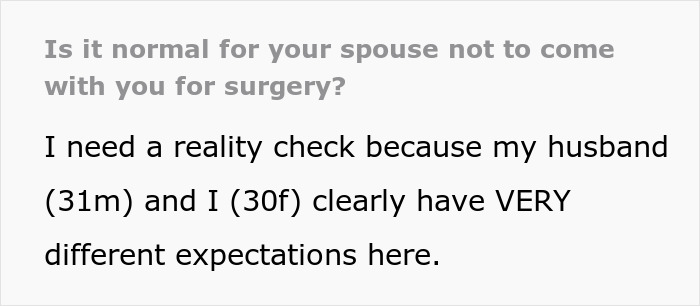
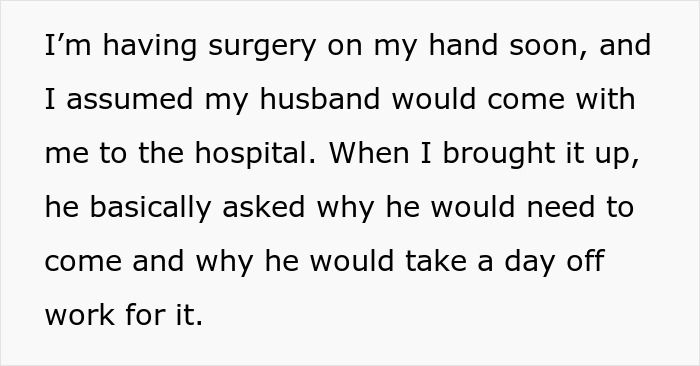
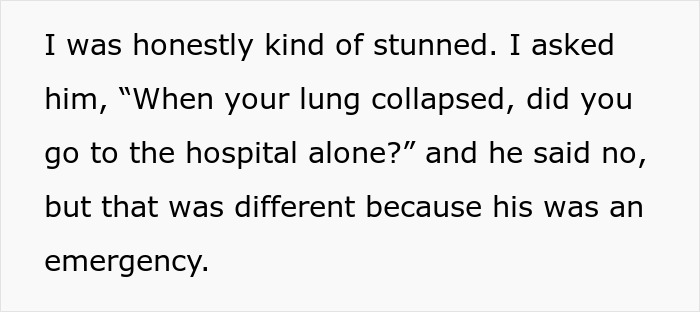
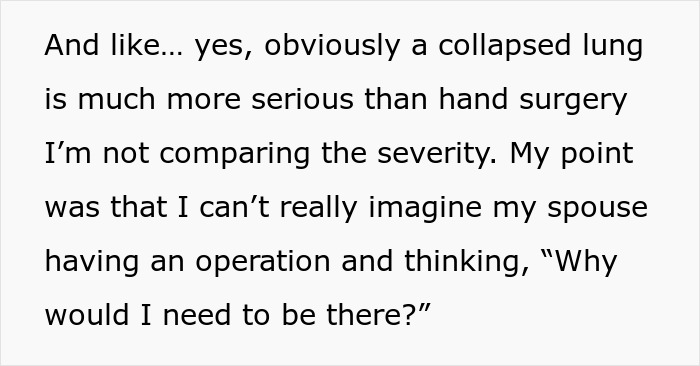
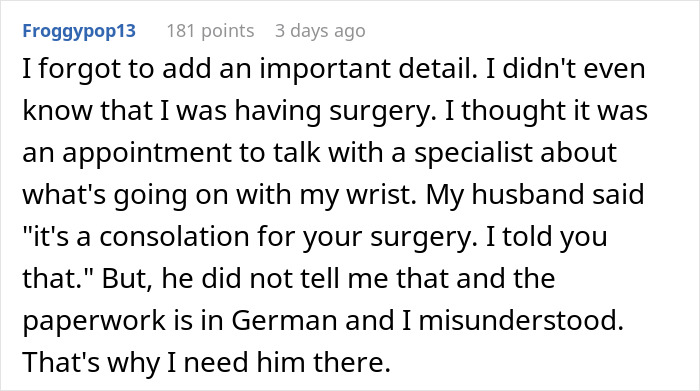
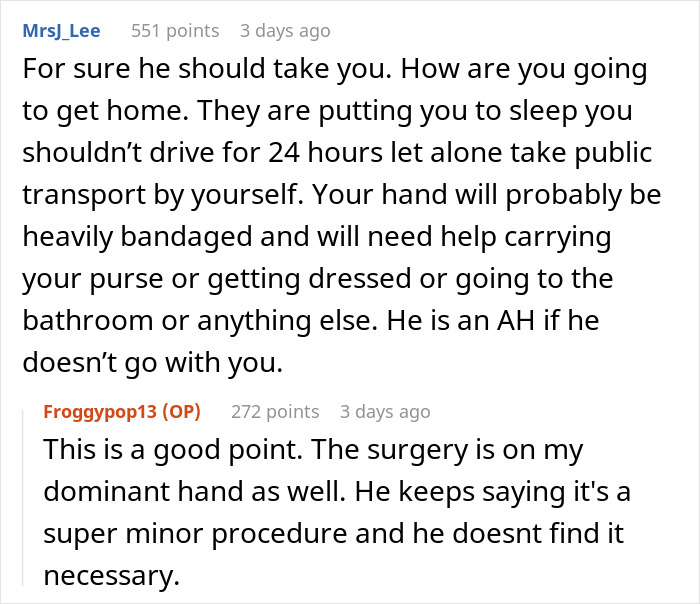
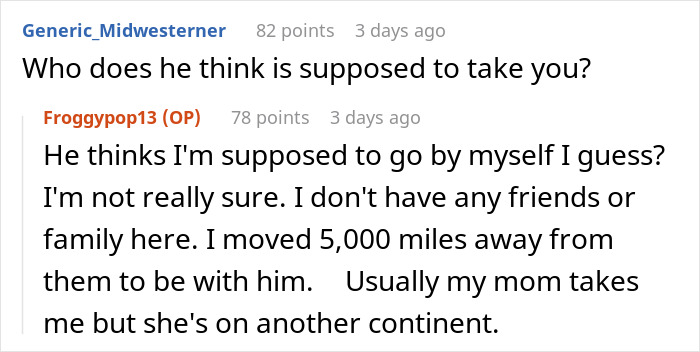
This woman was having surgery on her hand and asked her husband to accompany her. She needed the support since she moved to Switzerland from the U.S. and didn’t speak perfect German, but her husband thought she didn’t need him there. Refusing to take a day off work, he basically told her to get over it and go alone.
Having surgery, even if it’s a minor one, can be scary. Being in hospitals is generally unpleasant for many people, and that’s only amplified when you’re having some sort of procedure done. Some people go even as far as to avoid any sort of surgical intervention on their bodies at all costs, and that condition is called Tomophobia. Research shows that around 12.8% of the population has a fear of undergoing surgery.
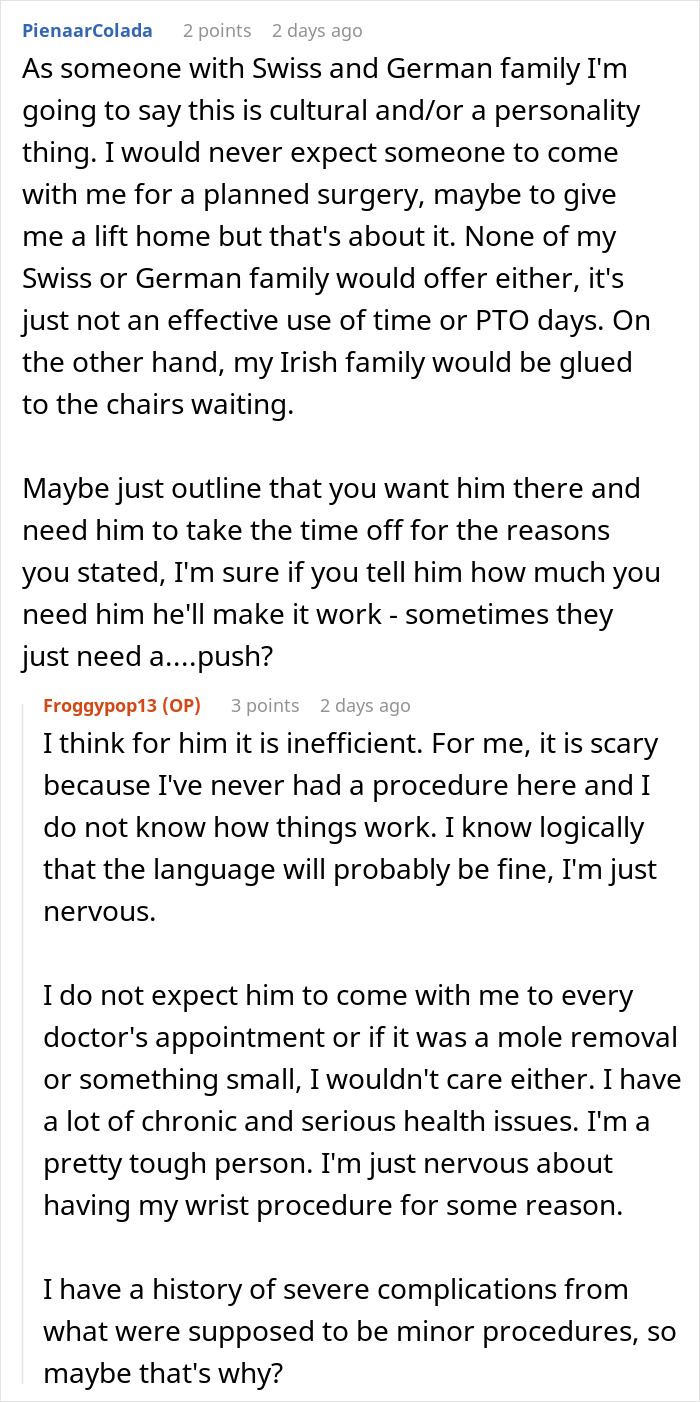
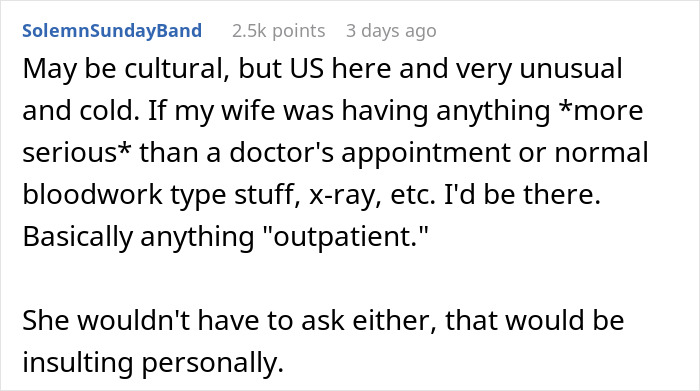
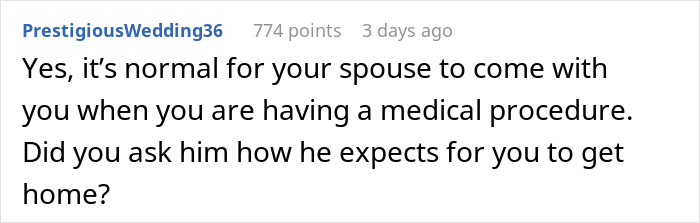
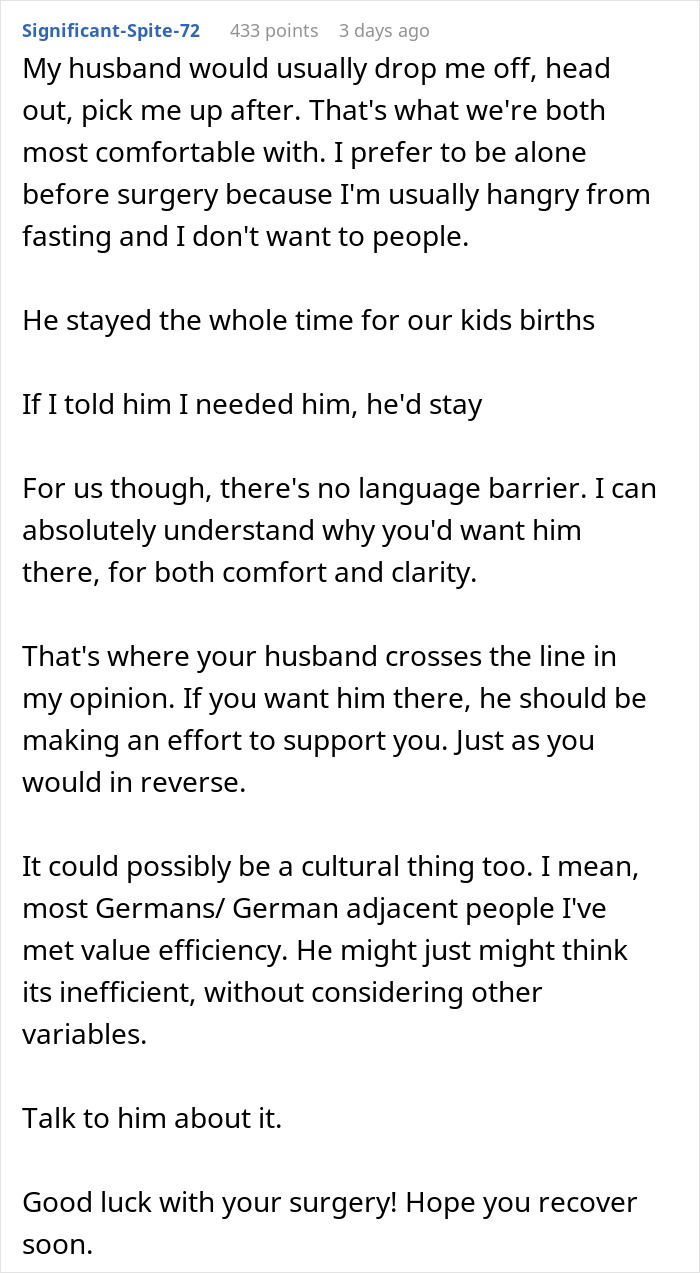
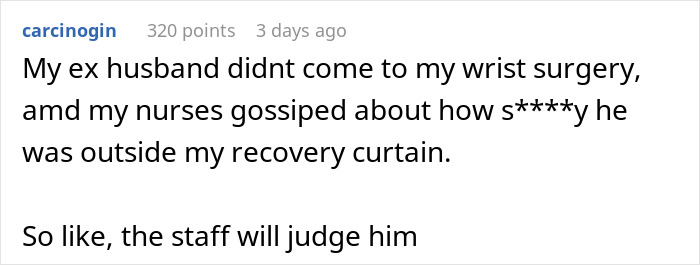
This woman doesn’t seem to have any sort of phobia related to hospitals — she just genuinely wanted her husband to be there for emotional support. Judging from her story and the comments below, it’s expected for a spouse, family member, or friend to accompany someone to medical procedures, even if they don’t get knocked out.
When a person has to go under anesthesia, it’s usually required that they bring a loved one with them. After all, anesthesia can impair basic cognitive functions: patients may have poor recall and experience psychomotor dysfunction. In the U.S., for example, the Centers for Medicare & Medicaid Services require hospitals to discharge patients under the care of a responsible adult after anesthesia or sedation.
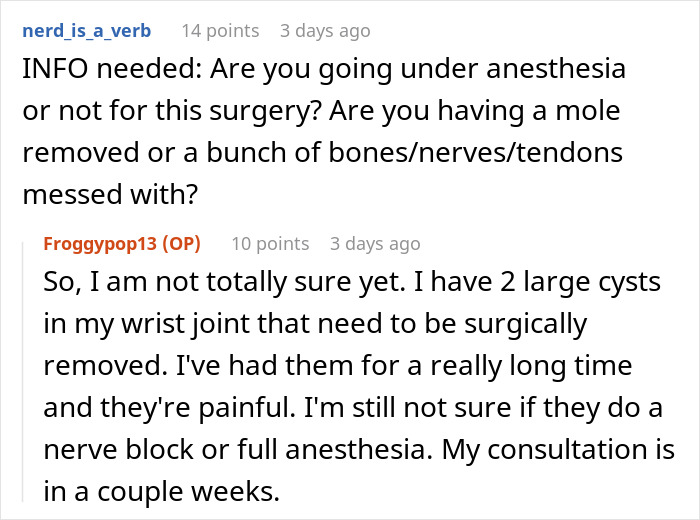
That, of course, may differ depending on the type of sedation the patient receives. For hand surgery, general anesthesia is rare, and local, monitored, or regional anesthesia is more common. According to the experts at the University of Wisconsin, a nerve block is usually performed for hand, wrist, and arm surgeries.
Some hand surgeries are performed with patients awake; for others, patients are made sleepy with medicine. After minor wrist surgery, the patient may leave the same day. Still, even after regional anesthesia, patients shouldn’t drive themselves. It’s always best to ask a health provider whether you, as a patient, can get home on your own or if someone will accompany you.

Living in a foreign country can feel lonely: you’re far from home, friends, and family, and have to build entirely new support systems. Research shows that 87% of expats feel isolated during their time abroad, and the second most common reason is the language barrier.
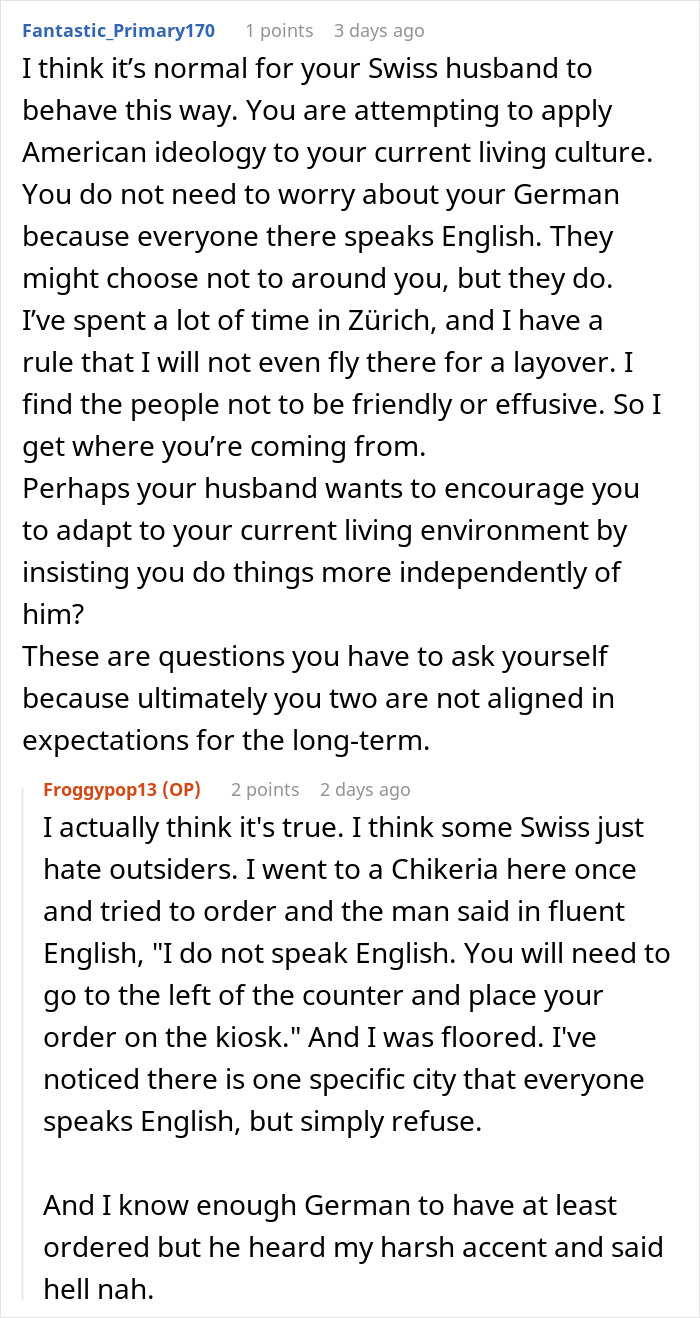
Switzerland usually ranks low among countries where expats feel content living. According to the 2017 Ease of Settling Index, Switzerland was 61st out of 65 countries. The top reasons are difficulty making friends, an unfriendly local population, and not feeling at ease in Swiss culture. “People in Switzerland have a culture of being reserved; they are friendly, but not actually looking for friends,” one U.S. respondent claimed.
While most U.S. expats living in Switzerland were content with their financial situation, many said healthcare costs (50%) are the second-biggest expense after housing (67%). The language barrier is also a big source of anxiety when making friends or just navigating administrative tasks, but even when finding friends, those fluent in the local languages say they have a difficult time making connections. “They speak Swiss German, which is so far from High German that native German speakers cannot understand them,” one respondent explained.
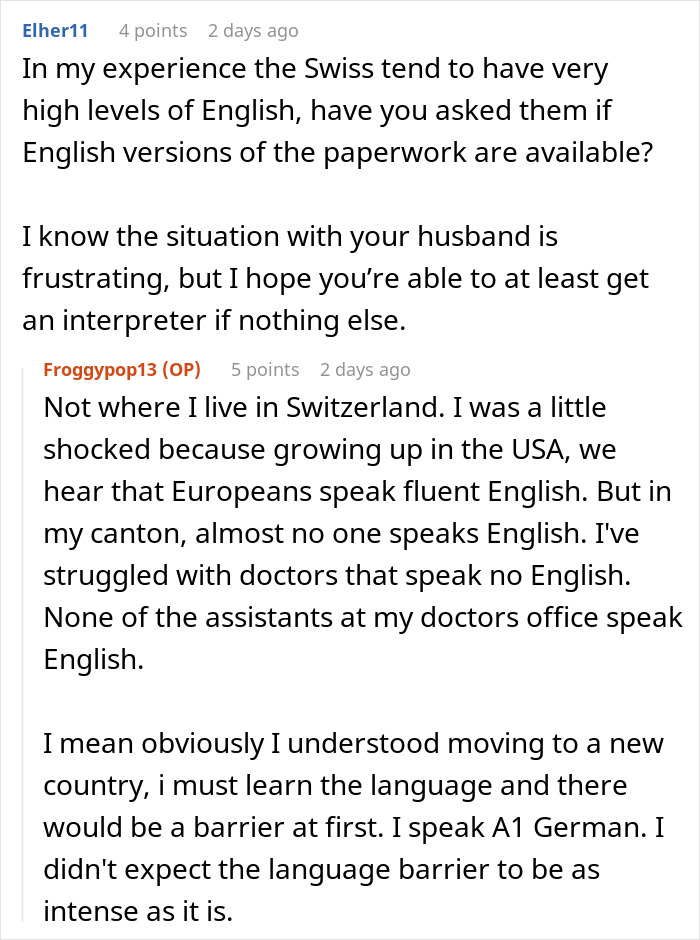
While most doctors and specialists should be able to communicate with patients in English, Expatica notes that nurses and other staff members might not be as fluent. According to the official page for the canton of Zurich, most doctor practices also have medical staff who speak more than one language.



By entering your email and clicking Subscribe, you're agreeing to let us send you customized marketing messages about us and our advertising partners. You are also agreeing to our Privacy Policy.
Thank you! You've successfully subscribed to newsletters!

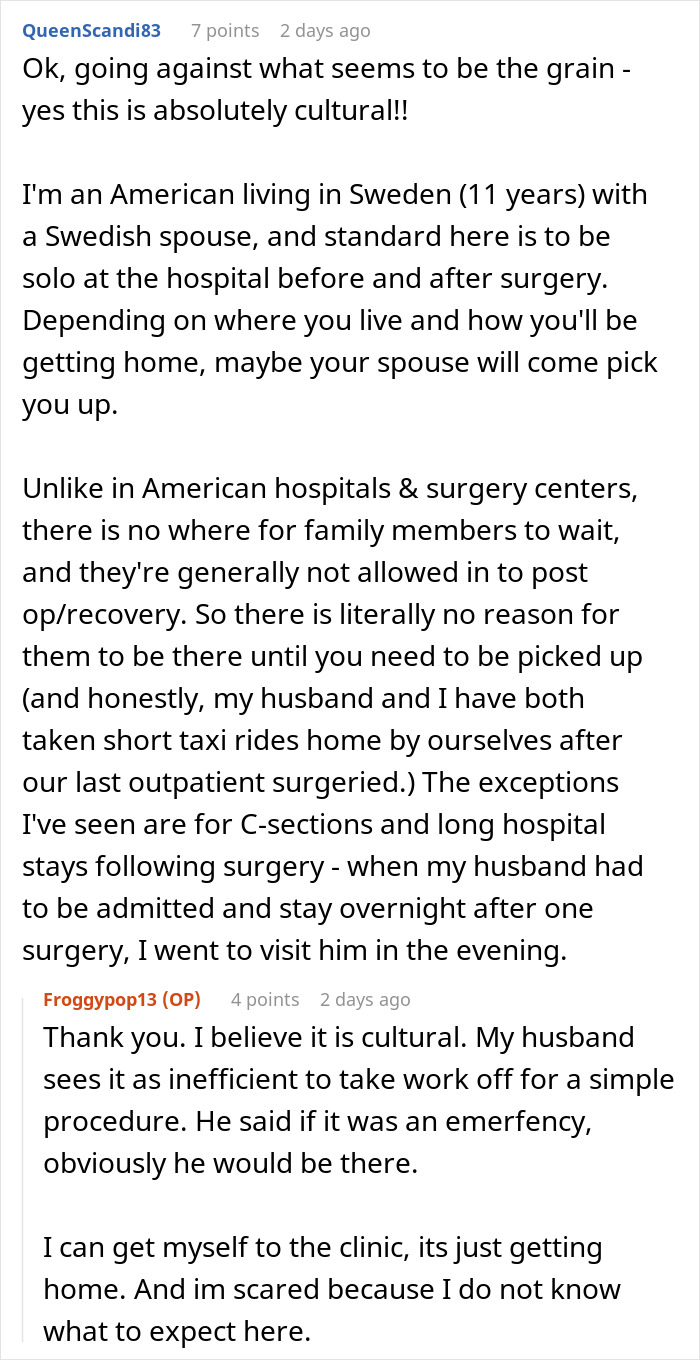
Very cultural. I am a swede also like one redditors that answered. There really isnt a waiting room for visitors. Only place a partner is expected to be there is at birth, as they are in the room. Of course the partner could drop you off and then pick up up, or wait around in the cafe or restaurant if the not long operation, til its time to go home.


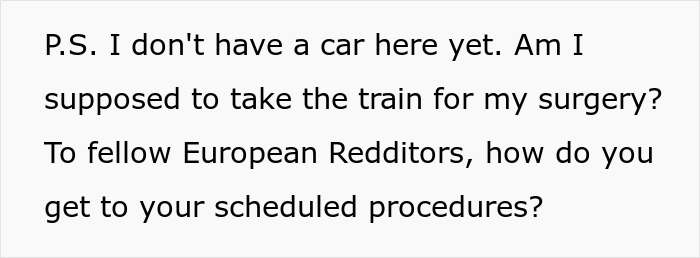
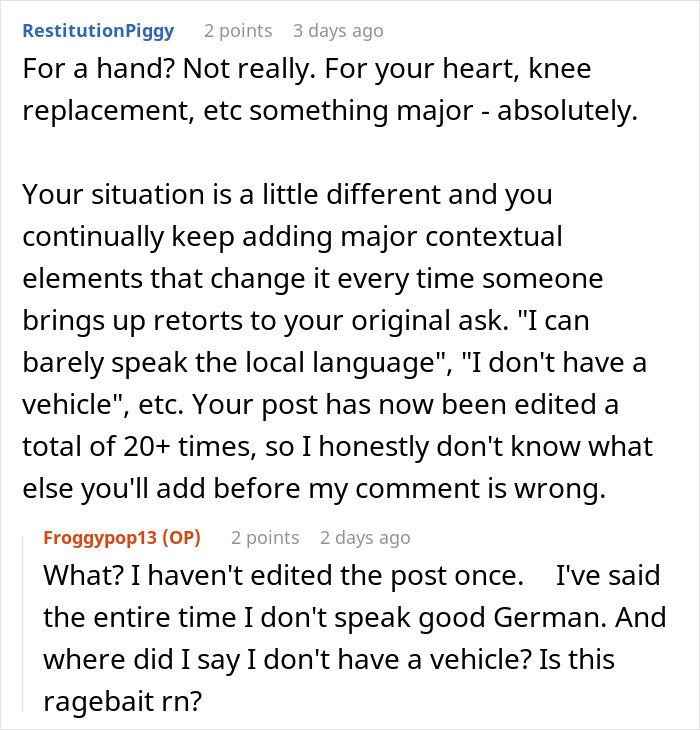
Weirdly she got defensive and snappy about “where does it say I don’t have a vehicle?” When it’s in the post: I don’t have a car here yet - am I supposed to take the train?
Very cultural. I am a swede also like one redditors that answered. There really isnt a waiting room for visitors. Only place a partner is expected to be there is at birth, as they are in the room. Of course the partner could drop you off and then pick up up, or wait around in the cafe or restaurant if the not long operation, til its time to go home.
Weirdly she got defensive and snappy about “where does it say I don’t have a vehicle?” When it’s in the post: I don’t have a car here yet - am I supposed to take the train?


































 No fees, cancel anytime








31
6