Get Premium
Dark mode theme is available exclusively for premium users. Learn more about the benefits of subscribing.
No fees, cancel anytime.

 Dark Mode Ad-Free Browsing Unlimited Content
 Ad-Free Browsing Unlimited Content Dark Mode
Join 1.2 million Panda readers who get the best art, memes, and fun stories every week!

While parenting is already a challenging job, it can be even more complicated for stepparents. There’s so much to navigate—from building trust and handling emotional boundaries to dealing with the pressure of stepping into an already-existing family dynamic. It’s not always easy to find your place, especially when relationships are still fragile.
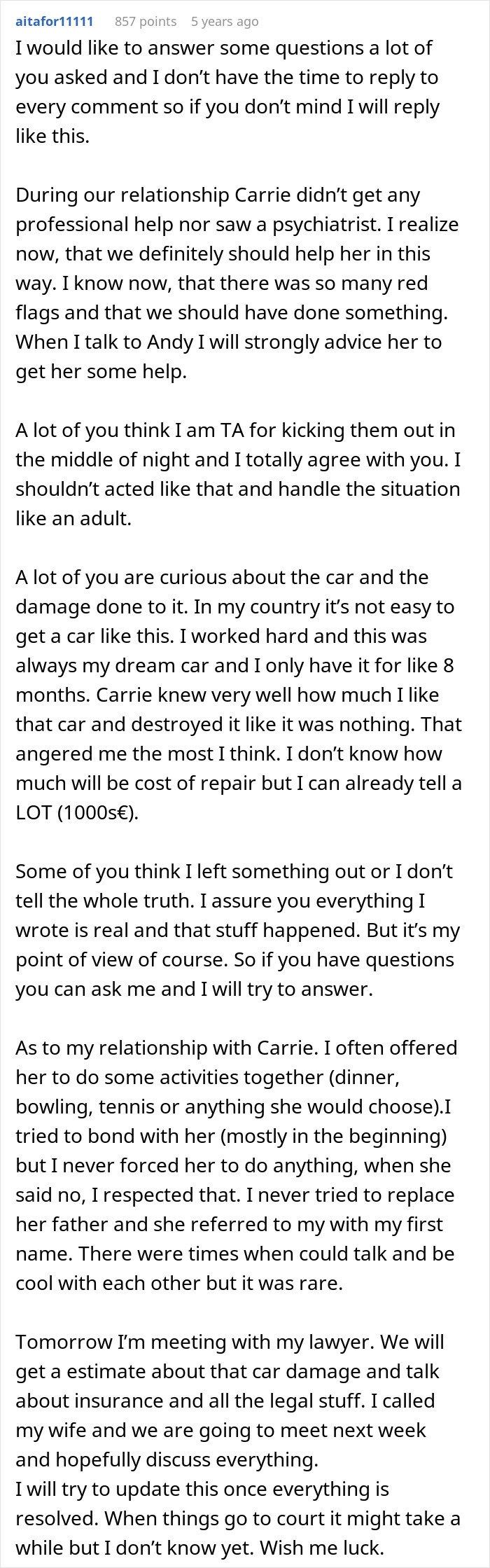
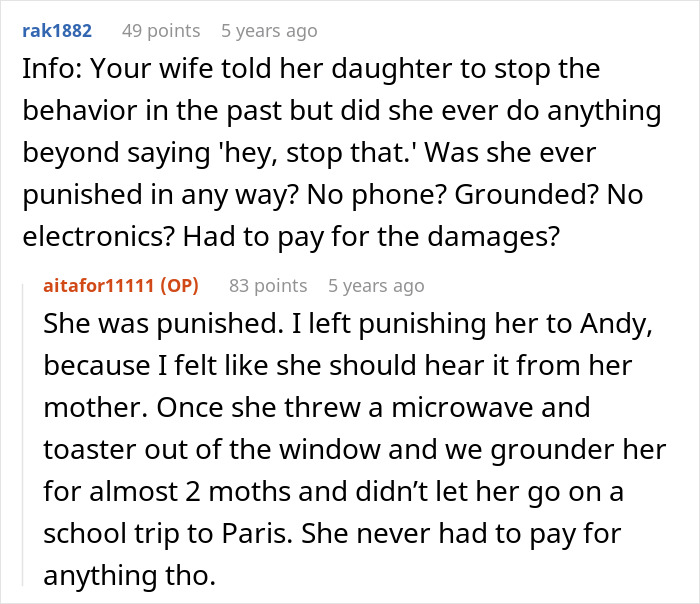
Speaking of which, one man shared how his relationship with his stepdaughter slowly began to fall apart. Over time, her behavior became more difficult and destructive, creating constant tension at home. Eventually, things spiraled out of control when he caught her vandalizing his car, leading to a heated argument that ended with both his wife and stepdaughter leaving the house. Keep reading to see how the situation unfolded.
Image credits: davidpereiras/Envato (not the actual photo)
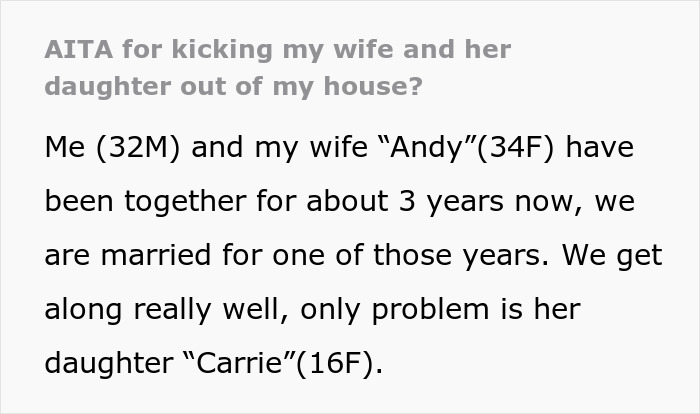

Image credits: Zinkevych_D/Envato (not the actual photo)

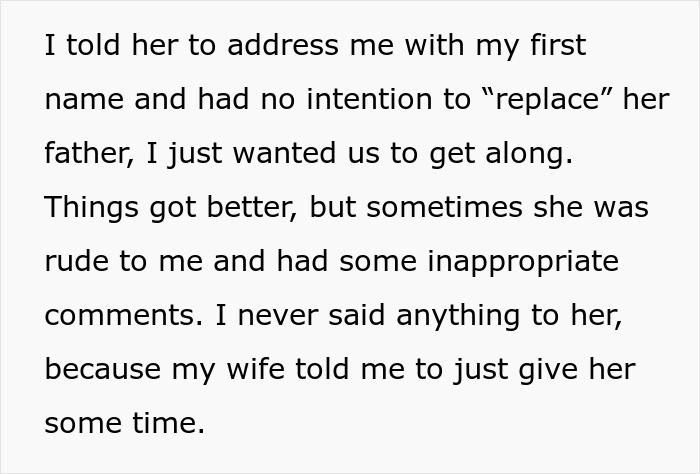
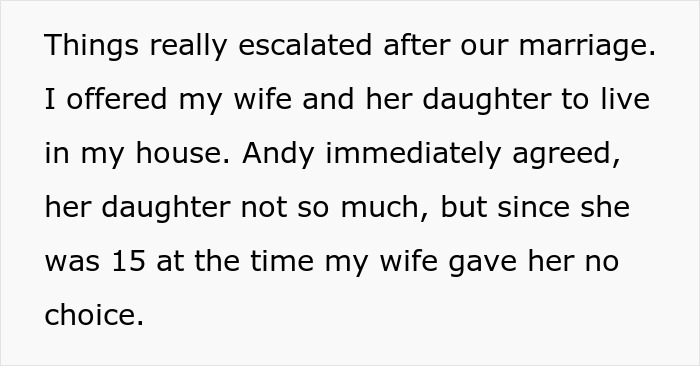
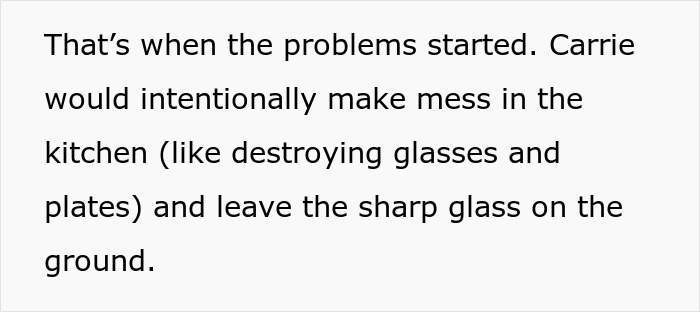
Image credits: AltrendoImages/Envato (not the actual photo)
Image credits: Great_bru/Envato (not the actual photo)
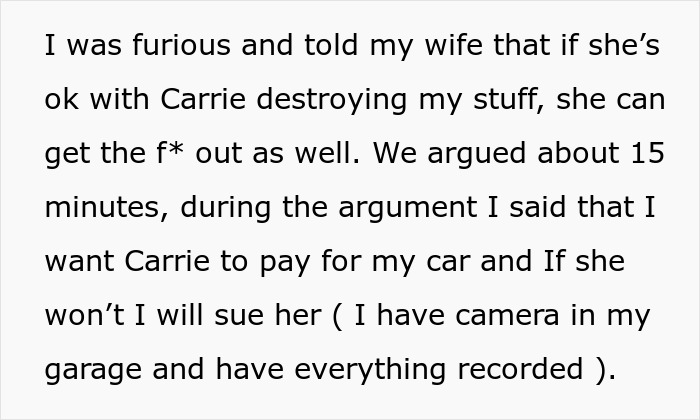
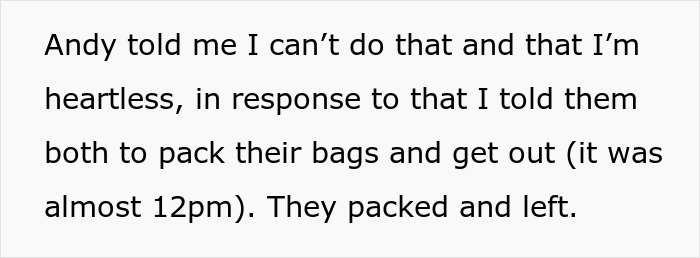
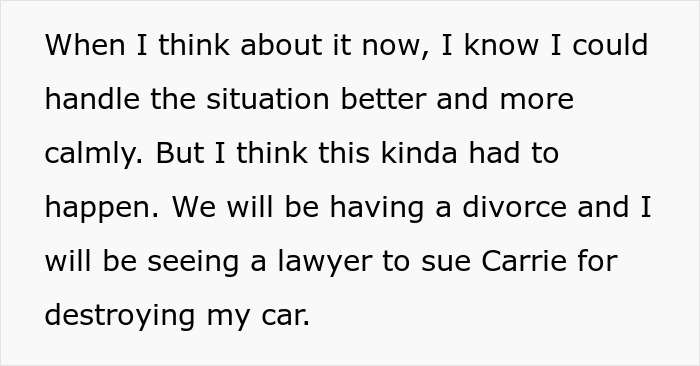
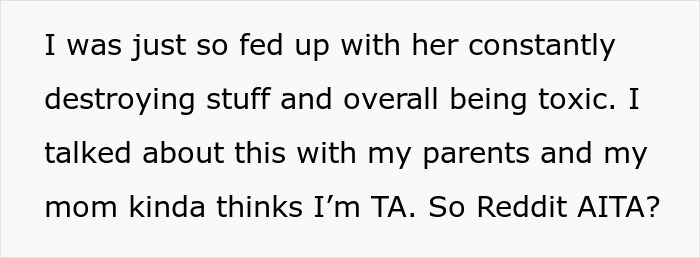
Image source: aitafor11111
Image credits: Alena Darmel/Pexels (not the actual photo)



Today, many baby boomers have stepped into the role of grandparents. While they still carry some of the old-school habits and values they grew up with, their place in the family is shifting. The world has changed, and so have the expectations of parenting. Just like in this particular case, where it seems that the man (a millennial parent) and his approach to dealing with his teen stepdaughter were quite different.
Millennials and Gen Z are raising children with approaches that are far more intentional, emotionally aware, and flexible than what previous generations relied on. Let’s start with Gen Z. Born between 1997 and 2012, the oldest members are now entering their late 20s and early 30s, stepping into parenthood as parents of children who belong to Generation Alpha and beyond. And their approach to raising kids? Let’s just say it’s a lot less about strict rules and a lot more about understanding, connection, and authenticity. They’ve seen what worked and what didn’t with their own parents, and now they’re carving out their own path.
A survey of 2,000 parents with children aged 0–6 revealed that parenting today is evolving in new and intentional ways. About 37% of parents are adopting cycle-breaking approaches, consciously working to heal generational trauma rather than repeating patterns from their own upbringing. Another 33% focus on building strong emotional bonds and attachment, emphasizing empathy, communication, and connection. Meanwhile, 31% prioritize real-world consequences, teaching children cause-and-effect reasoning to help them navigate the world responsibly. These numbers highlight how modern parents are blending old lessons with innovative strategies to raise emotionally resilient and self-aware children.
Despite being raised on ideas like “gentle parenting,” many Gen Z parents don’t follow any single method religiously. Gen Z parents are pragmatic when it comes to gentle parenting. According to the survey, 43% believe gentle parenting works only in certain situations, while 38% think it has a specific time and place in raising children. Still, 39% feel it’s most effective when combined with other parenting approaches, blending empathy with structure and practical lessons. These stats show a generation that values flexibility and adaptability, understanding that there isn’t a one-size-fits-all method to raising children in today’s complex world.
Gen Z parents’ approach to child-rearing goes far beyond rejecting traditional norms. They value personal expression and authenticity, not just for themselves but for their children as well. Rather than rigidly following prescribed rules or parenting “formulas,” they seek tools that allow them to create a parenting style aligned with their values and beliefs. This approach encourages children to explore their individuality and develop a sense of self, whether that involves creativity, identity expression, or learning at their own pace. These parents are redefining parenthood in a way that prioritizes growth, freedom, and emotional understanding.
It’s not just Gen Z who is rethinking parenting. Millennials are also leading the way in encouraging children to embrace their authentic selves. They are more likely than prior generations to support gender non-conforming children and allow kids to explore identities that feel natural to them. Deborah Carr, PhD, professor and chair of the sociology department at Boston University and author of Golden Years? Social Inequalities in Later Life, points out that millennials are pioneering a movement toward raising children in environments that prioritize self-expression, acceptance, and emotional well-being.
Many millennial parents, having experienced intensive “helicopter parenting” themselves, are intentionally choosing a freer, more exploratory approach. They allow children to experiment, create, and make mistakes without constant supervision, understanding that independence and problem-solving are critical life skills. This method encourages confidence and resilience, allowing children to learn from their experiences in a supportive environment rather than through strict control.
Beyond independence, millennials integrate empathy, emotional awareness, and cycle-breaking strategies into their parenting. They are redefining what success looks like—not just in academic or behavioral outcomes, but in raising children who are self-aware, emotionally intelligent, and empowered to make choices aligned with their values.
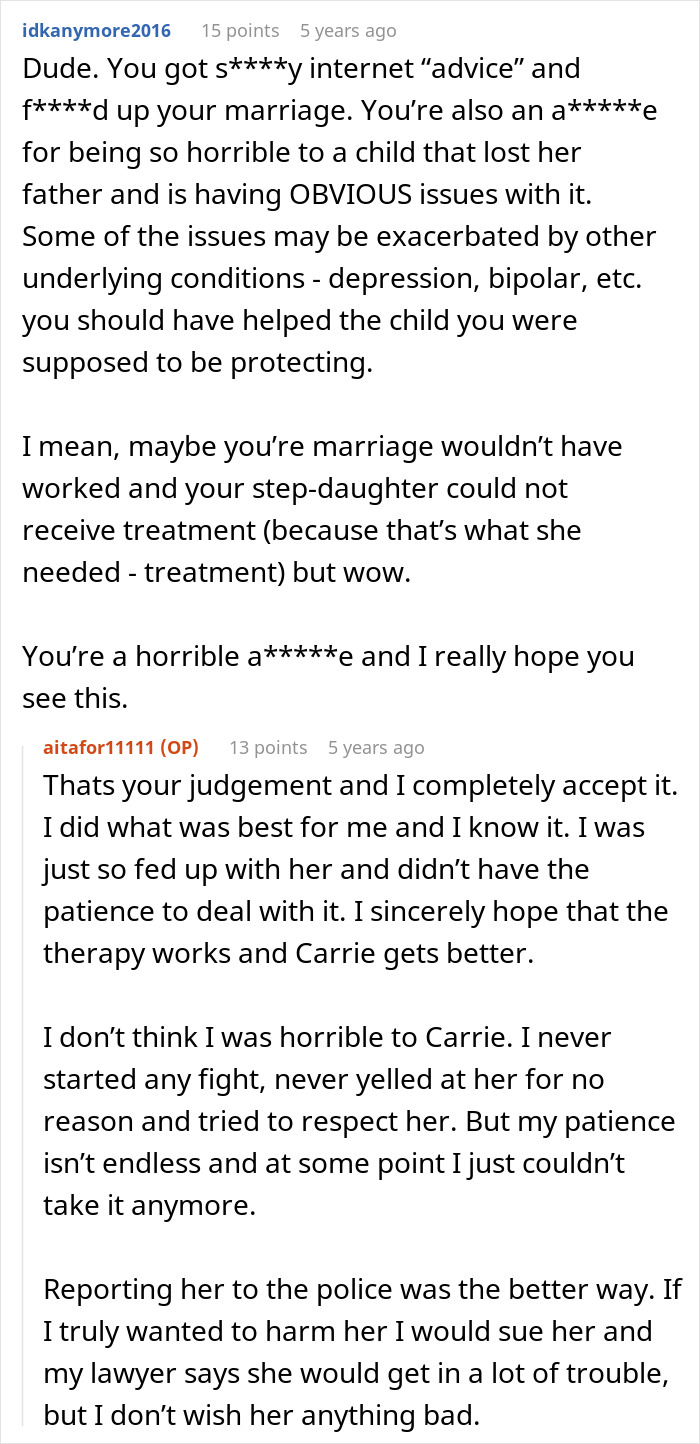
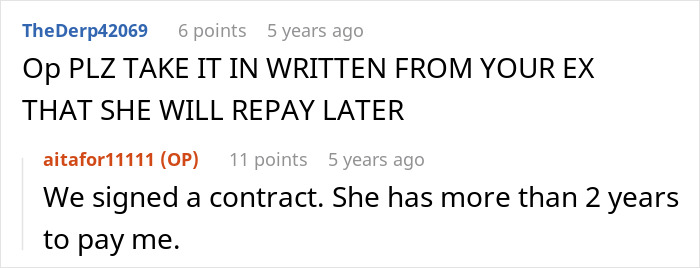
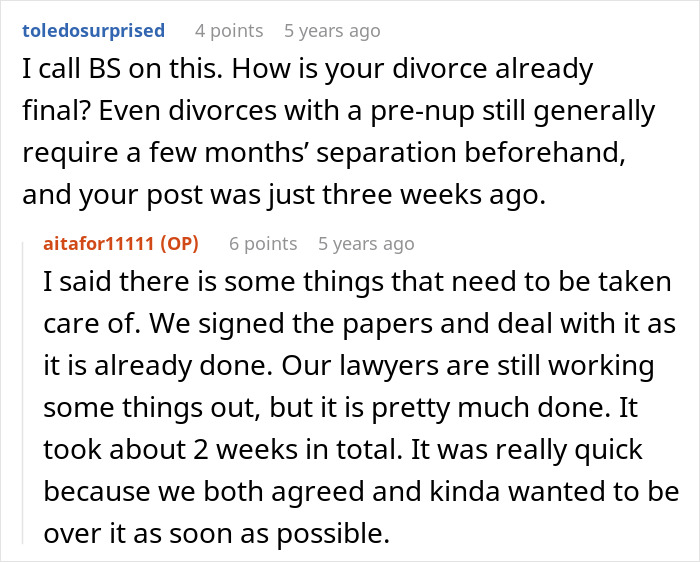
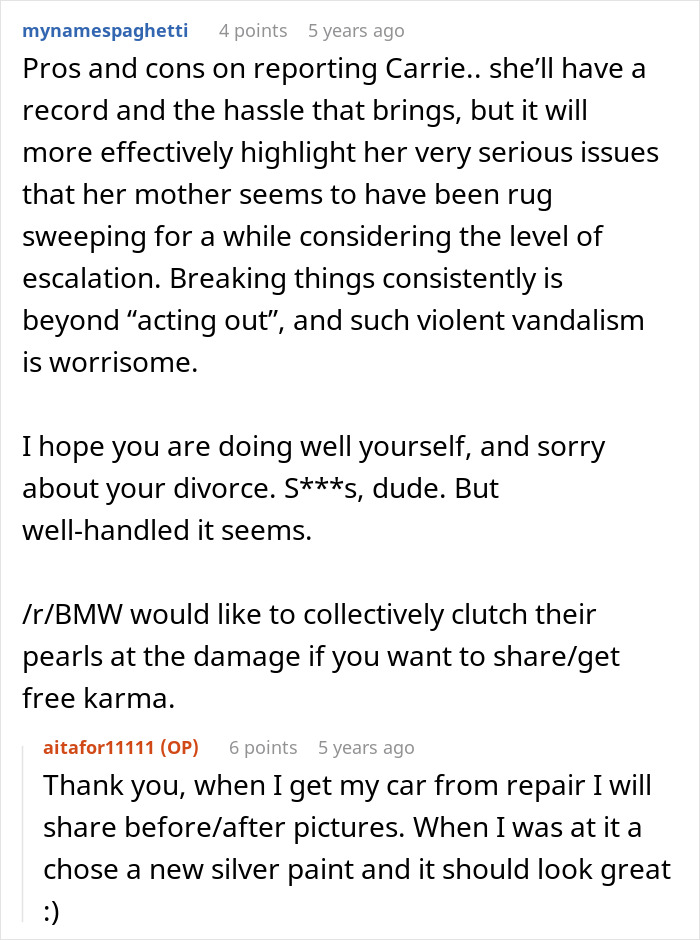
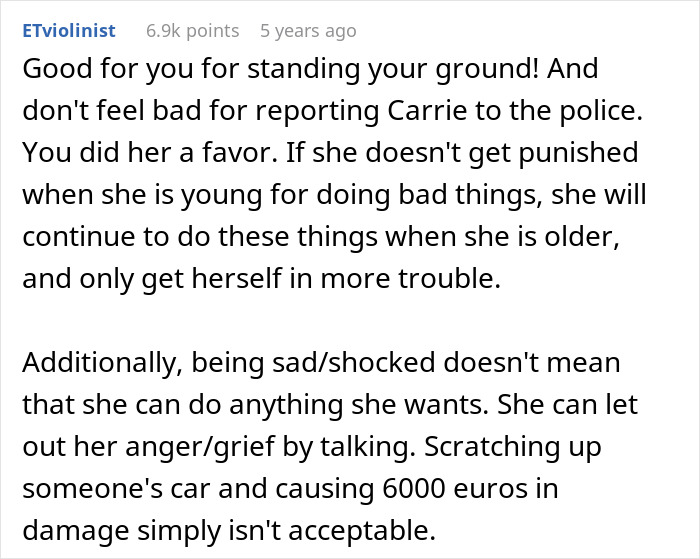
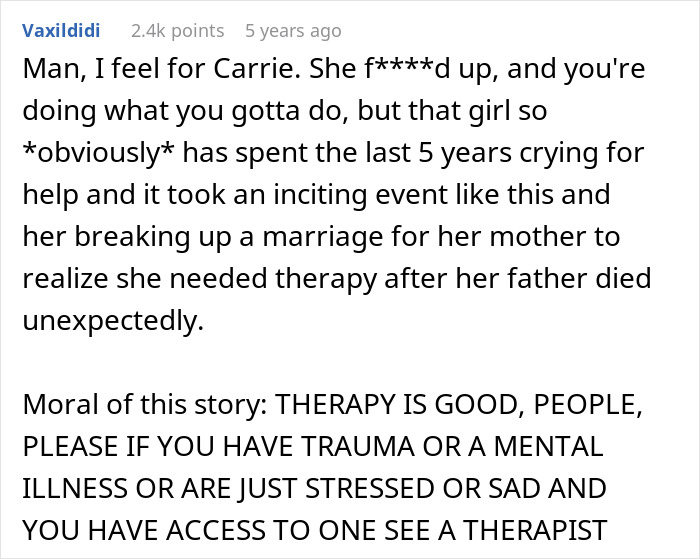
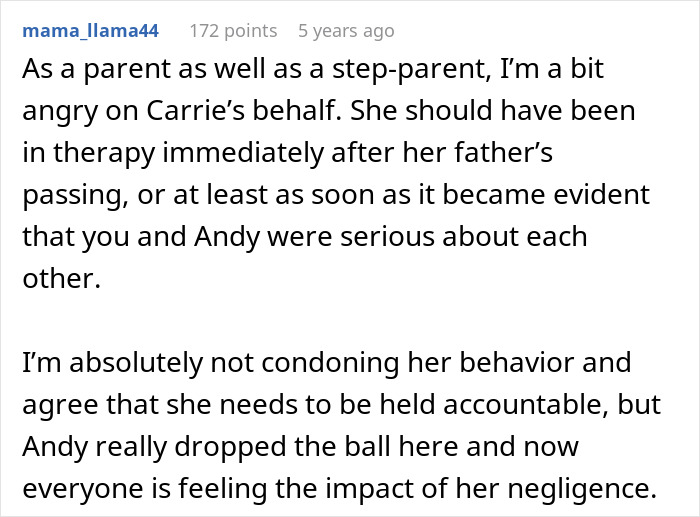
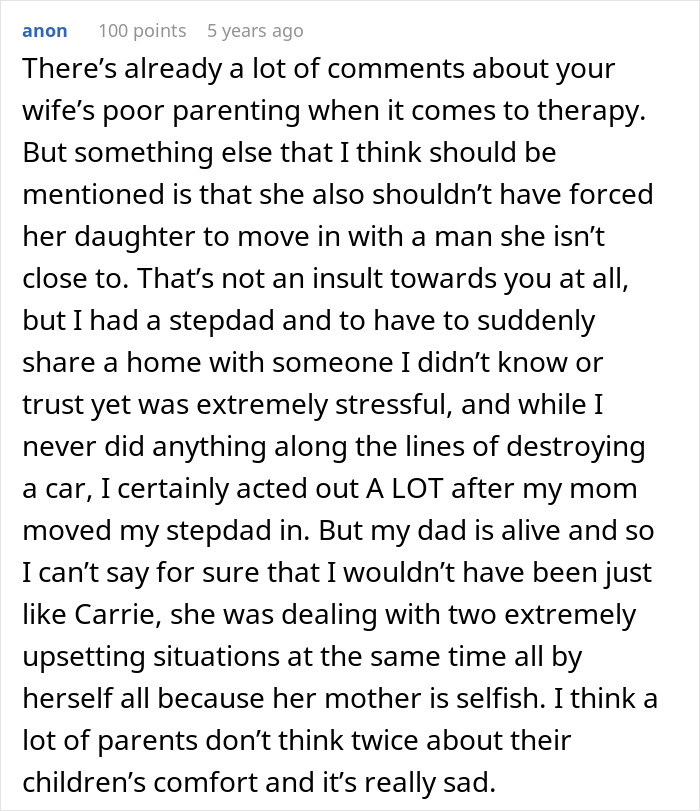
Coming back to the millennial parent in this particular case, it seems the stepdad did try to handle things thoughtfully. He gave the teen space, avoided using physical punishment, and attempted to set boundaries calmly. At the same time, the teen’s destructive behavior, including the damage to his car, shows how intense emotions can spill over—especially given her situation. While some of his actions, like how he reacted to the car, have been questioned by many, it’s clear he was navigating a very difficult dynamic. We’d love to hear your thoughts—how would you have handled this situation? Do you think millennial and Gen Z parents are better equipped to manage these kinds of challenges than previous generations?
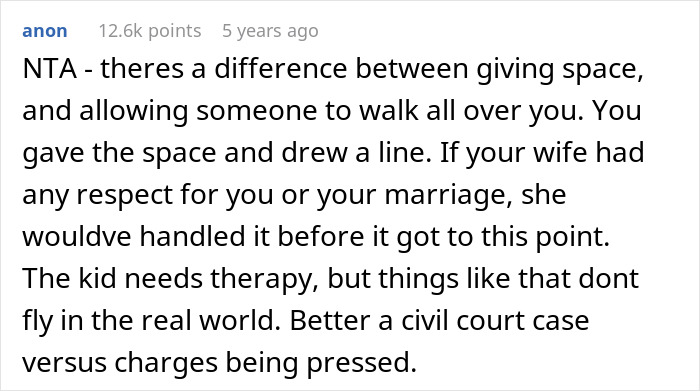
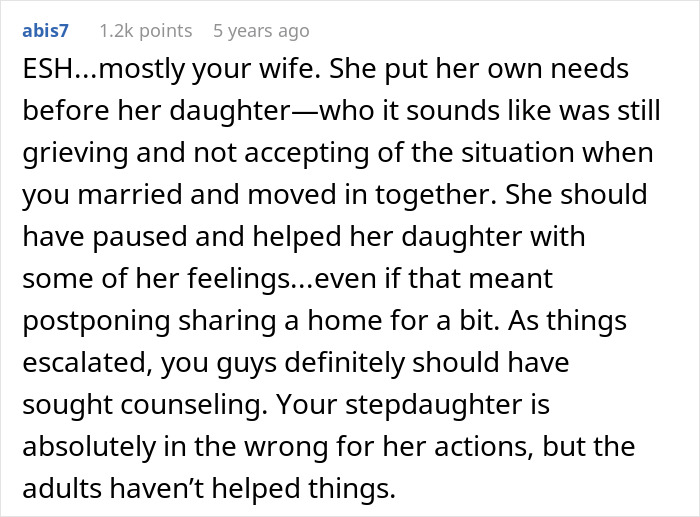
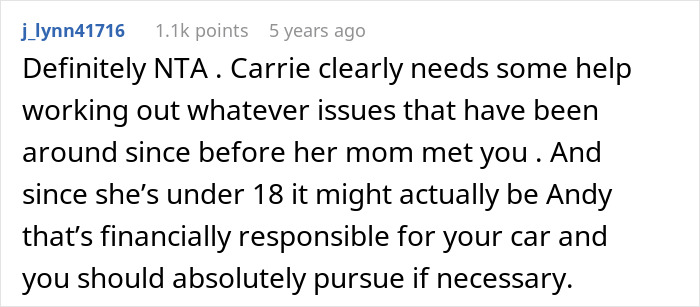

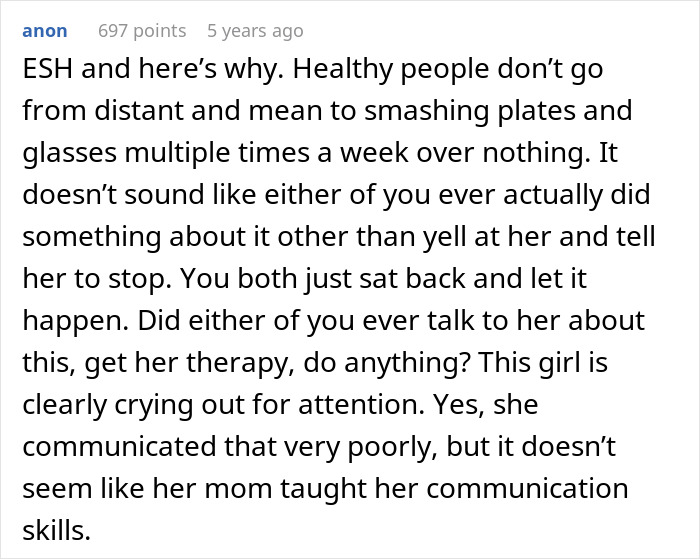
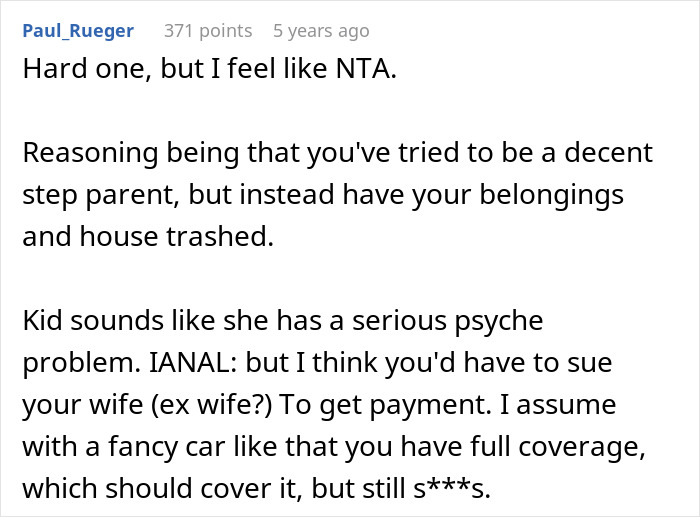

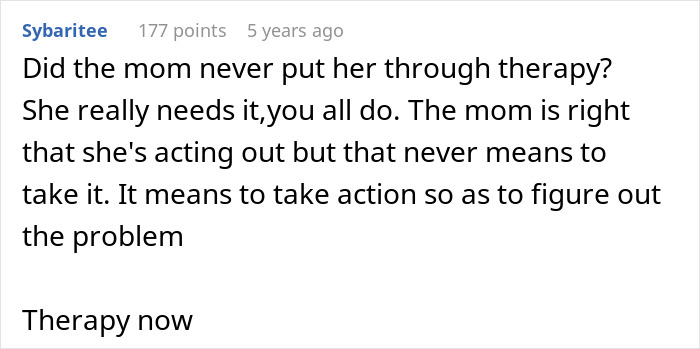
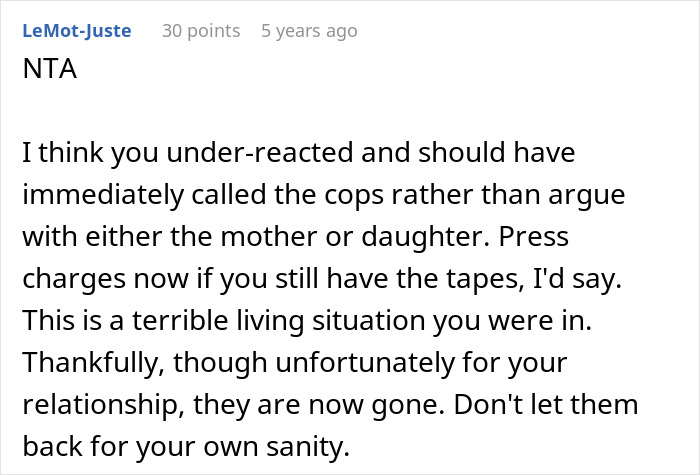
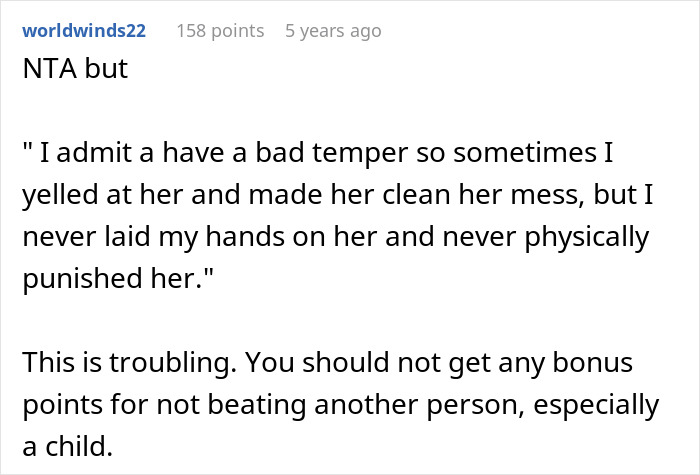
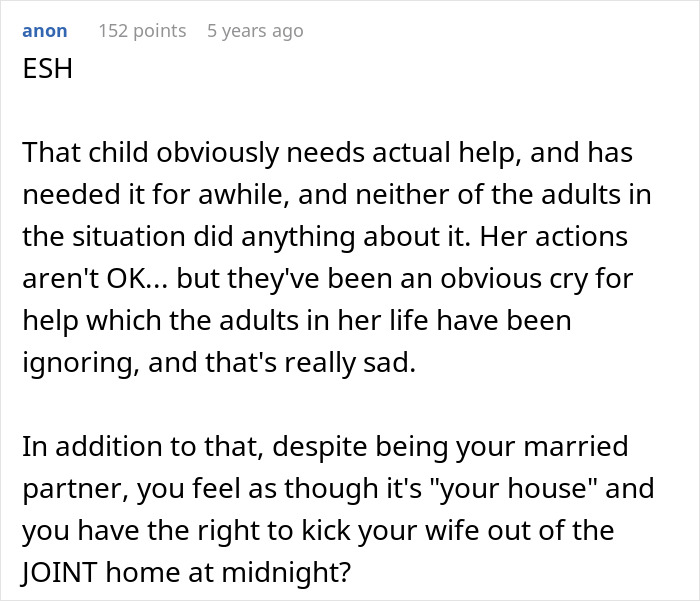
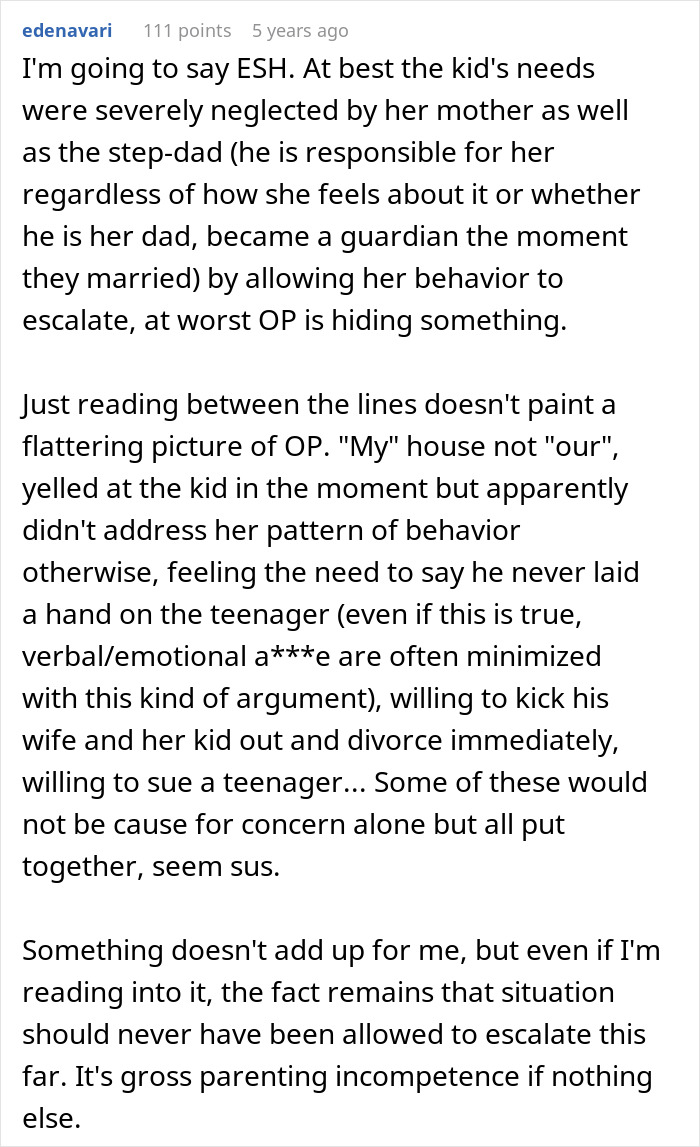
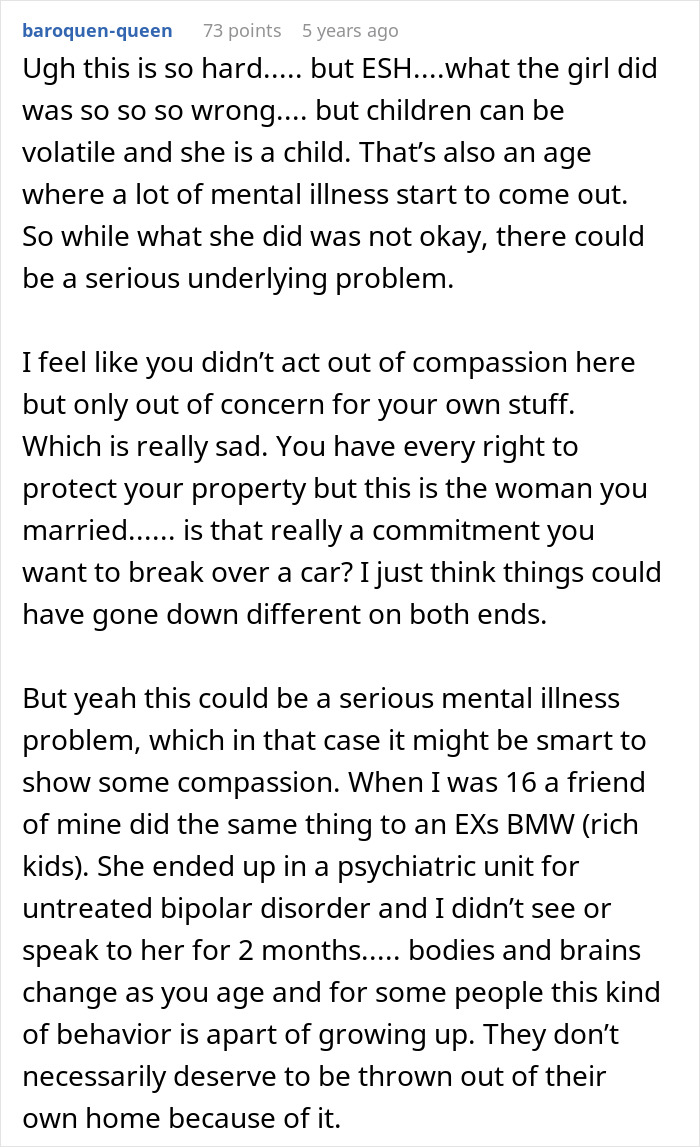
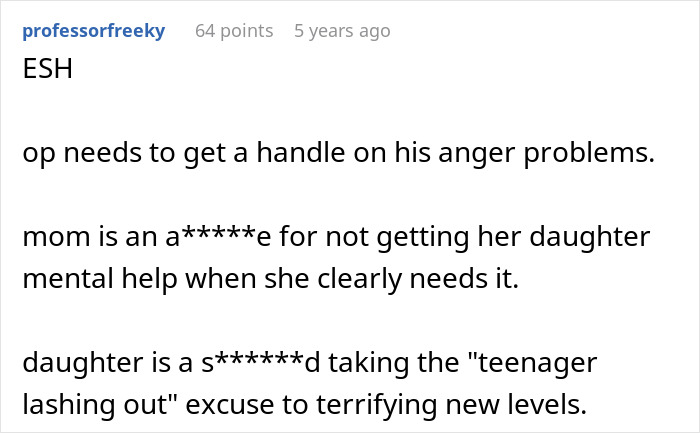

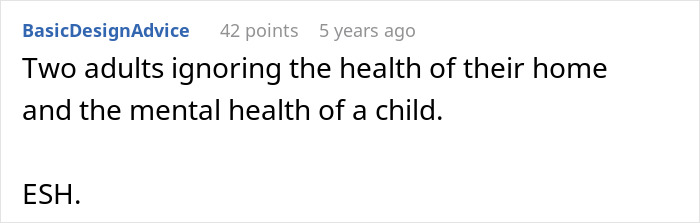
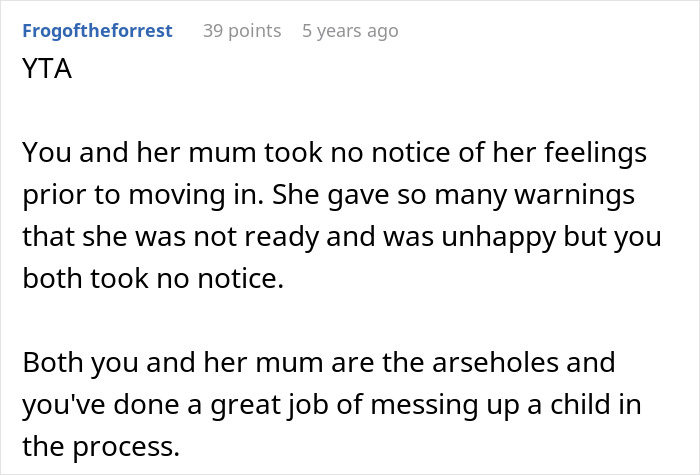
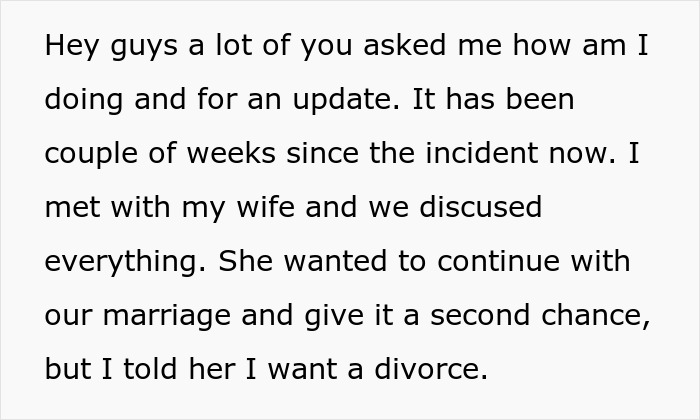
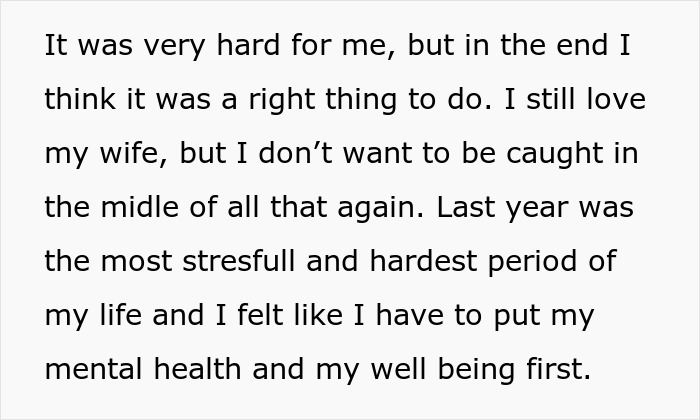
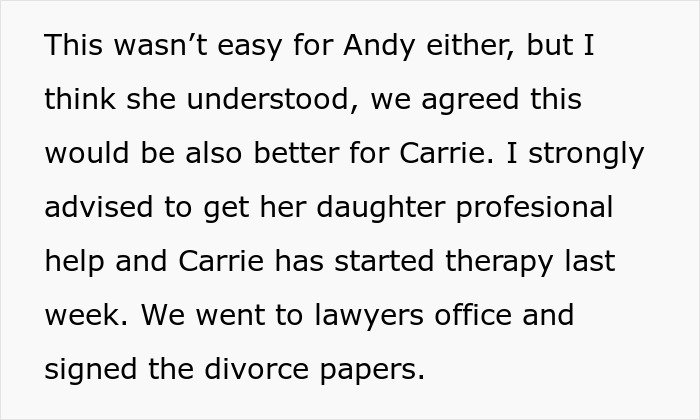
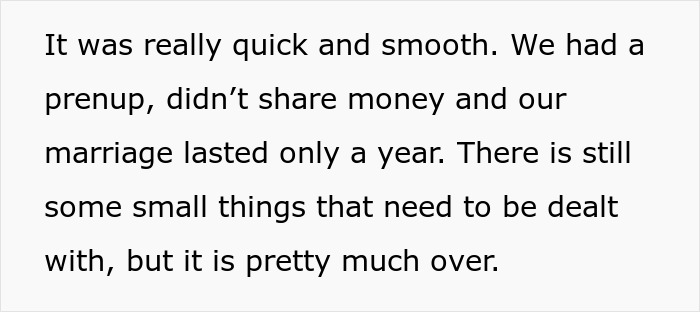
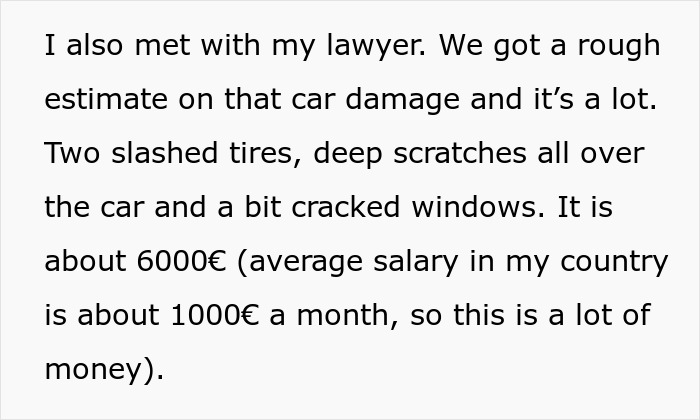
Image credits: Mikhail Nilov/Pexels (not the actual photo)


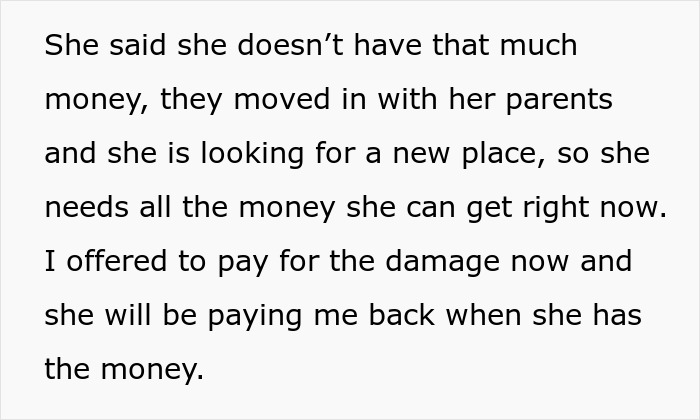
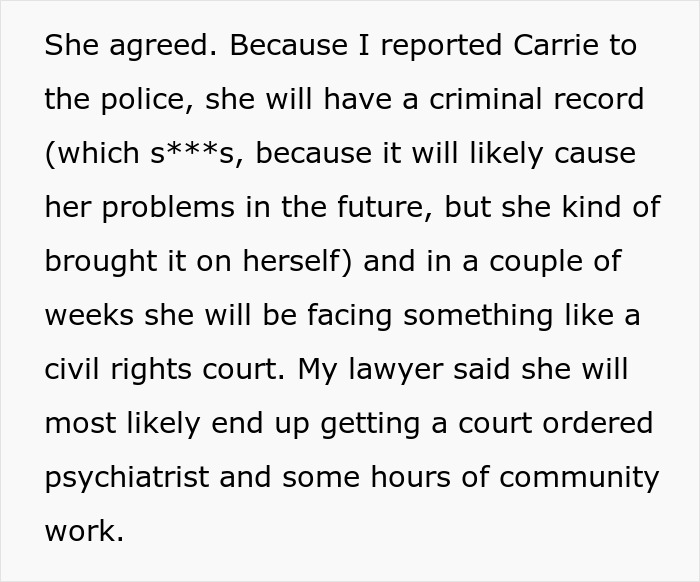
Image credits: KATRIN BOLOVTSOVA/Pexels (not the actual photo)
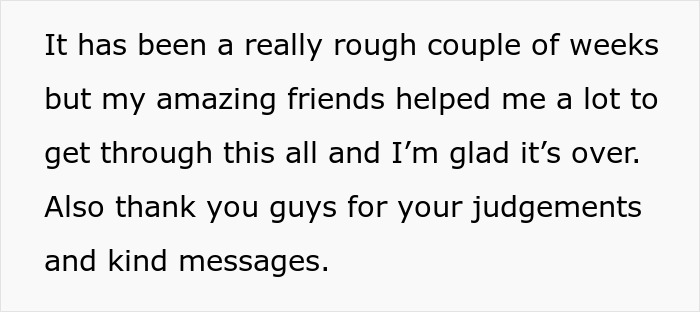
Image credits: aitafor11111








By entering your email and clicking Subscribe, you're agreeing to let us send you customized marketing messages about us and our advertising partners. You are also agreeing to our Privacy Policy.
Thank you! You've successfully subscribed to newsletters!
25Kviews
Share on Facebook

Lots of kids lose parents and don't act like spoiled brats. She's 16, not 5. I'm sorry she's struggling, but that doesn't give you free rein to commit crimes.

16 years old isn't 6 years old. Carrie is old enough to know better and is old enough to be held responsible and accountable for her actions. The whole situation súcks though - the mom probably should have gotten therapy/counseling for Carrie after Carrie's father díed, IMO, or at the very least once the issues started with OP.

The kid is old enough to know better and should be held accountable.
Lots of kids lose parents and don't act like spoiled brats. She's 16, not 5. I'm sorry she's struggling, but that doesn't give you free rein to commit crimes.
16 years old isn't 6 years old. Carrie is old enough to know better and is old enough to be held responsible and accountable for her actions. The whole situation súcks though - the mom probably should have gotten therapy/counseling for Carrie after Carrie's father díed, IMO, or at the very least once the issues started with OP.
The kid is old enough to know better and should be held accountable.




























 No fees, cancel anytime



















36
45