Get Premium
Dark mode theme is available exclusively for premium users. Learn more about the benefits of subscribing.
No fees, cancel anytime.

 Dark Mode Ad-Free Browsing Unlimited Content
 Ad-Free Browsing Unlimited Content Dark Mode
Join 1.2 million Panda readers who get the best art, memes, and fun stories every week!
There seems to be drama, chaos, entitlement and a bit of rudeness lurking around every corner nowadays. We line up to watch people being roasted, we laugh at dark jokes, we poke fun by punching down, and we spark arguments just to get a reaction.
It's no secret that the internet often rewards unhinged behavior. But every now and then it also provides us with a breath of fresh air to cleanse the bad vibes. It’s almost as if the world wide web declared, “Put some respect on my meme” and someone out there heard the message loud and clear. They set up an account dedicated to sharing a bunch of decent memes that are pure enough to share with your grandma.
Respectful Memes was born back in 2016 and has since grown into a big family of more than 2.5 million followers. The posts are the virtual equivalent of holding the door open for the next person and then sharing a hearty laugh together. Bored Panda has put together a list of some of the best ones... They're random, funny, relatable and a reminder that humor can have good manners, too.
This post may include affiliate links.
Some quarters believe that respect is a thing of the past, and would argue that social media is partly to blame. Entitlement, rudeness, conflict and controversy are everywhere, with keyboard warriors not afraid to have a go at a complete stranger.
Caitriona King, a psychoanalytical psychotherapist based in Ireland, says there's an impression that respect is declining and has been over the last few decades. But that may not actually be the case. She argues that it could rather be that respect has evolved to mean something different to what it once did.
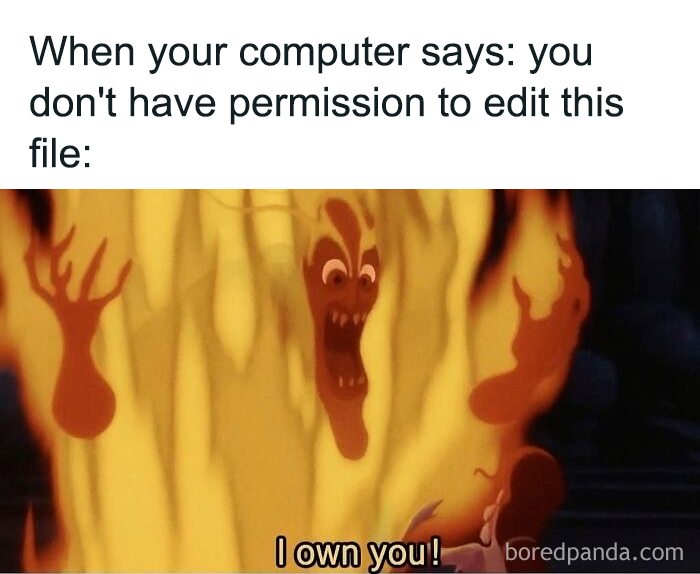
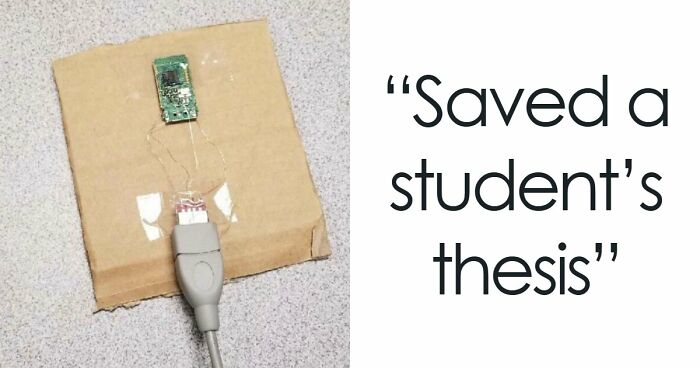
You do not have access to "My Documents" folder... Hey, PC, these are MY documents, not yours!!!
King notes that many Generation X (Gen X) folk, or those born between 1965 and 1980, were raised in households where respect was hierarchical. Some were even told that children should be seen and not heard... and that you will do so because I said so. There was no debating, no arguing and no questions asked or answered.
"They were taught to: respect elders and authority figures automatically; unquestionally follow rules at school, at home and in institutions; avoid 'answering back' and value manners, punctuality and formality," the expert explains.
For many, this ‘traditional’ or strict upbringing influenced how they chose to raise their own children. Some maintained the strict approach, where obedience and discipline are considered the pillars of respect. Others didn't. But it's also important to note that by the time Gen Xers started becoming adults, in the 80s and 90s, society as a whole was changing.
"The rise of individualism challenged the idea that respect was earned solely by age or position," explains King. "Rock and pop culture icons questioned authority and Gen X was heavily influenced by this cultural shift. The workplace began to embrace more casual communication styles, reducing formality and creating a less rigid sense of hierarchy."

"When it comes to respect, Gen X has both inherited older forms of deference and adapted to newer, more egalitarian approaches," King says, adding that many are parents of Gen Z and late Millennials while holding leadership positions in business, education and politics.
"They tend to teach and expect respect in more balanced ways, often emphasizing listening to children and encouraging open dialogue; respecting differences in identity, belief and lifestyle as well as expecting mutual respect in personal and professional relationships," the expert notes.
But while they may take a more gentle approach to parenting, it's not uncommon to hear Gen Xers complaining about the lack of basic respect in younger generations, especially in the workplace.
King says that it's important to remember that what one generation deems 'respectful,' might differ from another generation. The definition of respect has changed, or evolved, she believes. And respect is now considered more reciprocal and less hierarchical.
"It is less about obedience to authority and more about mutual dignity—valuing others regardless of status," explains the expert.

Deborah Norville, the author of The Power of Respect, agrees.
"Discover what someone else calls respect. That is the key to the Power of Respect," she writes, explaining that the definition of respect is different for everyone.
Norville goes on to say that the word itself comes from the Latin respectus, which means “regard.” And while the dictionary defines respect as “To feel or show deferential regard for; esteem,” she has come up with her own definition after exploring and researching the topic.

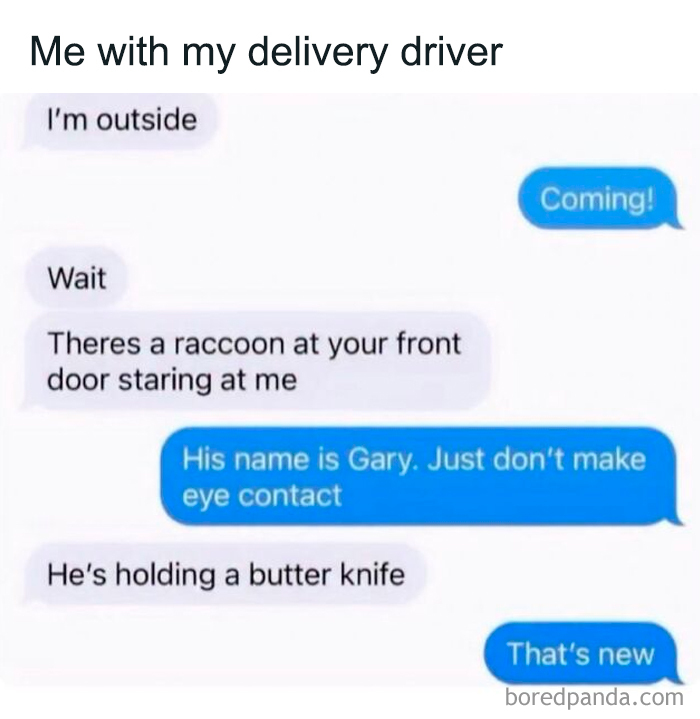
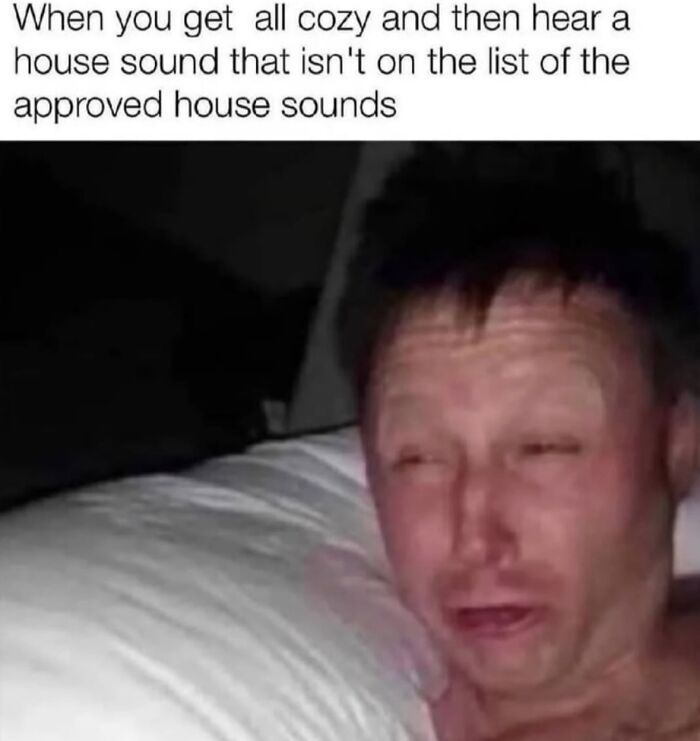
I was listening to raccoons fight outside my window not ten minutes ago. It's the stuff of horror film soundtracks. Sure, raccoons are cute. H*ll, they're adorable, with the stripey tails and bandit masks, the waddling walk and bouncing run, and their strangely human hands. But do not, and I mean do not, mess with them! The thought of armed raccoons is terrifying. Edit: Great, they're at it again. 2:45AM here and it sounds like a m******e happening in my backyard. Undoubtedly an adorable m******e, but still.
Norville's definition of respect is the following: “Acknowledging the value and uniqueness of others and being mindful of their feelings, while at the same time trying to put myself in their position.”
She believes that respect requires empathy, the capacity to anticipate and understand the feelings of others. "It requires consideration," she says. "It is letting the Golden Rule shape the way we interact. It’s being mindful to see a situation from another’s perspective. When respect is given, it communicates to the recipient of the respect that he is valued and important."
Sadly, it seems that many people do not feel respected. A 2025 Gallup survey revealed that respect in the workplace has returned to an all-time low. Only 37% of U.S. employees polled strongly agreed that they are treated with respect at work.
"People come to work expecting to receive respect. It is a requirement for collaboration. In the presence of mutual respect, team members can communicate openly and constructively," notes the site. "Disrespect, by contrast, damages workplace relationships. When employees report a lack of respect at work, there’s a strong chance that ethically and legally questionable behavior is present."
Do you feel society has become more rude and disrespectful over the years? Let us know in the comments below.

What's with this fad of using white text instead of easier to read yellow text?

I just stuff all the sheets for one bed set into a pillow case.
What?? He's gonna crash at some girls house and he's not dating her?? Goodnight????






 No fees, cancel anytime