Get Premium
Dark mode theme is available exclusively for premium users. Learn more about the benefits of subscribing.
No fees, cancel anytime.

 Dark Mode Ad-Free Browsing Unlimited Content
 Ad-Free Browsing Unlimited Content Dark Mode
Join 1.2 million Panda readers who get the best art, memes, and fun stories every week!
Certain everyday household items you use without a second thought could be silently harming your health, with potentially fatal consequences.
In a now-viral video, 42-year-old Harvard doctor Dr. Saurabh Sethi warned that common things we often overlook in our homes could trigger respiratory issues and other serious medical conditions.
“These hidden dangers are often overlooked, but backed by science,” Dr. Sethi cautioned his viewers.
Image credits: Doctor Sethi
The California-based gastroenterologist shared the video on his official Instagram in June of this year, and it has since garnered over 2.4 million views on the platform.
In the clip, titled 3 Toxic Bedroom Items You Should Throw Out ASAP, Dr. Saurabh explained, one by one, the medical dangers associated with each of the three everyday items.
He shared how old pillows, mattresses, and air fresheners “might be silently affecting your gut, sleep, and long-term health.”
In the caption of the post, he added, “In this eye-opening video, Harvard and Stanford-trained doctor Dr. Sethi breaks down 3 common items found in most bedrooms that you should throw out ASAP.”
Image credits: Unsplash/Jason Hawke
“From Air fresheners to old mattresses, these hidden dangers are often overlooked, but backed by science.”
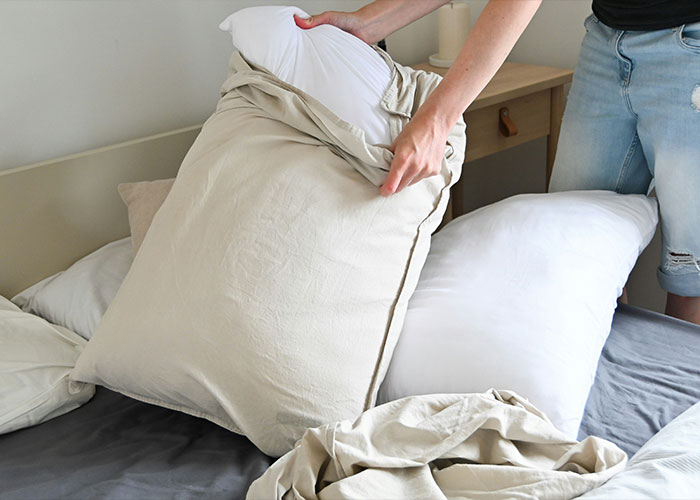
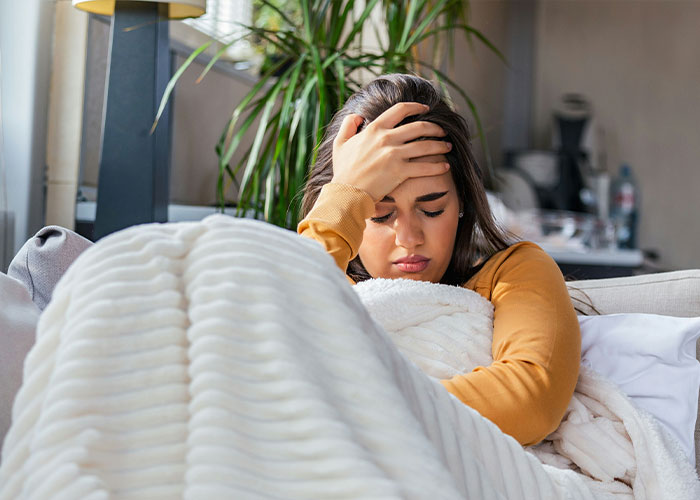
In the reel, he began by explaining how old pillows “accumulate dust mites, sweat, and allergens over time.”
@doctorsethimd 3 Toxic Things in Your Bedroom You Should Throw Out ASAP ❌ Dr. Sethi #toxin#learnontiktok♬ original sound – Doctor Sethi ⚡️
According to a research study on house dust mite (HDM) allergies by the National Library of Medicine, old pillows provide a thriving environment for tiny mites that can trigger allergies, asthma, and eczema, especially in children.
To prevent such respiratory conditions, Dr. Sethi recommended replacing pillows every “one to two years,” and no longer than that.
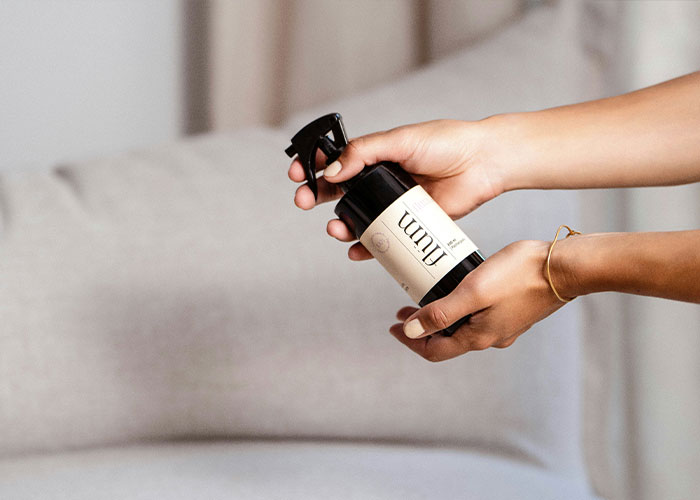
The next item on his list was synthetic air fresheners, which he cautioned against using in bedrooms, as they release phthalates and volatile organic compounds (VOCs) that are “linked to respiratory issues and hormonal disruption.”
Image credits: Unsplash/Nik
These are tiny chemicals that canisters expel into the air along with the fragrance, which then seep into the lungs when inhaled.
According to Dr. Sethi, long-term exposure to artificial air fresheners can also cause “reproductive harm and asthma.”
Image credits: Unsplash/Flüm France
He suggested using natural “essential oils” that are extracted from plants as an alternative to keep your space smelling fresh.
The Harvard and Stanford-trained doctor also cited a 2023 study done by the National Library of Medicine.
According to the research findings, “86% of the air fresheners tested contained phthalates,” which are medically recognized as harmful chemicals for human health.
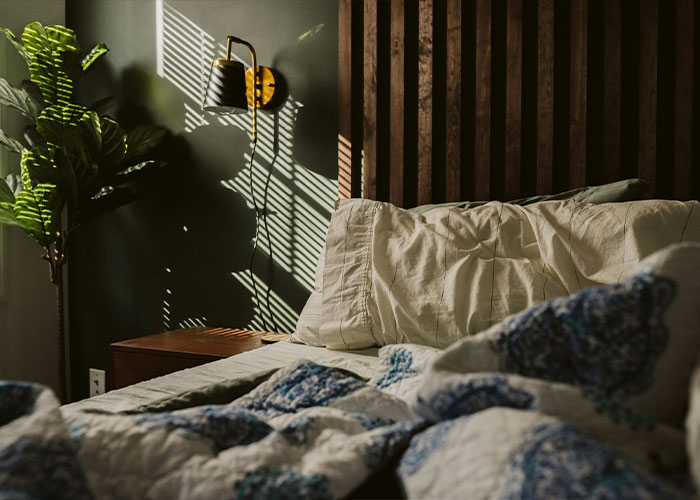
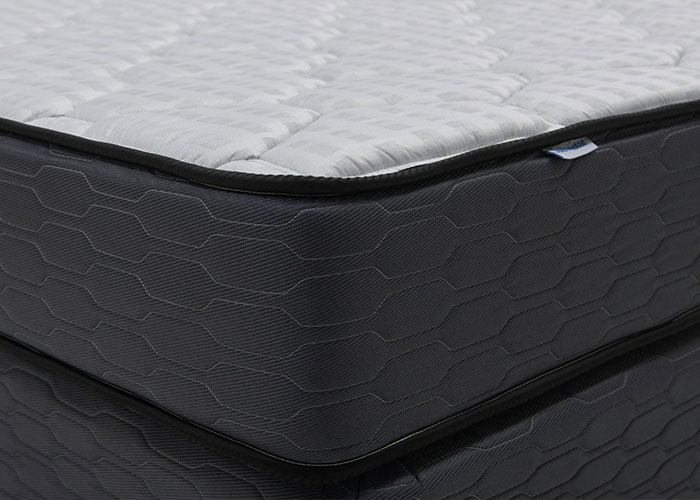
Lastly, he urged his viewers to replace their mattresses that are “more than 7-10 years old.”
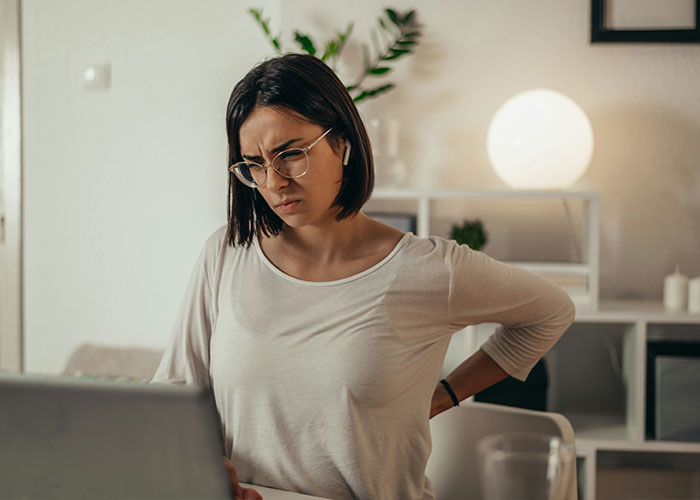
“[It] can lower sleep quality and cause chronic back pain. Share this widely to spread awareness,” the video concluded.
After years of use, mattresses lose their firmness and structural support, which often results in lower back pain and poor spinal alignment.
Image credits: Unsplash/Getty Images
While the video was intended as a cautionary message, it sparked mixed reactions among social media users on Instagram.
Some viewers expressed gratitude for the “important information” about health, while others were not convinced, arguing that replacing these items could have a “negative impact on the environment.”
Several netizens shared that they’ve used pillows and mattresses for over a decade and are “doing just fine.”
“Old pillow = 2 years? If we threw those away and bought new ones that‘d had a massive negative impact on the environment,” commented one user.
Image credits: Unsplash/Costa Live
Another wrote, “1 or 2 years old? U can’t believe our pillow is 12 years old something!”
“Wash pillows regularly. No need to replace,” added a third.
“We aren’t so rich to spend this much money. My mattress is more than ten years old and I’m breathing fine.”
Image credits: Unsplash/Getty Images
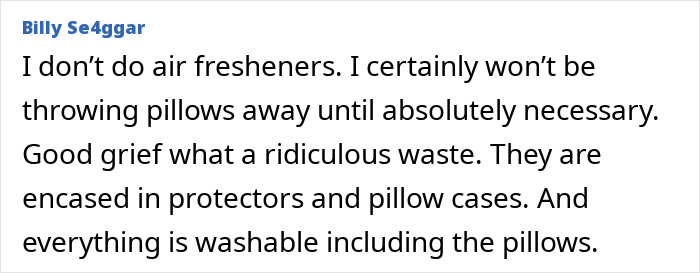
“I don’t do air fresheners. I certainly won’t be throwing pillows away until absolutely necessary.”
However, several studies online support Dr. Sethi’s advice, suggesting that pillows should be replaced every one to two years.
To accurately determine when a pillow needs replacing, experts recommend the Pillow Fold Test.
In this test, the pillow is laid flat, folded in half, and held for about 30 seconds to a minute.
Image credits: Alex Tyson
If the pillow springs back to its original shape after being released, it’s still supportive. If it remains folded or takes too long to unfold, it’s time to buy a new one.
“4th item that you need to throw out = mobile phone,” one user sarcastically wrote online.

By entering your email and clicking Subscribe, you're agreeing to let us send you customized marketing messages about us and our advertising partners. You are also agreeing to our Privacy Policy.
Thank you! You've successfully subscribed to newsletters!


The doctor said to use essential oils. which immediately pings my BS detector. Essential oils aren't good to breath in either, doesn't matter that they are natural. The doctor sounds like a quack, that had never heard pillow protectors.

Hemlock is "natural" too, isn't it? XD I agree - essential oils are NOT always safe just because they're made from plants or are "natural". Many can, in fact, be toxic/harmful since they're actually concentrated oils from said plant - applying most essential oils directly to your skin can cause contact dermatitis at the very least, and it's not good to dump them undiluted into a diffuser/etc.
Load More Replies...
I hate the way the internet conspires to waste my time. Near the beginning of the article there was a grey box titled "Highlights" with three bullet points. They could have put the three items right there, but no, the author insists on making me scroll through the article to find the three REAL highlights.

Same as in highschool or college. Must be at least 500, 1000, 2000 words etc. I'd write two or three paragraphs at most then just keep filling it up with...well filler... until it was long enough. The people who excelled at that now write these articles.
Load More Replies... The doctor said to use essential oils. which immediately pings my BS detector. Essential oils aren't good to breath in either, doesn't matter that they are natural. The doctor sounds like a quack, that had never heard pillow protectors.
Hemlock is "natural" too, isn't it? XD I agree - essential oils are NOT always safe just because they're made from plants or are "natural". Many can, in fact, be toxic/harmful since they're actually concentrated oils from said plant - applying most essential oils directly to your skin can cause contact dermatitis at the very least, and it's not good to dump them undiluted into a diffuser/etc.
Load More Replies... I hate the way the internet conspires to waste my time. Near the beginning of the article there was a grey box titled "Highlights" with three bullet points. They could have put the three items right there, but no, the author insists on making me scroll through the article to find the three REAL highlights.
Same as in highschool or college. Must be at least 500, 1000, 2000 words etc. I'd write two or three paragraphs at most then just keep filling it up with...well filler... until it was long enough. The people who excelled at that now write these articles.
Load More Replies...



























 No fees, cancel anytime




















11
22