Get Premium
Dark mode theme is available exclusively for premium users. Learn more about the benefits of subscribing.
No fees, cancel anytime.

 Dark Mode Ad-Free Browsing Unlimited Content
 Ad-Free Browsing Unlimited Content Dark Mode
Join 1.2 million Panda readers who get the best art, memes, and fun stories every week!
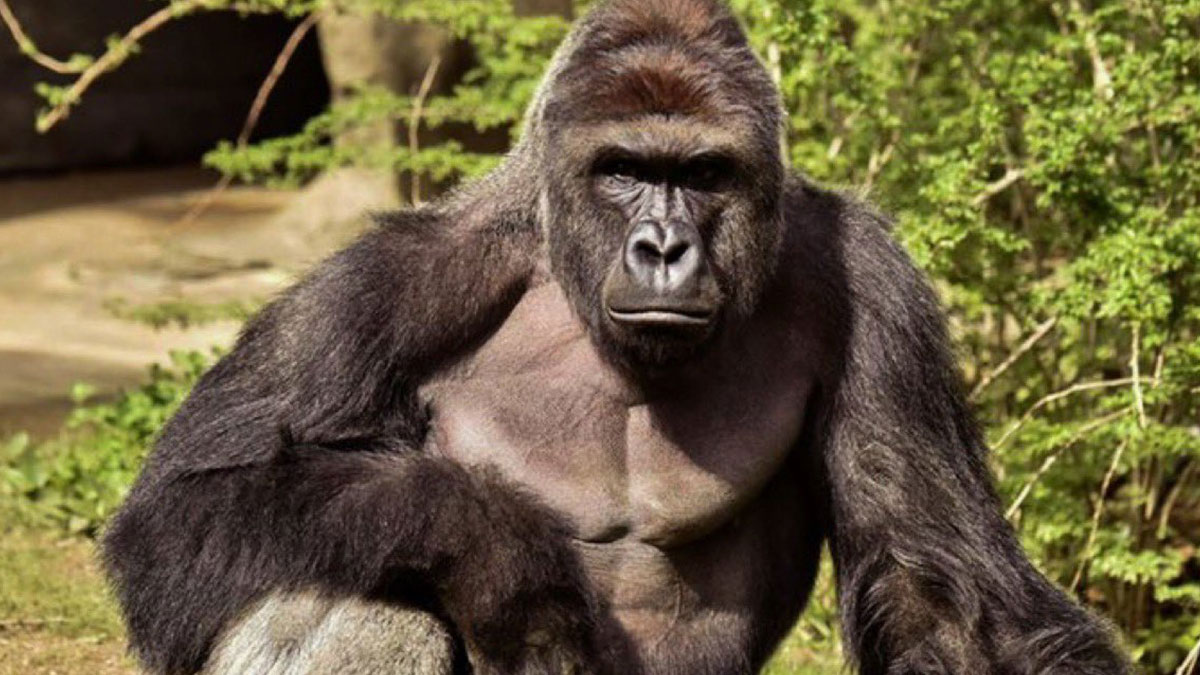
Most of us can probably pinpoint the exact moment we realized, “Oh, the internet has truly changed.” For some, that might be 2020, when TikTok finally started taking over the online stratosphere. For others, it all began with Harambe.
Let’s take a ride down memory lane, shall we? It’s 2016. The iPhone 7 is still a few months away from launching, you’re probably sick and tired of everyone around you dabbing, and right before summer starts, you hear the news: Harambe has been euthanized. But… who is Harambe? And what actually happened? Let’s break it down, 10 years later.
Image credits: The White House / X
Image credits: Jason Miklacic / Wikipedia
Image credits: Christina Langford-Miller / Unsplash
In 2016, the world felt a bit simpler. There wasn’t the same kind of social media pressure we know today, and not all of us had fallen victim to the algorithm just yet. Still, the news of a gorilla’s death made headlines, shook the internet, and arguably changed online culture forever. Few could have predicted the impact it would have.
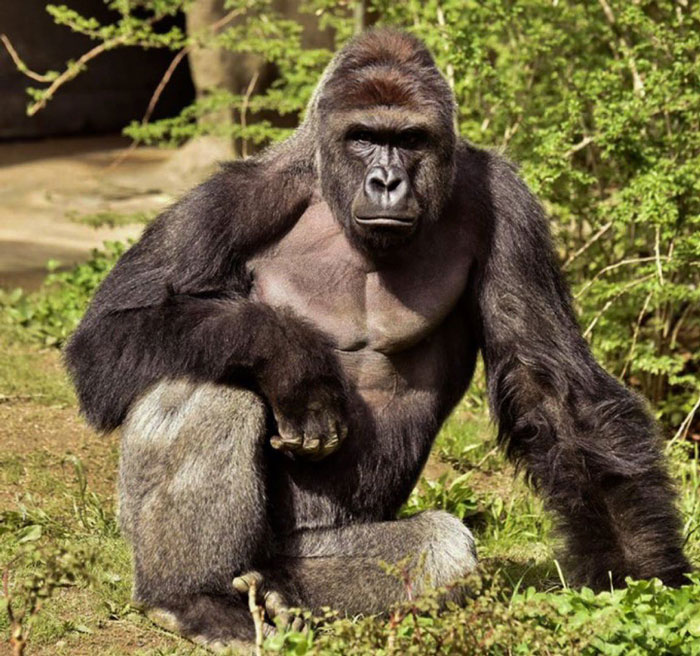
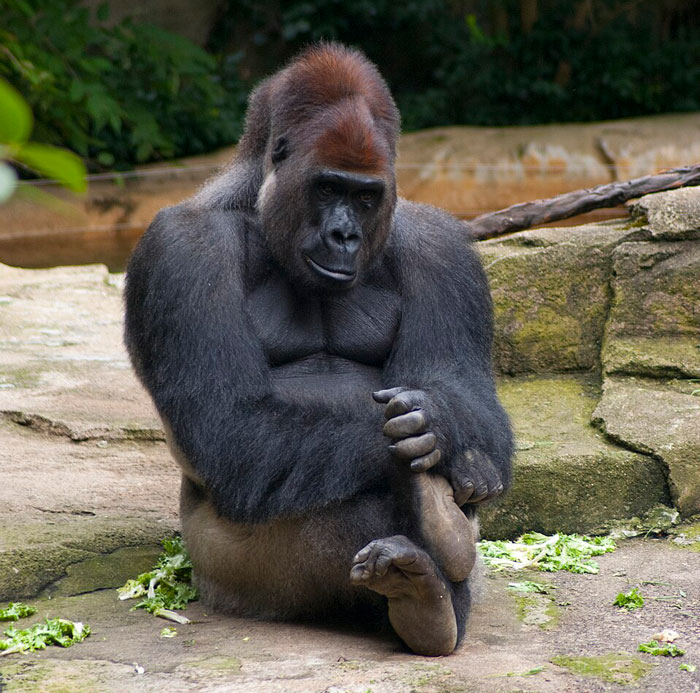
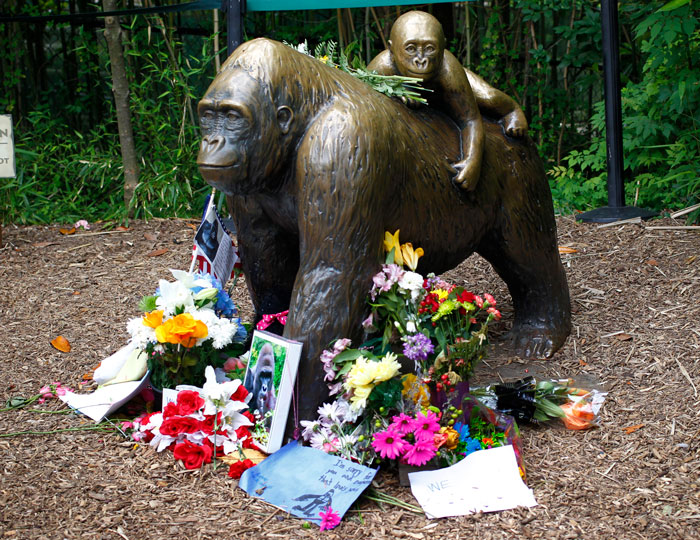
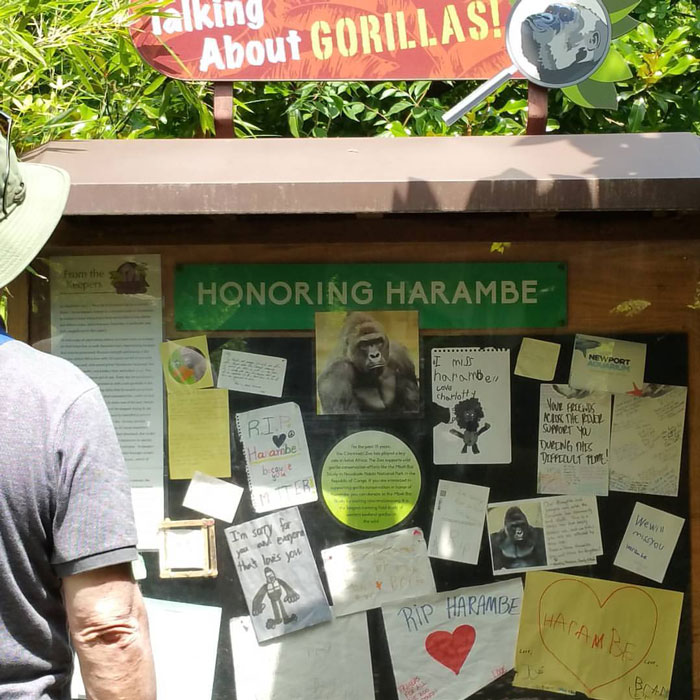
Harambe was a 17-year-old critically endangered Western Lowland gorilla living at the Cincinnati Zoo. He was originally born at the Gladys Porter Zoo in Texas. However, in 2002, a chlorine gas poisoning accident at the zoo claimed the lives of Harambe’s mother, sister, and brother. Harambe was the only one who survived.
Image credits: ViralHog / YouTube
In 2014, he was transferred to the Cincinnati Zoo to live among other adult gorillas, as he lacked some of the primal instincts he would normally have learned from his mother and other members of his troop. After two years at the zoo, however, his life would be cut short one day after his 17th birthday, when a three-year-old child slipped into the gorilla enclosure where Harambe was being kept.
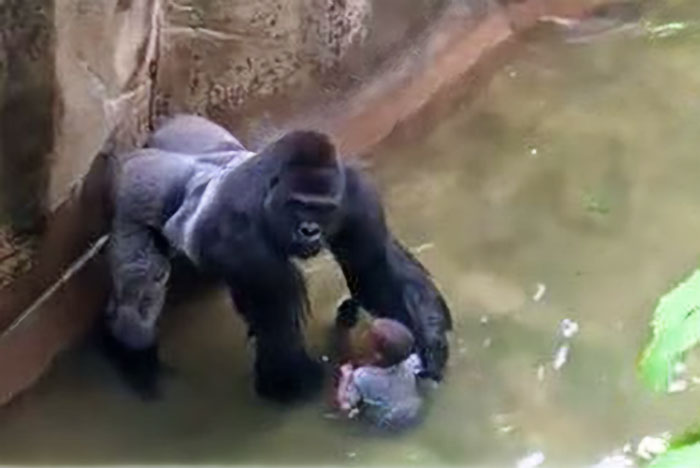
While the gorilla wasn’t necessarily acting violently, he grabbed the toddler and began dragging him around the enclosure. Some primatologists later observed that his behavior resembled the way a female gorilla might protect an infant. Nonetheless, amid the chaos and panic of the situation, the zoo’s Dangerous Animal Response Team decided to put Harambe down.
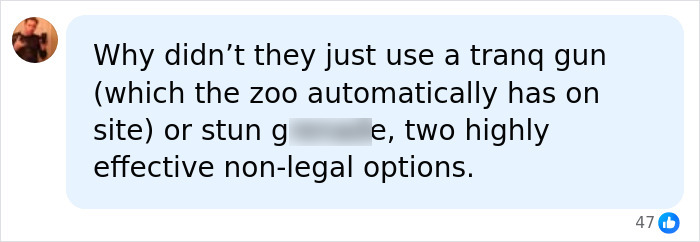
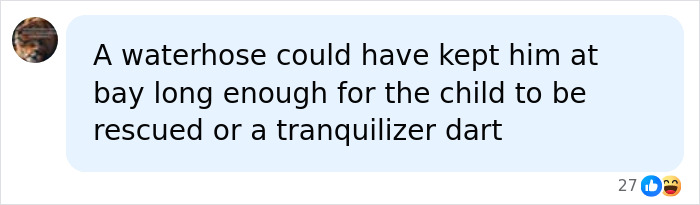
While tranquilizers were considered, the severity of the situation left the emergency team with a difficult decision. Zoo director Thane Maynard later explained what happened: “Our first response was to call the gorillas out of the exhibit,” he said. “The two females complied, but Harambe did not.” And, per experts, tranquilizers do not take effect immediately, and the delay could endanger the child even more.
Image credits: John Sommers II / Getty Images
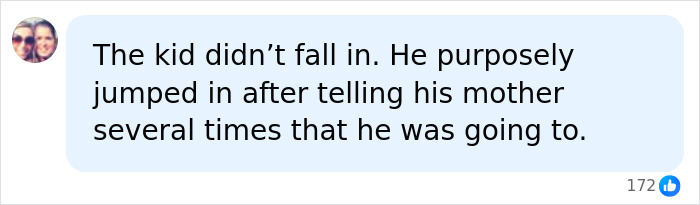
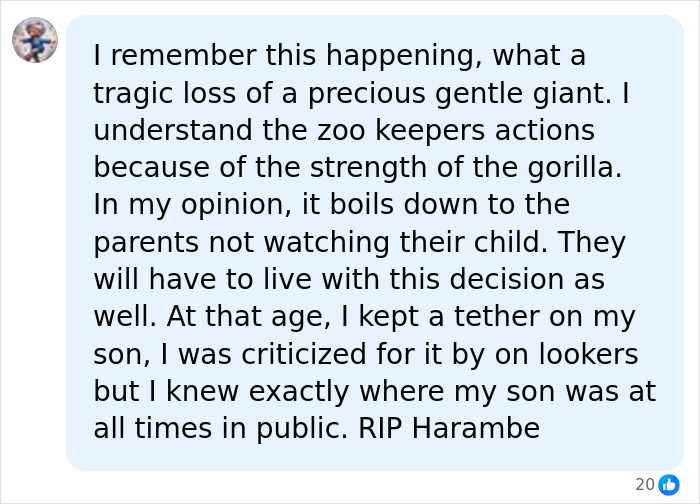
Per Maynard, they also feared that being shot with a tranquilizer dart could have made Harambe increasingly agitated, which would have worsened the situation. While many understood the emergency team’s decision, others blamed the adult involved: the toddler’s mother. Many wondered how she could have possibly let her son slip into the enclosure, ultimately leading to the death of an innocent animal.
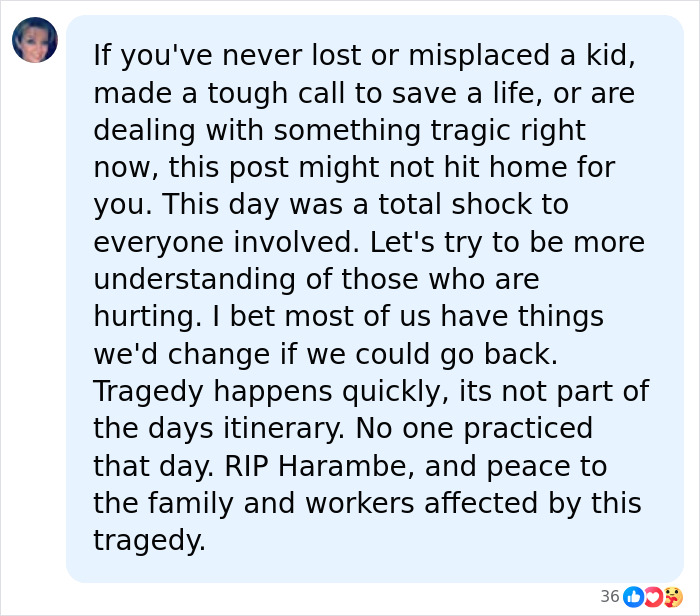
“As a society, we are quick to judge how a parent could take their eyes off of their child, and if anyone knows me, I keep a tight watch on my kids,” the woman wrote in a now-deleted Facebook post. “Accidents happen.” Thankfully, the child was left with only some bruises, scrapes, and a concussion. Per the mother’s testimony, no other injuries were detected.
Parenting experts also came forward after the incident to defend the mother, arguing that toddlers “can slip away in a single instant.” The sentiment was echoed by Hamilton County prosecutor Joe Deters, who said, “If anyone doesn’t believe a three-year-old can scamper off very quickly, they’ve never had kids.” Nonetheless, many people still wanted someone to be held accountable.
Image credits: Kyle McCarthy / Flickr
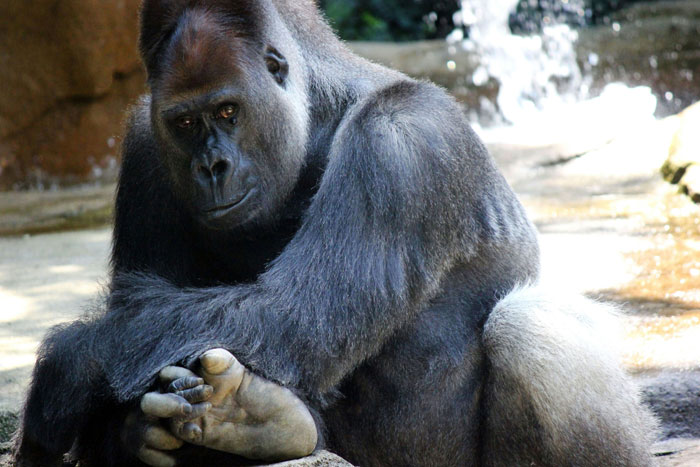
Wildlife photographer Jeff McCurry, who often photographed the gorillas at the zoo, later spoke about his experience with Harambe, praising both his intelligence and unique personality. “He really seemed to be highly intelligent and interested in what was going on, and he was special,” he said.
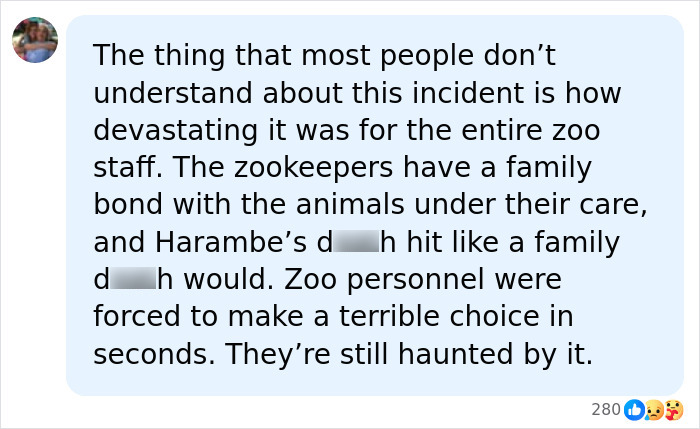
The keepers’ possible trauma from the incident was also met with empathy and understanding from many people online, despite the initial outrage. Nonetheless, many believe the situation served as a warning for both parents and zookeepers to remain vigilant in wildlife spaces. So, do you think the zookeepers should have used a tranquilizer? Let us know in the comments below.
Image credits: www.facebook.com
Image credits: www.facebook.com
Image credits: www.facebook.com
Image credits: www.facebook.com
Image credits: www.facebook.com
Image credits: www.facebook.com
Image credits: www.facebook.com
Image credits: www.facebook.com
Image credits: www.facebook.com
Image credits: www.facebook.com
Image credits: www.facebook.com
Image credits: www.facebook.com
Image credits: www.facebook.com
Image credits: www.facebook.com

By entering your email and clicking Subscribe, you're agreeing to let us send you customized marketing messages about us and our advertising partners. You are also agreeing to our Privacy Policy.
Thank you! You've successfully subscribed to newsletters!

Tranquilizer darts can take up to 20 minutes to start working. Too bad they didn't just shoot the kid instead. 🤷♀️

The idiocy of people who think that turning a hose on a stressed adult gorilla or shooting it with a dart are reasonable solutions to a situation where a child's life hangs in the balance.

It's a good example of people who don't realize, or understand that 1: turning the hose on it will probably move it from stressed... to enrage; and 2.) Tranq darts don't work instantly like they do on TV, so the gorilla is going to feel pain... and go from stressed to enraged.
Load More Replies...

Tranquilizer darts can take up to 20 minutes to start working. Too bad they didn't just shoot the kid instead. 🤷♀️
The idiocy of people who think that turning a hose on a stressed adult gorilla or shooting it with a dart are reasonable solutions to a situation where a child's life hangs in the balance.
It's a good example of people who don't realize, or understand that 1: turning the hose on it will probably move it from stressed... to enrage; and 2.) Tranq darts don't work instantly like they do on TV, so the gorilla is going to feel pain... and go from stressed to enraged.
Load More Replies... 





























 No fees, cancel anytime







31
7