Get Premium
Dark mode theme is available exclusively for premium users. Learn more about the benefits of subscribing.
No fees, cancel anytime.

 Dark Mode Ad-Free Browsing Unlimited Content
 Ad-Free Browsing Unlimited Content Dark Mode
Join 1.2 million Panda readers who get the best art, memes, and fun stories every week!

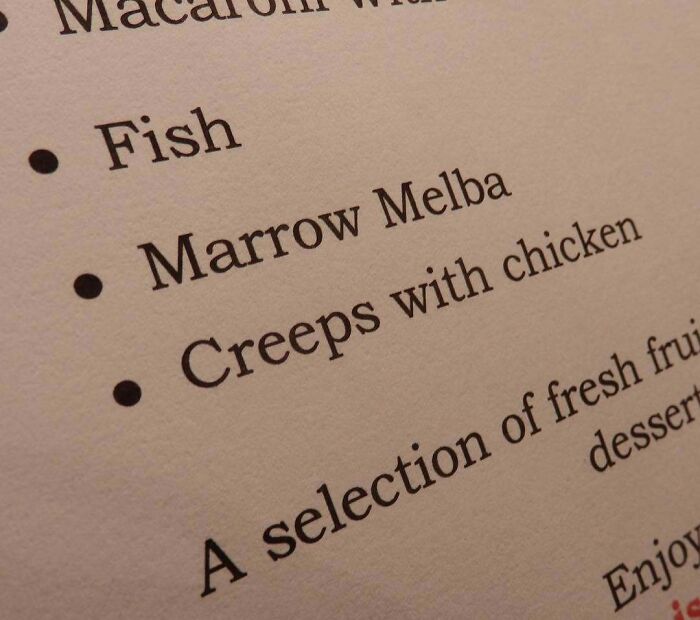
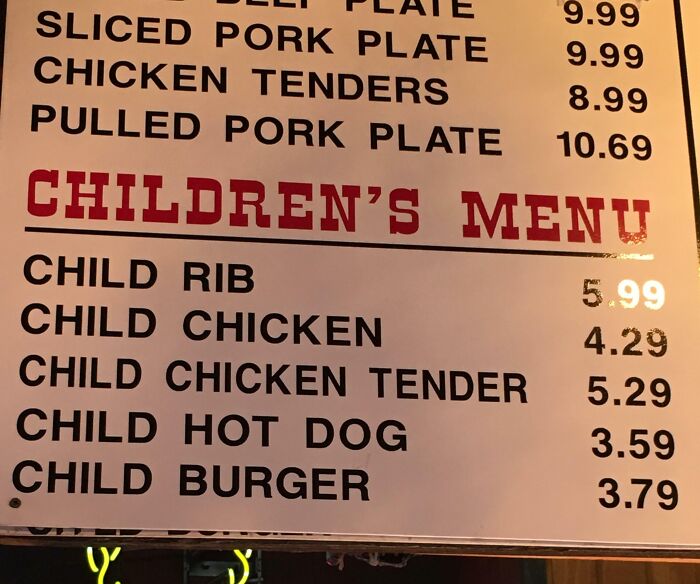
Fresh Human, Child Rib, Jewish Women Stewed... It may sound like Hannibal Lecter's dream 3-course meal, but these are actually dishes found on "ordinary" restaurant menus around town. Many, we'd hazard a guess, should be taken with a pinch of salt because clearly, they're a case of cuisine getting lost in translation.
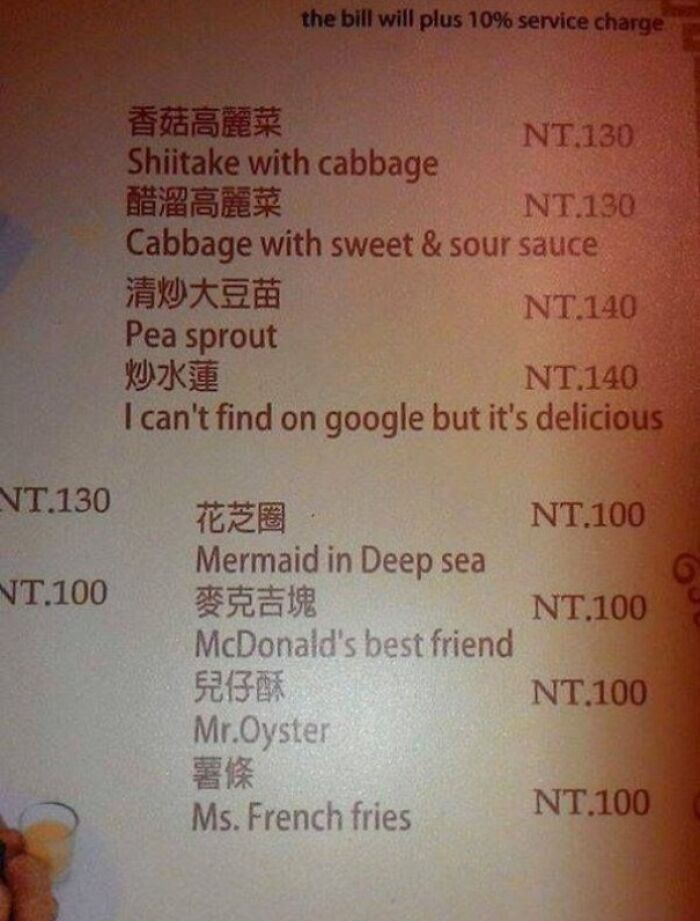
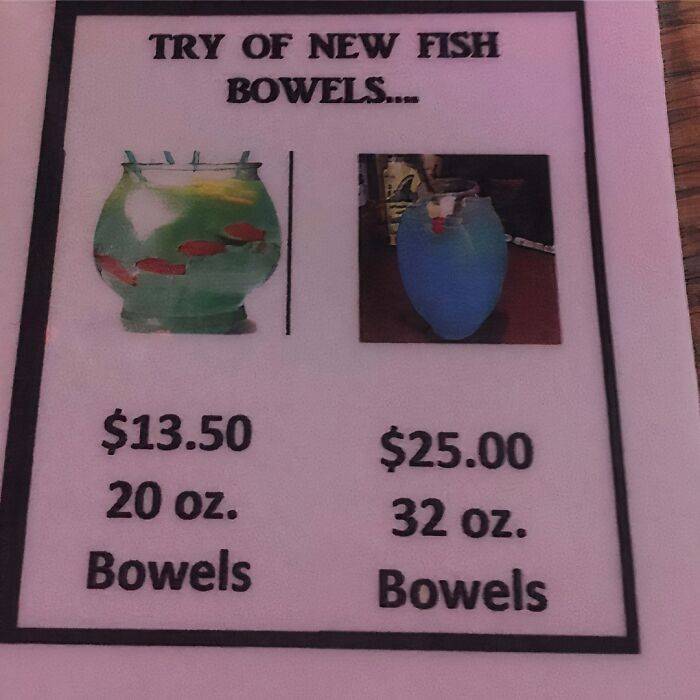
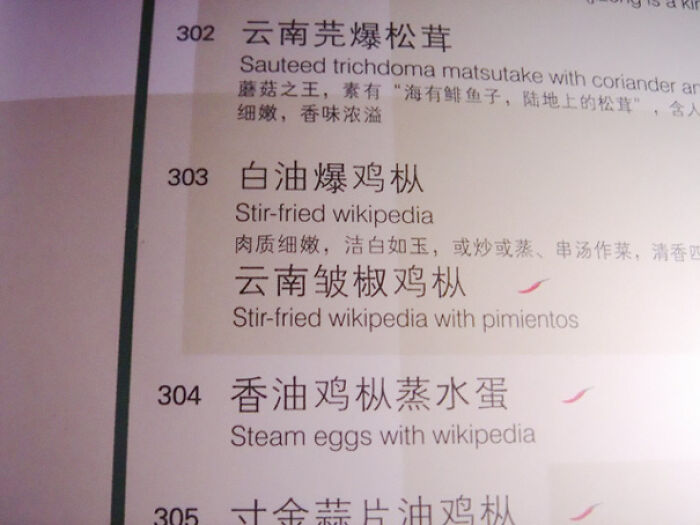
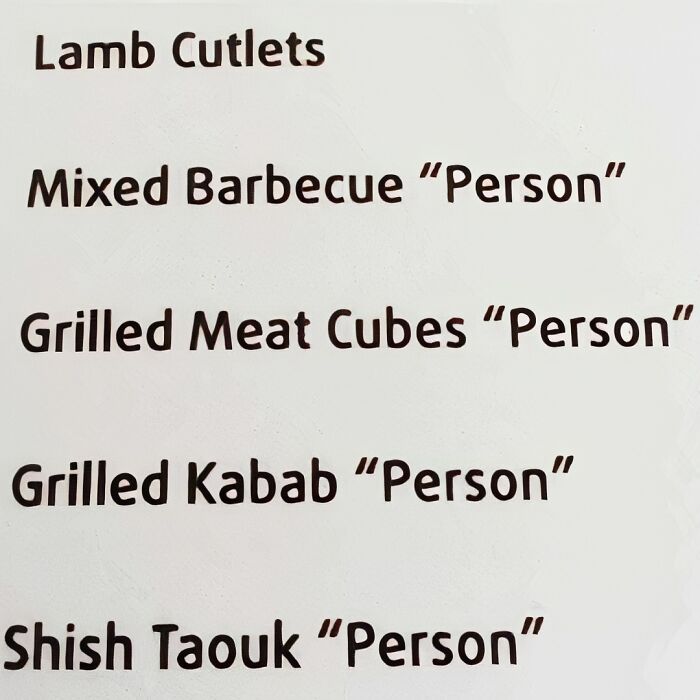
Other gems that diners have spotted include Steam Eggs With Wikipedia, New Fish Bowels, and Mixed Barbeque "Person." Eating out has never been this funny or confusing. Bored Panda has compiled a list of some of the most epic restaurant menu fails to tickle your taste buds ahead of tonight's boring dinner. We also take you on a culinary trip around the world to explore the most bizarre dishes that people are brave enough to try out. You'll find that between the images. Bon appétit!
This post may include affiliate links.

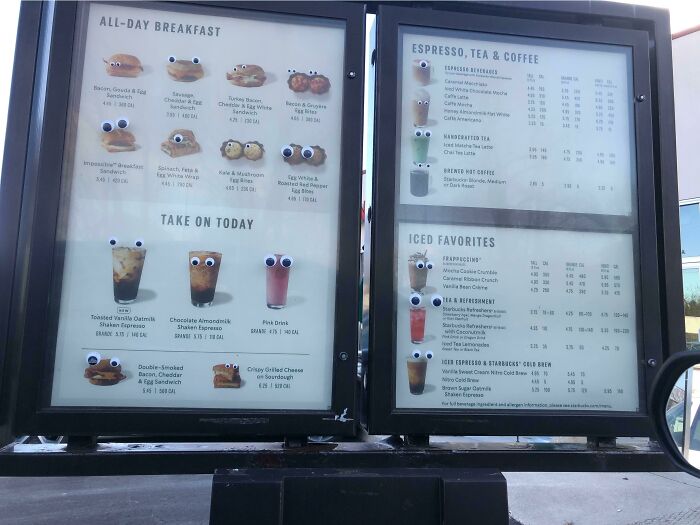
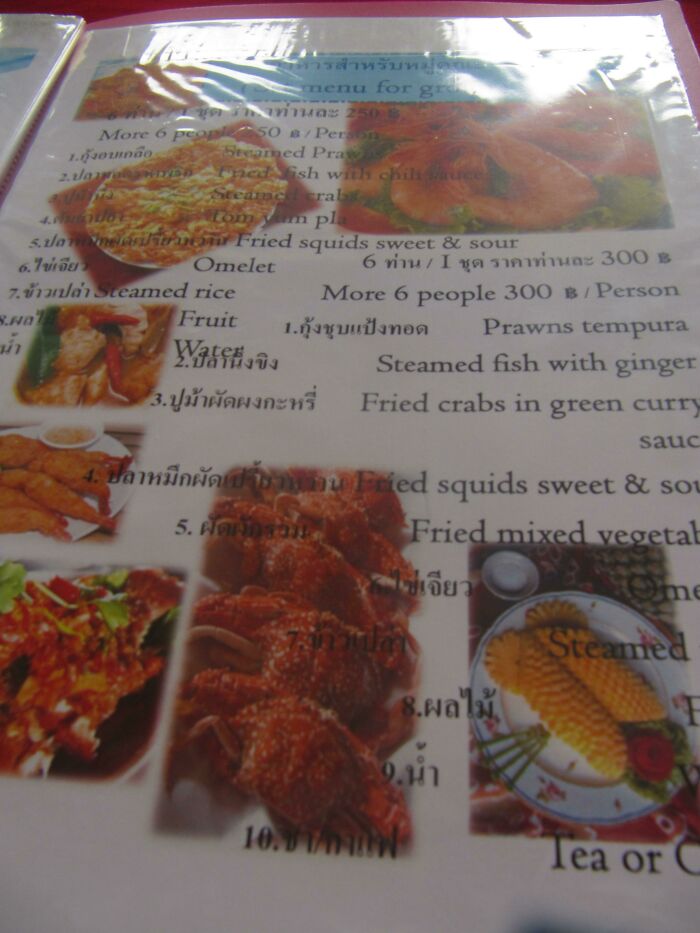
lol oh my XD It says fried lotus root - indeed very delicious!
The mere thought of a rat in the kitchen could send shivers down a fine diner's spine and have UB40 breaking out into song. Jokes aside, rats aren't known to be the most hygienic creatures, and many people do not want them anywhere near food. But in parts of Kenya, Splinter and his friends are considered a delicacy.
The roasted rodents are locally known as "kadzora." Cooked over open flames, they're believed to be a perfectly reliable source of protein, and some say devouring them holds significant cultural value.
“Eating rodents has been part of our lives. It’s something our grandparents taught us, and it’s a skill we pass down. It’s part of the Chonyi or Mijikenda culture,” says Joseph Sanga from Kilifi, on the coast of the East African country.
The rats are not just caught and tossed over the flames. They're carefully cleaned first. Locals believe the fire enhances flavor and removes potential health risks. But not everyone is convinced...
“Rodents are not meant to be eaten," warns Dr. Ghalib Salim from the Coast General Teaching and Referral Hospital (CGTRH). "Any meat that is to be consumed needs to be inspected. Consuming unverified meat poses health risks, as rodents are known carriers of pathogens and may be contaminated.”
In parts of Germany, there actually is a dish called "Tote Oma" (dëad grandma). It's a sort of mash of blood sausages, bacon, onion and herbs, usually served with potatoes. You'll find it on many menus of traditional small restaurants, especially in Thuringia and Saxony. Never tried it, but my father loves it.
While many of us prefer our food unalived before it hits our mouth, some in South Korea may argue, "but why?" There's a dish called san nakji, and it comprises live octopus tentacles that continue to wriggle on the plate after being sliced.
"While some may find the dynamic movement and chewy texture unsettling, others appreciate the dish for its cultural significance and the way it highlights the freshness of the ingredients," says food writer Mansi Bhandari, adding that it’s often seasoned with sesame oil and sesame seeds.
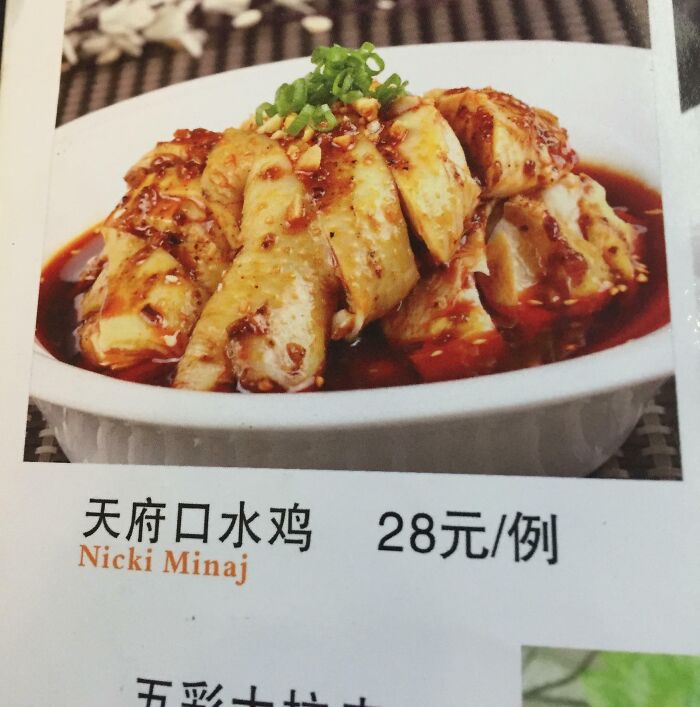
I'm not 100% sure, but I think it's some kind of "water/liquid-cooked chicken". The first characters are referring to a region (Tianfu) so it could be "herb-bath-cooked chicken from the Tianfu region", more or less.
Checked with my ex, who is Chinese. 303 is actually "stir-fried chicken cooked in oil" and "chicken cooked with Yunnan peppers and mushrooms" (Yunnan peppers are from the southwestern region of China and are of medium/high heat/spiciness. Yunnan peppers are NOT the same cultivar as pimiento peppers, so not sure why the English translation says "pimientos". Pimientos are sweet peppers and aren't spicy at all.) 304 is "steamed egg custard with sesame oil and mushrooms". The characters under "stir-fried wikipedia" actually describe the dish above, so I imagine the "wikipedia" part came about accidentally because the description is nicked FROM wikipedia XD
Those quotation marks in restaurant menus feel of most of the time. "What do you mean, 'Veal'?". Even more suspicious if the waiter tells you today's specials and uses a good amount of air quotes..
The Tastes Seoul Good food blog describes san nakji as one of the "weirdest, wildest, and most dangerous" foods of South Korea. It goes on to say that there are two ways to eat the dish. The first is as mentioned above: chopped up, still wriggling and garnished.
"The other way to eat san nakji is to take the octopus straight from its watery home, wrap it around a wooden chopstick, dip it in sesame oil – and eat it in one bite," reads the site. "This is an extreme way to eat a living animal, and is only for the brave."
Tastes Seoul Good warns that diners must chew with extreme care. Some people have not lived to tell the tale of eating san nakji. If the octopus isn't chewed enough, it can stick in your throat, effectively sending you to your grave.
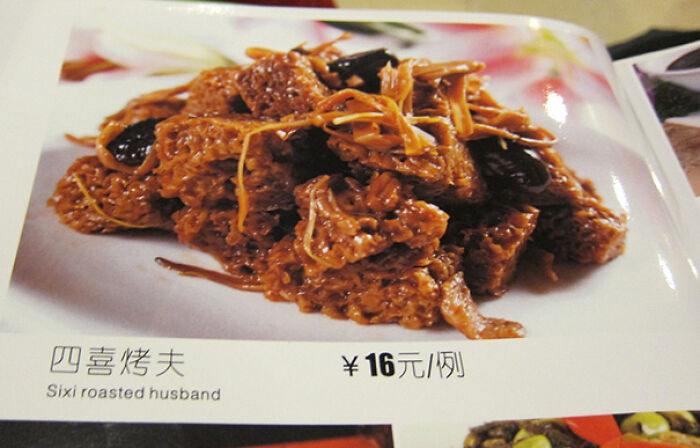
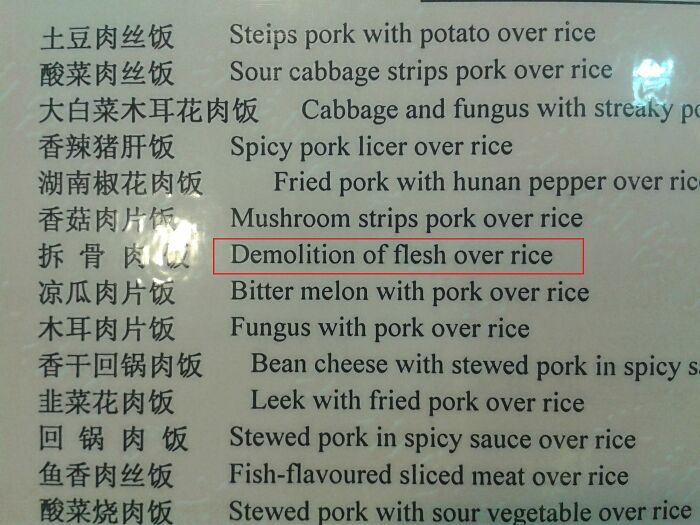
It's "deboned meat" XD Just "deboned", not "demolished" XD The first two characters do actually say "tear down" or "demantle" and "bone", literally, but it means "deboned" when paired with the third character ròu (meat.)
Over in Cambodia, those brave enough to try can feast on fried tarantulas. The massive creepy crawlies are known locally as "a-ping," and eaten as a snack or street food.
"These arachnid snacks have become a popular tourist attraction in Skuon, where visitors can observe locals selling them at roadside stalls or markets," reports Rough Guides. "Despite their intimidating appearance, fried tarantulas have gained a reputation as a must-try delicacy for adventurous travelers seeking unique culinary experiences in Cambodia."
Just like the roasted rats in Kenya, fried tarantulas hold cultural significance in Cambodia. They're considered a traditional food, as well as a valuable source of protein in rural communities.

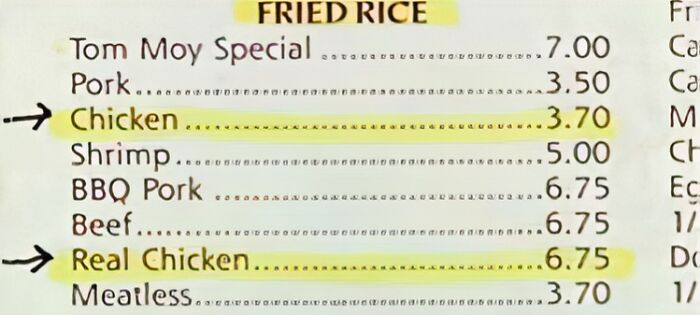
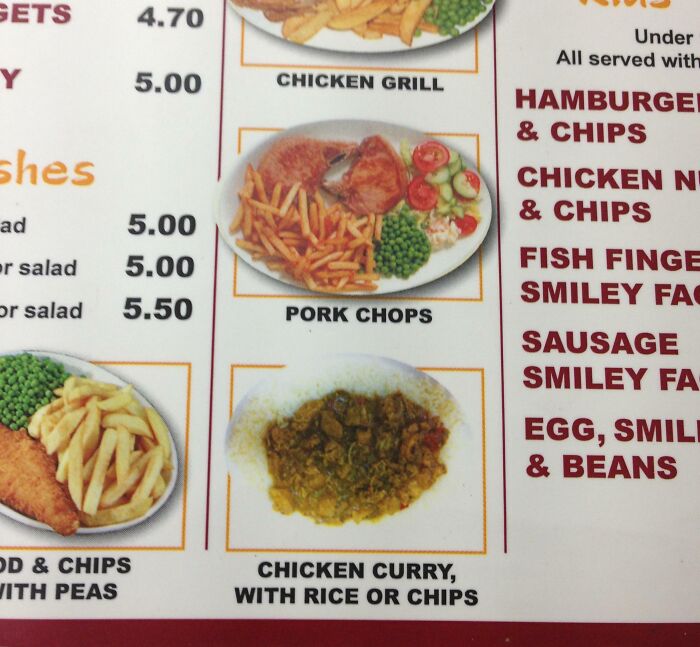
Wait, if you order chips with chips, the second portion is only half a quid. Hell yeah.
Many Canadians may turn their noses up at roasted rats or fried tarantulas. But, jellied moose nose isn't off the table. According to Rough Guides, it's a traditional dish originating from Indigenous communities in Canada, particularly among the First Nations peoples.
"As the name suggests, the dish is made from the nose of a moose, which is boiled until tender, then the meat is removed from the bone, sliced, and combined with various seasonings," explains the site.
Jellied moose nose is often served as a cold appetizer or snack. And as you might imagine, it has a rather "unique" flavor and texture. As Rough Guides notes, the jelly provides a gelatinous base for the tender moose meat.
"While it may not be commonly found in mainstream cuisine, it holds cultural significance for Indigenous communities and is cherished as a traditional dish passed down through generations," adds the site.
Not too far away, you may find some Americans feasting on Rocky Mountain oysters. And no, they are not the normal type of sea oysters that might come to mind.
Popular in places like Colorado, Montana, Wyoming, and Texas, Rocky Mountain oysters are also known as prairie oysters. They are not found in the ocean, or underwater, but rather between the legs of male animals like bulls, pigs, or sheep. By "between the legs," yes, we mean the testicles.
"The testicles are typically peeled, pounded flat, coated in flour or breadcrumbs, seasoned with salt and pepper, and then deep-fried until golden brown and crispy," reports Rough Guides. "They are often served hot with dipping sauces such as cocktail sauce, horseradish, or mustard." Errrr.... yum?
According to Atlas Obscura, Rocky Mountain oysters have a texture similar to calamari, "with a light gamey flavor halfway between chicken and venison."

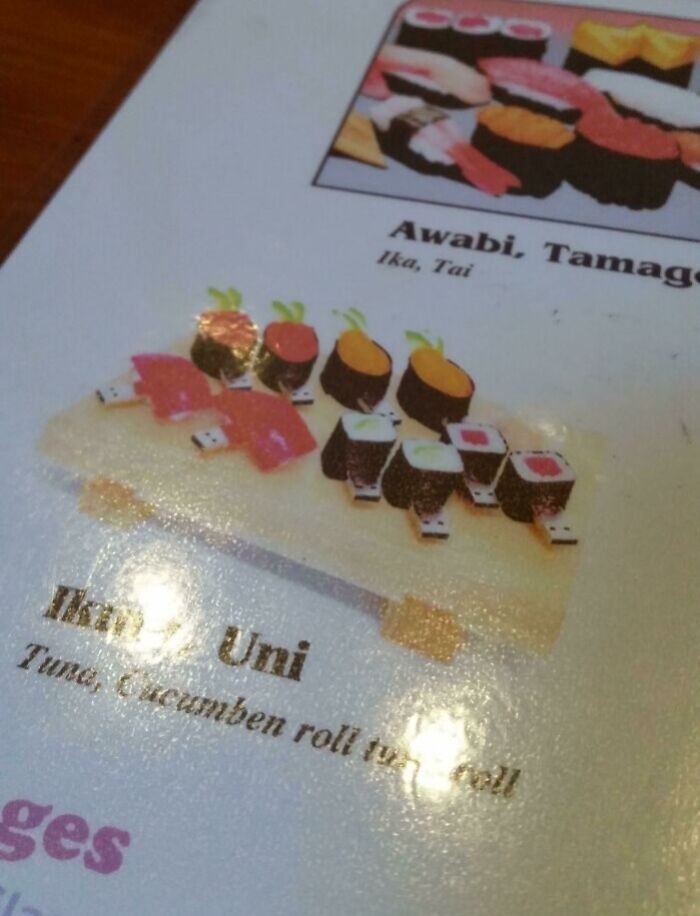
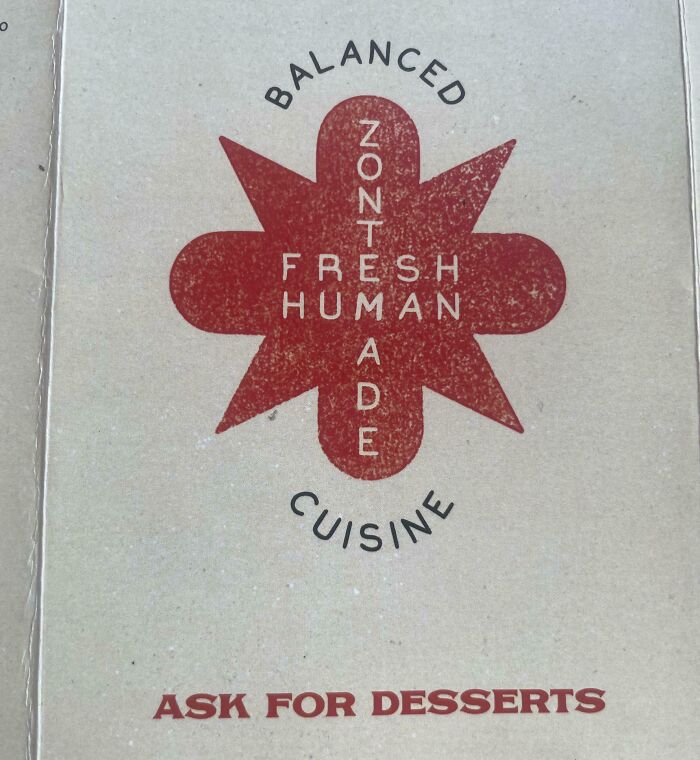
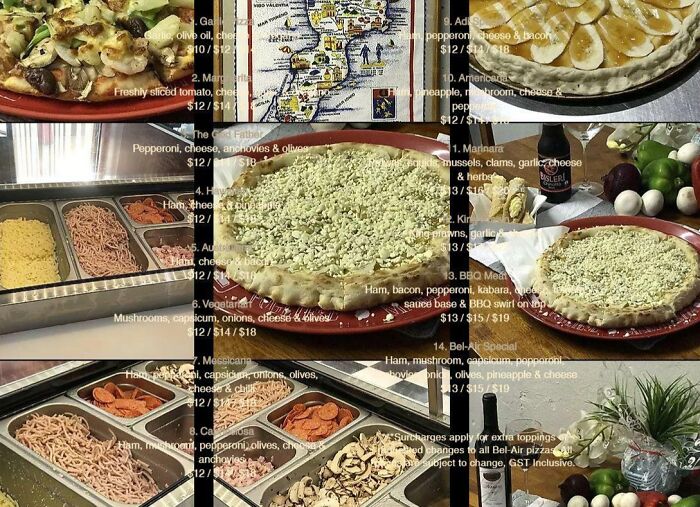
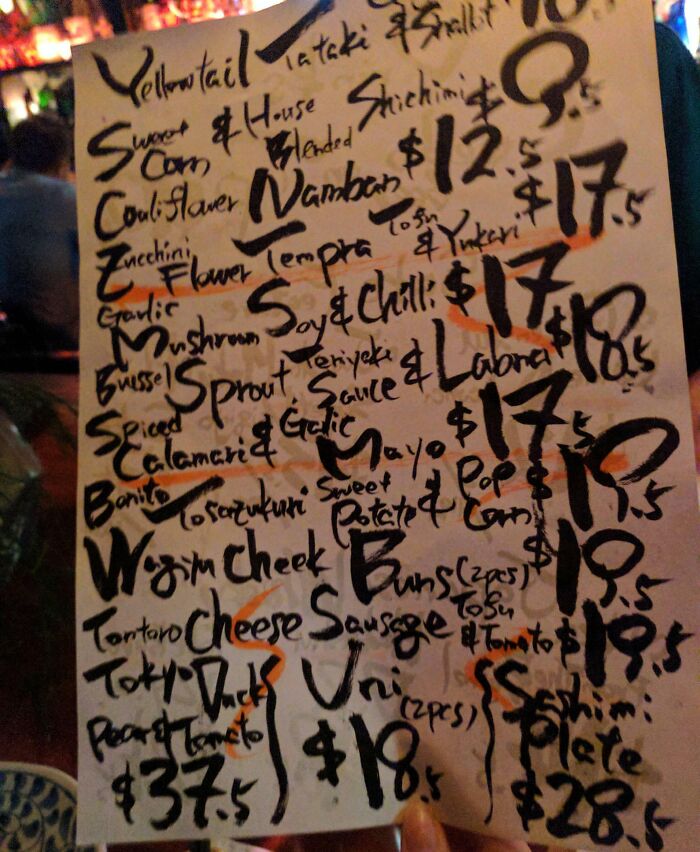
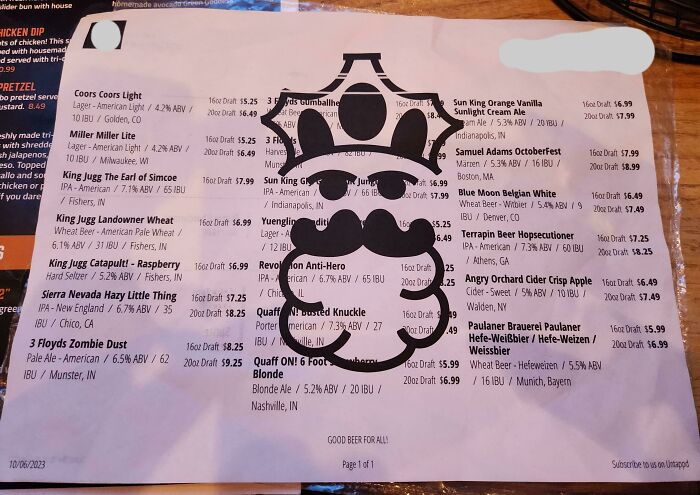
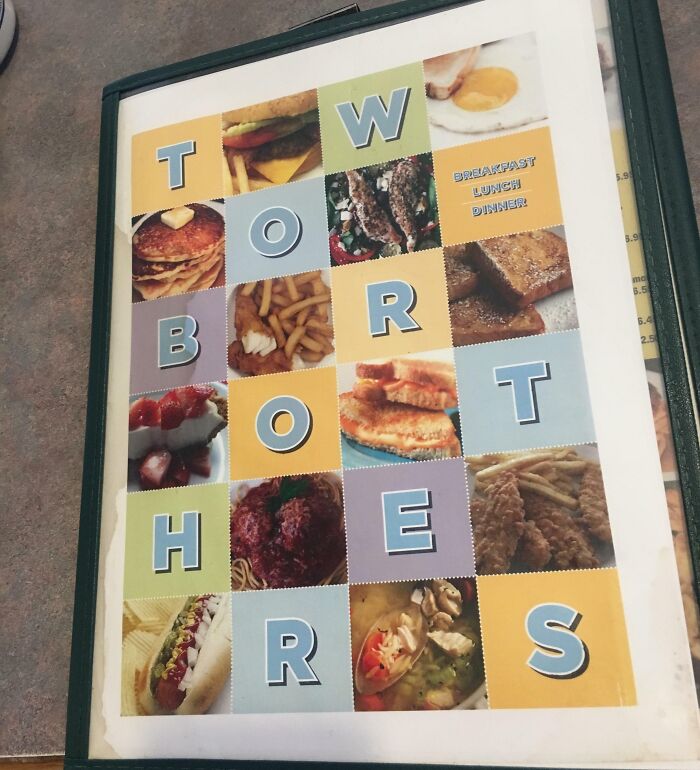
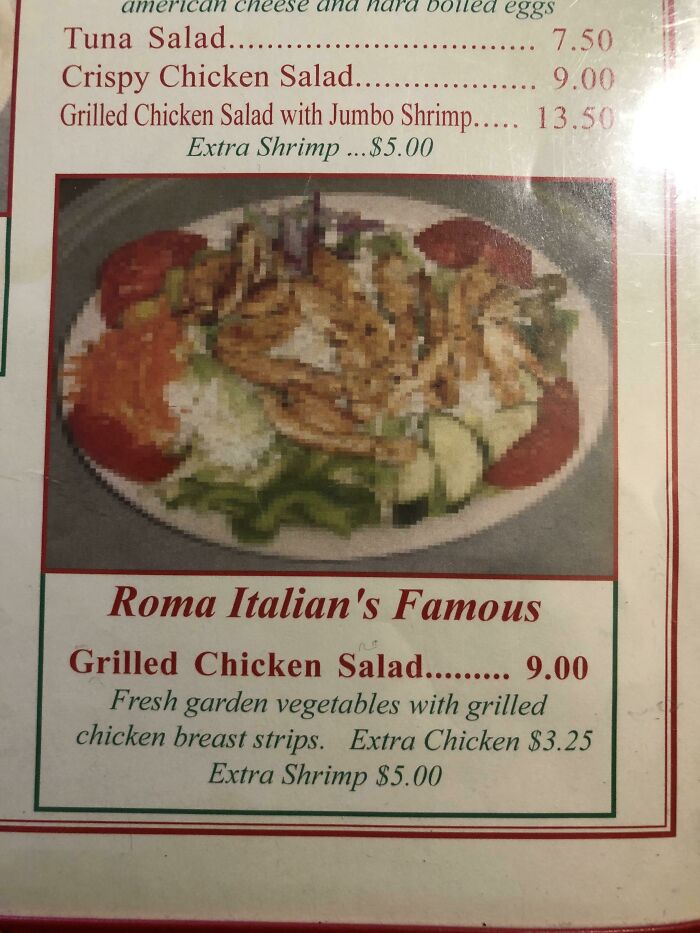
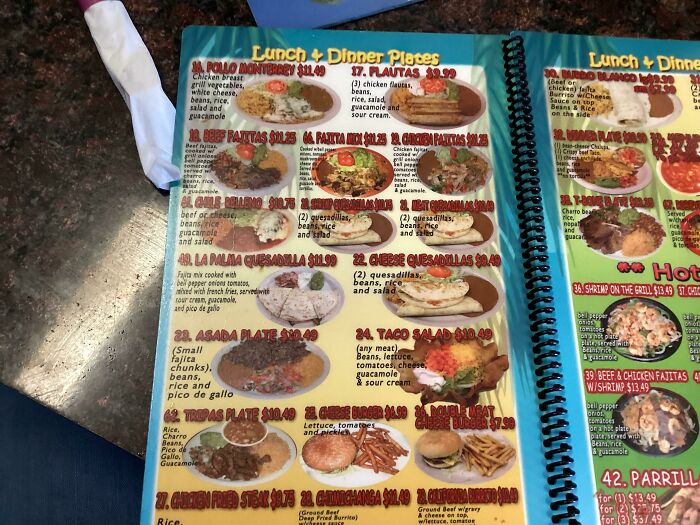
That's not a font choice, that's a distortion effects choice! XD

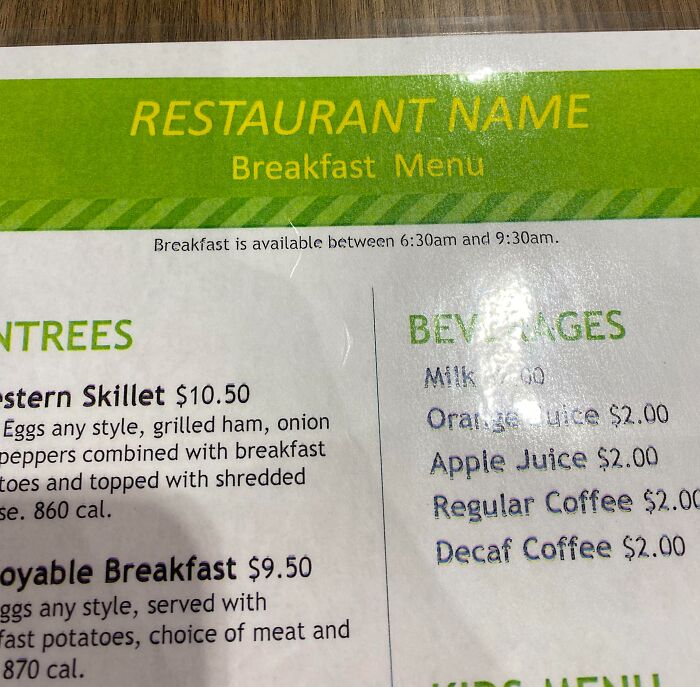
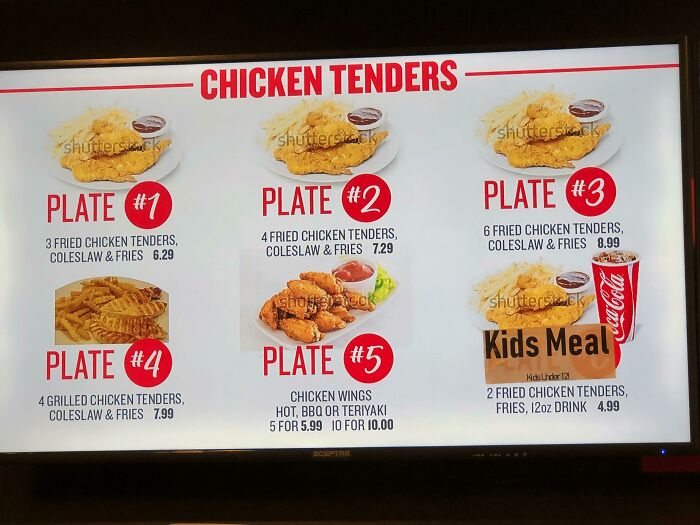
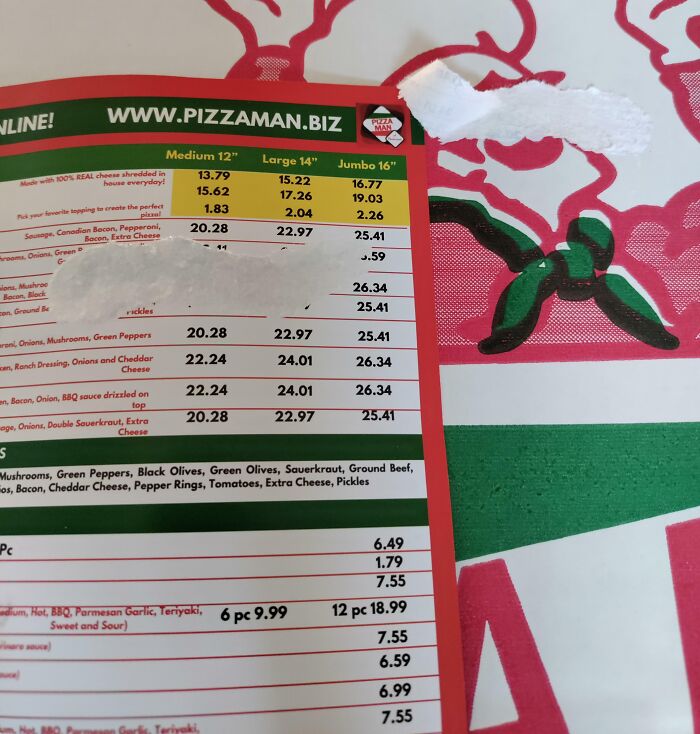
Reminds me of when retail stores slap the price tag right over important information on the label (or on top of the bar code so the cashier can't scan it...)







































 No fees, cancel anytime