Get Premium
Dark mode theme is available exclusively for premium users. Learn more about the benefits of subscribing.
No fees, cancel anytime.

 Dark Mode Ad-Free Browsing Unlimited Content
 Ad-Free Browsing Unlimited Content Dark Mode
Join 1.2 million Panda readers who get the best art, memes, and fun stories every week!
Some people graduate, celebrate and wave goodbye to school for good... relieved to finally be putting their student chapter behind them. Others eat knowledge for breakfast. For them, one degree is simply not enough. They need that PhD behind their name.
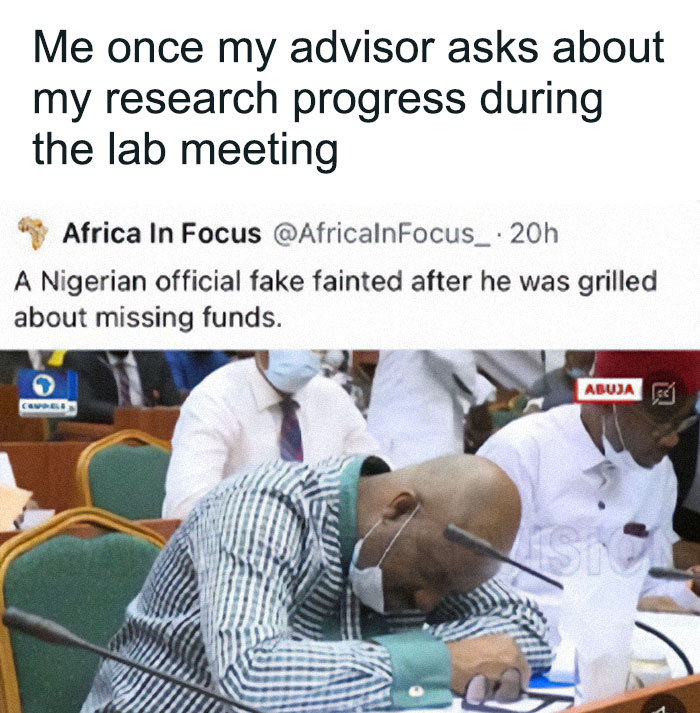
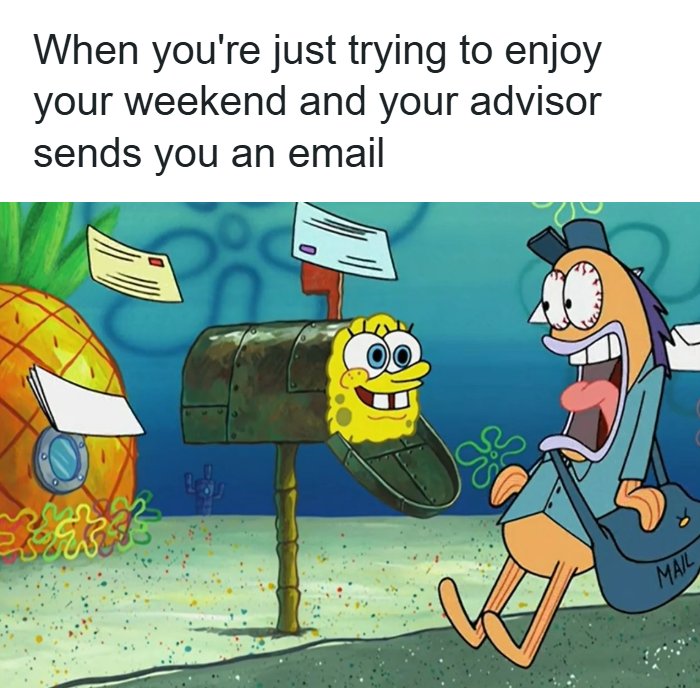
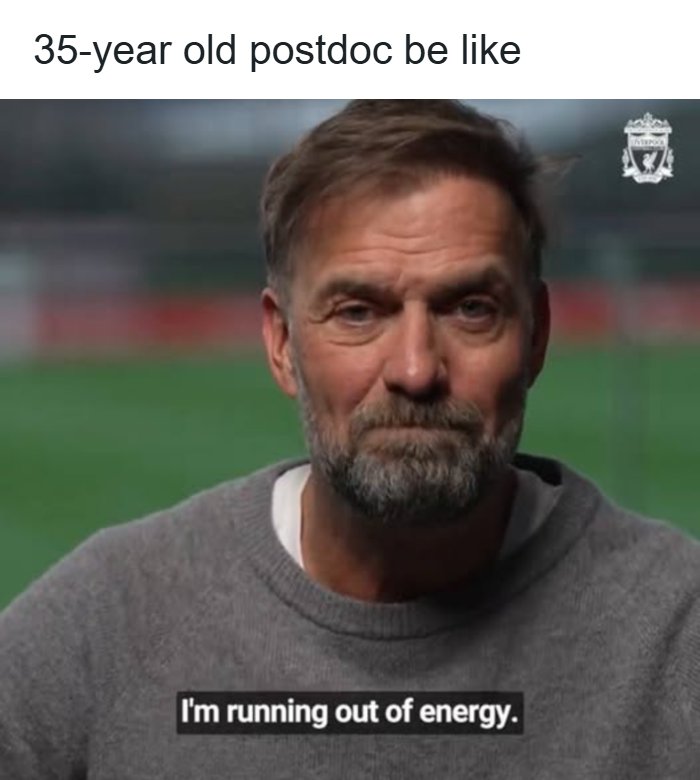
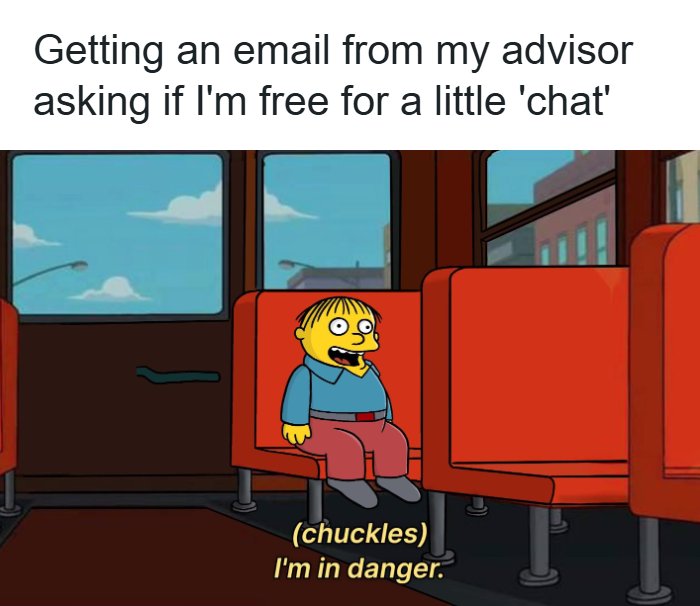
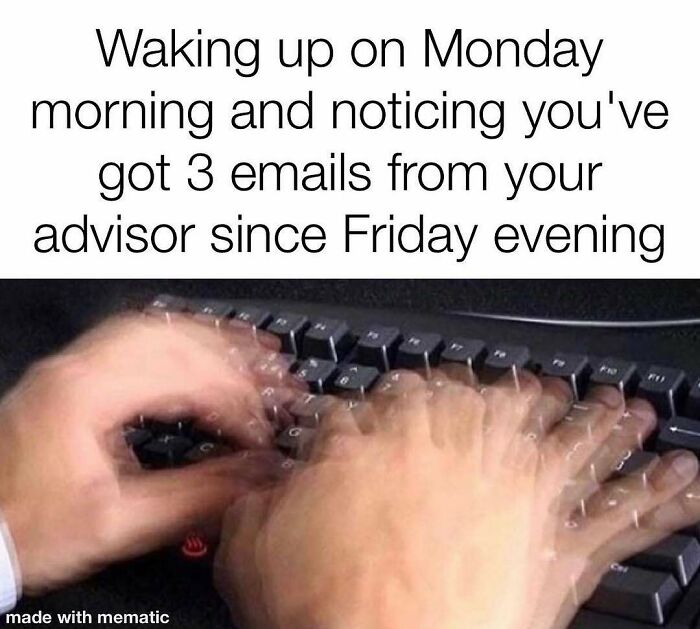
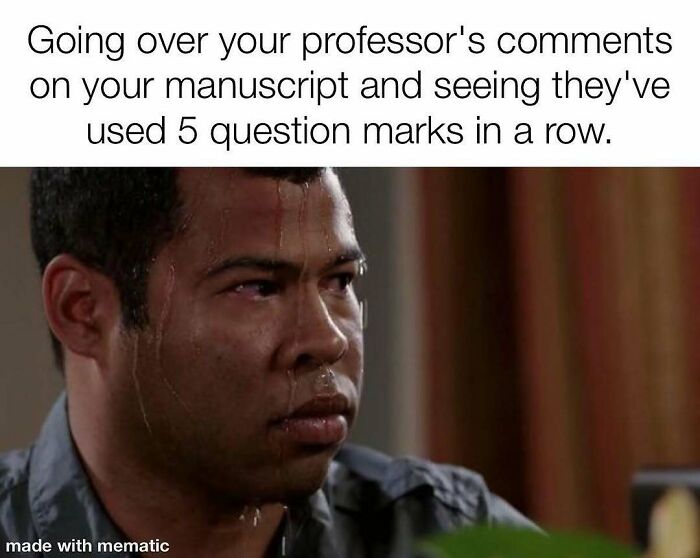
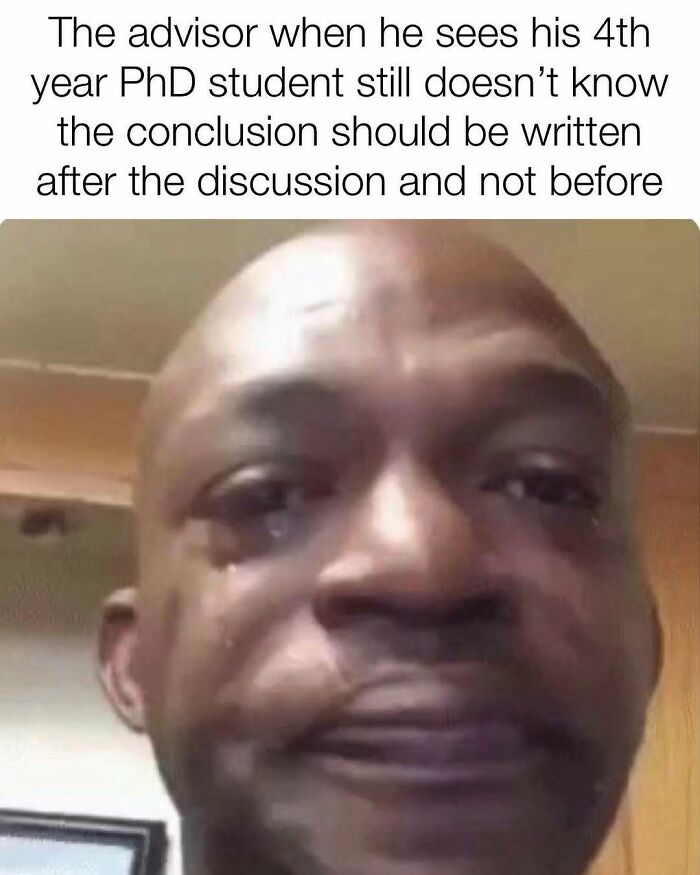
But the long road to obtaining a doctorate doesn't come easy. Late nights, stress, endless hours of research, writing, rewriting and rewriting again can take its toll on even the most calm and organized academic. Then there are the dreaded emails from your advisor. A simple, "Can we chat?" can leave you questioning everything you thought you'd mastered.
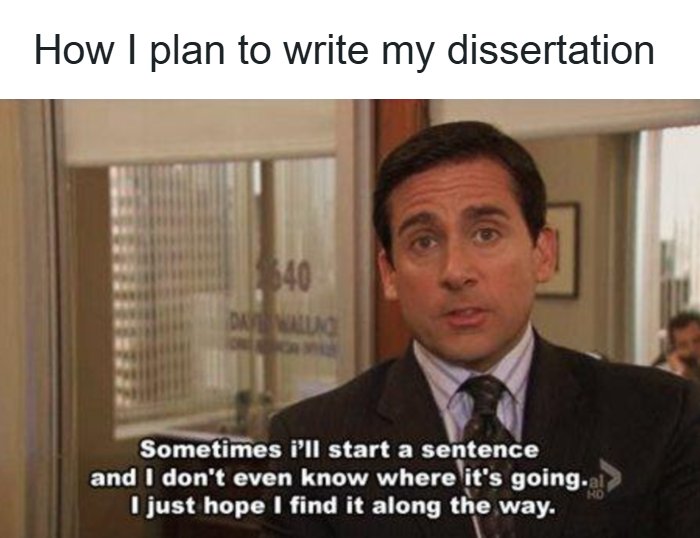
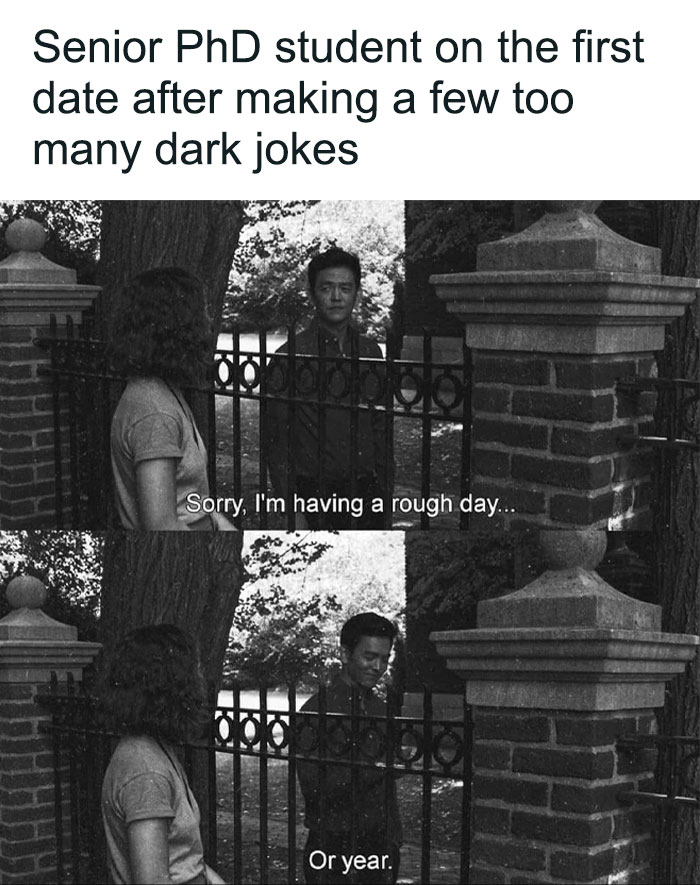
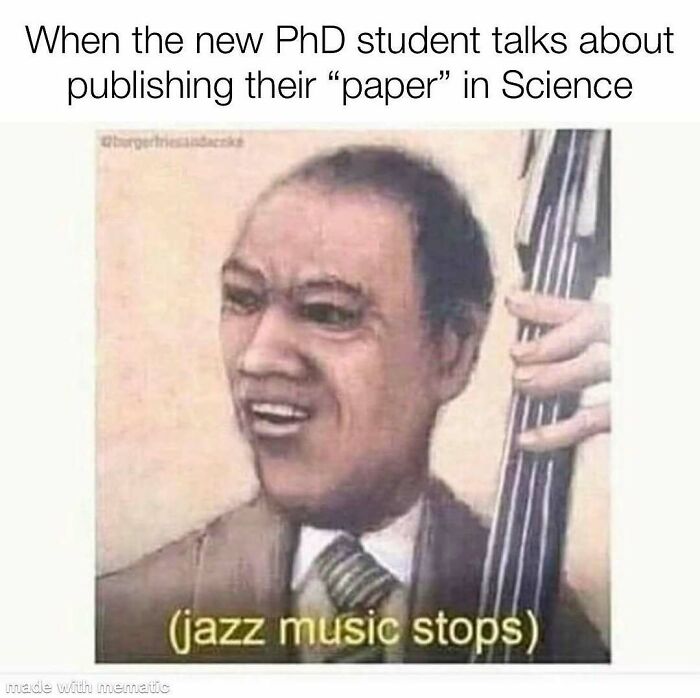
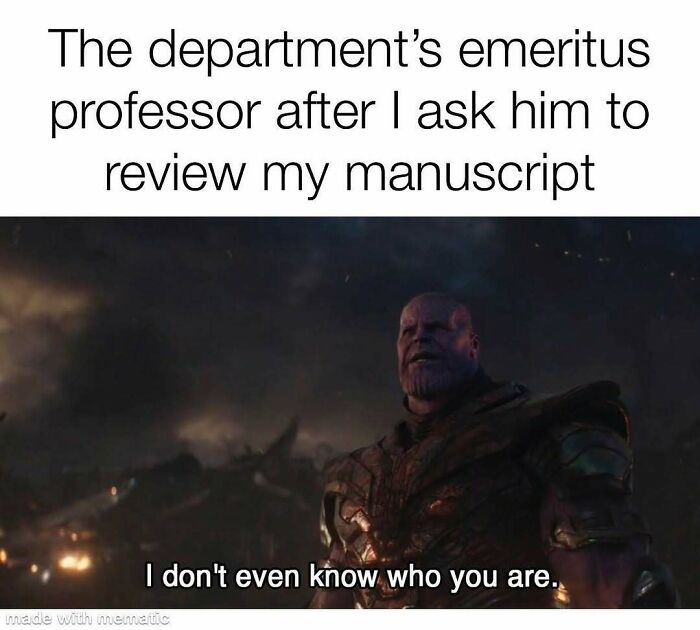
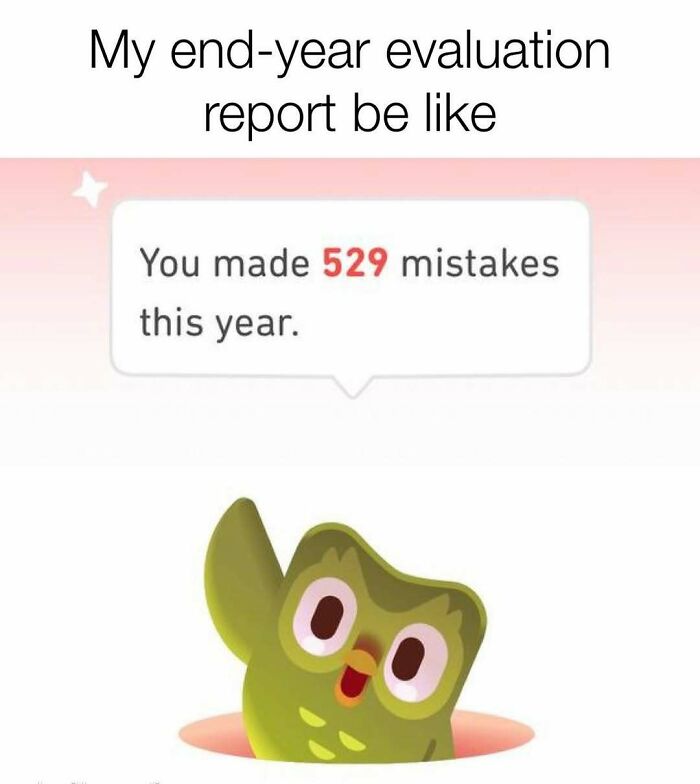
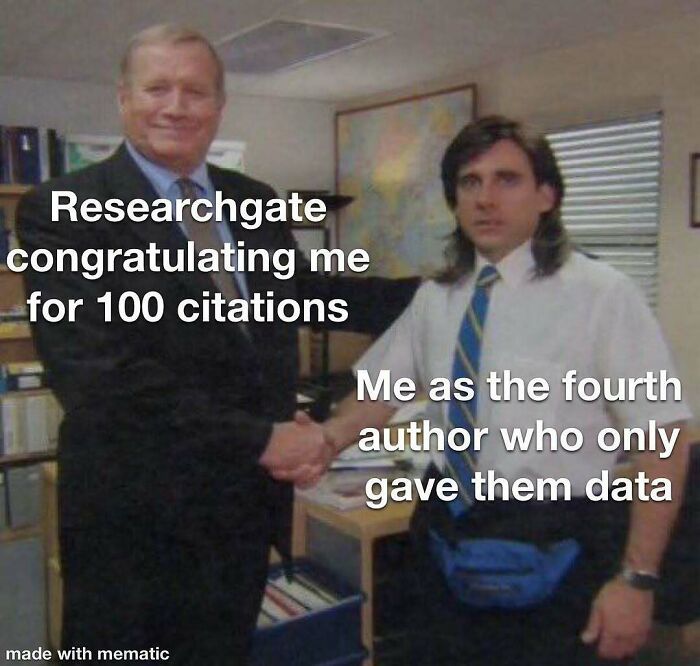
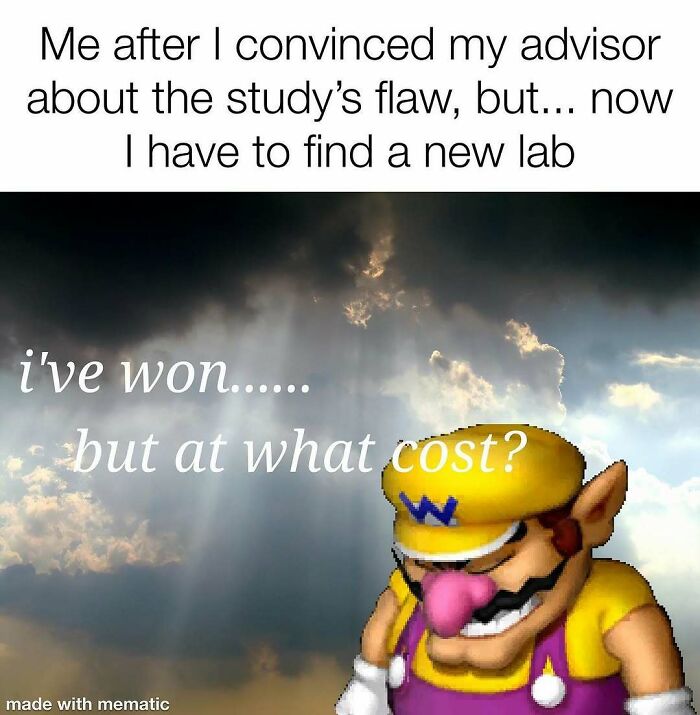
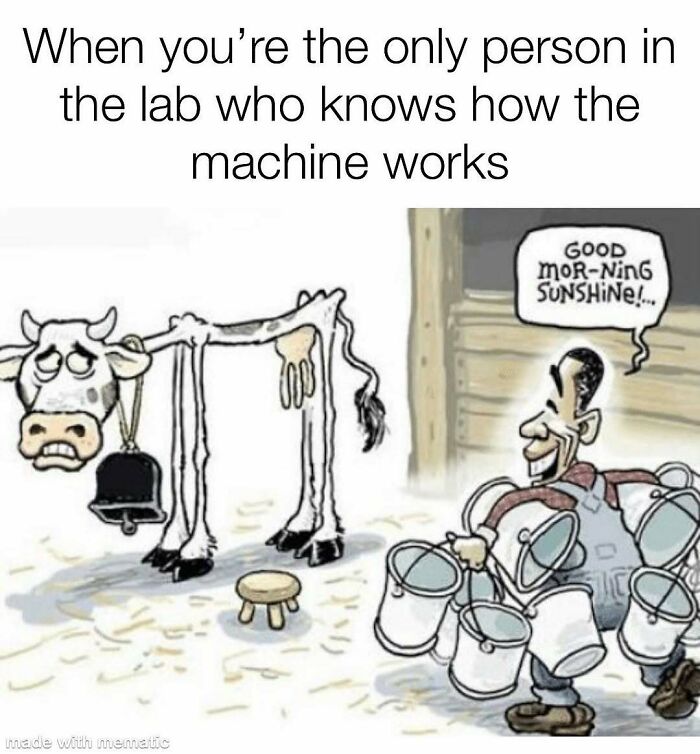
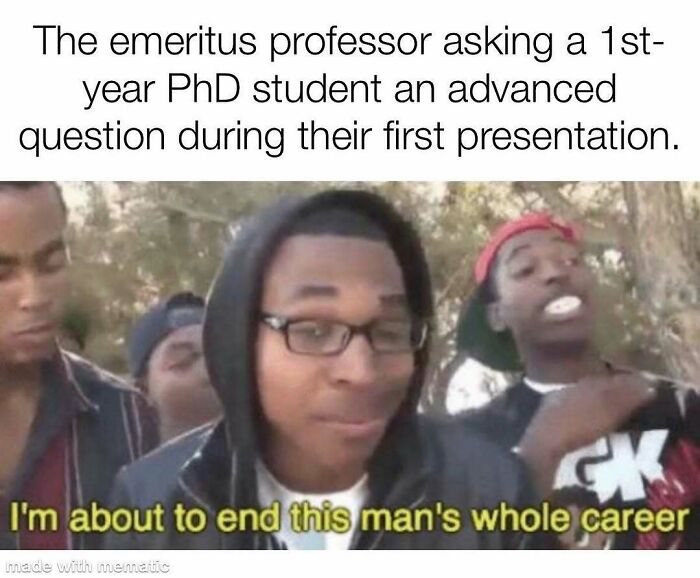
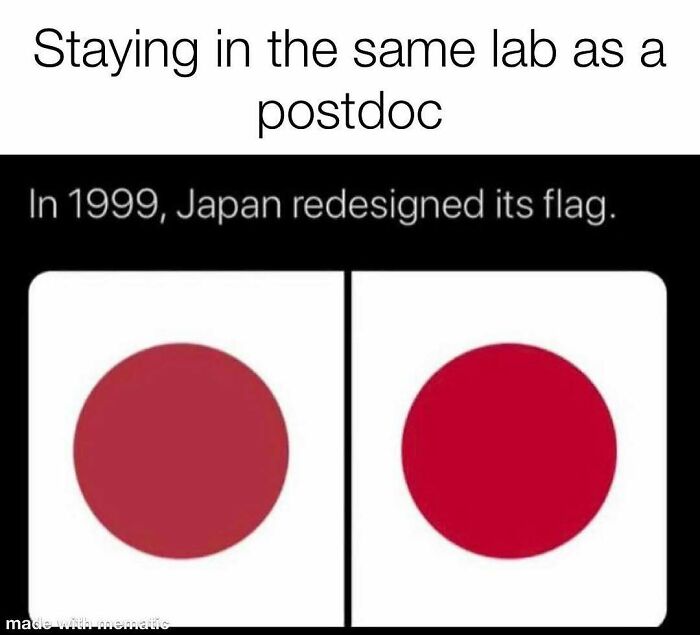
Thankfully, help is at hand. My PhD in Memes is somewhat of a virtual therapy room for those struggling through their thesis. A grad school survival kit, if you will. The Instagram page shares "high-quality memes peer-reviewed by experts in the field." Bored Panda has picked the best ones for anyone looking to laugh through the pain. Don't forget to provide your feedback by hitting the upvote button.
This post may include affiliate links.

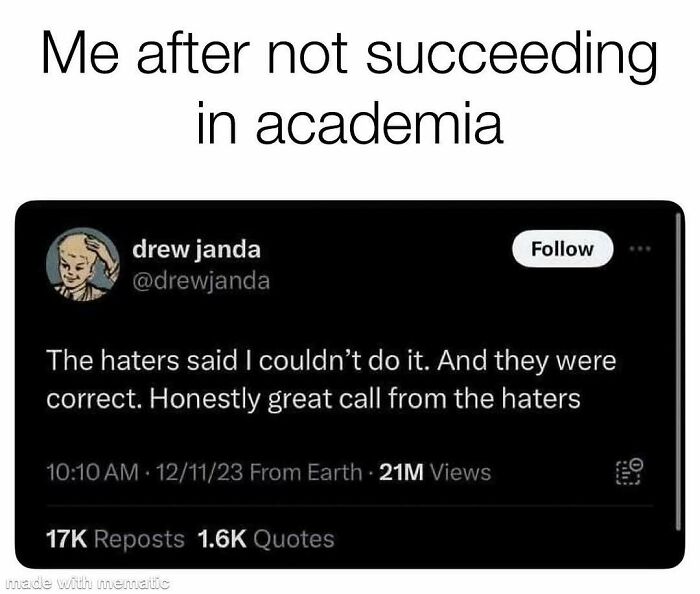
I feel like this could be about my entire life, not just my academic career XD
Rare, specialised, and more valuable than ever. That's how economist, banker and researcher Imran Khan describes PhD holders. He says that there are roughly 8 million of them in the world, yet they make up only 0.1% of the global population.
Leading the pack is Slovenia, where 3.6% of the country's population has a PhD. "The distribution between PhD adults by gender in Slovenia finds more female doctorates than male PhD earners," notes the World Population Review site. "About 4.5% of adult females have a PhD, compared to about 3% of adult males in Slovenia."
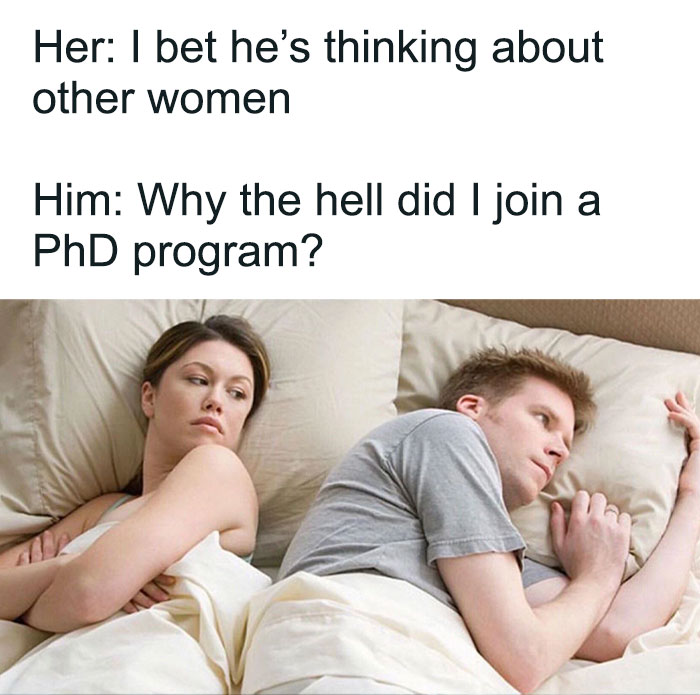
If you're studying for a PhD , you ain't got time for a relationship . . .
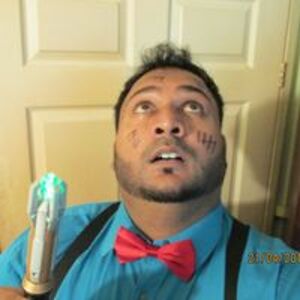

If my experiment doesn't have a major bug then it's not publishable either, because all the published experiments have major bugs, and my experiment doesn't agree with them.
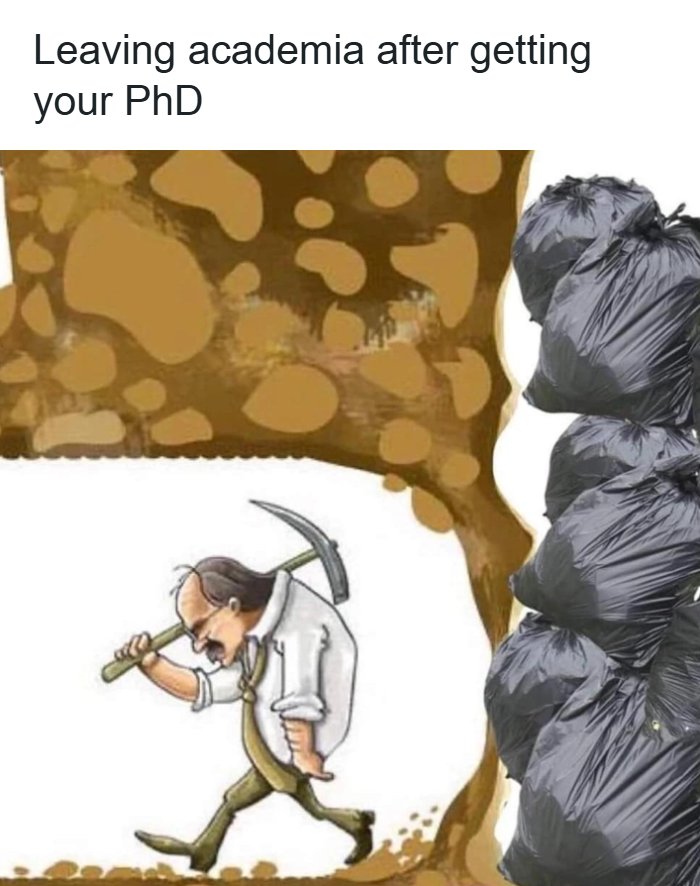
According to Khan, around half of those who set out to get their PhD end up dropping out. Research conducted by the Council of Graduate Schools found similar results.
"The study looked at 49,000 students attending 30 institutions in 54 disciplines comprising 330 programs," explain the experts at Statistics Solutions, a global dissertation consulting company. "Astonishingly, the completion rate ten years after students begin their doctoral program remains low at 56.6%."
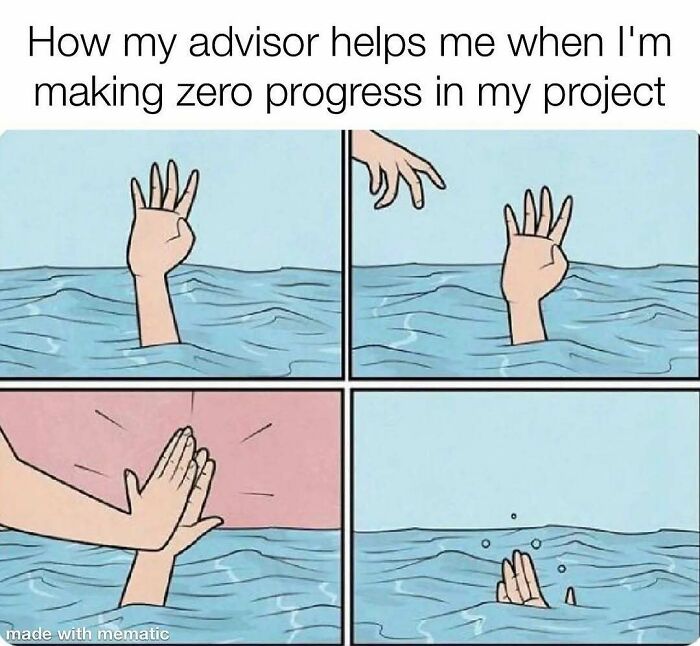
The consultants believe that often, this is due to a lack of support from universities and/or their advisors.

I mean it's not easy, but the way some people act you'd think that you need to be a genius to do it. In reality, it's long-term effort (a marathon, not a sprint). The difficulty lies in learning to be independent (which you eventually should anyway) and dealing with the fact that it's really long. Maybe I lucked out with my supervisor, but the hardest part for me is the administrative part of it! Also, the one thing that I think is a big reason why people regret or worry about doing a PhD is the lack of financial stability. Some people are genuine employees, but some (like me) are students with a scholarship, which could just disappear if I don't do well.
Aku Sika agrees. The founder of the SikaInScience blog is currently pursuing a PhD in Regenerative Medicine at King’s College London (KCL). Sika likens choosing a PhD supervisor to online dating.
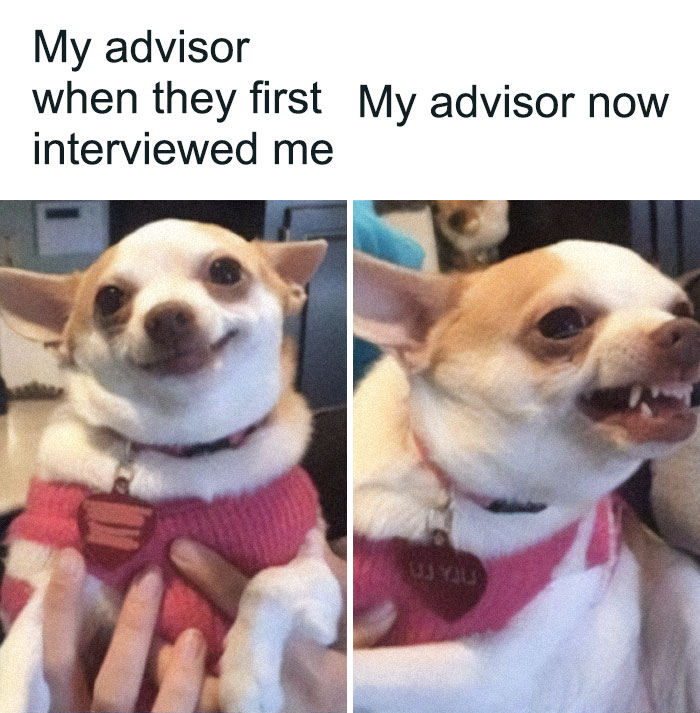
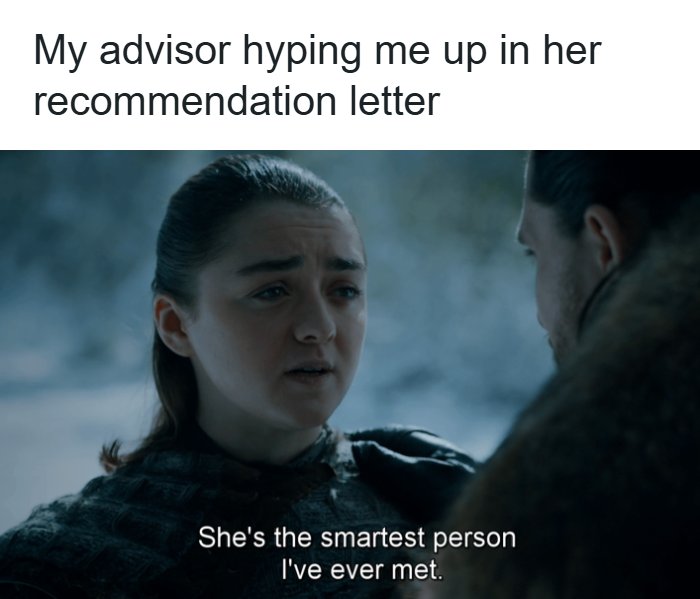
"Red Flags? Ghosting? Vague feedback that makes you spiral into self-doubt. Yep," writes the student. "Poor supervisor is one of the main reasons students don’t complete their PhD. Staying motivated is hard when your supervisor barely knows you or your project exists!"
Sika adds that if communication is poor, it can lead to a lack of direction and growing frustration. This can leave students questioning their motivation to continue.
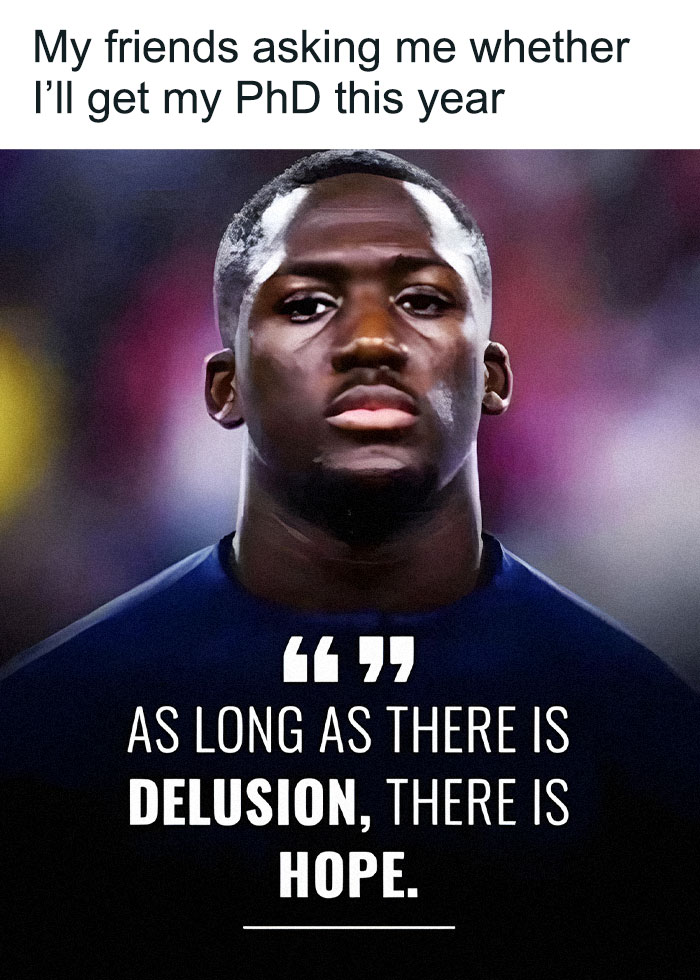
My family members ask me "When are you going to get a job?"
Luis P. Prieto, a relatively recent doctor, runs the site A Happy PhD. Prieto says a lot of people seem to face the same hurdles and issues while pursuing their PhD. And for many, it's too much… They end up dropping out.
"Imagine you are in a classroom with your peer Ph.D. students. Look to the person on your left. Look to the person on your right," writes Prieto. "According to the statistics, only one or two of you will ever finish the Ph.D."
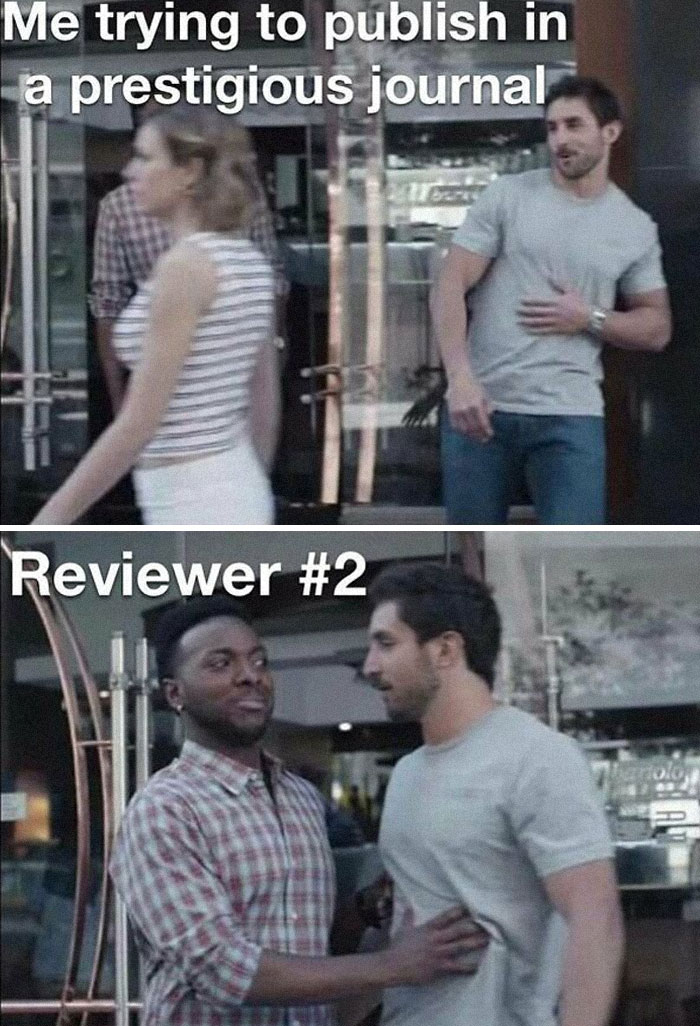
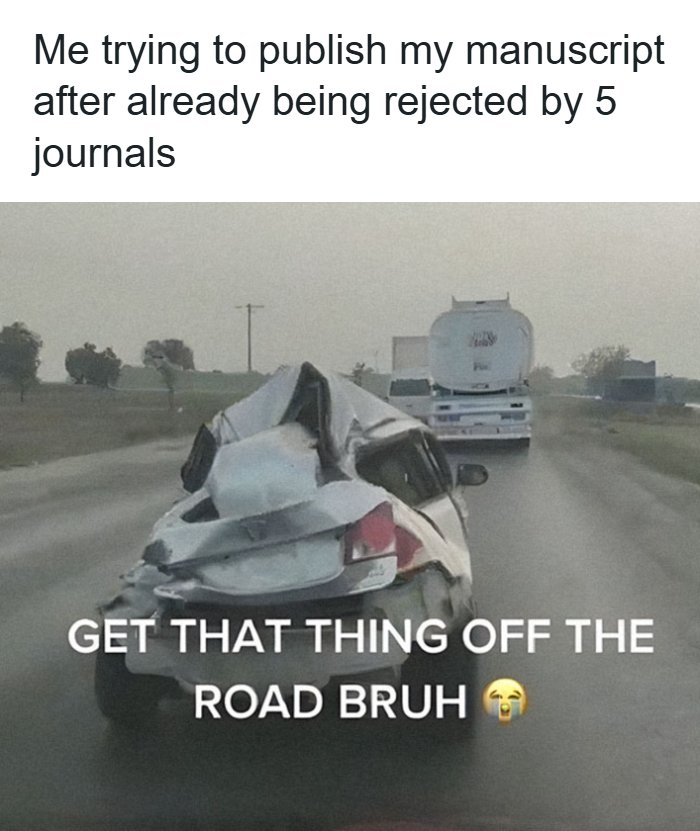
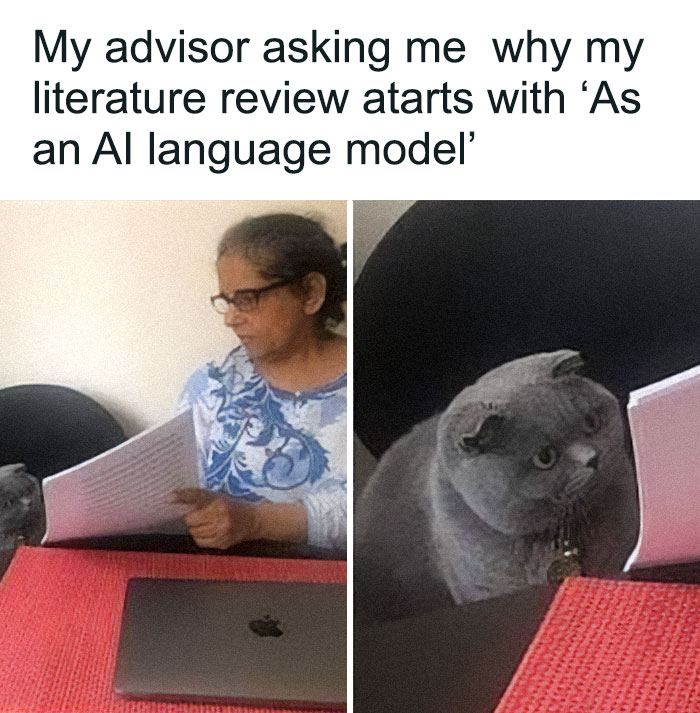
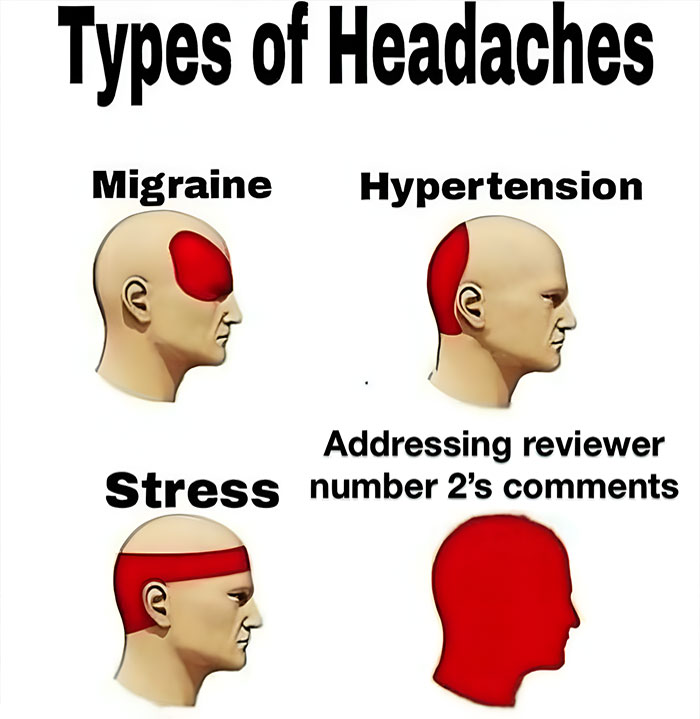
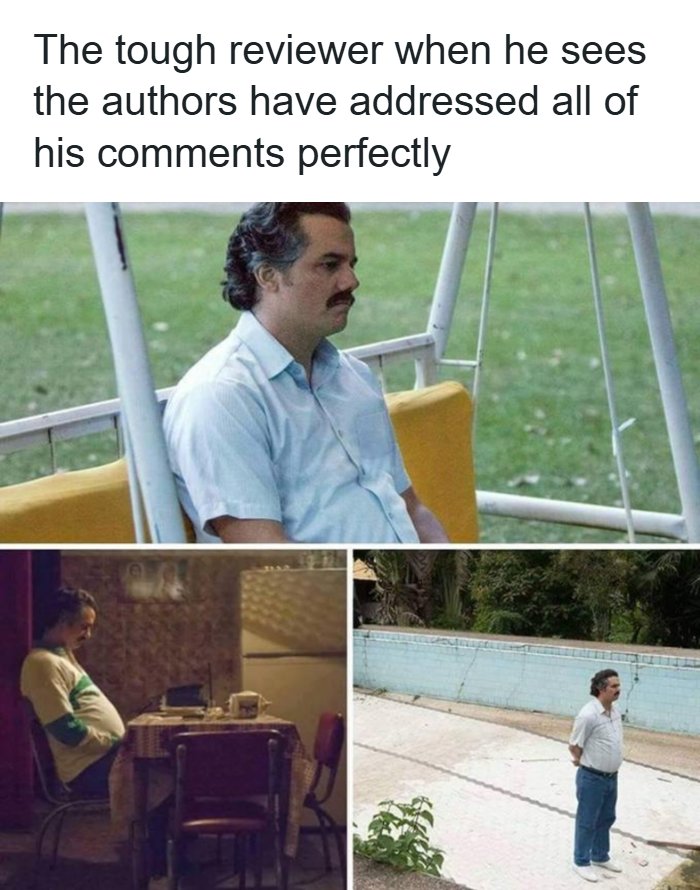
For me it was Reviewers 1, 2 and 4! They just used AI to generate an answer and it was so obvious. The question is, how do you answer that without telling them that they're full of s**t? Most of the questions had nothing to do with my article! Reviewer 3 was the best though and provided me with a 4 page report that helped me improve my work a lot!
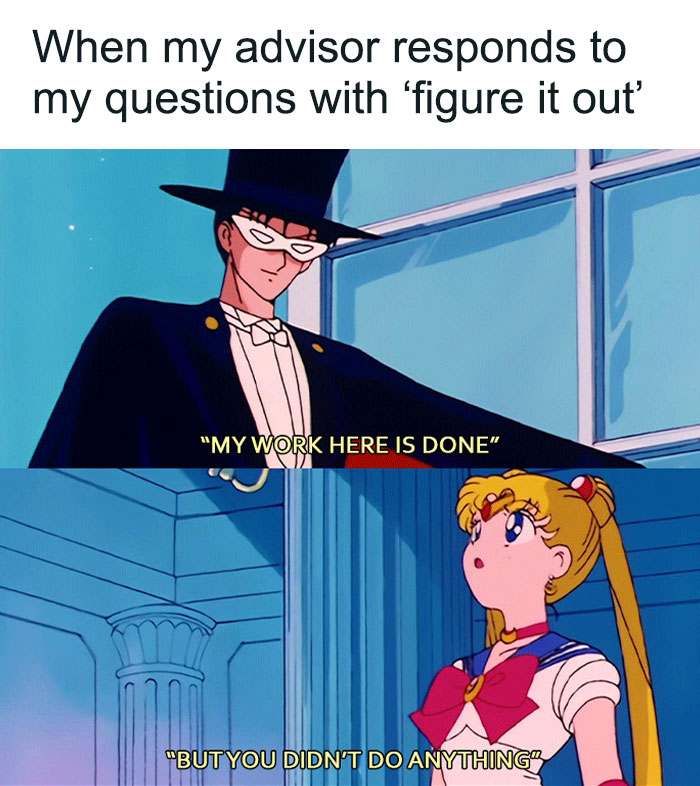
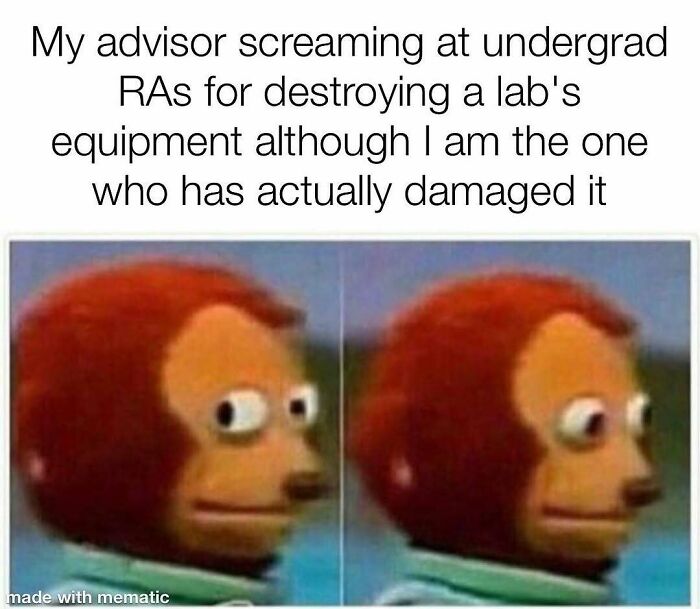
I loathe advisors that don't guide and assist. Then they're just there to get their name on something. I said what I said lol
Prieto notes that several studies have found that dropping out of a Ph.D. is more probable in the first two years. "This is probably due to the students coming to the doctorate with a certain image or expectation of what doing research looks like, and academic research life not living up to those expectations – leading to disillusionment and dropout," he explains.
Prieto also points out that if about half of the doctoral students actually drop out of the Ph.D., probably many more have at least considered quitting.
“Indeed, I’d wager that you are quite lucky if you have not thought of abandoning the Ph.D. so far," he says.
Prieto believes that dropping out of your PhD is not always a bad thing. He says that so much emphasis is placed on institutional success, that we sometimes forget the student is not a human resource. They're a human being, he argues, and their personal experience matters. "What if dropping out is the better option for this particular student, as a person, at this point in time?"
He adds that dropping out shouldn't be seen as time, or years, wasted.
"Are they really wasted?" asks Prieto, adding that even if you do not have a paper calling you “Ph.D.”, it is quite probable that you learned a few useful things during this journey, however incomplete.
"You learned to read scientific papers, you learned how your kind of research is really made, you learned to write and to argue a bit better, and probably you also practiced your critical thinking (which seems in short supply these days)," he says. "I wouldn’t call that a total waste."
Proof read dude...proof read. Also it is alarming how many people at that level make those copy and paste mistakes.
On his site, Prieto reveals that he dropped out of his Psychology masters, to focus on his Ph.D. He states that he doesn’t regret it one bit. The senior research fellow at Tallinn University suggests that, if you're considering dropping out, you evaluate your environment and your daily experience carefully, and discuss it with family and close friends.
But the decision is only yours, he adds.
He warns that if you think you are not “smart enough”, you might be suffering from impostor syndrome, and there's a good chance you will be able to complete your PhD.
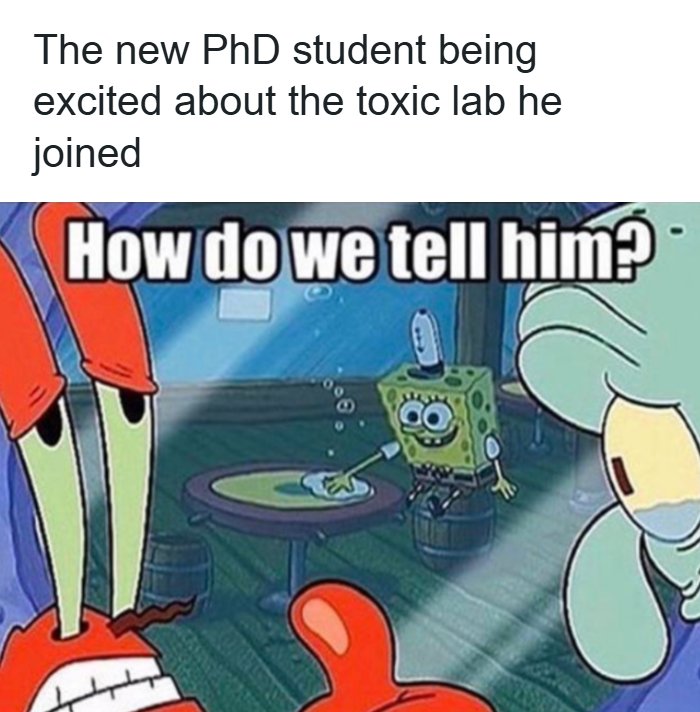
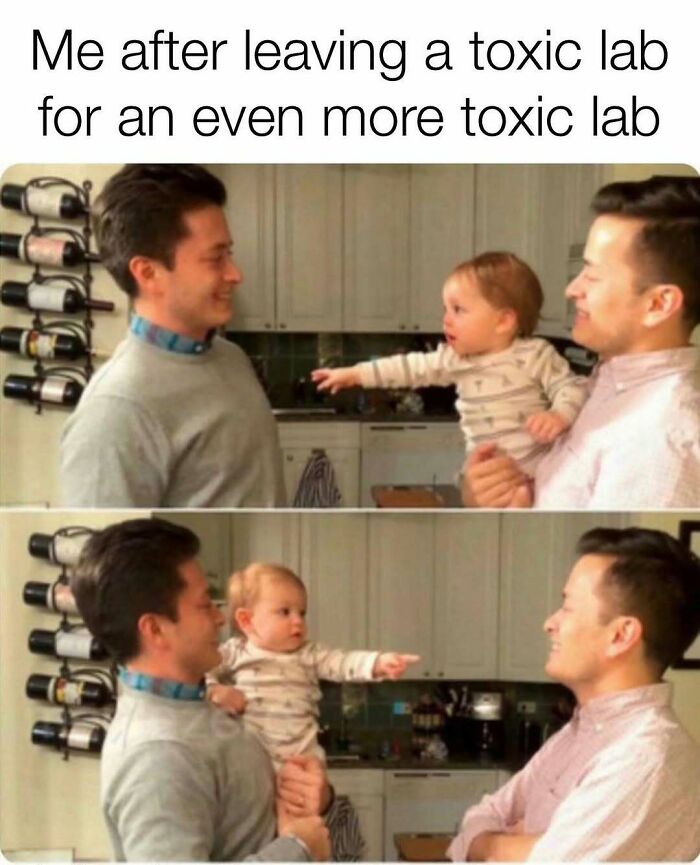
"If, on the other hand, your lab environment is toxic, your economic or social situation is really bad, or you feel deeply unhappy every day you do research, maybe it is time for a re-evaluation," Prieto adds.
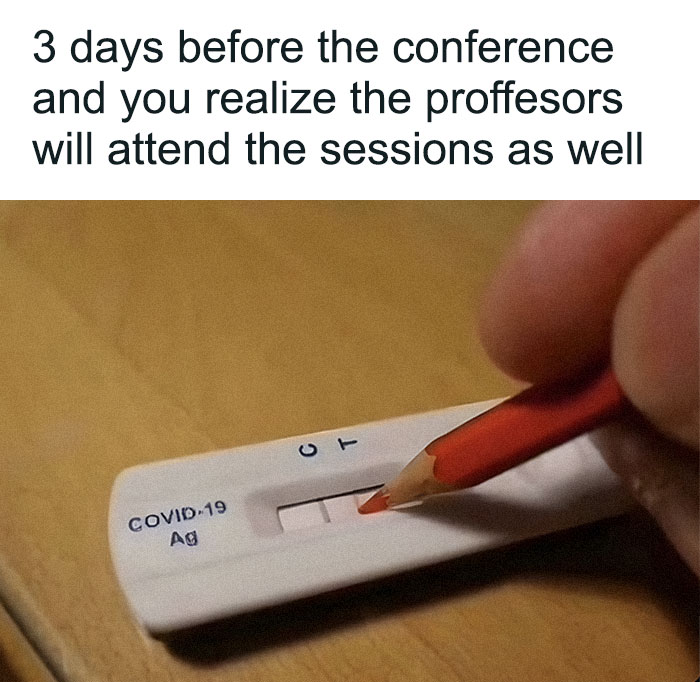
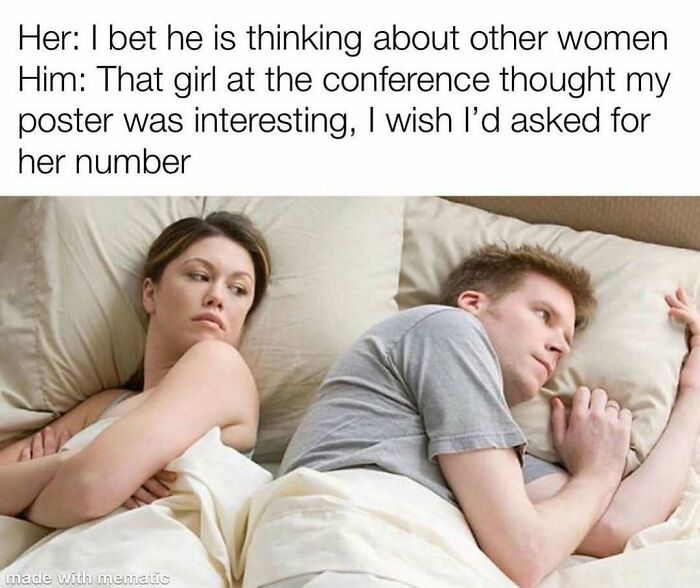
These poster sessions are cool but geez, the questions some people ask.
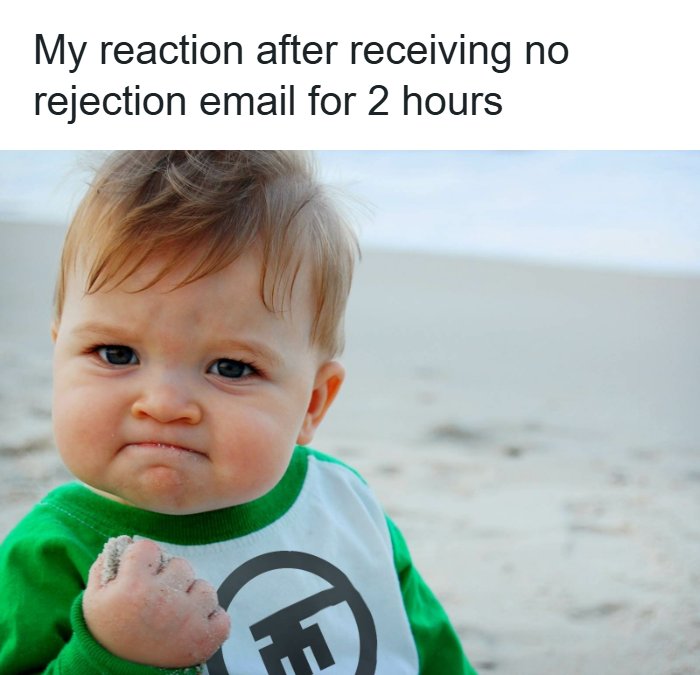
It's hell when they get accepted and you know that the article is not worth the paper it's emailed on.
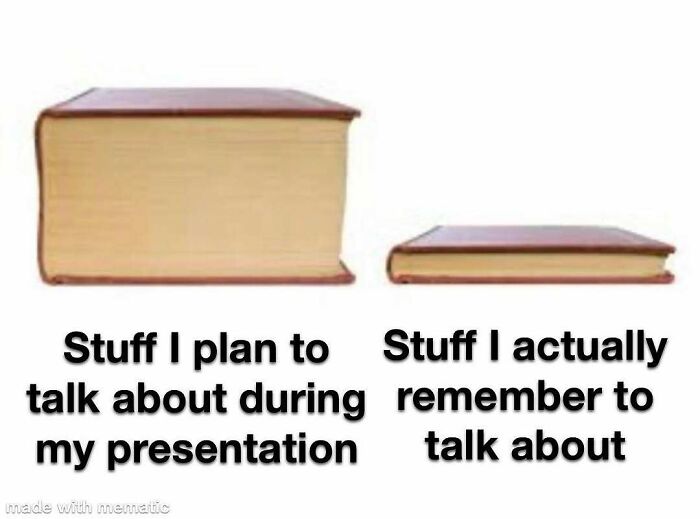
For me it's the opposite. I blab and blab and then realise that they don't know what I'm talking about, which is fair, because neither do I
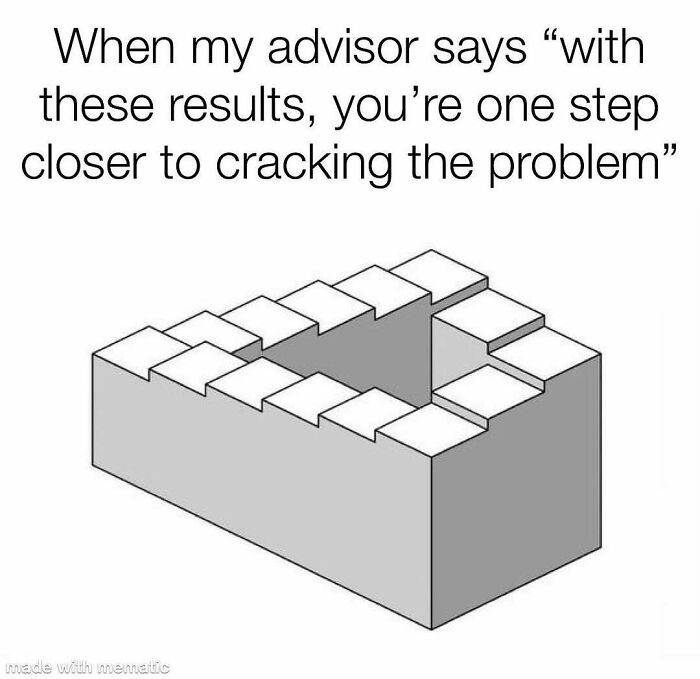
Brezhnev announcing that "every four year plan takes us one step closer to communism".
My team and another team in Italy all work on a very specific subject and there has been a lot of back and forth between the two, trying to create a new tool that is better than theirs. The number of citations has gone wayyy up
There is a professor in my lab who destroys everyone, including other professors. He's in me evaluation committee! So far though, every time I left the committee meeting convinced that he was going to fail me and instead it was "Very good work!"
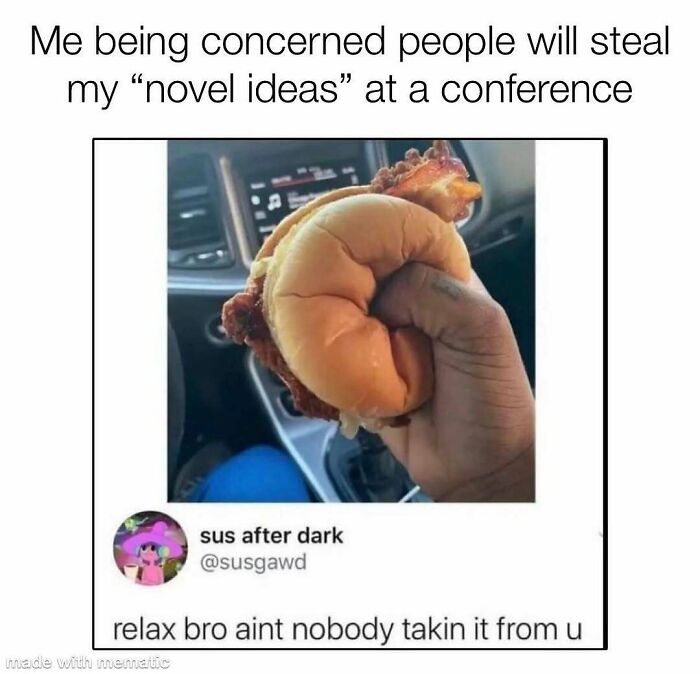
Please, steal my ideas, I'll pay you to steal my ideas, how does a million dollars sound.

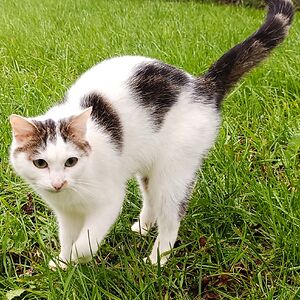
Properly not the best day to have published this on, given what has happened with that bloke from Cambridge...

For those interested, look up University of Cambridge Professor Jason Arday, who was found déàd after allegations that he plagiarised and falsified parts of his research, as well as claims of fabrication in his autobiographical accounts...
Load More Replies...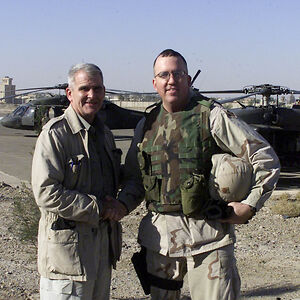
After my 4 years of undergraduate work (BS Geology), I spent 13 years of night school to complete a MS Environmental Science, MA Military History, Ph.D. Engineering. All while working and raising a family.
Those "fourth reviewer" comments really hit hard. So true. These days my papers get rejected before they even reach the fourth reviewer.

Are your papers like your BP posts? Half of it true, no sign of response to feedback?
Load More Replies... Properly not the best day to have published this on, given what has happened with that bloke from Cambridge...
For those interested, look up University of Cambridge Professor Jason Arday, who was found déàd after allegations that he plagiarised and falsified parts of his research, as well as claims of fabrication in his autobiographical accounts...
Load More Replies... After my 4 years of undergraduate work (BS Geology), I spent 13 years of night school to complete a MS Environmental Science, MA Military History, Ph.D. Engineering. All while working and raising a family.
Those "fourth reviewer" comments really hit hard. So true. These days my papers get rejected before they even reach the fourth reviewer.
Are your papers like your BP posts? Half of it true, no sign of response to feedback?
Load More Replies...






 No fees, cancel anytime