Get Premium
Dark mode theme is available exclusively for premium users. Learn more about the benefits of subscribing.
No fees, cancel anytime.

 Dark Mode Ad-Free Browsing Unlimited Content
 Ad-Free Browsing Unlimited Content Dark Mode
Join 1.2 million Panda readers who get the best art, memes, and fun stories every week!
Our brains are very good at making connections, even if they aren’t always right. Most things are straightforward, you see a large group of trees and you can surmise that you’re looking at a forest. But sometimes it can be interesting to see something more perplexing just to let your brain work a bit for it.
So for your daily dose of novel confusion, we’ve gathered amusing pics and posts that should elicit a “hmmm” from you. Get comfortable, prepare to furrow your brow as you try to understand what exactly is going on, upvote your favorites and be sure to share your thoughts and possible explanations in the comments down below.
This post may include affiliate links.
Our brains are very good at making connections, even if they aren't always right, and that's basically the whole plot behind why a good confusing photo works so well. When something clicks together into "oh, that's a forest," your brain barely breaks a sweat. It matched a pattern, filed it away, and moved on. But feed it something that almost makes sense and doesn't quite land, and it refuses to let go.
That's the whole engine behind incongruity theory, an idea that traces back to Kant and Schopenhauer, of all people, who noticed that laughter tends to show up right after an expectation gets yanked out from under you. Your brain sets up a little prediction about what it's looking at, the image doesn't cooperate, and the resulting scramble to make it fit is where the fun lives.
There's actually a two step process going on. First comes the jolt of "wait, what," then comes the scramble to resolve it into something that makes sense, even if the explanation you land on is completely made up. Researchers who study humor call this the setup and the resolution, and they've found the sweet spot is when something is surprising but not so far out there that your brain gives up trying.

Lol, now this is hilarious!! You know that doggo is being dramatic to make that cat feel tougher 🤣
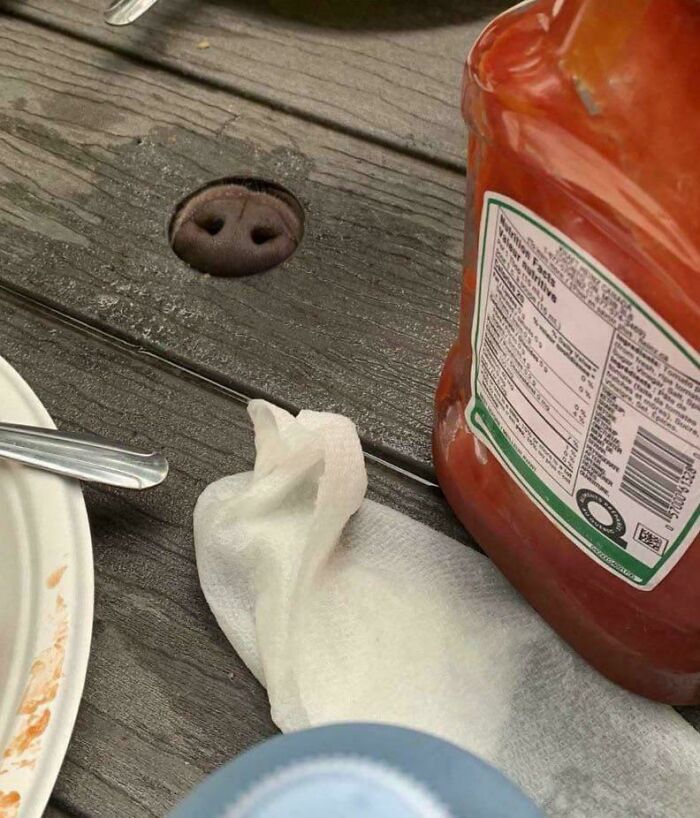
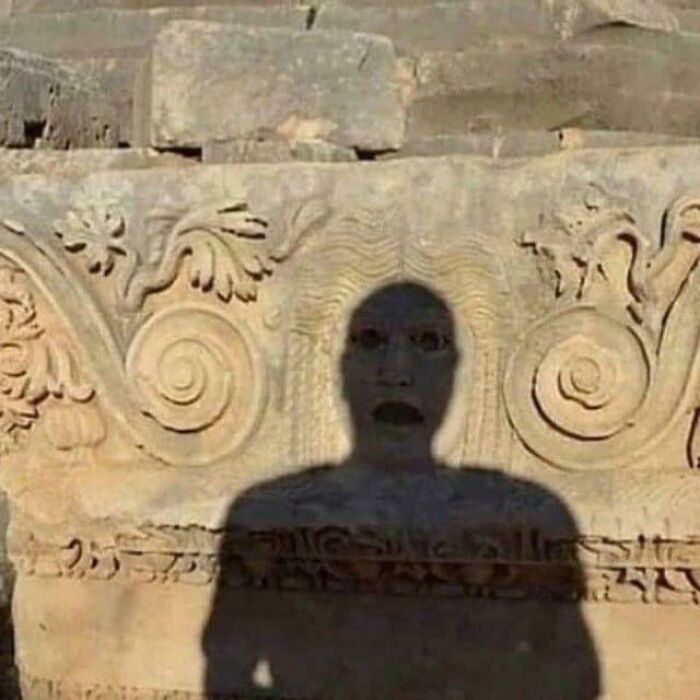
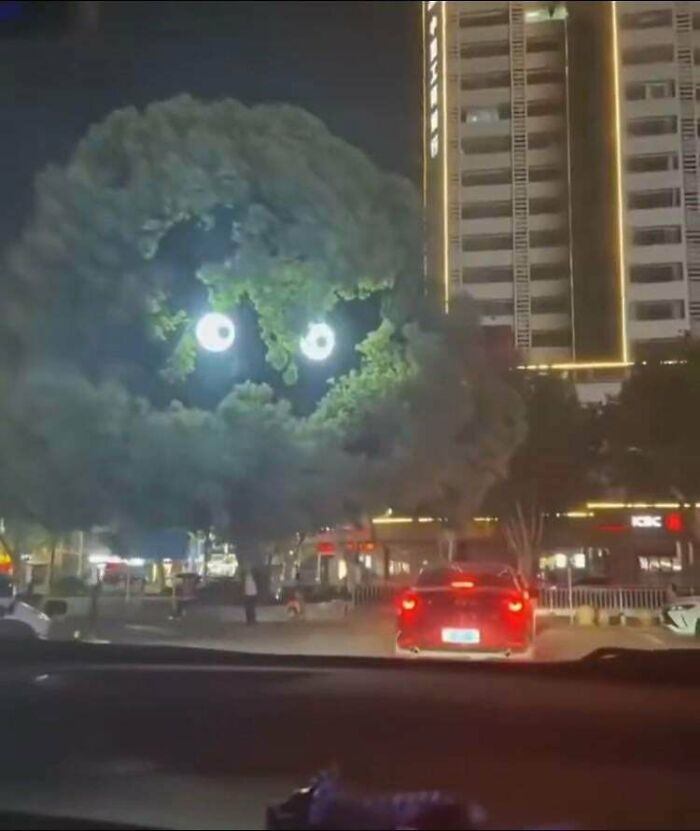
A photo that's just confusing with zero possible explanation isn't nearly as fun as one where you can almost, almost see what happened. Then there's the classic case of your brain inventing a face where there isn't one. It's called pareidolia, and it's why a pepper looks grumpy, an electrical outlet looks alarmed, and two windows and a door somehow read as a tiny screaming house.
Your brain has a dedicated chunk of tissue, the fusiform gyrus, whose entire job is spotting faces fast, because for most of human history it mattered a whole lot whether the shape in the bushes was a friend or something about to eat you. That circuitry is so trigger happy it fires even when there's obviously no face involved, and some research suggests people who see faces and shapes in random noise more easily also tend to score higher on tests of creativity, so next time somebody points out a face in their soup, you can tell them it's basically a brain flex.
Curiosity itself is doing a lot of the heavy lifting too. Psychologists describe it using something called the information gap theory, which is a fancy way of saying that the itchiest, most magnetic feeling comes from knowing just enough about something to realize you're missing a piece. Too little information and you don't care.
Too much and there's no mystery left. A photo that shows you a bizarre setup with absolutely no context sits right in that gap, and your brain lights up trying to close it, in a way that lines up with reward related activity researchers have measured during curiosity studies. That's the same mechanism that makes you click one more headline or keep scrolling past your bedtime, except here it's aimed at a picture of, say, a shoe inexplicably nailed to a ceiling.

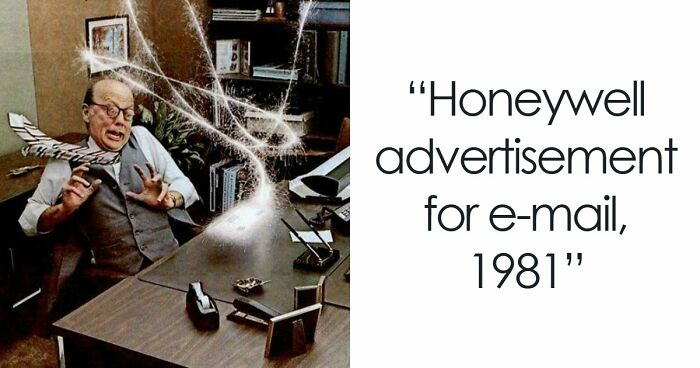
The streamers hanging behind them look like an optical soundtrack. Why was this hidden?
None of this requires the picture to actually mean anything. Half the appeal of a genuinely random image is that there is no tidy answer waiting at the end, just a bunch of people in the comments proposing increasingly elaborate theories about what they're looking at.
Your brain doesn't need the mystery solved to enjoy chewing on it for a minute, and that's really the whole point of a good confusing photo. It gives your pattern seeking machinery something to do that isn't your inbox or your group chat, and it turns out a small, harmless puzzle is one of the more reliably entertaining things you can hand a human brain.

The governing committee of women's sports meeting to decide if this year's uniform is adequately skimpy

Oh, come on! Neanderthals and dinosaurs never co-existed. This pic is SO fake!

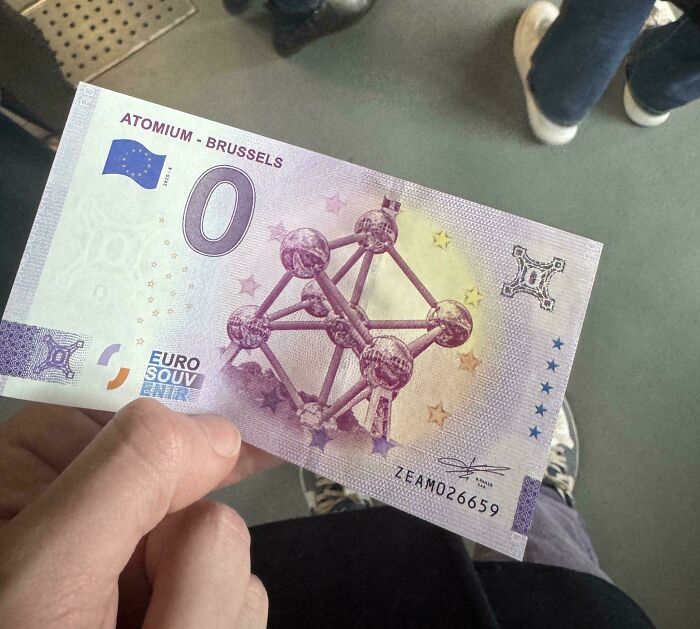
That reminds me: Have any of my Bored Pandas from the EU taken the ECB survey about the new design yet?







Yeah, Justin might not be the brightest bulb, I think.
Load More Replies... Yeah, Justin might not be the brightest bulb, I think.
Load More Replies...

























 No fees, cancel anytime