Get Premium
Dark mode theme is available exclusively for premium users. Learn more about the benefits of subscribing.
No fees, cancel anytime.

 Dark Mode Ad-Free Browsing Unlimited Content
 Ad-Free Browsing Unlimited Content Dark Mode
Join 1.2 million Panda readers who get the best art, memes, and fun stories every week!

Most of us have that one friend who always talks too much about themselves. In many cases, we might actually, unfortunately, be that friend. Research shows that around 40% of a person’s speech is about themselves. And while that can make us seem quite narcissistic, it doesn’t mean we don’t listen to what our friends say.
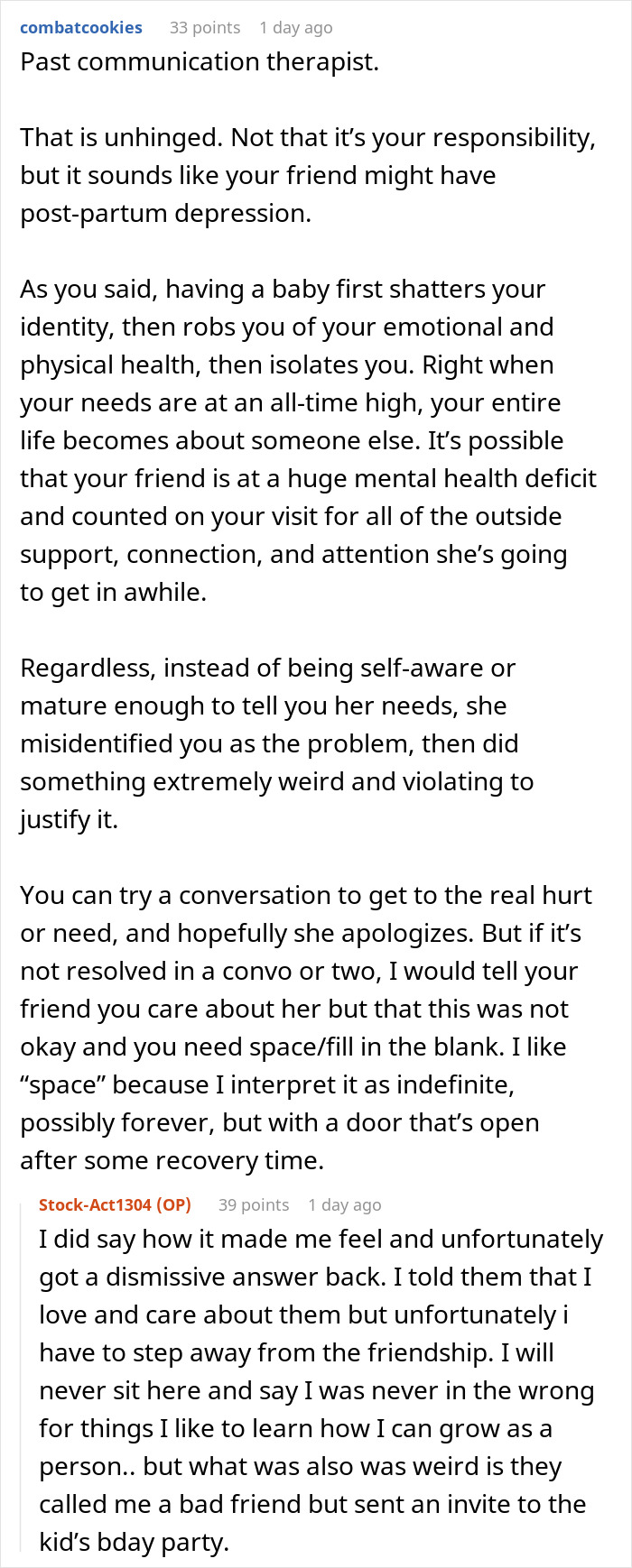
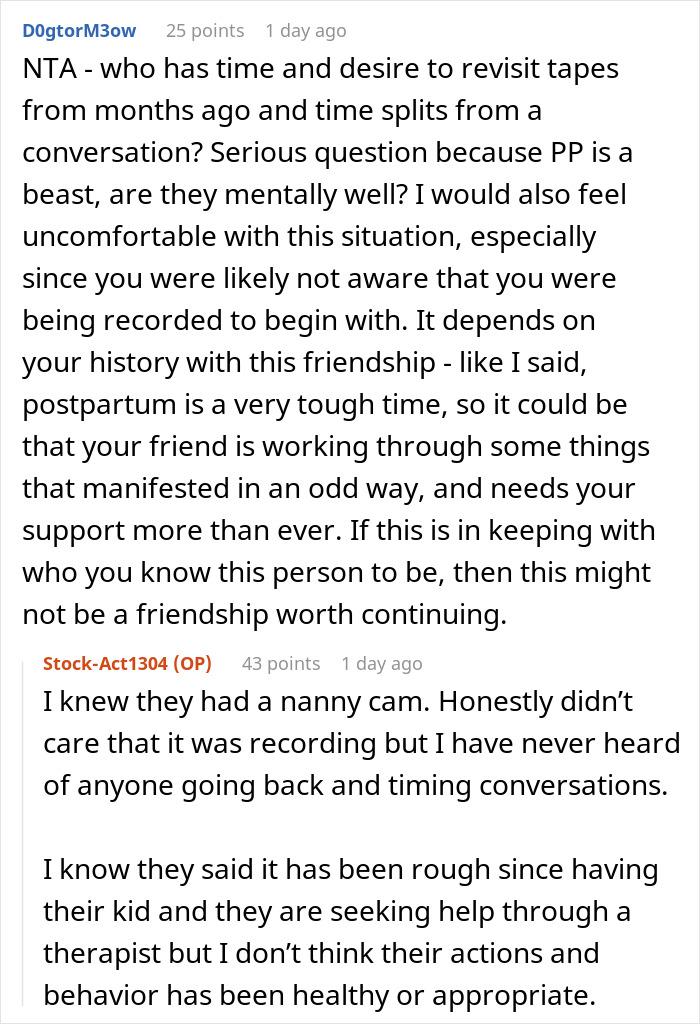
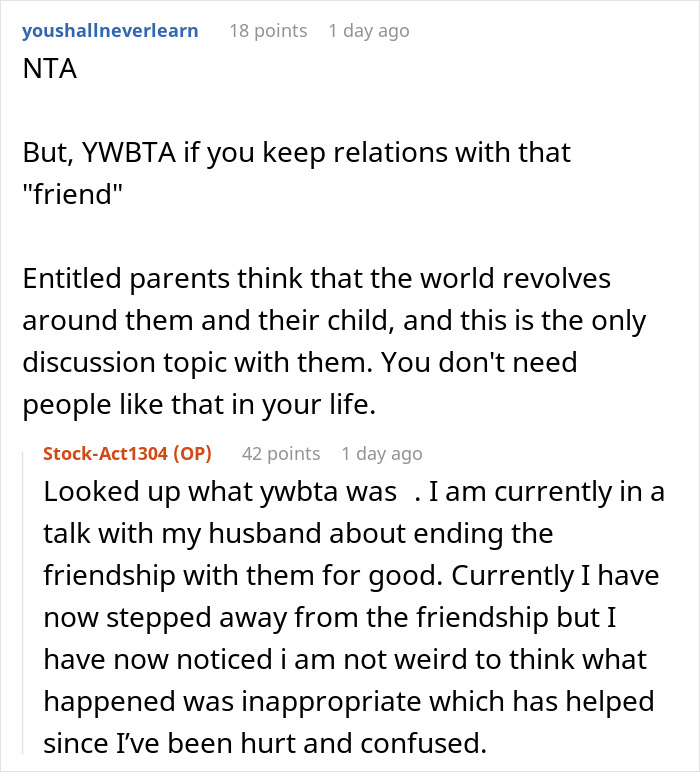
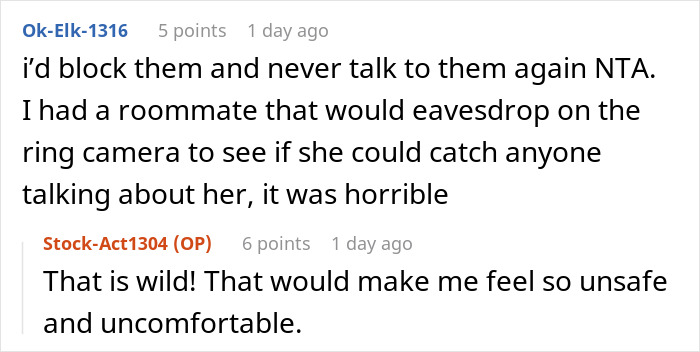
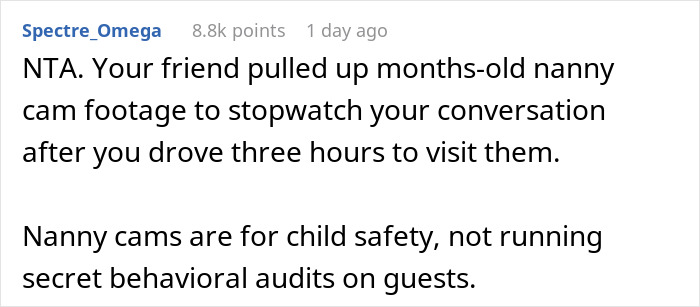
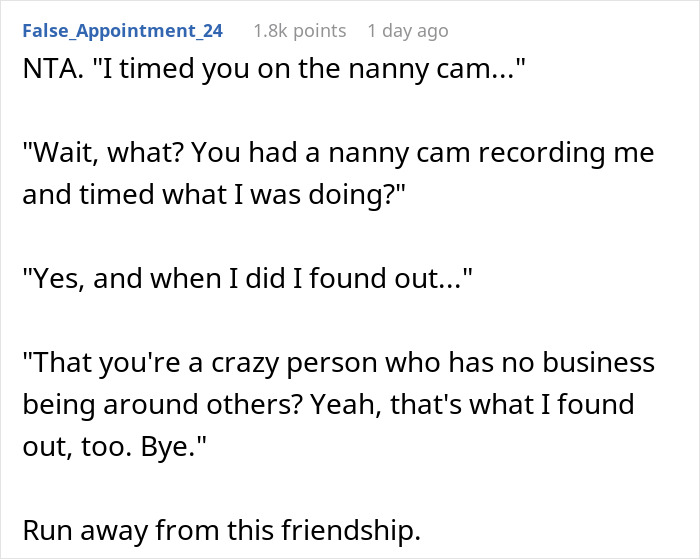
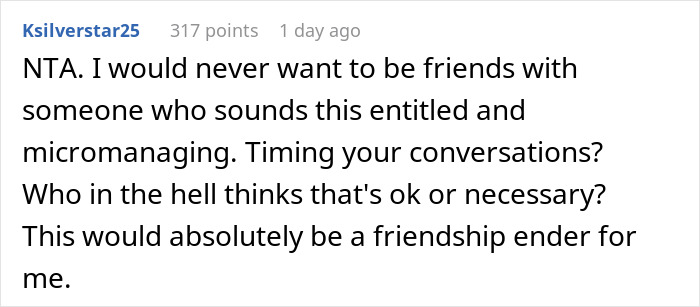
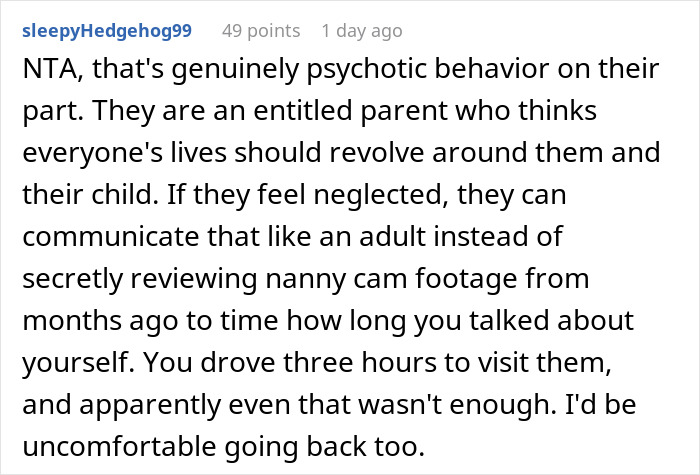
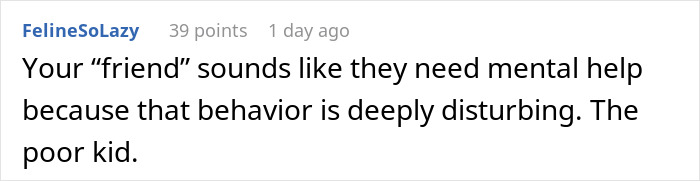
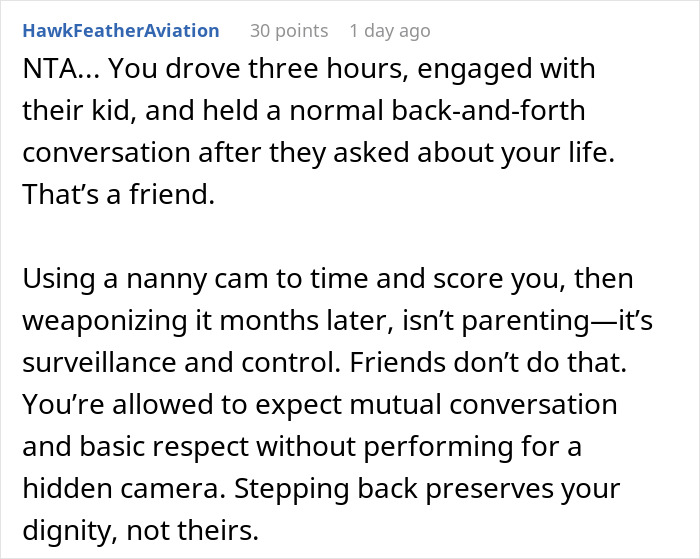
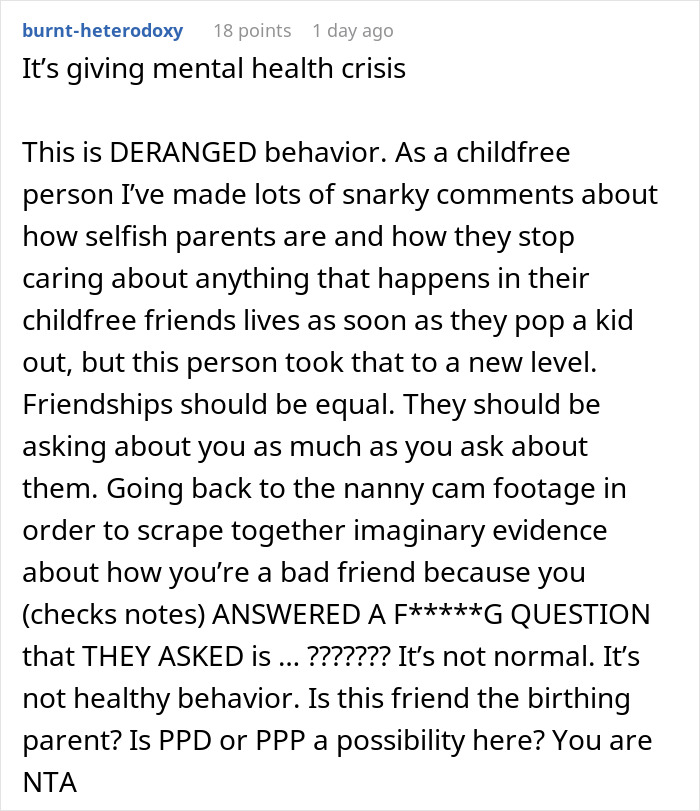
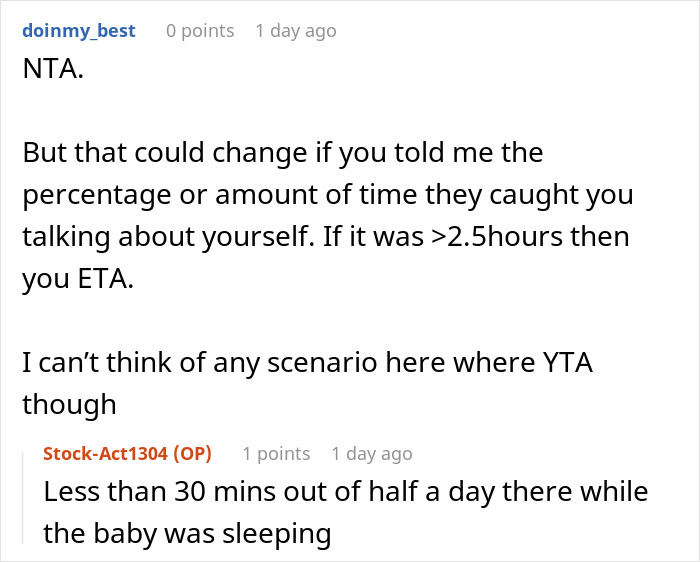
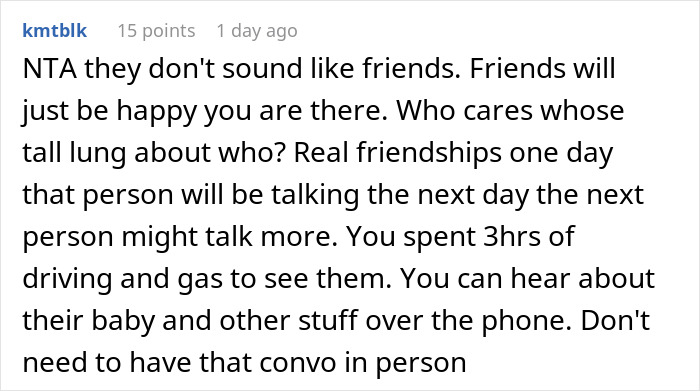
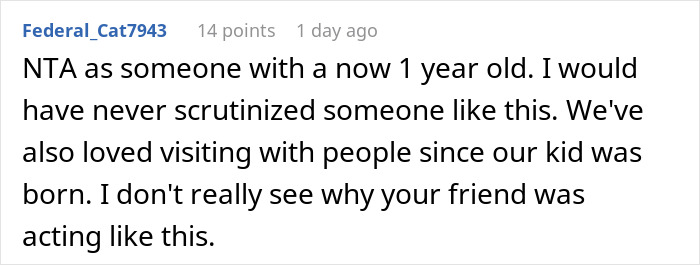
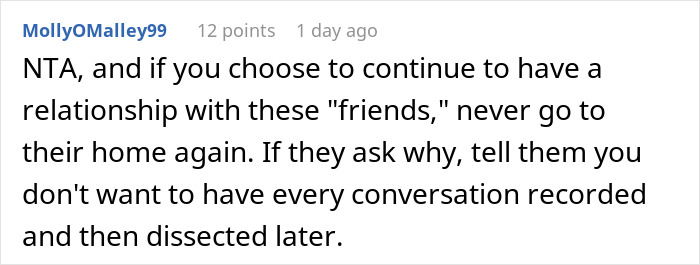
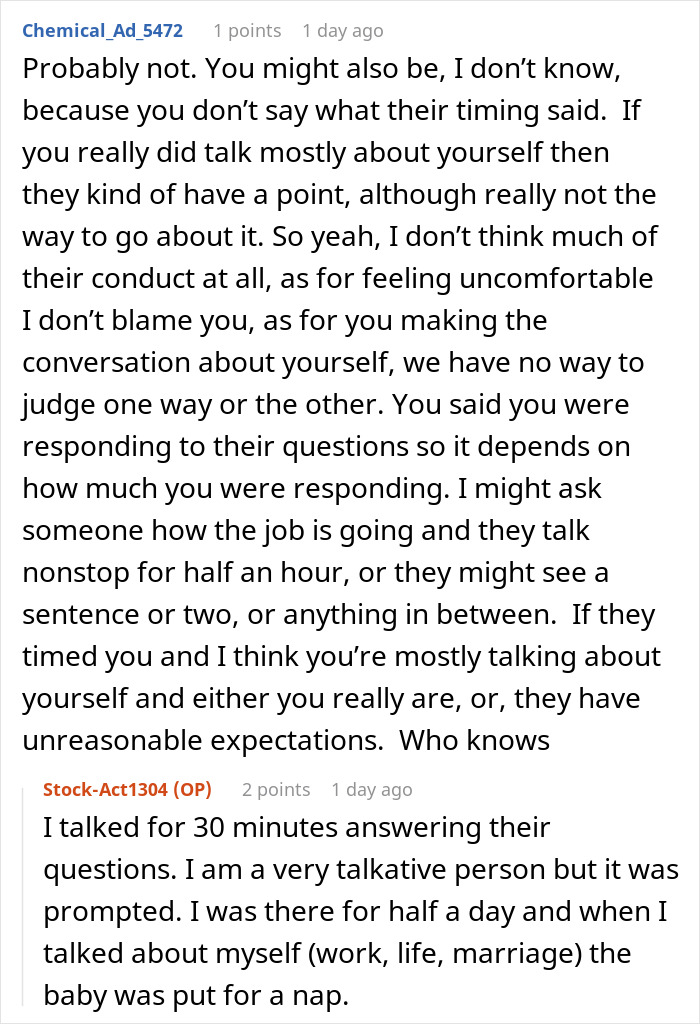
This person, however, was accused by their friends of focusing too much on themselves during their latest catch-up sesh. Apparently, the person talked too much about themselves and asked too little about their daughter and parenthood. The parents even timed it with their nanny cam, and once the friend found out, they went online to ask whether this is a normal part of friendship or a violation of boundaries and privacy.
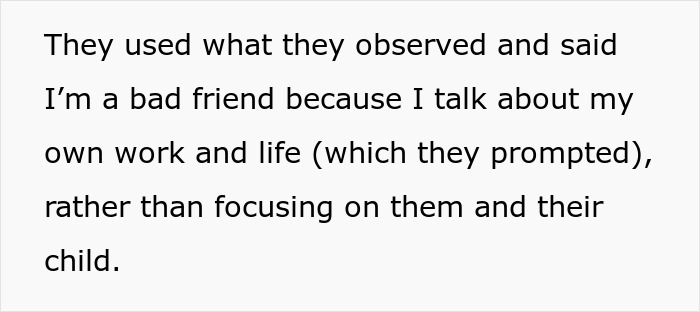
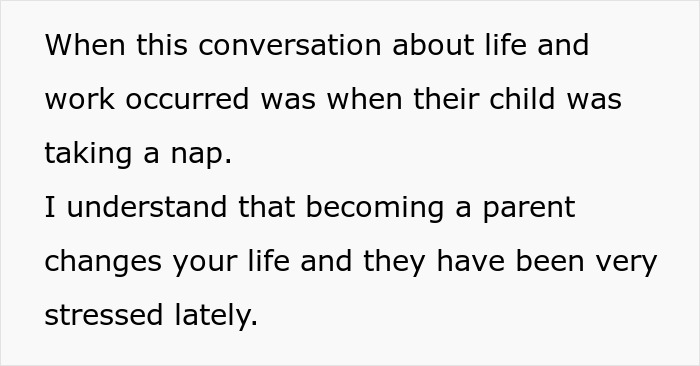
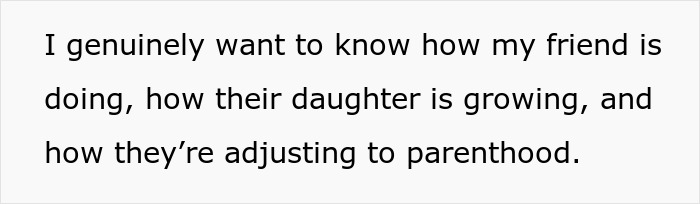
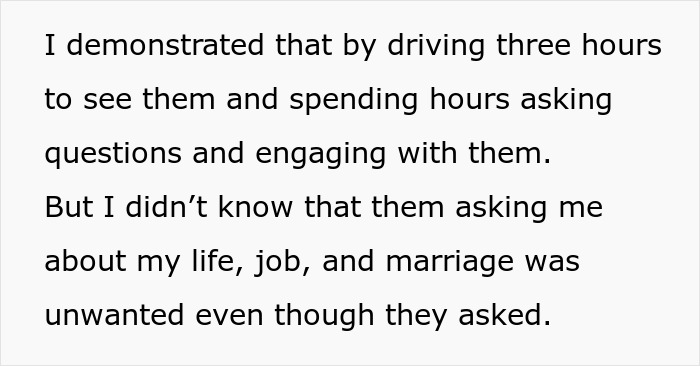
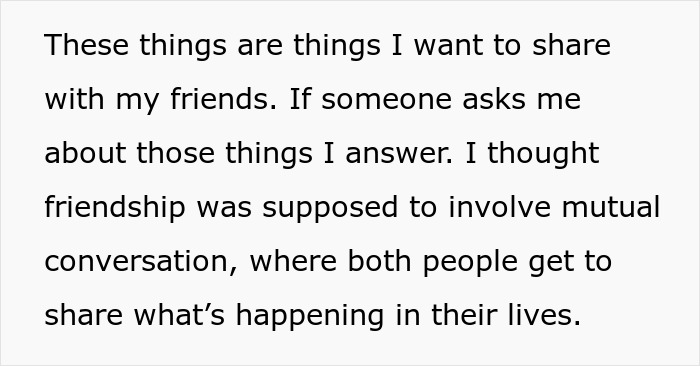
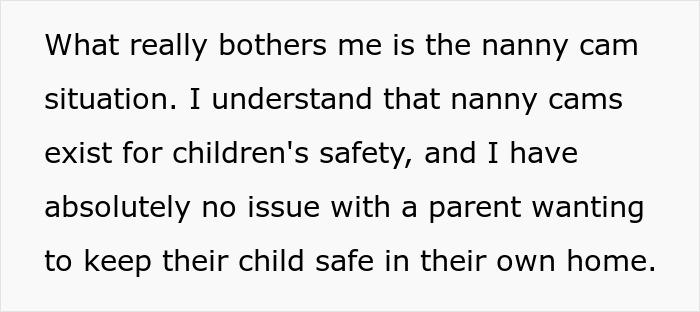
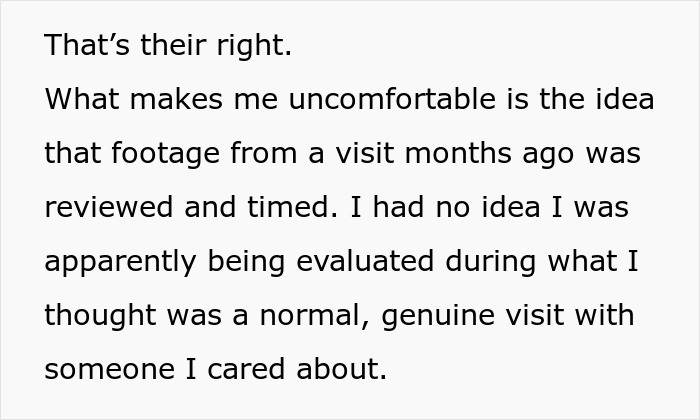
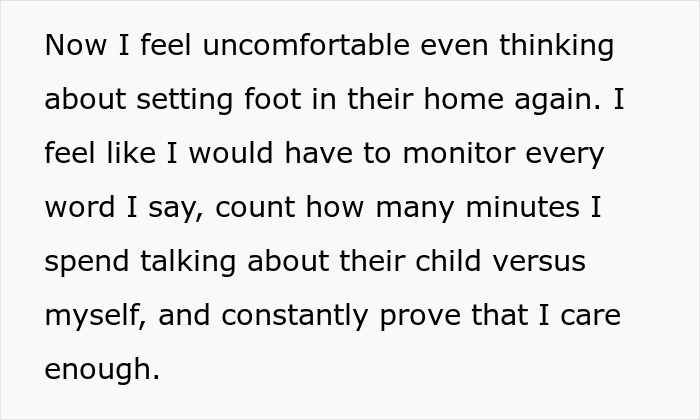

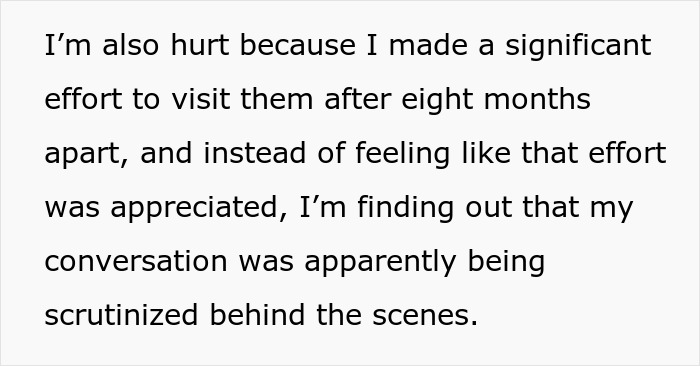
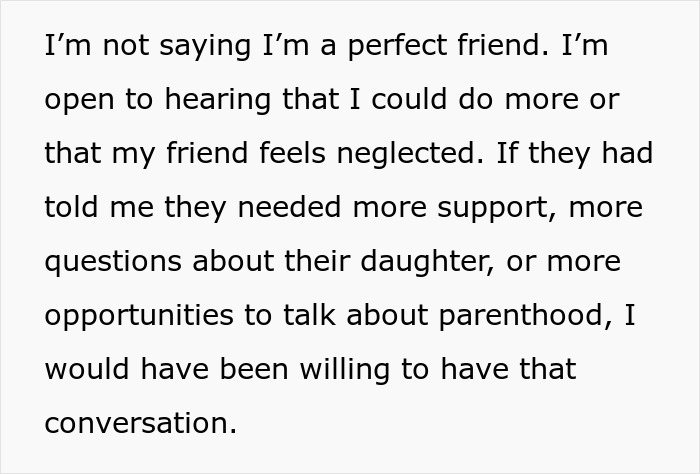
Who hasn’t met a person who likes the sound of their voice a little bit too much? Of course, we can’t know if OP is really that kind of person without hearing what both sides of this argument have to say.
It’s nice when the conversation revolves around you, when people are engaged in what you’re saying, and want to hear more of what you think. The same researchers who found that around 40% of a person’s speech is about themselves also noticed that answering questions about oneself floods our brains with dopamine. So, it’s pleasant when someone is interested in you during a conversation, and it’s similar to having a good meal, receiving money, and even moments of intimacy.
However, it is true that some people are more narcissistic than others when it comes to conversations. These types of people are actually referred to as conversational narcissists. Sometimes, they might dominate the conversation without realizing they’re doing it. Other times, their goal might be to manipulate, gaslight, or dismiss the other person.
There are different reasons why some people are more narcissistic during conversations than others. As psychotherapist Leanna Stockard, LMFT, explained to VeryWell Mind, there are four main ones:
In the case of the first three, the person might not even notice they’re doing it. This might be the case for the OP — perhaps they tend to talk about themselves more than they realize. However, some people are just plainly ego-driven and think that what they have to say is more interesting and valuable than their friends’.
Even those who are conversational narcissists can change their ways. It’s not a medical diagnosis — it’s just a tendency to talk over people, listen to them less, and not engage during conversations. That, of course, doesn’t feel great for friends, but there are ways conversational narcissists can be more present and engaged in conversations and become better listeners.
Experts say that self-reflection is the number one step: realizing that you’re taking over conversations and not participating in them the way your friends might want you to. “Overcoming these patterns starts with building a person’s own emotional literacy and then utilizing skills to help them find a deeper connection within interactions with others,” Hannah Schlueter, MA, LAC, explains.
Conversational narcissists need to hone their active listening skills. That means listening to what a person is saying and repeating back what they heard, and only offering their perspective once the person is done.
Non-verbal cues are also important. Words aren’t the only way of communicating between people, so looking for microexpressions, a frown, a smile, and different breathing patterns can also be helpful when engaging in a conversation.
If you know you tend to hijack conversations and are bad at spotting non-verbal cues and active listening, try preparing questions and topics before meeting up with a friend. “Before meeting up with people, go in with a mindset and intention to not talk about yourself, to not share a story where you’ve experienced something similar, or share your perspective or opinion unless the other person asks,” Stockard added for VeryWell Mind.

















By entering your email and clicking Subscribe, you're agreeing to let us send you customized marketing messages about us and our advertising partners. You are also agreeing to our Privacy Policy.
Thank you! You've successfully subscribed to newsletters!


Jesus, they sound like theyve fallen down the new parent- extremist pipeline. They are no longer hiding that they are petty aholes. Good thing they are 3+ hours away, much easier to avoid.

The moment she answered that the only time they had ever driven her way was for her wedding was when the epiphany should have hit home that these are not friends and have made zero effort. I hope she reflects on that and gets child free friends so she can talk freely and without fear of being audited.


It’s when you put a baby on the floor on a rug on their tummy lol nothing sinsister, it encourages baby to lift their head and use arms to move about, normally only done from 4 mths onwards .
Load More Replies... Jesus, they sound like theyve fallen down the new parent- extremist pipeline. They are no longer hiding that they are petty aholes. Good thing they are 3+ hours away, much easier to avoid.
The moment she answered that the only time they had ever driven her way was for her wedding was when the epiphany should have hit home that these are not friends and have made zero effort. I hope she reflects on that and gets child free friends so she can talk freely and without fear of being audited.
It’s when you put a baby on the floor on a rug on their tummy lol nothing sinsister, it encourages baby to lift their head and use arms to move about, normally only done from 4 mths onwards .
Load More Replies...




































 No fees, cancel anytime










29
9