Get Premium
Dark mode theme is available exclusively for premium users. Learn more about the benefits of subscribing.
No fees, cancel anytime.

 Dark Mode Ad-Free Browsing Unlimited Content
 Ad-Free Browsing Unlimited Content Dark Mode
Join 1.2 million Panda readers who get the best art, memes, and fun stories every week!
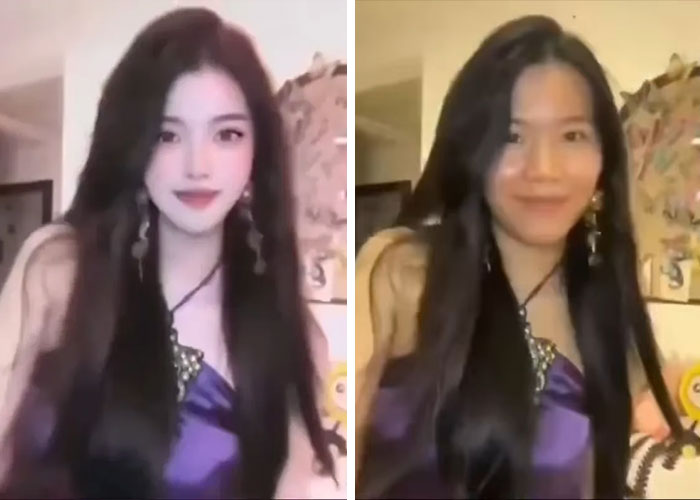
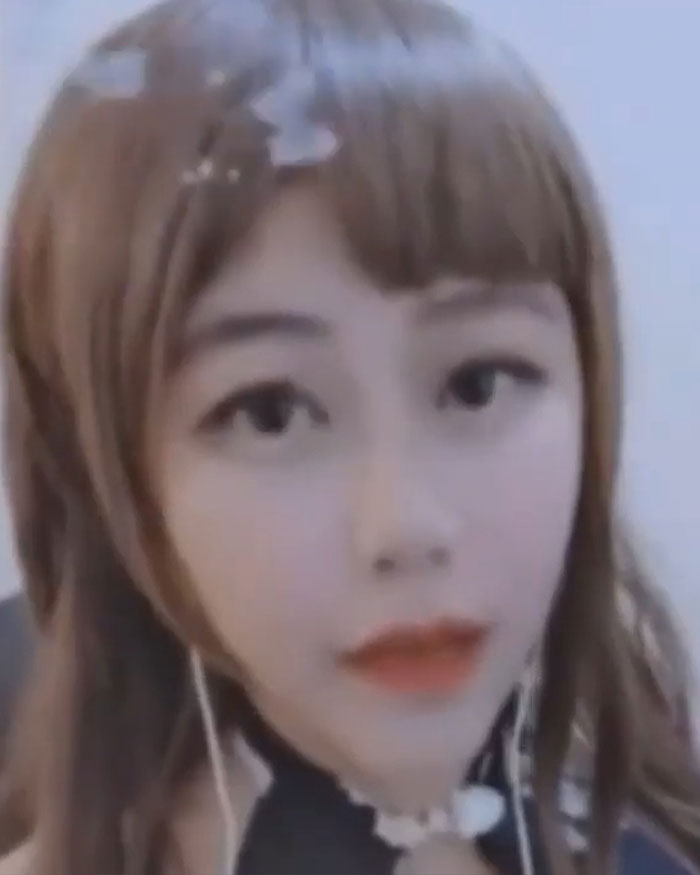
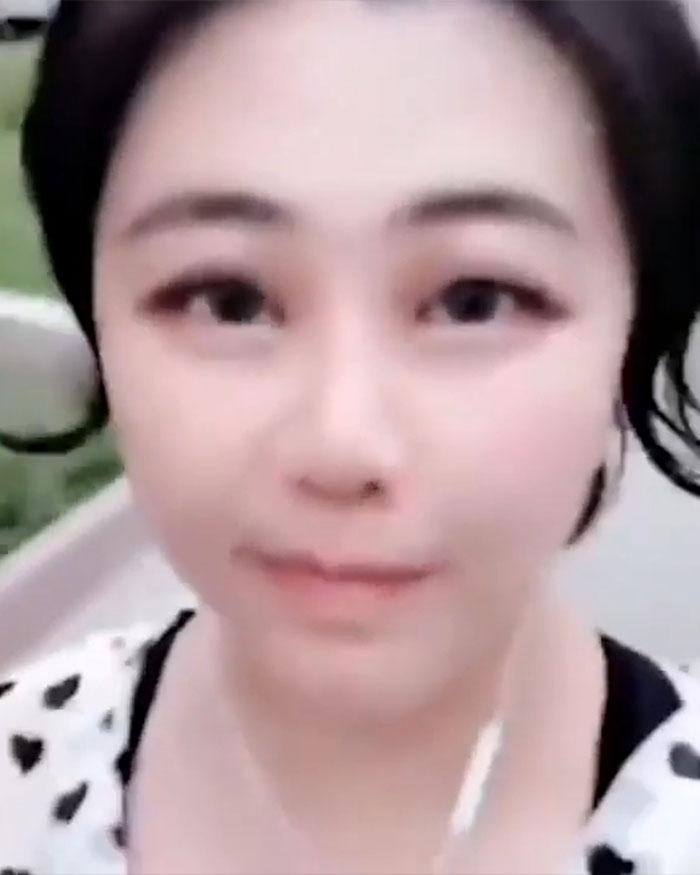
After a beauty filter malfunctioned mid-livestream, a Chinese content creator allegedly lost 140,000 followers, sparking intense conversations about East Asian beauty ideals.
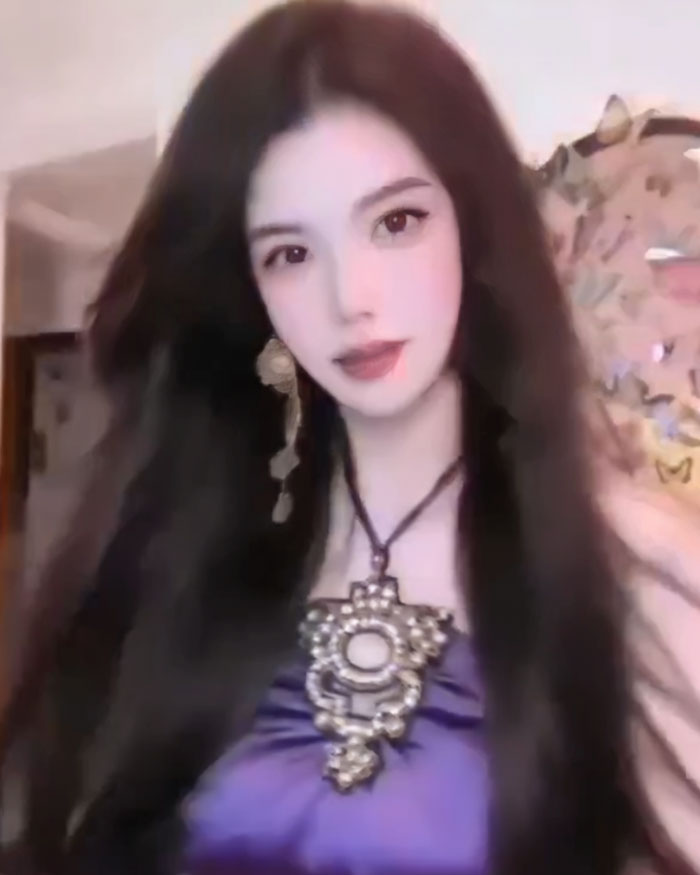
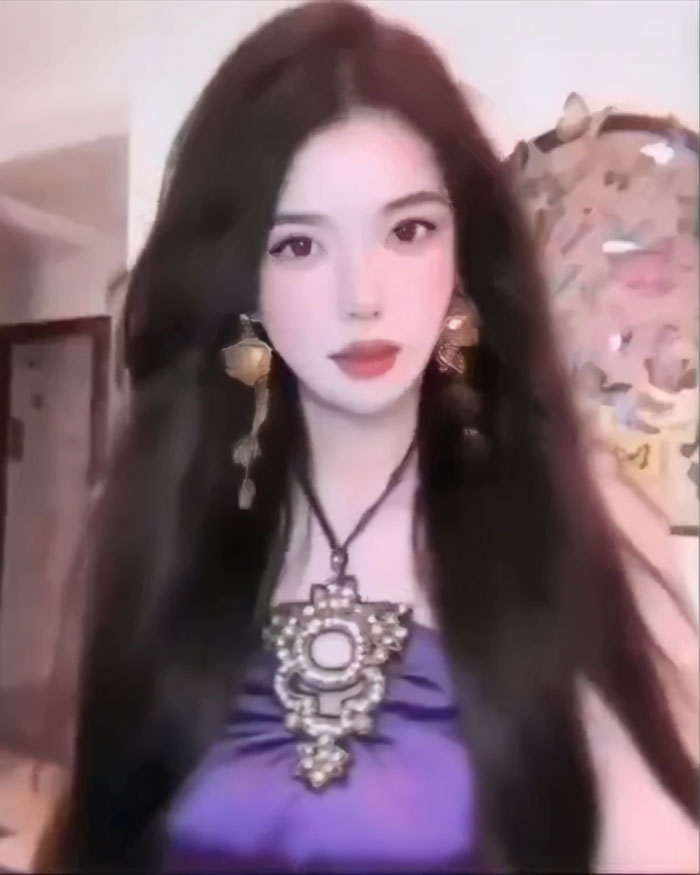
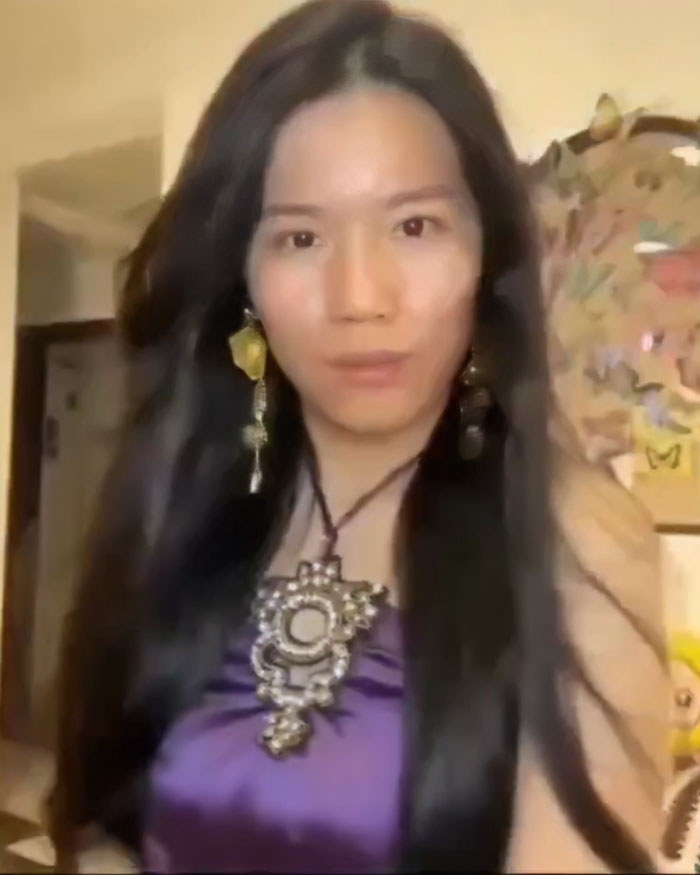
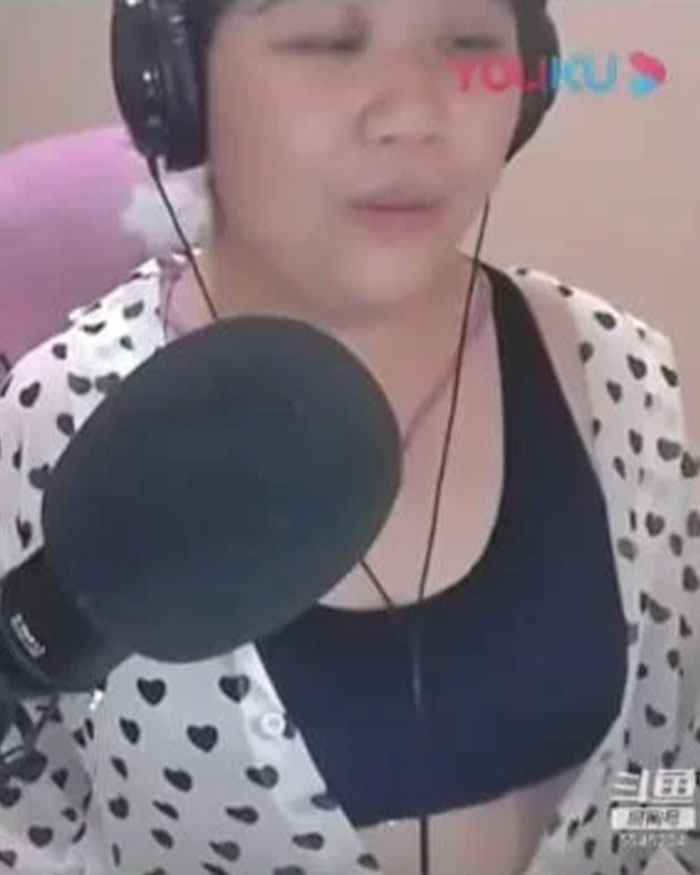
The influencer, whose name remains unknown, appeared pale-skinned and slim-faced with the digital mask on. However, a glitch that lasted only a few seconds revealed her true appearance — a woman with a warmer skin tone and asymmetrical countenance.
Netizens reacted quickly to the slip-up, sharing a mix of disappointment and support.
“Technical glitch brought forth the truth,” one wrote, while another added, “I think she is so much prettier without a filter.”
Image credits: X/gigglexguru
In countries such as China, Korea, and Japan, white skin is often associated with cleanliness. This is not a new trend but a centuries-old belief, according to an article on the GenereAsians blog.
In the pre-industrial era, women across these regions used products such as oshiroi (white powder) and even lard to achieve the desired complexion.
Additionally, a round chin and wider shoulders were considered undesirable.
Image credits: X/gigglexguru
Dressed in a satin halter-neck top with her long hair cascading down, the Chinese influencer at the center of the filter-glitch fiasco was seen shimmying her shoulders to music playing in the background, as the video repeatedly switched between her real face and the modified persona.
Image credits: X/gigglexguru
“What I ordered vs. what I got,” a critic wrote about the blunder, while another added, “The truth is painful.”
“Fake can’t be hidden for long,” a third commented.
Beauty filter took revenge 😭😭😭 pic.twitter.com/NEycMgB4av
— Giggle Guru (@gigglexguru) February 17, 2026
“Filter glitch equals career glitch,” wrote a fourth.
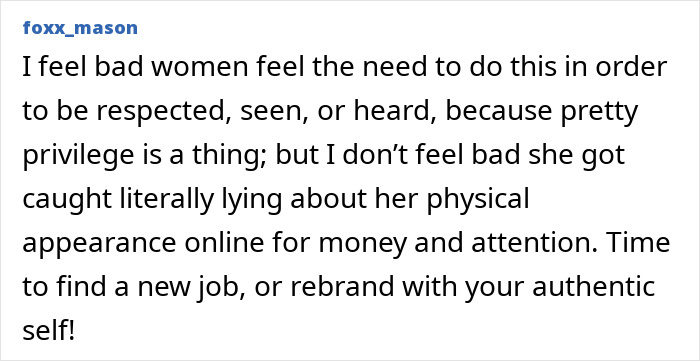
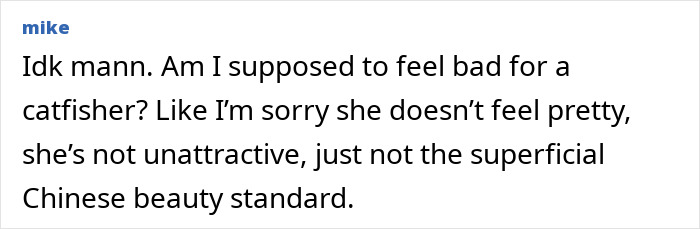
“The issue isn’t her beauty — the issue is she cheated,” another noted.
Image credits: X/gigglexguru
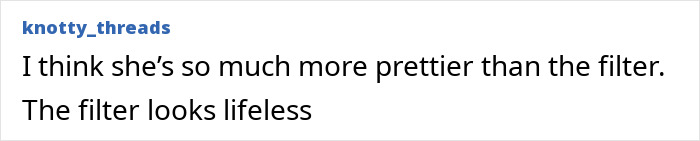
“She’s cuter in real life,” one said, with another adding, “There is nothing wrong with her real face, and the outrage just shows the mentality of the people.”
“Excuse me, she looks gorgeous without the filter. She must not use it,” advised a third.
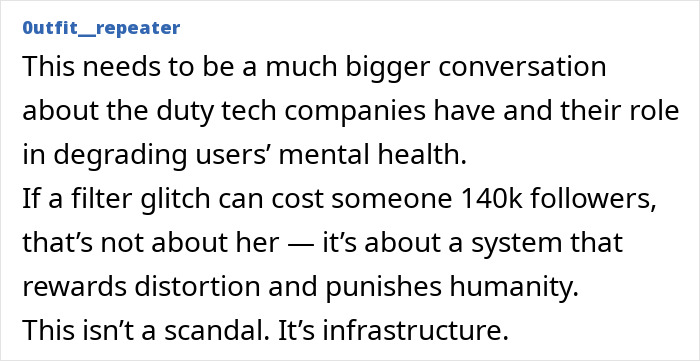
“These beauty filters promote an inferiority complex in young girls,” a fourth opined.
Image credits: Mar2llq
Image credits: Douyu
TikTok launched the Bold Glamour artificial intelligence filter in 2023, leading many users to say it “should be illegal.”
The ultra-realistic filter allowed users to create a full face of makeup without obvious glitches or signs of digital alteration.
“Do not use this filter,” British content creator Joana Kenny captioned a video of herself using it at the time.
Image credits: Douyu
“I don’t want to say this about myself, but I actually look ugly when I take this filter off,” she admitted in the clip. “I was happy with the way I looked until I tried this. These filters have to stop.”
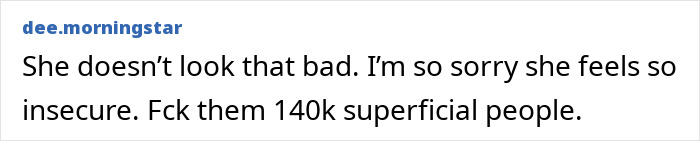
Some called the Chinese influencer’s loss of 140,000 followers good riddance, with one expressing, “It is unfortunate when appearances become the main reason people follow or unfollow someone.”
Image credits: Douyu
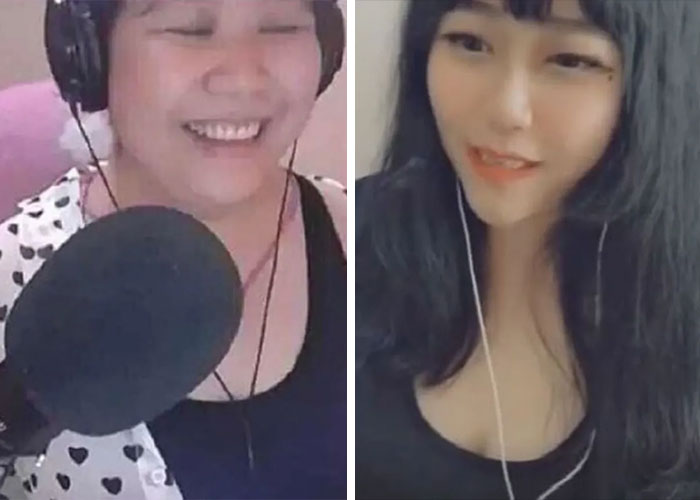
In 2019, vlogger Qiaobiluo Dianxia, who called herself Your Highness Qiao Biluo, left her fans stunned after her filter failed, revealing her to be a 58-year-old woman and not the young girl they believed her to be.
China’s Global Times reported at the time that she was “worshipped” as a “cute goddess” by her audience, some of whom tipped as much as 100,000 yuan ($14,533) during her livestreams.
Image credits: Douyu
She was labeled a “granny” following the incident and briefly stopped streaming.
According to the BBC, China has seen a rapid rise in the popularity of livestreaming, and the state government, which is known to control all forms of media, including news coverage, is not pleased about it.
We interviewed plastic surgeon Dr. Monica Kieu about why the Bold Glamour TikTok filter could lead to an increase in people wanting plastic surgery pic.twitter.com/DRVcN23LQ4
— NowThis Impact (@nowthisimpact) October 26, 2023
Livestreamers are discouraged from broadcasting in public spaces and are guided on what they can or cannot say. Politically sensitive comments can invite backlash from authorities, and streamers must also ensure they are not perceived as vulgar, the publication reported.
The highly lucrative industry is saturated with female users, with People’s Daily and Lengow Blog estimates from 2019 stating they account for 78.8 percent of the country’s live streamers.

By entering your email and clicking Subscribe, you're agreeing to let us send you customized marketing messages about us and our advertising partners. You are also agreeing to our Privacy Policy.
Thank you! You've successfully subscribed to newsletters!


First of all, she looks so much better sans filter. But more importantly, why do people still seem confused by the fact that influencers are playing a role? They aren't any more real than the actors in a blockbuster. It's a part. She's not any more or less fake than the rest of the algorithm. If you want authenticity, you're only going to find it irl
First of all, she looks so much better sans filter. But more importantly, why do people still seem confused by the fact that influencers are playing a role? They aren't any more real than the actors in a blockbuster. It's a part. She's not any more or less fake than the rest of the algorithm. If you want authenticity, you're only going to find it irl














 No fees, cancel anytime










28
1