Get Premium
Dark mode theme is available exclusively for premium users. Learn more about the benefits of subscribing.
No fees, cancel anytime.

 Dark Mode Ad-Free Browsing Unlimited Content
 Ad-Free Browsing Unlimited Content Dark Mode
Join 1.2 million Panda readers who get the best art, memes, and fun stories every week!

Some phrases are so tricky they might make you feel like up is down and left is right. But give them time and really think deeply. They do start to make sense. And just when you feel triumphant that you finally figured it out, they leave you with more questions.
Yes, dear pandas, we are talking about paradoxes. It’s honestly quite fascinating how simple words strung together can have such a mind-boggling effect. Well, if you want to challenge your brain a little, we have just the thing for you. Just go through this list of netizens’ favorite paradoxes that will do the magic trick!
This post may include affiliate links.
 “I don’t like that place - no one goes there anymore because it’s always too crowded.”.

Sounds like something Yogi Berra would say. Wait! He did say it, slightly modified: “Nobody comes here anymore, it’s too crowded”.
 The Ship of Theseus - If you had a boat, and over the course of time you replaced the decaying planks in the ship with new ones, when you fully replaced every plank, would it be the same boat?
 The Epicurean Paradox.
"Is God willing to prevent evil, but not able? Then he is not omnipotent.
Is he able, but not willing? Then he is malevolent.
Is he both able and willing? Then whence cometh evil?
Is he neither able nor willing? Then why call him God?".

Not a paradox if there is no god. Here's a different paradox: If God created everything, who created Hell? If Satan created hell, then God didn't create everything. If God created Hell, then Satan is his collaborator - in which case are they both good or both evil?
“The beginning of the end,” “less is more,” “silence speaks volumes,” or “it is better to give than to receive.” While reading, we often come across phrases like these that just don’t make sense at first glance. However, after a careful look, we can understand what they are really trying to say.
That’s basically a paradox, which is a powerful literary device. Writers often use it to push readers to question their opinions and challenge their assumptions. It is generally defined as a statement or concept that seems contradictory, but, when inspected closely, reveals a deeper truth. Its ability to open a whole new door of meaning is what renders it so fascinating.
 Zeno’s paradox of motion. If you shoot an arrow at a target, at some point it’s halfway there, then halfway of the remaining half, etc. Since no remaining distance cut in half can ever equal zero, the arrow never reaches the target.

Zeno was wrong. 'never' implies that impact doesn't happen at any time for an infinity of time. However, in this series of calculations, you are not only halving the distance to impact, but also the time to impact. It's not that the arrow never hits the target, obviously it does, it's just that modelling it's flight in this way means that you never reach a point in the calculation when the arrow hits the target.
 When I was in art class we had an assignment to paint a paradox or oxymoron.. I didn't paint anything, handed in a blank canvas titled "Completed Assignment" and got an A.
When you look at the word’s etymology, Merriam-Webster sheds light on its Greek roots. These people were all too aware of how a paradox could take us outside our usual way of thinking. They basically combined the prefix “para” (meaning beyond or outside of) with the verb “dokein” (meaning to think), forming “paradoxos,” an adjective meaning “contrary to expectation.”
Latin speakers used that word as the basis for the noun paradoxum. Later, English speakers borrowed it in the 1500s as “paradox.” Research shows the earliest evidence for paradox dates to 1533, in the writing of Thomas More, a lord chancellor, humanist, and martyr.
 "Actually, there are two kinds of people in this world: those who believe there are two kinds of people in this world and those who are smart enough to know better." -Tom Robbins.
There are two groups of people in this world: the first group can draw correct conclusions from incomplete data.
 The vending machine paradox from gravity falls. dipper and Mabel are getting some snacks from the vending machine, when the snack gets stuck. soos shows them a trick on how to open it. they all get candy. later that episode, they travel back in time and teach a kid whose snack got stuck the trick they learned. that kid turned out to be soos, which leaves us with the question, who invented the vending machine trick?
 Paradox of the Court.
"The Paradox of the Court, also known as the counterdilemma of Euathlus, is a very old problem in logic stemming from ancient Greece. It is said that the famous sophist Protagoras took on a pupil, Euathlus, on the understanding that the student pay Protagoras for his infrastructure after he wins his first court case. After instruction, Euathlus decided to not enter the profession of law, and Protagoras decided to sue Euathlus for the amount owed.
Protagoras argued that if he won the case he would be paid his money. If Euathlus won the case, Protagoras would still be paid according to the original contract, because Euathlus would have won his first case.
Euathlus, however, claimed that if he won, then by the court's decision he would not have to pay Protagoras. If, on the other hand, Protagoras won, then Euathlus would still not have won a case and would therefore not be obliged to pay.
The question is: which of the two men is in the right?" (from wikipedia).
We have come a long way from the 1500s. But we shouldn’t underrate the ability of a mind-bending paradox in today’s age of increasing totalitarian governments. Writers can use it to disrupt conventional thinking and make readers weigh opposing ideas at the same time. That makes paradox a tool for intellectual resistance. It can also make people question the “truth” these governments feed them.
That it always takes three tries to plug in USB.

Not since the introduction of the USB-C connection. But now we have to worry about whether the cable is the right one or not.
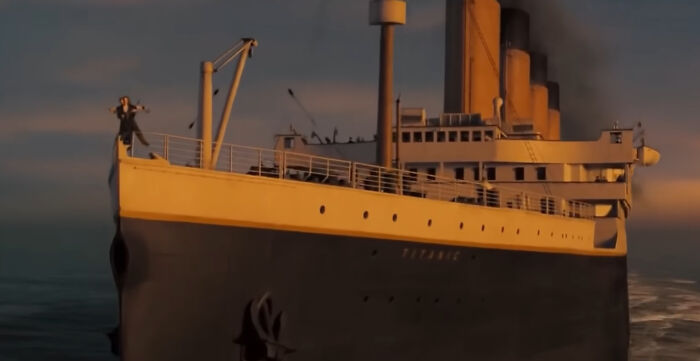 The titanic sunk because of the weight of all the time travelers who came back to stop the titanic from sinking.
According to Alan Watt, a bestselling novelist and filmmaker, “For a writer who enjoys stretching the limits of language to reach the utmost bound of human thought, there is no better tool than the paradox.”
“A great paradox is both confounding and beautiful. It reminds us that there are limits to what logic can capture and that some aspects of truth are inherently contradictory. Language and argument are shorthands; they can never fully explain what they’re attempting to explain. Paradox reminds us that storytelling often lives beyond simple logic, in the tension between opposing ideas,” he adds.
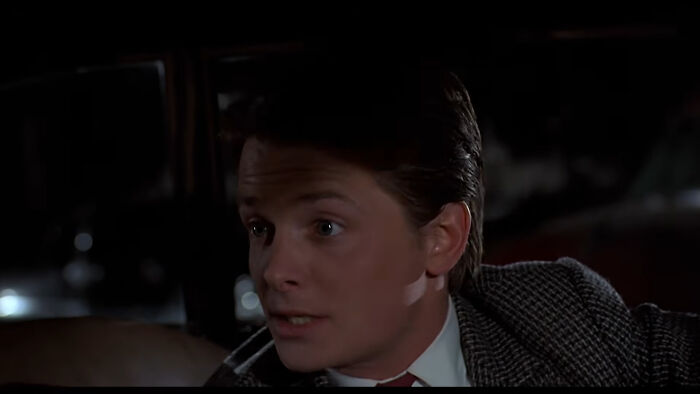 When Marty goes back and meets his mom in Back To The Future, she gets to know him as Calvin "Marty" Klein. If we assume she named her son Marty because of this interaction, how could he have originally been named Marty?
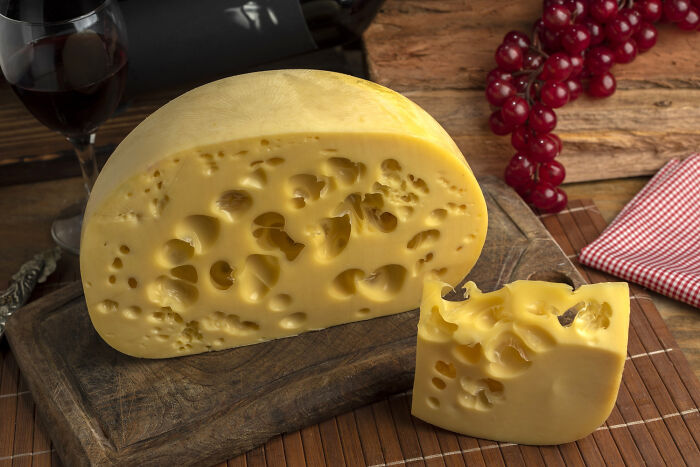 Swiss Cheese Paradox
Swiss cheese as we all know has holes. Therefore, the more Swiss cheese you have, the more holes you have. However, the more holes you have, the less cheese you have because of it. In conclusion, the more cheese you have the less cheese you have.
Yes I know it's a joke paradox. I still love it because how stupid it is.

I always ask the seller to cut the holes out, because I refuse to pay for them
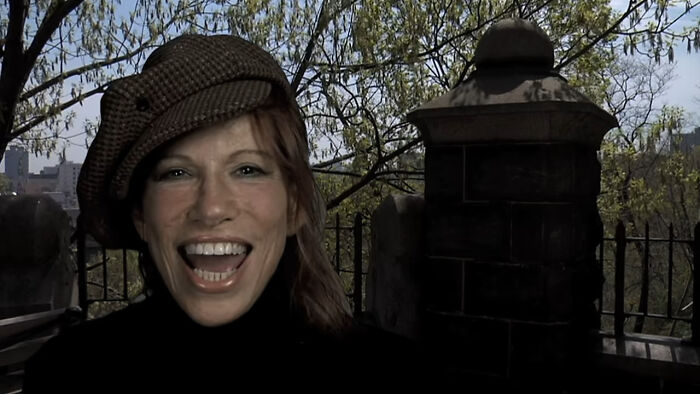 "You're so vain. You probably think this song is about you."
She's suggesting it's not about them but the song is entirely about them.
Whether it be Shakespeare or Emily Dickinson, many notable literary figures have used this device. However, legendary baseball player and coach Yogi Berra was another major personality famous for using paradoxes. In fact, his paradoxical statements were so impressive that they became famous as “Yogi-isms.”
For instance, when he said, “Baseball is ninety percent mental, and the other half is physical,” it might seem like a comic statement. But when you really try to understand him, it sounds like he was stressing that physical ability isn’t enough. And when he said, “The future ain’t what it used to be,” he was probably trying to say that what we envision isn’t what materializes.
 The more you learn, the more you realize how little you know. Every time you gain a greater understanding about something, it creates even more questions than it answers.
This is not a paradox. Knowing more doesn't mean you know less, it just means you discovered more to know.
 My favourite is this:
If you randomly guess at this multiple choice question what are the odds you get it right?
a) 25%
b) 50%
c) 25%
d) 0%
>!the solution is there is no right answer, we can prove this by condition:!<
>!case 1: the "right" answer is 25% well then you have a 50% chance of choosing 25 so then the right answer is not 25!<
>!case 2: the "right" answer is 50% well then you have a 25% chance of choosing 50 so that cant be right!<
>!case 3: the "right" answer is 0% well then you have a 25% chance of choosing that so thats not right!<
>!so there is no right answer! Even though it feels like there should be!
 A barber has a sign in front of his store that says:
"I shave anyone who does not shave himself, and nobody else"
Can the barber shave himself?
While his statements might sound comical, a closer look shows he was a total genius. On that note, here are some of my favorite Yogi-isms:
“It ain’t over till it’s over.”
“A nickel ain’t worth a dime anymore.”
“It gets late early out there.”
“If people don’t want to come to the ballpark, how are you going to stop them?”
“I didn’t really say everything I said.”
 You send randomly chosen people into a room. For there to be a 50% chance of at least 2 people in the room sharing the same birthday how many people do you need to send in? It might seem at first glance you have to cover 365/2 birthdays which is 183 people to the nearest whole number. As it turns out the answer is actually 23.
 Two shop workers were arguing while I was in the queue. One of them shouted "the customer is always right". Then I popped my head in and said " Erm, no they're not" ,leaving the pair with an unsolvable paradox.
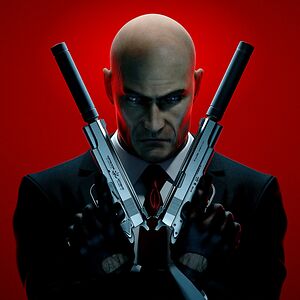
that is only part of the saying the full saying is "the customer is always right in matters of taste"
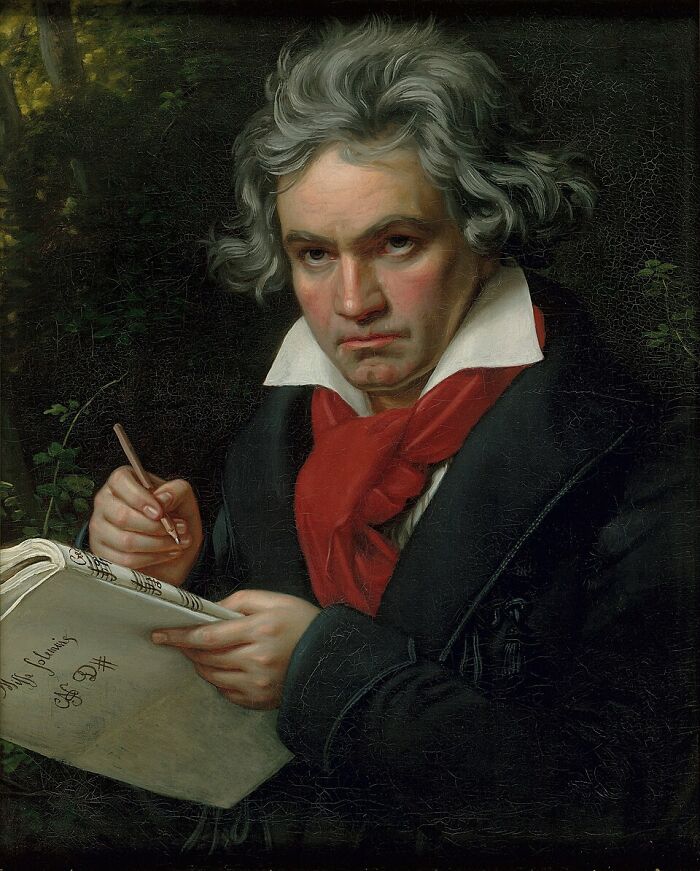 The Beethoven paradox
A man builds a time machine to go back in time and meet his favourite composer, Beethoven.
When he gets there, though, no one seems to know who Beethoven is, not even his family: it's like he never existed.
Luckily, the man brought with him all the symphonies Beethoven wrote to get them autographed, so he copies all of them, becoming himself Beethoven.
Now, who wrote those symphonies?
Although paradoxes can be complicated to comprehend at times, there’s no denying that they are equally enjoyable. After all, they have intrigued thinkers right from ancient times. Experts at the Paradox Museum claim that the confusion paradoxes create can be quite pleasurable.
Psychologists call this phenomenon “cognitive dissonance.” The experts point out that it’s akin to the delightful discomfort of holding two opposing beliefs in your mind. Paradoxes boost this sensation, making our brains perform mental gymnastics, they add.
Not sure if this is a traditional paradox, but growing up middle-class in America, my parents made "too much" money that I didn't qualify for any major financial assistance for my college tuition, but nowhere near enough money to actually be able to afford it.
US capitalism paradox is a person paying $1500 for rent not being able to qualify for a $1000 mortgage
 The [Jevons Paradox](https://en.wikipedia.org/wiki/Jevons_paradox). Which states that, if anything comes around that increases the efficiency of consuming some resource, the demand for that resource will go up, leading to even *more* of it being consumed instead of less.
Sounds similar to Braess's paradox, which is where attempts to improve traffic flow by building a new road often leads to worse congestion. Conversely, improved traffic flow can sometimes be achieved by removing roads, since drivers are likely to choose many different alternative routes, thus spreading out more and avoiding bottlenecks.
 The surprise examination (aka the unexpected hanging paradox).
Your teacher says you'll have a test next week on a day that you won't be able to predict, not even the morning before the test. So all you know is that it will be one of the days from Monday to Friday.
But is Friday really possible? If it's Friday morning, and you haven't had the test yet, then you would be able to predict with absolute certainty that the test will be that same day, so there's no way the test can be on Friday. Clearly, it must be one of the days from Monday to Thursday.
But is Thursday really possible?
EDIT: Ok, seems like I have to add some clarifying information. **First:** By "predict", I mean "be absolutely certain that there is a test that day", not to just happen to guess right. **Second:** There are people claiming that the teacher is making an erroneous or logically false statement. That's not true. If the teacher gives the exam on Tuesday, then that's a day that the students can't predict. The teacher **doesn't claim** that a test would be unpredictable on any day next week, only that the test will be on a day that isn't predictable.
Moreover, research emphasizes that our minds react differently when confronted with paradoxes. It explains that being open to paradoxical ideas is a trait called paradoxicality, and accepting it can enhance individuals’ creativity. It also notes that “Niels Bohr, a theoretical physicist and Nobel Prize winner, believed that by holding opposites together, the mind can reach a new level where traditional convergent thinking is suspended.”
 The catch 22 paradox - being unable to escape a situation due to contradictory rules. An example from the Joseph Heller novel is basically if you believe doing a task in the military is dangerous and could k**l you, you are therefore sane and thus able to complete the mission. If you don't believe doing a task is dangerous and could k**l you, then you have elected to do it anyway.
 "The following statement is true.
The statement above is false."
It bends my mind, trying to understand this.
These are just statements. Nothing enforces that both statements are true.
The Agressive Piggy is walking in the forest. Afairy flies up to him, and says:
-Hey Agressive Piggy! I'll make two wishes of yours come true!
-Hello Irritating Fairy, put an unremovable nail in this tree!
*MagiC happens*
-Alright, my second wish is that you pull it out!
Well, dear readers, you might improve your creativity by going through this entire list. Don’t forget to upvote the ones that you loved. And if you know any other paradoxes, feel free to drop them in the comments. Also, if you want to keep challenging yourself, go through our older list of paradoxes that might break your brain!
The Smithsonian has Lincoln's hatchet, but the blade has been replaced twice and the handle thrice.
 [Simpson's Paradox](https://en.wikipedia.org/wiki/Simpson%27s_paradox)
Example 1: Berkeley admissions showed that men were significantly more likely to be admitted than women, but when looking at each individual department there was either no bias, or an apparent bias for women.
Example 2: In 1995 and 1996 David Justice had a higher batting average than Derek Jeter, but when you combine the two years, Derek Jeter has a higher average.
Oscar the Grouch's happiness (Sesame Street)
Oscar LOVES being angry. So when he's angry, he gets happy. But he HATES being happy, so he is then angry about being happy. Now he's happy because he's angry again. Continue for eternity.
 The Galileo paradox
The sequence of square numbers: 1, 4, 9, 16, 25, 36, 49, 64, etc clearly shows that there are a lot fewer square numbers than there are non-square numbers, as the distance between them gets increasingly longer.
But any number can be multiplied by itself and the result of this multiplication is a square number. So it must also be true that there are at least as many square numbers than there are non-square numbers.
My mom had these two little puppies. They were red dachshunds and they were sweet and cute and the biggest ears. They were my favorite paradox...
Scotty manages to leave his space ship, travels back in time, and returns. He is obviously drunk and has a woman of obviously low character on each arm. When chastised by his captain, he replies “Hoot, mon, hae ye ne’er heard of the pa'r o’ doxies of time travel?”
The Song of Storms paradox from Ocarina of Time
You learn a song (the song of storms) from a guy who learned it from you when you were a kid, because you went back in time (after you learned from the guy as an adult), then to be the kid who taught the guy who taught you as an adult.
How 0.9 repeating is equal to 1
There’s lots of different ways to prove it but the simplest for me is this example:
X = 0.9999...
Multiply it by 10, so 10X = 9.9999...
Subtract 1X from 10X or 9.999... - 0.9999... which equals 9
So then 9X = 9, simplify to X = 1
I was in denial for a good bit when I first heard of this.
"Whatever I say is a lie".
 If you ask Rick Astley for a DVD of the movie "Up", he will not give it to you because he is Never Gonna Give You Up. However by not giving you Up, even though you asked for it, he is letting you down. The Astley Paradox.
Can't find my glasses without my glasses.
 John Connor sending his own father back in time and his father conceiving John on the same trip.
Sorites Paradox; When e x a c t l y does heap of a million grains of sand turn into a "non-heap" when you take away grains of sand one at a time.
If God can do anything ,can he heat up a bowl of ramen so hot that even he can’t eat it.
The word "indescribable" was created so that nothing can be truly indescribable. Think about that one for a moment.
I was at a lecture once and speaker Vic Stinger told the audience that he would pay $10,000 that day anyone who could demonstrate precognition. I raised me hand and told him I'd had future visions of me walking out of the lecture hall without $10,000. The only way to prove I wasn't indeed precognitive was to pay me the 10 grand for being precognitive.
Spoiler: It totally came true.
Camus regards The Absurd as a paradox. Humans are constantly driven to seek meaning in a world that doesn't appear to have any.
Cartoon suns that are drawn wearing sunglasses. What exactly are they protecting their eyes from?
There is a smallest number that is not nameable in less than 18 syllables. But "The smallest number not nameable in less than 18 syllables" has seventeen syllables and names the same number.
The Fermi Paradox
It's basically about the existence of aliens and can be summed up as:
"1- The Milky Way contains hundreds of billions of stars, and billions of them are similar to the sun.
2- It is highly likely that some of these stars will have planets that are similar to Earth.
3- If we assume – via the Copernican principle – that Earth is not particularly special, then intelligent life should also exist on some fraction of these Earth-like planets.
4- Some of these intelligent life-forms might develop advanced technology, and even interstellar travel.
5- Interstellar travel would take a long time, but as there are many sun-like stars that are billions of years older, there has been plenty of time for such travel to have occurred.
6- Given all this, why haven’t we met or seen any trace of aliens? Where is everybody?".
for all we know they could be watching us if their technology is way more advanced than ours we may not even comprehend them sufficiently advanced technology is indistinguishable from magic
To set up my Wi-Fi I need Wi-Fi to install a app needed to set up my Wi-Fi.
The more you try to argue with someone, the less likely they are to agree with your point. That's why you shouldn't argue. I think discussing would be better.
That people with lisps can't say "lisp." Same is true for most people with speech impedidediments.
Delightful word there at the end. Note to self: Find a way to use impedidediments,
The Bootstrap Paradox
Example: a young man is trying to invent a time machine, but can't figure out how. One day a paranoid elderly man approaches him and gives him an old, tattered notebook that contains the detailed schematics and blueprints for designing a fully functional time machine. The young man quickly makes a copy of every page and puts them in a brand new, identical notebook, before the old one falls apart. He spends 50 years of his life building the time machine, and towards the end he begins to notice sketchy government agents following him around and monitoring him. He decides to fake his own d***h by going back in time, taking the time machine plans in the notebook with him so the government will never find them. He travels 50 years into the past and gives his younger self the notebook for safekeeping.
Crocodile Paradox: If a crocodile steals a child and promises its return if the father can correctly guess exactly what the crocodile will do, how should the crocodile respond in the case that the father guesses that the child will not be returned? Wrote it word for word from a Wikipedia page.
Raven Paradox: Observing a green apple increases the likelihood of all ravens being black.
Not a paradox, but the Monty Hall problem might sound like one if you don't have enough statistics knowledge: https://en.wikipedia.org/wiki/Monty_Hall_problem.
In Twilight Struggle, a board game where you play out the Cold War with one player as the USA and another as the USSR, the first part of the turn is called the Headline Phase. Each player plays a card and resolves it. The USA has a card called Defectors which cancels the USSR's card during the Headline phase. However, the USSR can get it. And if they play it during the Headline phase, it cancels the USSR's card, which cancels canceling the card, causing it to happen, which cancels it, but it cancels canceling the card, and so on.
I remember it as the "Hangman's Paradox".
A hangman stands at a crossroads and asks all travelers where they are going. If you tell the truth, he lets you free. If you lie, he hangs you.
What does the hangman do when you tell him you are traveling so he can hang you?

He might become angry and hang you anyway, so best not to say that to him.
Mitch hedburg once said "my belt holds up my pants and my pants have belt loops to hold my belt... what's going on down there? Who's the real hero? ".
The tolerance paradox: you can’t tolerate hate, it will take over.
In other words: if you want a society that's 100% tolerant, it mustn't tolerate hate and bigoted views.
The Pogo Paradox. Where an event is caused by the very attempts to prevent it.
Edit: I’m not sure if this is an official name. I heard it on Star Trek: Voyager.
Edit 2: No this is *not* the Streisand Effect. That defines a situation where people want to suppress knowledge about some information but that effort causes the information to become more widespread. This is *not* a paradox.
Edit 3: Yes just like That’s So Raven, as 300 replies have already pointed out.
Edit 4: And Harry Potter, and Star Wars, etc.
Edit 5: OK Y'ALL CAN STOP RECOMMENDING "DARK" ON NETFLIX
Edit 6: enough about the d**n monkey on Umbrella Academy.
For example, people shushing louder than the noise they are objecting to.
Can God make a rock so heavy that even He cannot lift it?
-The omnipotence paradox.
How can mirrors be real, if our eyes aren't real?
This sentence contains two mistake.
The "no-wipe s**t"
You wipe and see no s**t thinking to yourself that you had a "no-wipe s**t" but as you wiped to find out, it cannot be a "no-wipe s**t".

Or, you turn around to flush, and there is nothing there....what happened to it?
The grandfather paradox where you go back in time to k**l your grandfather. Then your father would never have been born. What would happen to you?
Bootstrap paradox
The fact that the idea/item(s) never have a beginning or an end but the fact that exists to exist is just cool.
I was an avid sci-fi reader as a kid. Somewhere around 7th or 8th grade I decided that all "time-travel paradox" stories were dumb and stopped reading them. The only exception to that was Poul Anderson's "The Corridors of Time", which handles the paradox problem neatly and correctly: The past cannot be changed but the future can be.

Yeah tons of these are just different versions of the time-traveller's paradox, a trope of sci-fi ever since the genre existed. The best writers are not necessarily those who invent the most believable explanations or work-arounds, but those who construct their writing well enough that we're prepared to suspend our disbelief for the sake of the story. It's why Pterry sold so well, we don't care how ridiculous the Discworld's reality is, or that some aspects of it changed from the earlier books as he developed it, it's not the point of his books, it just provides a backdrop for his wonderful storytelling.
Load More Replies... I was an avid sci-fi reader as a kid. Somewhere around 7th or 8th grade I decided that all "time-travel paradox" stories were dumb and stopped reading them. The only exception to that was Poul Anderson's "The Corridors of Time", which handles the paradox problem neatly and correctly: The past cannot be changed but the future can be.
Yeah tons of these are just different versions of the time-traveller's paradox, a trope of sci-fi ever since the genre existed. The best writers are not necessarily those who invent the most believable explanations or work-arounds, but those who construct their writing well enough that we're prepared to suspend our disbelief for the sake of the story. It's why Pterry sold so well, we don't care how ridiculous the Discworld's reality is, or that some aspects of it changed from the earlier books as he developed it, it's not the point of his books, it just provides a backdrop for his wonderful storytelling.
Load More Replies...



















 No fees, cancel anytime