Get Premium
Dark mode theme is available exclusively for premium users. Learn more about the benefits of subscribing.
No fees, cancel anytime.

 Dark Mode Ad-Free Browsing Unlimited Content
 Ad-Free Browsing Unlimited Content Dark Mode
Join 1.2 million Panda readers who get the best art, memes, and fun stories every week!
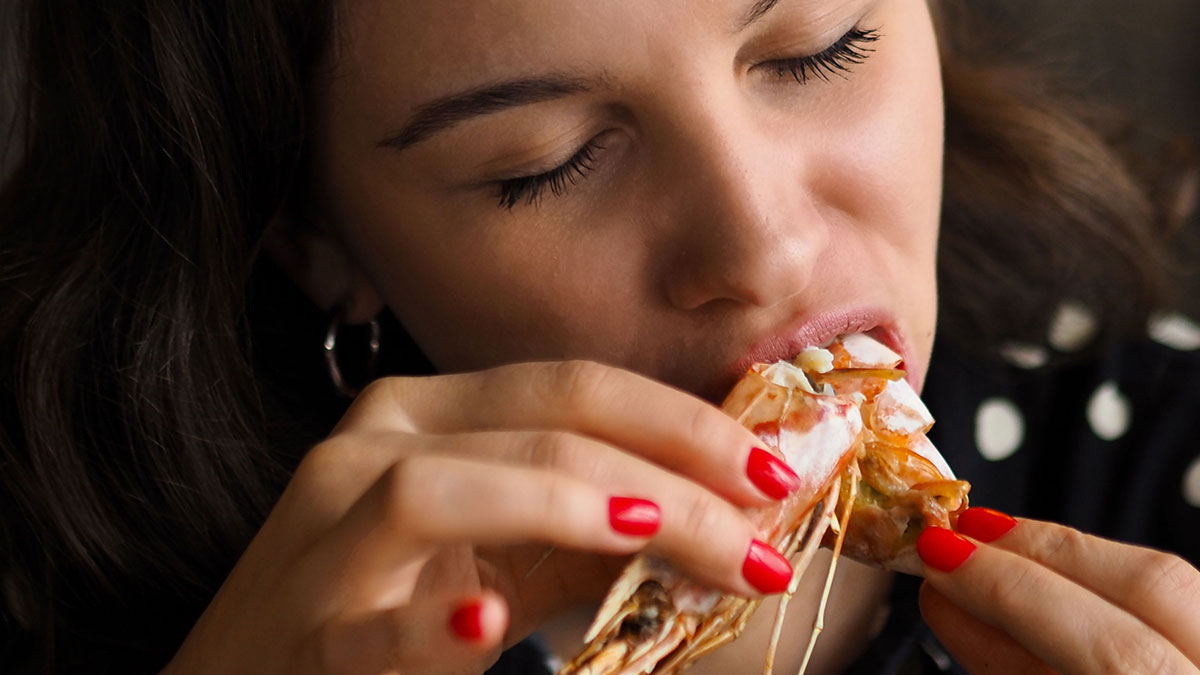
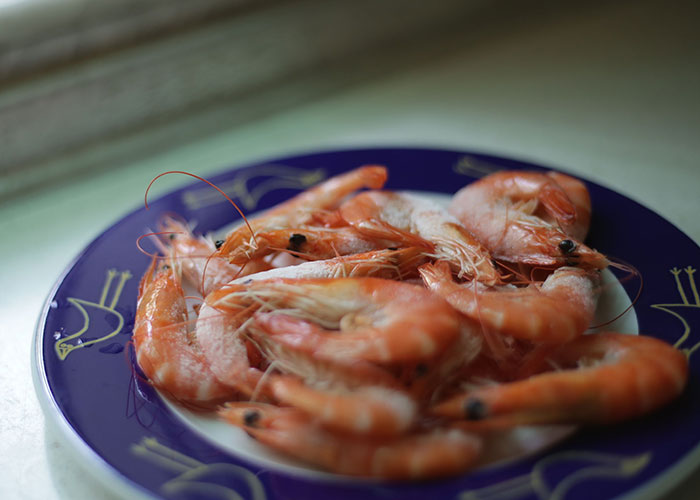
People can be allergic to many different things. Some are allergic to pollen; others to cats or dogs, but millions of people worldwide also struggle with food allergies. Statistics show that about 30 million Americans have at least one food allergy, and 2% of the American population (that’s roughly six million people) are allergic to shellfish.
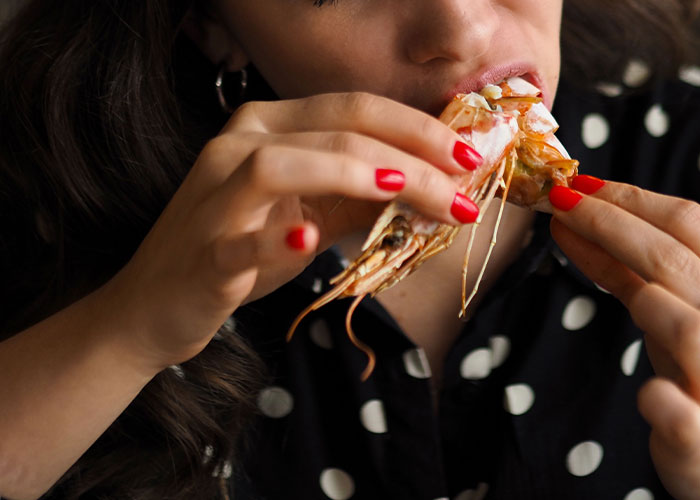
Food allergies can be life-threatening, but what do you do when the people closest to you don’t believe it? That was this person’s dilemma, as their stepfather downplayed the seriousness of their anaphylactic allergy and still prepared shellfish at home. At a loss about what to do, the person decided to seek advice online.
Image credits: Nadin Sh/Pexels (not the actual photo)
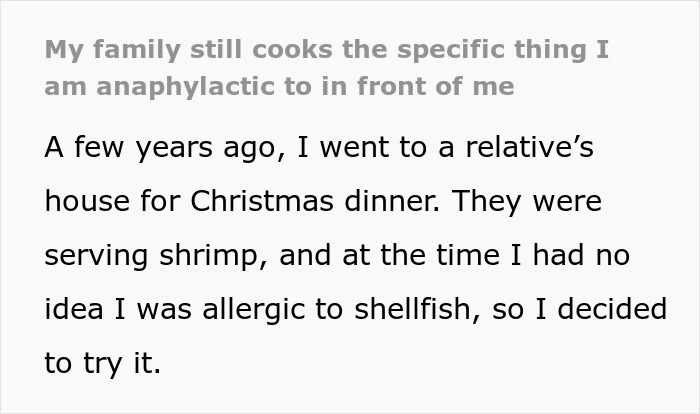
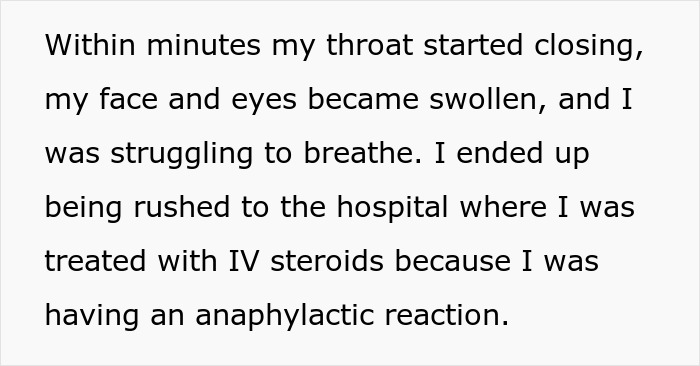
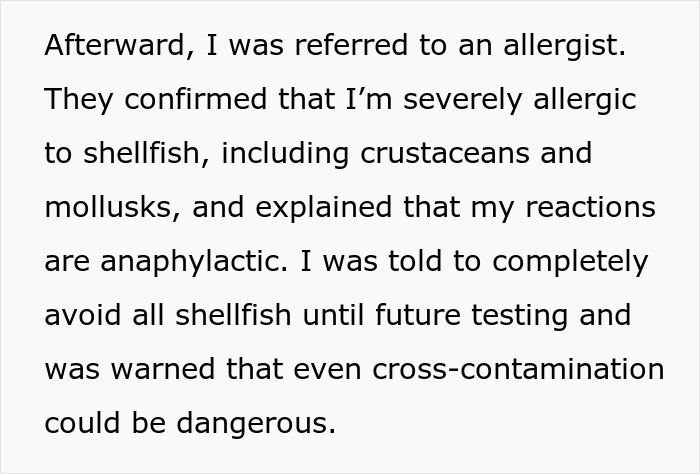
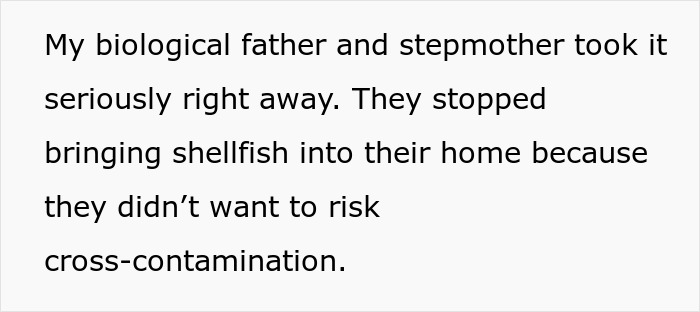
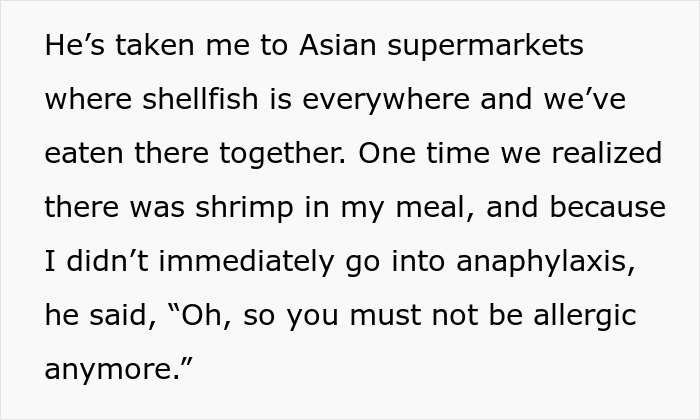
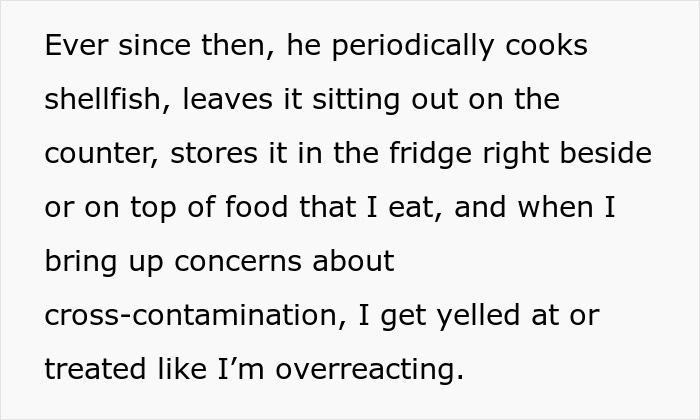
Image credits: mingche lee/Pexels (not the actual photo)
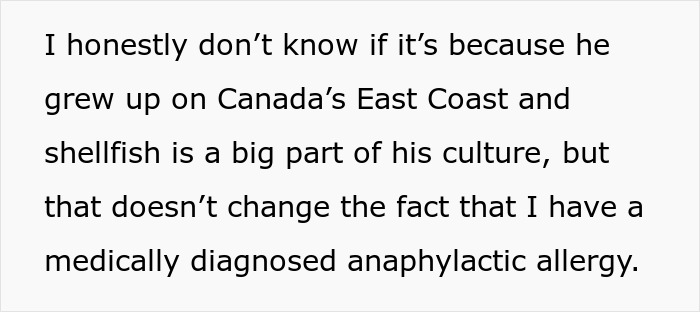
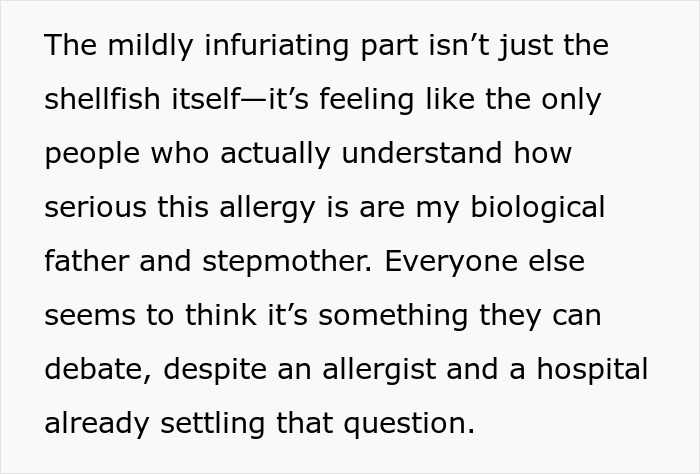
Image credits: baconstrip451
Image credits: Mikael Blomkvist/Pexels (not the actual photo)
Having an allergy of any kind is no joke. Unfortunately, some people associate allergies with minor discomfort, thinking that having an allergy means just sneezing a little or getting a rash from time to time when they’re exposed to an allergen.
In reality, allergies can be life-threatening. Research shows that half of Americans with an allergy have had a severe reaction. What’s more, one to five out of 100 people have had an experience similar to the OP and went into anaphylactic shock.
Having a food allergy that might result in anaphylaxis seriously changes one’s habits and perspective on life. Allergic people have to take steps each day to make sure they don’t get exposed to an allergen, which often means living in a constant state of stress and fear.
It’s not just about what they’re eating – they have to worry about what their food has touched. Eating out and shopping are more laborious, as they need to ask the staff or read labels to make sure there will be no allergens in their food. Then there’s cross-contamination: even tiny amounts of an allergen can send an allergic person into anaphylactic shock.
Living with such a severe allergy can be exhausting. People always have to monitor their surroundings, be aware of what they touch, and pay attention to their bodies to catch an upcoming reaction before it’s too late.
On top of that, they have to deal with people like the stepfather in this story, who don’t believe the severity of the allergy, even when there is definitive medical proof. The social aspect of having a severe allergy might be the hardest to navigate, especially when it involves the people closest to you.
Image credits: Alex Green/Pexels (not the actual photo)
So, what does one do when they’re faced with a situation like OP? How do you deal with a family member who doesn’t believe you have a severe allergy? And is there any way you can convince them to be more cautious around you?
British TV personality and host of the show Supernanny, Jo Frost, says that this type of ignorance can be traced to a simple lack of empathy. “The more you can educate your family, through literature and books, videos and trusted online resources, the more you end up changing a person’s belief system,” she told Food Allergy Research & Education.
At the same time, we can’t always change a person’s point of view or how they do things; we can only choose how we react to them. For this reason, Frost says, people have to decide what they’re willing to put up with and what they consider out of bounds.
If family members repeatedly ignore warnings and downplay the severity of a person’s allergy, you have to let them know that you won’t tolerate their behavior. “What you do expect from them is support and encouragement,” Frost explains. “Put a boundary in place and let them know that if the behavior continues, it will force you to decide whether to be in their company and presence at all.”



By entering your email and clicking Subscribe, you're agreeing to let us send you customized marketing messages about us and our advertising partners. You are also agreeing to our Privacy Policy.
Thank you! You've successfully subscribed to newsletters!

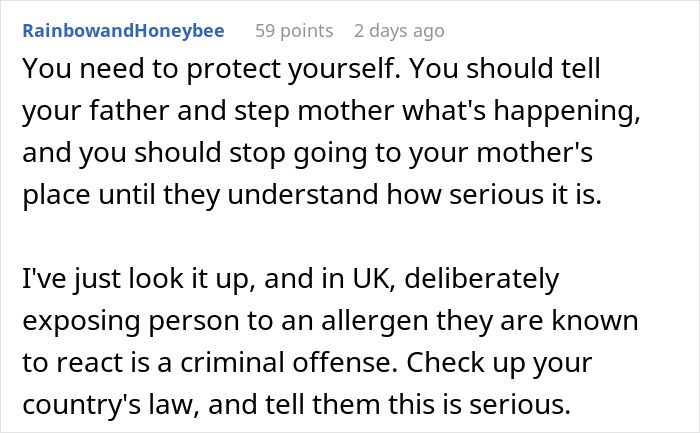
well, OP, you are being very clearly told that you don't matter there, so why go?
My last salary was $8750, ecom only worked 12 hours a week. My longtime neighbor yr estimated $15,000 and works about 20 hours for seven days. I can't believe how blunt he was when I looked up his information, This is what I do..... 𝐉𝐨𝐛𝐀𝐭𝐇𝐨𝐦𝐞𝟏.𝐂𝐨𝐦
Load More Replies...
My sibling has a severe shellfish allergy like OP and has been to the hospital with life threatening reactions several times. While it's nice that his father and step-mom stopped bringing it into the house at all that's really not necessary given the nature of the allergy. We still cook and eat shellfish when my brother is over, we're just careful. Leaving it out on the counter or storing it beside other foods shouldn't be a risk (unless step-dad has poor food practices and leaking happens) but obviously storing it on top of food is a risk. If OP eats at restaurants they're doing exactly the same thing there.
well, OP, you are being very clearly told that you don't matter there, so why go?
My last salary was $8750, ecom only worked 12 hours a week. My longtime neighbor yr estimated $15,000 and works about 20 hours for seven days. I can't believe how blunt he was when I looked up his information, This is what I do..... 𝐉𝐨𝐛𝐀𝐭𝐇𝐨𝐦𝐞𝟏.𝐂𝐨𝐦
Load More Replies... My sibling has a severe shellfish allergy like OP and has been to the hospital with life threatening reactions several times. While it's nice that his father and step-mom stopped bringing it into the house at all that's really not necessary given the nature of the allergy. We still cook and eat shellfish when my brother is over, we're just careful. Leaving it out on the counter or storing it beside other foods shouldn't be a risk (unless step-dad has poor food practices and leaking happens) but obviously storing it on top of food is a risk. If OP eats at restaurants they're doing exactly the same thing there.






















 No fees, cancel anytime






31
7