Get Premium
Dark mode theme is available exclusively for premium users. Learn more about the benefits of subscribing.
No fees, cancel anytime.

 Dark Mode Ad-Free Browsing Unlimited Content
 Ad-Free Browsing Unlimited Content Dark Mode
Join 1.2 million Panda readers who get the best art, memes, and fun stories every week!
Helping family members can get complicated fast. Very fast. A casual offer made with the best intentions can mean something very different to the person on the other end, especially if there is some sense of entitlement involved in the people you’re trying to help.
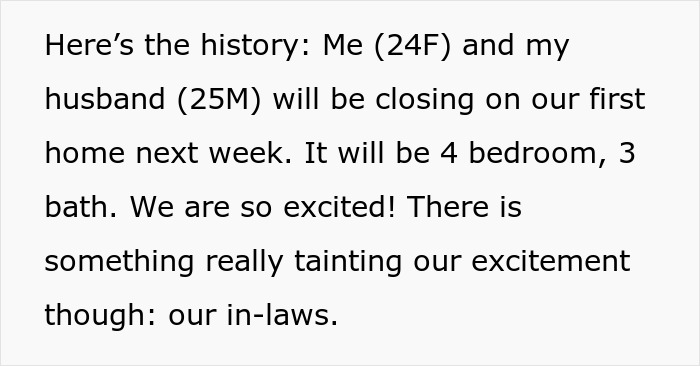
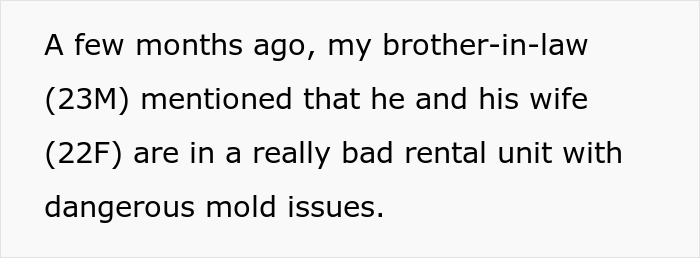
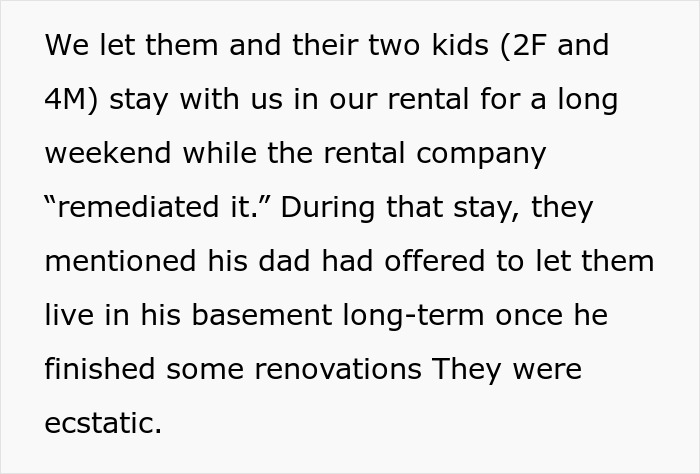
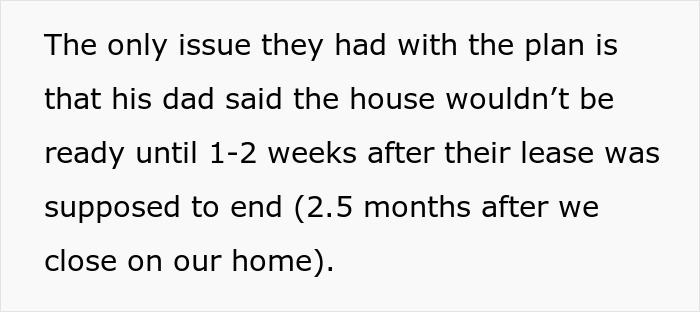
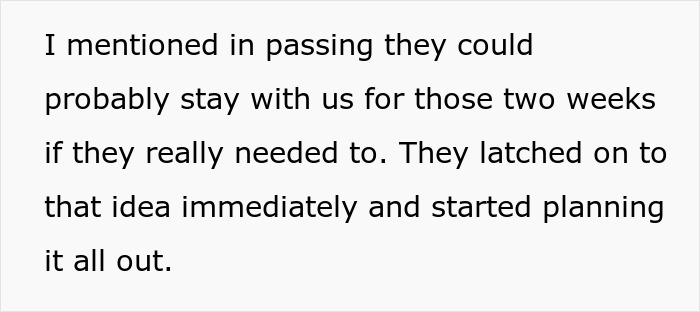
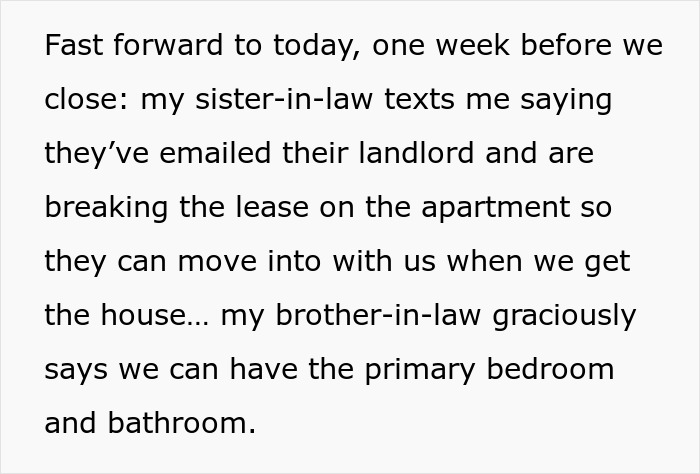
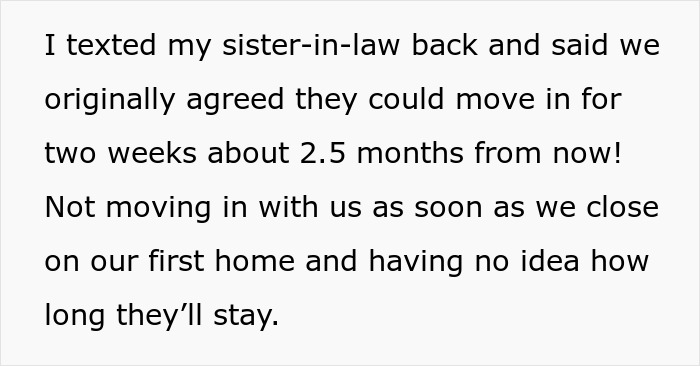
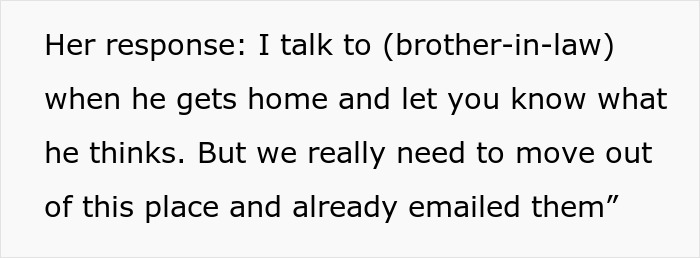
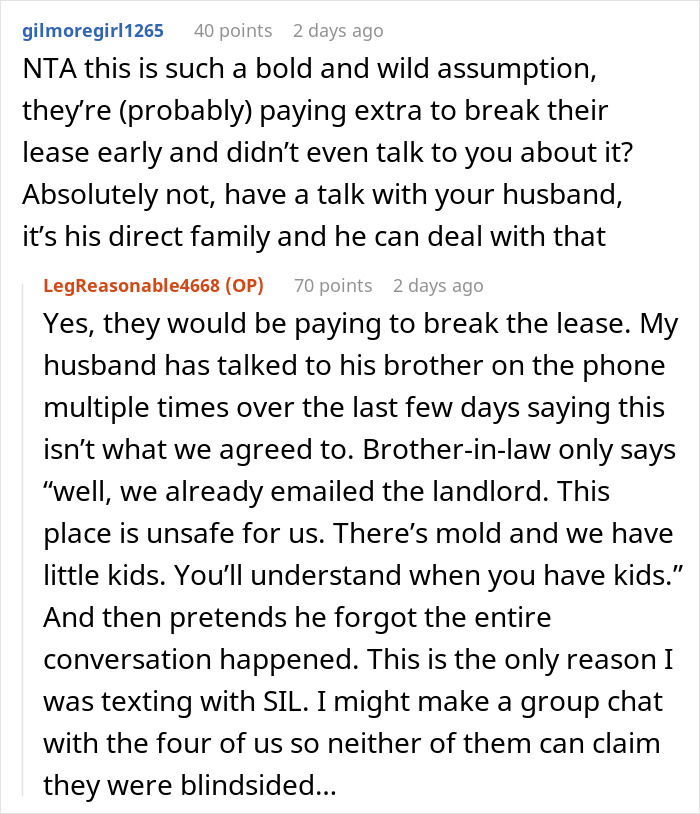
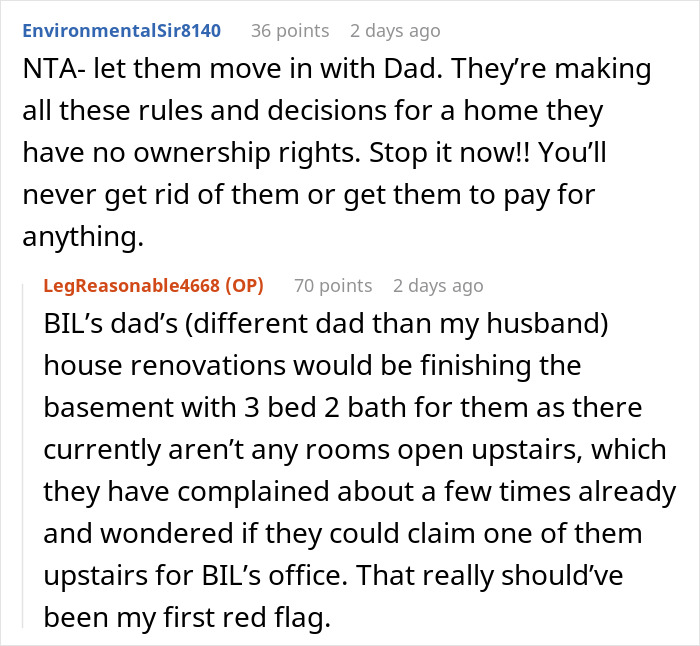
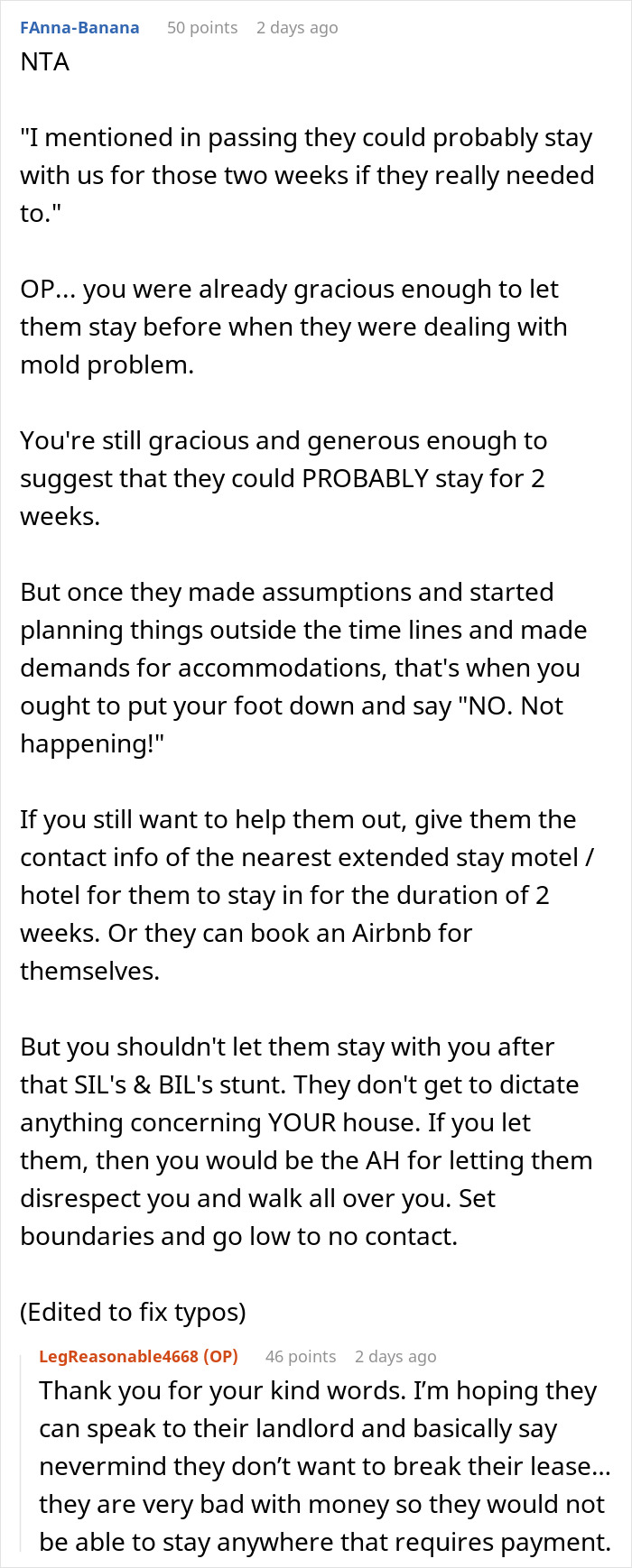
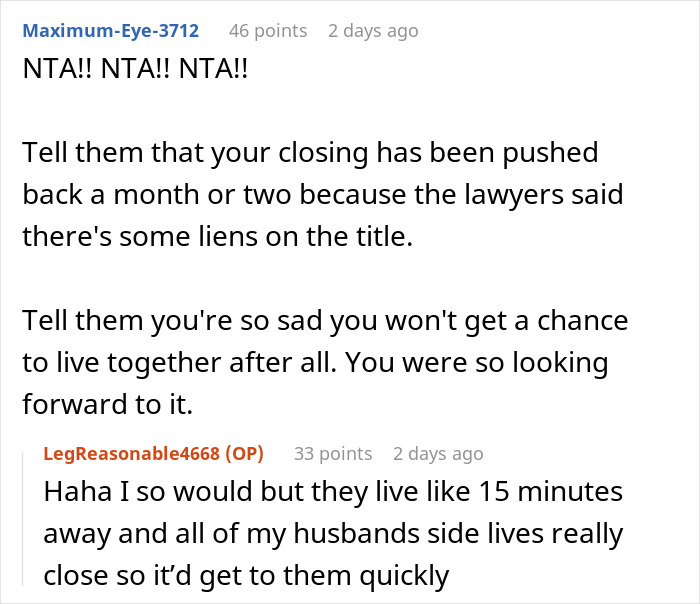
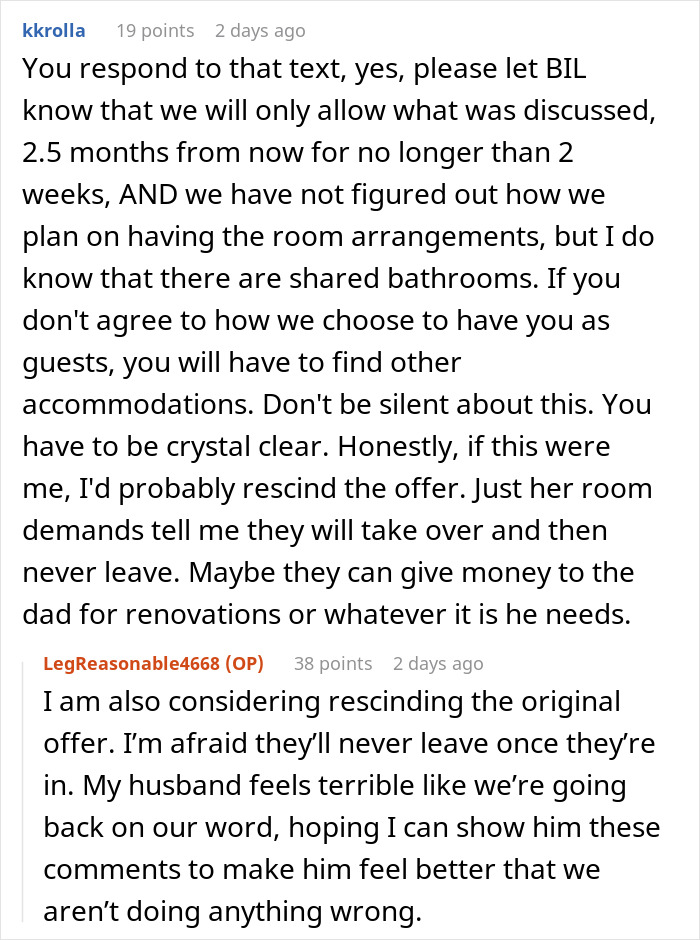
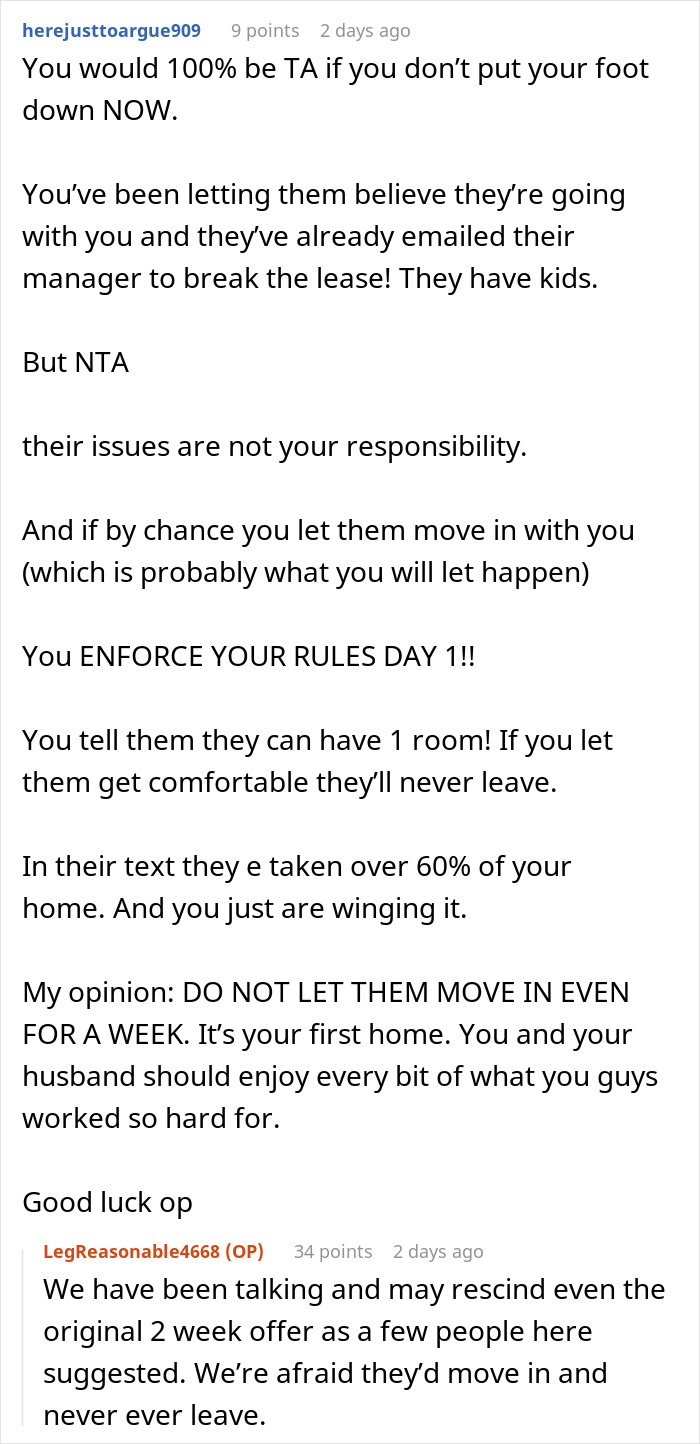
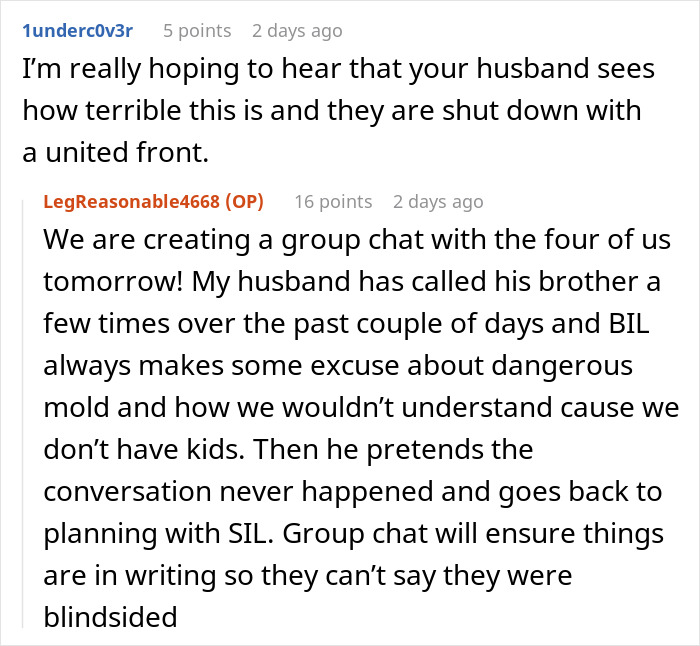
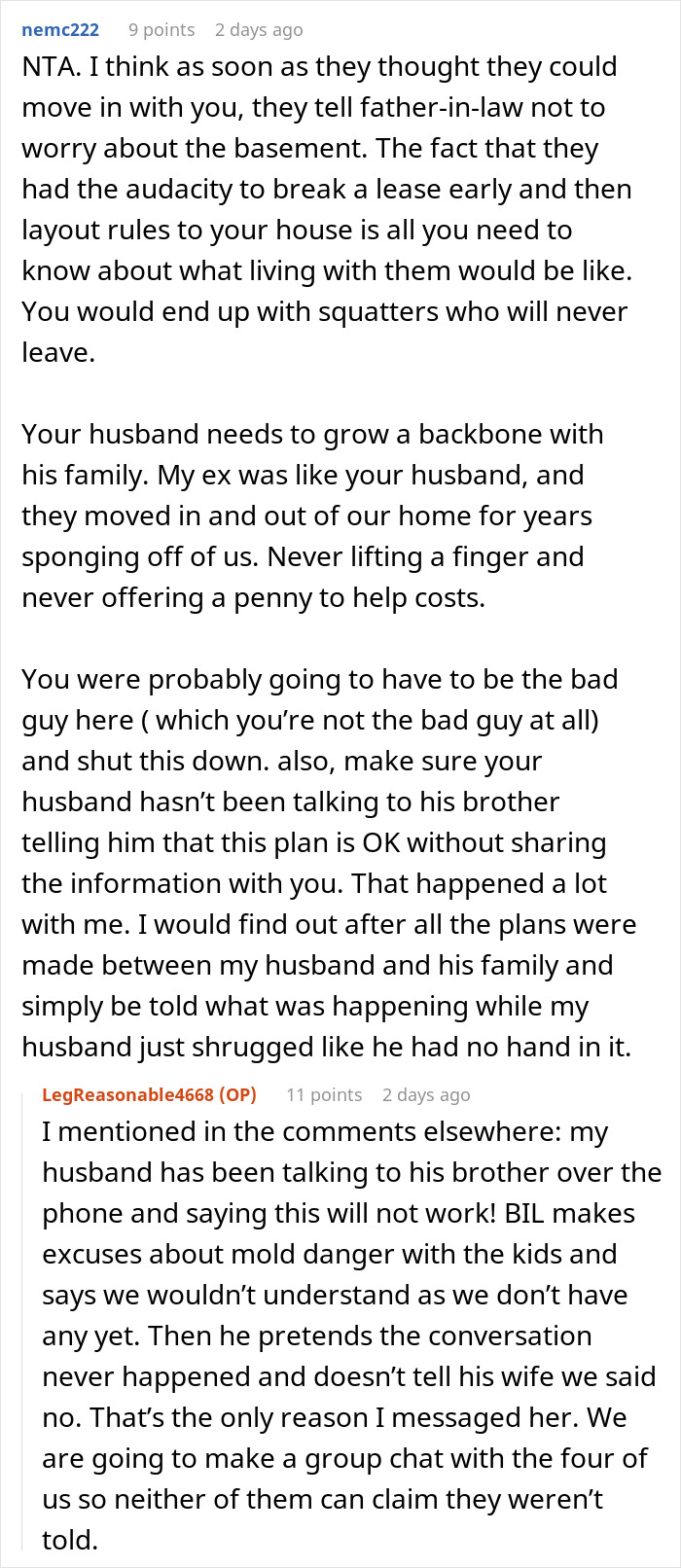
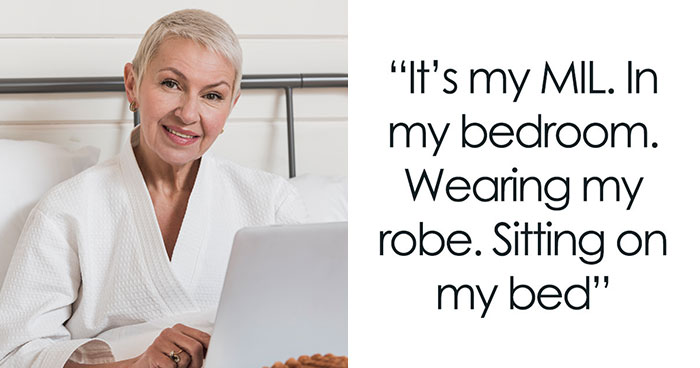
The woman behind this story was about to close on her first home with her husband when their plans took an unexpected turn. A few months earlier, she had offered her brother-in-law and his family a place to stay for two weeks if they needed somewhere to go between rentals.
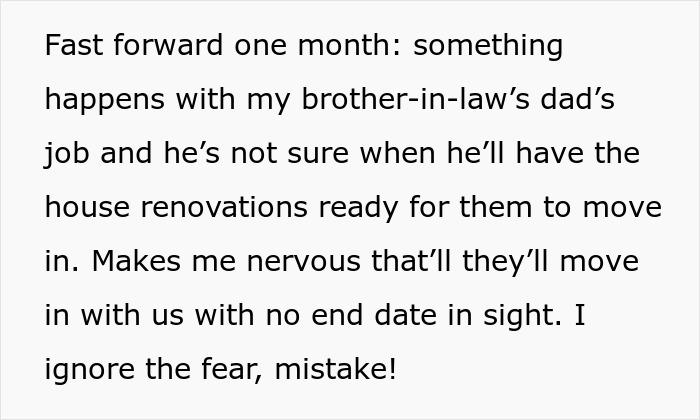
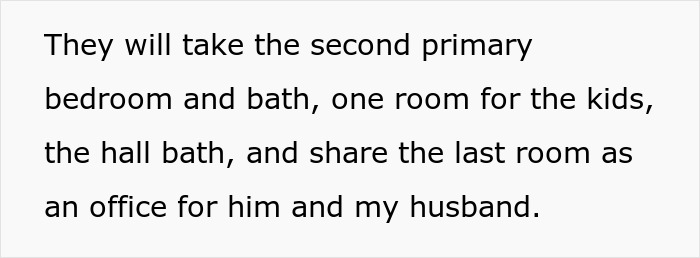
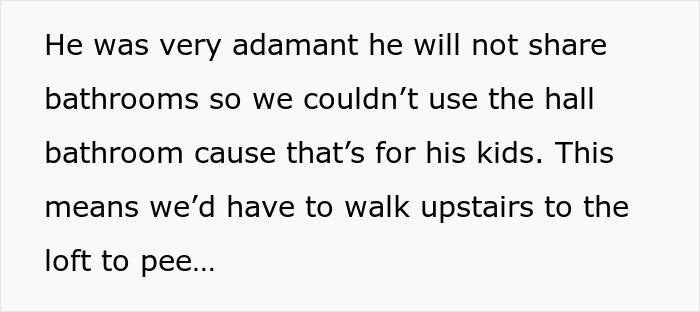
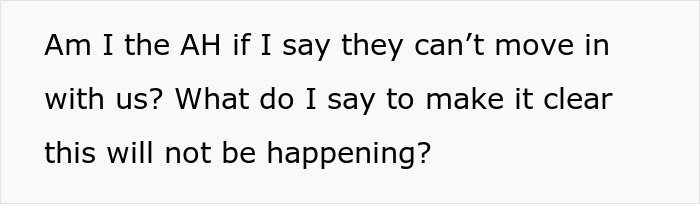
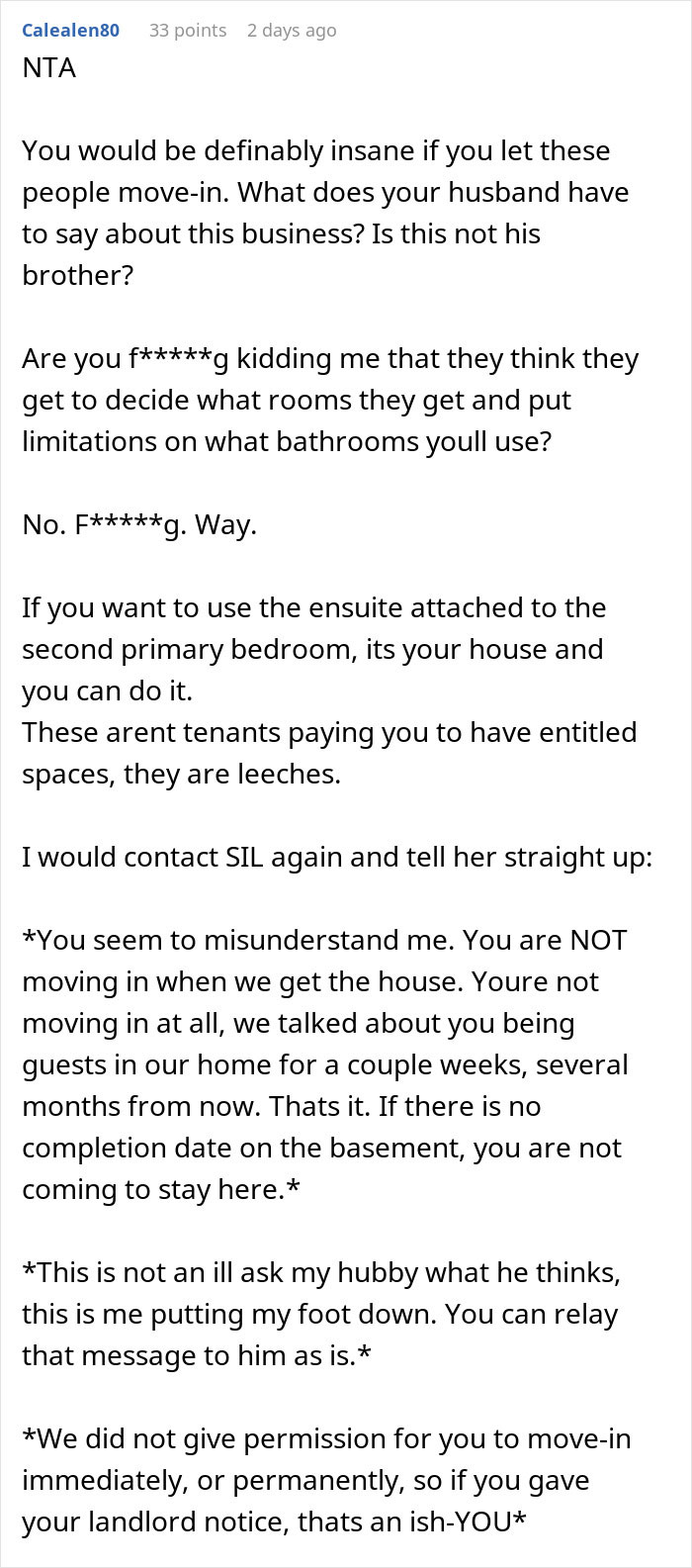
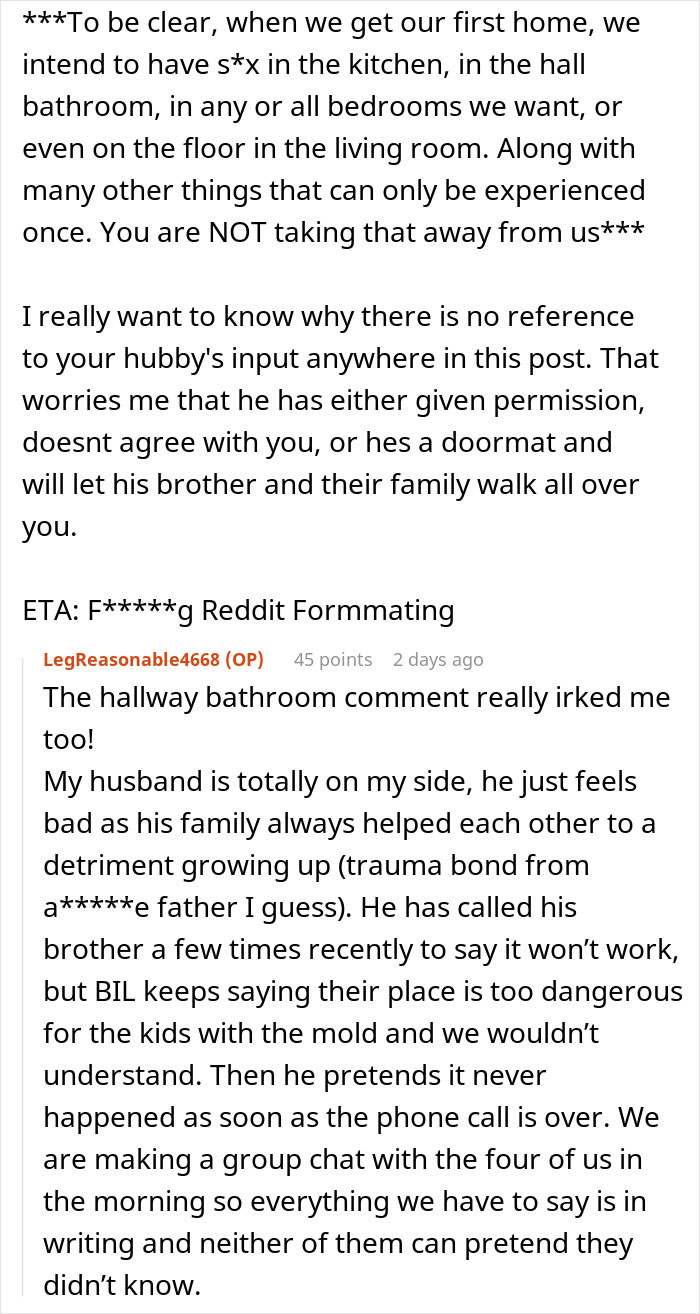
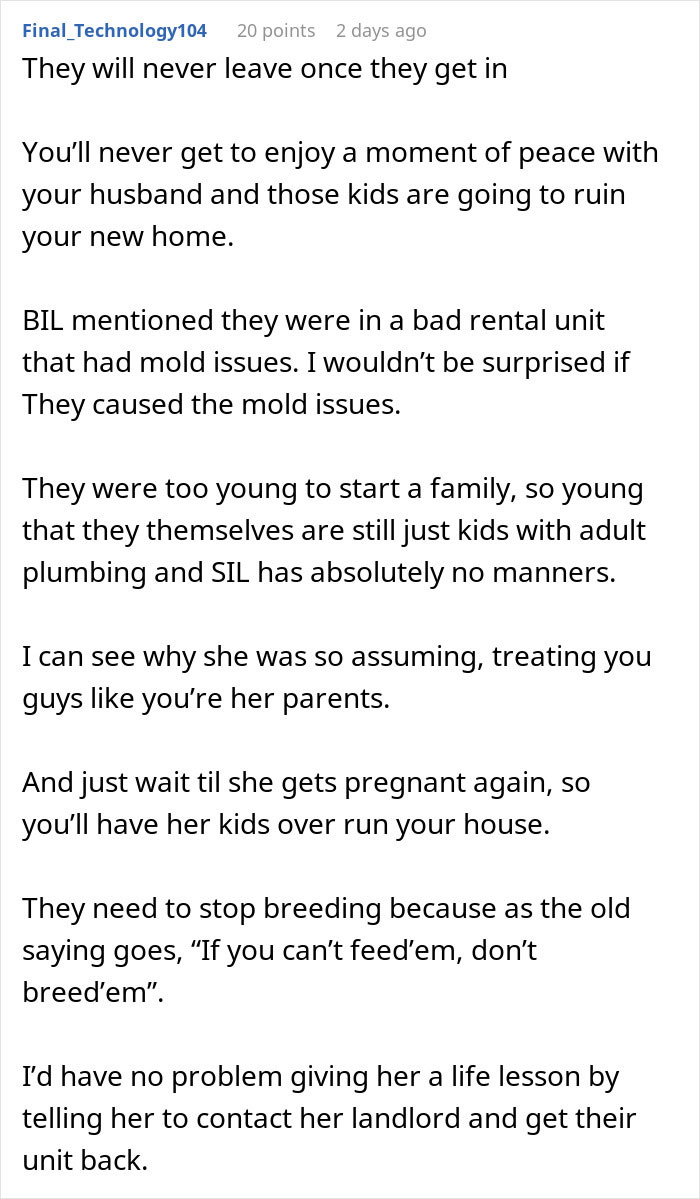
After discovering they had already broken their lease and assigned themselves rooms in the new house, she turned to Reddit for urgent advice and to find out if she was wrong to change her mind.
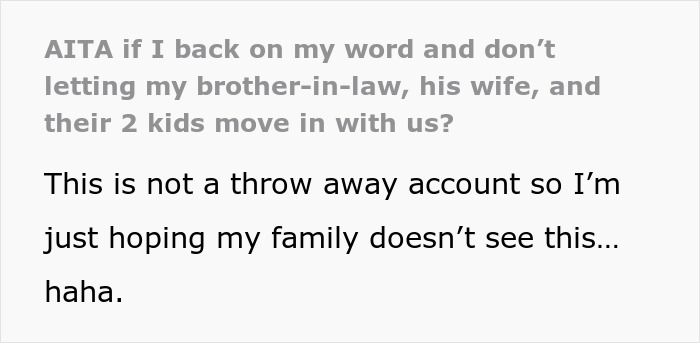
Owning a home is a significant milestone for most people, no matter where they live. In the U.S., buying a house is still a major financial decision. According to the Census Bureau, homeowners with a mortgage paid a median of $2,035 per month in housing costs in 2024, up from $1,960 the year before. This amount covers insurance, taxes, and utilities.
These costs can add up fast. The financial strain is even clearer when you look at housing costs compared to household income. In 2024, homeowners with a mortgage spent a median of 21.4% of their income on housing. Also, 59.7% of owned homes had a monthly mortgage payment, showing how common this expense is.
This issue is not limited to the U.S. The general estimation is that up to 3.4 billion people around the world don’t have access to adequate housing. The global housing shortage reached 288 million units in 2023, up from 251 million in 2010. At the same time, 44% of households worldwide spent more than 30% of their income on rent.
Struggles with housing can impact more than just finances. Research from 14 European countries found that people who spent over 30% of their income on housing felt less satisfied with their lives. Those spending more than half their income on housing reported the lowest satisfaction, showing that high housing costs can affect overall well-being.
Owning a home can mean more than just having property. One study found that people’s life satisfaction increased as they moved toward homeownership, starting even before the purchase and continuing after. The effect was stronger for those who did not face major struggles with housing costs.
In other words, the positive feelings can start before you even move in. The emotional impact of buying a home isn’t just about getting the keys. People’s life satisfaction started to rise before the purchase, which suggests that looking forward to more stability and having a place of their own is an important part of the experience.
Family relationships often come with expectations to help each other. Young adults and married couples may feel different types of family obligations, such as offering help, avoiding arguments, staying in touch, and sharing personal issues. These expectations shape how relatives decide what they should do for each other.
These obligations do not work the same way for everyone. Expectations change depending on the type of family relationship. One person might see helping a relative as a serious duty, while another might think of it as something optional and limited.
Psychological entitlement means having unrealistic expectations about what one deserves. Studies show that people with a strong sense of entitlement often expect more than others think is fair. These beliefs can affect how people act, especially when they feel their expectations or self-image are challenged.
People with entitled attitudes are more likely to make competitive choices, act selfishly in romantic relationships, and respond aggressively when their ego is threatened. This does not mean everyone acts this way, but it shows how different expectations can lead to problems between people.
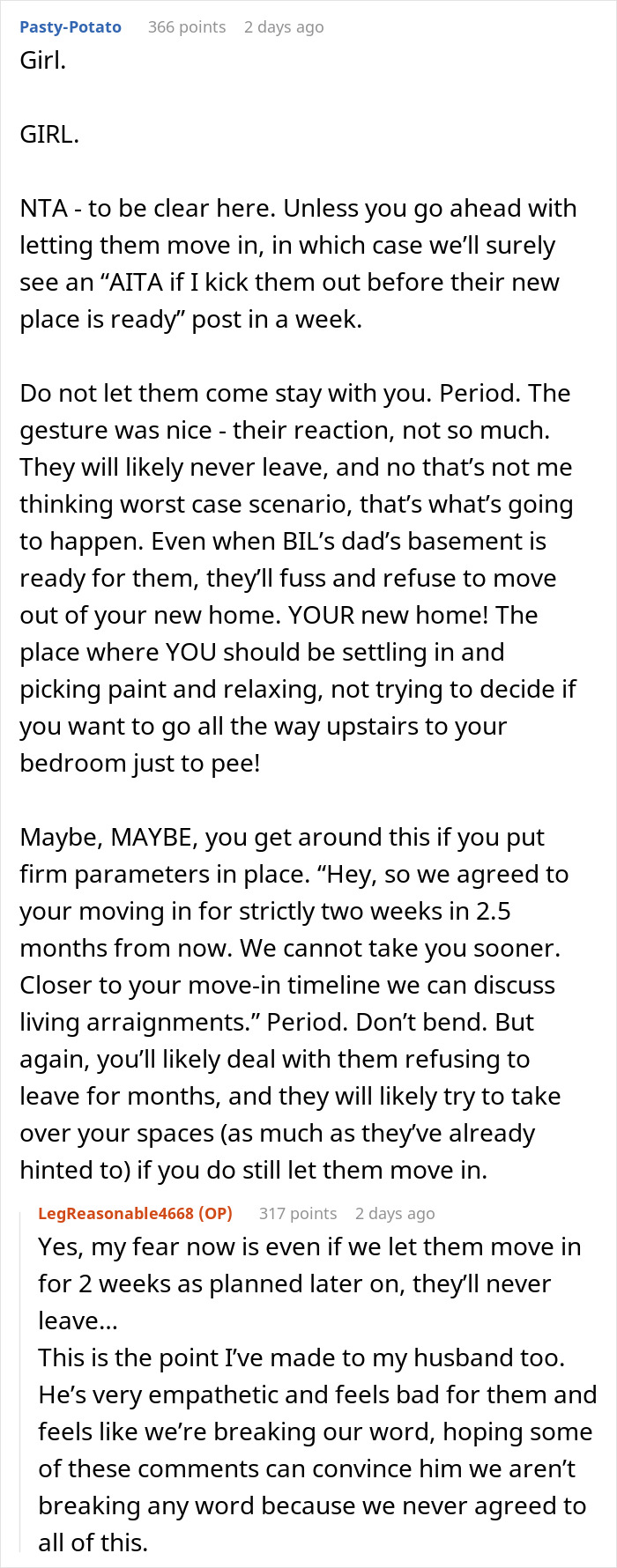
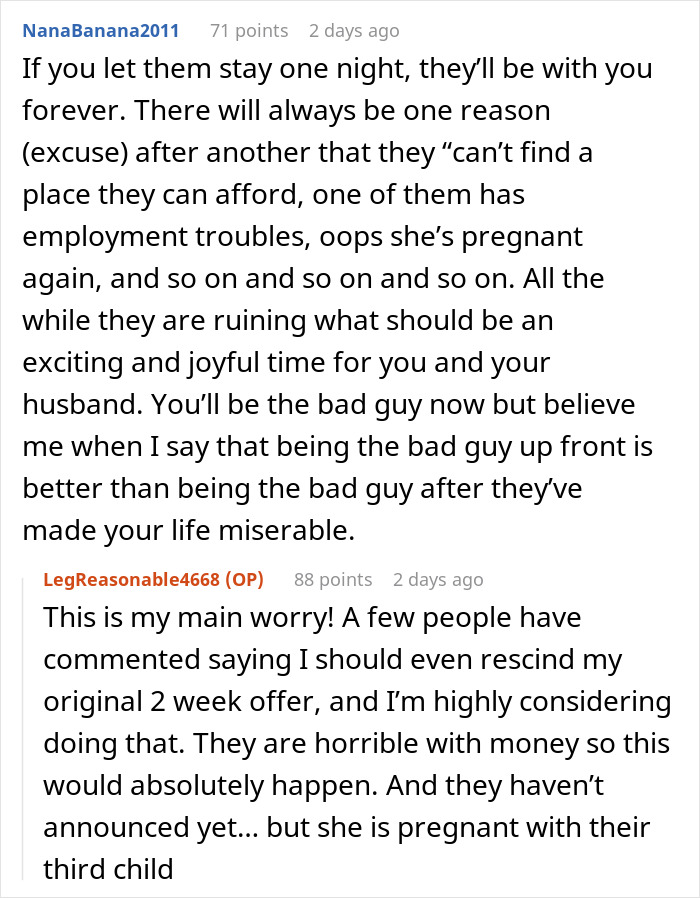
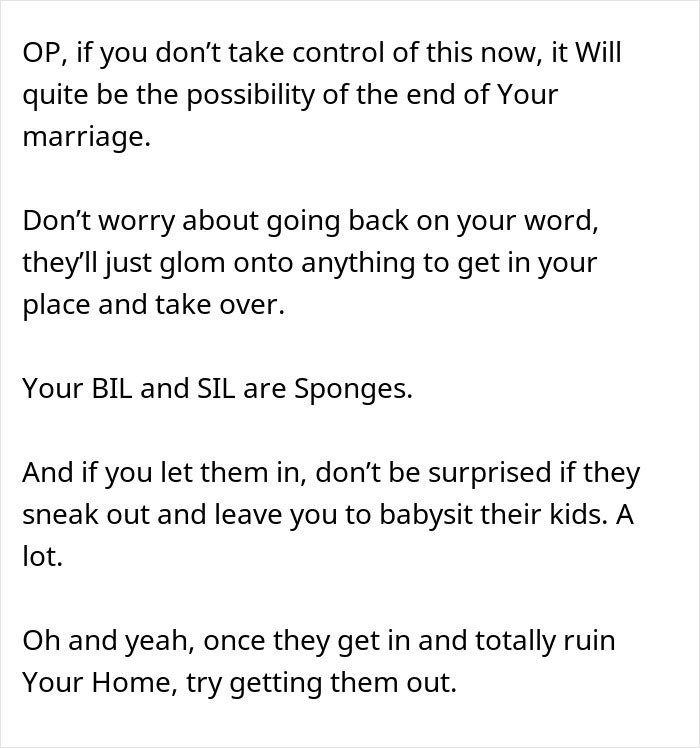
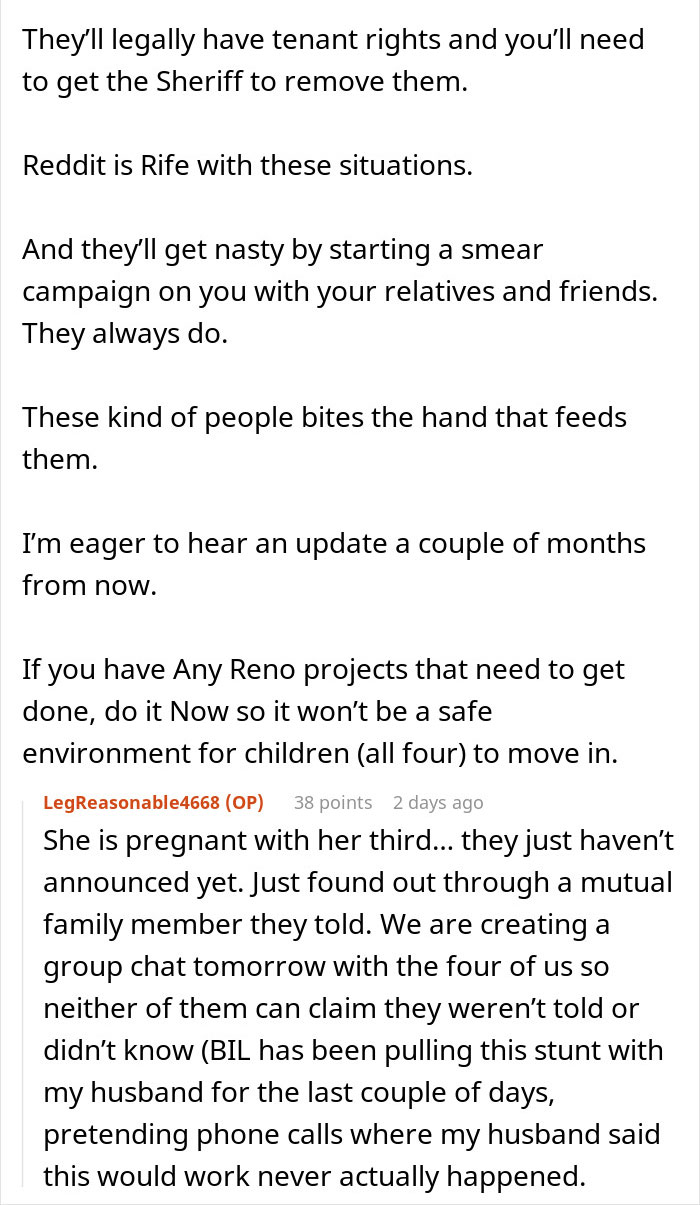
In this case, the relatives needed help, but they took a generous offer much further than the couple intended. A temporary place to stay can help a family through a rough patch, but it shouldn’t become their new home.
Do you think she was right to refuse the open-ended stay? What would you have done in her place? Share your thoughts in the comments!



By entering your email and clicking Subscribe, you're agreeing to let us send you customized marketing messages about us and our advertising partners. You are also agreeing to our Privacy Policy.
Thank you! You've successfully subscribed to newsletters!


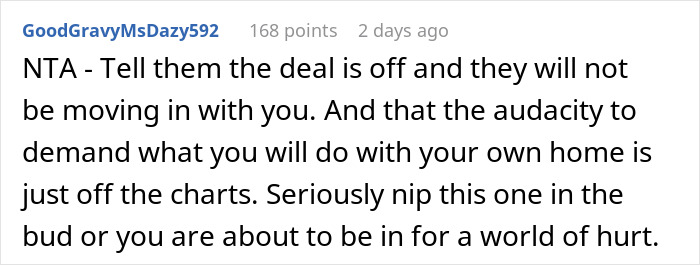
The proper response to all of the demands of these leeches is "That is not happening." First thing to do after getting the keys to your new house would be to install an alarm system and cameras. Lock every door and window every time you leave and every night. Do not share a house key with anyone - even for "emergencies" - until those people have figured out their lives and settled somewhere else....and even then, NEVER give them access to your house. And most importantly of all, DO NOT make any statements that could be interpreted as an offer of assistance.
The proper response to all of the demands of these leeches is "That is not happening." First thing to do after getting the keys to your new house would be to install an alarm system and cameras. Lock every door and window every time you leave and every night. Do not share a house key with anyone - even for "emergencies" - until those people have figured out their lives and settled somewhere else....and even then, NEVER give them access to your house. And most importantly of all, DO NOT make any statements that could be interpreted as an offer of assistance.



















 No fees, cancel anytime







30
3