Get Premium
Dark mode theme is available exclusively for premium users. Learn more about the benefits of subscribing.
No fees, cancel anytime.

 Dark Mode Ad-Free Browsing Unlimited Content
 Ad-Free Browsing Unlimited Content Dark Mode
Join 1.2 million Panda readers who get the best art, memes, and fun stories every week!

Halle Berry thought she was facing one of the most devastating diagnoses of her life in 2024 after painful symptoms led her to believe she had contracted a s**ually transmitted infection.
The actress later revealed that the ordeal not only sent her searching for answers but also deeply affected the trust between her and her partner, Van Hunt, before doctors uncovered what was actually happening.
Her confession has since sparked widespread discussion online, with many women admitting they had never realized these symptoms could be linked to perimenopause.
Speaking exclusively to Bored Panda, menopause experts explained why Berry’s experience is far more common than many people realize.
Image credits: Getty/Matei Horvath
Halle first shared the story while speaking with former First Lady Jill Biden during A Day of Unreasonable Conversation, revealing that what began as discomfort during intimacy quickly spiraled into fear and confusion.
According to Berry, the pain became so severe that she and her partner, musician Van Hunt, were convinced something was seriously wrong.
“I tried to go to the bathroom, and I couldn’t go,” she recalled. “It was so painful when I tried to let a little bit out.”
The actress said the symptoms became so alarming that both of them assumed she had contracted herpes.
“My partner and I spent the next 72 hours playing the blame game, trying to figure out who gave it to me,” Berry admitted, explaining that the ordeal even strained the trust they had built in their relationship.
Halle Berry’s perimenopause story hits hard.
She woke up in the worst pain of her life, everything swollen and unrecognizable. Her doctor immediately diagnosed worst-case herpes. For 72 brutal hours, she and her new partner spiraled through trust… pic.twitter.com/kBegUbKxdn
— Camus (@newstart_2024) July 22, 2026
However, after multiple medical appointments and negative test results, doctors reached a very different conclusion.
Halle later learned she was actually experiencing symptoms of genitourinary syndrome of menopause (GSM).
It’s a condition linked to declining estrogen during perimenopause that can cause severe v**inal dryness, burning, pain during intimacy, and urinary symptoms.
Image credits: Unsplash
While Halle’s story stunned many people, experts told Bored Panda that her experience is far from unusual.
Dr. Sophia Yen, a menopause specialist and co-founder and CEO of Pandia Health, explained that genitourinary syndrome of menopause affects 45% to 87% of postmenopausal women, yet many never receive treatment because the condition is often overlooked.
“I don’t have a percentage of time when GSM is misdiagnosed, but its symptoms are the same as a urinary tract infection,” Dr. Yen said, noting that the condition can also increase a woman’s risk of recurrent UTIs.
Image credits: Unsplash
Dr. Anna Cabeca, a triple board-certified OB-GYN and menopause specialist, agreed, adding that she regularly sees women whose symptoms are mistaken for entirely different conditions.
“I see this happen more often than I’d like to admit,” she shared. “Women come in with v**inal dryness, pain with in***course, burning, or urinary symptoms, and they’ve been told it’s a yeast infection, herpes, or even anxiety.”
Image credits: Getty Images
According to Dr. Cabeca, one reason so many women struggle to receive the correct diagnosis is that the symptoms often develop gradually and don’t resemble what most people associate with menopause.
“Unlike hot flashes, which often fade even without treatment, GSM symptoms typically increase in severity over time if left unaddressed,” she explained.
“It’s heartbreaking because these are completely treatable, yet the condition remains widely overlooked even in medical settings.”
Image credits: halleberry
Although hot flashes are often considered the hallmark of perimenopause, both experts highlighted that the hormonal transition can affect nearly every part of the body long before menopause officially begins.
“It’s not just women making the mistake, it’s doctors and providers,” Dr. Yen explained.
Beyond hot flashes, she said women may experience painful in***course, recurrent urinary tract infections, brain fog, anxiety, heart palpitations, rising cholesterol, pre-diabetes, and even changes in body fat distribution, many of which are rarely associated with perimenopause.
Dr. Cabeca agreed, adding that symptoms such as sleep disturbances, fatigue, migraines, mood changes, weight gain, decreased libido, and heart palpitations are also frequently dismissed as unrelated health problems.
“People are taught menopause is about hot flashes,” she said. “It’s not. It’s a full-body hormonal transition.”
Image credits: Unsplash
The experts also challenged the common belief that these changes only begin in a woman’s 50s.
Dr. Yen noted that the average age of perimenopause is around 47, though it can begin earlier, while menopause itself occurs at an average age of 52.
One of the earliest warning signs, she explained, is a noticeable change in menstrual cycles, such as periods arriving at least seven days earlier or later than usual.
Dr. Cabeca added that although most women begin noticing changes in their 40s, “Perimenopause can begin as early as your 30s—I’ve seen it happen,” stressing that the transition typically lasts four to eight years before menopause.
Image credits: Getty Images
For both experts, one of the biggest concerns isn’t just the symptoms themselves; it’s how often women struggle to find answers because menopause education remains limited, even within the medical community.
“We have a LONG way to go,” Dr. Yen said. “We need to mandate peri/menopause education in medical school and in other health professions.”
She pointed to recent research showing that only 31% of OB-GYN residency programs include any menopause curriculum, leaving many healthcare professionals without formal training on conditions such as genitourinary syndrome of menopause.
Dr. Anna echoed those concerns, saying women’s health is still too often treated as a secondary issue despite its profound impact on quality of life.
Image credits: Unsplash
“It has improved slowly, but the gaps remain enormous,” she said.
“Women’s s**ual health, v**inal health, and the real quality-of-life impact of these changes are still treated as secondary concerns. They’re not.”
Both experts also stressed that women don’t have to accept pain, dryness, or other symptoms as an inevitable part of aging.
“Know that 100% of us will go through it and that it has 100+ symptoms,” Dr. Yen said. “If you have symptoms, get treated. You won’t get a gold medal for seeing how long you can white-knuckle it through… Don’t suffer. Get treated.”
Dr. Cabeca offered a similar message, telling women, “Your body is not betraying you during perimenopause. It’s changing. Recognition is the first step.”
“You deserve care that takes you seriously—not dismissal, not misdiagnosis, and not silence,” Dr. Cabeca said.
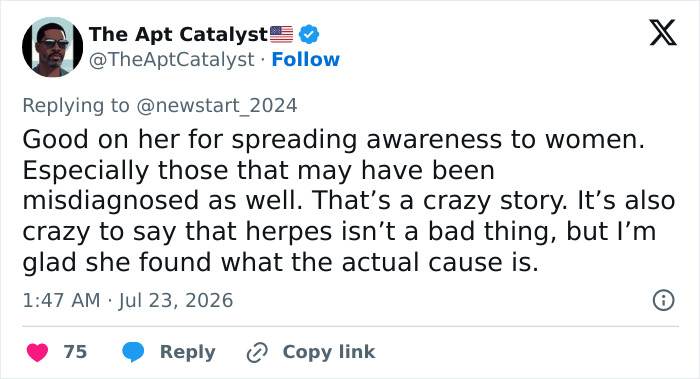
Image credits: TheAptCatalyst
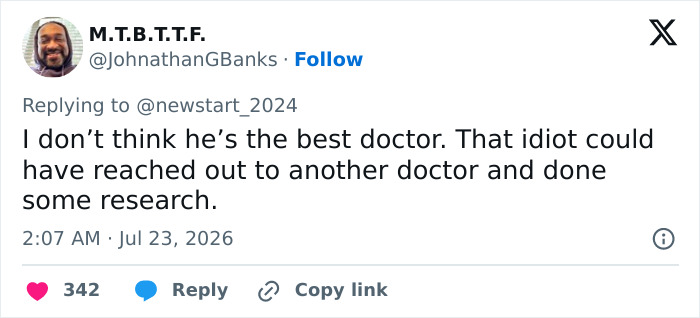
Image credits: JohnathanGBanks
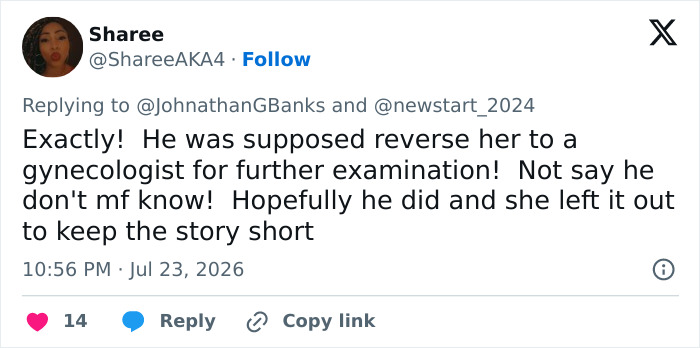
Image credits: ShareeAKA4
Image credits: angijones
Image credits: HotrodGrams2
Image credits: ronmaest3
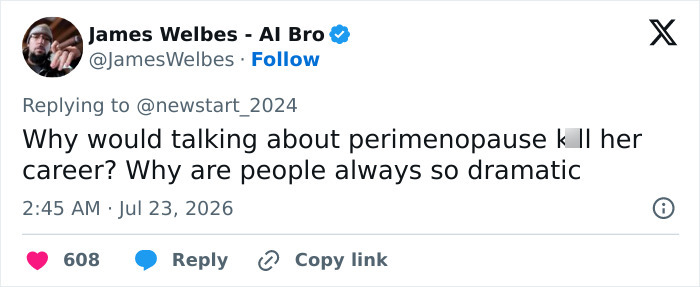
Image credits: JamesWelbes
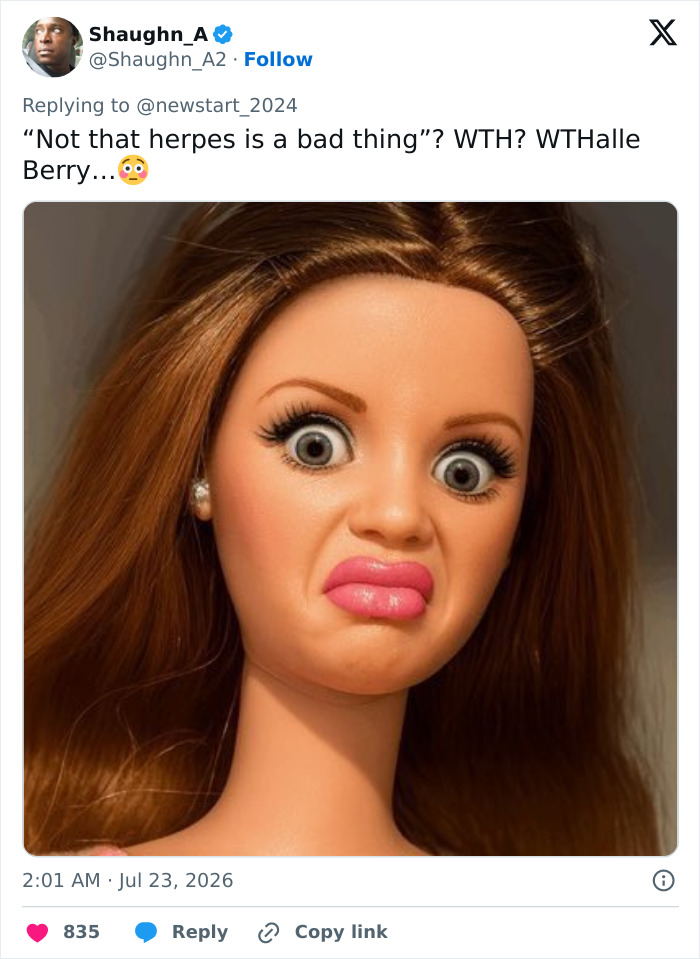
Image credits: Shaughn_A2
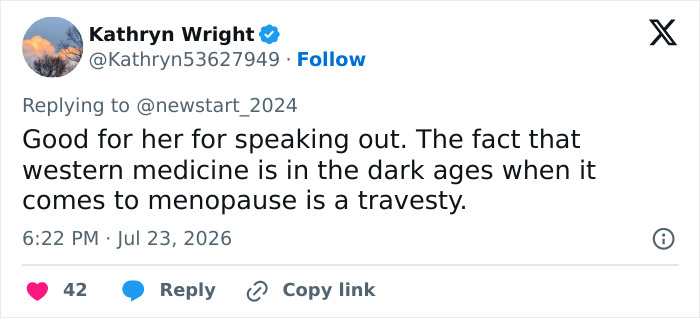
Image credits: Kathryn53627949
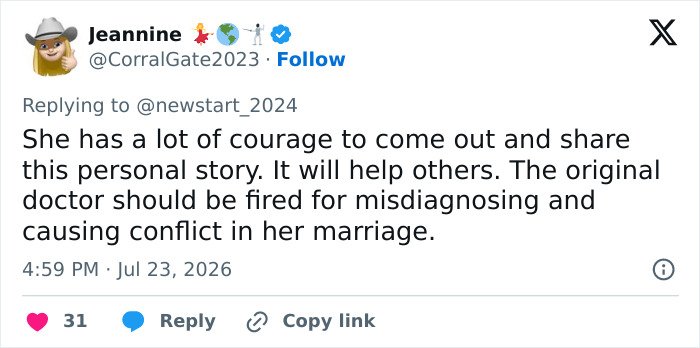
Image credits: CorralGate2023
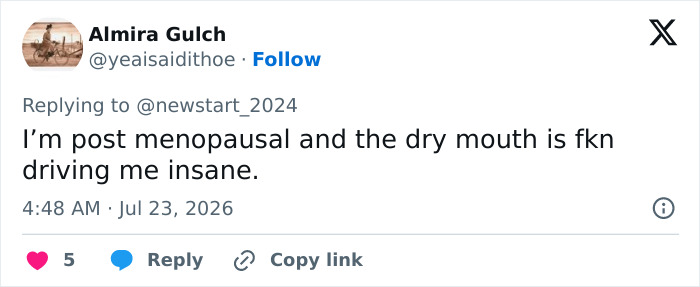
Image credits: yeaisaidithoe
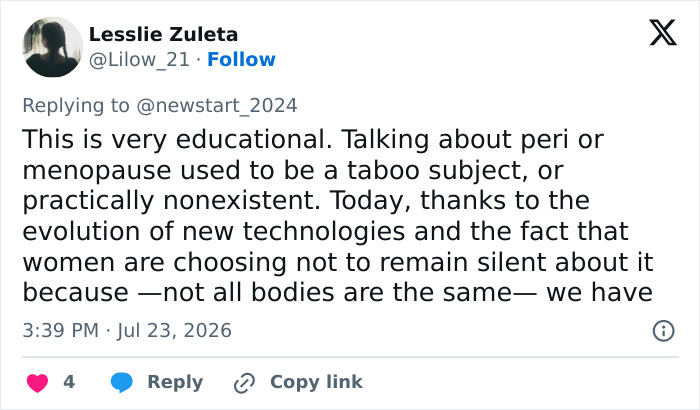
Image credits: Lilow_21
Image credits: Lilow_21

By entering your email and clicking Subscribe, you're agreeing to let us send you customized marketing messages about us and our advertising partners. You are also agreeing to our Privacy Policy.
Thank you! You've successfully subscribed to newsletters!


If you don’t have a medical condition or family medical history that contraindicates it, HRT (hormone replacement therapy) is an absolute game changer! You would be surprised at the conditions it clears up that you never knew were related to perimenopause/menopause.

Why would one’s mind jump straight to the herp? I’d think uti first, then go to doctor. Nowhere in this story does it make sense that everyone thought it was herpes. Fun fact: herpes and heroes are just one letter or autocorrect away.
If you don’t have a medical condition or family medical history that contraindicates it, HRT (hormone replacement therapy) is an absolute game changer! You would be surprised at the conditions it clears up that you never knew were related to perimenopause/menopause.
Why would one’s mind jump straight to the herp? I’d think uti first, then go to doctor. Nowhere in this story does it make sense that everyone thought it was herpes. Fun fact: herpes and heroes are just one letter or autocorrect away.



































 No fees, cancel anytime

















16
4