Get Premium
Dark mode theme is available exclusively for premium users. Learn more about the benefits of subscribing.
No fees, cancel anytime.

 Dark Mode Ad-Free Browsing Unlimited Content
 Ad-Free Browsing Unlimited Content Dark Mode
Join 1.2 million Panda readers who get the best art, memes, and fun stories every week!

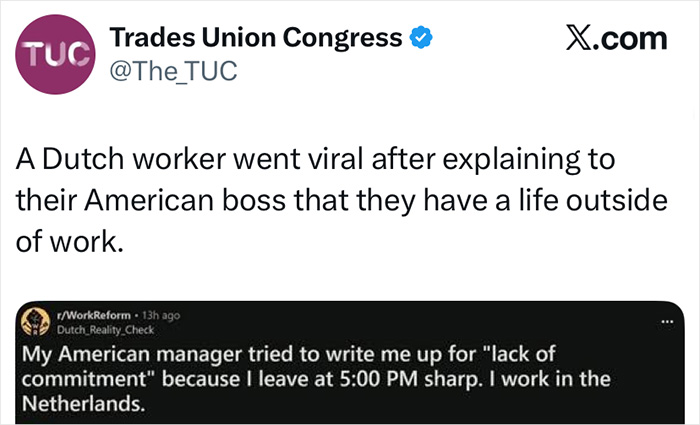
A Dutch employee has reignited global debate over work-life balance after publicly recounting how a newly appointed New York-based manager at their US tech firm attempted to reprimand them for leaving work on time.
The account struck a chord online by illustrating deep differences between labor expectations in the Netherlands and the United States.
The dispute was triggered by three specific issues: the employee ending their workday at 5 pm, ignoring weekend emails, and refusing unpaid evening meetings.
“I honestly feel bad for you guys in the US,” they wrote. “The fact that you have to apologize for having a life outside of work is insane to us.”
Image credits: Pexels/Chait Goli (Not the actual image)
“Last week, we had a 1-on-1 meeting where he told me he was ‘concerned’ about my dedication to the team,” the worker wrote.
“He didn’t like that my Slack status goes offline at 5:01 pm every single day. He was annoyed that I didn’t reply to an email he sent on Saturday morning until Monday at 9:00 am.
He was especially frustrated that I refused to join a ‘team bonding’ Zoom call that was scheduled for 7 pm my time, which is 1 pm his time.”
Image credits: Freepik/pressfoto (Not the actual image)
The Dutch worker made clear these actions were not unusual in their labor context.
Standard working hours in the Netherlands are typically 36 to 40 hours per week, and the Dutch Working Hours Act sets statutory limits on how long employees may work and requires minimum daily and weekly rest periods.
Image credits: Pexels/Muhammad Fawdy (Not the actual image)
While Dutch law does not mandate a universal legal ‘right to disconnect,’ contracts and collective agreements often reflect cultural norms that respect boundaries around work hours, and mandatory rest periods mean employees must have significant uninterrupted time off.
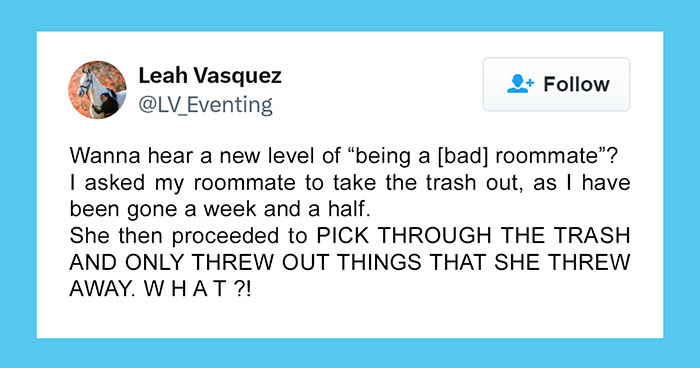
Image credits: The_TUC
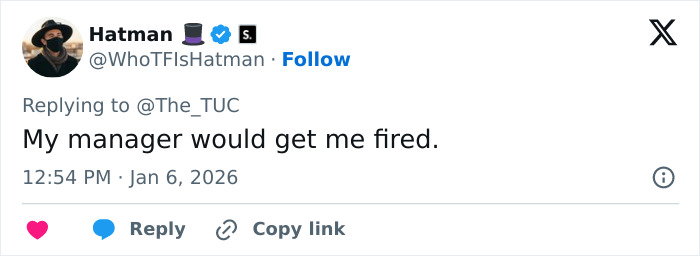
Image credits: WhoTFIsHatman
In the Zoom meeting, rather than apologize or acquiesce, the employee challenged the manager’s assumptions about dedication and time logged.
They told the manager that in the Netherlands, “if you can’t finish your work by 5 pm, it doesn’t mean you are dedicated. It means you are inefficient or understaffed.”
The worker added, “I told him I am neither.”
Image credits: Freepik/katemangostar (Not the actual image)
The worker went on to remind the manager that their employment contract stipulated 40 hours per week, and did not include nights or weekends.
“My contract is for 40 hours, not ‘40 hours plus nights and weekends,’” the post stated.
The manager, unfazed, attempted to escalate the matter. He threatened the employee with a Performance Improvement Plan over what he saw as poor commitment.
Instead of backing down, the Dutch worker took the manager’s email directly to human resources.
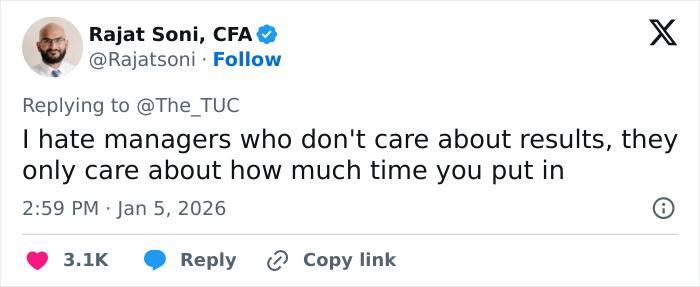
Image credits: Rajatsoni
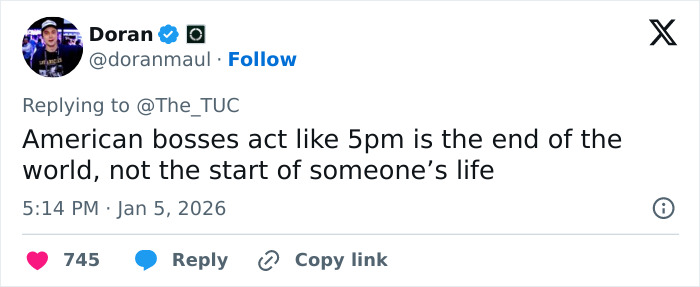
Image credits: doranmaul
“She literally laughed when she read it and told me to ignore him. She said she would have a ‘chat’ with him about local labor laws,” they wrote.
Image credits: Pexels/Kindel Media (Not the actual image)
The intervention worked. In the days following the HR conversation, the employee reports that the manager has not sent a single email after 5 pm.
The worker’s critique of US “hustle” culture is not unfounded. Especially when taking into account the most recent data from the Organization for Economic Co-operation and Development (OECD).
Image credits: Freepik (Not the actual image)
When accounting for work and job quality, as well as work-life balance, the Netherlands ranks at nº 6, slightly behind Luxembourg and Switzerland.
Conversely, the US ranks at nº 28, slightly ahead of countries like Chile, the Slovak Republic and Israel.
According to the OECD Better Life Index, the nº 1 country for both of these metrics is Norway.
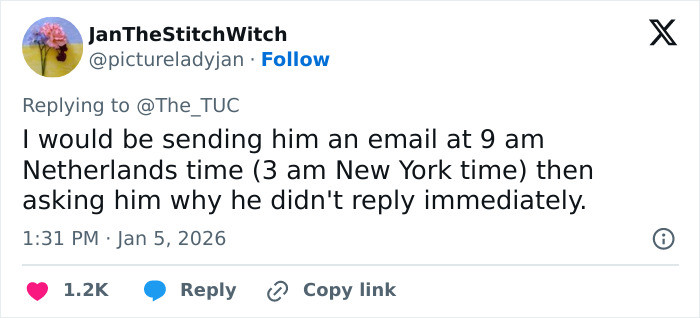
Image credits: pictureladyjan
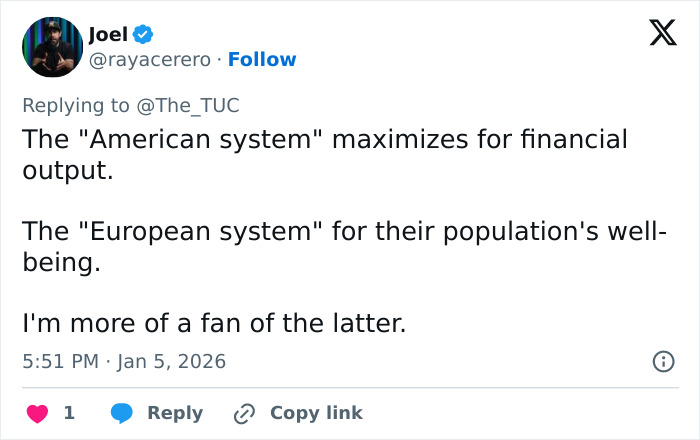
Image credits: rayacerero
“American bosses act like 5 pm is the end of the world, not the start of someone’s life,” a reader wrote.
“I hate managers who don’t care about results, they only care about how much time you put in,” another added.
Image credits: Freepik (Not the actual image)
Others shared personal anecdotes of expected on-call access, after hours messaging, tools deployed to tether employees to their work devices, and psychological pressure.
Image credits: Freepik (Not the actual image)
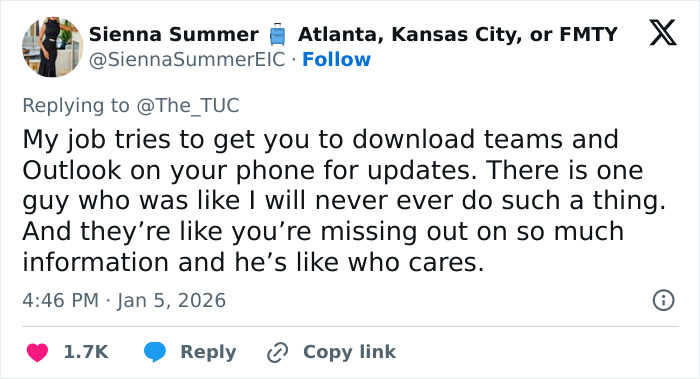
“My job tries to get you to download Teams and Outlook on your phone for updates’,” one wrote.
“There is one guy who was like, ‘I will never ever do such a thing.’ And they’re like you’re missing out on so much information’ and he’s like ‘who cares.’”
“Oh, leaving early?” another added. “No, I’m leaving on time.”
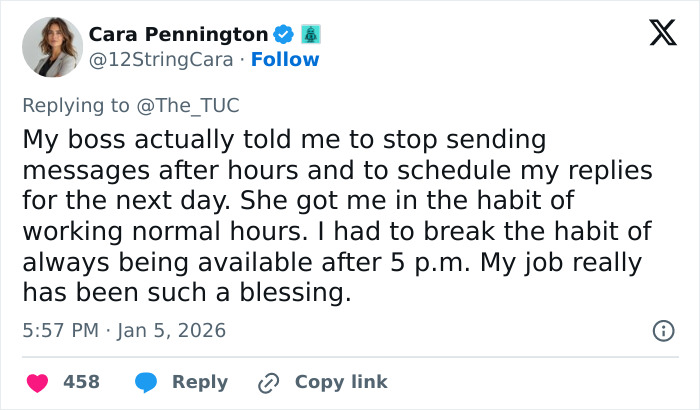
Image credits: 12StringCara
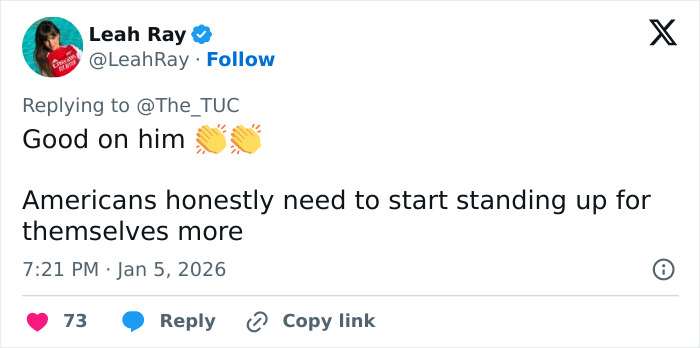
Image credits: LeahRay
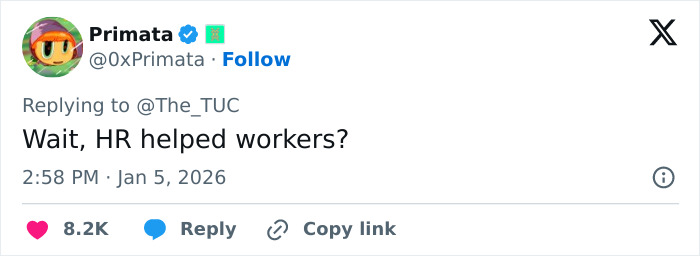
Image credits: 0xPrimata
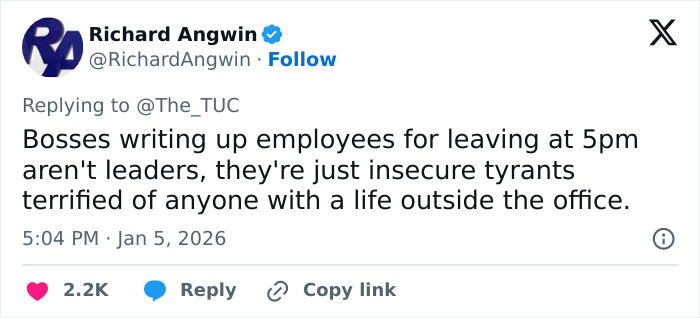
Image credits: RichardAngwin
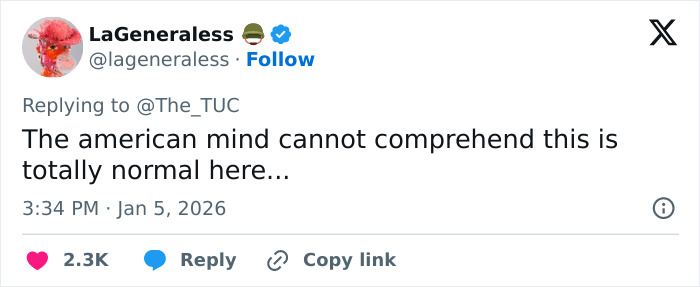
Image credits: lageneraless
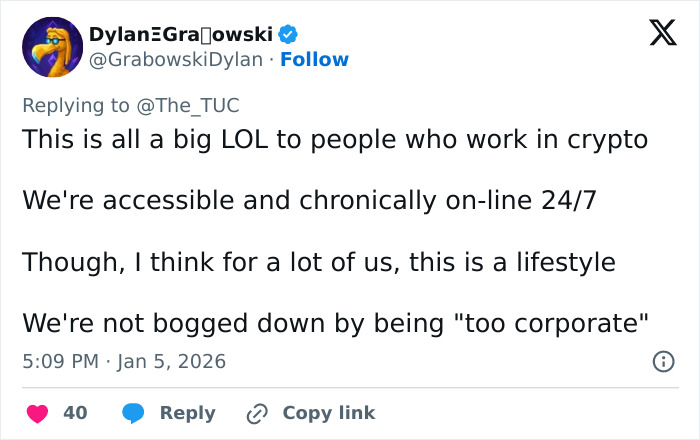
Image credits: GrabowskiDylan
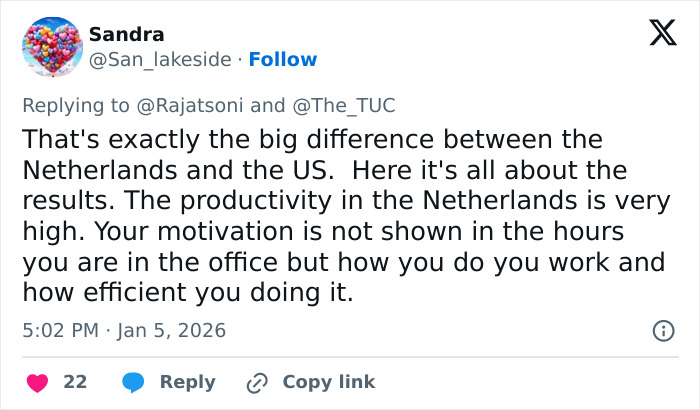
Image credits: San_lakeside
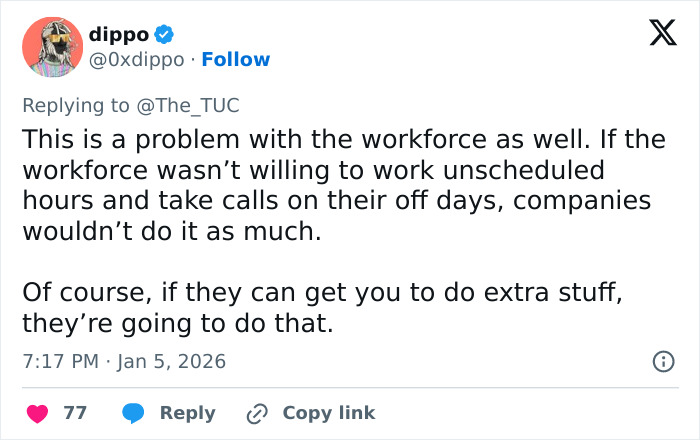
Image credits: 0xdippo
Image credits: RiRi_LotusQueen
Image credits: SiennaSummerEIC
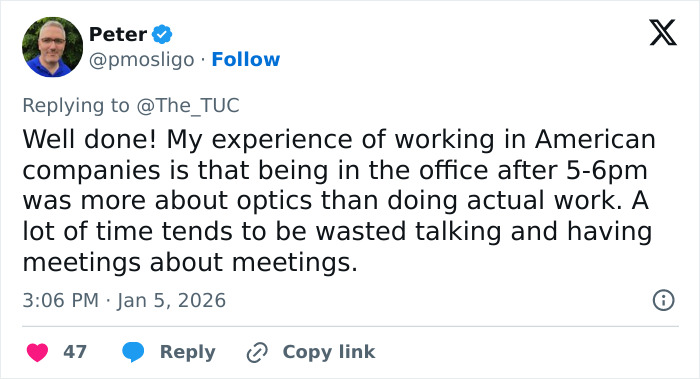
Image credits: pmosligo
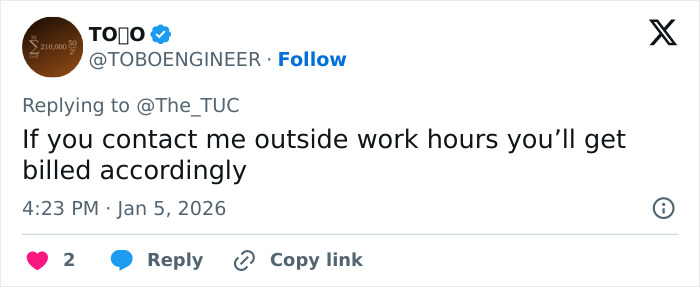
Image credits: TOBOENGINEER
Image credits: jay__deen

By entering your email and clicking Subscribe, you're agreeing to let us send you customized marketing messages about us and our advertising partners. You are also agreeing to our Privacy Policy.
Thank you! You've successfully subscribed to newsletters!


This is another example of American businesses not acquainting themselves with the labour laws of the countries in which they are present. I believe in Germany it's even illegal to be contacted after hours if you don't have given explicit consent. I've worked for an American business and our domestic HR was very busy telling US-HR that what they wanted to do or proposed to do was simply illegal here.

If they can't find the country on a map they are unlikely to even consider local labour laws.
Load More Replies...





I’m 65 now, and my whole working life I refused to work after I was off. If I got behind on something and had to out in extra time, I did it that day and got it out of the way so I could go home and decompress. Same went for the hourly jobs I had. If I needed extra cash or was in a generous mood, I would work overtime—-but I always got paid time and a half for it. AND that was not every day. If it could wait until 9am tomorrow or Monday, then it waited. Management hated that, and I know it cost me advancement in some of the places I worked, but I still insisted on it. Back then I had no idea my attitude was 40 years ahead of my time. I just wanted to have a life away from work. Forgot to say I’m American. Not all of us embrace hustle culture and giving our lives to the company—-who doesn’t give a fat rat’s a*s about us.


was there a buring issues, a looming deadline? No? Then 17:00 (yes, yes, 5pm...) is the end of the day.

It doesn't matter if there is a deadline or not, contracted working hours are all you can be expected to work. If a boss cannot properly timescale a project to be completed within normal working hours then they have no business being a boss.
Load More Replies...
The truth is: US workers have zero job protections. So if we need to work unpaid or risk losing our jobs, we do it, then call it "hustle." It's really just fear.

Used to have a manager like this. I would turn off at 501 and not do any work stuff until the next work day. I never chatted at 830am on the way to work on teams. I was told I wasn't a team player. No I am a team player from 9-5 m to f

Having worked at a company with American and Asian colleagues, it takes a bit of figuring out and flexibility, but we always managed to arrange meetings, and it's much easier when people are working from home. As long as it's not regular and there's enough notice, no-one should mind staying a bit late or getting up a bit early, as long as they get the time back; in some cases, two meeting were scheduled, America/Europe/Africa, then America/Asia/Australasia, to cover everyone.

The keyword here is: "As long as it's not regular and there's enough notice...". The boss in the post definitely didn't get that message :).
Load More Replies...
Years back, I had a personable and very efficient colleague who left work 15 minutes early every day. No one else cared, except for the business owner. Nag, nag, nag. The efficient one efficiently used his short paternal leave to find another job. His not-so-pleasant replacement worked long hours: 9-5, then evenings to correct the mistakes he made during regular hours.
No hr didn't help the worker. Hr helped the worker so the company wouldn't be sued.

Americans gees we are all weird. I only do 40 hour work weeks and can do it how I want, 10 hours 4 days doesn't matter. I do not have to ask I say when I am using PTO, and can even go over my limit and earn back the extra I used. So yes all Americans are all the same.

I’ve told my team that they shouldn’t be checking email outside work hours, so they wouldn’t even know if I send something in the evening or on a weekend. If I log in after hours, that’s my choice and it doesn’t set any expectation for them
This is another example of American businesses not acquainting themselves with the labour laws of the countries in which they are present. I believe in Germany it's even illegal to be contacted after hours if you don't have given explicit consent. I've worked for an American business and our domestic HR was very busy telling US-HR that what they wanted to do or proposed to do was simply illegal here.
If they can't find the country on a map they are unlikely to even consider local labour laws.
Load More Replies... I’m 65 now, and my whole working life I refused to work after I was off. If I got behind on something and had to out in extra time, I did it that day and got it out of the way so I could go home and decompress. Same went for the hourly jobs I had. If I needed extra cash or was in a generous mood, I would work overtime—-but I always got paid time and a half for it. AND that was not every day. If it could wait until 9am tomorrow or Monday, then it waited. Management hated that, and I know it cost me advancement in some of the places I worked, but I still insisted on it. Back then I had no idea my attitude was 40 years ahead of my time. I just wanted to have a life away from work. Forgot to say I’m American. Not all of us embrace hustle culture and giving our lives to the company—-who doesn’t give a fat rat’s a*s about us.
was there a buring issues, a looming deadline? No? Then 17:00 (yes, yes, 5pm...) is the end of the day.
It doesn't matter if there is a deadline or not, contracted working hours are all you can be expected to work. If a boss cannot properly timescale a project to be completed within normal working hours then they have no business being a boss.
Load More Replies... The truth is: US workers have zero job protections. So if we need to work unpaid or risk losing our jobs, we do it, then call it "hustle." It's really just fear.
Used to have a manager like this. I would turn off at 501 and not do any work stuff until the next work day. I never chatted at 830am on the way to work on teams. I was told I wasn't a team player. No I am a team player from 9-5 m to f
Having worked at a company with American and Asian colleagues, it takes a bit of figuring out and flexibility, but we always managed to arrange meetings, and it's much easier when people are working from home. As long as it's not regular and there's enough notice, no-one should mind staying a bit late or getting up a bit early, as long as they get the time back; in some cases, two meeting were scheduled, America/Europe/Africa, then America/Asia/Australasia, to cover everyone.
The keyword here is: "As long as it's not regular and there's enough notice...". The boss in the post definitely didn't get that message :).
Load More Replies... Years back, I had a personable and very efficient colleague who left work 15 minutes early every day. No one else cared, except for the business owner. Nag, nag, nag. The efficient one efficiently used his short paternal leave to find another job. His not-so-pleasant replacement worked long hours: 9-5, then evenings to correct the mistakes he made during regular hours.
No hr didn't help the worker. Hr helped the worker so the company wouldn't be sued.
Americans gees we are all weird. I only do 40 hour work weeks and can do it how I want, 10 hours 4 days doesn't matter. I do not have to ask I say when I am using PTO, and can even go over my limit and earn back the extra I used. So yes all Americans are all the same.
I’ve told my team that they shouldn’t be checking email outside work hours, so they wouldn’t even know if I send something in the evening or on a weekend. If I log in after hours, that’s my choice and it doesn’t set any expectation for them




































 No fees, cancel anytime
 then open in external browser


 and click "Open in External Browser"















36
23