Get Premium
Dark mode theme is available exclusively for premium users. Learn more about the benefits of subscribing.
No fees, cancel anytime.

 Dark Mode Ad-Free Browsing Unlimited Content
 Ad-Free Browsing Unlimited Content Dark Mode
Join 1.2 million Panda readers who get the best art, memes, and fun stories every week!
Blind dates can feel like a lottery, you hope for a jackpot, but sometimes you end up with a consolation prize. You build up your expectations over months or even years, imagining someone who shares your humor or your hobbies. Then, when the moment finally arrives, reality has a way of rewriting the script in ways you never saw coming.
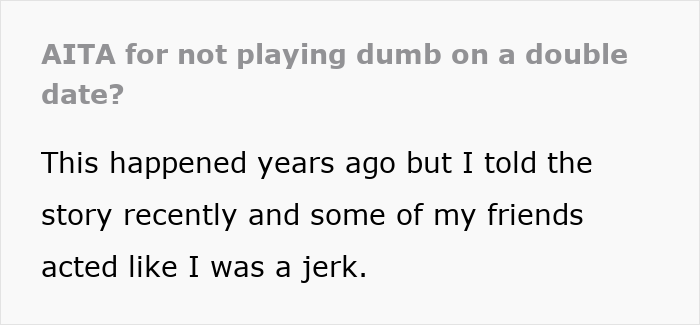
After years of hearing about a supposedly ideal match from a coworker, today’s Original Poster (OP) finally pushed for the long-promised setup. The build-up was enormous, but when the actual date arrived, things quickly spiraled into a painfully confusing dinner that left everyone scratching their heads.
More info: Reddit
Image credits: marymarkevich / Freepik (not the actual photo)
Image credits: freepik / Freepik (not the actual photo)
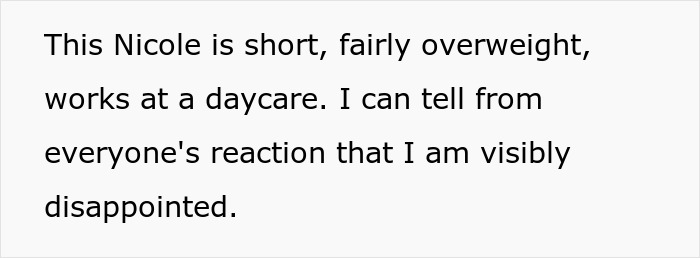
Image credits: mego-studio / Freepik (not the actual photo)
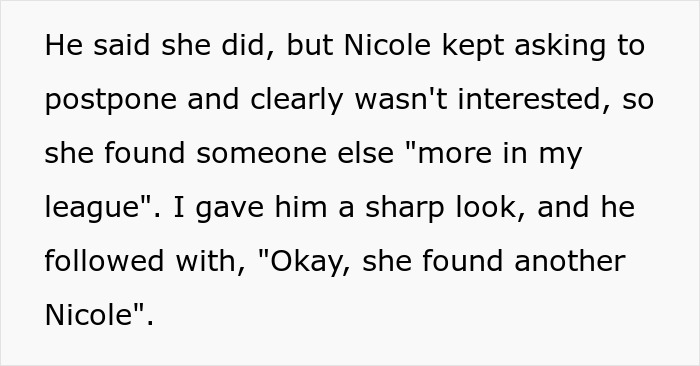
Image credits: Unique-Tailor-4358
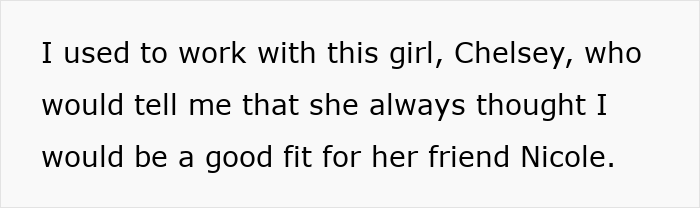
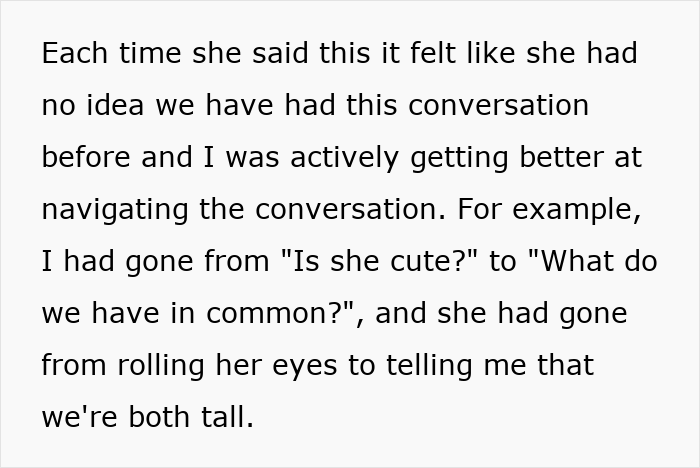
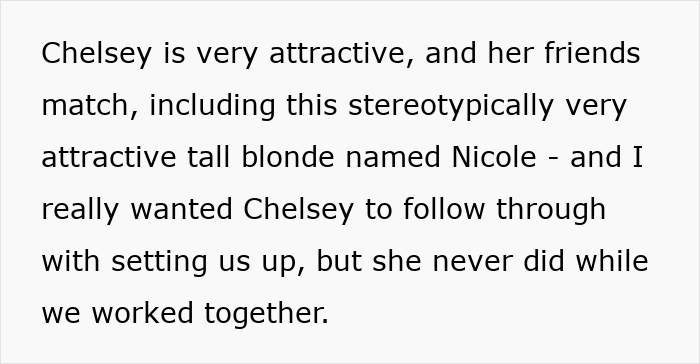
The OP shared that his coworker repeatedly insisted that he and her friend would be a great match. She described this friend as tall, attractive, and funny, basically ticking every box he had imagined. At one point, she even said she had discussed a TV show with this friend, only for the friend to echo his thoughts later.
This reinforced his belief that the coworker knew what she was talking about. Yet, despite years of hints and encouragement, the promised introduction never actually happened while they were working together. A few years later, the OP and the coworker bumped into each other outside work. The topic of this “friend” came up again, and this time he pushed for a meeting.
Excited, he exchanged numbers with the coworker and was told the plan involves a double-date style setup. Like many people, he checked social media beforehand, and everything aligned with the long-standing image he’d had. However, when the night finally arrived, he quickly realized that the lady was not the same person he’d seen online neither did she match the coworker’s descriptions.
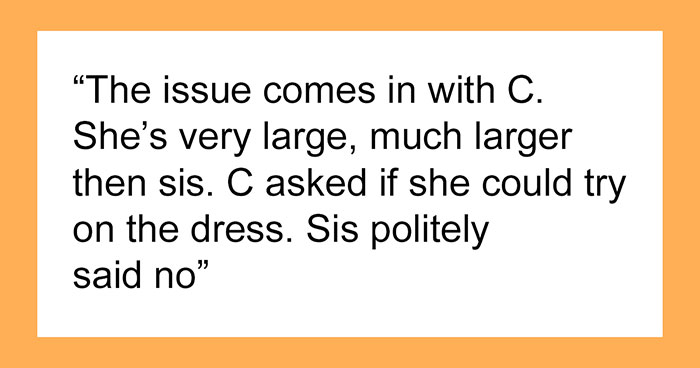
Did the lady have the same name as the one the coworker had told him about? Yes, however, this one was shorter, a bit overweight, and was working at a daycare. The OP was disappointed, and he couldn’t hide it. The friend eventually got upset, and when the coworker stepped away, her fiancé admitted the coworker had originally planned to set him up with the first person, but she wasn’t interested.
Image credits: drobotdean / Freepik (not the actual photo)
Psychologists have long studied how first impressions shape our perception, a phenomenon known as the primacy effect. Psychologs explain that when we form mental images of someone, through descriptions, photos, or gossip, our brain creates a prototype that influences how we interpret their actual behavior.
In this context, setups through friends often carry an initial layer of trust because both participants assume the matchmaker understands their personalities. Stylist, however, highlights that complications arise if the friend misrepresents someone, creating a mismatch between expectations and reality. This can lead to awkward interactions, disappointment, and tension.
Mismatched assumptions in friend-introduced meetings can also generate cognitive dissonance, reducing perceived authenticity and trust. Rocket Health notes that when initial expectations fail to match reality, suspicion arises and can trigger a halo reversal, where positive impressions quickly turn negative. Furthermore, persistent implicit biases further reinforce these judgments, keeping trust low even after clarifications.
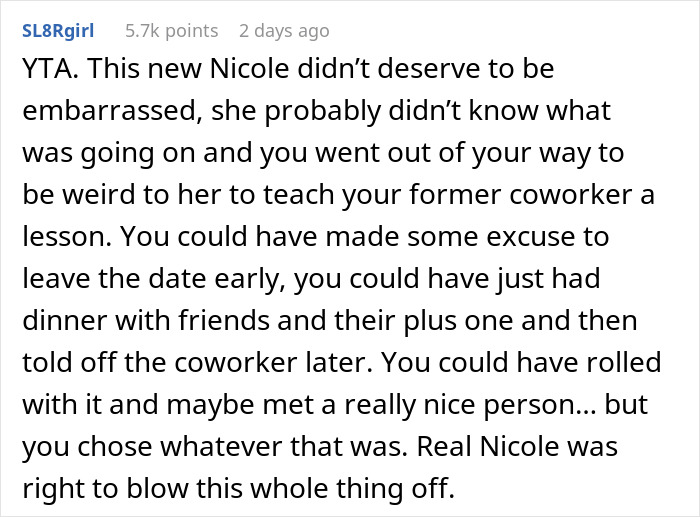
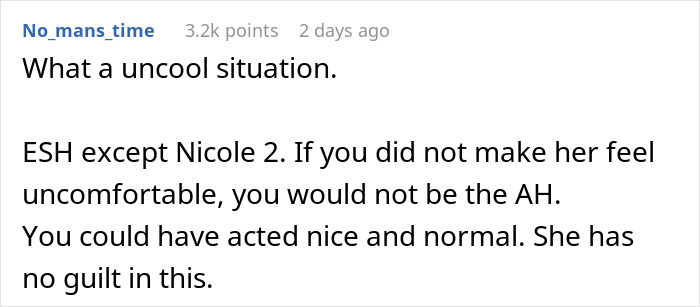
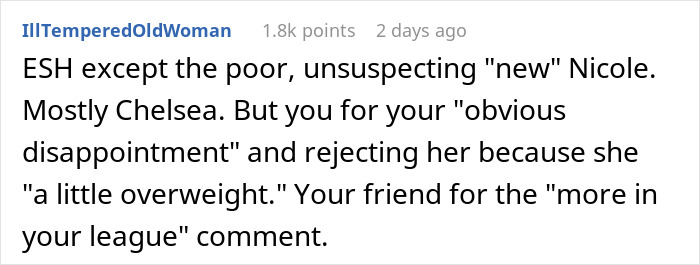
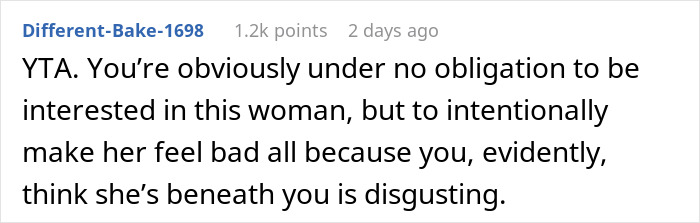
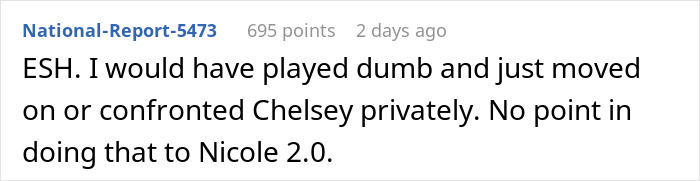
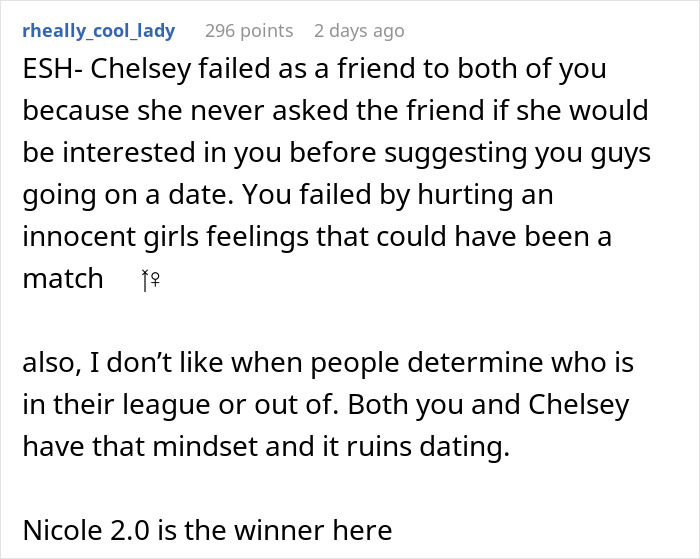
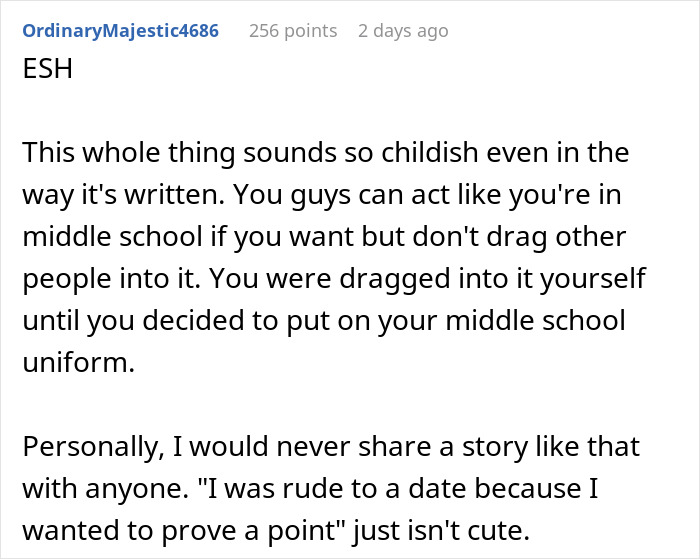
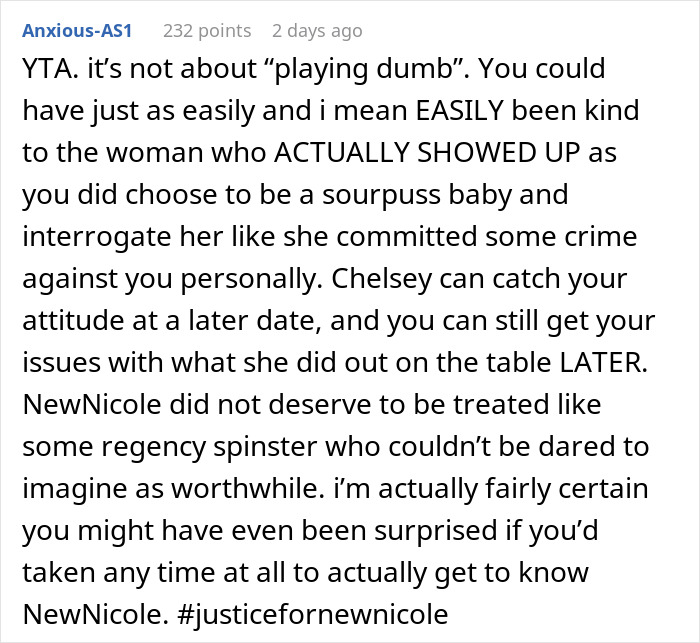
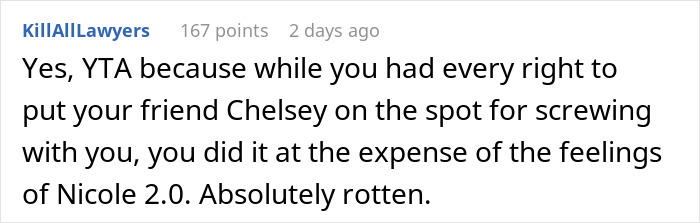
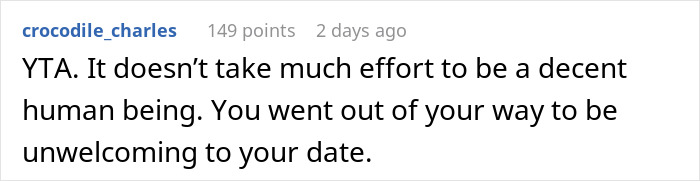
Netizens criticized the OP for how he treated the second date, with most people agreeing that the blame lies with everyone except her. They insisted that basic decency should have prevailed despite the miscommunication. Who do you think is more at fault in this situation, the friend, the OP, or both parties? We would love to know your thoughts!










 No fees, cancel anytime









20
2