Get Premium
Dark mode theme is available exclusively for premium users. Learn more about the benefits of subscribing.
No fees, cancel anytime.

 Dark Mode Ad-Free Browsing Unlimited Content
 Ad-Free Browsing Unlimited Content Dark Mode
Join 1.2 million Panda readers who get the best art, memes, and fun stories every week!
We’ve all had that workplace moment, the one where something small spirals into something super emotional, and suddenly you’re questioning your entire career path while hiding in the bathroom.
The truth is, the smallest interactions reveal much bigger problems. And in this case, when today’s Original Poster (OP) made an attempt to grab her bag from her shared office with her supervisor, it exposed a deeper concern about inclusion and how neurodivergent individuals are treated at work.
More info: Reddit
Image credits: freepik / Freepik (not the actual photo)
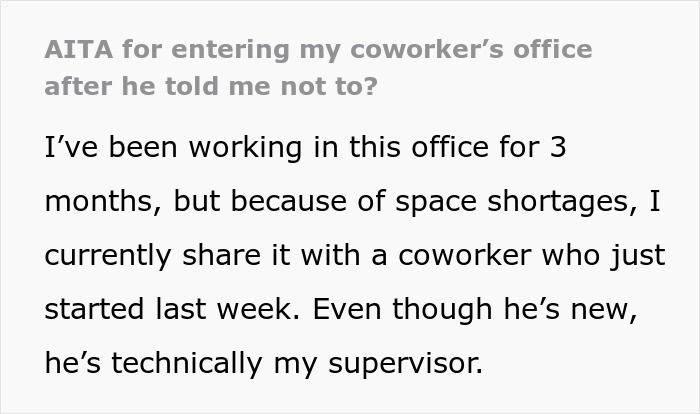
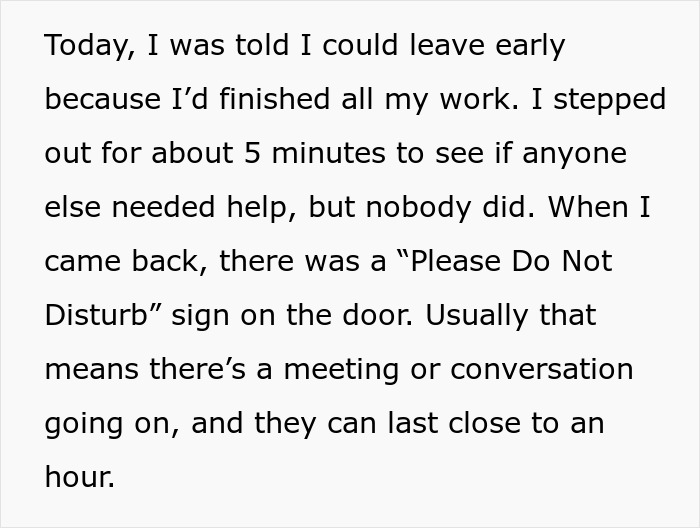
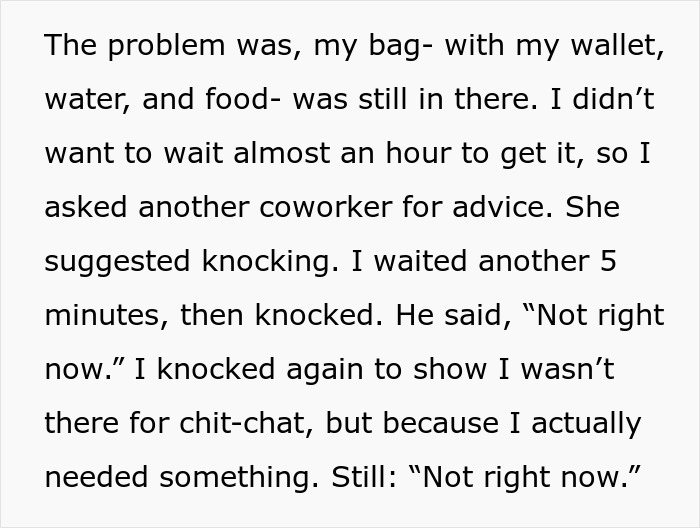
Image credits: Bizon / Freepik (not the actual photo)
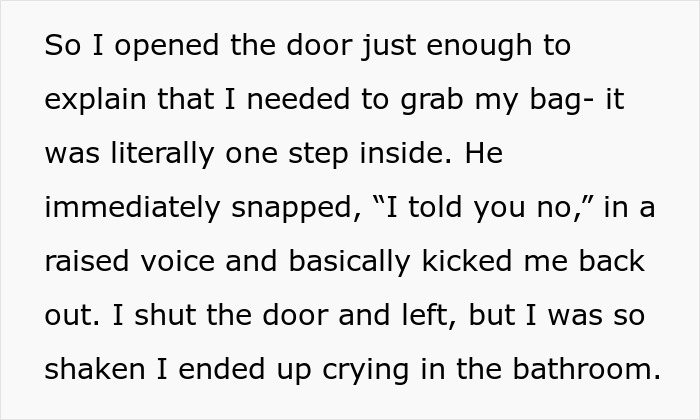
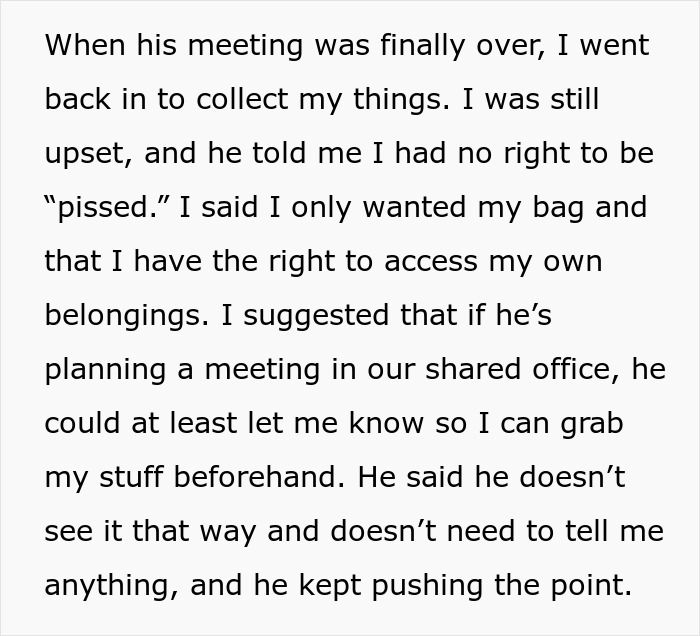
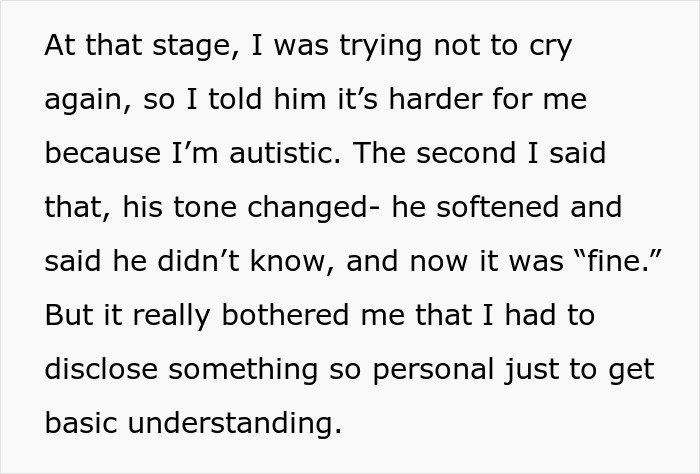
Image credits: pixel-shot.com / Freepik (not the actual photo)
Image credits: Level-Bid4516
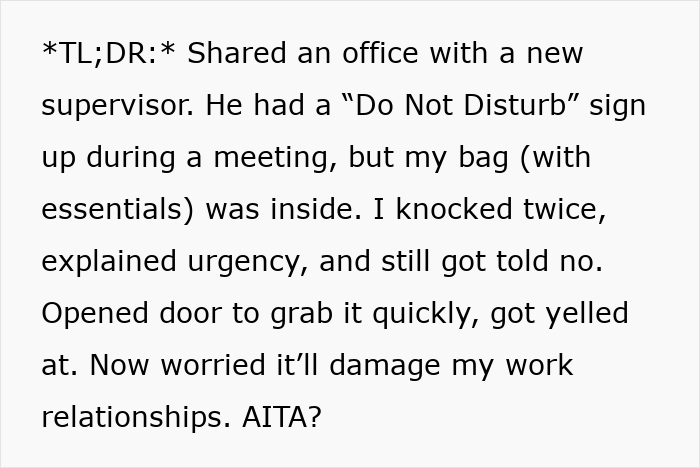
The OP noted that she had been working comfortably in her office for three months. Due to space limitations, she however began sharing the space with a new coworker who also happened to be her supervisor. One day, she finished her work early and was told she could leave so before heading out, she stepped away for just five minutes to check if anyone else needed help.
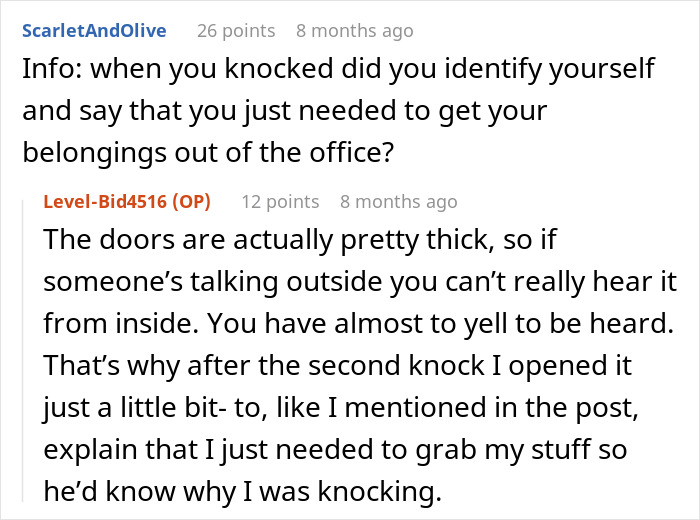
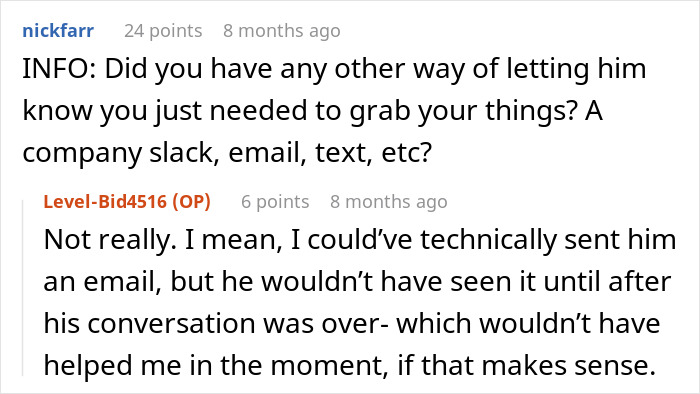
However, when she returned, she found the door shut, which she knew meant that the supervisor was clearly in a meeting. Normally, that would be fine, except her wallet, water and food, were still inside. Not wanting to wait potentially an hour, she asked a coworker for advice and decided to knock. After waiting politely, she tried twice, explaining she just wanted to grab her bag.
Left with no choice, she cracked the door open to quickly explain, but the supervisor snapped and yelled at her, kicking her out. The OP, shaken by the interaction, ended up crying in the bathroom. When the meeting finally ended, she returned to retrieve her belongings. Still upset, she attempted to explain she just wanted to get her bag, but the supervisor told her she had no right to be upset.
As the conversation escalated, she then mentioned that she was autistic, hoping it would help explain why the situation had been particularly difficult. Suddenly, the supervisor’s tone shifted. He softened, saying he didn’t know and that everything was “fine”. This left the OP feeling uneasy, wondering why she had to be treated with understanding only after disclosing such personal information.
Image credits: claudiodiv / Freepik (not the actual photo)
In workplace environments where people share limited space, communication plays a major role in preventing misunderstandings like this. Regal Tag highlights that employees should always be clearly informed when access to shared spaces is temporarily restricted. This includes specifying which area is affected, why the restriction is in place, who can still enter, and how long it will last.
Beyond logistics, how people interpret these moments also matters. Mental Health suggests that small incidents at work, such as being denied entry or feeling dismissed, can trigger stronger emotional reactions than expected. This happens because individuals often interpret these events as signals of unfairness, exclusion, or disrespect rather than isolated practical issues.
There is also a broader layer involving how employees navigate communication differences in the workplace. Stanton House explains that neurodivergent employees are often placed in situations where they feel pressured to disclose personal conditions in order to be understood or accommodated. This creates uneven emotional labor, where they must spend additional effort explaining themselves or setting boundaries.
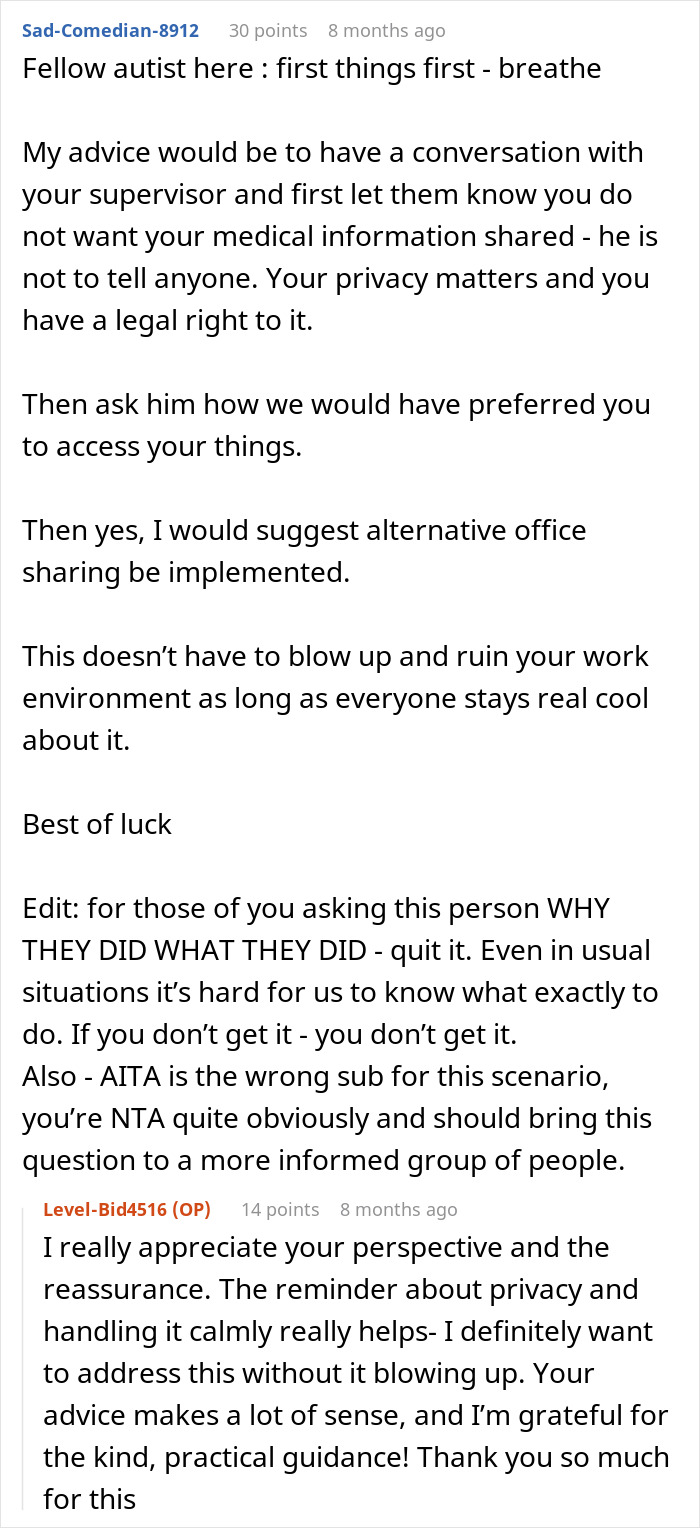
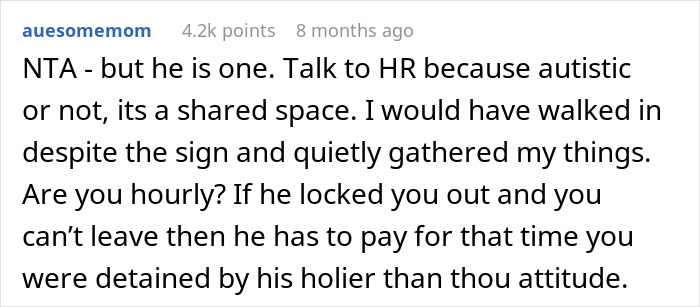
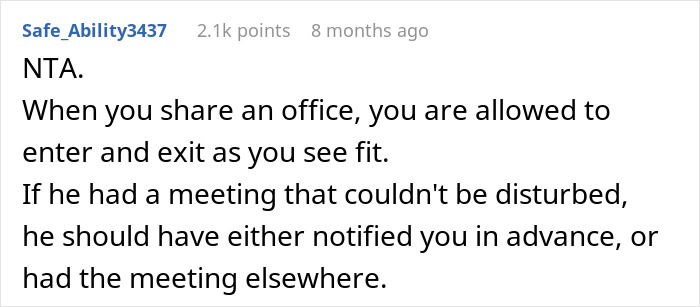
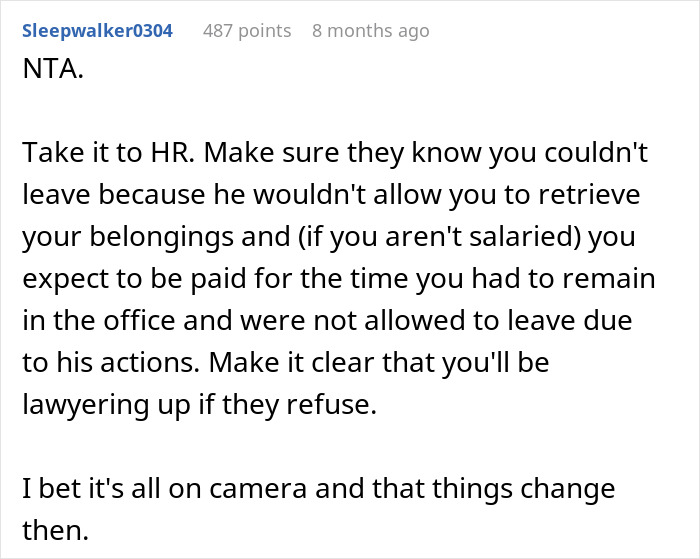
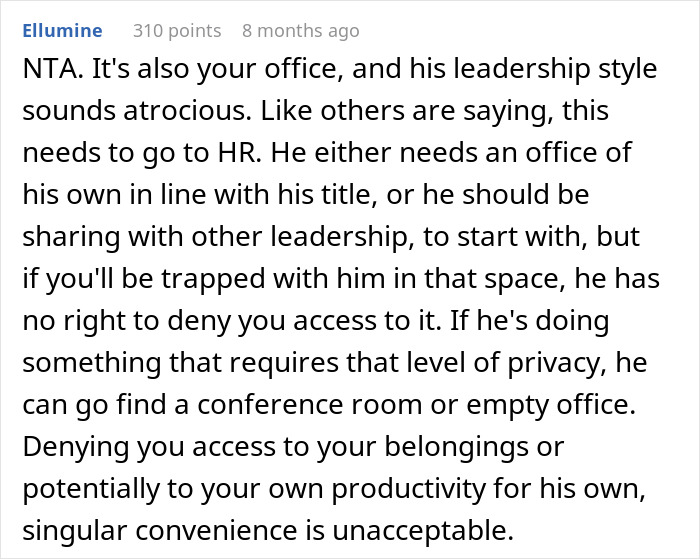
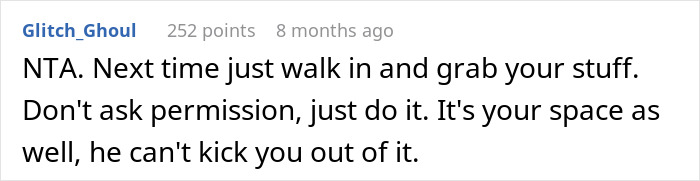
Netizens agreed that the OP was not at fault and that the supervisor’s behavior was inappropriate in a shared workspace. They also felt this was a clear HR issue, emphasizing that the supervisor should have arranged meetings elsewhere or warned the coworker in advance. Would you have handled this situation differently if you were in her place? What would you have done? We would love to know your thoughts!

By entering your email and clicking Subscribe, you're agreeing to let us send you customized marketing messages about us and our advertising partners. You are also agreeing to our Privacy Policy.
Thank you! You've successfully subscribed to newsletters!


Hope OP went to HR and said that sharing an office with her boss isn't working and can other arrangements be made. OP shouldn't have had to tell AH Boss she's autistic *just* to make him be a better person. 🤬

Especially when it has nothing to do with OP being autistic. It was just him locking her out of their shared space which he shouldn't do without notice no matter what.
Load More Replies...

Absolute nonsense, if my stuff is in there, I get access ti it. Deal.
Hope OP went to HR and said that sharing an office with her boss isn't working and can other arrangements be made. OP shouldn't have had to tell AH Boss she's autistic *just* to make him be a better person. 🤬
Especially when it has nothing to do with OP being autistic. It was just him locking her out of their shared space which he shouldn't do without notice no matter what.
Load More Replies... Absolute nonsense, if my stuff is in there, I get access ti it. Deal.






















 No fees, cancel anytime







32
19