Get Premium
Dark mode theme is available exclusively for premium users. Learn more about the benefits of subscribing.
No fees, cancel anytime.

 Dark Mode Ad-Free Browsing Unlimited Content
 Ad-Free Browsing Unlimited Content Dark Mode
Join 1.2 million Panda readers who get the best art, memes, and fun stories every week!
A Canadian digital artist Andrea Tamme, known on social media as Lothlenan, turns classical works of art into geeky and beautiful paintings of pop culture. From Mona Lisa by Leonardo da Vinci to Edvard Munch's Scream, from Rick and Morty to Sailor Moon, Lothlenan successfully juxtaposes classical art with modern in his carefully reimagined paintings.
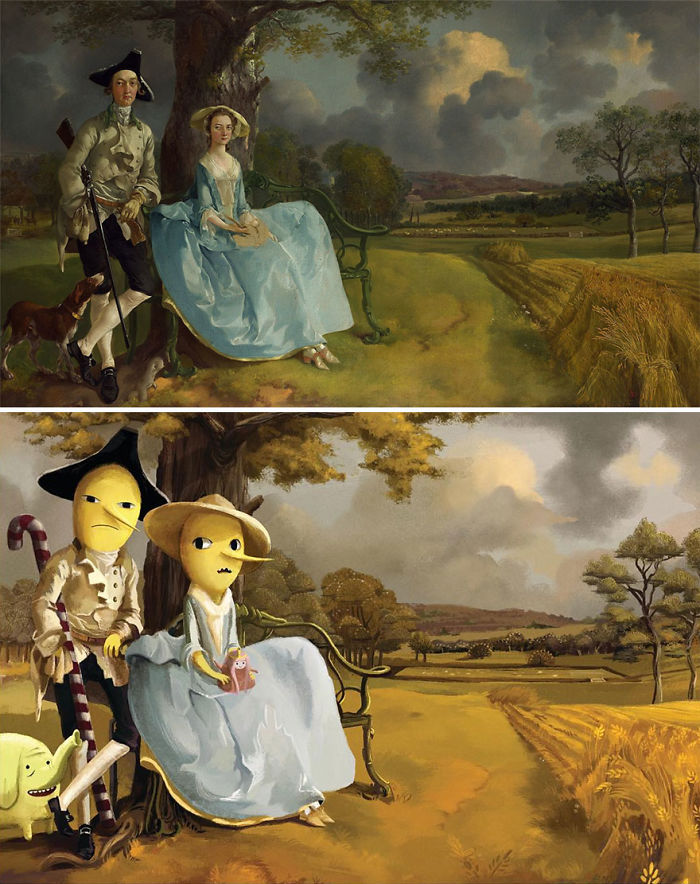
Lothlenan began his digital art series while doing a study of 'Mr. and Mrs. Andrews' by Thomas Gainsborough in his free time as a way to strengthen his painting skills. Perhaps out of the need to exhilarate his studying experience, Lothlenan decided to 'spice things up' a little bit by portraying the Earl of Lemongrab from 'Adventure Time' as Mr. Andrews - the original protagonist of Gainsborough's famous painting.
The artist liked the resulting picture and his friends liked it, even more, so he decided to turn it into an ongoing series with a lot more cartoon characters and unique artworks, which can be seen right below!
More info: lothlenan.tumblr.com | Instagram
Click here & follow us for more lists, facts, and stories.
This post may include affiliate links.
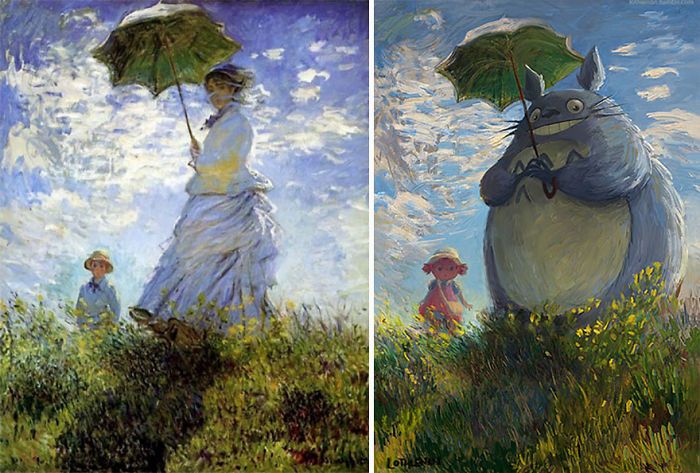
Woman with a Parasol - Madame Monet and Her Son (also known as The Stroll) is Claude Monet's impressionist oil-on-canvas painting that shows his wife and son on a stroll on a windy summer's day. The symbolism in this painting is simple, but interesting. The parasol, the veil, and the dress of Madame Monet are indicators of status, despite the fact that Monet's family was far from rich at the time. The parasol is also a symbol of protection. Monet did not like the industry and city among which he grew up, therefore, he uses the landscape and light colors of a countryside to contrast all that.
H/t: tripimprover.com
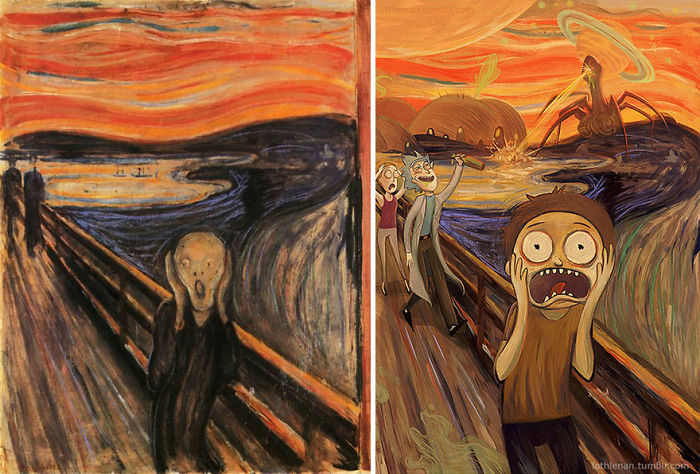
The original German title that Edvard Munch - a Norwegian Expressionist - gave to his work was Der Schrei der Natur (The Scream of Nature), and the Norwegian title - Skrik (Shriek). The painting of the agonized face become one of the most recognizable pieces of art symbolizing the anxiety of modern man. In a way, The Scream is an autobiographical expressionistic construction based on Munch's experience when, on a walk through nature, he was left behind by his two companions (seen in the background). Though, it must be noted that, while Munch himself had gone through the experience depicted, the main subject of the painting bears no resemblance to him or anyone else. "The creature in the foreground has been depersonalized and crushed into sexlessness or, if anything, stamped with a trace of the femininity of the world that has come close to assimilating it."
H/t: edvardmunch.org
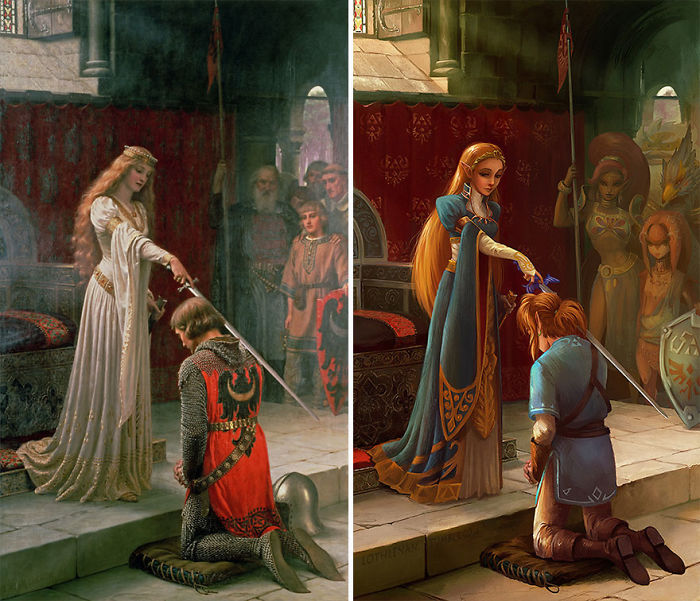
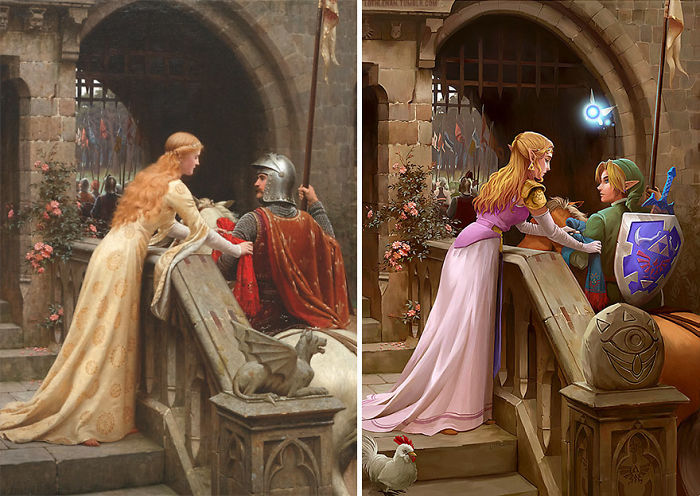
The Accolade by British artist Edmund Leighton is one of the most recognizable paintings of the 1900s which depicts the subject of chivalry. Leighton was a pre-Raphaelite artist who studied and exhibited at the Royal Academy Schools. He was known for his meticulously crafted, romantic medieval scenes that featured long, richly-colored dresses - often times the focal point of his works. The Accolade is a romantic depiction of a time when kings and queens reigned supreme, and knights rescued their damsels in distress.
H/t: art.com
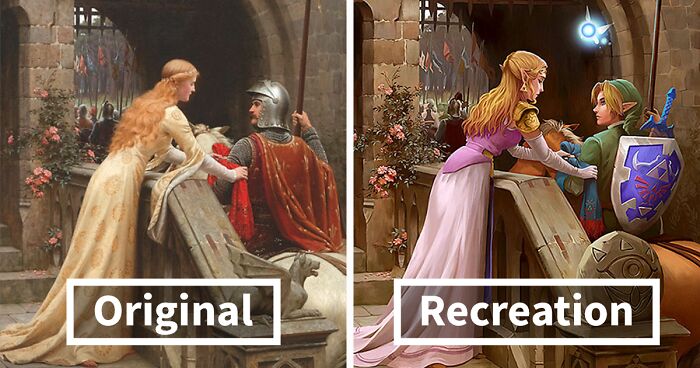
God Speed by Edmund Leighton is an oil-on-canvas painting which portrays an armored knight departing to war, as he leaves his beloved behind. She, in turn, ties a sash around his arm, a customary tradition of wishing luck during those times. A sash is a symbol of their unbreakable bond and hope that they will be reunited eventually.
H/t: artworkonly.com
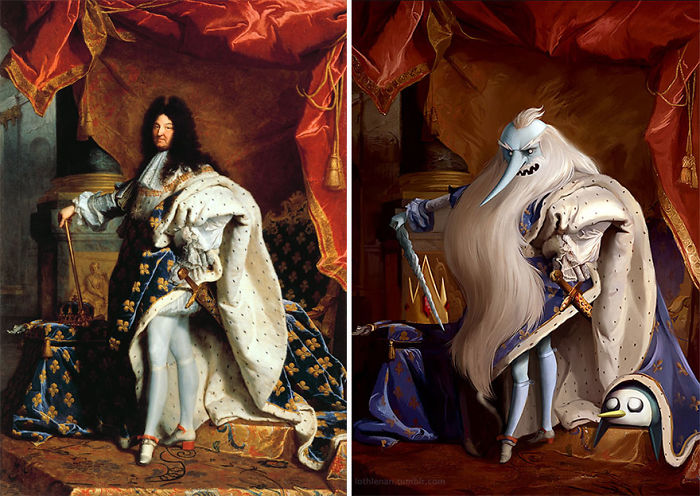
Portrait Of Louis XIV is an oil-on-canvas painting by French painter Hyacinthe Rigaud done after he was commissioned by the king who wanted to fulfill his grandson's desire of a personal portrait. At first, it was commissioned as a gift for Philip V of Spain, but due to its success and immediate popularity at court it was never shipped to Spain. The details of the painting - the regalia of the antique setting, the crimson curtain and the grace of the Sun King in his coronation robes embroidered with the royal fleur de lys - command an absolute power of the monarch.
H/t: louvre.fr
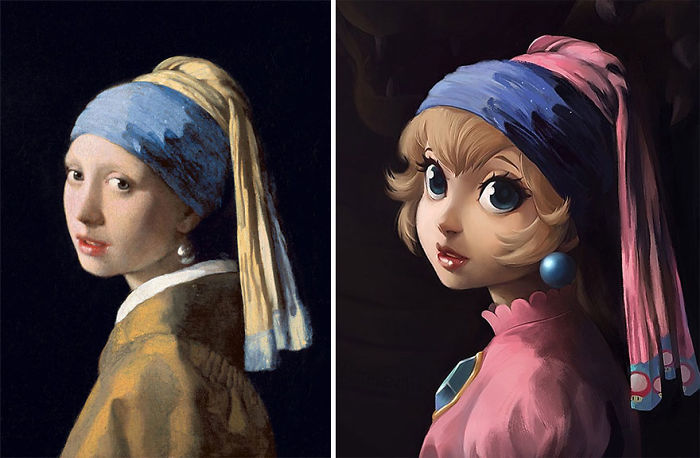
Girl With A Pearl Earring is an oil-on-canvas painting by Dutch Golden Age painter Johannes Vermeer. It is a tronie, which is a 17th-century Dutch description of a 'head' not entirely meant to be a portrait. The painting portrays a young imaginary woman clad in an exotic dress accentuated by a very large pearl earring. Uncharacteristic to Vermeer's subjects, the protagonist of this painting is not depicted doing a daily chore. Instead, it is a glimpse of a fleeting moments, as she turns her head over her shoulder, and parts her lips as if about to speak.
H/t: britannica.com
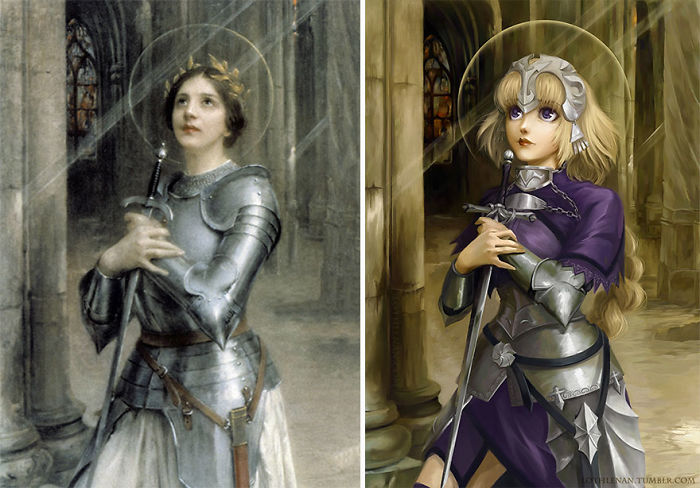
Joan of Arc (Jeanne d'Arc) has inspired artistic and cultural works for nearly six centuries, not least of which is this by Lenoir. Knowing that his parents would not support art as a career, Lenoir became a maître d'études (study master), and then a teacher at a secondary school, the Lycée in Rochefort. It was likely that a taste of formal studies was what gave him a push to follow his heart. He debuted at the Paris Salon of 1887 and continued to exhibit there throughout his life. However, just like many other artists got caught in the change of classical to modern, Lenoir's art was perceived 'out of fashion' before 1926 when he died.
H/t: flickr.com
Mr. And Mrs. Andrews is an oil-on-canvas portrait painted by Thomas Gainsborough after his return home from London to Suffolk in 1748. This is a conversation piece, usually a small-scale portrait depicting two or more people, often in an open landscape. By emphasizing on the landscape, Gainsborough was able to put his skills as a painter on display convincingly changing weather and naturalistic scenery, which was still a novel idea at the time.
H/t: nationalgallery.org.uk
You Might Also Like: 46 Times People Experienced A Serious Case Of Pareidolia And Documented It Online






































 No fees, cancel anytime