Get Premium
Dark mode theme is available exclusively for premium users. Learn more about the benefits of subscribing.
No fees, cancel anytime.

 Dark Mode Ad-Free Browsing Unlimited Content
 Ad-Free Browsing Unlimited Content Dark Mode
Join 1.2 million Panda readers who get the best art, memes, and fun stories every week!

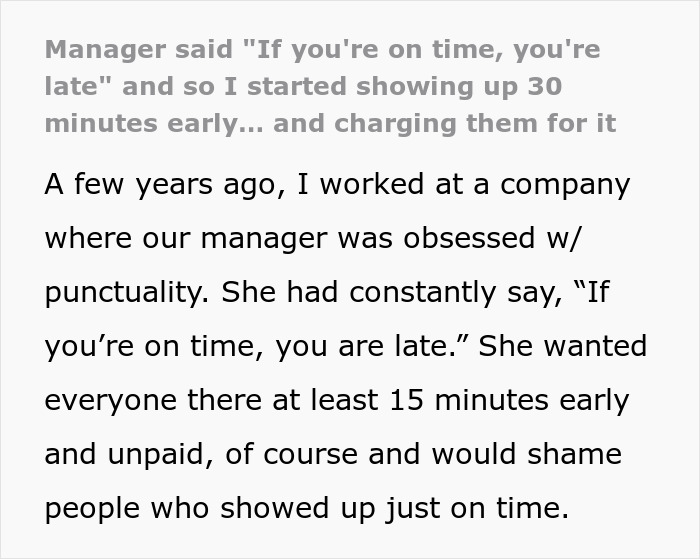
There are morning people, and then there are people who treat the clock like it’s a moral compass. We’ve probably all worked with one: the boss who thinks being five minutes early makes you a better person, and being exactly on time is some form of betrayal. It’s the same type who probably thinks “fun” is arriving at the airport four hours early.
Not that we’re judging, but today’s Original Poster (OP) shared a story that is a delicious slice of petty revenge served warm and early—30 minutes early, to be exact. It’s about how they used their boss’s own “motivational” mantra against her in the best way.
More info: Reddit
Image credits: krakenimages.com / Freepik (not the actual phone)
Image credits: MadrasMusez
Image credits: freepik / Freepik (not the actual phone)
Image credits: MadrasMusez
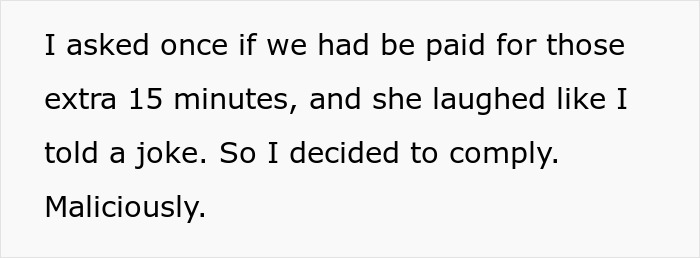
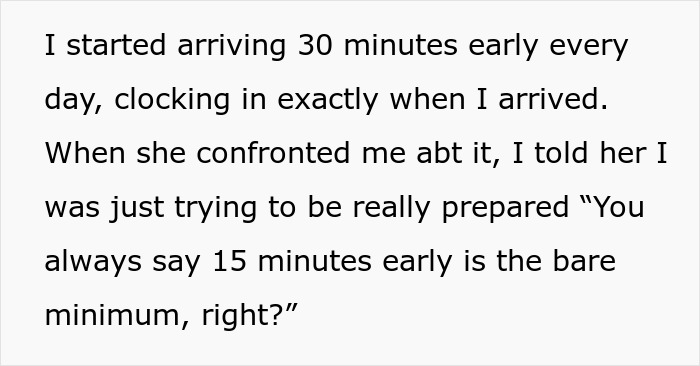
The OP started by explaining that their manager’s preference for punctuality bordered on cult-like obsession. In fact, her favorite motto was that they were late just by being “on time.” It wasn’t a cute saying. It was a rule, and they were all expected to arrive at least 15 minutes early, except they weren’t getting paid for that time.
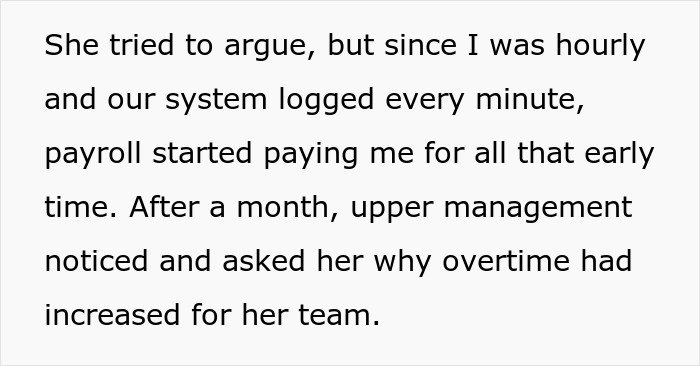
Instead of arguing, the OP decided to give the manager exactly what she wanted, just with a twist. They began showing up 30 minutes early every single day and immediately clocking in. Since they were hourly, every extra minute was logged and paid. And just like that, their compliance turned into quiet resistance.
A month into this new ultra-punctual routine, upper management started noticing something odd. Payroll costs were way up, and the department’s budget took a hit. Naturally, leadership turned to the manager for answers. Caught between her own policy and the bottom line, the manager had no choice but to explain the sudden surge in overtime.
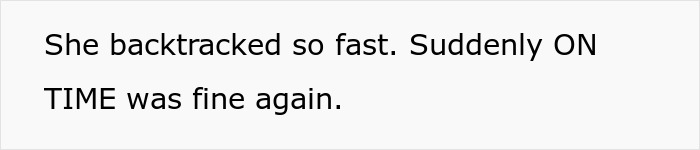
Ironically, her plan to squeeze more unpaid labor out of her team had backfired gloriously, and faced with scrutiny and a potential reprimand, the manager pulled a 180. Her strict rules about early arrivals quietly vanished, and being “on time” became perfectly acceptable.
To better understand the boundaries between effective supervision and harmful control, Bored Panda spoke with HR expert Dara Faronbi, who explained the difference between strong time management and toxic micromanagement.
“Good time management means setting clear expectations and empowering employees to work efficiently,” she stated before going further to explain that toxic micromanagement crosses the line when a manager excessively controls every detail, which can erode trust and damage employee autonomy.
Image credits: freepik / Freepik (not the actual phone)
Faronbi emphasized the importance of intent and outcome, saying that “while strong management promotes productivity and growth, micromanagement often stems from insecurity and can lead to burnout and disengagement.”
When asked about the legality and fairness of requiring hourly workers to arrive early without being paid for it, she said, “In general, companies must compensate employees for any work-related duties performed before their scheduled shift.”
She warned that expecting staff to be present early without pay “can violate labor regulations and create serious ethical issues” and that employers should make sure “all time spent on work responsibilities, including preparation, is properly accounted for and compensated.”
Finally, we explored the concept of ‘malicious compliance,’ which is when employees follow rules strictly to expose flaws. Faronbi explained, “This behavior often signals deeper dysfunction within the workplace, such as poor communication, low trust, or unresolved grievances.”
For HR, she said, “such actions should serve as a red flag prompting a closer look at company culture, leadership, and employee morale to prevent disengagement or turnover from escalating.”
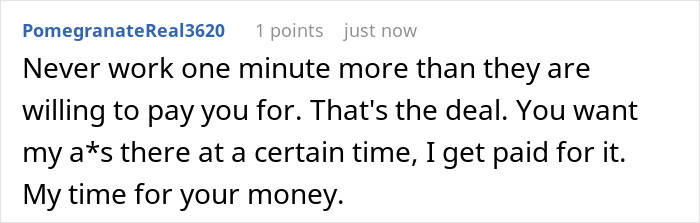
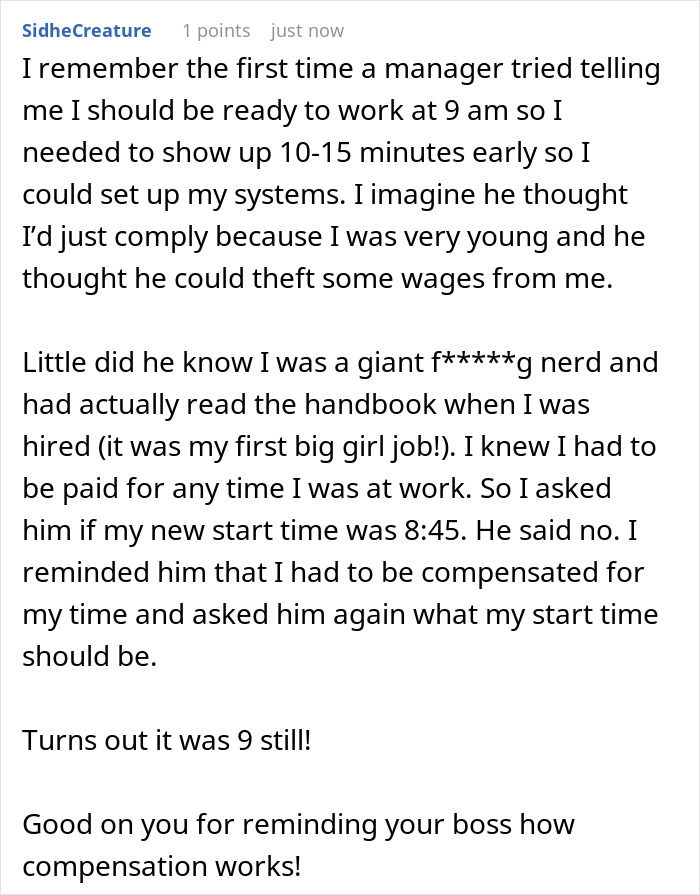
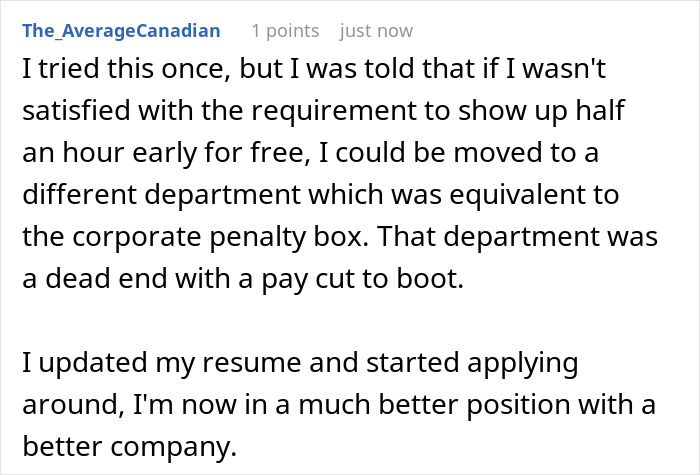
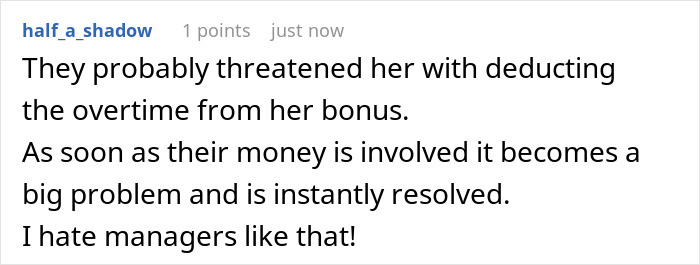
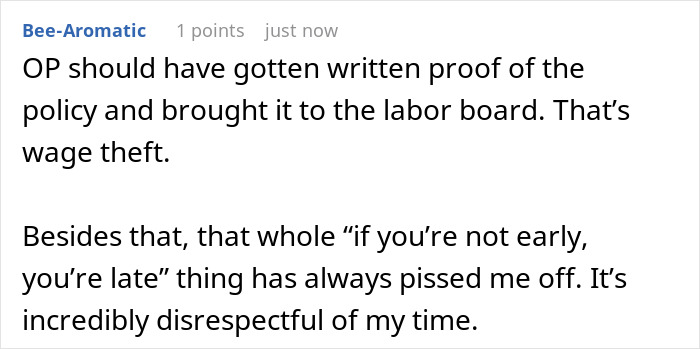
Netizens insisted that the OP’s actions were both clever and justified. The most echoed sentiment was that if a company wants time, they need to pay for it, simple as that. They also applauded the tactic of following bad policies to the letter in order to expose their flaws and force change.
What do you think about what the OP did? What’s the most unreasonable workplace policy you’ve ever dealt with? We would love to know your thoughts!
Image credits: freepik / Freepik (not the actual phone)

By entering your email and clicking Subscribe, you're agreeing to let us send you customized marketing messages about us and our advertising partners. You are also agreeing to our Privacy Policy.
Thank you! You've successfully subscribed to newsletters!

If there was a previous shift, managers who can't manage won't give those employees the ability to end their shift on time. That makes the new shift have to take up the slack. It's a manager's job to make shifts change as seamlessly as possible. Good managers know the tricks. Bad managers put the onus on their staff.

Or, they could have just gone to HR beforehand to clarify the position wrt being paid for the extra time. something like "OK, I'll come in 15 minutes early each day but HR tell me it will all count as overtime, is that OK?" Not sure why they had to go through this charade unless they just wanted to do the extra hours.

I still have the email between me , hr, and my manager when there was some time crunch and we had to do stay really late one day, I worked OT often and understood it was over 40 hours a week and I would usually work a few extra hours throughout the week. Well this one Friday we worked like 16+ hirs and I had already had Monday's PTO so normally that would eliminate overtime. Except out state laws clearly say more than 40 hours a week OR more than 14 hours in one day were OT. I was young so it took like 20 days of emails to finally get paid the 15 or 16 dollara of OT I should have received. But d**n was I persistent. I know now that I should just ask once then go to the state labor board and let them handle it because I mentioned it to several coworkers that did the same hours and they didn't bother to fight like me.
If there was a previous shift, managers who can't manage won't give those employees the ability to end their shift on time. That makes the new shift have to take up the slack. It's a manager's job to make shifts change as seamlessly as possible. Good managers know the tricks. Bad managers put the onus on their staff.
Or, they could have just gone to HR beforehand to clarify the position wrt being paid for the extra time. something like "OK, I'll come in 15 minutes early each day but HR tell me it will all count as overtime, is that OK?" Not sure why they had to go through this charade unless they just wanted to do the extra hours.
I still have the email between me , hr, and my manager when there was some time crunch and we had to do stay really late one day, I worked OT often and understood it was over 40 hours a week and I would usually work a few extra hours throughout the week. Well this one Friday we worked like 16+ hirs and I had already had Monday's PTO so normally that would eliminate overtime. Except out state laws clearly say more than 40 hours a week OR more than 14 hours in one day were OT. I was young so it took like 20 days of emails to finally get paid the 15 or 16 dollara of OT I should have received. But d**n was I persistent. I know now that I should just ask once then go to the state labor board and let them handle it because I mentioned it to several coworkers that did the same hours and they didn't bother to fight like me.


































 No fees, cancel anytime












44
14