Get Premium
Dark mode theme is available exclusively for premium users. Learn more about the benefits of subscribing.
No fees, cancel anytime.

 Dark Mode Ad-Free Browsing Unlimited Content
 Ad-Free Browsing Unlimited Content Dark Mode
Join 1.2 million Panda readers who get the best art, memes, and fun stories every week!
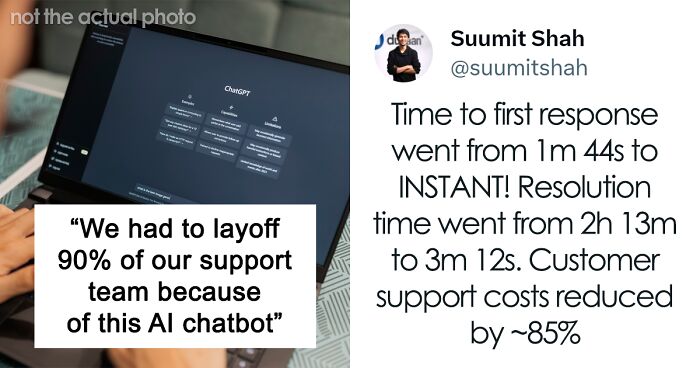
It was not that long ago that the murmurs of Artificial Intelligence crept into our general conversation, just like computers did back in the late ’70s. And as technological advancements go, this naturally sparked fears that A.I. will take our jobs. Despite the reassurance from tech bros that “It’s really nonsense” and we have nothing to worry about, the day has come when they get to eat their own words.
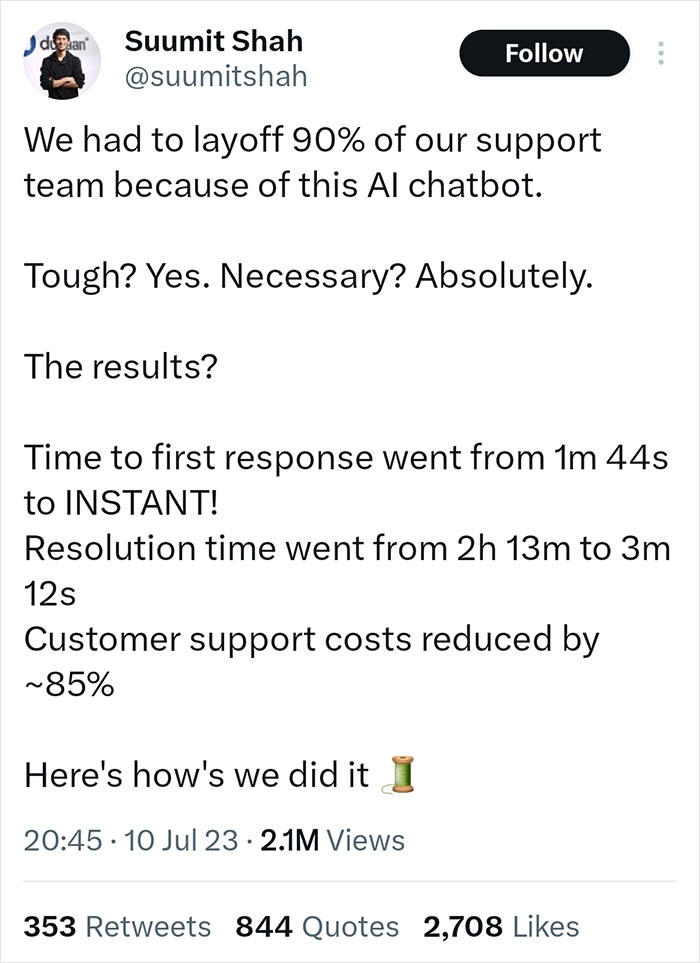
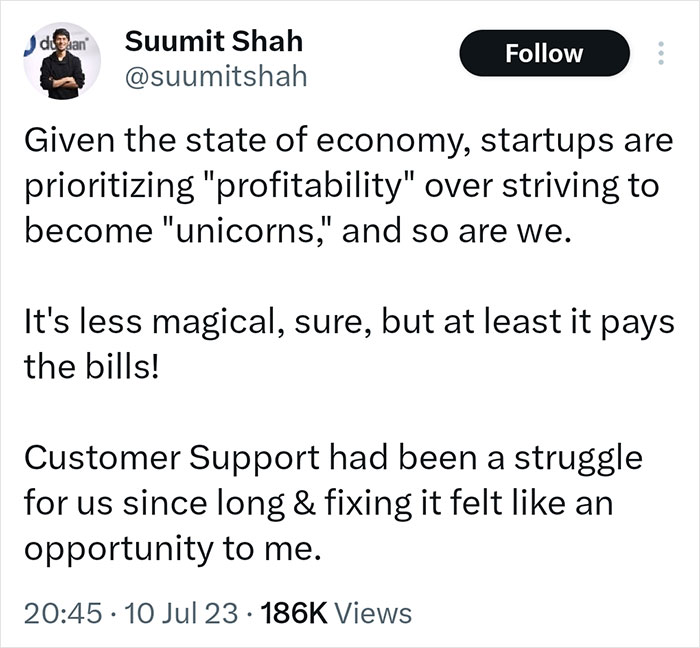
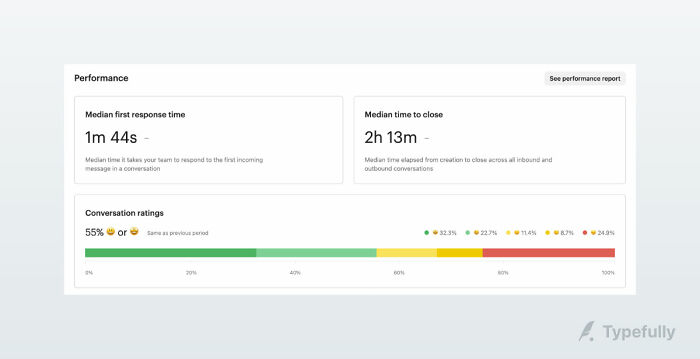
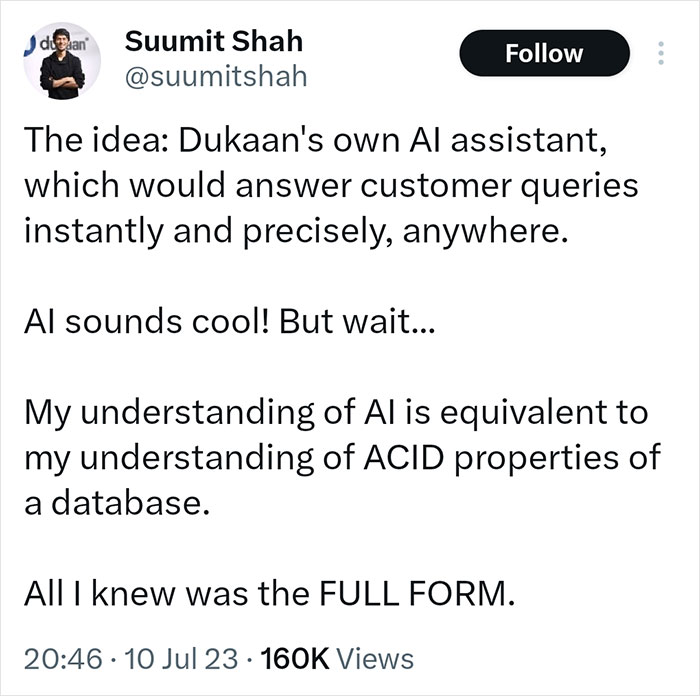
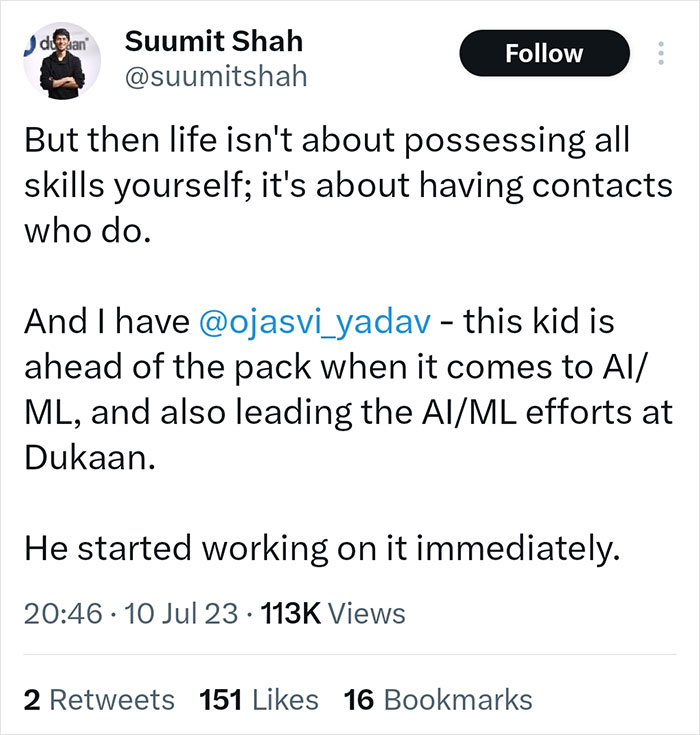
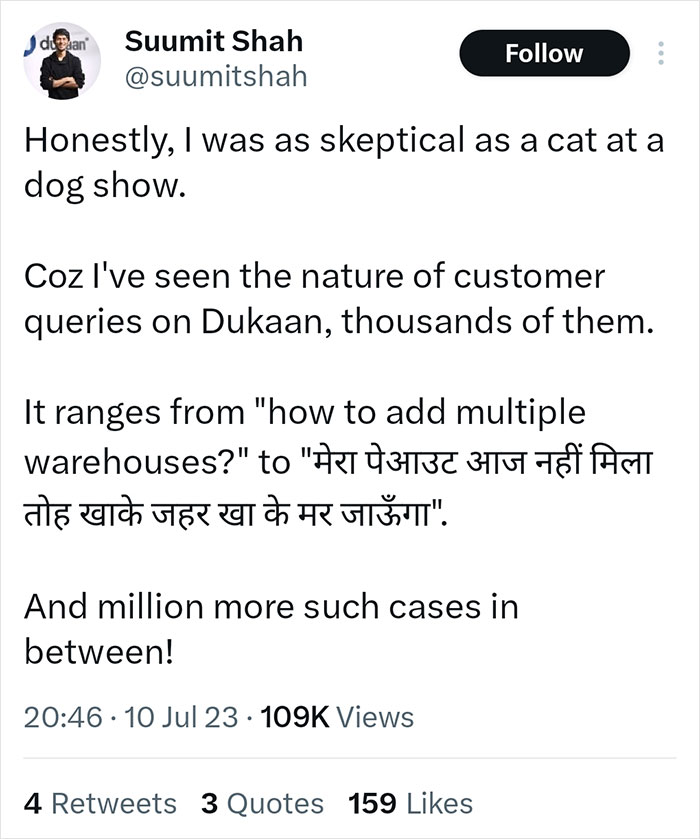
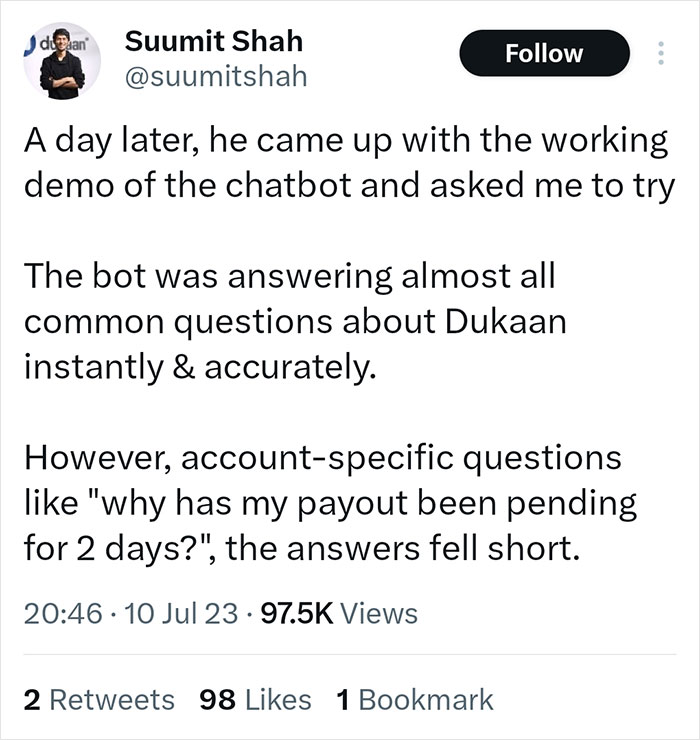
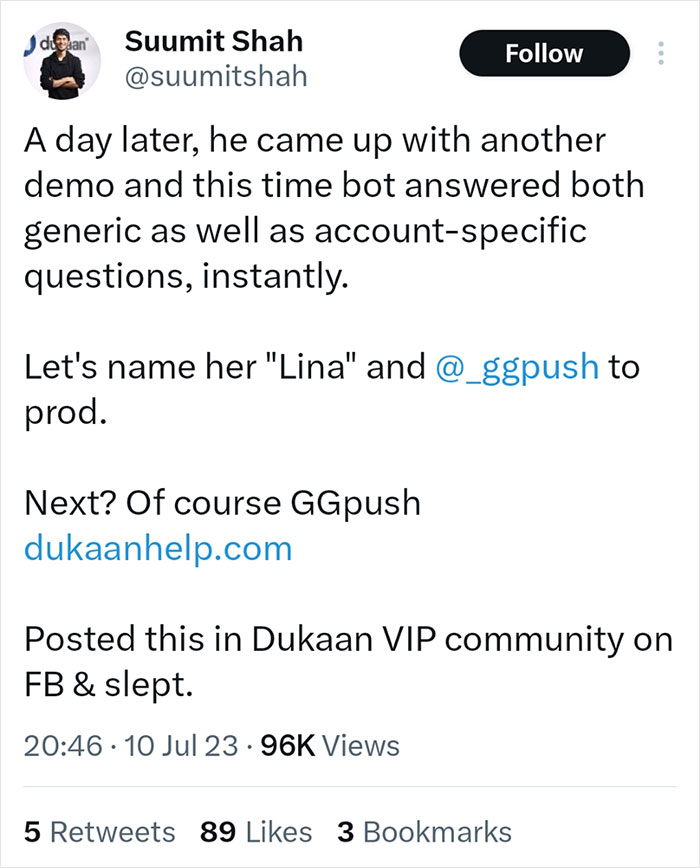
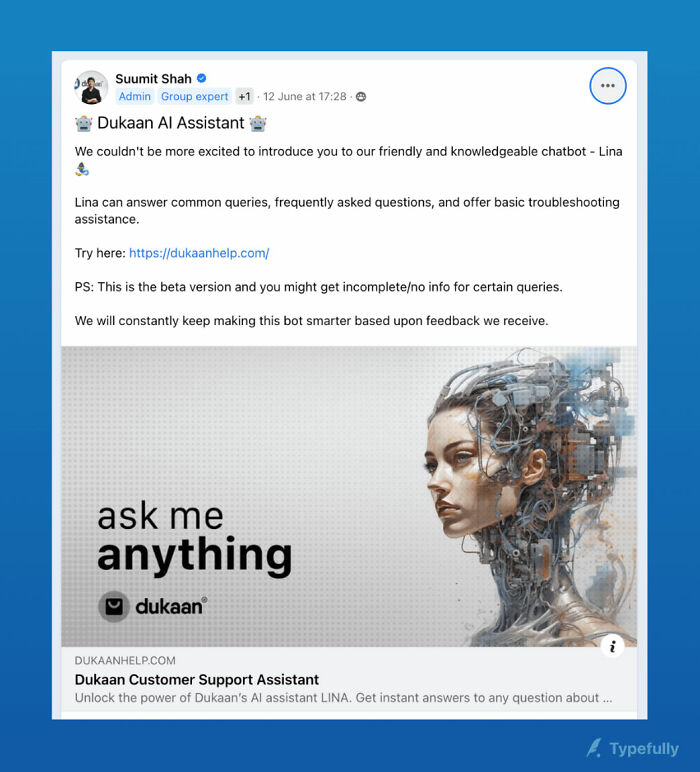
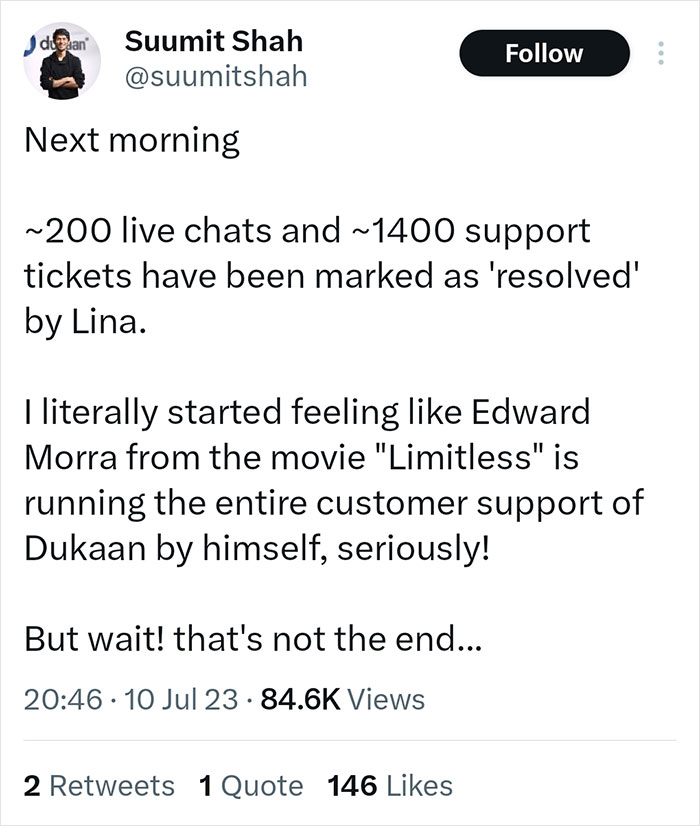
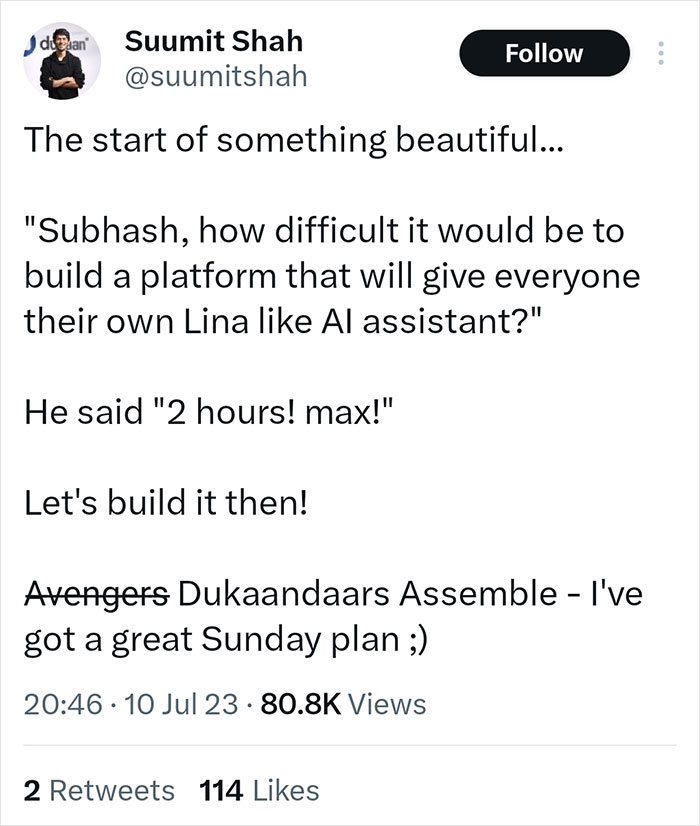
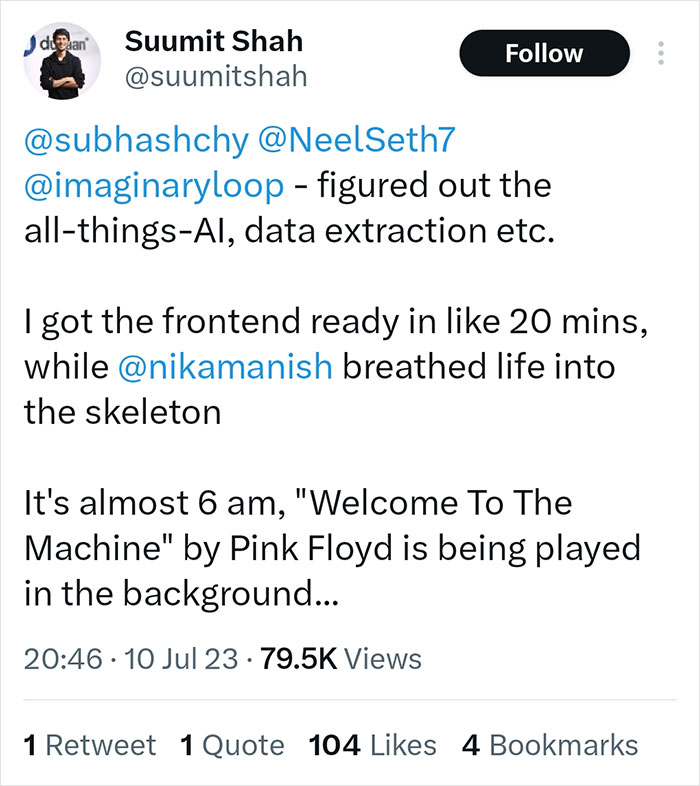
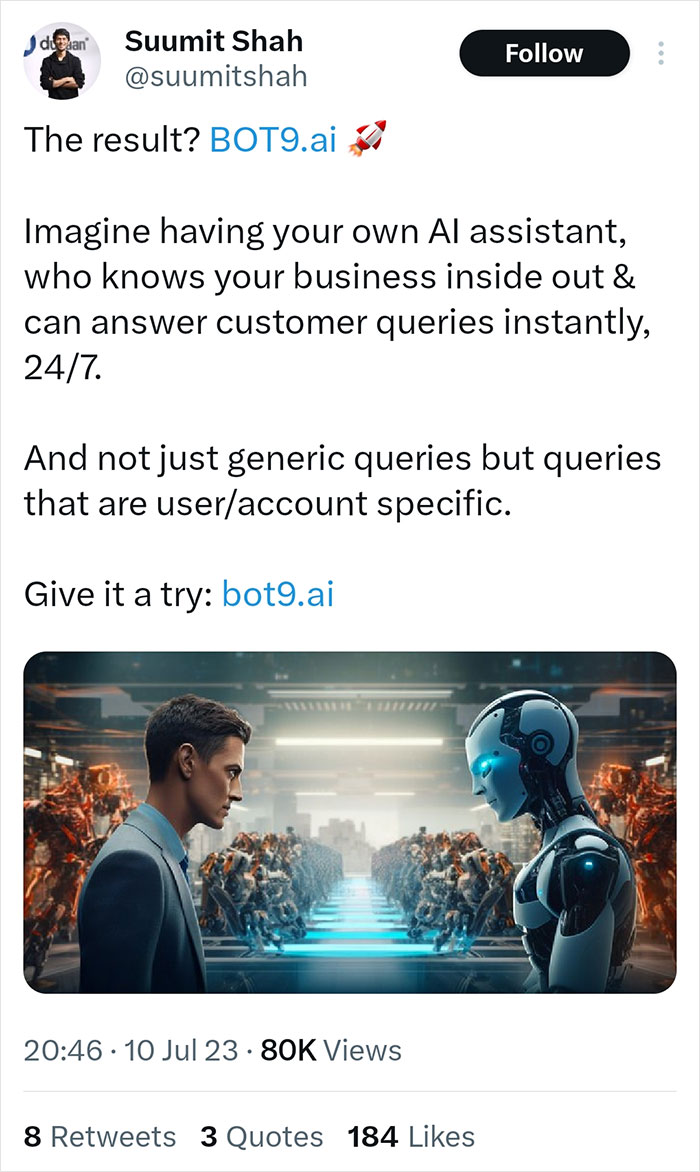
A couple of days ago, Suumit Shah, the CEO of the e-commerce platform Dukaan, boasted about replacing 90% of his support staff with an A.I. chatbot. “Time to first response went from 1m 44s to INSTANT!” he gleefully wrote. No surprise, then, that this has sparked an online backlash, with Shah trying to fend off thousands of online haters. In one of his replies, the CEO said, “It was a tough decision.” Sure. But no amount of broken-heart emojis will make up for all the employees that were sacked from their positions because of cost-saving 1s and 0s.
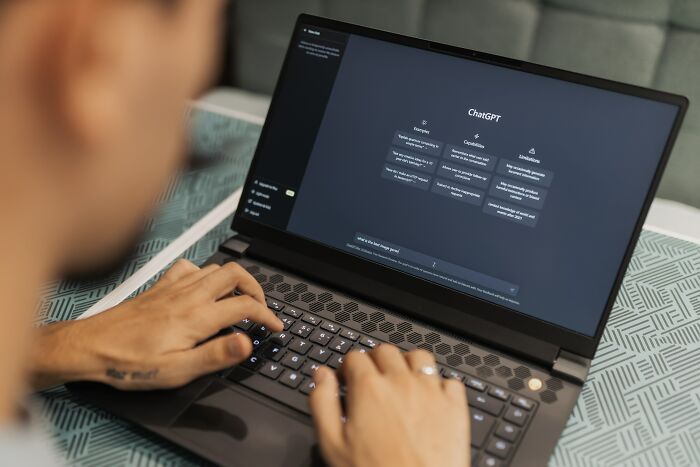
Image credits: Matheus Bertelli (not the actual photo)
Image credits: suumitshah
Image credits: suumitshah
Image credits: suumitshah
Image credits: suumitshah
Image credits: suumitshah
Image credits: suumitshah
Image credits: suumitshah
Image credits: suumitshah
Image credits: suumitshah
Image credits: suumitshah
Image credits: suumitshah
Image credits: suumitshah
Image credits: suumitshah
Image credits: suumitshah
Image credits: suumitshah
Image credits: suumitshah
Image credits: suumitshah
Image credits: Sora Shimazaki (not the actual photo)
We all saw it coming to this, right? Not to sound too gloomy, but we all have been watching Netflix’s Black Mirror, sensing that it doesn’t sound too sci-fi with all the rapid advancements in A.I. and layoffs dominating headlines. After all, even Elon Musk, who only a few days ago announced a new venture that aims to create AI that can “understand the universe,” warned everyone about becoming too dependent on artificial intelligence. He might be responsible for massive layoffs at Tesla and Twitter. Also, for making A.I. powerful enough to crush the best-of-the-best at one of the most difficult video games there is. But at least man is no fool enough to replace human workers with self-learning machines (yet).
The bad news is, people have a right to worry. While tech experts around the world try to calm everyone down, promising that there’ll be harmony between A.I. and humans, almost half of the employees (49% to be exact) fear they will be pushed overboard thanks to cost-effective automatons, according to a new survey by Microsoft.
For all those who aren’t worried that ChatGPT isn’t eyeing their position, then, a recent Goldman Sachs report has some bad news – some of which is evident by today’s headline. According to it, the automation and advancement of A.I. will replace the equivalent of 300 million jobs worldwide this year, with legal and administrative workers most likely to be susceptible to this disruption.
While it’s undeniable that things will drastically change – if they haven’t already – with the rapid advancement of A.I., according to Philip Torr, professor of engineering science at the University of Oxford, automation could have a positive impact on the workplace. Particularly in cutting down the unnecessary workload. “In general, technology has airways led to more work,” he told Bored Panda in an email. “Due to technology, we now work more than we ever had. In the middle ages, for example, peasants only worked 15 to 20 hours a week.” In other words, it’s not that the number of jobs will change, he says, but roles that will be in demand.
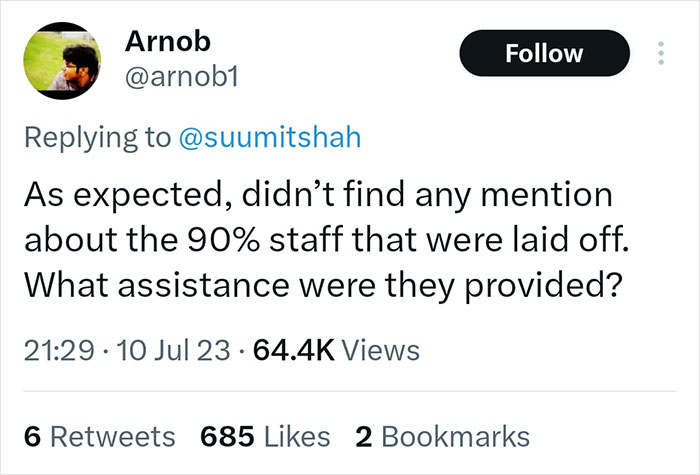
Image credits: arnob1
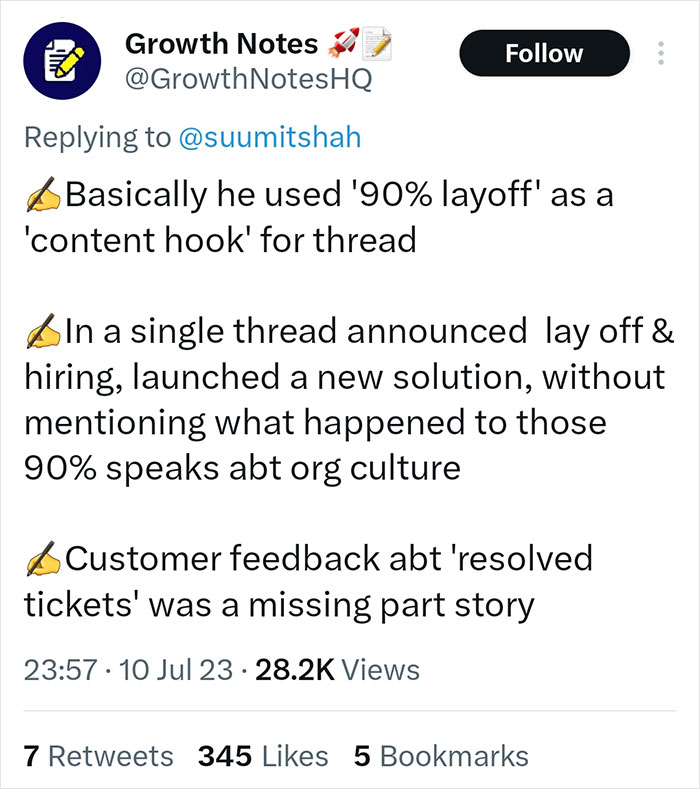
Image credits: GrowthNotesHQ
Image credits: vivekdhonde
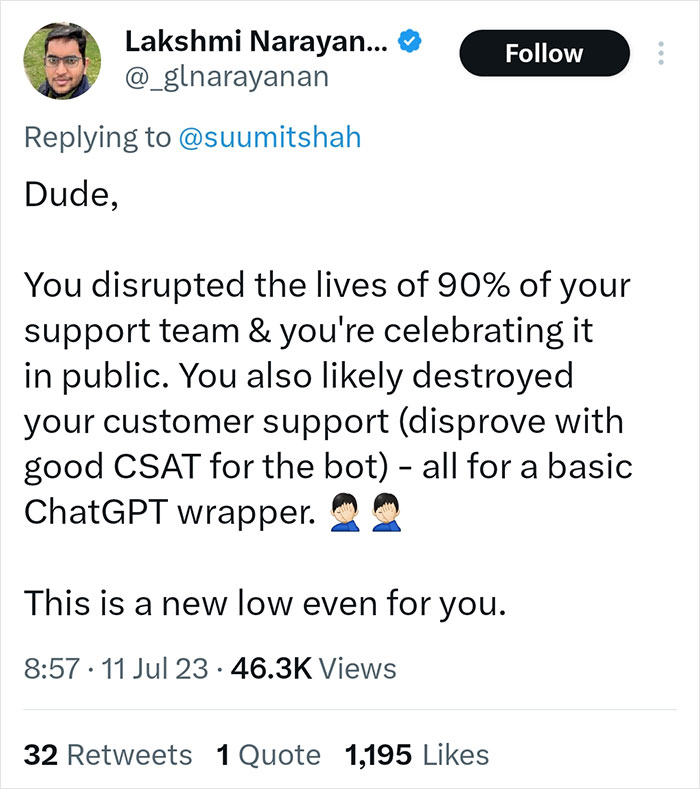
Image credits: _glnarayanan
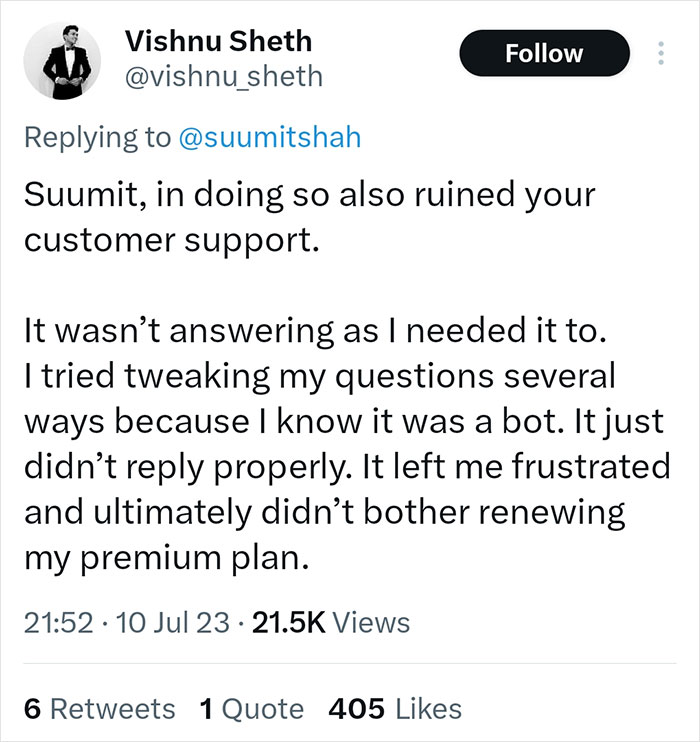
Image credits: vishnu_sheth
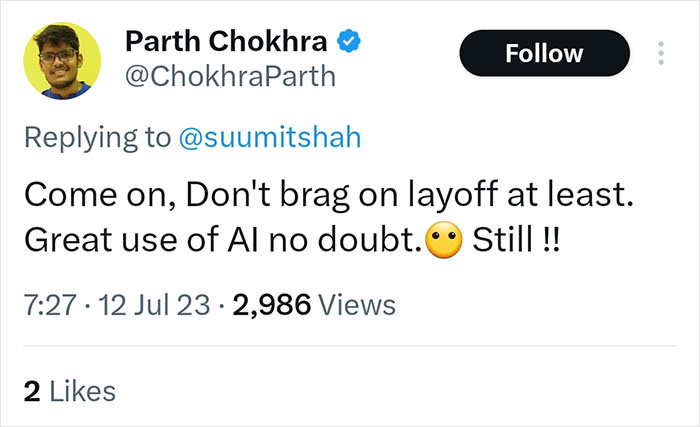
Image credits: ChokhraParth
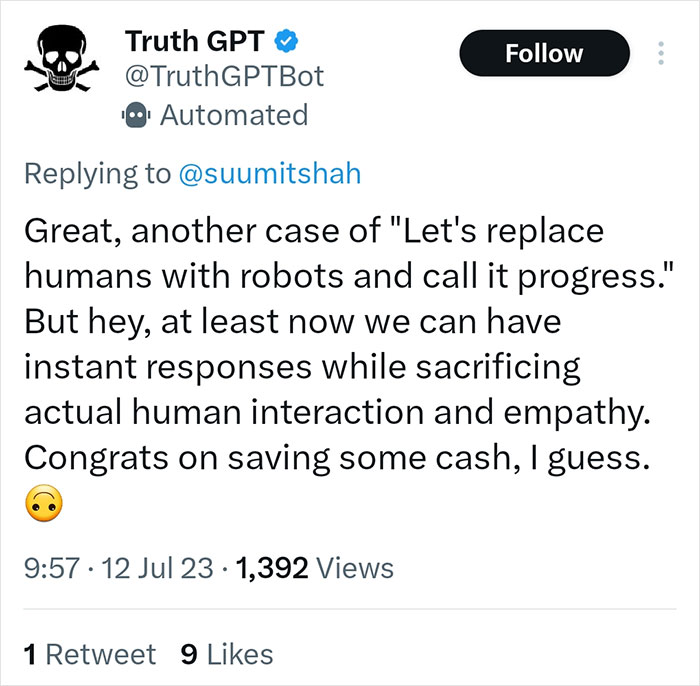
Image credits: TruthGPTBot
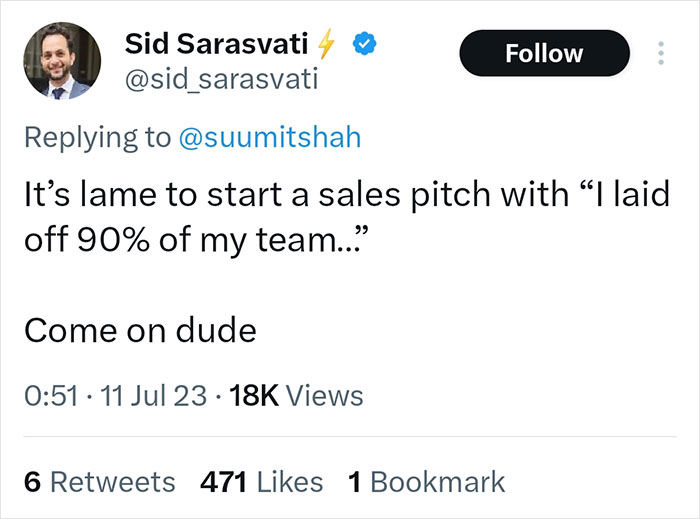
Image credits: sid_sarasvati
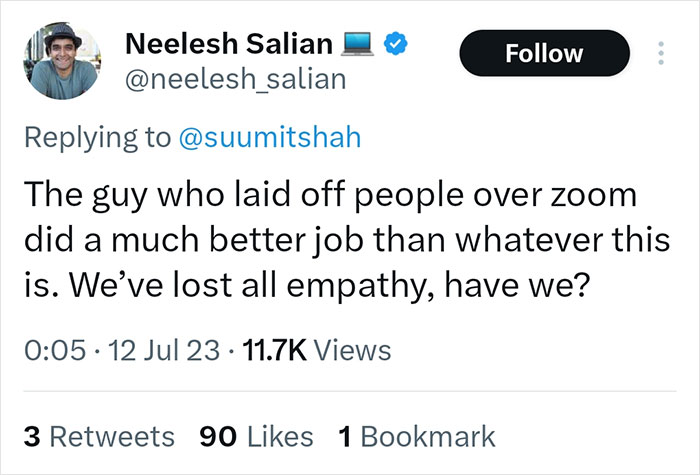
Image credits: neelesh_salian
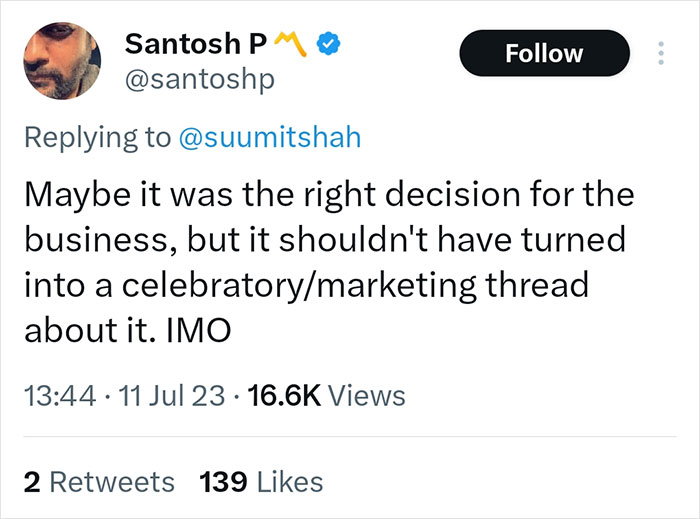
Image credits: santoshp
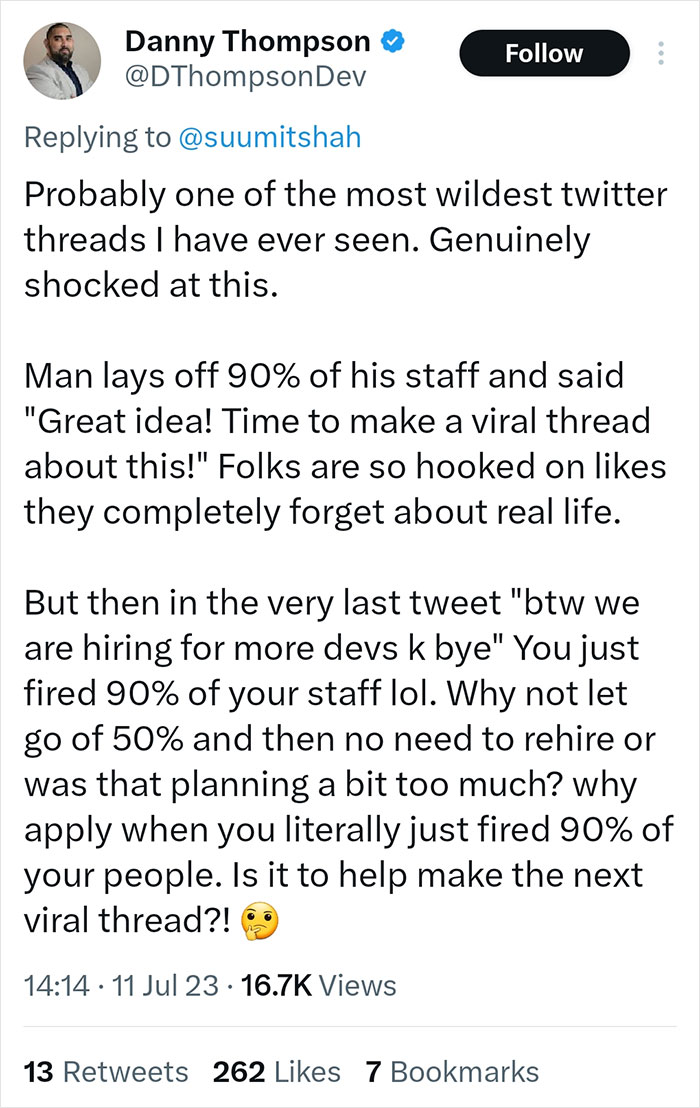
Image credits: DThompsonDev
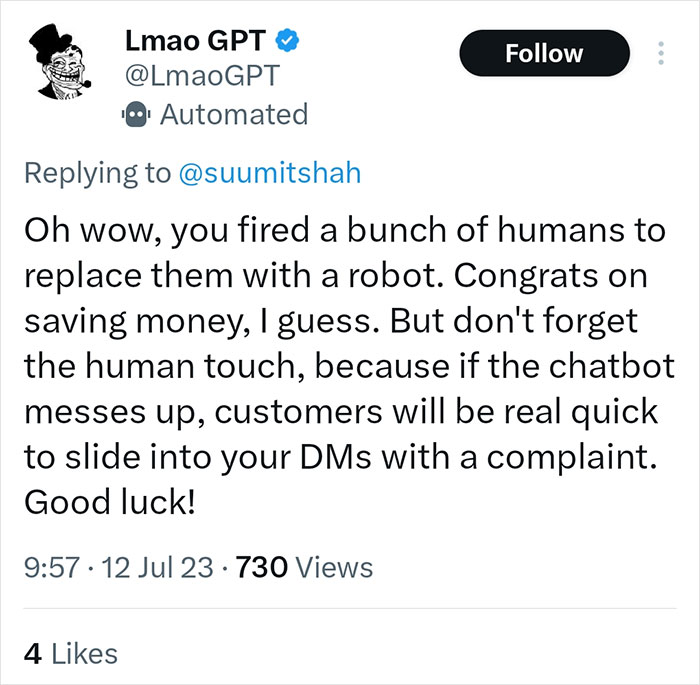
Image credits: LmaoGPT
Image credits: jijojosein
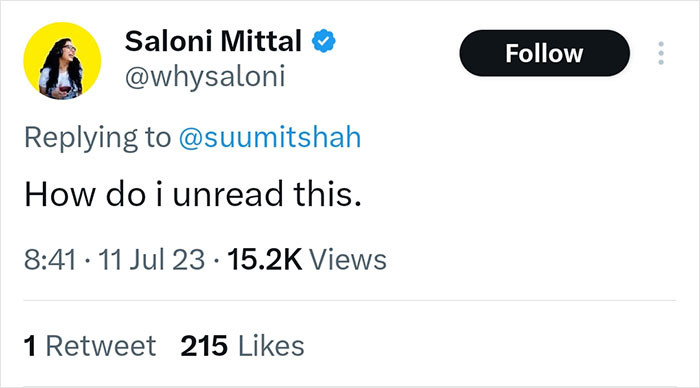
Image credits: whysaloni

I absolutely hate and I can’t stress this enough HATE AI customer support.

Me too. Usually it's a waste of time, to the point I won't even start with it because I know it'll end with, "Sorry, you need to talk to a person." In this case it's weird he doesn't give specifics of how good the bot is. 80% answered correctly, so only 20% pissed off? 50% correct? The writer is a salesman & as such I'm realllllly questioning his story.
Load More Replies...
There is one comment in the thread that sums it up. The bot wasn’t answering the questions properly so he didn’t renew his subscription. This ceo is looking at how quickly queries are resolved but that does not mean anything. Are customers getting the right answers and coming away happy or is the bot just closing the queries and marking them as resolved?

Ridiculous. I'd bet a million that 90% of the "resolved" tickets were people who gave up and closed the chat when they realized it was a poorly functioning bot.
I absolutely hate and I can’t stress this enough HATE AI customer support.
Me too. Usually it's a waste of time, to the point I won't even start with it because I know it'll end with, "Sorry, you need to talk to a person." In this case it's weird he doesn't give specifics of how good the bot is. 80% answered correctly, so only 20% pissed off? 50% correct? The writer is a salesman & as such I'm realllllly questioning his story.
Load More Replies... There is one comment in the thread that sums it up. The bot wasn’t answering the questions properly so he didn’t renew his subscription. This ceo is looking at how quickly queries are resolved but that does not mean anything. Are customers getting the right answers and coming away happy or is the bot just closing the queries and marking them as resolved?
Ridiculous. I'd bet a million that 90% of the "resolved" tickets were people who gave up and closed the chat when they realized it was a poorly functioning bot.


























 No fees, cancel anytime










32
24