Get Premium
Dark mode theme is available exclusively for premium users. Learn more about the benefits of subscribing.
No fees, cancel anytime.

 Dark Mode Ad-Free Browsing Unlimited Content
 Ad-Free Browsing Unlimited Content Dark Mode
Join 1.2 million Panda readers who get the best art, memes, and fun stories every week!

It’s normal for parents to worry about their children. Where they are, who they’re with, and what they’re doing are all things that reasonably enter every parent’s mind. Tracking apps and location-sharing technology can help to ease a bit of this worry.
But when the “child” in question is your 31-year-old (otherwise perfect) boyfriend and his mother is still using location sharing to track his every move, it might be fair to be a little, erm, concerned. Particularly if she keeps buzzing her way into your dates like a digital third wheel.
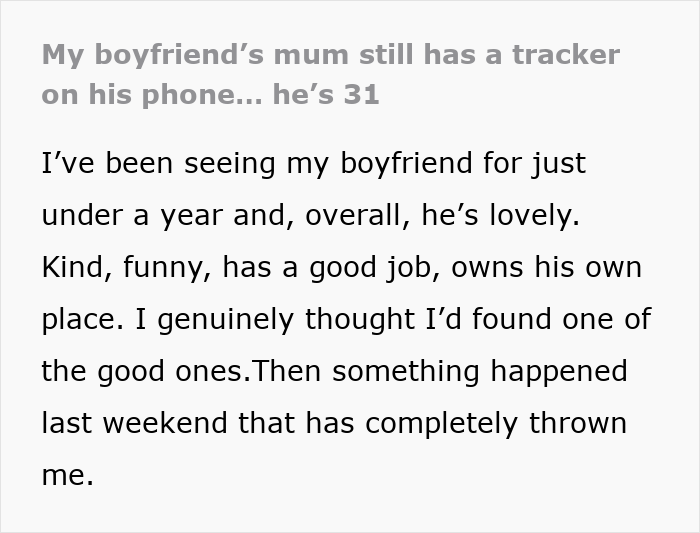
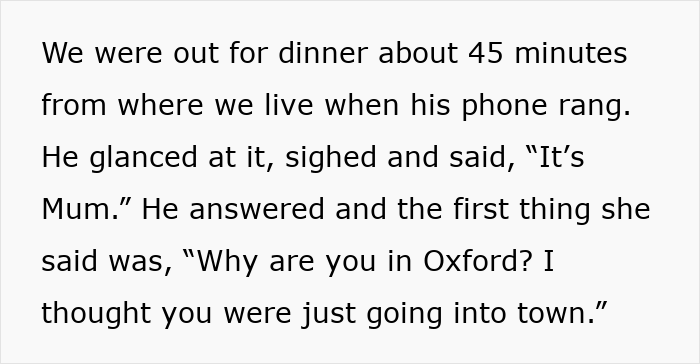
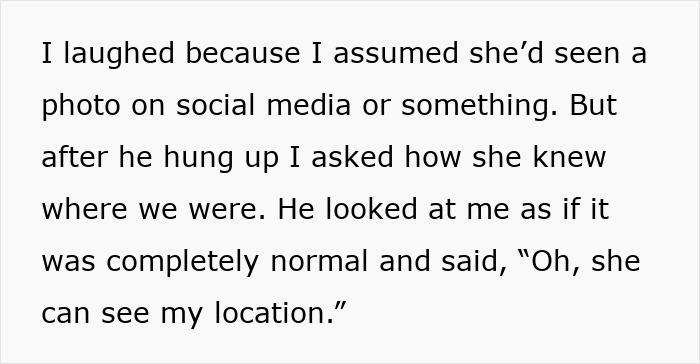
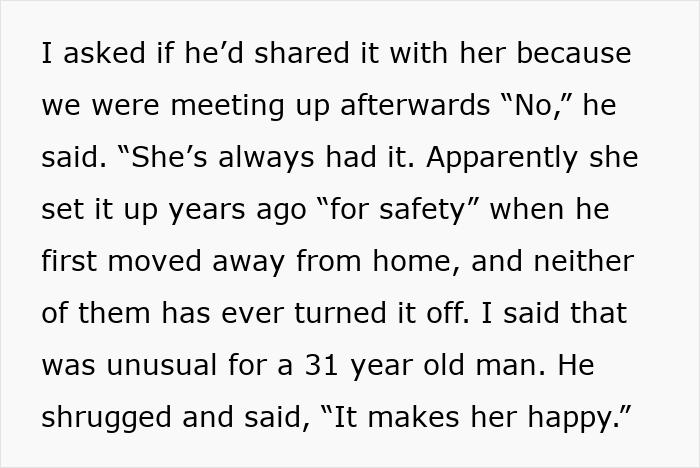
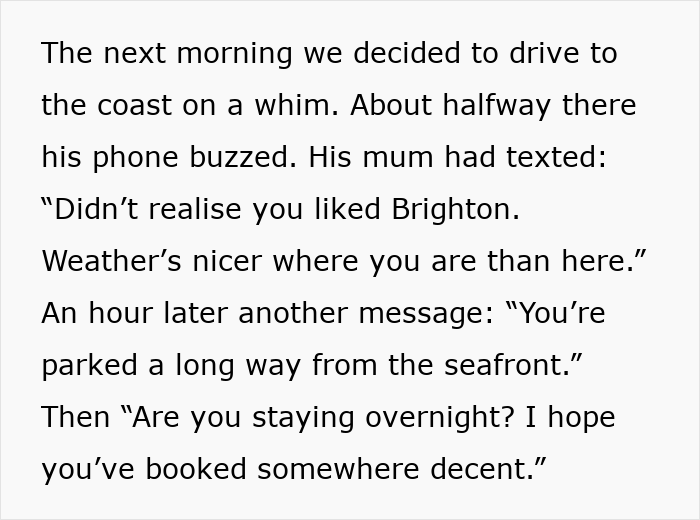
Perplexed by the mom’s constant intrusions—calls, messages, and even an unannounced drop-in—Mumsnet user TryingNotToJudgeMyBf took to the forum to ask if it was reasonable to think this kind of monitoring was “completely bizarre” or if, as the boyfriend seemed to think, it was actually no big deal.
Image credits: Ron Lach / Pexels (not the actual photo)
Image credits: cottonbro studio / Pexels (not the actual photo)
Image credits: Vitaly Gariev / Pexels (not the actual photo)
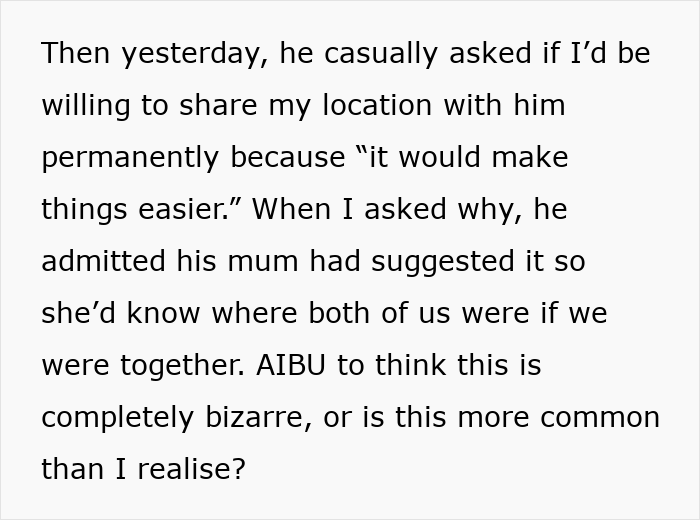
Image credits: TryingNotToJudgeMyBf
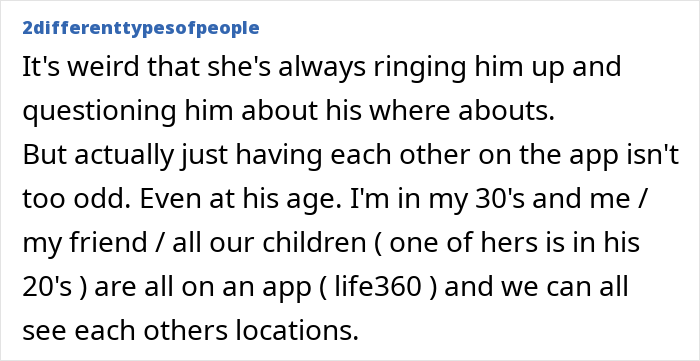
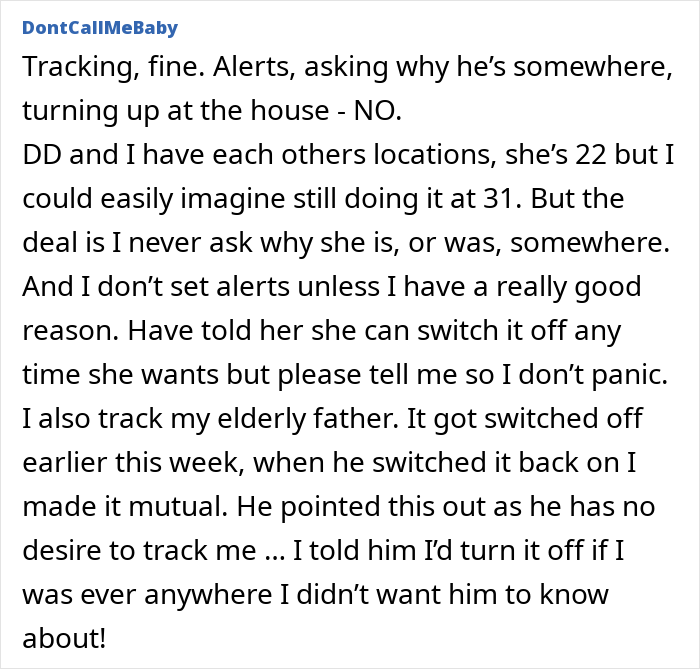
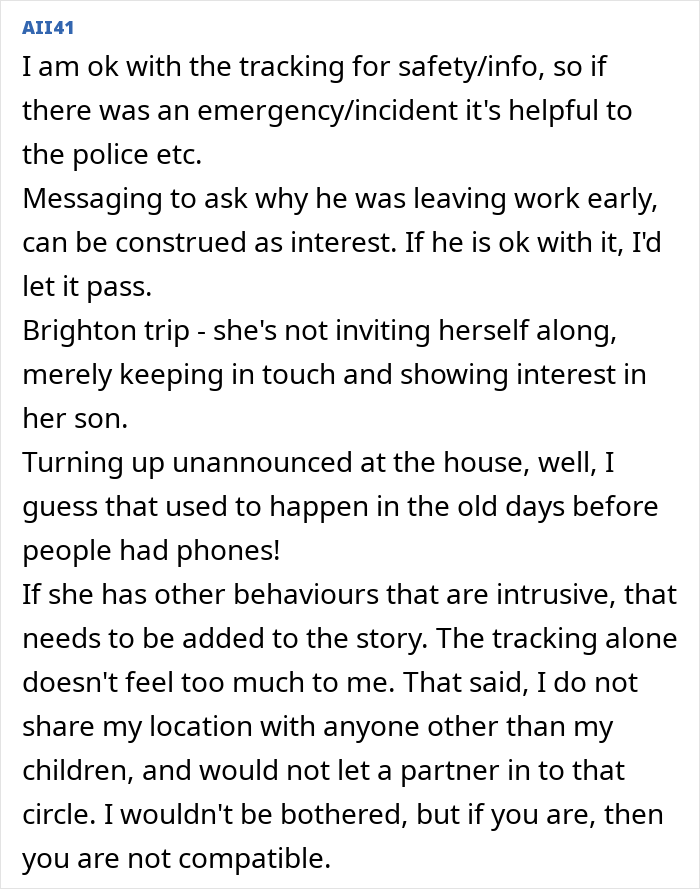
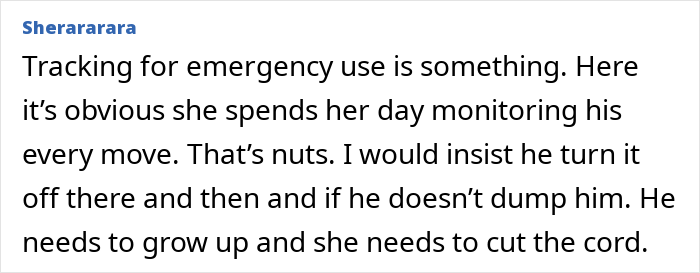
Location sharing is hardly new, and plenty has been said about both its perks and its pitfalls. On the one hand, knowing where a loved one is can offer reassurance, make coordinating plans easier, and be useful in an emergency. On the other, having access to someone’s whereabouts at any given time raises some pretty obvious questions about privacy, boundaries, and independence.
Still, there’s no denying how commonplace the technology has become. As Kate Lindsay, writing for Bustle, points out, it’s even found a place in pop culture, from Taylor Swift’s The Black Dog to an episode of Netflix’s Love Is Blind. Sharing locations has even become something of a relationship milestone for some couples, with The New York Times once calling it “the final frontier in digital expressions of coupledom.”
And the appeal of the technology isn’t difficult to understand, particularly for parents. A 2026 C.S. Mott Children’s Hospital poll found that 52% of parents surveyed tracked their 18- to 25-year-old children at least occasionally. Of those who did, 68% cited peace of mind as a reason, 64% pointed to emergencies, and a whopping 95% said tracking helped them worry less.
It’s worth noting, though, that the man in this story is 31—a good few years outside the age range covered by the Mott poll. And other research suggests parental tracking becomes considerably less common as children get older. A 2024 Pew Research Center survey found that while 42% of parents answering about an 18- to 24-year-old tracked their location at least occasionally, that dropped to 21% for 25- to 29-year-olds and just 9% for those with children in their early 30s.
Regardless of age, research shows that tracking a loved one for “reassurance” can sometimes backfire and have the opposite effect. Nearly a quarter of parents in the Mott poll who tracked their young adult children admitted it sometimes made them more anxious, not less.
Kara Alaimo, a professor of communication at Fairleigh Dickinson University, explained to CNN that this is because location data gives us only one piece of the picture. We have to fill in the blanks ourselves. In this way, “This kind of tracking can feed and cause anxiety in parents,” she said. “You have to make assumptions and jump to conclusions, which may or may not be accurate.”
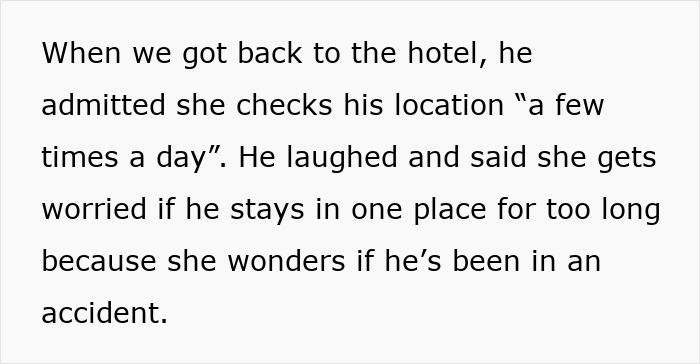
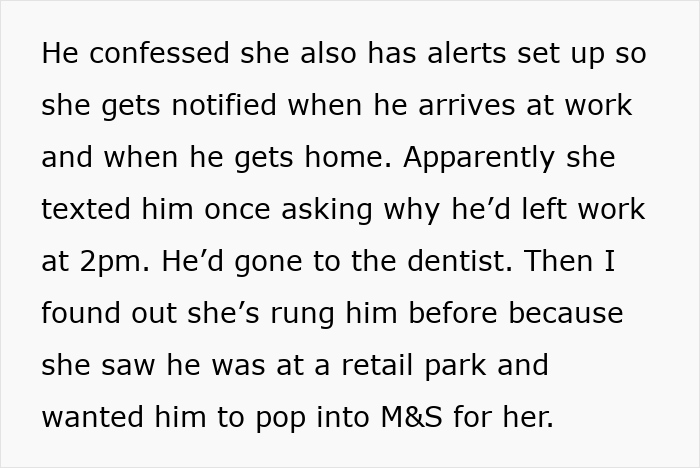
And we see this play out quite clearly in this story. The man once had to explain to his mother why he’d left work at 2 p.m. (he’d gone to the dentist), and he even admitted that his mother gets worried if he’s in one place for too long because she starts to fear he’s been in an accident.
But even if constantly checking a loved one’s location provides temporary reassurance, that reassurance can come with a catch.
According to clinical psychologist and cognitive behavioral psychotherapist Anca Ivu, over time, repeatedly checking someone’s location can become a way of regulating fear and uncertainty. And with repeated checking, she explains, the brain can begin to learn: “I cannot feel safe unless I verify.” This then becomes about something deeper than simply finding out where someone is. It becomes about avoiding “the difficulty of tolerating uncertainty.”
And if checking becomes the thing that makes that uncertainty bearable, location sharing may end up feeding the very anxiety it was supposed to lessen.
Some experts go even further, warning that checking can become less of a tool for reassurance and more of a tool for control.
For instance, Sarah Clark, a University of Michigan research scientist and co-director of the Mott poll, warns that constant tracking can prompt parents to start micromanaging their adult children’s daily lives, asking things like “Hey, why aren’t you in class? I thought you had to work at 9. Didn’t you have this appointment? Weren’t you going to exercise today?”
Again, the parallels with this story are striking.
“With that type of hovering,” she says, “the young adult has less ownership of their own schedule and obligations, and less responsibility to figure out how to be a successful adult.”
Clinical psychologist Dr. Mark McConville raises a similar concern, saying that tracking “may impede a young adult’s ability to become fully independent from their parents” and “can also undermine a young adult’s confidence in their ability to manage their own life.”
And according to Clark, once location sharing becomes a way for parents to meddle in those everyday decisions, it can signal something bigger: a parent struggling to make the transition from parenting a child to parenting a young adult.
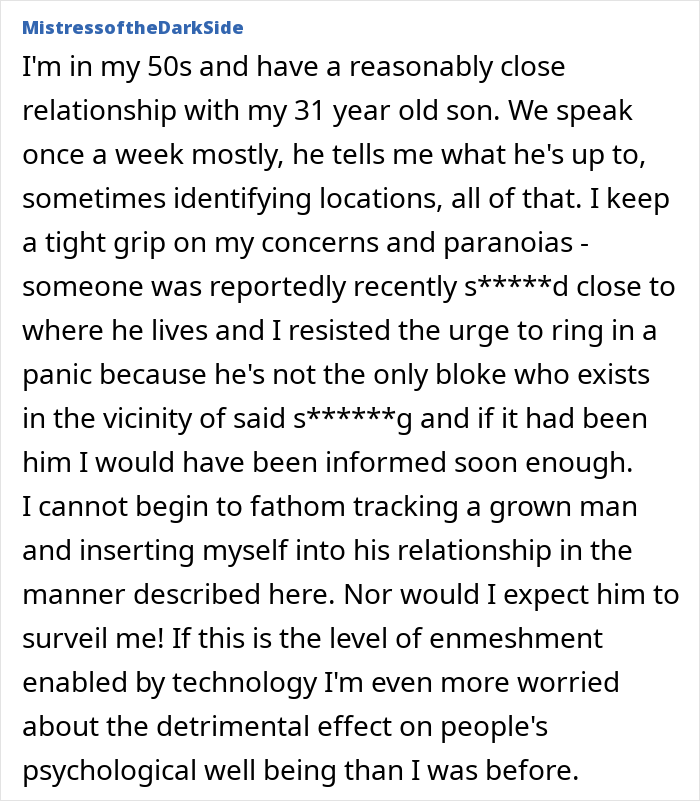
The man in this story, however, isn’t exactly transitioning into adulthood—he’s 31. And yet, judging by the mother’s behavior, it’s not hard to see why some thought something more complicated was going on. In fact, more than one commenter had a word it: “enmeshment.”
Broadly speaking, enmeshment refers to relationships where personal boundaries become unclear and family members struggle to maintain independence from one another. In a parent-child relationship, that might mean a parent remaining unusually involved in an adult child’s life, or the adult child feeling responsible for keeping the parent happy.
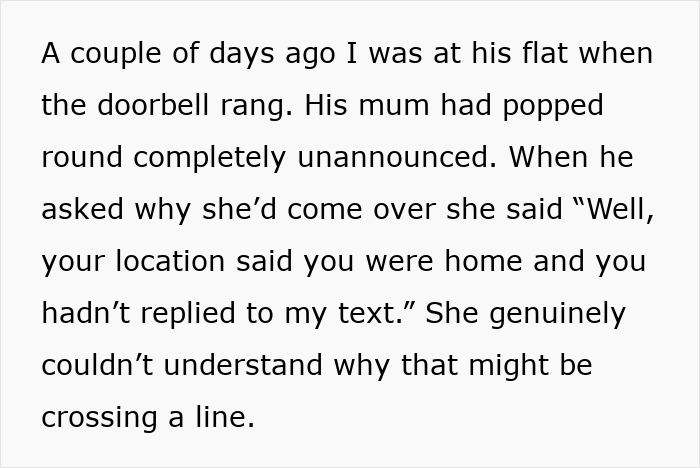
Of course, one anonymous post on Mumsnet isn’t enough to label this relationship as enmeshed, but some details do make boundaries worth considering: the boyfriend keeping location sharing on because “it makes her happy,” his mother checking it “a few times a day,” setting alerts for his movements, and even showing up unannounced when he didn’t respond to a text.
Then, of course, there’s also the fact that she reportedly suggested OP permanently share their location too.
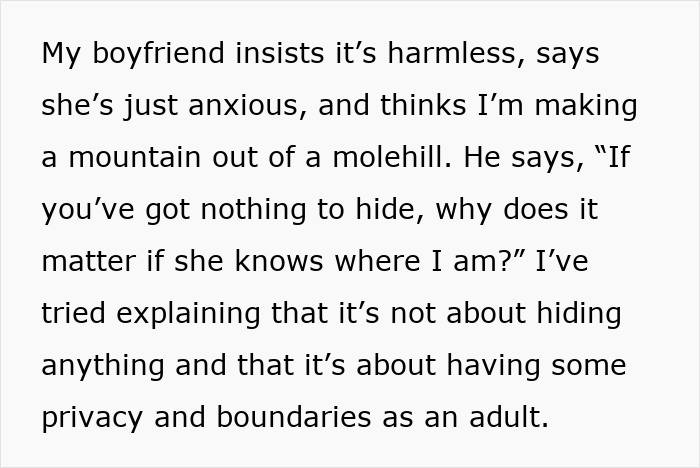
And while OP doesn’t say whether they intend to agree, it’s not difficult to see how this could become a bigger issue in their relationship. The couple already seems to view privacy very differently. “If you’ve got nothing to hide, why does it matter if she knows where I am?” the boyfriend reportedly asked—a question that could just as easily arise if OP chooses not to share their own location.
For OP, however, privacy isn’t about hiding anything. It’s about having “some privacy and boundaries as an adult.”
Sharing your location isn’t automatically proof of trust, and wanting privacy isn’t evidence of secrecy. As Anca Ivu puts it, sharing because you genuinely want to is very different from sharing because saying no might cause “suspicion, guilt, or conflict.”
At the end of the day, if reassurance—or maybe even just connection—is what someone wants, tracking isn’t the only option. Clark suggests parents and their adult children can agree on occasional check-ins instead. Therapist and author Joana Harrison goes a step further, arguing that relying on location sharing can mean missing the human connection of a simple text like “I’ll be home in an hour, on my way.”
And perhaps that’s the bigger point: knowing where someone is isn’t quite the same as hearing from them. Location sharing can be convenient and reassuring, but healthy connection still leaves room for privacy, independence, and boundaries.

By entering your email and clicking Subscribe, you're agreeing to let us send you customized marketing messages about us and our advertising partners. You are also agreeing to our Privacy Policy.
Thank you! You've successfully subscribed to newsletters!







































 No fees, cancel anytime






















31
3