Get Premium
Dark mode theme is available exclusively for premium users. Learn more about the benefits of subscribing.
No fees, cancel anytime.

 Dark Mode Ad-Free Browsing Unlimited Content
 Ad-Free Browsing Unlimited Content Dark Mode
Join 1.2 million Panda readers who get the best art, memes, and fun stories every week!

Your first serious relationship comes with a lot of new experiences—excitement, heartache, and lessons you never see coming. It’s a time of learning what love really feels like and what it sometimes costs.
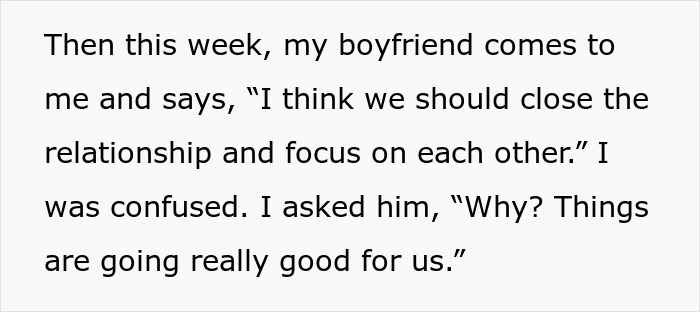
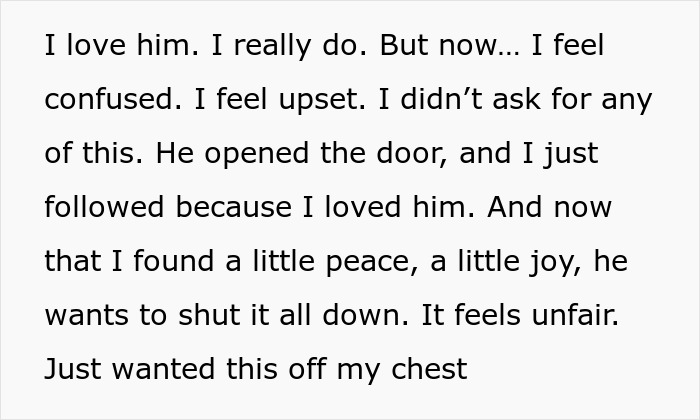
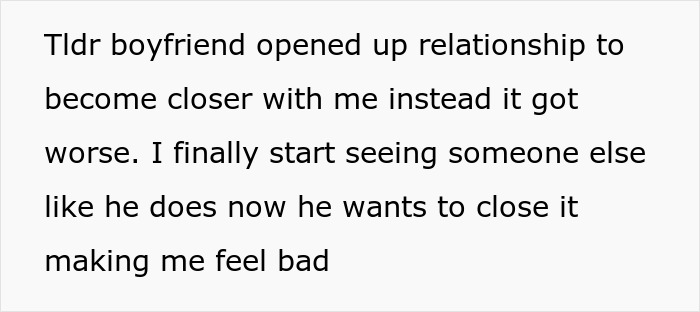
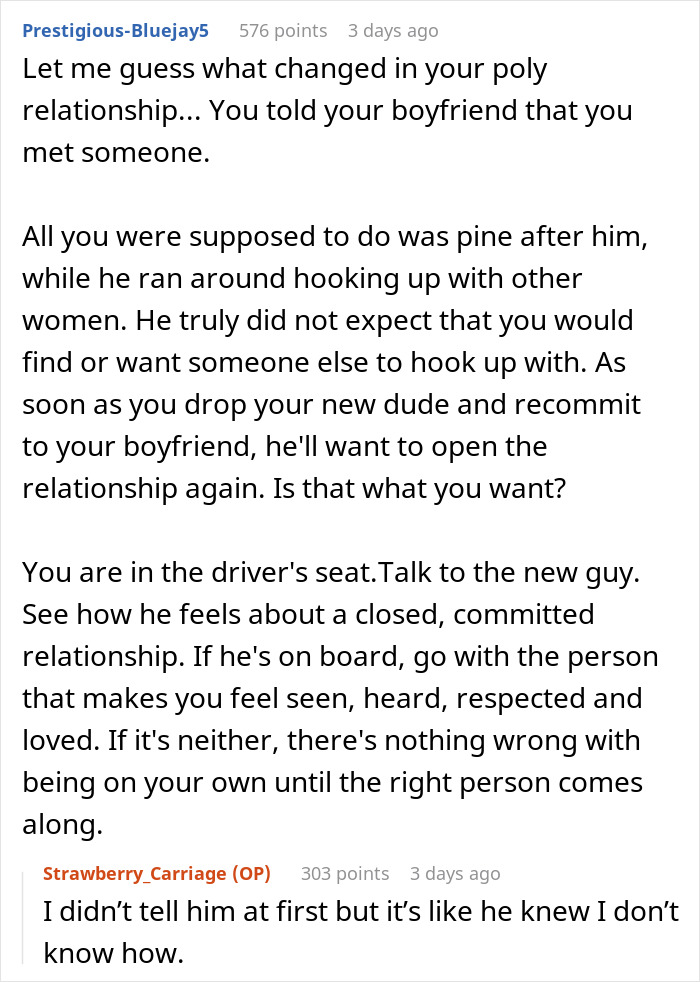
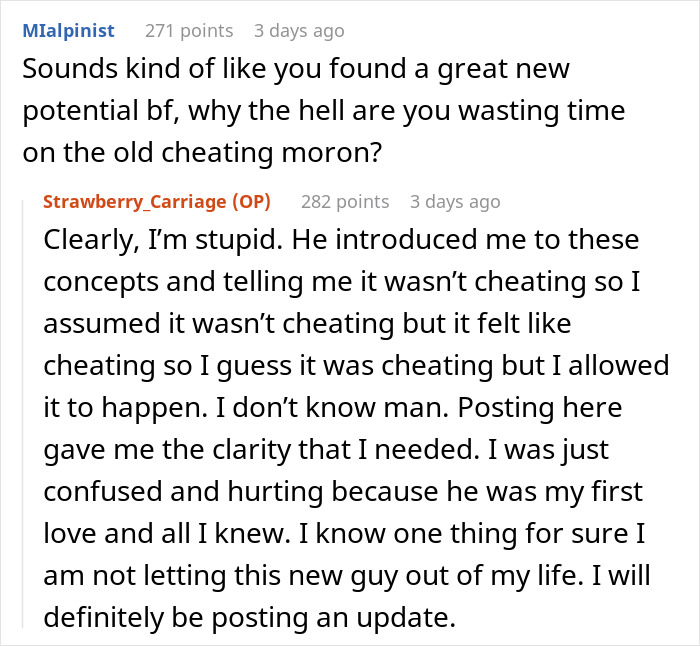
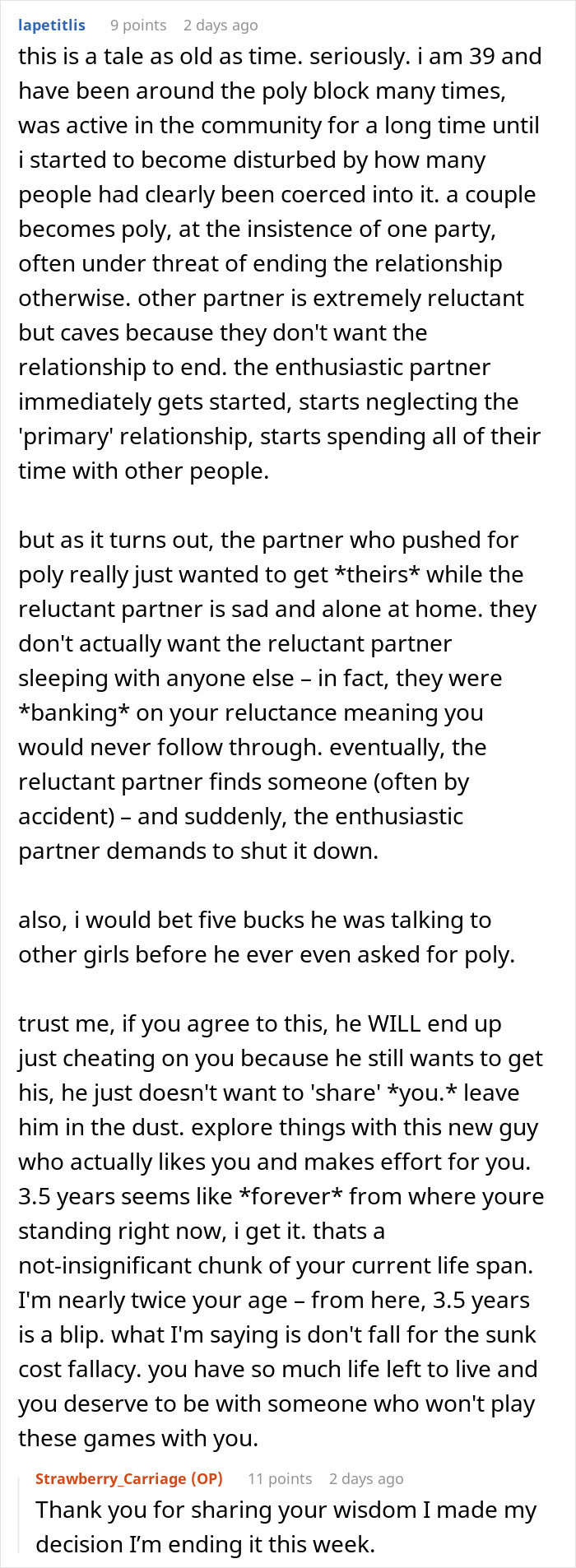
One woman found herself in exactly that position. When her boyfriend suggested opening their relationship to fix what he called a fading spark, she agreed, afraid of losing what they had. But in the process, she met someone else, someone who treated her with care and made her feel genuinely wanted. That’s when her boyfriend suddenly insisted they go back to being monogamous.
Now, she’s not sure she wants to play by his rules anymore.
Image credits: denisapolka (not the actual image)
Image credits: freepik (not the actual image)
Image credits: Szabo Viktor (not the actual image)
Image credits: Katerina Holmes (not the actual image)
Image credits: Timur Weber (not the actual image)
Image credits: Strawberry_Carriage
In a world that celebrates monogamy and idealizes the idea of “finding the one,” polyamory remains a complicated and often misunderstood topic. While it’s still up for debate how successful open relationships are long-term, one thing is clear—it’s hard to build something healthy when one person feels pressured into it.
It does, however, open the door to a much bigger conversation: boundaries. How far are we willing to stretch ourselves for someone we love? And when does compromise turn into self-abandonment?
In recent years, the word “boundaries” has made its way from therapy rooms into everyday conversations. But just because we talk about them more doesn’t mean we’ve gotten better at using them.
According to research by the Thriving Center of Psychology, 58% of people in the US admit they have a hard time saying no to others. It’s even more common among women—65% say it’s difficult for them, compared to 49% of men. Friends and parents are the hardest to turn down, but romantic partners aren’t far behind, with 28% finding it tough to assert themselves with someone they’re dating.
It makes sense. The closer someone is to us, the more we care about protecting that connection. We worry that saying no might hurt them, disappoint them, or even threaten the relationship. And when we’re in a vulnerable position, like the woman in this story, it’s even harder to push back.
But boundaries are a part of every relationship. They come up at all stages, whether it’s about how fast things are moving, what counts as cheating, or how to manage money together. That’s why it’s so important to talk about them and to keep checking in as things evolve.
PsychCentral offers a few tips for setting boundaries that actually work. First, don’t wait. The earlier you bring something up, the easier it is to avoid confusion later. And even if the timing isn’t perfect, bringing it up late is still better than never addressing it at all.
Expect hard conversations, and have them anyway. “Communication is key to relationships,” Dr. Jacqui Gabb, professor of sociology and intimacy at The Open University, told PsychCentral. “You do need to have [conversations], even if they’re really difficult things to talk about, like sex.”
It also helps to use “I” statements rather than blaming language. As Gabb puts it, “I think all communication should start with ‘I feel.’” If you begin with accusations like “you never” or “you always,” people tend to shut down and stop listening.
Finally, don’t feel guilty asking for space. Wanting time for yourself doesn’t mean you’re pushing someone away; it just means you’re making room to recharge. Just make sure you’re kind and thoughtful in how you say it.
Image credits: nensuria (not the actual image)

By entering your email and clicking Subscribe, you're agreeing to let us send you customized marketing messages about us and our advertising partners. You are also agreeing to our Privacy Policy.
Thank you! You've successfully subscribed to newsletters!

It's not poly when what you're actually doing is testing the waters with a sidepiece.

Nor is it poly when either or both parties have partner/s outside of their own relationship. "Open" as it's described in the title is the more correct term for this.
Load More Replies...
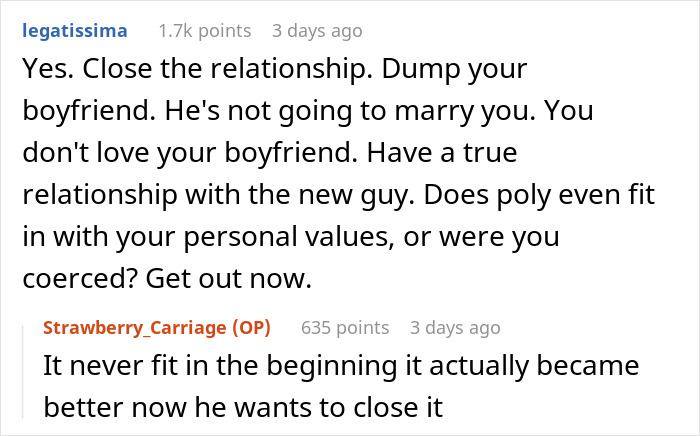
He may well be the most amazing person you'd ever met. But bear in mind that he was also the *only* person you'd ever met. Case in point, the second person you ever met was even more amazing. Ditch the manipulative deadbeat.

I've come to realize, poly only works, if a couple is already very close - otherwise it'll break the relationship. Another aspect about poly is, it is so, so, so much work and not "I spend an hour with partner 1 here, and an hour with partner 2 there". If poly doesn't mean chasing one one-night-stand after another but seeing the same second person, you'll find yourself in two relationships - and it's the work of two relationships. You can barely equally divide quality time. If both partners are not on the same page with this, then don't do it. If you want guidelines on "xyz is *OUR* place exclusively", don't do it. I'd even go as far as saying, if you have a problem with your partner mentioning the other partner, don't do it. Poly can be a thrilling, personally enhancing thing, but it takes confident, grown up people to live it properly. Been there, done that, didn't mess up my marriage, also because I'm married to a man and had a (herself married) girlfriend. No secrets.

The only time I've heard of polyamory truly working is when EVERYONE is "together", so to speak. There's an author/artist named Jennifer Diane Reitz who lives in a polyamorous relationship with her three spouses. Polyamory cannot usually sustainably just be "let's just fúck whoever we want to and still say we're dating/married." Everyone has to be on the same page, if not all living together. Everyone has to be comfortable and familiar with everyone else in the relationship, even if they don't have actual s*xúal contact with some of them. I know that there are some cultures where polyamory is practiced (and other things like line marriages) and that tells me that it clearly CAN work; monogamy is not the "only possible relationship type". But, as you said, everyone in the relationship has to be close AND mature enough, or else it's just a person/persons who want to hook up with other people while still having the veneer of a "partner".
Load More Replies... It's not poly when what you're actually doing is testing the waters with a sidepiece.
Nor is it poly when either or both parties have partner/s outside of their own relationship. "Open" as it's described in the title is the more correct term for this.
Load More Replies... He may well be the most amazing person you'd ever met. But bear in mind that he was also the *only* person you'd ever met. Case in point, the second person you ever met was even more amazing. Ditch the manipulative deadbeat.
I've come to realize, poly only works, if a couple is already very close - otherwise it'll break the relationship. Another aspect about poly is, it is so, so, so much work and not "I spend an hour with partner 1 here, and an hour with partner 2 there". If poly doesn't mean chasing one one-night-stand after another but seeing the same second person, you'll find yourself in two relationships - and it's the work of two relationships. You can barely equally divide quality time. If both partners are not on the same page with this, then don't do it. If you want guidelines on "xyz is *OUR* place exclusively", don't do it. I'd even go as far as saying, if you have a problem with your partner mentioning the other partner, don't do it. Poly can be a thrilling, personally enhancing thing, but it takes confident, grown up people to live it properly. Been there, done that, didn't mess up my marriage, also because I'm married to a man and had a (herself married) girlfriend. No secrets.
The only time I've heard of polyamory truly working is when EVERYONE is "together", so to speak. There's an author/artist named Jennifer Diane Reitz who lives in a polyamorous relationship with her three spouses. Polyamory cannot usually sustainably just be "let's just fúck whoever we want to and still say we're dating/married." Everyone has to be on the same page, if not all living together. Everyone has to be comfortable and familiar with everyone else in the relationship, even if they don't have actual s*xúal contact with some of them. I know that there are some cultures where polyamory is practiced (and other things like line marriages) and that tells me that it clearly CAN work; monogamy is not the "only possible relationship type". But, as you said, everyone in the relationship has to be close AND mature enough, or else it's just a person/persons who want to hook up with other people while still having the veneer of a "partner".
Load More Replies...





























 No fees, cancel anytime




































34
24