Get Premium
Dark mode theme is available exclusively for premium users. Learn more about the benefits of subscribing.
No fees, cancel anytime.

 Dark Mode Ad-Free Browsing Unlimited Content
 Ad-Free Browsing Unlimited Content Dark Mode
Join 1.2 million Panda readers who get the best art, memes, and fun stories every week!
In this day and age, it’s hard to have a social life if you don’t have social media. According to the Pew Research Center, up to 71% of Americans are on social media platforms like Facebook, Instagram, and Snapchat. Some just like to keep up with family and friends, but others share a good portion of their everyday lives.
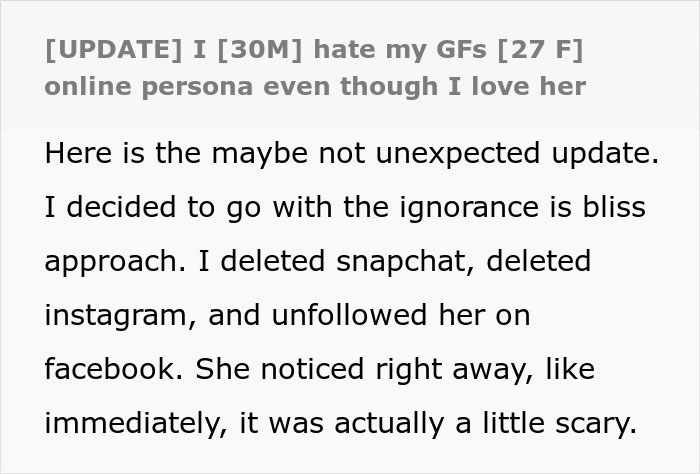
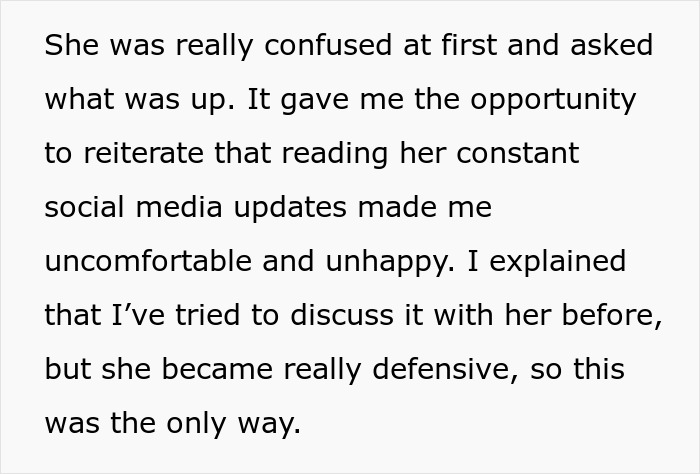
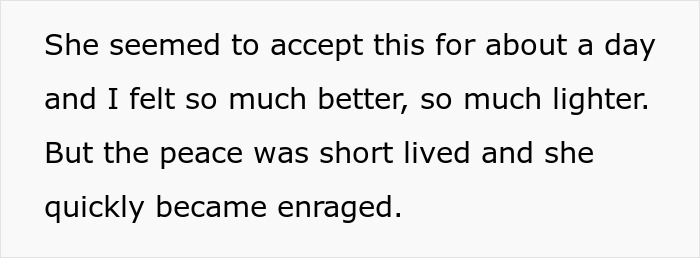
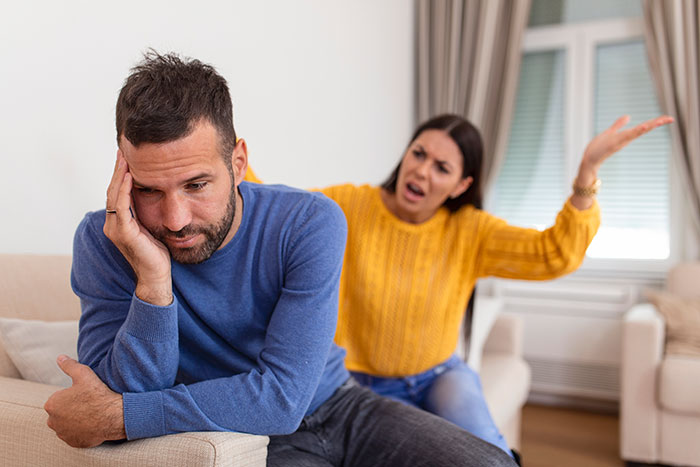
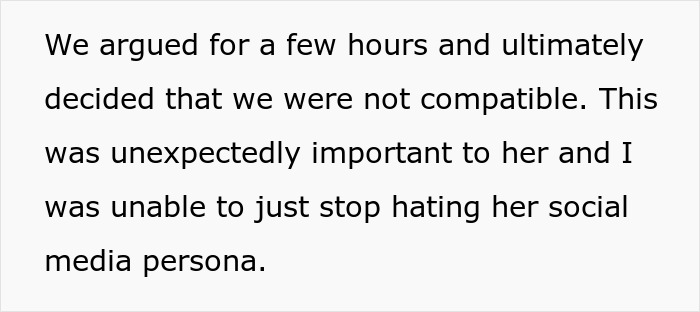
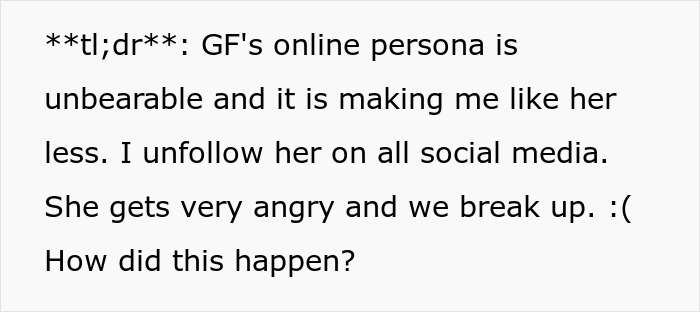
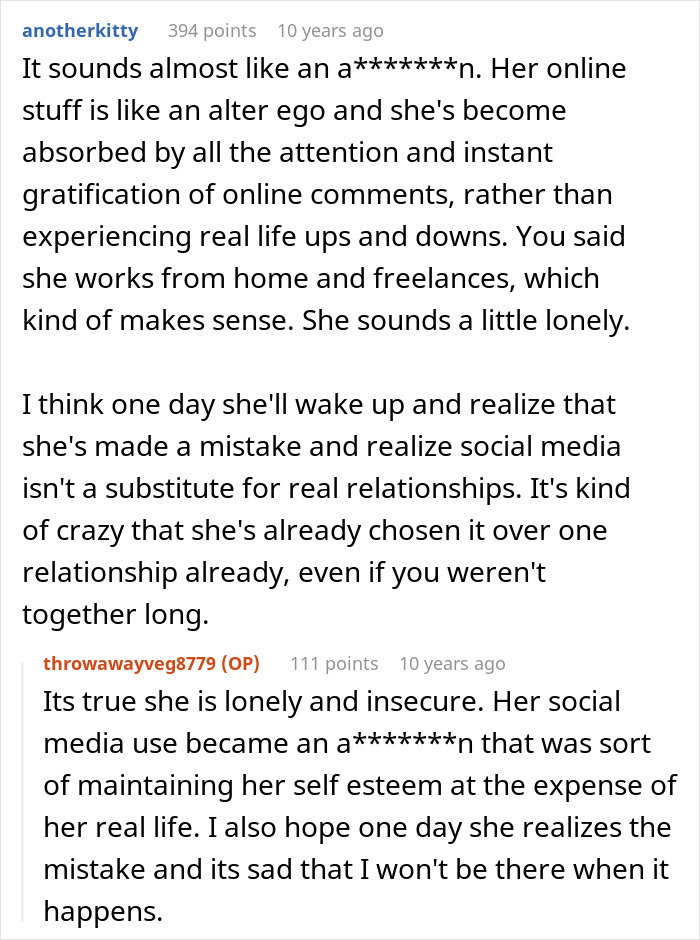
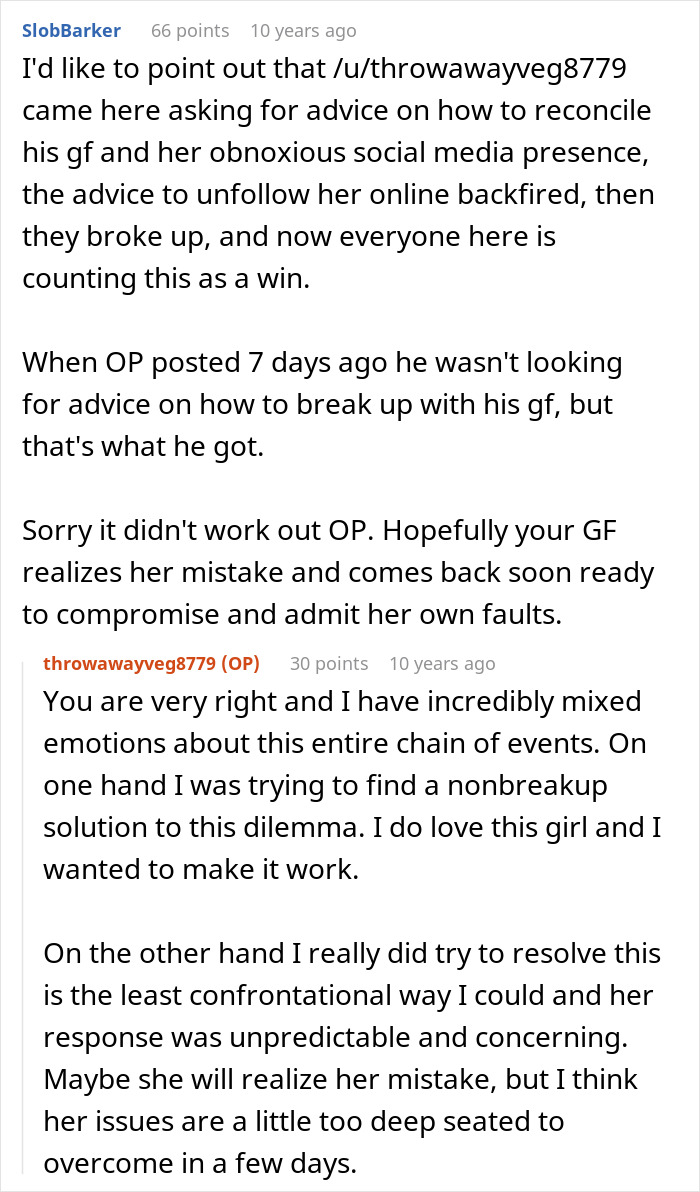
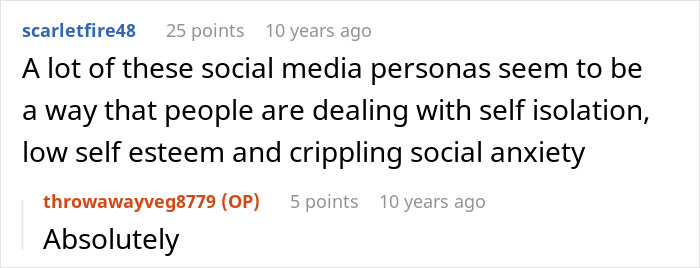
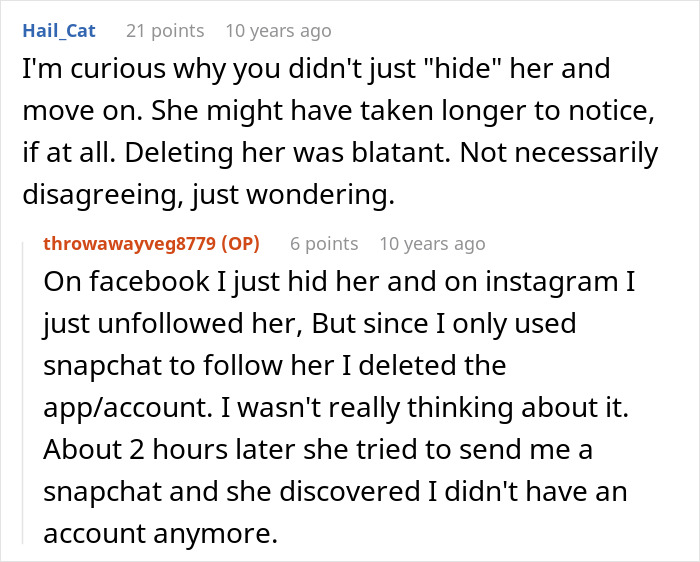
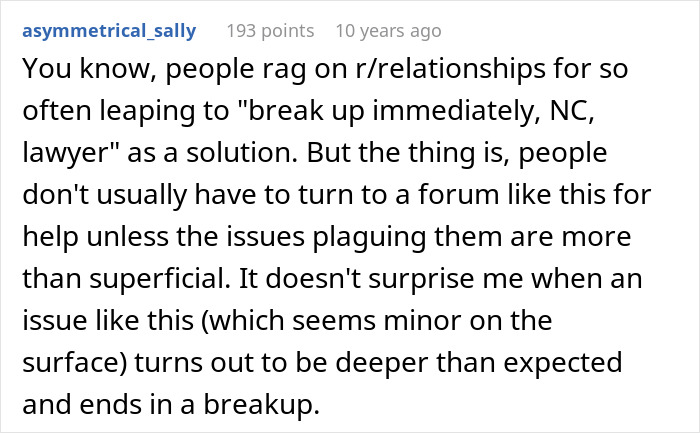
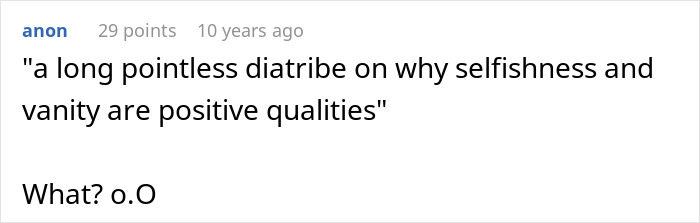
This woman liked to share a little bit too much of her life online, at least according to her boyfriend. He said she would make about 20 posts a day, and her behavior was making him see her as shallow and vain. He tried to solve the problem by deleting the apps, but that only made his entire relationship explode.
Image credits: lookstudio (not the actual image)
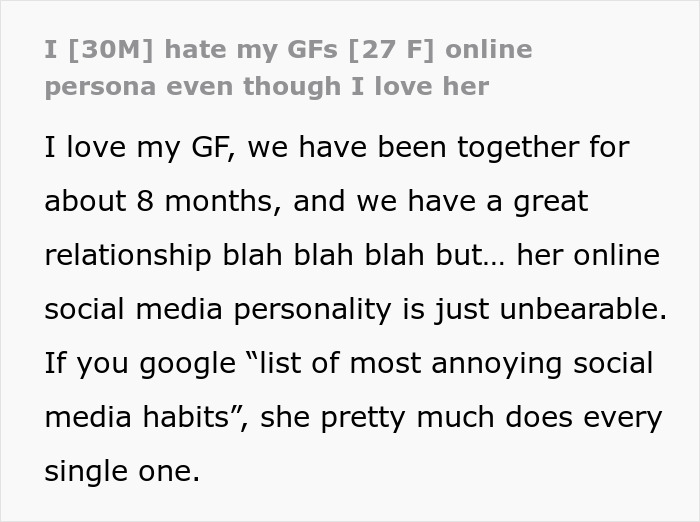
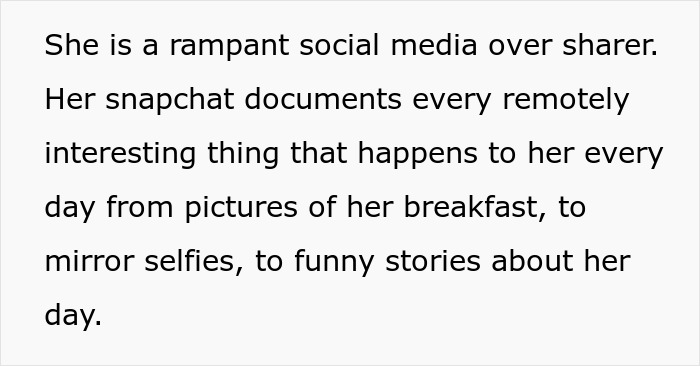
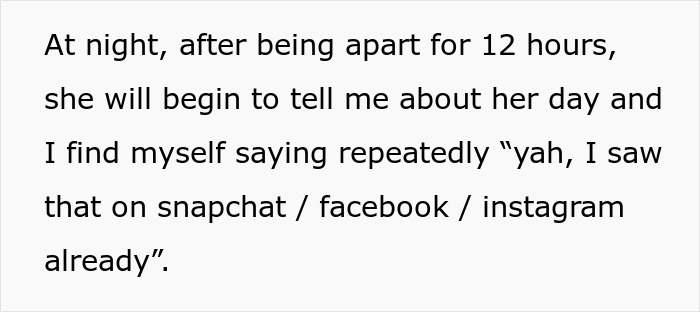
Image credits: SkelDry (not the actual image)
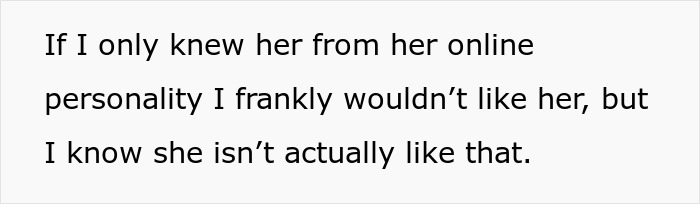
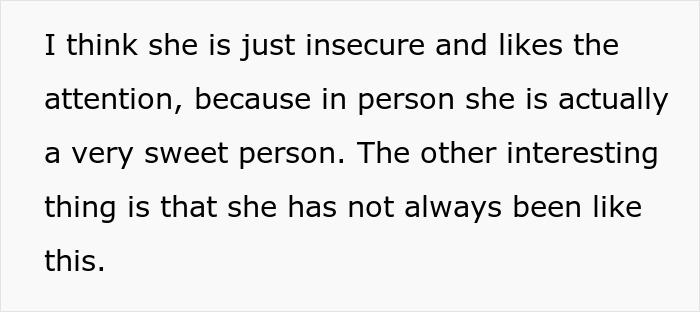
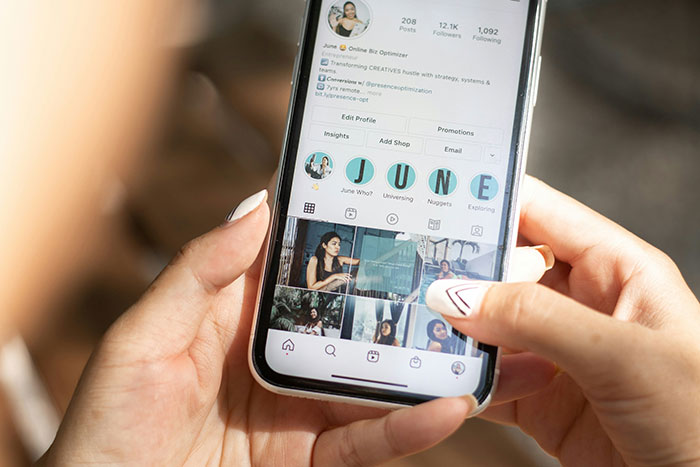
Image credits: June Aye (not the actual image)
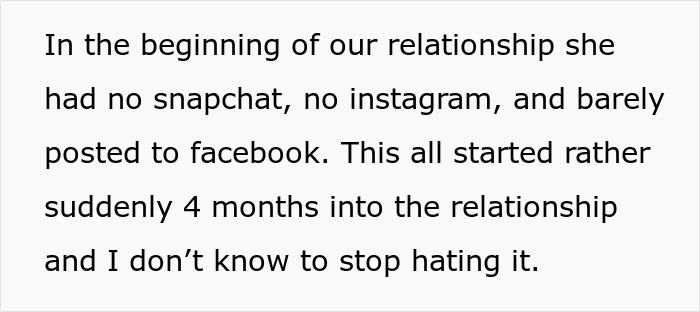
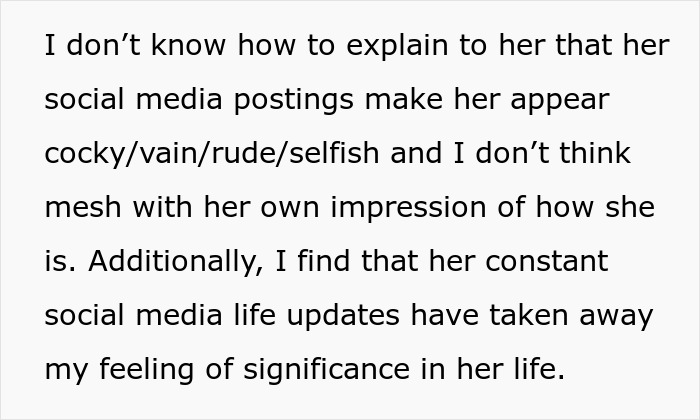
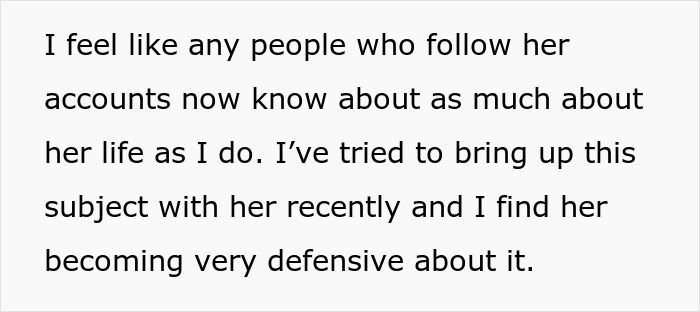
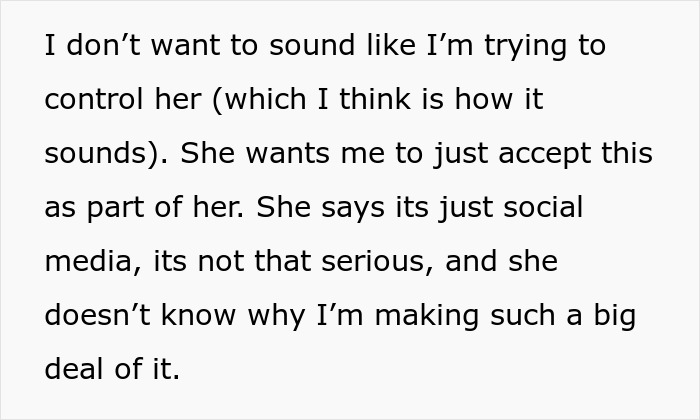
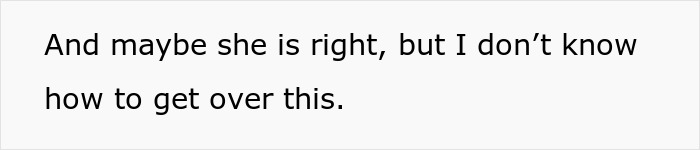
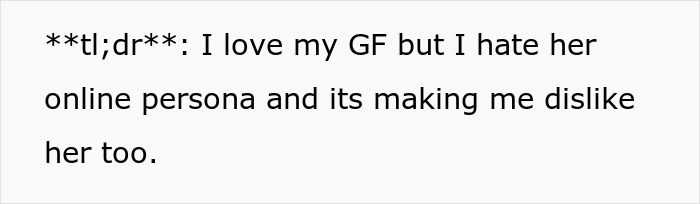
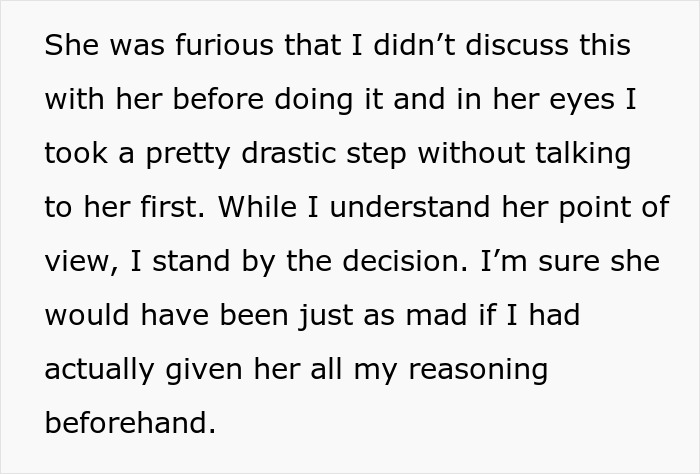
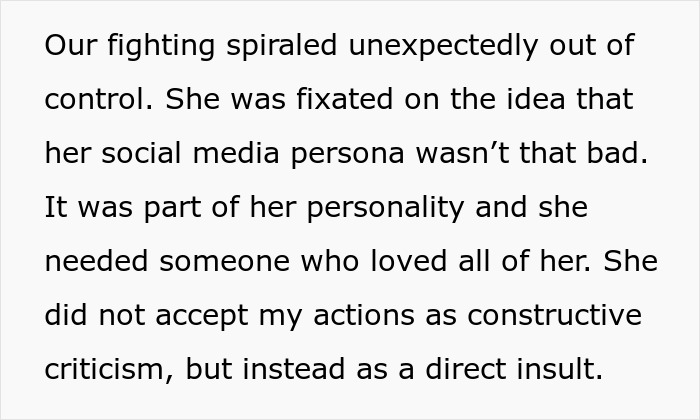
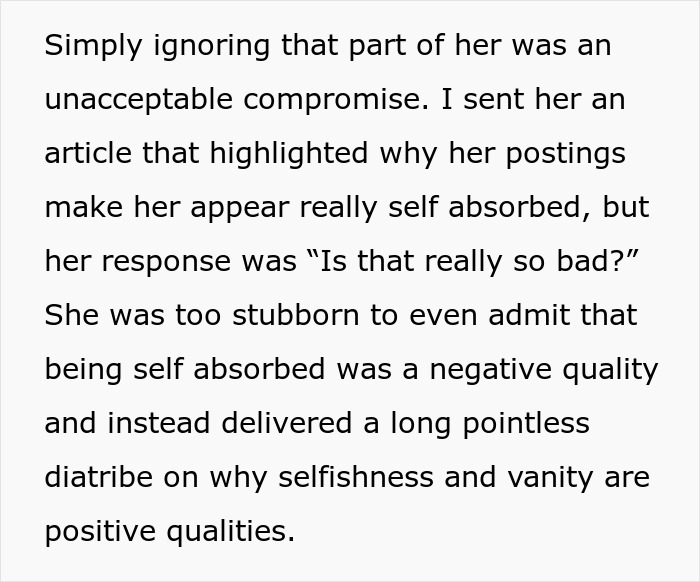
Image credits: throwawayveg8779
Having a social media presence is quite normal these days. Some people don’t even post or share anything; they just lurk on Facebook or Reddit and click the occasional “Like” button. But others spend a significant amount of time online.
In the UK, for example, it’s estimated that adults spend around two hours on social media per day. In the U.S., the number is similar: two hours and 16 minutes. Globally, internet users spent around 141 minutes per day on social media in 2025.
So, what exactly constitutes a dependence on social media? If we’re all on it for more than two hours a day, doesn’t that mean we’re all slightly dependent on it? In one study, when researchers asked college-aged participants what they considered oversharing on social media, the most common answer was that posting more than five times a day was too much.
People also don’t shy away from cutting off people if they overshare on social media. 67.1% of the participants in the study said they unfollowed or unfriended someone because they posted too much. 60.2% also did the same when their friends shared too much personal information about themselves, like “medical issues, politics, relationships, and overly-emotional statements.”
Image credits: Swello (not the actual image)
With all that in mind, just because someone overshares doesn’t mean they have an unhealthy social media dependence. Social media works in ways that are habit-forming, and, in some ways, it was designed to be that way.
Research shows that some people may be more prone to obsessive use of social media. Those who have low self-esteem and mental health issues may spend more time checking their social media feeds compulsively and spend excessive amounts of time there. Experts say that infinite scrolling and personalized notifications also contribute to people developing a dependence on social media.
A 2025 study explored how using social media affects our bodies. The researchers found that it was similar to dependence on harmful substances. When the participants used Instagram, their heart rates slowed and sweating increased. That indicated how immersed they were in an activity that was meaningful to them and how excited they were.
When the participants were asked to get off Instagram and read a news article, their sweating and heart rates would increase. They reported feeling anxious and stressed and wanted to continue scrolling through their feed. The researchers observed that a similar response happens with withdrawal during abstinence.
However, they wouldn’t go as far as to call this an unhealthy obsession. “Instead, we believe that social media offers very powerful rewards,” co-author Niklas Ihssen, Associate Professor of the Department of Psychology at Durham University, explained.
Judging by their previous study, the team thinks that it’s social connection and friendship that social media users find obsessively compelling. “Social media taps into basic human needs: we all want to belong and to be liked.”
However, they admit that excessive use of social media can negatively impact people’s work performance and relationships. “We may be just fine abstaining or cutting down from social media for a while without experiencing dramatic changes to our wellbeing (either positive or negative),” Ihssen went on. “The reason for this is that in contrast to [substances], we can satisfy our needs through other means – for instance, by talking to people.”
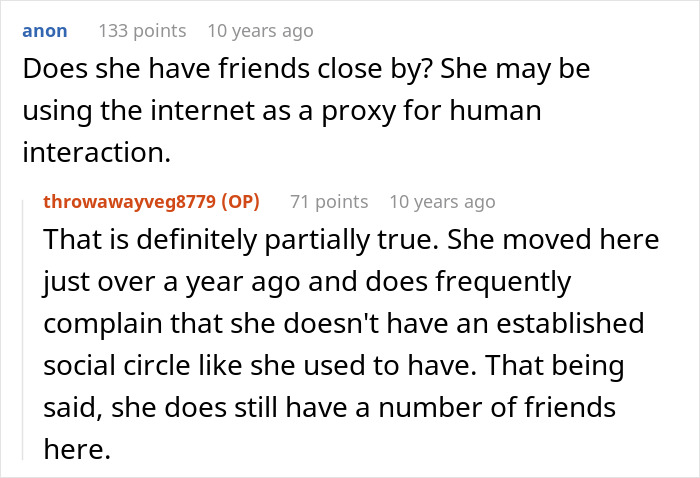
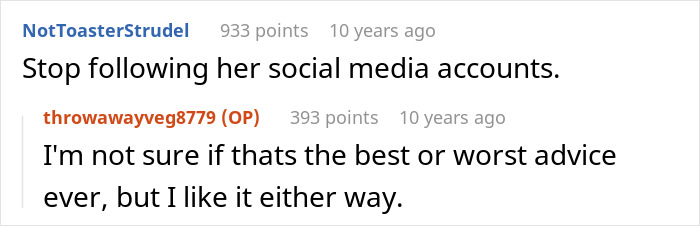
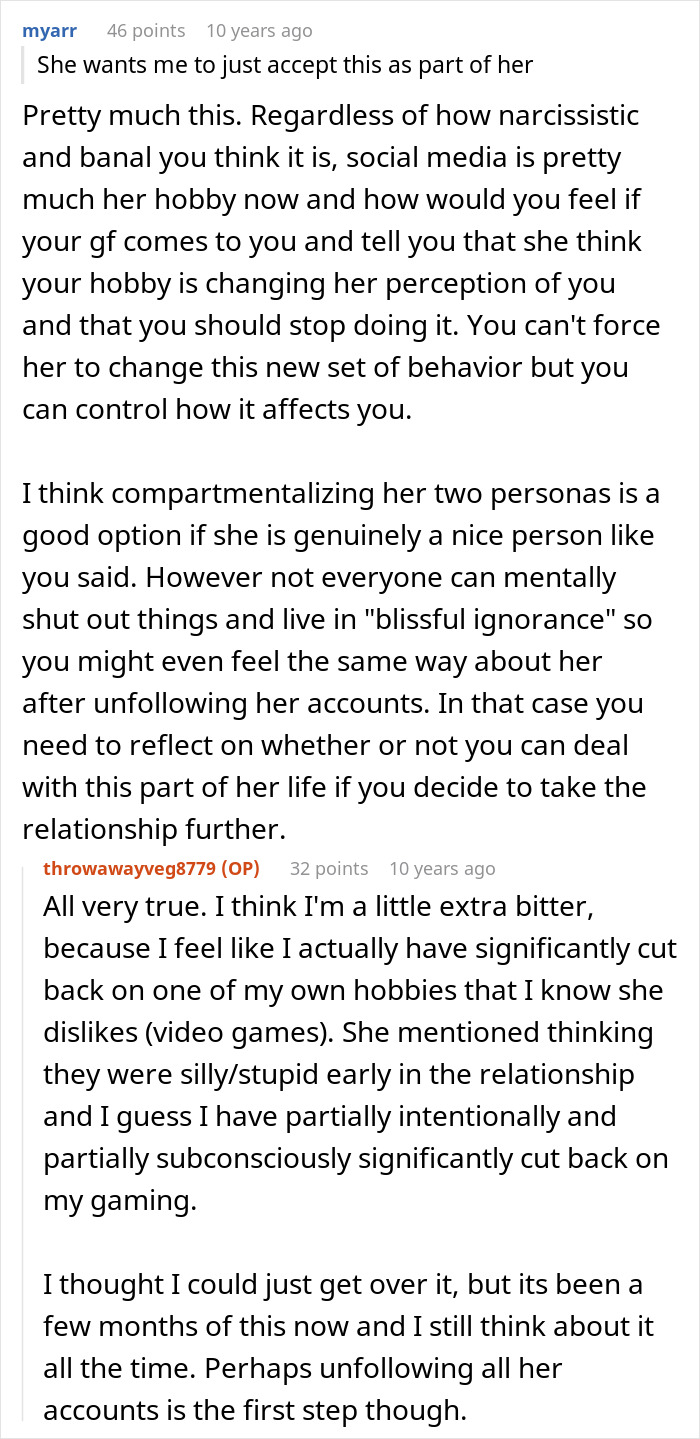
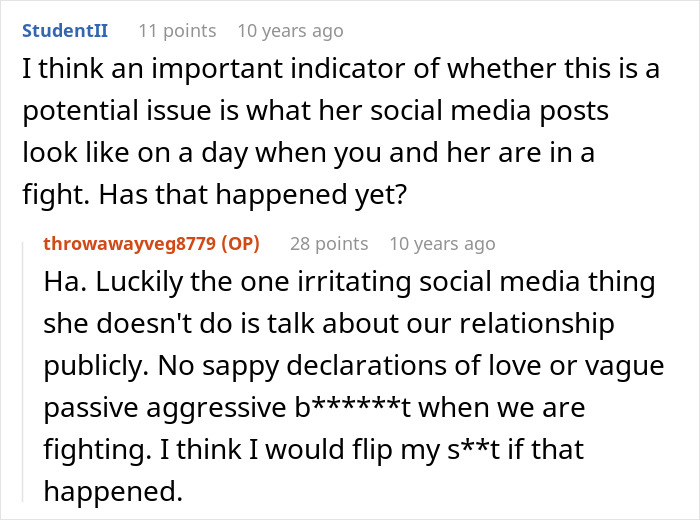
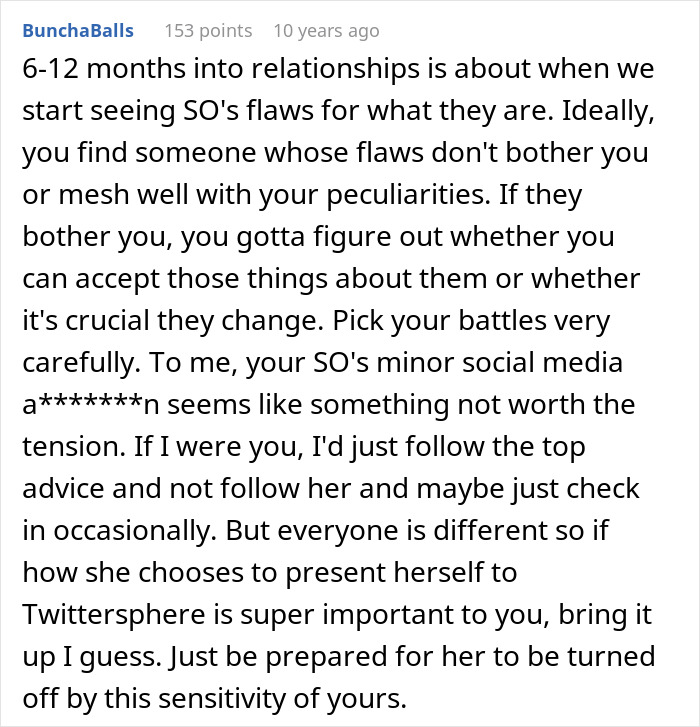
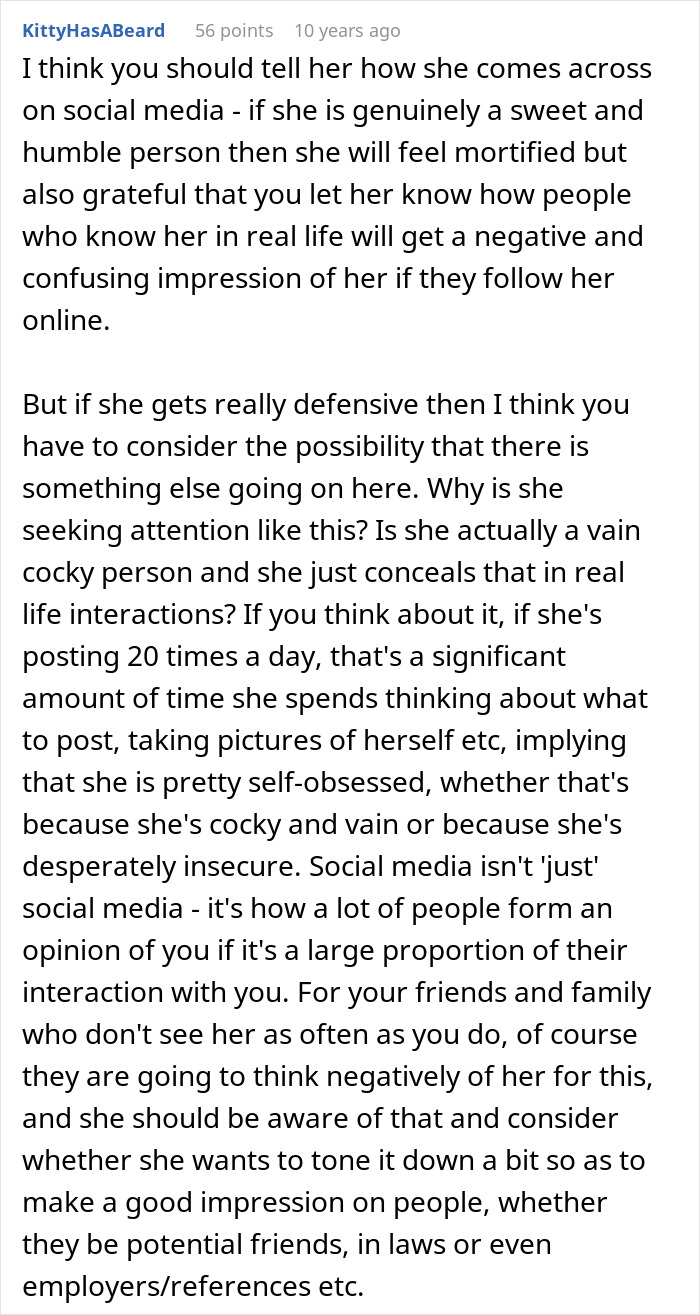
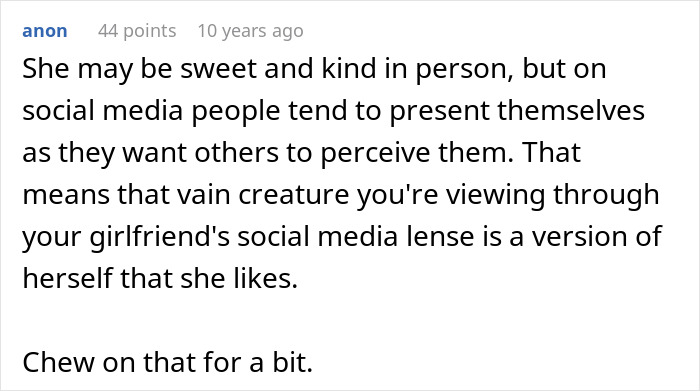
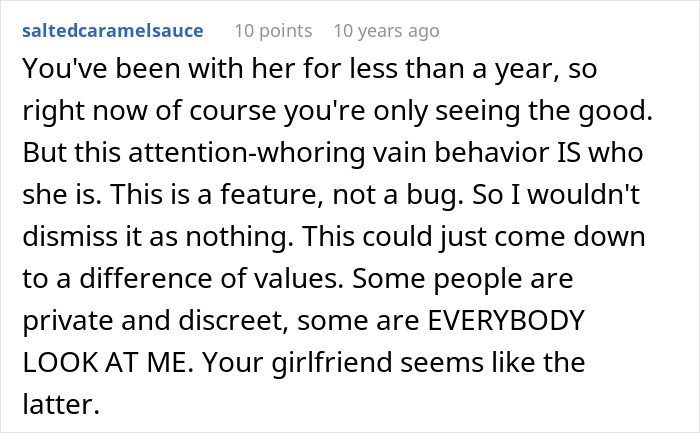
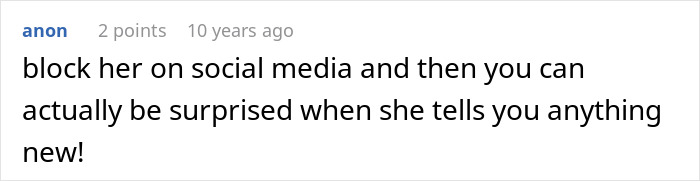

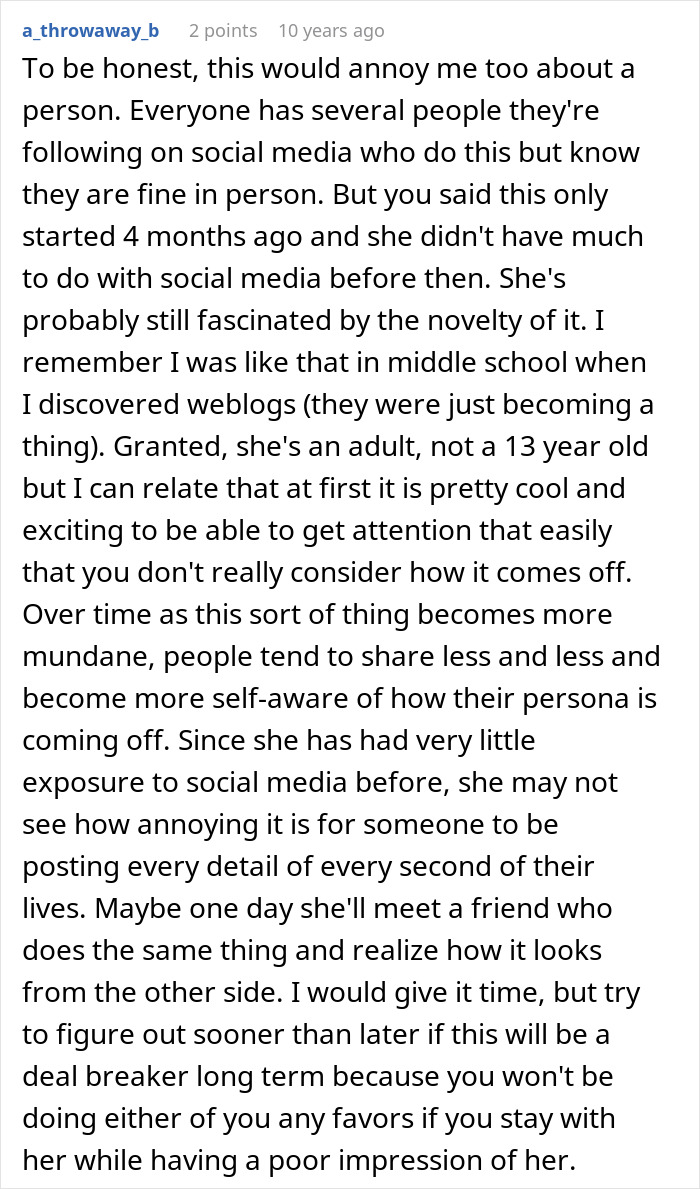
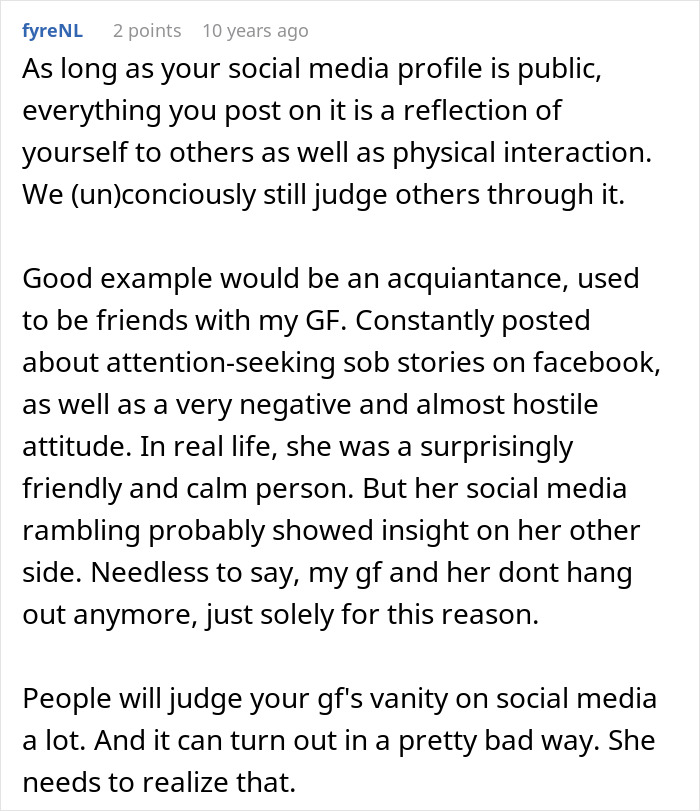
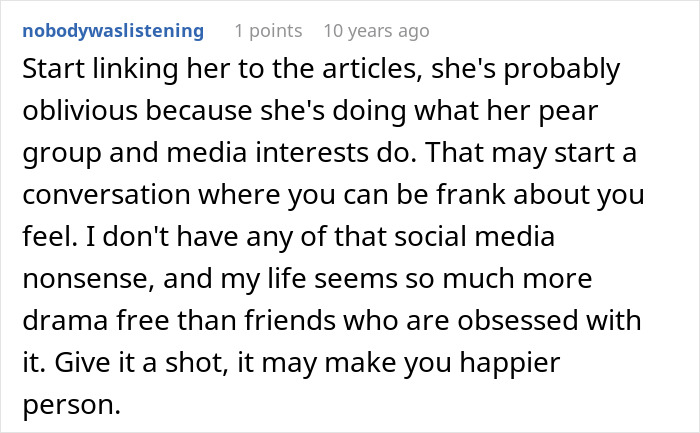
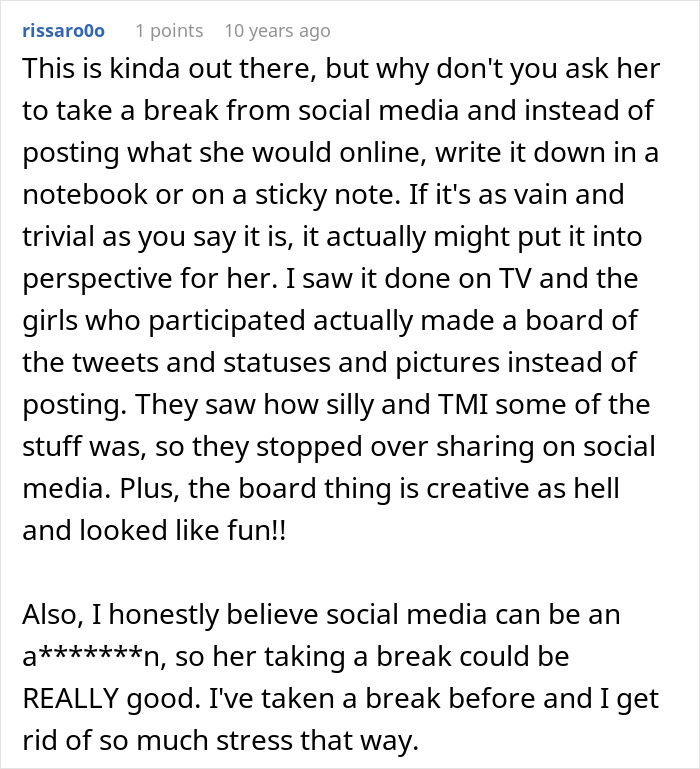
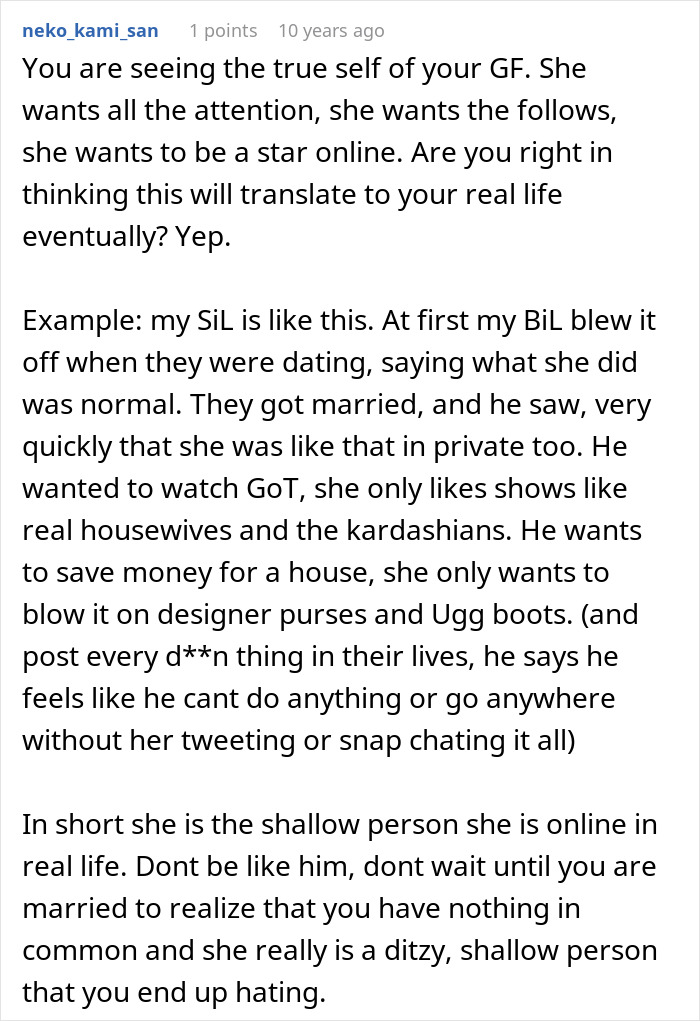
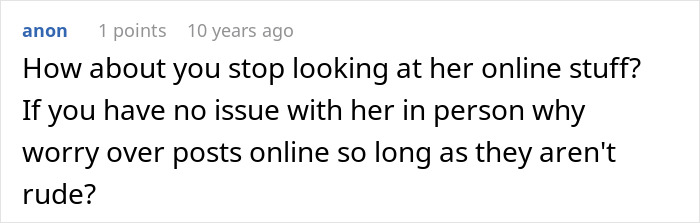
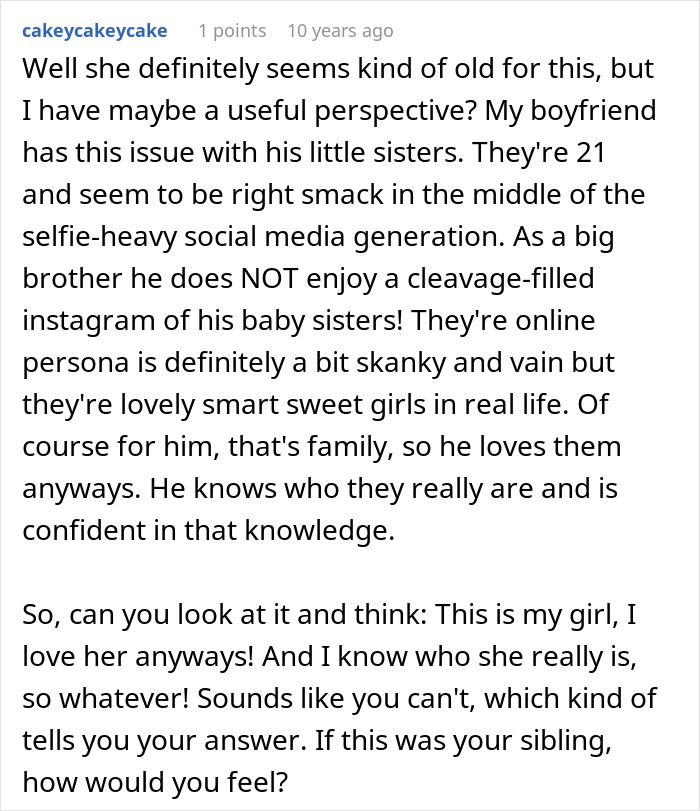
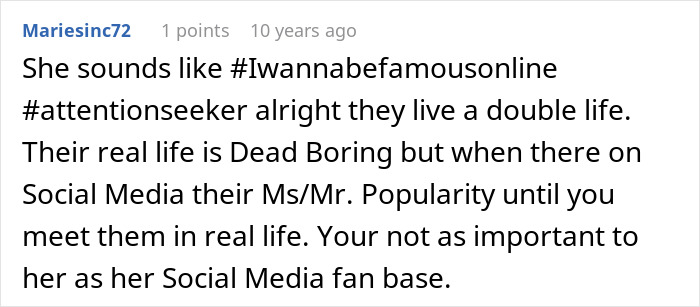
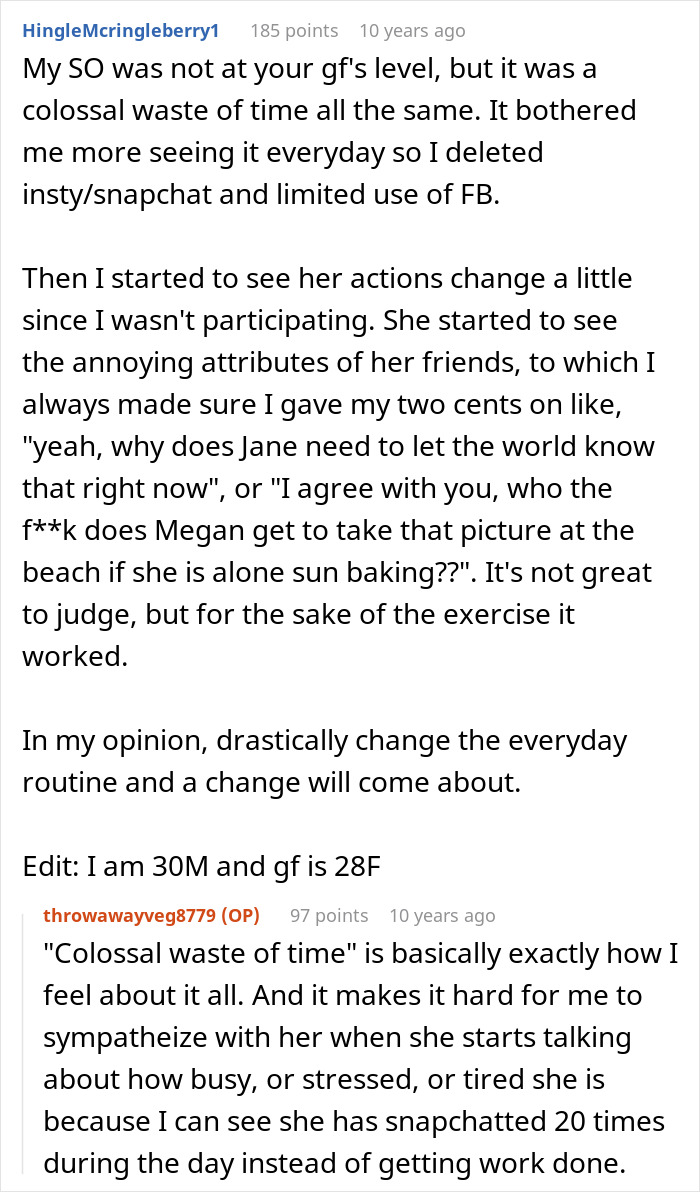
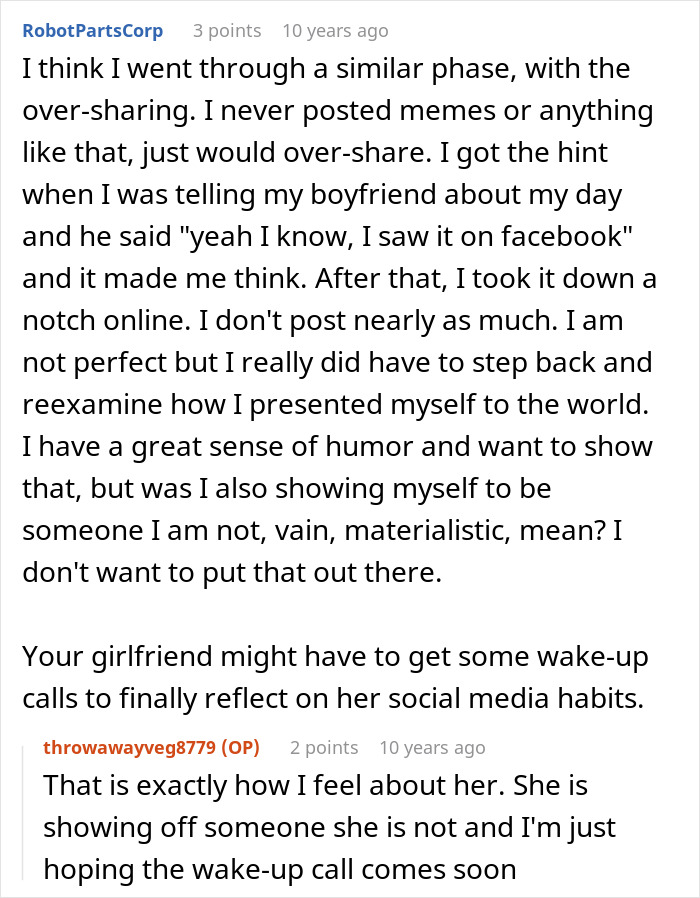
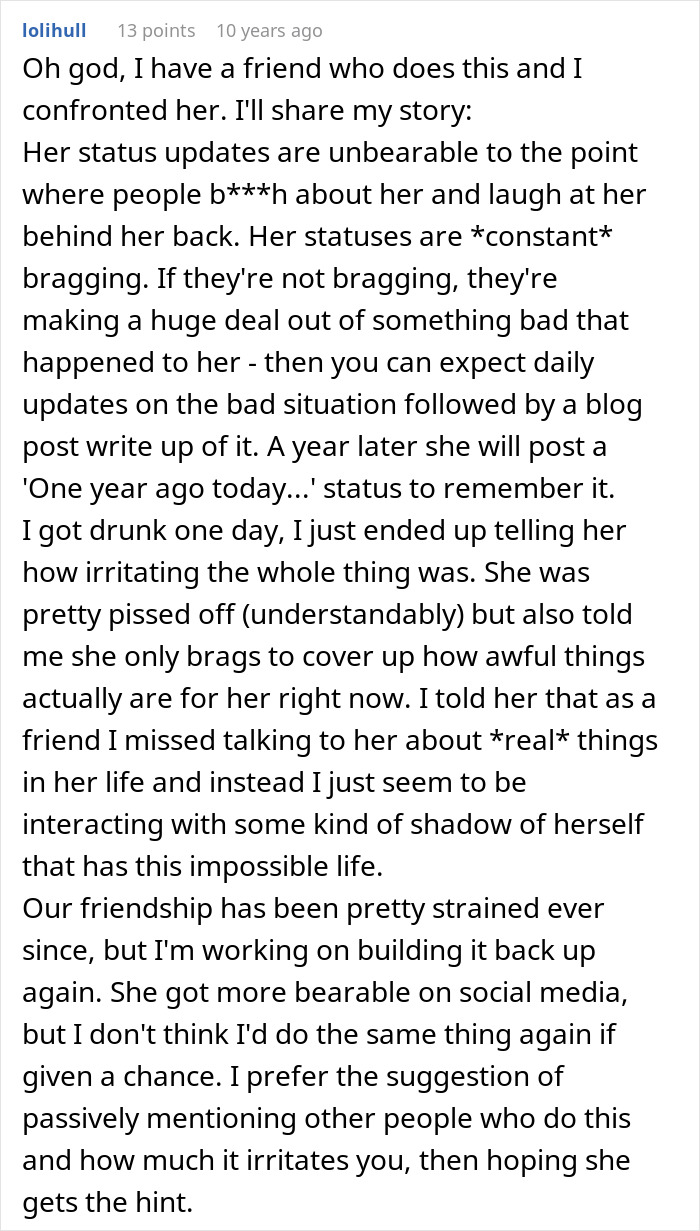
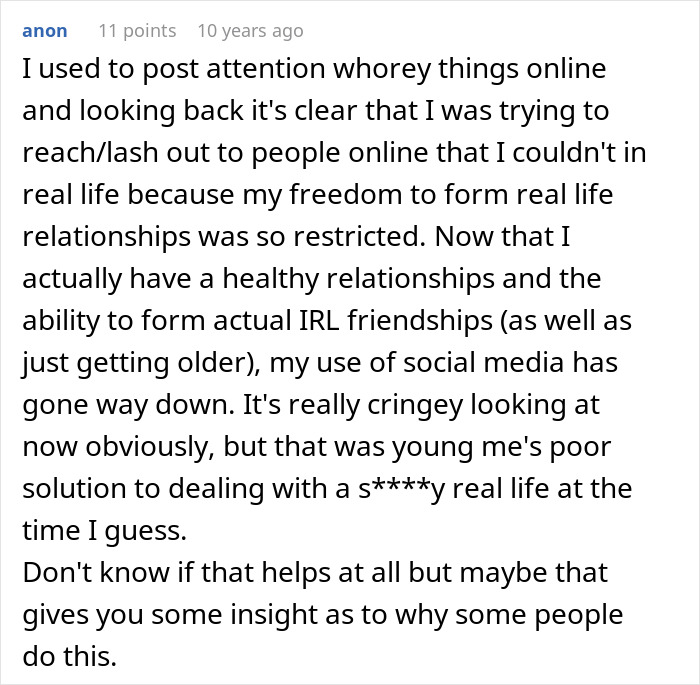
Image credits: Ingmar (not the actual image)
Image credits: stefamerpik (not the actual image)
Image credits: throwawayveg8779

By entering your email and clicking Subscribe, you're agreeing to let us send you customized marketing messages about us and our advertising partners. You are also agreeing to our Privacy Policy.
Thank you! You've successfully subscribed to newsletters!

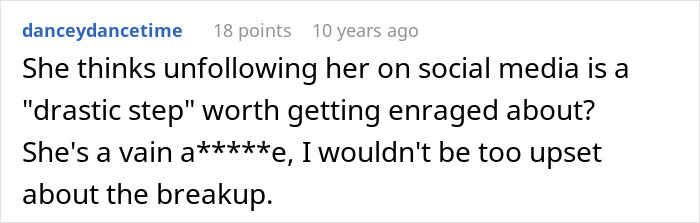
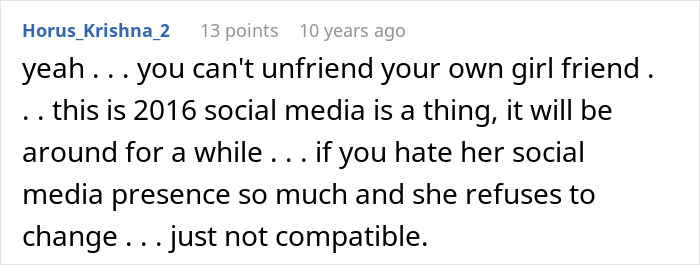
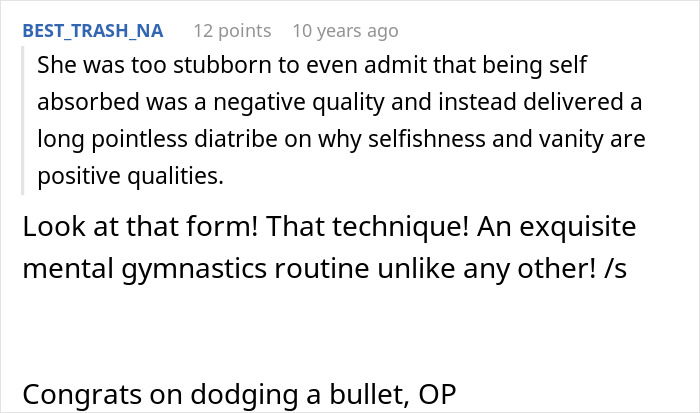
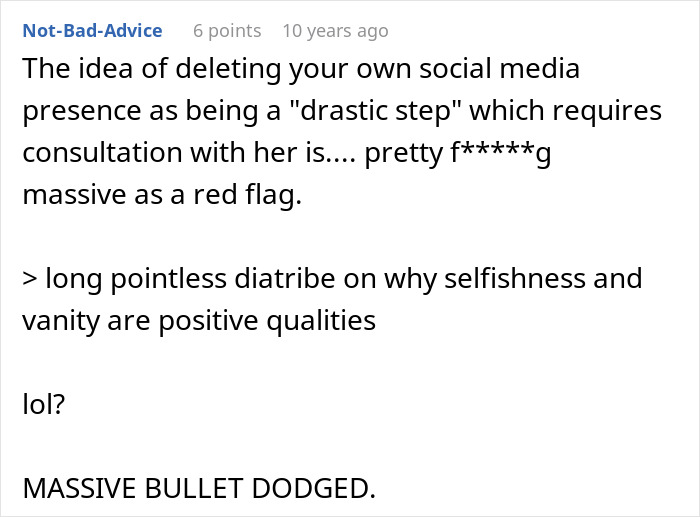
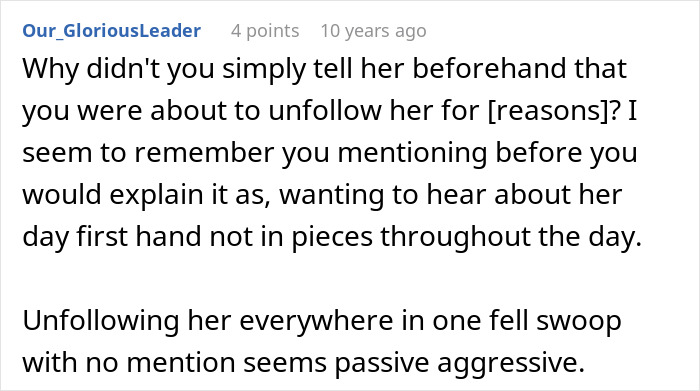
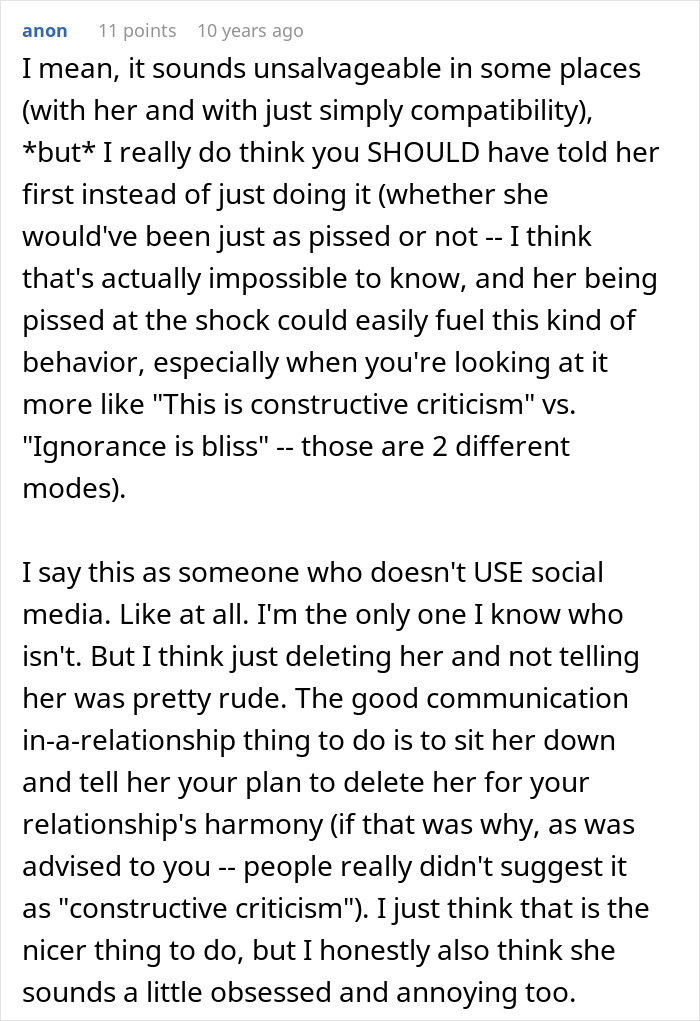
In one of his first replies he said he cut back on his hobby because she thought it was silly/stupid. (Gaming). Any person who claims such a hobby is silly/stupid is... That's a big minus point. She sounds like she needs some more wisdom about things that matter in life.

that one reply i was trying to find up there. if your hobby isnt harmful and your partner makes fun of it, while refusing to give up their own, they should be no partner of yours.
Load More Replies...
When I got the opportunity to live in a villa with a pool overlooking the beach, I joked I should try to become an influencer. It was half a joke because I was broke and I'm luckily pretty enough that I don't need a ton of filters to look attractive and I love dressing up. Still, I gave up on the idea because I wanna *live* and I really don't see how life can be enjoyable when you spend hours taking pictures and posting on social media to get "likes" from people you'll never even meet.

I went through a period of overusing Facebook. By the end I was only using it to post funny pictures and recently I stopped using it altogether because I couldn't take the endless stream of bad news and general negativity. And boy did my mental health instantly improve. No more doomscrolling for this little bird.
In one of his first replies he said he cut back on his hobby because she thought it was silly/stupid. (Gaming). Any person who claims such a hobby is silly/stupid is... That's a big minus point. She sounds like she needs some more wisdom about things that matter in life.
that one reply i was trying to find up there. if your hobby isnt harmful and your partner makes fun of it, while refusing to give up their own, they should be no partner of yours.
Load More Replies... When I got the opportunity to live in a villa with a pool overlooking the beach, I joked I should try to become an influencer. It was half a joke because I was broke and I'm luckily pretty enough that I don't need a ton of filters to look attractive and I love dressing up. Still, I gave up on the idea because I wanna *live* and I really don't see how life can be enjoyable when you spend hours taking pictures and posting on social media to get "likes" from people you'll never even meet.
I went through a period of overusing Facebook. By the end I was only using it to post funny pictures and recently I stopped using it altogether because I couldn't take the endless stream of bad news and general negativity. And boy did my mental health instantly improve. No more doomscrolling for this little bird.







 No fees, cancel anytime







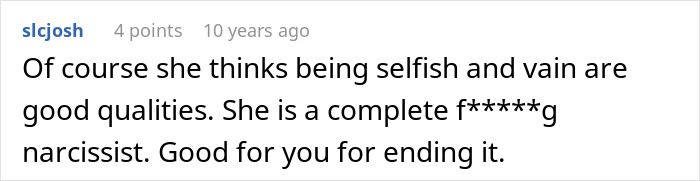
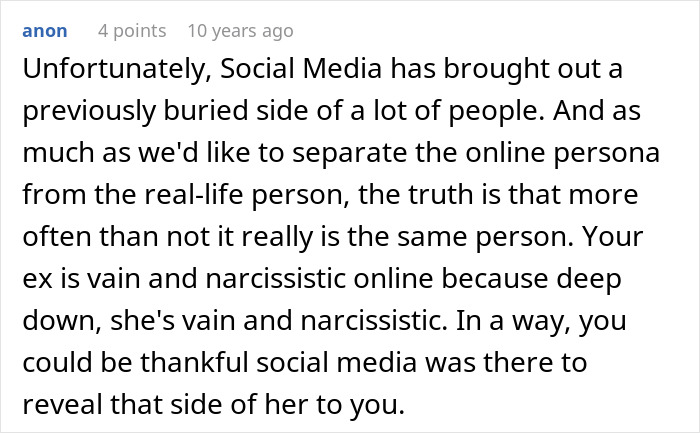
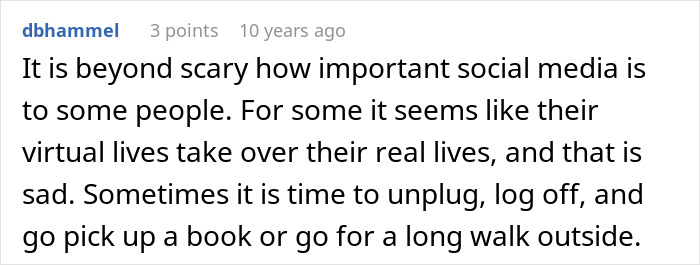
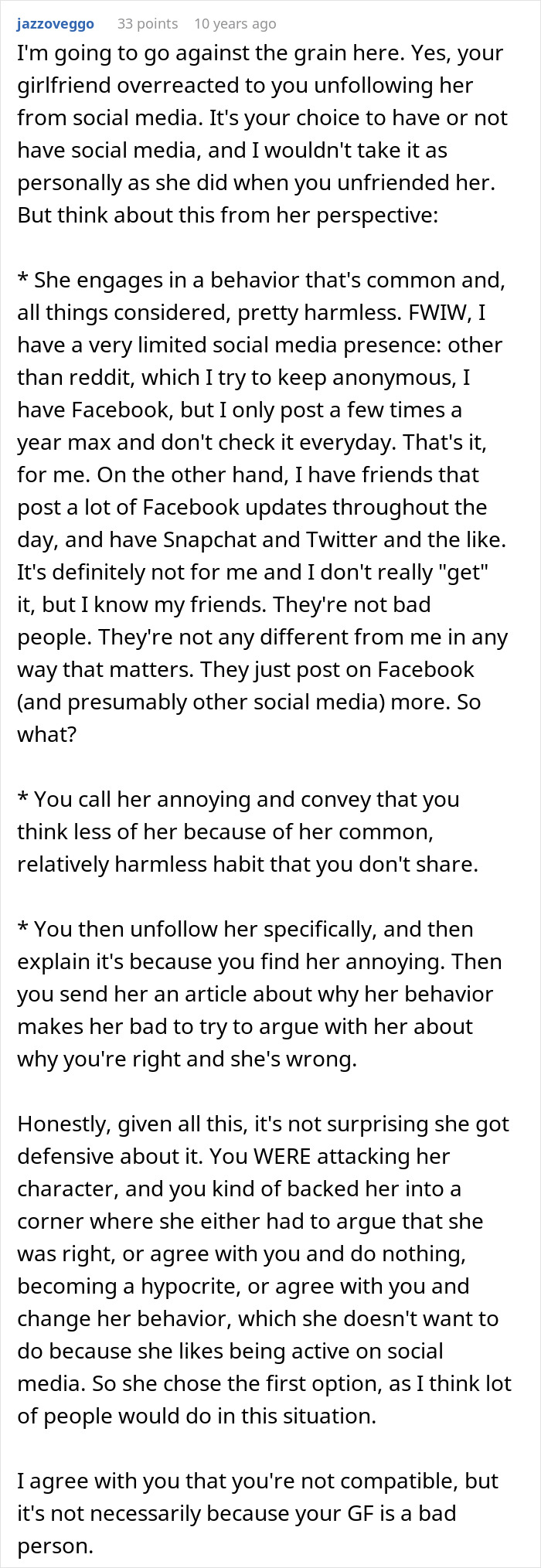




20
8