Get Premium
Dark mode theme is available exclusively for premium users. Learn more about the benefits of subscribing.
No fees, cancel anytime.

 Dark Mode Ad-Free Browsing Unlimited Content
 Ad-Free Browsing Unlimited Content Dark Mode
Join 1.2 million Panda readers who get the best art, memes, and fun stories every week!

Logic and reasoning are genuinely admirable qualities. We all envy the person who can walk into a chaotic situation and produce a color-coded spreadsheet that makes everything make sense. Budgets, travel plans, career decisions, and home renovations — bring on the data. It can be deeply satisfying when done right.
But there is a point where the spreadsheet crosses a line. When it stops being a tool for navigating life and starts being a system for managing the people in it, something shifts. One woman spent over a year finding her boyfriend’s logical approach to everything completely fascinating, right up until she opened his laptop to do him a favor and found out exactly how far the data collection went.
More info: Reddit
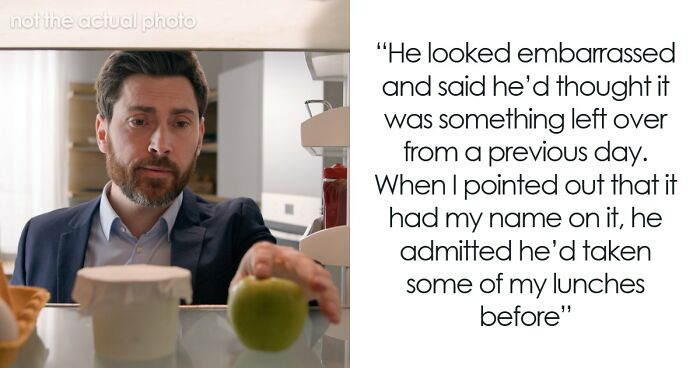
Image credits: syda_productions / Magnific (not the actual photo)
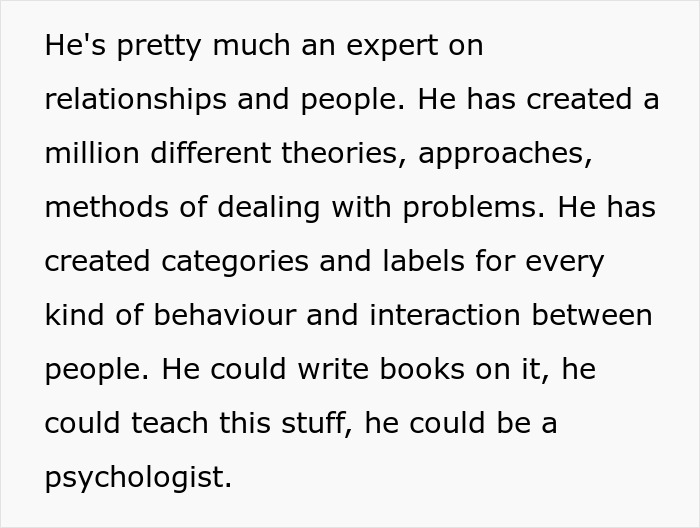
Image credits: pressfoto / Magnific (not the actual photo)
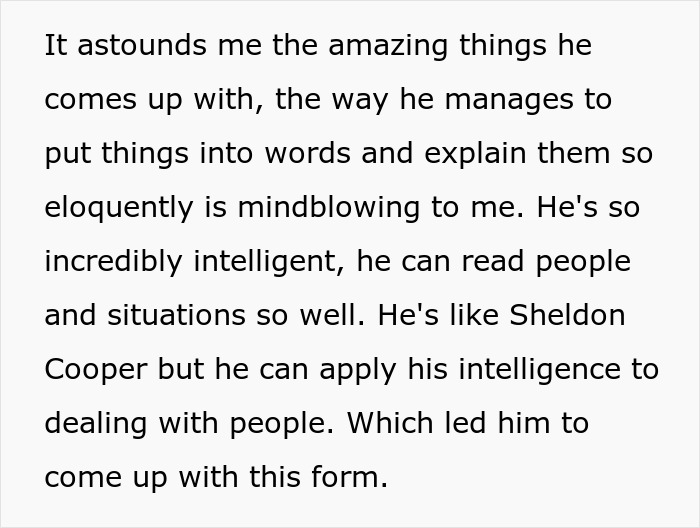
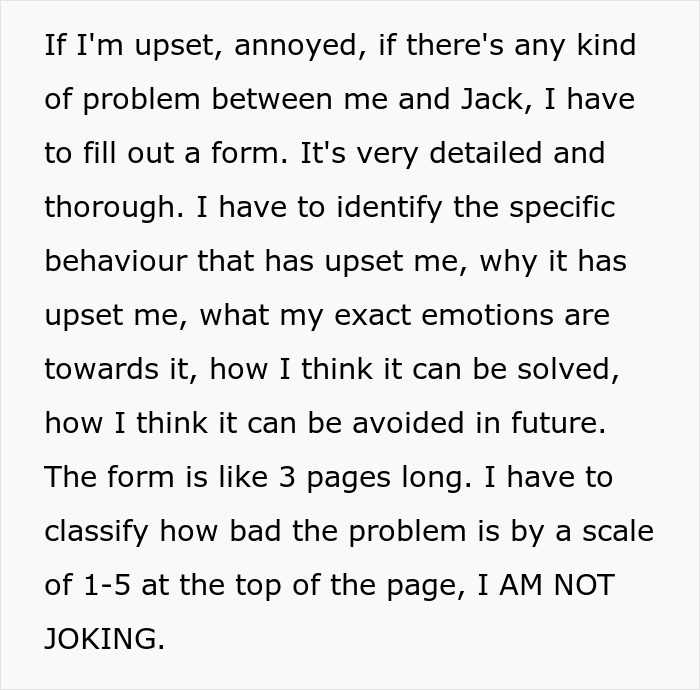
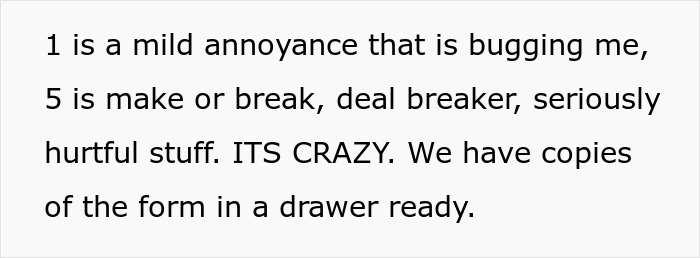
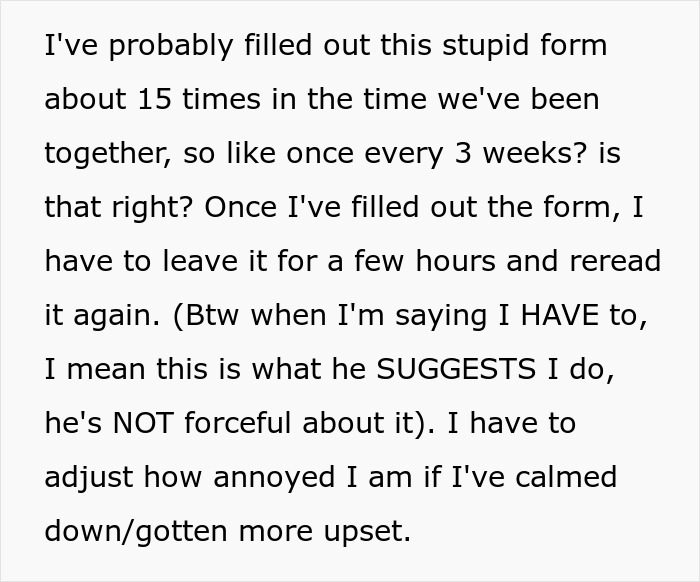
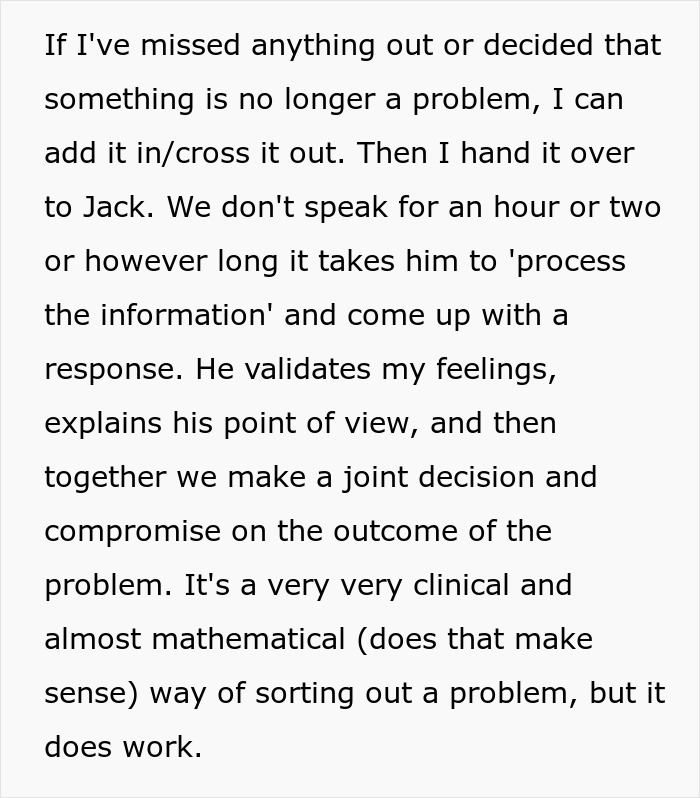
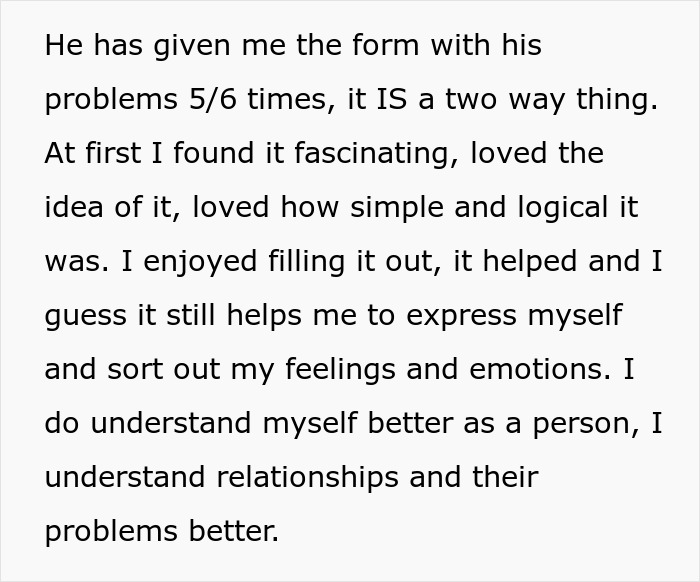
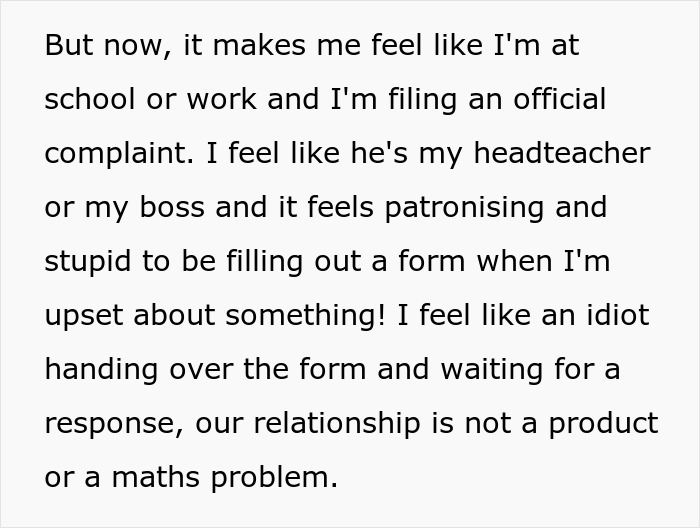
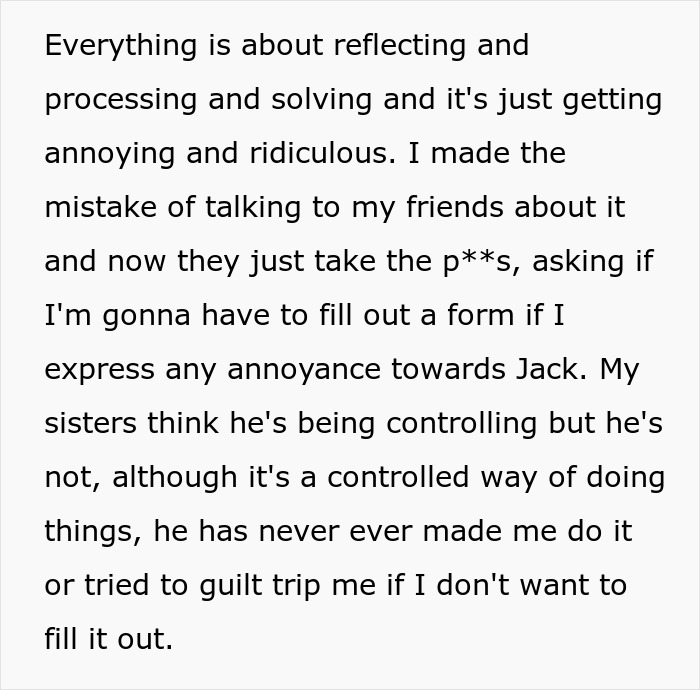
Image credits: karlyukav / Magnific (not the actual photo)
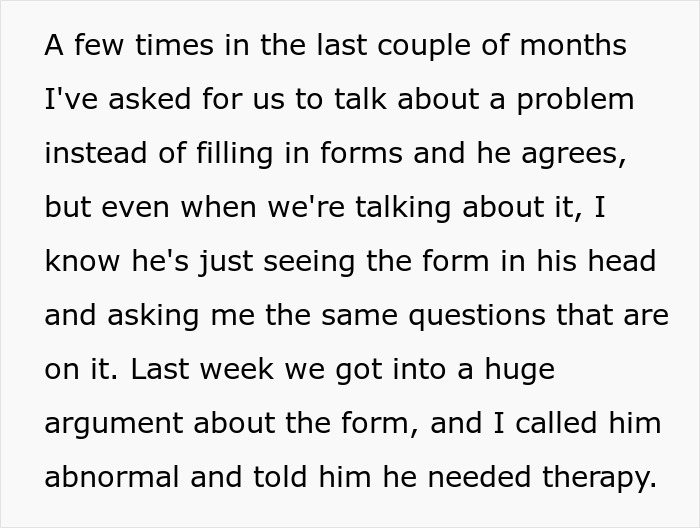
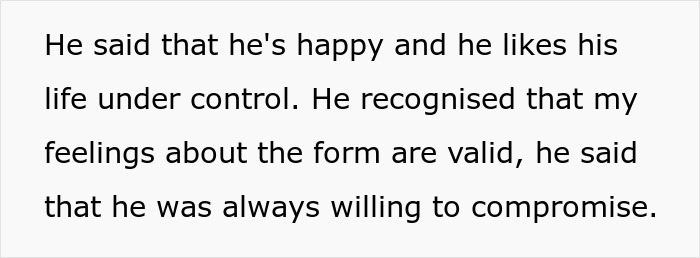
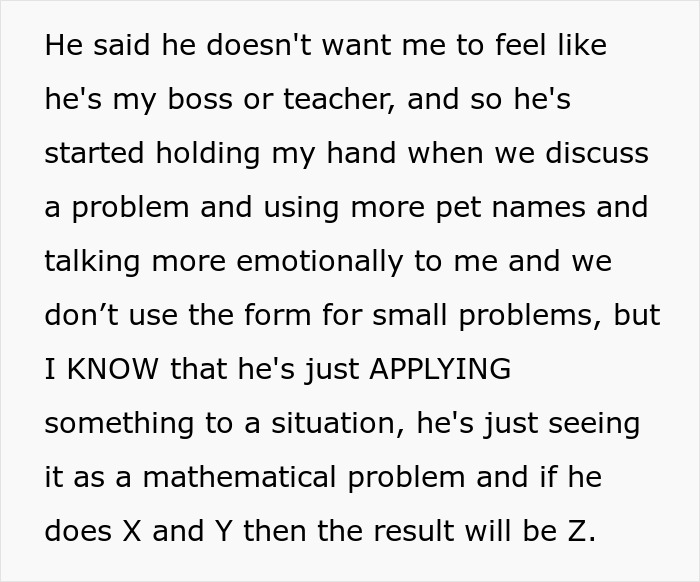
Image credits: Camandona / Magnific (not the actual photo)
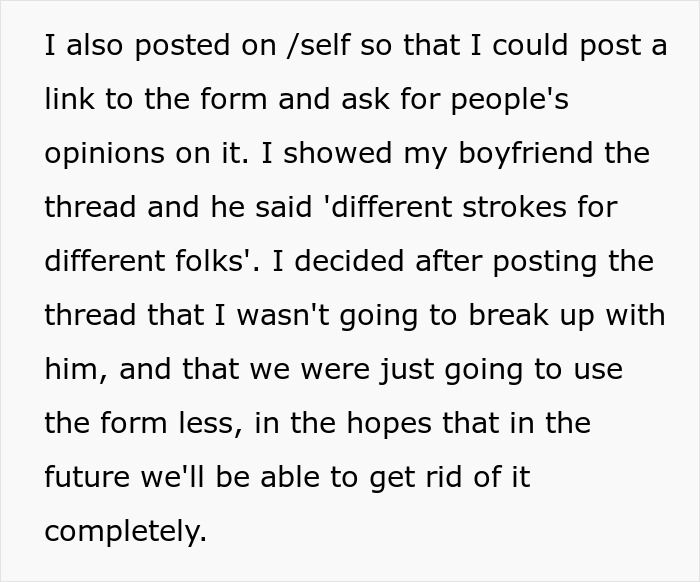
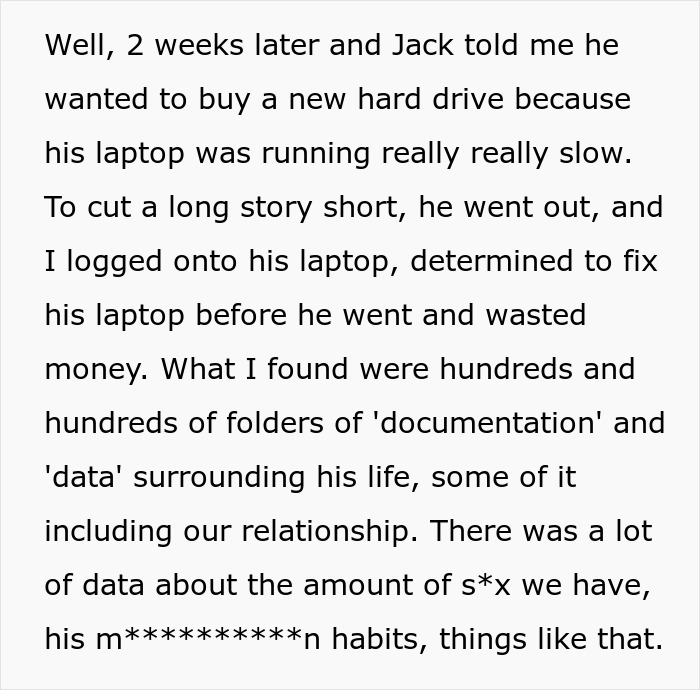
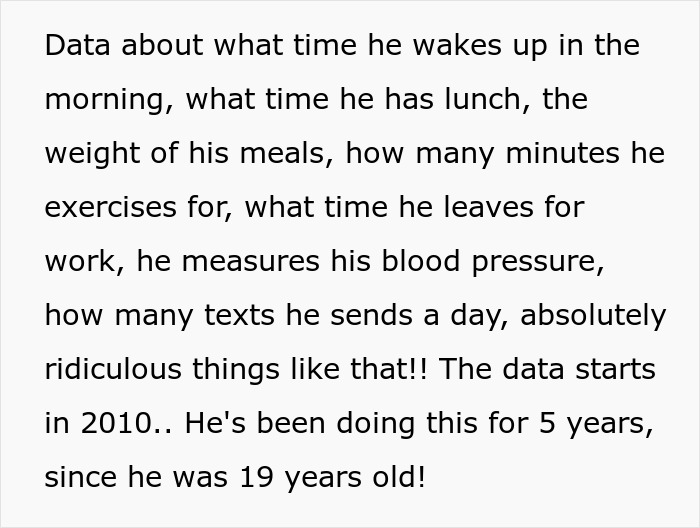
Image credits: freepik / Magnific (not the actual photo)
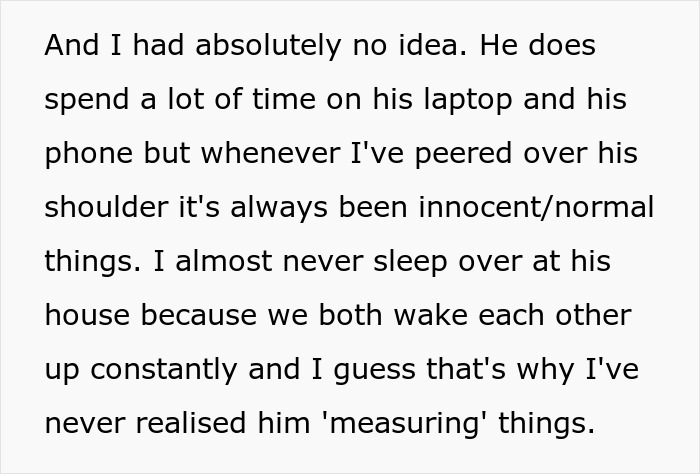
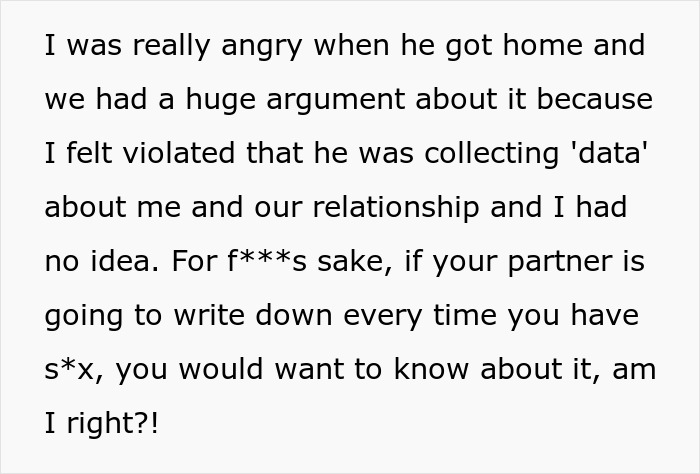
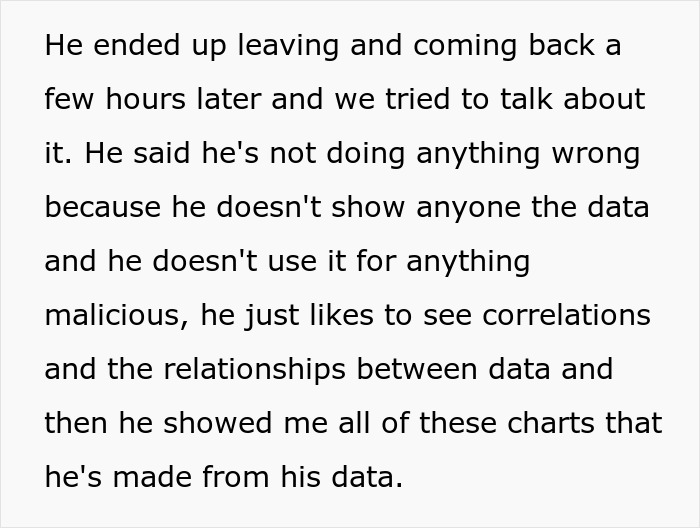
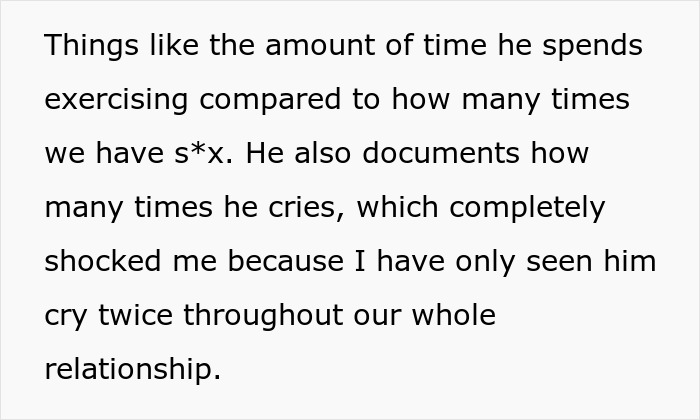
Image credits: SkelDry / Magnific (not the actual photo)
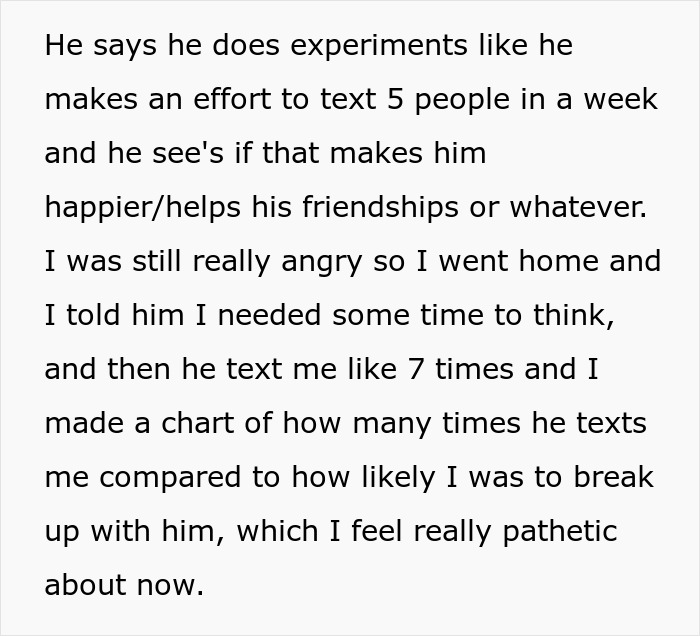
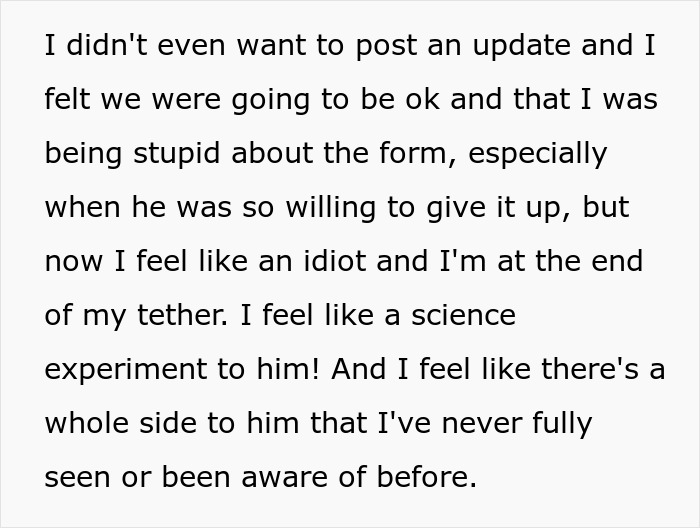
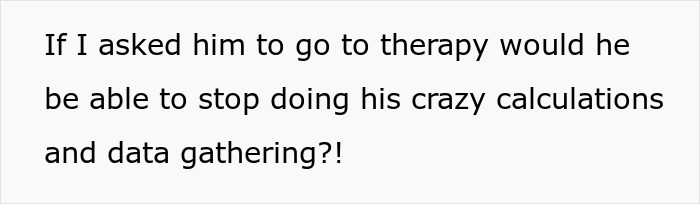
Image credits: Direct-Caterpillar77
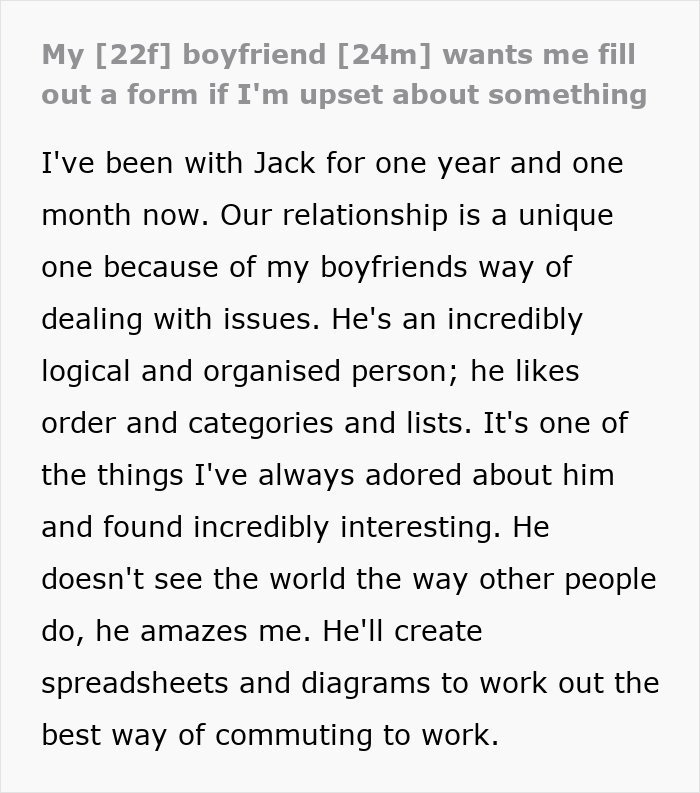
A woman had been with her boyfriend, Jack, for just over a year and found his analytical mind one of the most fascinating things about him. He made spreadsheets for commuting decisions, folders of research before making any choices, mind maps, pie charts, and comparative diagrams for everything.
When she came to him with a problem, he would sit down with her, map out every option, weigh the risks and rewards, and arrive at a solution. It was efficient, thorough, and impressive. Then he introduced the form. If she was upset about anything, she was asked to fill out a three-page document of all her feelings and triggers.
He would take a couple of hours to process it and come back with a validated, structured response. It worked, technically. Problems got solved. Nothing repeated. But somewhere along the way, it stopped feeling like a relationship and started to feel like filing a complaint with HR, and her friends would not let her forget it. After pushing back, they started using it a little less.
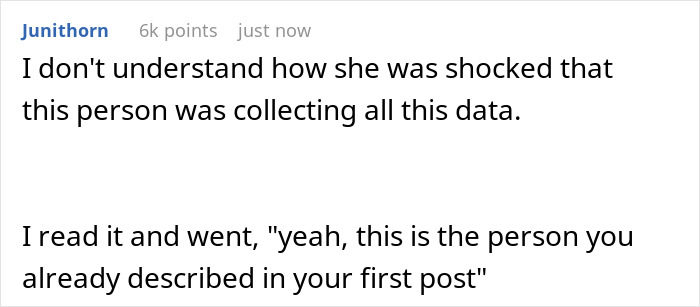
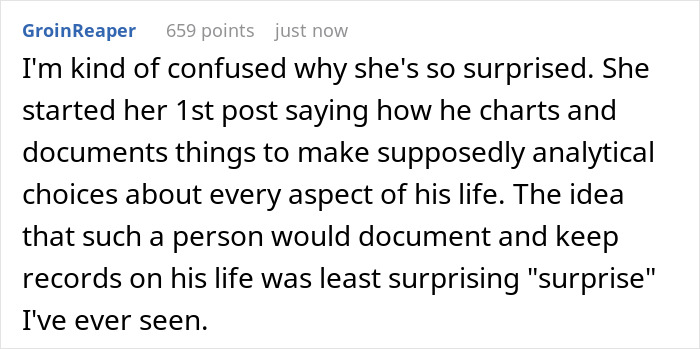
One day, she logged onto his computer to help him make it a little faster. What she found, instead of a slow computer, were hundreds of folders of documentation going back to 2010. Data about their intimate life, his self-pleasuring habits, the weight of his meals, what time he woke up, how many texts he sent per day, how many times he cried, his blood pressure readings, and how many minutes he exercised.
Five years of meticulous self and relationship data that she had known absolutely nothing about. He defended it calmly, said he was not sharing the data with anyone and had no malicious intent, and showed her the charts he had made, including one comparing his exercise frequency to how often they were intimate. She went home to think. He texted her seven times.
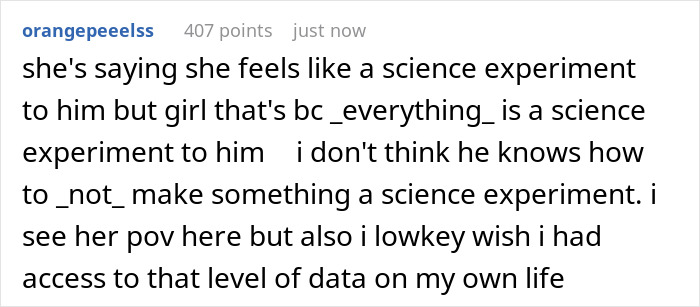
She made a chart of how many times he texted her compared to how likely she was to break up with him, which she acknowledged was both unhinged and completely understandable given the circumstances. She felt like a science experiment, and wondered whether therapy could undo five years of data collection in a person who had never once considered it a problem.
Image credits: standret / Magnific (not the actual photo)
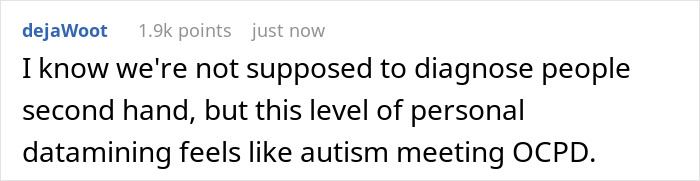
A significant portion of the comments section landed on the same theory about Jack. Around half of autistic people experience alexithymia, a difficulty understanding and describing their own emotions. For someone who genuinely struggles to access or articulate feelings intuitively, building a system that externalizes and categorizes emotional experiences is just an adaptation.
The form, the data collection, the need to process everything through structured frameworks before responding, all of it becomes considerably more legible through that lens. But there is also an OCD angle worth considering. Research shows that for many people, building and maintaining spreadsheets and organizational systems provides genuine relief from intrusive thoughts and uncertainty.
A perfectly structured tracker or color-coded system creates a predictable environment that temporarily calms anxiety. The five years of data collection are not the behaviors of someone trying to control another person. They are the behaviors of someone trying to control their own internal experience of a world that feels chaotic without structure.
The International Psychology Clinic is clear that if someone is relying on organizational systems to relieve distress caused by intrusive thoughts, professional support is strongly recommended. Cognitive Behavioral Therapy and Exposure Response Prevention therapy specifically focus on teaching people to tolerate uncertainty rather than needing to manage it through ritual and documentation.
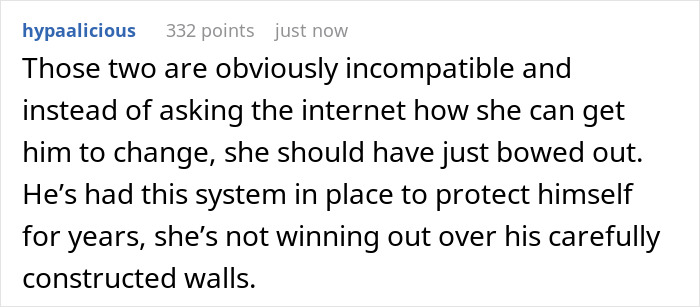
None of this makes her feelings invalid. Discovering that your relationship has been quietly logged and categorized for a year without your knowledge is a reasonable thing to be upset about. But it does reframe the question from is he controlling to is he struggling, and those two questions have very different answers.
Do you think there is a way for her to move forward from this? Share some advice in the comments!











By entering your email and clicking Subscribe, you're agreeing to let us send you customized marketing messages about us and our advertising partners. You are also agreeing to our Privacy Policy.
Thank you! You've successfully subscribed to newsletters!

Your dating an autistic person. If that's how he sorts his feelings have at it. There is no harm in what he is doing. If you don't like the lists leave. Otherwise deal with the lists and love him for them.

I don't think he should be recording intimate things about her on his laptop, which can get accessed by nefarious people. Otherwise while I do agree that he is likely to continue to be like this, using the "he's autistic" card doesn't excuse him from affecting other people with his autistic habits and proclivities. I'm on the spectrum too, and it doesn't magically excuse me from bothering other people with my issues just because "I'm autistic". Unless he's very low-functioning, he needs to fit into society too. If he wants to stay with her, and she wants to stay with him, why is she the only one who has to "deal" with something that is bothering her? He needs to learn to adjust too. The entire world cannot flow exactly the way he wants it just because "he's an autistic person". If the lists are a make-or-break thing for her, why is she the only one who has to "deal" with it? He can reduce the lists from being 3 pages long at least, or learn to hybridize talking about the issue instead.
Load More Replies...
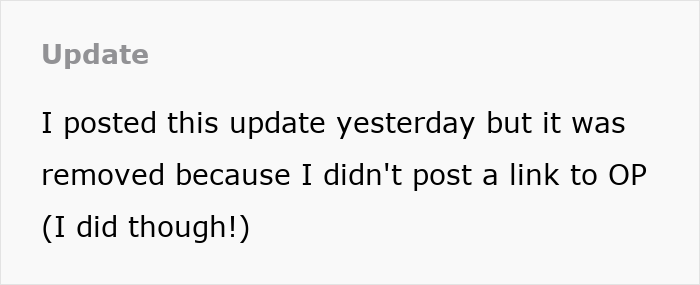
I love how OP starts her claim about how OP knows so much about feelings, and he is great, and could be a psychologists. And the proceeds to spell out how her boyfriend is severely autistic and doesn't understand what emotions are, so in an effort to process stuff he read a million books about it, didn't get them, and then forces people to threat emotions as data to be analized in an attempt to process it. And frankly, some parts of her explanation sounded manipulated from him in ways to just have not to d**d with her having emotions (if you have a problem, fill a form, then leave me alone for a few hours so maybe it will go away, and if not then we deal with it). And then the update basically confirmed everything that was glaring from the first paragraph, OP is severely autistic for sure, and OP doesn't understand that, but also, doesn't understand that just because OP is inteligent doesn't mean he knows everything about everything

Your dating an autistic person. If that's how he sorts his feelings have at it. There is no harm in what he is doing. If you don't like the lists leave. Otherwise deal with the lists and love him for them.
I don't think he should be recording intimate things about her on his laptop, which can get accessed by nefarious people. Otherwise while I do agree that he is likely to continue to be like this, using the "he's autistic" card doesn't excuse him from affecting other people with his autistic habits and proclivities. I'm on the spectrum too, and it doesn't magically excuse me from bothering other people with my issues just because "I'm autistic". Unless he's very low-functioning, he needs to fit into society too. If he wants to stay with her, and she wants to stay with him, why is she the only one who has to "deal" with something that is bothering her? He needs to learn to adjust too. The entire world cannot flow exactly the way he wants it just because "he's an autistic person". If the lists are a make-or-break thing for her, why is she the only one who has to "deal" with it? He can reduce the lists from being 3 pages long at least, or learn to hybridize talking about the issue instead.
Load More Replies... I love how OP starts her claim about how OP knows so much about feelings, and he is great, and could be a psychologists. And the proceeds to spell out how her boyfriend is severely autistic and doesn't understand what emotions are, so in an effort to process stuff he read a million books about it, didn't get them, and then forces people to threat emotions as data to be analized in an attempt to process it. And frankly, some parts of her explanation sounded manipulated from him in ways to just have not to d**d with her having emotions (if you have a problem, fill a form, then leave me alone for a few hours so maybe it will go away, and if not then we deal with it). And then the update basically confirmed everything that was glaring from the first paragraph, OP is severely autistic for sure, and OP doesn't understand that, but also, doesn't understand that just because OP is inteligent doesn't mean he knows everything about everything





















 No fees, cancel anytime

















29
25