Get Premium
Dark mode theme is available exclusively for premium users. Learn more about the benefits of subscribing.
No fees, cancel anytime.

 Dark Mode Ad-Free Browsing Unlimited Content
 Ad-Free Browsing Unlimited Content Dark Mode
Join 1.2 million Panda readers who get the best art, memes, and fun stories every week!
A work-life balance is more than just not being harassed by emails late at night, it can be as simple as having a private life that your employer has no say over. But some bosses only see their employees as, well, just that, employees, and think they have a right to dictate things well beyond working hours.
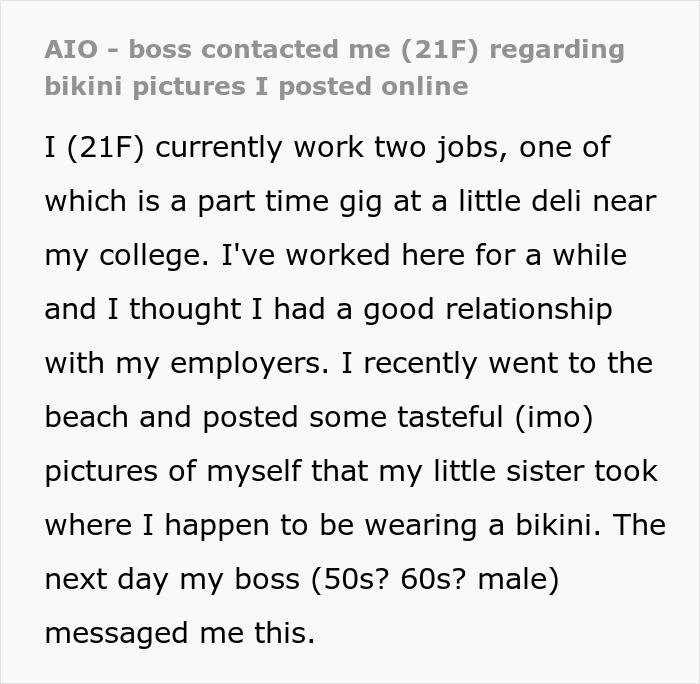
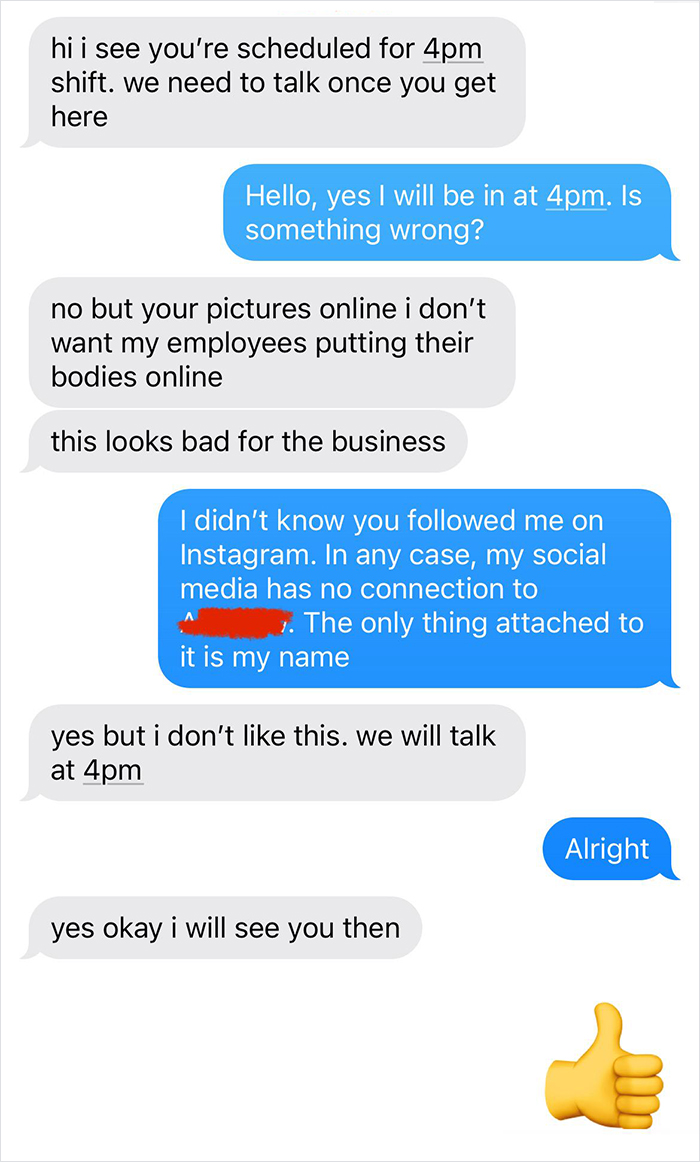
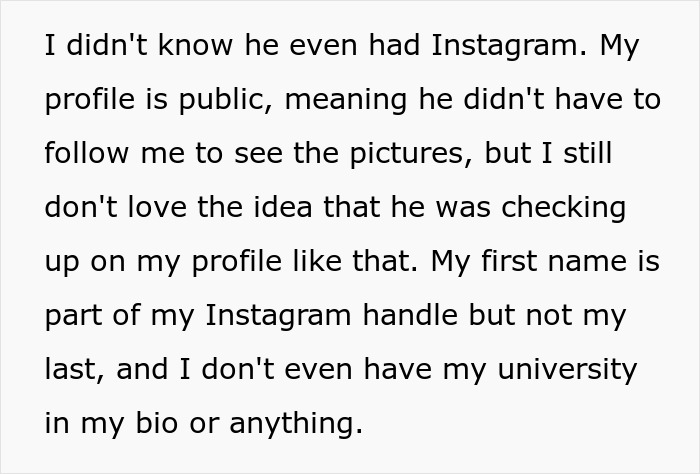
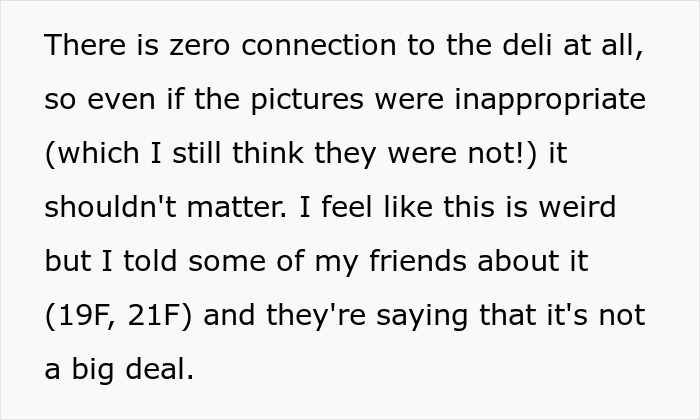
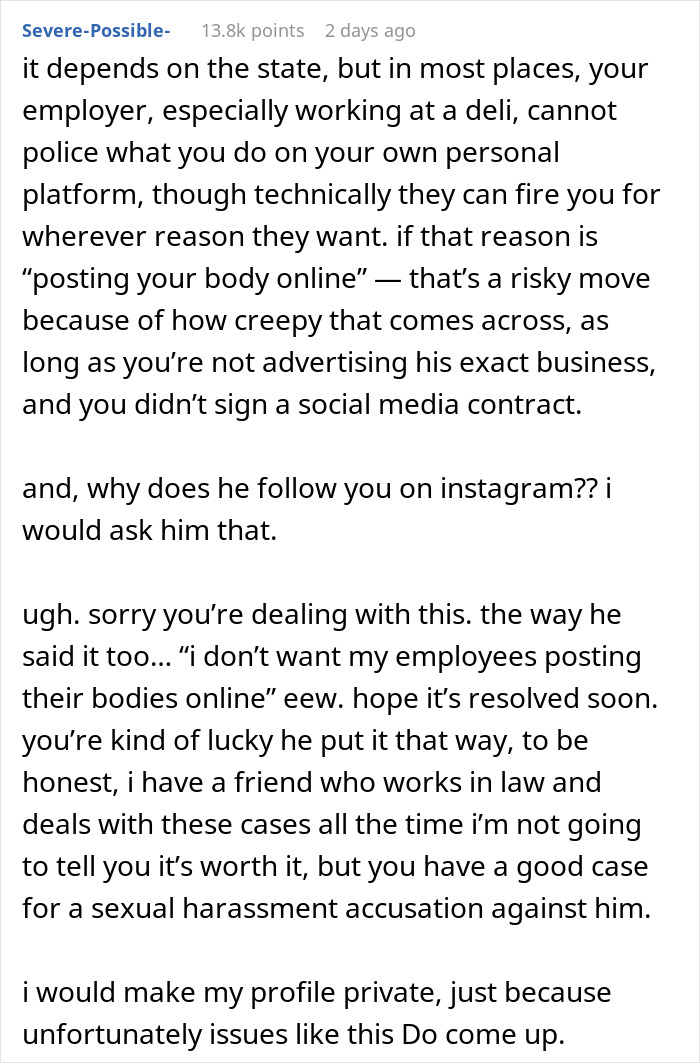
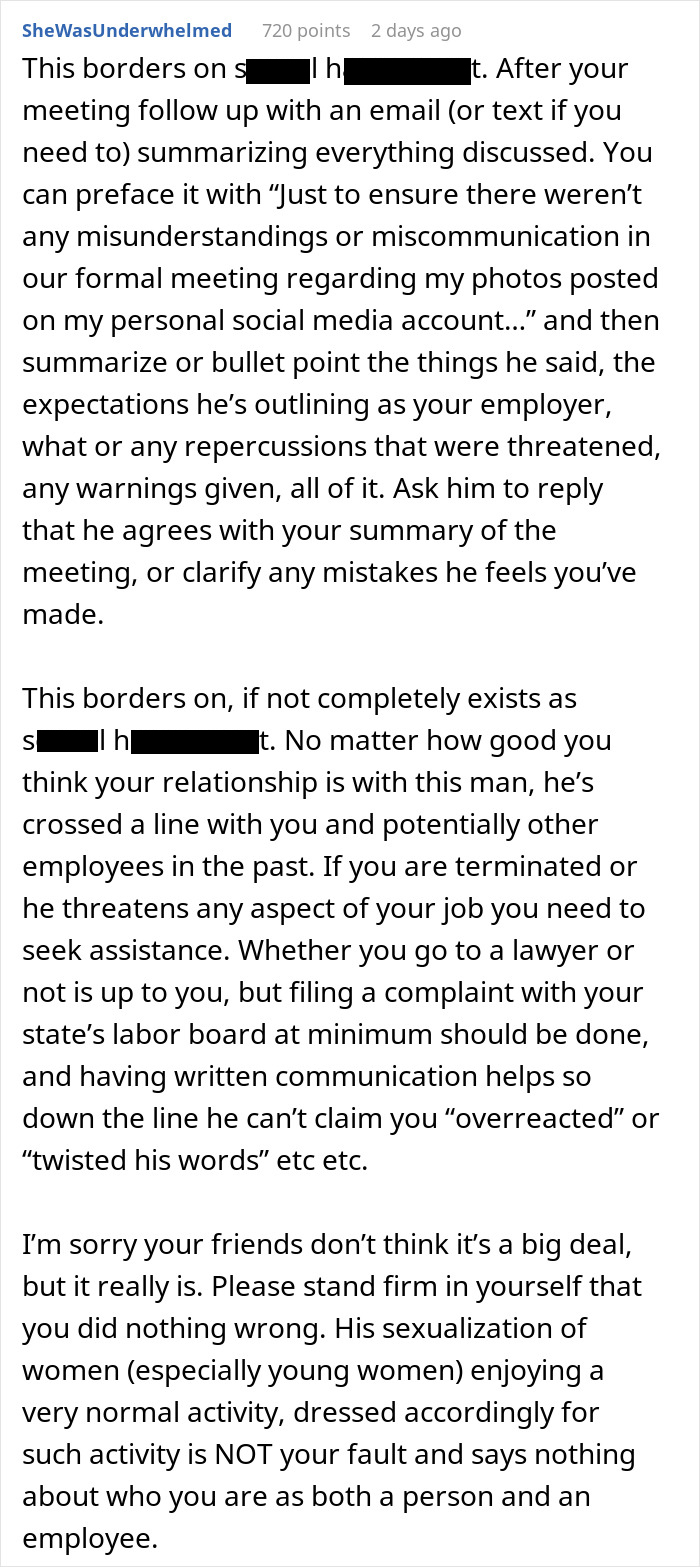
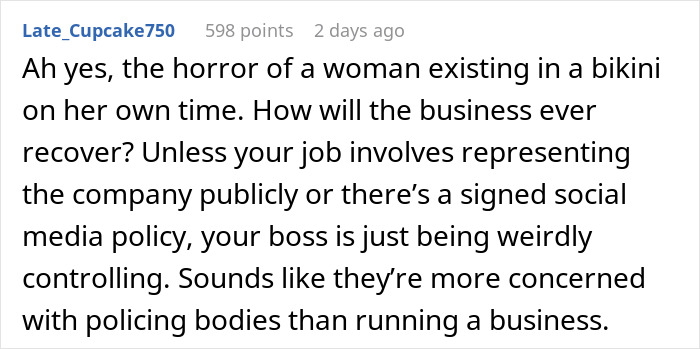
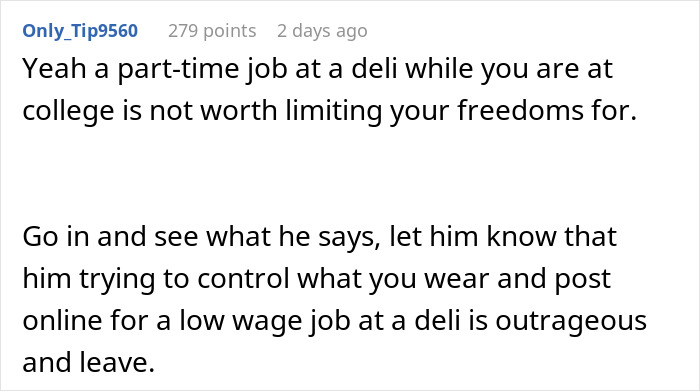
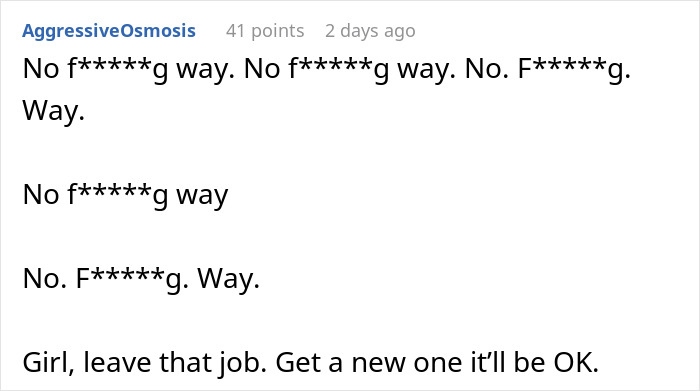
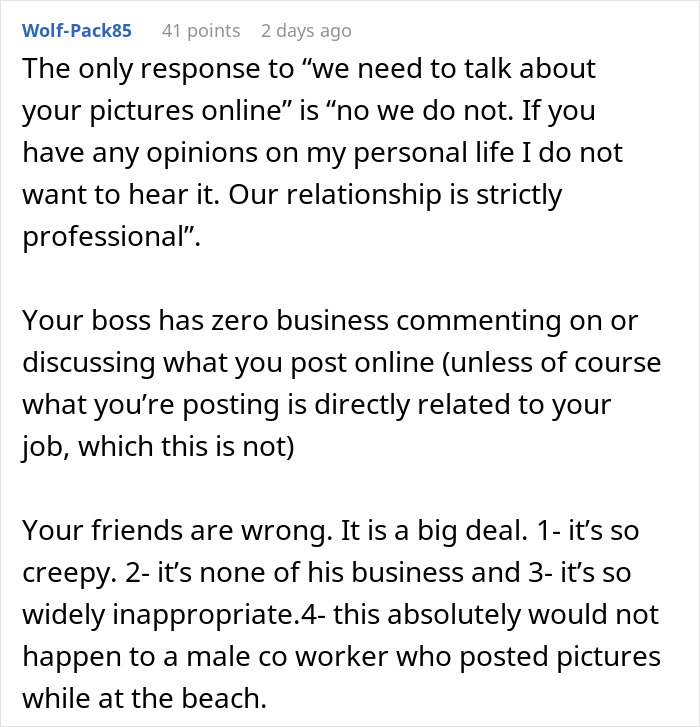
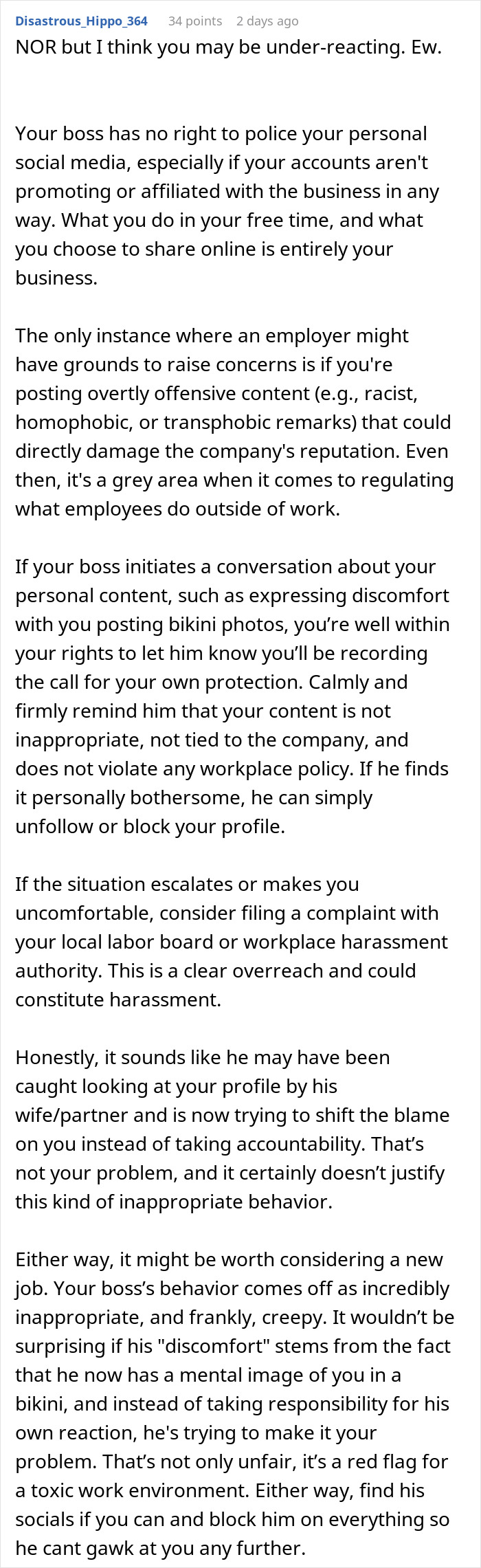
A woman asked the internet if she was overreacting when she got an Instagram message from her boss, complaining that she had posted bikini pictures. We reached out to the woman who posted the pictures via private message and will update the article when she gets back to us.
Image credits: Lucas Andrade / pexels (not the actual photo)
Image credits: [deleted]
Image credits: [deleted]
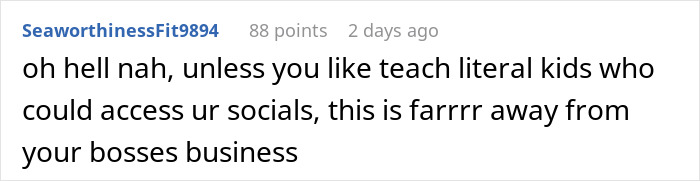
When your boss informs you about what you cannot post on your own personal social networking platforms, it can be invasive and autocratic, but you must understand your rights, your employer’s perspective, and how to address the issue calmly and lawfully.
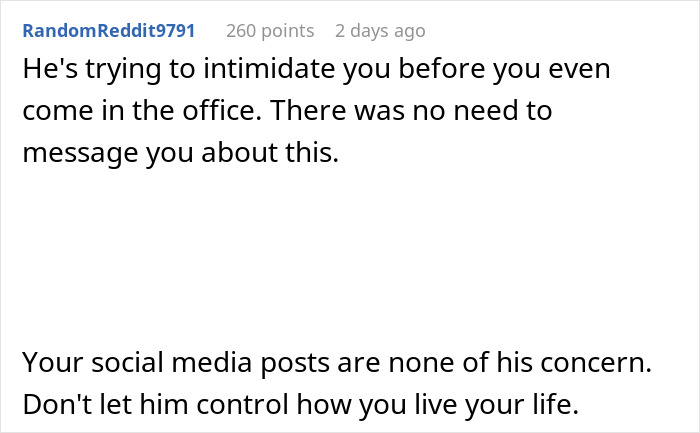
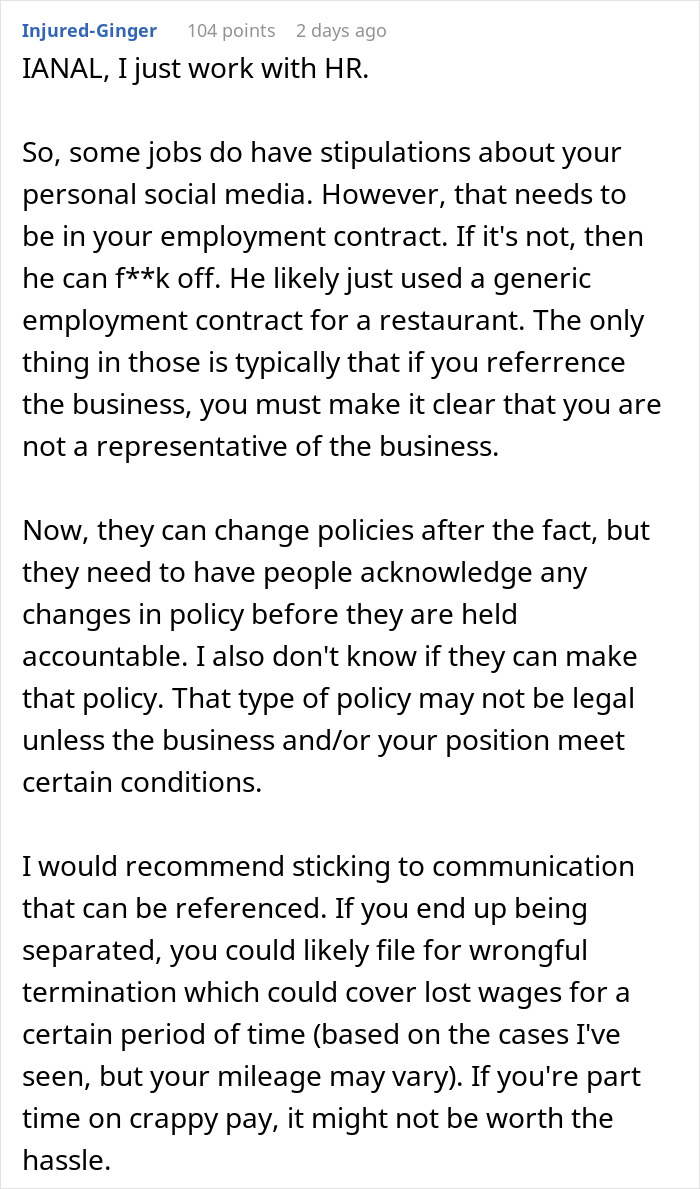
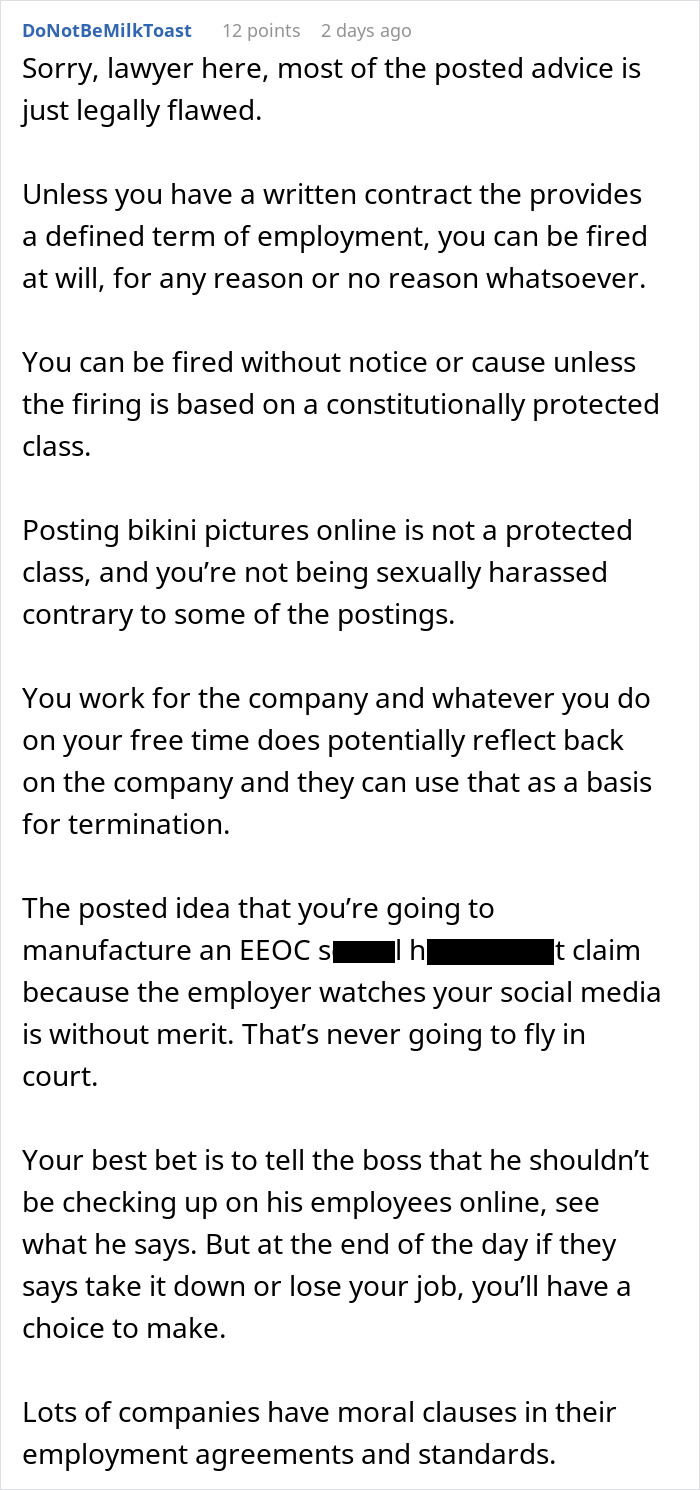
Your social media rights while employed in the United States depend on a blend of federal, state, and sometimes company regulations. Federal law, such as the National Labor Relations Act (NLRA), protects workers’ rights to discuss conditions of work, wages, or unionizing, yes, including on social media. That is, if you’re discussing your working conditions or wages, especially with coworkers or the public, your employer usually can’t discipline you for that. But it doesn’t cover everything. If you post private company information, make harassing or discriminatory statements, or purposefully damage the company’s reputation, your employer might have grounds to discipline or terminate you.
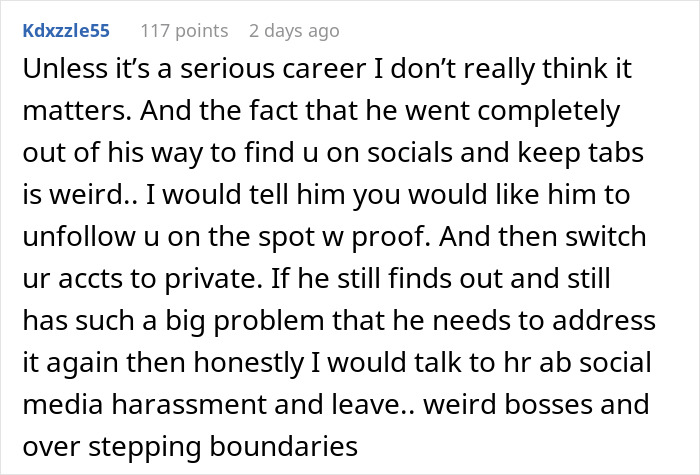
So, if your boss comes along and says something like, “You can’t put that up,” don’t become angry. Instead, get them to clarify. A good place to start is: “Can you tell me what specifically about the post is the problem? ” Try to be inquisitive rather than confrontational. The company may have a social media policy that dictates what is and isn’t acceptable. If they do, ask to see it. A well-crafted policy should establish boundaries and enforce them consistently throughout the workplace.
Image credits: allatsyganova / envato (not the actual photo)
If you are being told not to disclose something personal, like politics, lifestyle, or going to a legal protest, you can be given greater protection, especially by way of state laws. To take an example, some states (like California, New York, and Colorado) pass laws that prevent employers from taking action against an employee for lawful off-work activity, like social media posting. Those protections do normally establish limits, however, where posts themselves amount to harm to the employer’s legitimate business interests.
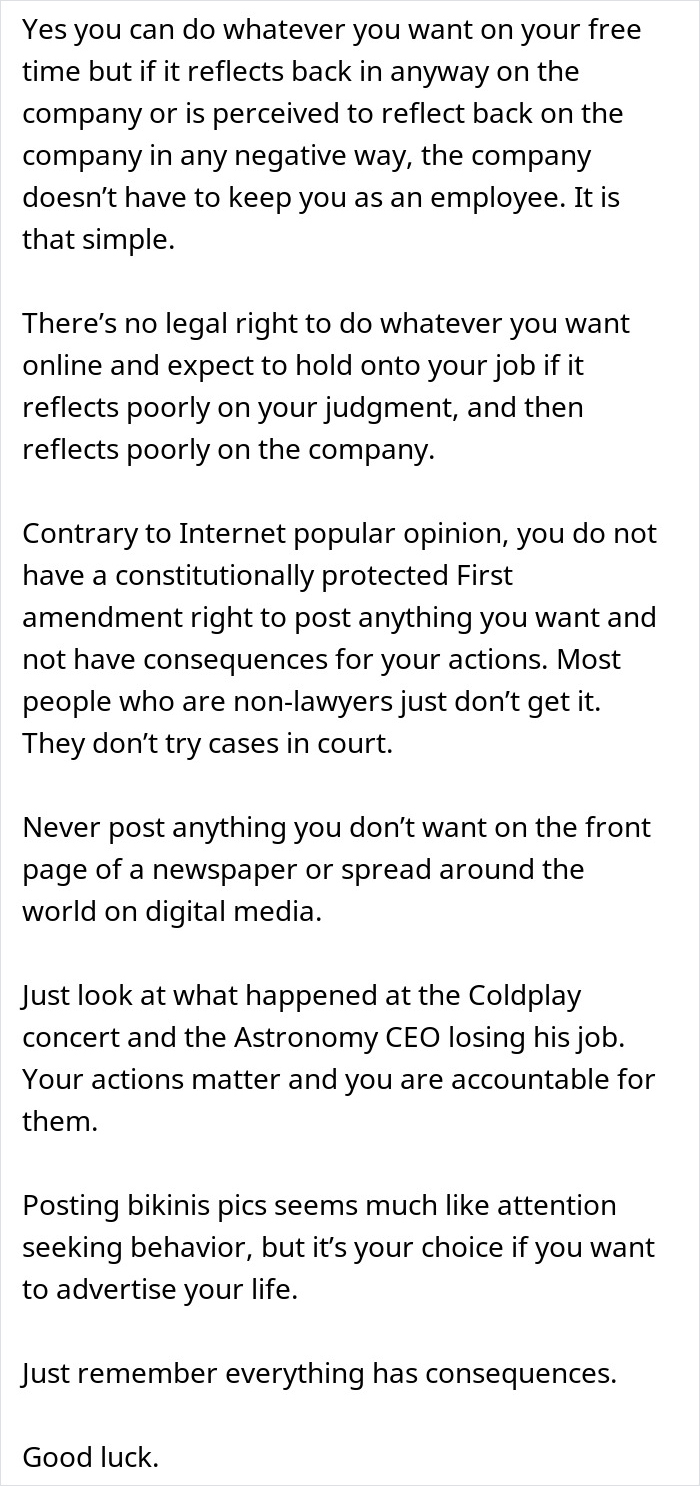
If the conversation becomes more serious, or if you are being disciplined or threatened with termination regarding a post that you believe is protected, you should record the conversation and consider speaking to an employment lawyer. You may also file a charge with the National Labor Relations Board (the NLRB, isn’t it great how it’s only the last letter that changes?) if your rights under the NLRA have been violated. Greet your boss with professionalism and honesty. Ask for specifics, reference any policy they reference, and define your reason behind the posting if needed. If you believe your rights are infringed upon, check into your state’s labor laws or consult with a professional before resisting too hard. Social media can be your own space, but on the job, the line between public and private becomes blurry, so be sure to know exactly where you are before responding. If you want to read more stories like this, some of the readers shared them below.

By entering your email and clicking Subscribe, you're agreeing to let us send you customized marketing messages about us and our advertising partners. You are also agreeing to our Privacy Policy.
Thank you! You've successfully subscribed to newsletters!

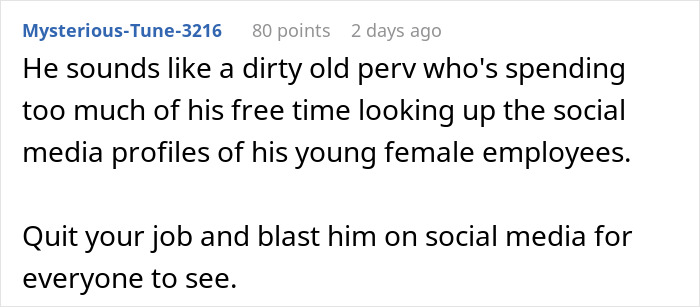
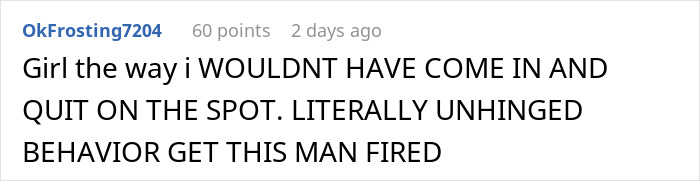
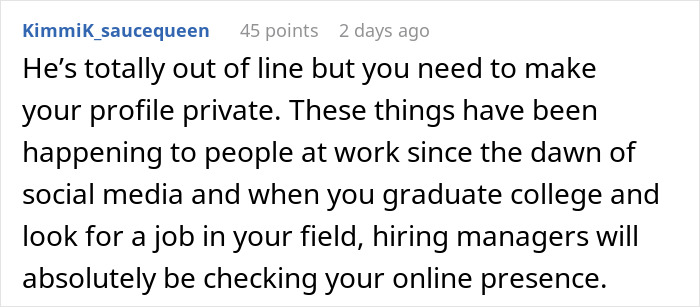
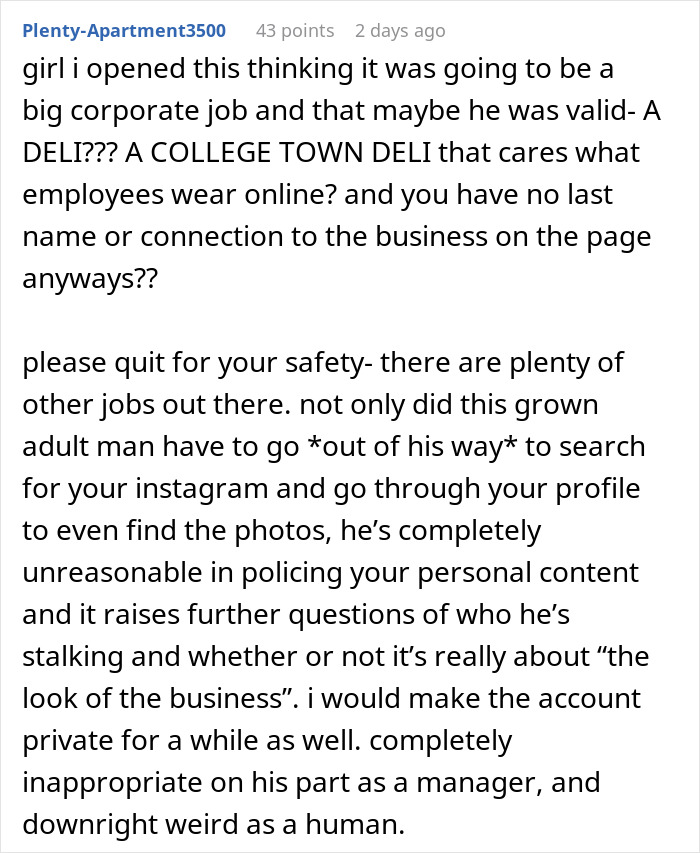
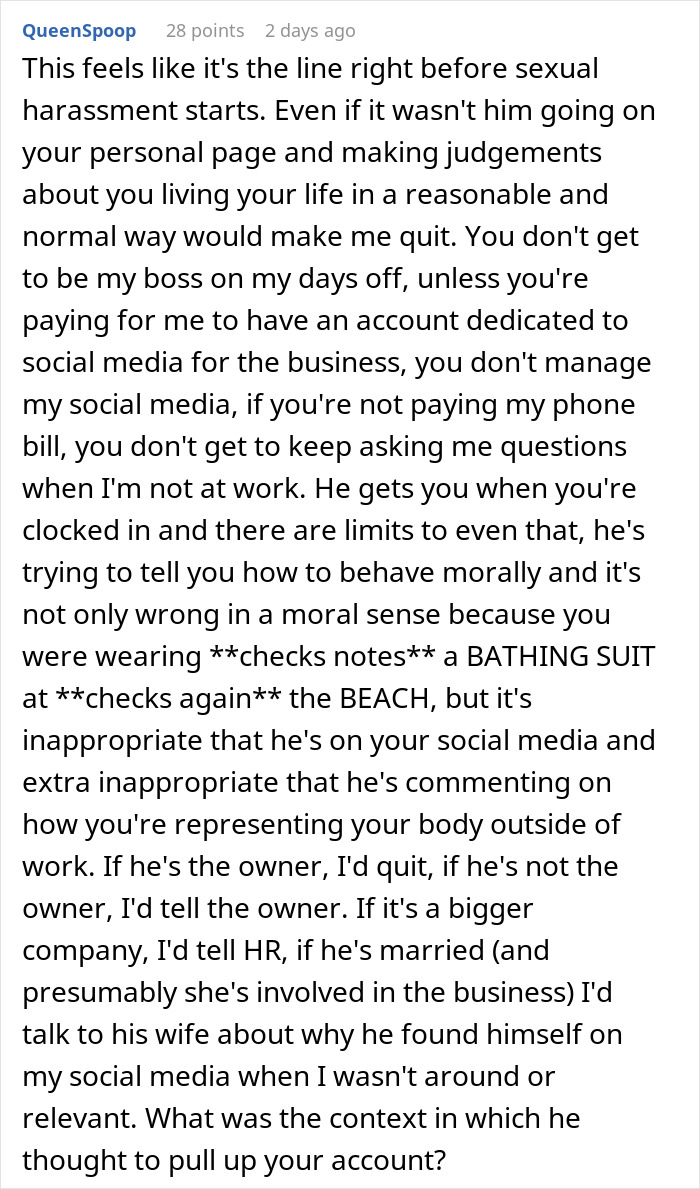
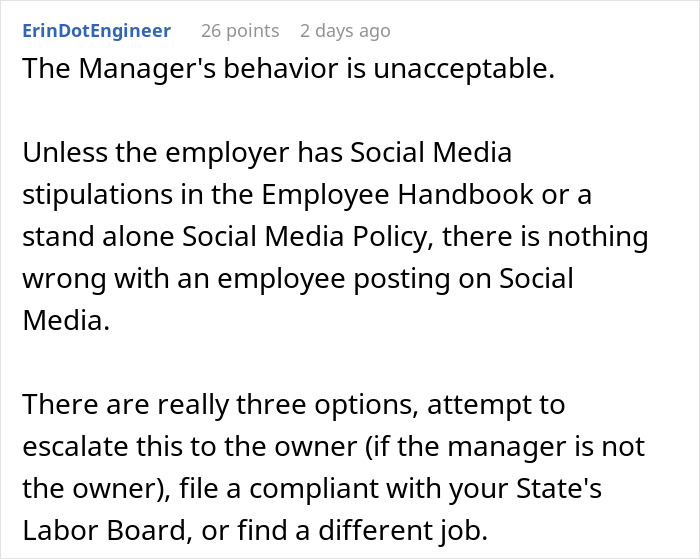
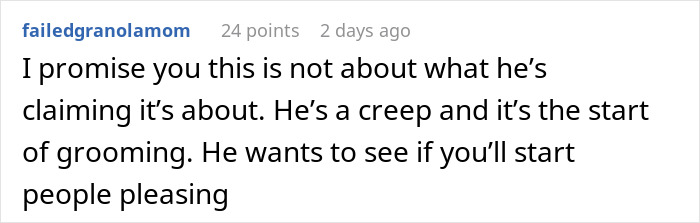
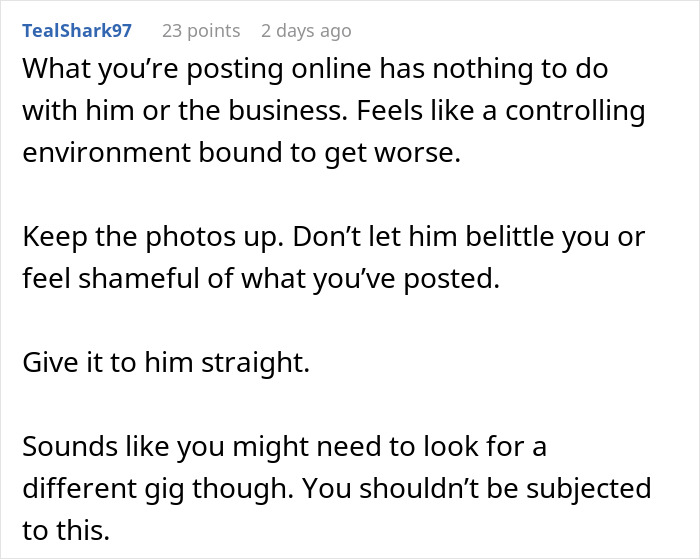
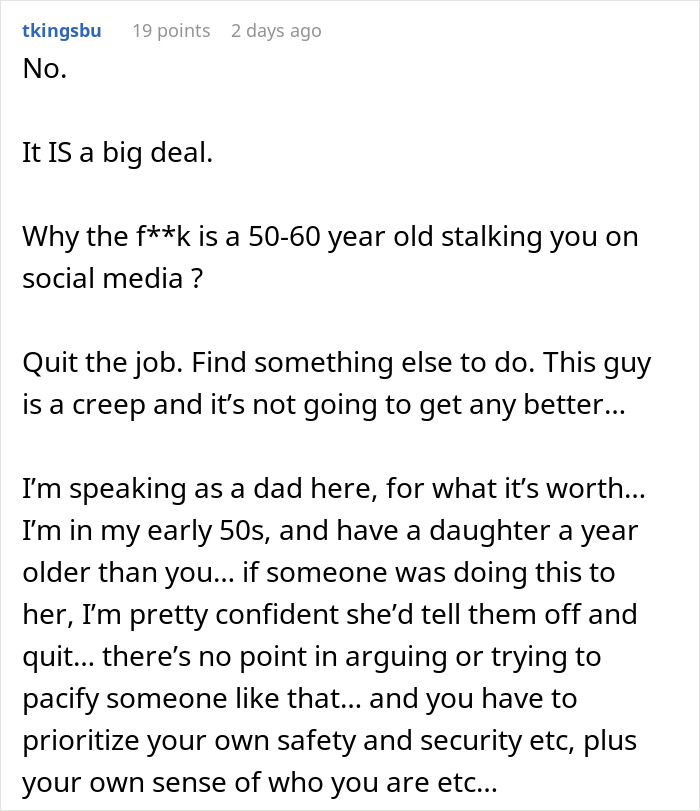
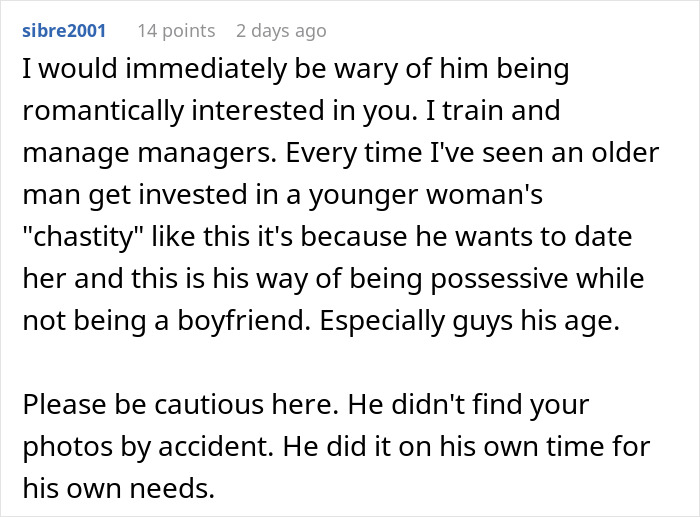
What OP does outwith work on her own free time is none of the boss's d**n business.

It makes me very happy to live in a country where this sort of behaviour on the part of the boss is not acceptable at all. It would be illegal to fire her too. Wearing a bikini at the beach is such a normal thing.



Not really if it's a public account in her name, and it's standard policy these days for employers to keep an eye on their employees' social media - which I think is weird but it's the world we live in, I suppose. Where he's wrong is in trying to police women's bodies. Unless what she posts can have a detrimental effect on the employer's business then it's not his place to dictate what she's allowed to post.
Load More Replies... What OP does outwith work on her own free time is none of the boss's d**n business.
It makes me very happy to live in a country where this sort of behaviour on the part of the boss is not acceptable at all. It would be illegal to fire her too. Wearing a bikini at the beach is such a normal thing.
Not really if it's a public account in her name, and it's standard policy these days for employers to keep an eye on their employees' social media - which I think is weird but it's the world we live in, I suppose. Where he's wrong is in trying to police women's bodies. Unless what she posts can have a detrimental effect on the employer's business then it's not his place to dictate what she's allowed to post.
Load More Replies...



















 No fees, cancel anytime














44
28