Get Premium
Dark mode theme is available exclusively for premium users. Learn more about the benefits of subscribing.
No fees, cancel anytime.

 Dark Mode Ad-Free Browsing Unlimited Content
 Ad-Free Browsing Unlimited Content Dark Mode
Join 1.2 million Panda readers who get the best art, memes, and fun stories every week!
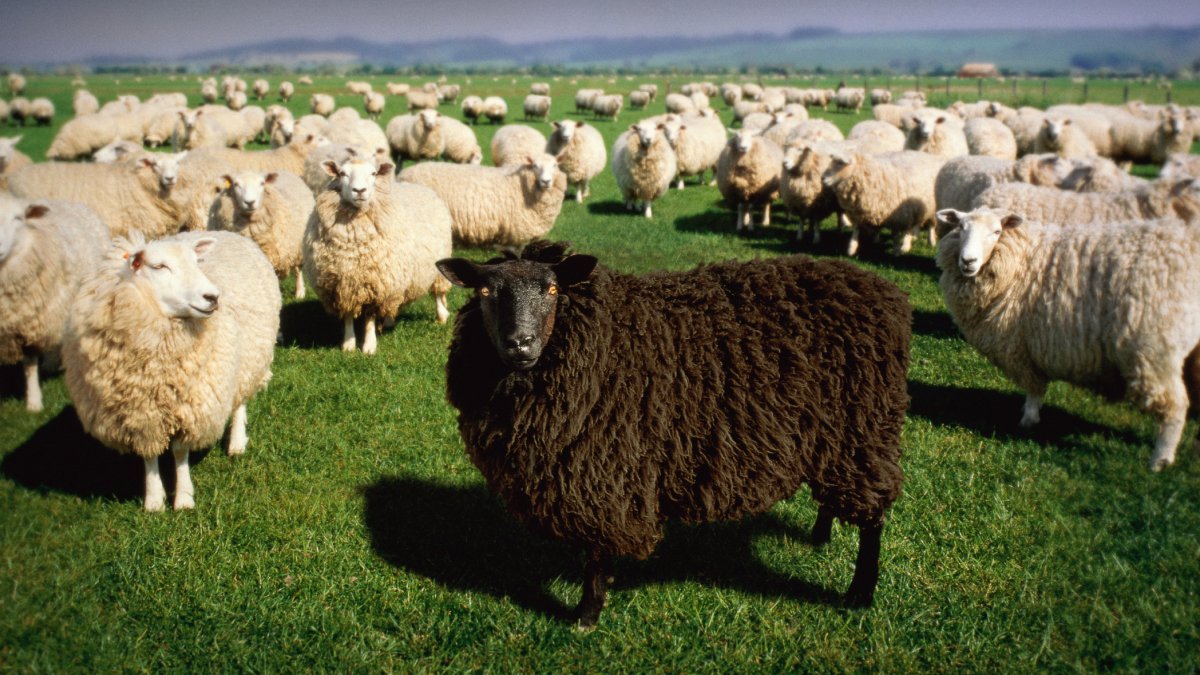
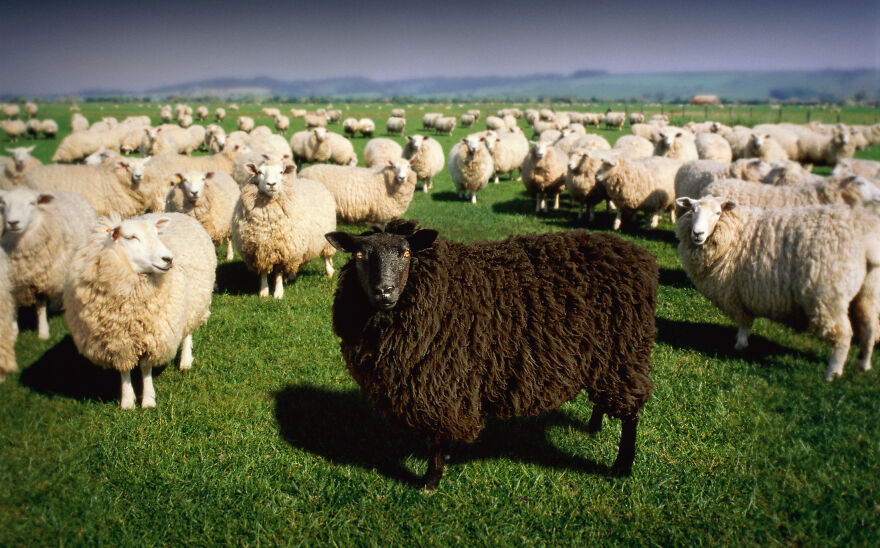
The “black sheep” is the person who breaks the family rules, questions the status quo, or simply refuses to play the expected part.
More often than not, there’s an inherent deep loneliness that comes with this rebellious role.
Being the “outcast” in your family often feels like a permanent mark, but it is actually a sign of emotional health and clarity.
Being the black sheep of the family isn’t a character flaw – it’s a role assigned to you by a dysfunctional system, and understanding this role is the first step toward breaking free and reclaiming your identity.
Image credits: Alan Thornton / Getty Image
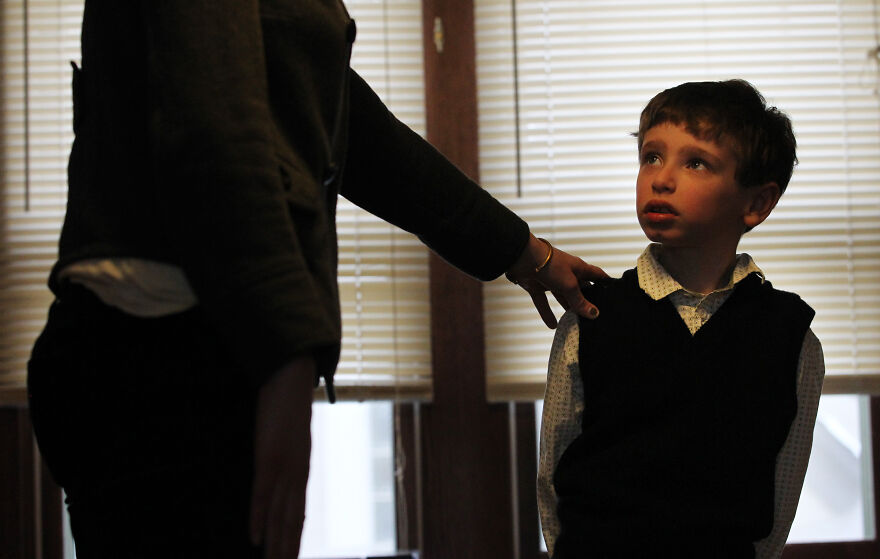
To properly define the meaning of a person who does not fit in (or the so-called “black sheep”), it is worth recalling your early moments when you were growing up. Were you ever told that you’re too emotional? Too dramatic? Perhaps you were the family’s biggest “trouble maker”?
If you nod your head in agreement, you were probably mistakenly viewed as the “problem child,” even though you were the notorious “truth-teller,” the antagonist child in a dysfunctional family who causes trouble just because they call out the hypocritical, selfish, and evil behavior of other members.
That said, being a black sheep of the family isn’t necessarily about being “bad.” Often, it’s about being the person who points out that the “emperor has no clothes.”
As a result, this child is often scapegoated for their bravery in saying the truth out loud.
Families have this weird habit of assigning one person to carry the burden of their dysfunction or failures; in most cases, this unlucky person is none other than the “black sheep.”
How do you tell if you are the “black sheep” of your family? There are three tell-tale signs to look for. First, if you are the only one who talks about “the elephant in the room,” you’re most likely to be detested for it. Second, if you are often blamed for family conflicts you didn’t create, it’s a major sign that you’re the scapegoat in your family.
Lastly, if you feel like you are speaking a different language from your parents or siblings, it means that you’re consciously, or subconsciously, trying to be the rebellious black sheep.
Image credits: Star Tribune / Getty Image
Being the black sheep isn’t always announced outright. It shows up in the small, repeated moments – who gets blamed when something goes wrong, whose achievements go unnoticed, whose opinion is dismissed before it’s fully heard.
These are some of the most common signs:
1.) You’re held to a different standard. Rules that don’t seem to apply to your siblings somehow always apply to you.
2.) Your accomplishments are minimized. Even genuine successes are met with silence, a quick subject change, or a “but” that erases everything you just did.
3.) You’re the scapegoat when things go wrong. Family tension needs somewhere to land, and it consistently lands on you. Psychologists describe this as a group process where one person carries the blame, frustration, and fear that the rest of the family doesn’t want to face.
4.) You feel like a guest in your own family. Holiday gatherings, group chats, family decisions – you’re present, but not quite included.
5.) Your emotions are labeled “too sensitive” or “dramatic.” When you react to being treated unfairly, the reaction itself becomes the problem.
6.) You’re compared to siblings – and always come up short.Research published in the Journal of Family Psychology found that differential parenting accounts for up to 40% of the variance in adolescent sibling conflict – so if you grew up feeling like you could never measure up, that gap was likely structural, not personal. This dynamic often runs alongside the golden child role, where one sibling is elevated while another is pushed down.”
7.) You feel relief when family events are canceled. That quiet sense of “thank god” says more than any explanation could.
If several of these sound familiar, you’re not imagining it. The pattern is real, and it almost always says more about the family system than it does about you.
If several of these sound familiar, you’re not imagining it. The pattern is real, and it almost always says more about the family system than it does about you.
Before you resent the fact that you’re the abandoned black sheep, remember that you’re the one being chosen for breaking the cycle. Dysfunctional families often need someone like the black sheep to project their own hidden flaws, failures, or insecurities onto, so they don’t have to face them themselves.
Your resistance to conformity is really not your fault. If you’re independent, curious, or have high integrity, you might naturally disrupt the family’s toxic narrative. The family reacts with rejection because you threaten their comfortable, unhealthy status quo, not because you did something particularly wrong.
Psychotherapist Kaytee Gillis, LCSW, wrote that breaking a generational cycle can feel rather lonely at first, but it will be worthwhile once you overcome those negative emotions (per Psychology Today).
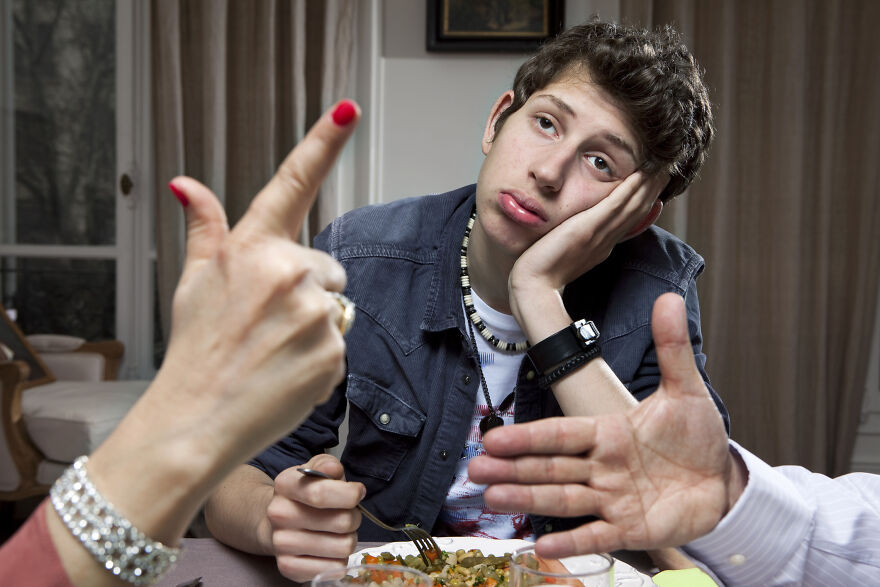
Image credits: EMS-FORSTER-PRODUCTIONS / Getty Image
Gillis also pointed out that feeling guilty and overwhelmed is common among courageous cycle breakers — but these are actually good signs of letting go of your traumatic past.
“Many of us had to adopt unhealthy behaviors to survive, such as taking ownership for things that were not our fault to keep peace,” she explained. “If we could predict Mom’s moods, for example, and act accordingly to make peace, it could end up keeping us safe in the long run. And while this behavior and insight were essential in childhood, they end up being a disadvantage in adulthood.”
The black sheep label rarely exists in isolation. It sits within a broader system of family roles in which each child is assigned a part to play in the household’s emotional script.
Growing up as the family outlier doesn’t just feel bad in the moment. It rewires how you see yourself and the world.
When the people who were supposed to make you feel safe instead made you feel like the problem, the effects follow you into adulthood in ways that aren’t always easy to trace back to their source.
1.) Chronic self-doubt. When your perceptions were consistently invalidated growing up, you learn not to trust yourself. You second-guess your decisions, downplay your instincts, and look to others for validation that you’re allowed to take up space. Research on scapegoating confirms that children in this role frequently develop chronic guilt, shame spirals, and difficulty asserting themselves.
2.) People-pleasing and fear of rejection. If love in your family felt conditional – something you had to earn and could lose at any moment – you may have become skilled at anticipating what others need and shrinking yourself to avoid conflict. This pattern tends to follow black sheep adults into friendships, romantic relationships, and work.
3.) Difficulty setting boundaries. Boundaries require a baseline belief that your needs are legitimate. If that belief was never built, saying “no” can feel dangerous – like it will confirm every bad thing you were made to believe about yourself.
4.) Hypervigilance. Constantly reading the room, bracing for criticism, waiting for the next moment things shift against you – this is what happens when a child grows up in an unpredictable emotional environment. Research shows that children raised in unstable or threatening environments develop a chronically activated stress response, and that heightened state of alertness often carries into adulthood even when the danger is long gone.
5.) A complicated relationship with identity. When your family assigned you a role – the difficult one, the dramatic one, the disappointment – separating who you actually are from the label they gave you can take years. In Family Systems Theory, this is known as the “identified patient” role: the person onto whom the family projects its collective anxiety and unprocessed dysfunction.
None of this is permanent. Awareness is the first step, and many black sheep adults find that the distance they eventually create from their families of origin becomes the space where they finally get to figure out who they actually are.
Sometimes the best outcome of being the family outlier is the life you build on your own terms, far from their expectations.
One story that circulated on Bored Panda captures this perfectly. A man who had long been the “black sheep” of his family built a genuinely happy life with his girlfriend, financial stability, a strong relationship, and a home that felt like home. His siblings and parents, rather than being glad for him, resented it. The success itself became the new problem.
Image credits: Westend61 / Getty Image
What the story illustrates isn’t unusual. When a family has built its identity around one member being the problem or the outsider, that member’s happiness disrupts the entire script. The black sheep isn’t supposed to thrive. When they do, the family often doubles down rather than reconsiders.
The comments under that post were full of people who recognized the pattern immediately. Not because it’s rare, but because it’s one of the most consistent things black sheep adults report: the moment they stopped needing the family’s approval and started building a real life, the family’s resentment increased, not decreased.
That resentment is information. It tells you that the role you were given was never about your actual behavior. It was about what your family needed someone to be.
Not every black sheep is in a position to cut contact. Some maintain relationships with family out of obligation, shared circumstances, or genuine love for certain members, even while recognizing the dynamic is unhealthy. For those situations, the grey rock method is worth knowing.
The idea is simple: become as uninteresting as a grey rock. Give short, neutral answers. Don’t share emotional updates, relationship news, or anything that could be used as ammunition or met with dismissal. You’re not hiding – you’re choosing not to perform for an audience that has never been on your side. Psychology Today describes it as a way to starve toxic individuals of the drama and attention they feed on.
Practically, this looks like:
Grey rocking isn’t the same as giving up. According to psychologists, when an abusive or manipulative person stops getting the reaction they’re looking for, they gradually lose interest in that target. It’s recognizing that emotional engagement with someone who isn’t engaging in good faith costs you something, and deciding that cost isn’t worth paying every time.
To survive being the family’s black sheep, it’s crucial to stop seeking validation from the people that you reject in the first place. You cannot get “I’m proud of you” from a system that needs you to be the “bad guy.” Find validation in your own achievements and chosen community, aka “found family.”
Reframing is also crucial when trying to thrive in a non-supportive system; instead of saying “I am the problem,” reframe it to “I am the catalyst for change.” Once you realize that it’s not about you, and that their abusive behavior is only a reflection of their internal conflicts, you’ll then start to approach any future hostility with acceptance instead of resentment.
Image credits: Vincent Besnault / Getty Image
Thriving in an unhealthy system requires firm boundaries. If your abusive family is unwilling to change, you have the right to draw the line and limit contact.
Rachel Zoffness, Ph.D., an assistant clinical professor at the UCSF School of Medicine and a pain psychologist, shared her best psychological advice on how to set boundaries with family members who test your patience (per Psychology Today).
First and foremost, you need to know your true worth and the value of your time. It doesn’t matter if the people around you are your blood relatives; if they don’t treat you with the respect and appreciation you deserve, you should avoid them and build healthy connections with those who build you up instead of bringing you down.
Another important step in healing is to allow yourself to do what’s best for you, be it skipping a family holiday gathering or refraining from attending a milestone event for an abusive or toxic relative. Chances are that you will be seen as the “bad person” for doing so, but that’s ok.
Image credits: skynesher / Getty Image
You also want to have crystal-clear needs and communicate them effectively. For example, are you comfortable if your mother-in-law spends the entire day with you at home, or would you prefer if she only comes over for dinner? Make sure your demands are heard by others; repressed emotions are a surefire recipe for boiling resentment.
Finally, while it might seem like cliché advice, you need to practice saying “no” to your family members. It feels heavy, but it can save your soul in the long run. Growing up, you’ve likely been programmed to always accept helping others, whether it’s your mother, father, or your little brother.
Assisting your closest family members can seem noble, and refraining from doing so feels wrong and evil. But whenever these thoughts cross your mind, ask yourself, is the lost mental health that comes from saying “yes” to an abusive family, worth sacrificing for? If not, use a firm tone when communicating your refusal; a shaky, soft “no” won’t cut it with your parents or relatives.
In families that resist any form of individual identity, the black sheep is often the first to push back against enmeshment, the dynamic that demands everyone share the same opinions, feelings, and loyalties.
All things considered, it is worth remembering that your family’s narrative is not necessarily the truth, but rather one version of history. You are the author of your own life. Once you stop trying to convince them of your worth, you are finally free to live it.
Being the disregarded black sheep is not as bad as it seems; it means that you’re the chosen truth-teller who’s brave enough to break a generational cycle of trauma. You have rare strength, you are authentic, and you are not trying to conform to wrongdoings, and if you’re being hated or ridiculed for this integrity, is it really your fault?
It is totally okay to draw the line and learn to say “no” to the very people you grew up with. Remember, your family of origin doesn’t have to be perfect, and if it’s not, you can always start anew and find your “chosen family,” the healthy family that doesn’t make you book another therapy session.
For more guidance on navigating complex family dynamics, explore the Bored Panda Family Hub.

By entering your email and clicking Subscribe, you're agreeing to let us send you customized marketing messages about us and our advertising partners. You are also agreeing to our Privacy Policy.
Thank you! You've successfully subscribed to newsletters!

I don't completely understand why we have suddenly had these fantastic articles about family dynamics on BP but I have to say I find them amusing and wonderful and I love them!

I have NEVER felt more SEEN before!!! Thank you for this article!!

They have an excellent article too called The Scapegoat Child. My mother broke me when I first married and rallied my siblings to her side and they didn’t speak to me for years. When she came back, it was very difficult trying to maintain. I finally got therapy. People casually throw around the narcissist label so it diminishes what they truly are. That article called out the therapies that truly helped me. Childhood trauma is truly a thing. It sucked that it took me until my 50s to finally get therapy help I needed.
Load More Replies... I don't completely understand why we have suddenly had these fantastic articles about family dynamics on BP but I have to say I find them amusing and wonderful and I love them!
I have NEVER felt more SEEN before!!! Thank you for this article!!
They have an excellent article too called The Scapegoat Child. My mother broke me when I first married and rallied my siblings to her side and they didn’t speak to me for years. When she came back, it was very difficult trying to maintain. I finally got therapy. People casually throw around the narcissist label so it diminishes what they truly are. That article called out the therapies that truly helped me. Childhood trauma is truly a thing. It sucked that it took me until my 50s to finally get therapy help I needed.
Load More Replies...

























 No fees, cancel anytime









20
3