Get Premium
Dark mode theme is available exclusively for premium users. Learn more about the benefits of subscribing.
No fees, cancel anytime.

 Dark Mode Ad-Free Browsing Unlimited Content
 Ad-Free Browsing Unlimited Content Dark Mode
Join 1.2 million Panda readers who get the best art, memes, and fun stories every week!
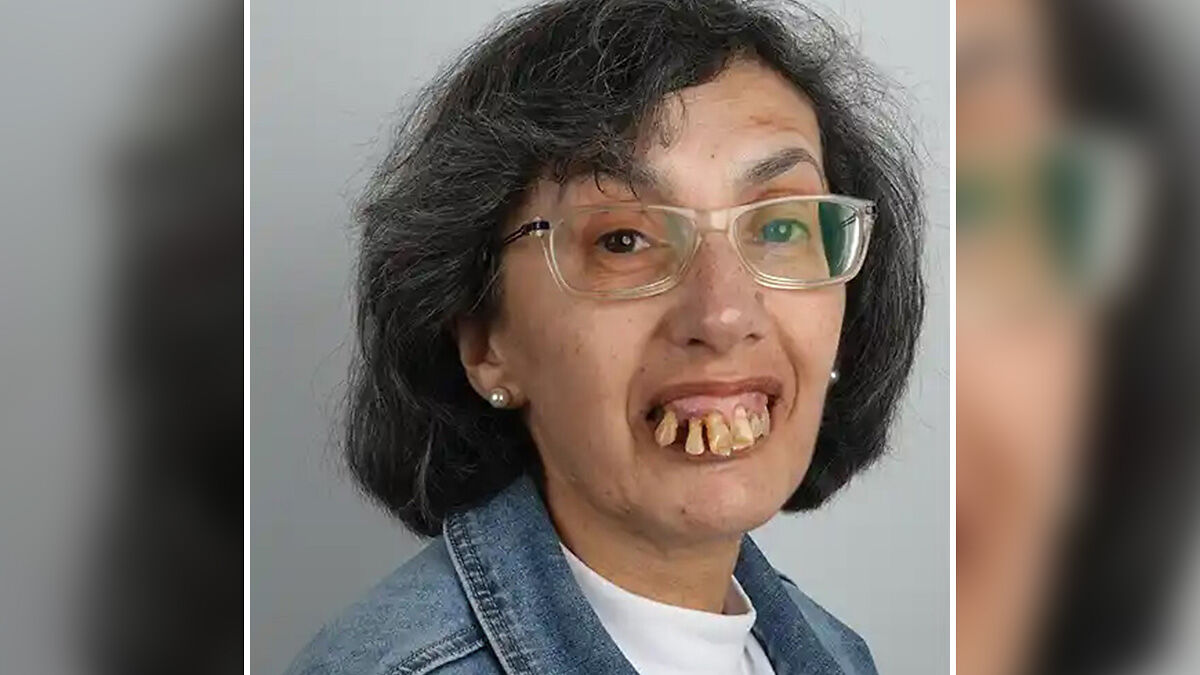
Our smile is one of the most noticeable features of our face, and one of the most deeply tied to confidence. In a 2019 study conducted by OnePoll, 7 in 10 people reported feeling self-conscious about their teeth, with over half (57%) admitting to covering their mouths when they laugh.
Every day, the Mint Clinic, a dental practice based in Lisbon, Portugal, sees many patients whose teeth have been severely affected by years of neglect and helps them restore their confidence through different dental treatments.
The clinic has shared several before-and-after photos, each telling a different story of insecurity and renewed self-esteem.
To better understand what lies behind these dramatic transformations, Bored Panda has spoken with Dr. Toni Pikoos, a psychologist who specializes in body image concerns, and Dr. Ruhee Jaffer, an award-winning general and cosmetic dentist who runs a clinic in California.
Here are the most striking before-and-after cases shared by the Mint Clinic, highlighting both the physical and emotional transformations experienced by patients.
This post may include affiliate links.
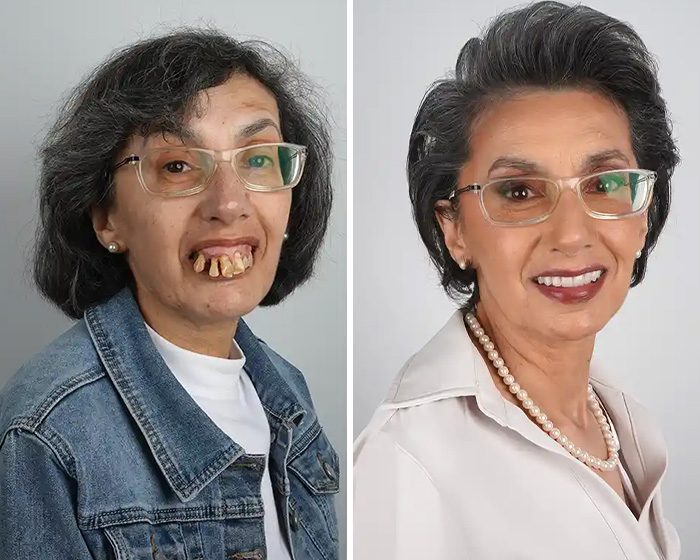
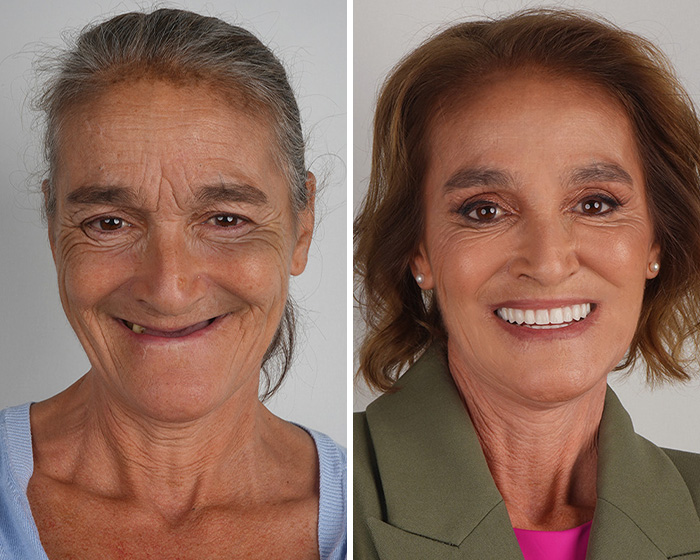
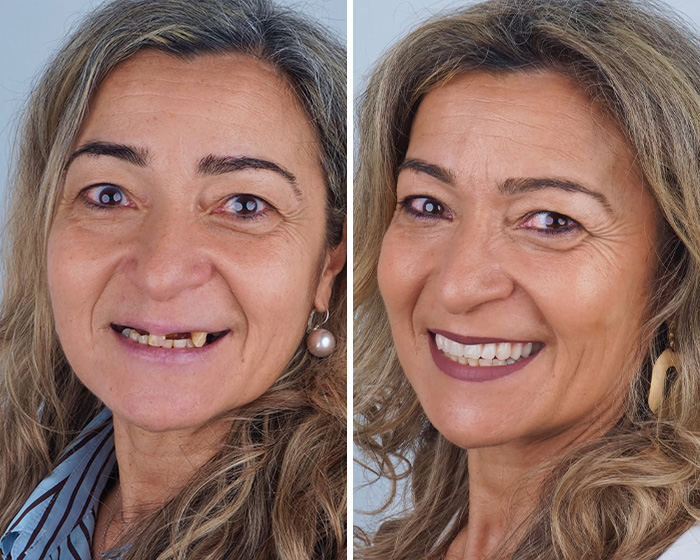
María José said she “didn’t know” how to smile before her transformation.
Having felt insecure about her smile since childhood, she explained that her appearance caused problems in both social and professional settings.
Her case reportedly involved abnormalities in dental development and a history of prolonged orthodontic treatment that failed to produce satisfactory results.
At age 59, the Lisbon resident finally decided to make a change and get dental implants.
“More than correcting protruding teeth, this treatment required listening, time, and a truly personalized approach,” the clinic noted.
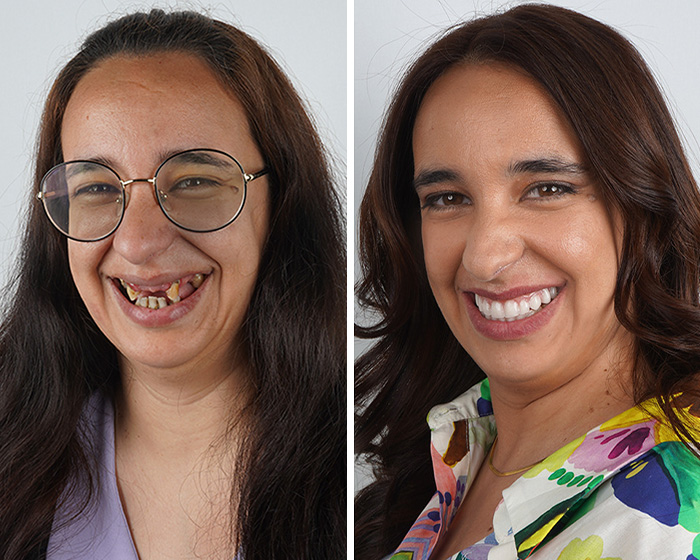
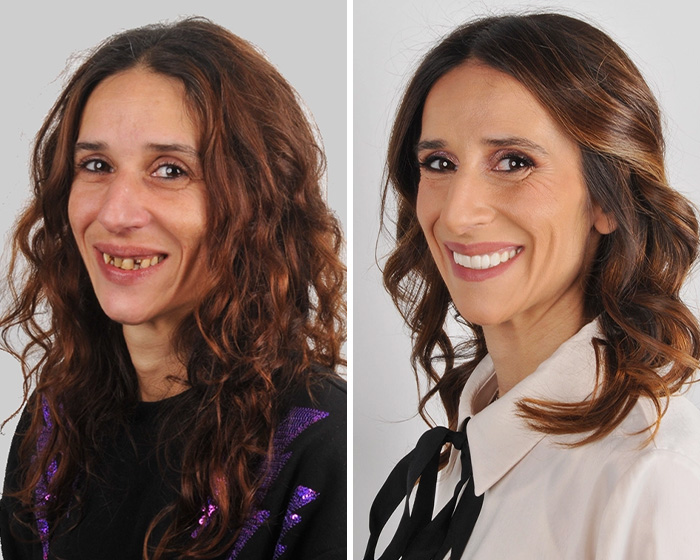
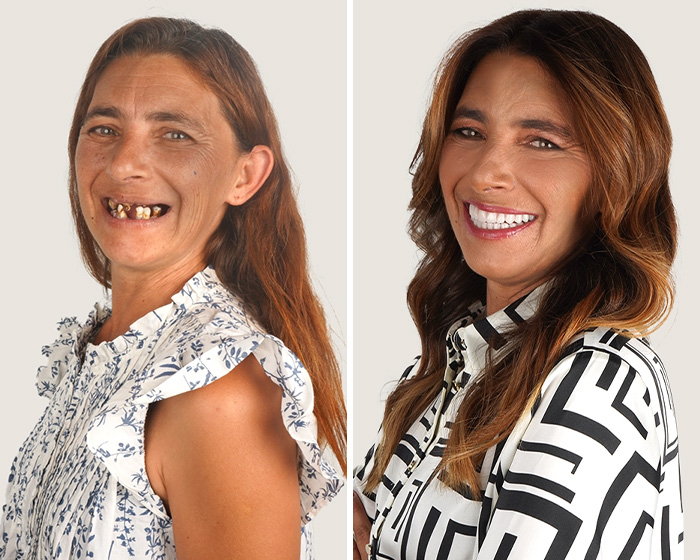
Growing up, Elisa developed a fear of the dentist due to traumatic experiences at different dental clinics.
That phobia reportedly kept her from attending regular dental checkups and maintaining good hygiene for a long time.
The “after” photo shows a confident woman who faced her fears and finally got the smile she had long desired.
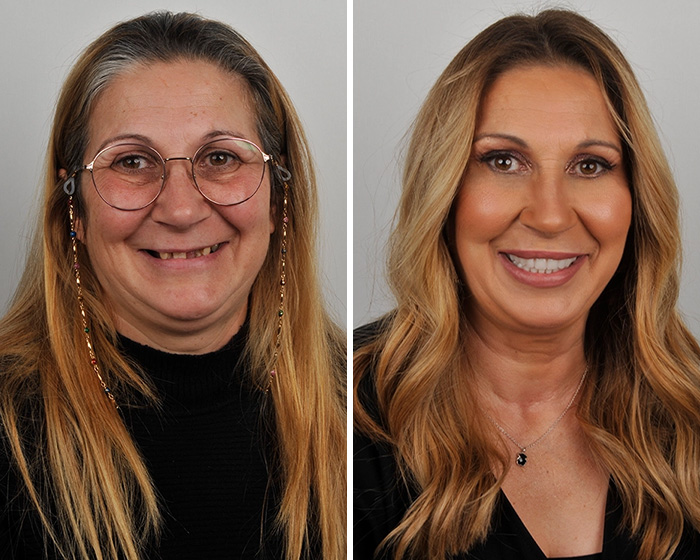
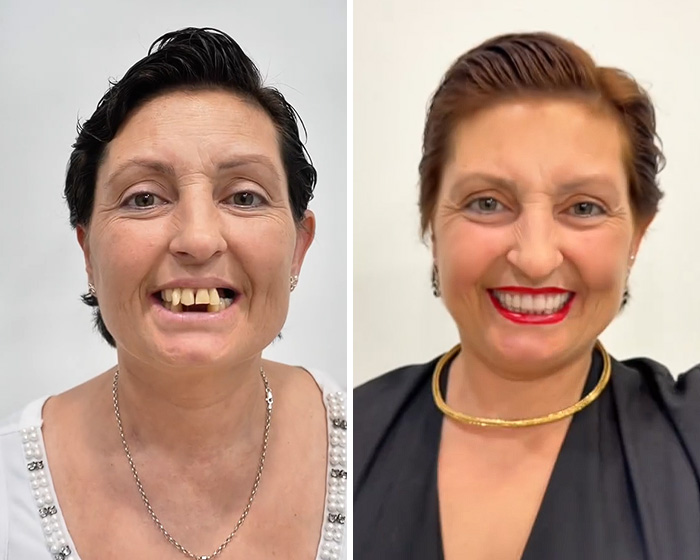
“I always told myself that by the time I was 50, I had to change,” Paula said in a video posted by the dental clinic.
She followed through on that promise, with hundreds of social media users praising the transformation and remarking that she looked like a completely different person.
In addition to helping Paula smile confidently, the transformation enabled her to eat whatever she wanted, something she hadn’t been able to do since she was 11 years old.
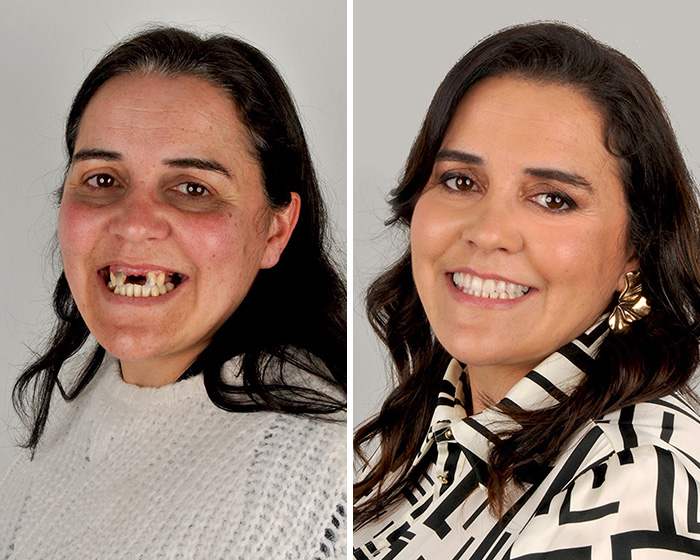
Rita entered the clinic with two of her front teeth missing, along with other signs of neglect—a reflection of several years during which her self-care had not been a priority.
As the clinic explained, a fixed implant-supported dental prosthesis was placed to restore Rita’s confidence and oral function.
According to the World Health Organization, tooth loss is generally the end point of a lifelong history of oral disease.
The estimated global prevalence of complete tooth loss is nearly 7% among people aged 20 or older. For people aged 60 or older, the figure rises to an estimated 23%.

I have met a few people who have prominent missing teeth (or none at all.) The smile with their mouths closed and I wish I had the $ to help.
“I feel ten years younger,” Manuela said as she looked in the mirror after undergoing what the clinic calls “facial harmonization.”
“I feel good about myself. For the first time, I’m not afraid to look in the mirror,” she added.
According to the clinic’s website, facial harmonization involves techniques such as hyaluronic acid fillers in the lips, chin, and under-eye area, as well as rhinomodeling, a non-surgical procedure that corrects asymmetries in the nose.
The clinic wrote, “Today, Manuela leaves behind a painful past and is living a new chapter, thanks to her new smile and renewed self-esteem.”
Telma went from feeling deeply insecure about her smile in family photos to confidently stepping in front of a camera.
Her smile bore the marks of years of dental deterioration and deep staining.
Dental veneers gave her a natural-looking smile that was in harmony with her gums and facial features.

My only comment is that the new teeth are waaay too white. The sheer whiteness draws attention to the fact that they are 'false teeth'.
Sandra presented a case of complete tooth loss, which directly affected her ability to chew and speak.
Without providing details about the patient’s personal life, the clinic said her life was marked by hardship and that her self-esteem issues related to her appearance had caused her to become withdrawn and quiet.
Sandra received dental implants that restored both her smile and confidence.
“In this case, it was possible to perform the extractions and place the implants all on the same day,” the clinic explained.
The transformation was completed in just a few hours thanks to surgical precision and advanced technology.
For years, Sónia suffered from periodontitis, a bacterial infection that causes bleeding and swollen gums. Left untreated, it can damage the bone that supports the teeth, leading to tooth loss.
This condition is most common in people over 30, with severe cases affecting more than 1 billion individuals worldwide, according to the World Health Organization. It is also reported to be the leading cause of tooth loss in adults.
The main cause of periodontitis is poor oral hygiene, with risk factors including a family history of gum disease, hormonal changes, diabetes, and high blood pressure.
While gum disease is not fatal, it has been linked to health conditions such as rheumatoid arthritis, cardiac disease, and cancer.
Sónia regained her confidence thanks to a comprehensive oral rehabilitation plan that controlled the disease and restored function to her mouth.
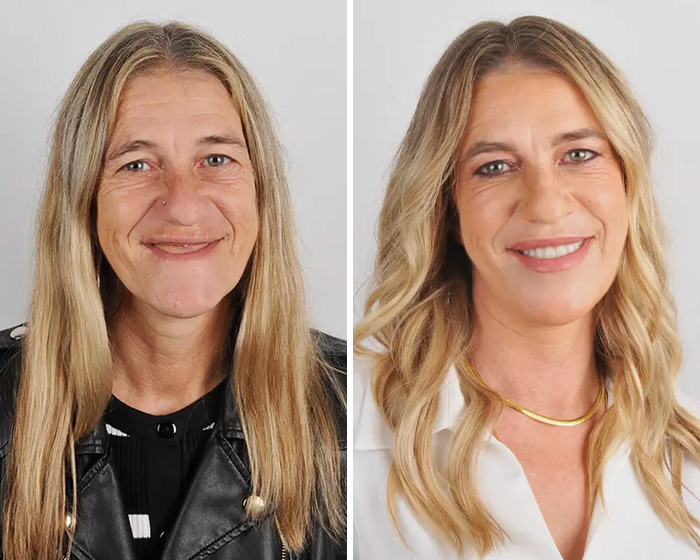
Natércia felt so insecure about her smile that she spent years covering it whenever something made her laugh.
In addition to concerns about her appearance, she felt self-conscious about her social interactions, as her teeth affected her ability to speak.
This resulted in the patient withdrawing from social life and concealing all expressions of happiness whenever she met new people.
As a result of Natércias’ significant loss of dental structure, the case presented a challenging clinical starting point.
The clinic noted about the transformation, “The restoration of Natércia’s smile was also the restoration of her confidence, her identity, and her freedom of expression.”
Helena had to change her diet to adapt to her missing teeth and the discomfort she experienced.
While the clinic did not reveal the cause for her tooth loss, it said that the few teeth she had were loose.
The woman revealed that she struggled deeply with her self-confidence, to the point of covering her mouth with her hand when she laughed.
The clinic restored her confidence and oral function by placing dental implants and prostheses supported by those implants.


This really made me smile AND remember to book a dentist's appointment!
It depressed me; I hate these articles because so many Pandas feel they hafta post negative comments, critique the makeup or hair, or post about anything other than the people looking so happy. I was raised in an environment where all I ever heard was negativity, and those people make me feel as if I'm right back there again. It's apparently k**l them to say either something nice or nothing at all. 😞
Load More Replies...
This article made me so happy for these beautiful women! You could see and feel the confidence in them. It made my day!

It makes me mad that dental care isn't seen as part of health care already. The teeth are part of the body and everyone should be able to get dental care. Healthy teeth make a profound difference not only functionally but in the way people see you socially. People will look at someone with decayed or missing teeth and just assume they're on d***s etc. My mom was a dental assistant and I've seen people's lives change after getting their teeth fixed. People look at themselves and shed tears.
Load More Replies...
This really made me smile AND remember to book a dentist's appointment!
It depressed me; I hate these articles because so many Pandas feel they hafta post negative comments, critique the makeup or hair, or post about anything other than the people looking so happy. I was raised in an environment where all I ever heard was negativity, and those people make me feel as if I'm right back there again. It's apparently k**l them to say either something nice or nothing at all. 😞
Load More Replies... This article made me so happy for these beautiful women! You could see and feel the confidence in them. It made my day!
It makes me mad that dental care isn't seen as part of health care already. The teeth are part of the body and everyone should be able to get dental care. Healthy teeth make a profound difference not only functionally but in the way people see you socially. People will look at someone with decayed or missing teeth and just assume they're on d***s etc. My mom was a dental assistant and I've seen people's lives change after getting their teeth fixed. People look at themselves and shed tears.
Load More Replies... 












 No fees, cancel anytime