Get Premium
Dark mode theme is available exclusively for premium users. Learn more about the benefits of subscribing.
No fees, cancel anytime.

 Dark Mode Ad-Free Browsing Unlimited Content
 Ad-Free Browsing Unlimited Content Dark Mode

Join 1.2 million Panda readers who get the best art, memes, and fun stories every week!

The internet is as bottomless as Hermione’s beaded bag, and digging through it is just as unpredictable. Whatever you can think of is probably in there somewhere, along with a whole bunch of things you never would’ve thought to look for.
You’ve got endless cat memes and hour-long videos of people organizing their fridges. There are also quizzes that tell you which sandwich you are and Google Maps reviews of random rocks. And that’s just the tip of the iceberg.
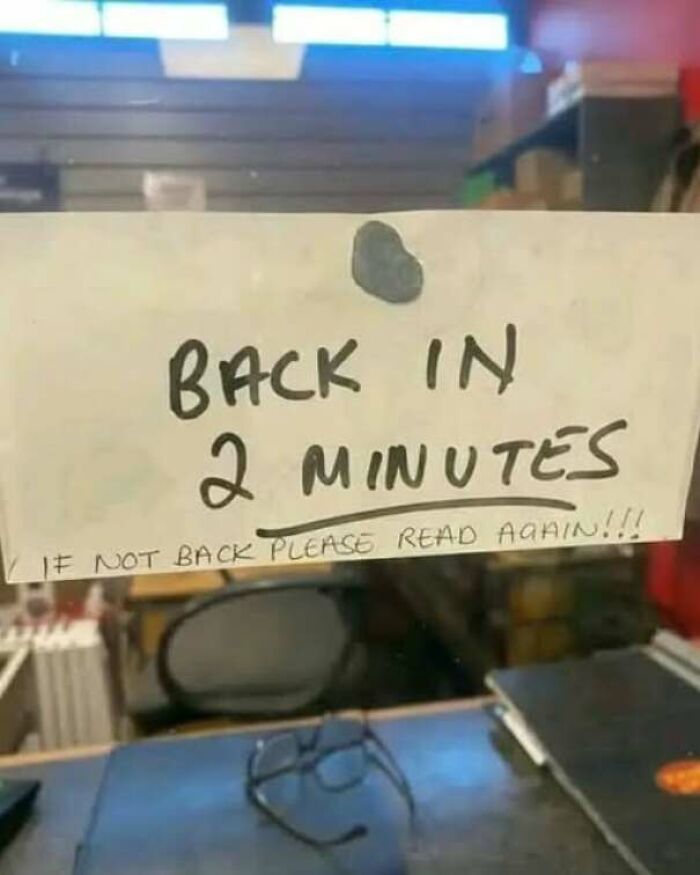
But you don’t have to hop from site to site to get your daily dose of internet chaos. The Facebook group “All Things Strange And Unusual” brings plenty of it together in one place. It’s filled with all sorts of funny and bizarre images, and we’ve rounded up some of the most amusing ones below. Scroll down to check them out!
This post may include affiliate links.
Trying to wrap your head around the size of the internet is a bit like trying to imagine how big the universe is. There’s so much out there that it’s hard to know where to even begin.
Of course, the internet isn’t actually infinite, even if scrolling through it sometimes feels that way. But figuring out exactly how big it is turns out to be surprisingly complicated.

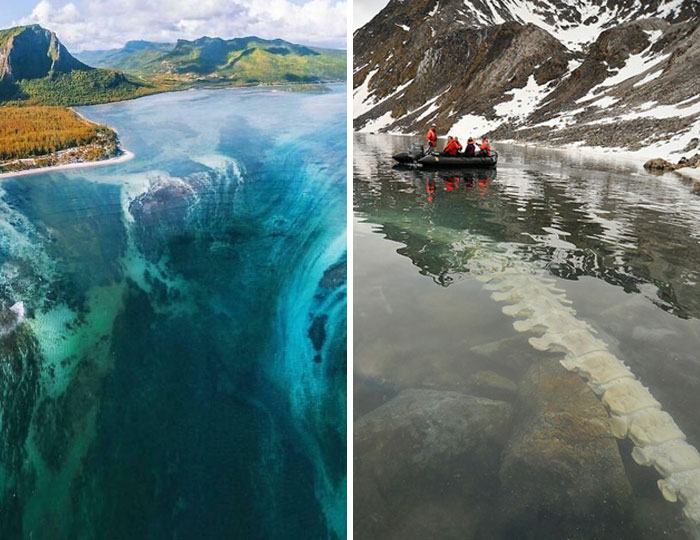
I will never get tired of this picture: it delights me anew every time I see it
For starters, what would we even measure? The number of websites? The amount of information stored online? The people using it?
According to the International Telecommunication Union, around 6 billion people were using the internet in 2025. That’s roughly three-quarters of the world’s population, and every day, those billions of people are adding more content to an already enormous collection.
To put that into perspective, Netcraft’s July 2026 survey counted nearly 1.5 billion websites across the web. That’s an almost ridiculous number, especially considering that a single website can contain thousands of individual pages.
And the numbers keep changing as new sites appear and others disappear. So even if someone somehow managed to count every single page today, their answer wouldn’t stay accurate for very long.
Even Google doesn’t have a complete picture of everything that’s out there. Its search index contains hundreds of billions of web pages, but plenty of online content never makes it into search results.
Google uses automated programs called crawlers that follow links from one page to another, collecting information as they go. So when you Google something, you’re actually searching through Google’s enormous collection of information about the web.

My first car was a powder-blue '86 Mazda 323 that I bought with my own money when I was 16. For Christmas the next year, my friends bought me a Jaguar hood ornament. We drilled holes in my Mazda's hood and epoxied the Jaguar hood ornament onto my Mazda XD It was glorious. Someone stole it a few months later when my friends and I were at the mall :(
All those websites and pages have to reach our screens somehow, which brings us to another surprising fact about the internet. Despite how wireless everything feels these days, a huge part of the system relies on actual cables running across the ocean floor.
TeleGeography’s 2026 submarine cable map shows 694 cable systems, including those already in service and others still being planned. It’s pretty wild to think that the history meme you just scrolled past might have reached your screen through a cable at the bottom of the ocean.
Of course, there’s a lot more happening behind the scenes whenever you open a website. As Cloudflare explains, information travels across the internet in small pieces called packets.
These pieces move through networks before being put back together by your device. It’s how you can open a page full of pictures without having to think about the complicated journey each one takes.

"As far back as I could remember, I always wanted to be a Goodfeather. You see, if you were a Goodfeather, you had it all. You were somebody in a neighborhood full of nobodies. Like Bobby and Pesto. Those guys were my heroes."
What’s perhaps even more impressive is how quickly all of this developed. The World Wide Web was invented by Tim Berners-Lee in 1989, and the first website was running at CERN by the end of 1990.
The website explained what the World Wide Web was and how people could use it. Pretty simple compared to what we’re used to today, right? Fast forward to 2026, and the web has grown so much that it’s hard to even figure out where it begins and ends.
Which brings us to perhaps the best way to understand the internet’s enormous scale: the sheer amount of information we’re dealing with. According to IDC research cited by Western Digital, the world is expected to generate around 274 zettabytes of data in 2026.
That’s 274 trillion gigabytes. Even if you could download one gigabyte every second without stopping, it would take you roughly 8.7 million years to get through that much data. And we’re talking about just one year’s worth!
With so much information available, there’s always something new waiting to be discovered. You could spend years exploring the internet and still barely scratch the surface.
Luckily, you don’t have to search through billions of websites to find something entertaining. Sometimes, all it takes is stumbling upon a funny picture that someone else was kind enough to share. And judging by the collection above, there’s certainly no shortage of those!




































 No fees, cancel anytime