Get Premium
Dark mode theme is available exclusively for premium users. Learn more about the benefits of subscribing.
No fees, cancel anytime.

 Dark Mode Ad-Free Browsing Unlimited Content
 Ad-Free Browsing Unlimited Content Dark Mode
Join 1.2 million Panda readers who get the best art, memes, and fun stories every week!

For decades, antidepressants have been prescribed as a lifeline for those struggling with mental health conditions. But as more people come off the pills, a growing number are sounding the alarm over unexpected and debilitating withdrawal symptoms.
With some persisting for years and causing long-lasting damage.
Now, these stories are sparking a movement, with survivors demanding greater accountability from the medical community and deeper research into the consequences of long-term antidepressant use.
Image credits: Daniel Martinez/Unsplash
Phillipa Munari started taking antidepressants in 2003 after telling her doctor she felt unusually tired. Despite feeling no improvement, she remained on the medication, Effexor, for a decade.
When she eventually decided to quit, under the guidance of her doctor, everything seemed fine at first. But within nine months, her body began to collapse.
“I had nerve pain. My neck and shoulders were sore all the time. My anxiety was through the roof,” Munari said. “I spent 20 hours in bed most days for two years.”
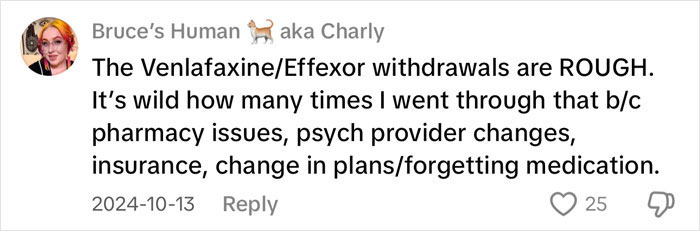
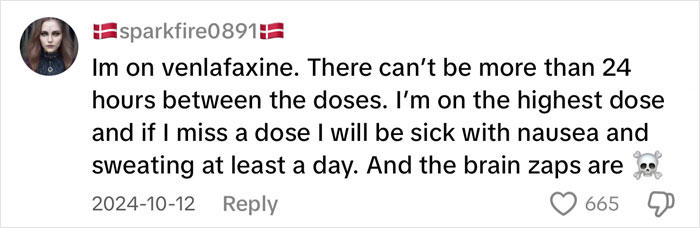
@drjaleelmohammed Some antidepressants are known for causing severe withdrawal symptoms when stopped abruptly. Venlafaxine (Effexor) is notorious for intense withdrawal effects like brain zaps, dizziness, nausea, and mood swings, which can begin after missing just one dose, making it difficult to taper off. Paroxetine (Paxil) withdrawal can trigger flu-like symptoms—aches, chills, and sweating—along with intense emotional distress, including anxiety, irritability, and crying spells. Duloxetine (Cymbalta) is so challenging to discontinue that it’s earned the nickname “Cymbalta withdrawal syndrome.” Symptoms include insomnia, extreme fatigue, vivid nightmares, and cognitive fog, leaving some users feeling dazed for weeks. Due to the severity of these symptoms, it’s essential to consult a doctor before stopping any antidepressant to ensure safe tapering and avoid extreme discomfort. #antidepressant#withdrawals#medication#mentalhealth#psychiatry#psychiatrist♬ original sound – Dr Jaleel Mohammed
She could barely walk, struggled to tend to her hobbies, and was eventually forced to stop working.
To qualify for disability, she had to go back on Effexor, then attempt a slower taper. Though her nerve pain gradually improved, her anxiety worsened.

Image credits: Hrant Khachatryan/Unsplash
She was gripped by panic and could no longer leave the house.
“I’d be in the passenger seat with my eyes closed,” she recalled, choking up.
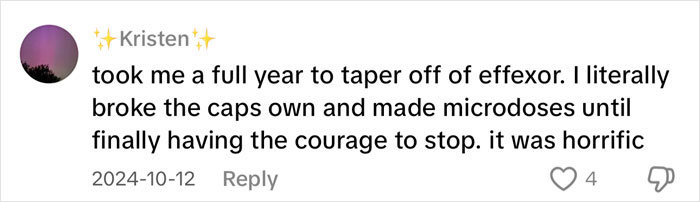
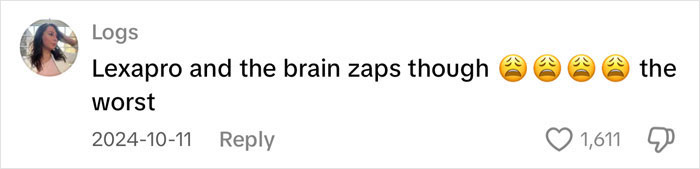
Munari is one of thousands who have taken to the internet to share stories of long-term suffering after coming off antidepressants, many of whom say their doctors never warned them this could happen.
Image credits: Curated Lifestyle/Unsplash
“I would like to feel like a human again,” that’s how Sven Huber, a 35-year-old from western Germany, described his condition after more than a decade on antidepressants.
He began his treatment in 2009 after identifying with symptoms of depression. He would stay on them for 13 years, switching from one solution to another, before trying to taper off.
Escitalopram, also known as Lexapro, helped his depression but robbed him of his emotions.

Image credits: Haley Lawrence/Unsplash
“The day after I started it, my genitals went numb and my emotions became blunted,” he said.
His libido vanished, his vision blurred, and he experienced what many describe as “brain zaps.”
@doctorkendramd 💊How to stop psych meds #fyp#followyourpage#psychiatristsoftiktok#holisticpsychiatrist#holisticpsychiatry#stopyourpsychmeds#psychmedwithdrawal#antidepressantwithdrawal#benzowithdrawal#antipsychoticwithdrawal#bigpharma#bigpharmabigproblem#bigpharmacorruption#psychmedtapering#psychmedtaper♬ original sound – Dr. Kendra Campbell, MD
When Huber attempted to quit, the symptoms intensified. Anxiety, confusion, and self-harm thoughts overwhelmed him. He went back on the medication, only to remain trapped for nearly a decade.
Finally, 18 months ago, he quit for good.
But the emotional numbness, burning feet, and dysfunction remain.
Image credits: Victoria Romulo/Unsplash
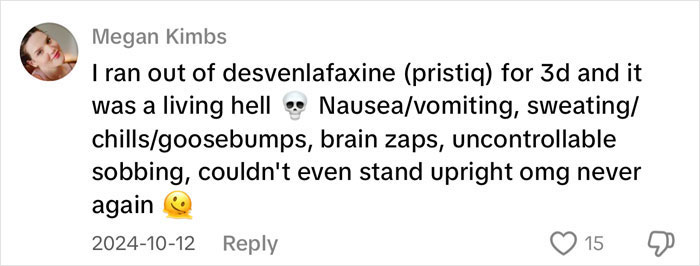
Doctors have long acknowledged that stopping antidepressants can lead to short-term withdrawal symptoms like dizziness, nausea, and insomnia.
But what many prescribers, and patients, still fail to grasp is that symptoms can last months, even years.
“You can have symptoms that persist for long periods after you stop them,” said British psychiatrist Dr. Mark Horowitz, who specializes in antidepressant withdrawal.
What makes the issue more complex is that no large-scale studies exist on these long-term outcomes.
Image credits: Daniel Martinez/Unsplash
Experts warn that antidepressants should not be viewed as a lifelong solution. Clinical guidelines generally recommend a maximum duration of two years, and even then only for individuals who have experienced repeated instances of self-harm ideation or attempts.
According to psychiatrists like Dr. Nassir Ghaemi, antidepressants are most effective in the first six months of treatment.
Prolonged use beyond two years, particularly without close monitoring, significantly increases the risk of withdrawal complications and, more importantly, has questionable efficacy.
In the absence of institutional support, those affected have begun organizing on their own.
Online communities like Surviving Antidepressants now host more than 23,000 members. A Facebook group focused on tapering off Cymbalta has grown to over 43,000.
The Reddit page for PSSD, or Post-SSRI Dysfunction, has expanded from just 700 to 16,000 subscribers in five years.
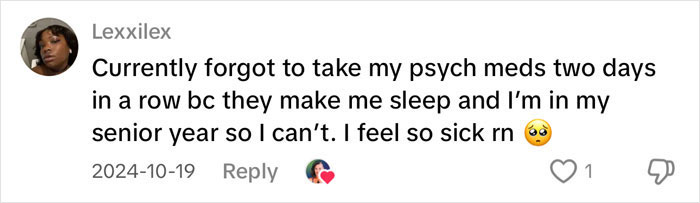
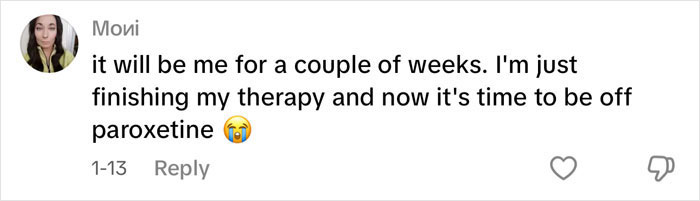
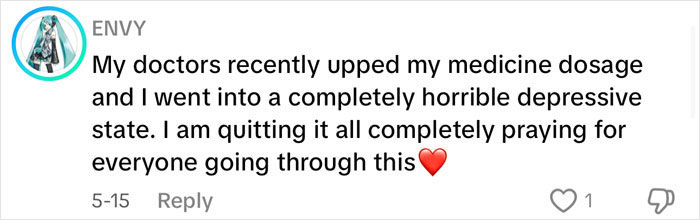
These platforms have become critical lifelines for a community of people that feel unheard, gaslit, and deceived.
The forums also offer detailed guides on tapering, including doctor-reviewed protocols that advocate for a slower reduction (about 10% of the dose per month) compared to the more drastic protocols recommended by most doctors.




































 No fees, cancel anytime


















0
0