Get Premium
Dark mode theme is available exclusively for premium users. Learn more about the benefits of subscribing.
No fees, cancel anytime.

 Dark Mode Ad-Free Browsing Unlimited Content
 Ad-Free Browsing Unlimited Content Dark Mode
Join 1.2 million Panda readers who get the best art, memes, and fun stories every week!
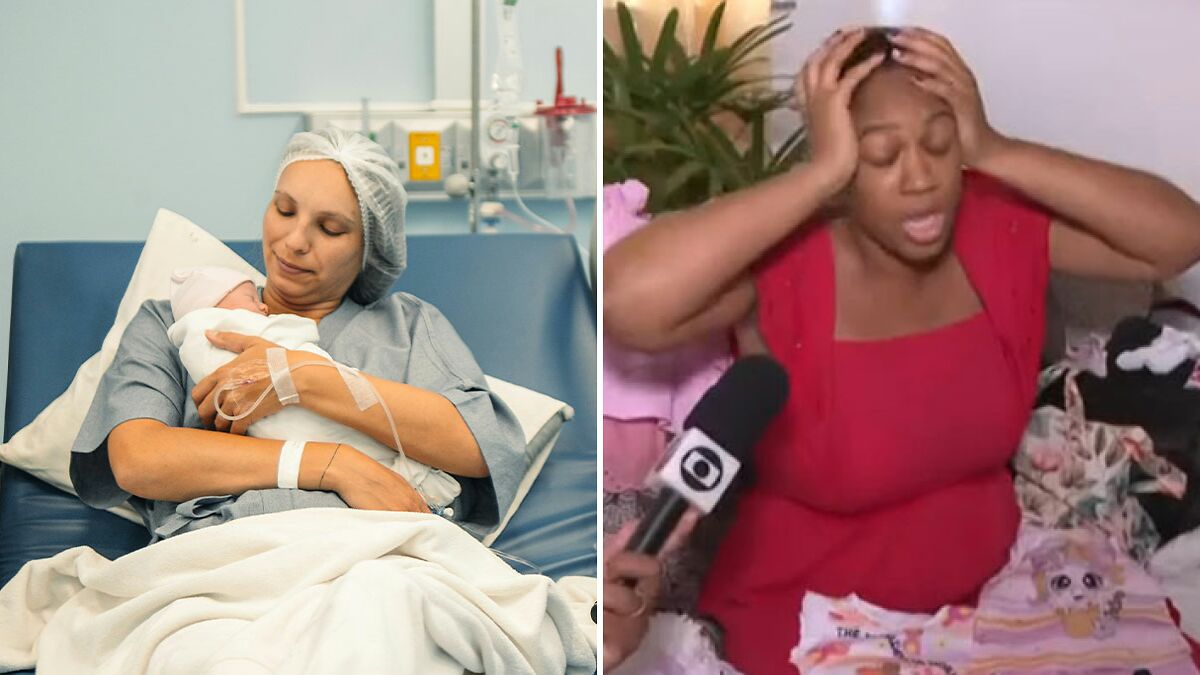
When news broke on November 8 of a tragic case in Brazil, where a newborn was fatally injured during labor by a doctor’s long nails, the global spotlight briefly turned to obstetric violence: a form of abuse that women experience in childbirth by medical staff.
The story of Lilliane Ribeiro, whose baby was born healthy but passed away soon after its neck was pierced at a hospital in Salvador de Bahia, served as a stark reminder of the devastating consequences of this type of negligence.
To understand the broader implications of this and similar events, Bored Panda spoke with Nadia Higson, a representative from the UK-based Association for Improvements in Maternity Services (AIMS), and Monica Casper, Dean of the College of Arts and Sciences at Seattle University and author of several papers on the topic.
“These violations within healthcare services have become normalized,” AIMS stated. “Maternity service users are subject to actions by staff that in other circumstances would be considered criminal.”
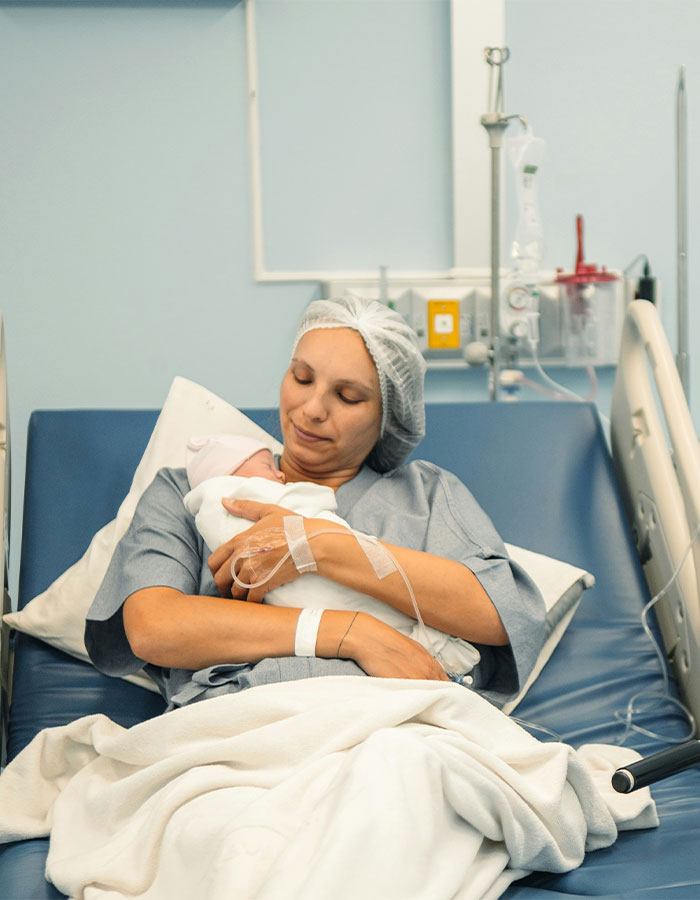
Image credits: George Dagerotip / Unsplash (Not the actual image)
Wanting her baby to receive the best care possible, Ribeiro saved up to have a professional perform a check-up at a private hospital. The doctor told her that her daughter was healthy but that she was too big to be safely delivered via natural birth, so he recommended a cesarean section instead.
When Ribeiro’s water broke, however, her family did not have the necessary funds to have her give birth at the private establishment, and she had to go to a public hospital, which is when her nightmare began.
Image credits: Nadia Higson for AIMS
In an interview with local media, Ribeiro recounted the midwives insulting and ignoring her as she waited for her turn, her leg dripping with amniotic fluid. She then described how she was coerced into a natural birth against medical advice, culminating in the tragic incident.
While the case is being investigated and the doctor responsible could face criminal charges for her malpractice, Ribeiro will have to deal with the psychological trauma of the tragedy, an ordeal shared by many women and that AIMS states “often goes under-reported.”
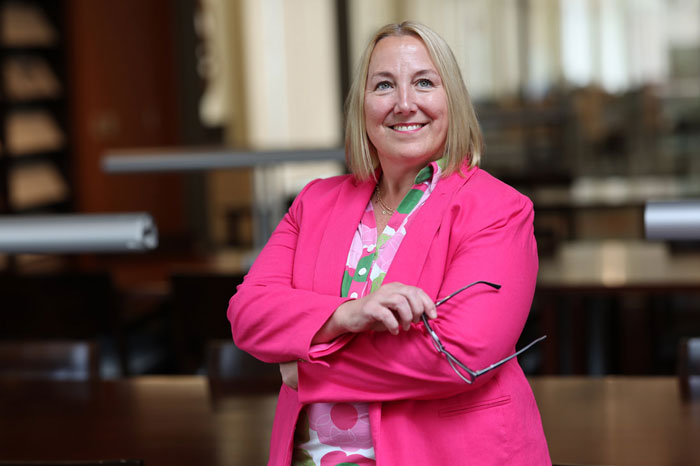
Image credits: Monica J. Casper
“These events can lead to both physical and psychological injuries that can last a lifetime,” AIMS added, pointing to PTSD and self-harm as common side effects of obstetric violence.
“Considering that up to 20% of mothers suffer from postpartum depression, timely access to mental health services is essential for preventing long-term adverse effects on both mother and child,” Casper stated.
View this post on Instagram
According to a study conducted by the University of Granada, Spain, and professionals from Denmark—which screened records of more than 60,000 women in developed countries—a surprising 45% of all cases experienced some form of obstetric violence.
These numbers become even worse when the women come from low-income backgrounds, Casper explained. “Women who are marginalized—whether racially or economically, are far more likely to be subject to obstetric violence.”
Image credits: Globo G1
“It’s not just poverty,” she added, reflecting on the socioeconomic background of Ribeiro. “It’s intersecting identities and structural locations. Poor black women will be more at risk than poor white women.”
The Dean shared how, according to a New York Department of Health maternal mortality and morbidity report published in 2022, out of 57 pregnancy-associated deaths in that city in 2019, 26 were African-American, and 20 others were of Latin American descent.
Image credits: Globo G1
According to Casper, the malpractice was so prevalent in underdeveloped countries that current terminology originated there.
“The term obstetric violence in its current usage was coined in Venezuela in 2007,” Casper explained.
“[It] is defined as ‘the appropriation of the body and reproductive processes of women by health personnel, which is expressed as dehumanized treatment, an abuse of medication, and to convert the natural processes into pathological ones.'”
View this post on Instagram
Ribeiro’s case is eerily similar to the murder of a baby in Georgia’s Southern Regional Medical Center on July 10, 2023. The case, cited by Casper in one of her studies, was officially ruled as a homicide in February of this year after the mother, 20-year-old Jessica Ross, filed a lawsuit accusing the establishment of concealing the manner of death of the infant.
Court documents state that the baby was decapitated after the doctor applied excessive traction on its head and neck during labor. To cover their tracks, the midwives covered the infant in a swaddling cloth and tried to convince its parents that it had passed away naturally.
Image credits: freestockcenter / Freepik (Not the actual image)
The doctors in Ribeiro’s case did a similar thing, stating that the baby was stillborn before dismissing her and moving on to other patients.
“This type of violence tends to be perpetuated by those with power over patients. Obstetric violence is a form of control which especially affects patients with less power and fewer resources,” Casper added.
Image credits: wavebreakmedia_micro / Freepik (Not the actual image)
The Dean also delved into what she called “medical gaslighting” in the field of maternity care, describing how female patients’ experiences are often disregarded “in much the same way that survivors of gender-based violence are routinely disbelieved and re-victimized.”
Casper accused healthcare professionals in the area of using their “expert” status to reframe the lived experiences of those who have suffered obstetric violence.
“They position obstetrics as ethical in its intentions and therefore harmless in its outcomes, conflating intention with outcome,” she stated.
What do you think needs to change to delliver safer maternity and neonatal services? AIMS has responded to Sands & Tommy…
Posted by AIMS on Saturday, June 29, 2024
When asked about what should be done to help minimize the effects of obstetric violence, both Higson and Casper pointed to advocacy and information as crucial elements.
“Patient advocacy and including these advocates in care settings is essential,” she said, emphasizing the importance of neutral parties in determining accountability when the mother’s rights are at risk or compromised during medical decisions that affect her and the child’s well-being.
“When providers abuse patients, there should be accountability measures in place,” Casper added in light of Ribeiro’s experience, being entirely at the mercy of the public hospital’s workers.”

Image credits: Wesley Tingey / Unsplash (Not the actual image)
Higson and her team at AIMS agree and have drafted a paper with a number of steps to address the issue, which include ongoing education for relevant staff, the information provided to all maternity service users of their rights and the legal pathways available, and the employ of independent bodies to review said complaints.
While their recommendations paint a path forward in protecting patients from obstetric violence, both professionals argued that lawmakers have been slow to respond to the issue and that there’s still much to be done.
“It’s a human rights issue,” AIMS noted. “Failure to address obstetric violence could lead to many maternity service users experiencing violations to them.”
Readers interested in Monica Casper’s work can check out her latest book, Babylost: Racism, Survival, and the Quiet Politics of Infant Mortality, published by Rutgers.
AIMS is a volunteer network that relies on donations and membership subscriptions. Those interested in its work can check out its website here.

By entering your email and clicking Subscribe, you're agreeing to let us send you customized marketing messages about us and our advertising partners. You are also agreeing to our Privacy Policy.
Thank you! You've successfully subscribed to newsletters!


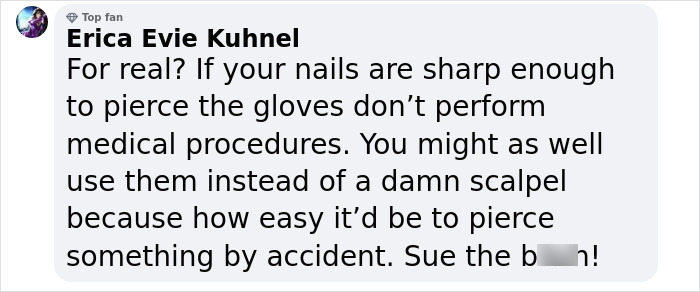
Why is it allowed to have long nails (healthcare profession) I think everybody knows that nails have to be short to avoid infections and germs/bacteria from spreading. Rings and other jewels can't be allowed either. Poor baby, so sad and terrible for the parents.

In the UK, a doctor, nurse or midwife would be dismissed from their profession and not be allowed to practise any more. Long nails are a known risk factor and disease vector. NHS Scotland's policy is " When providing patient care, hair should be tied back off the collar, with nails kept short and clean." If you have long nails, you would get a reprimand, and ordered to trim your nails in accordance with policy before working with another patient. If you killed a patient because of those long nails, you would be shown the door.
Load More Replies...

Women treating other women on the birthing bed as breeding cattle. We get enough of that from the men.
Why is it allowed to have long nails (healthcare profession) I think everybody knows that nails have to be short to avoid infections and germs/bacteria from spreading. Rings and other jewels can't be allowed either. Poor baby, so sad and terrible for the parents.
In the UK, a doctor, nurse or midwife would be dismissed from their profession and not be allowed to practise any more. Long nails are a known risk factor and disease vector. NHS Scotland's policy is " When providing patient care, hair should be tied back off the collar, with nails kept short and clean." If you have long nails, you would get a reprimand, and ordered to trim your nails in accordance with policy before working with another patient. If you killed a patient because of those long nails, you would be shown the door.
Load More Replies... Women treating other women on the birthing bed as breeding cattle. We get enough of that from the men.


































 No fees, cancel anytime












24
15