Get Premium
Dark mode theme is available exclusively for premium users. Learn more about the benefits of subscribing.
No fees, cancel anytime.

 Dark Mode Ad-Free Browsing Unlimited Content
 Ad-Free Browsing Unlimited Content Dark Mode
Join 1.2 million Panda readers who get the best art, memes, and fun stories every week!

Being disabled is enough of a challenge. You certainly don’t need someone making it harder by being outright ableist, whether that’s out in public or in the workplace. After all, that’s what the whole Americans with Disabilities Act is there to protect you from.
One disabled employee bumped heads with an openly ableist department manager who refused to reasonably accommodate their condition. What the department manager didn’t count on, though, was the employee knowing their rights inside and out. They shared their tale of karmic intervention with an online community.
More info: Reddit
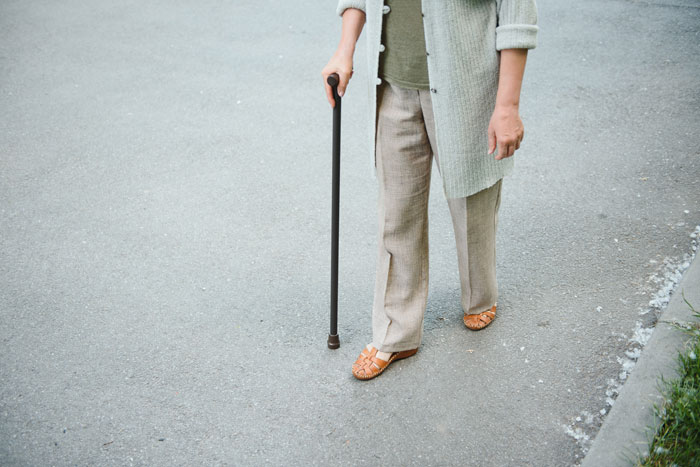
Image credits: hryshchyshen / Freepik (not the actual photo)
Image credits: The Yuri Arcurs Collection / Freepik (not the actual photo)
Image credits: yaroslav-astakhov- / Freepik (not the actual photo)
Image credits: freepik / Freepik (not the actual photo)
Image credits: thesystemforce
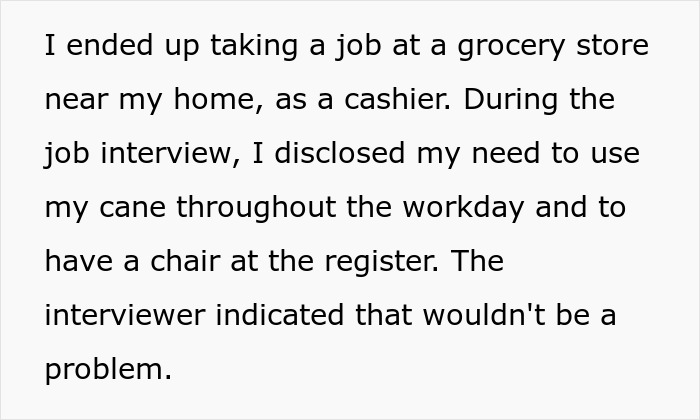
Seven years ago, OP, a disabled person, landed a dream job, but had to wait a few months to start. Needing a temporary paycheck, they took a cashier job at a local grocery store. During the interview, they disclosed their cane use and need for a chair. Management said it wouldn’t be a problem. Spoiler alert: it was.
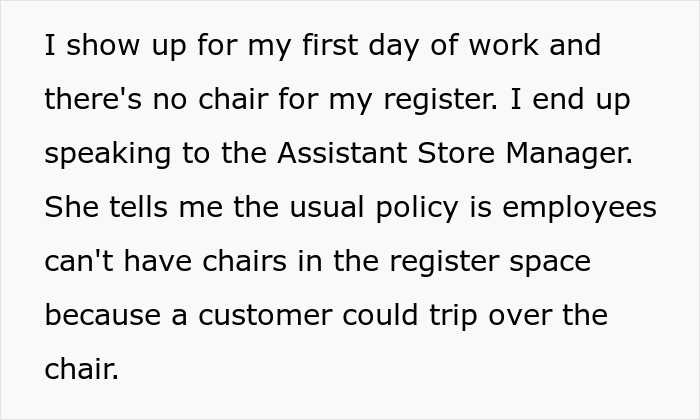
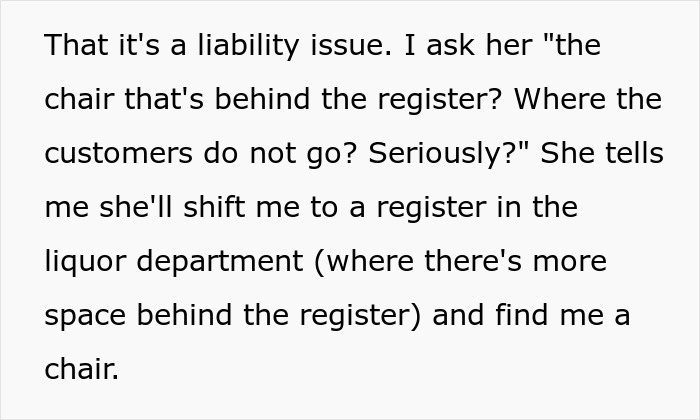
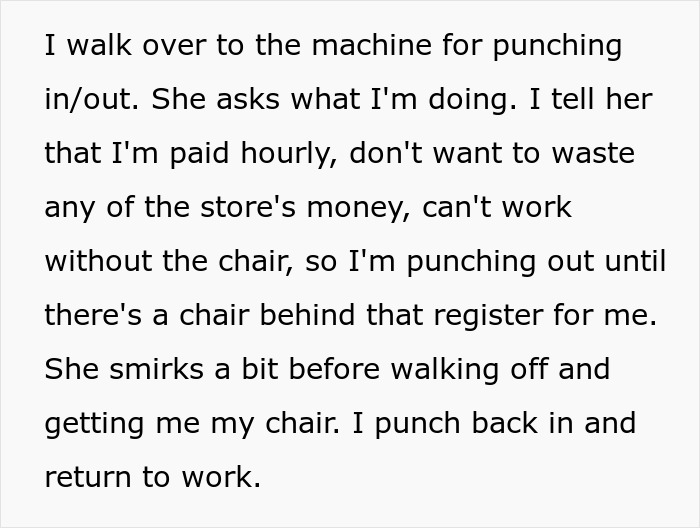
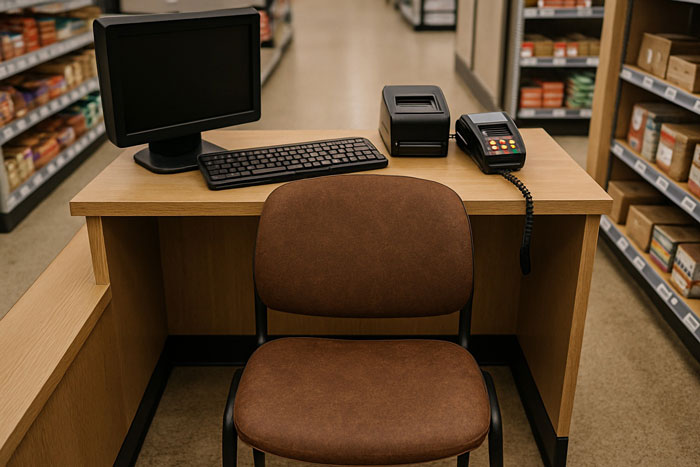
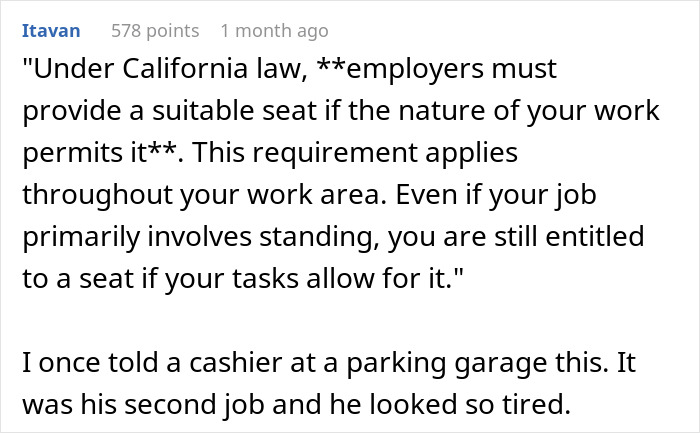
On their first day, there was no chair. A manager claimed chairs were a “liability,” even though customers never entered the register area. OP calmly clocked out, explaining they wouldn’t work without proper accommodation. Minutes later, a chair appeared. OP worked two peaceful days in the liquor department until the schedule changed, and drama returned.
Before their next shift began, the department manager called a meeting with OP. She dismissed the chair request and claimed accommodations weren’t for “people like them.” She even said they could ban the cane. Stunned but steady, OP walked out but came back the next day armed not just with a cane, but legal knowledge too.
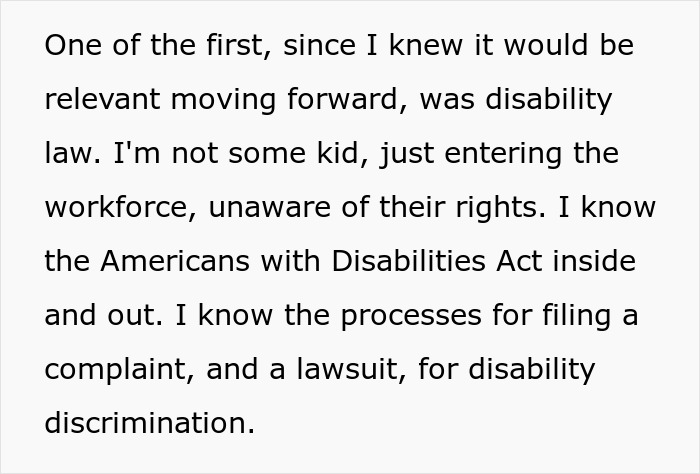
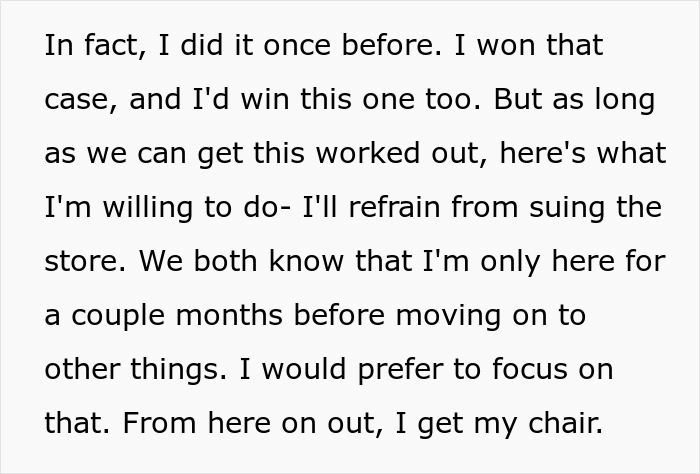
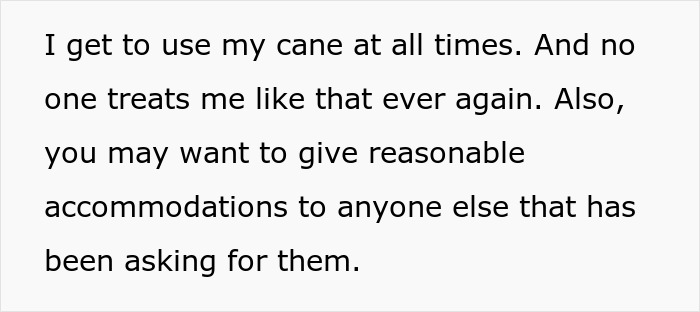
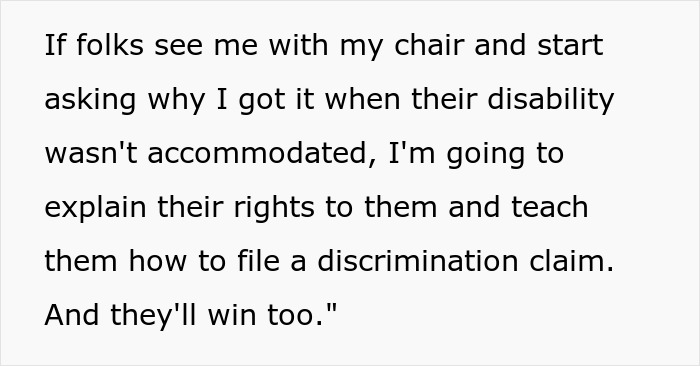
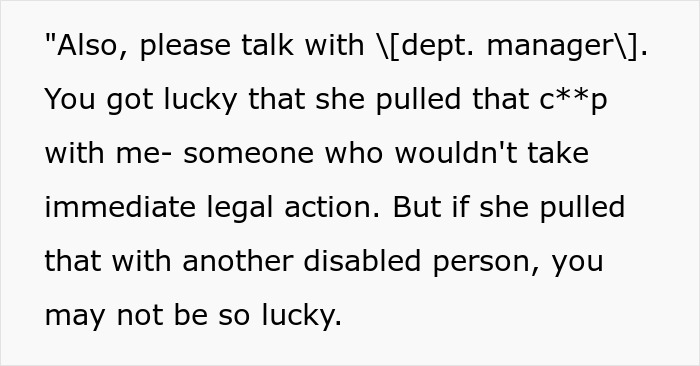
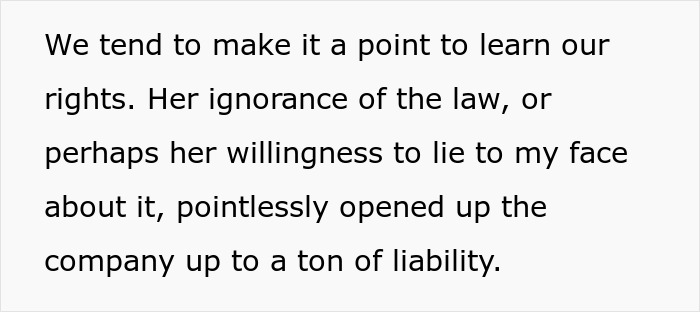
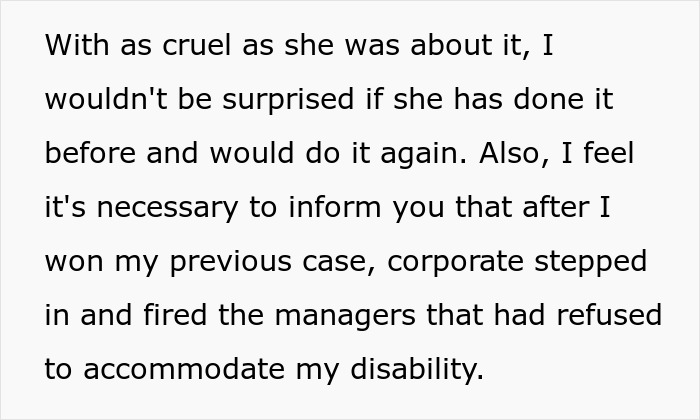
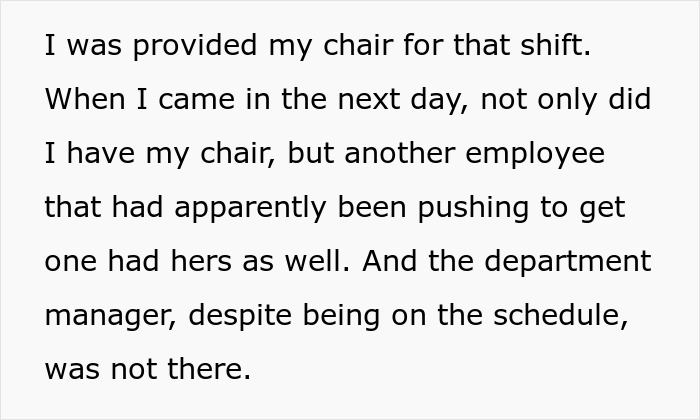
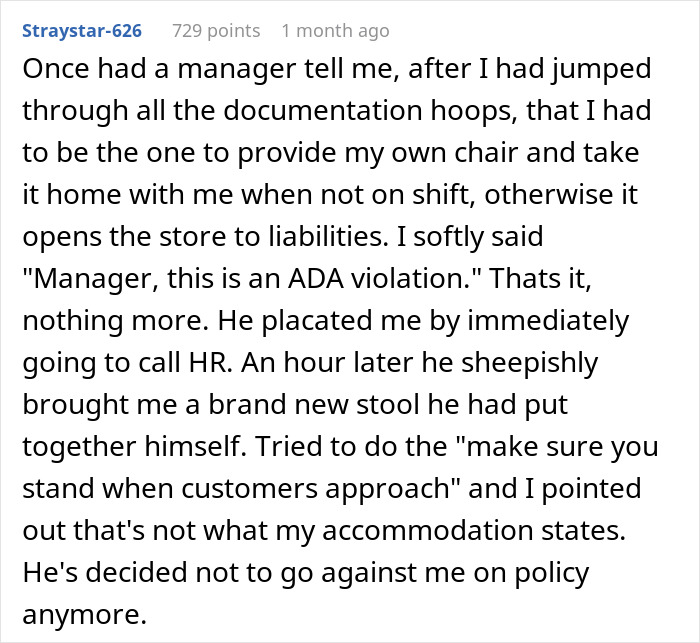
They explained the Americans with Disabilities Act (ADA) in detail. Mentioned a previous lawsuit they’d won. Gave the store a choice: accommodate or face consequences. Suddenly, OP got their chair, and so did another disabled employee. As for the cruel manager? She was demoted and quietly transferred.
Image generated by Bored Panda using ChatGPT
OP’s story reveals just how much discrimination disabled folks still face in the workplace, if not in public. While the ADA stipulates disabled peoples’ rights and offers them some form of legal protection, enforcement can be an uphill battle. So, as a disabled person, what are your rights in the workplace?
According to The Public Interest Law Center website, the ADA and the Pennsylvania Human Relations Act prohibit employers from firing, demoting, refusing to hire or promote a qualified individual with disabilities on the basis of disability. These laws also require employers to provide reasonable accommodations.
A reasonable accommodation is any change in the work environment or the manner in which work is conducted that enables an individual with disabilities to enjoy equal employment opportunities and participate fully in the workplace.
According to the U.S. Equal Employment Opportunity Commission website, to be protected under the ADA, you must have, have a record of, or be regarded as having a substantial, as opposed to a minor, impairment.
According to the American Civil Liberties Union website, if you believe your rights have been violated, you can file a charge of discrimination with the U.S. Equal Employment Opportunity Commission or your state fair employment practices agency.
OP’s track record certainly suggests they know their disability law back to front and inside out. Perhaps the store’s ex-department manager will think twice before stepping on the rights of another disabled person. We certainly hope so.
What would you have done if you’d found yourself in OP’s shoes? Do you think they should have sued, or was getting their manager demoted punishment enough? Let us know in the comments!

By entering your email and clicking Subscribe, you're agreeing to let us send you customized marketing messages about us and our advertising partners. You are also agreeing to our Privacy Policy.
Thank you! You've successfully subscribed to newsletters!

It's no skin off the manager's nose if OP gets a chair so why was she being so nasty about it? A little power went to her head? Luckily, OP knows ADA law so she could explain to the higher ups *why* ADA accommodation would be better than a bunch of lawsuits.

Because people simply don’t know their rights, and believe the lies their bosses tell them. I went to work for a place that actually made us sign a paper stating we would not discuss our salary with other employees. If we didn’t sign, we didn’t start work. I did not sign, because that is illegal, and I told them so. No, they didn’t change their tune, so I didn’t start there. But I did inform the Labor Board of it. I don’t know if anything came of it, but at least their secret is out and in the minds of the authorities. If enough other people, report them for it, and provide them with the paperwork itself (I didn’t get a chance to even take a picture of it, much less make a copy of it, or I definitely would have), there could be some heavy consequences for them. Fingers crossed.
Load More Replies...
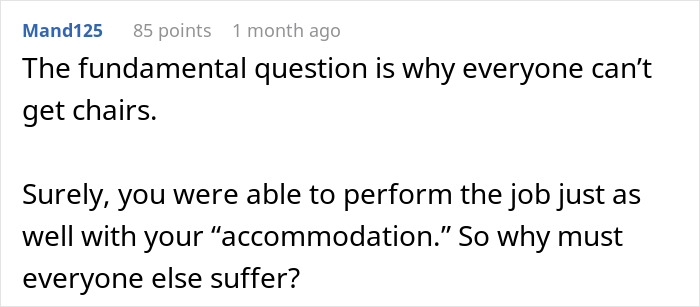
What is it with the belief that checkout operators have to be standing? Is it the 16th century there?


Serious question: why is it so common in North American cashier jobs for the employees to stand? I see this in Canada too, so it’s not just a USA thing. I don’t see liability issues; most stations are a 3-sided cubicle where the chair would be placed, customers aren’t going to trip over them. Is it nothing more than a money-saving opportunity because the organizations aren’t paying for chairs? I wonder if anyone has thought to do a cost benefit analysis, people with chairs vs without/time? Tired people make mistakes. Orgs may think the scanning apparatus is foolproof, not so; an item can miss being scanned for various reasons. Manual entry of discount or promo codes, human input error increases dramatically. Manual override of price for whatever reason, same thing. Fumbling! If a product is dropped and damaged by the cashier, scanned or not, it’s replaced by the store. Not to mention cost of cleanup if it’s a glass jar/bottle of something, which also temporarily shuts the station.

In the UK cashiers sit down. I can’t imagine having to stand still for an eight hour shift. Ridiculous.
Load More Replies... It's no skin off the manager's nose if OP gets a chair so why was she being so nasty about it? A little power went to her head? Luckily, OP knows ADA law so she could explain to the higher ups *why* ADA accommodation would be better than a bunch of lawsuits.
Because people simply don’t know their rights, and believe the lies their bosses tell them. I went to work for a place that actually made us sign a paper stating we would not discuss our salary with other employees. If we didn’t sign, we didn’t start work. I did not sign, because that is illegal, and I told them so. No, they didn’t change their tune, so I didn’t start there. But I did inform the Labor Board of it. I don’t know if anything came of it, but at least their secret is out and in the minds of the authorities. If enough other people, report them for it, and provide them with the paperwork itself (I didn’t get a chance to even take a picture of it, much less make a copy of it, or I definitely would have), there could be some heavy consequences for them. Fingers crossed.
Load More Replies... What is it with the belief that checkout operators have to be standing? Is it the 16th century there?
Serious question: why is it so common in North American cashier jobs for the employees to stand? I see this in Canada too, so it’s not just a USA thing. I don’t see liability issues; most stations are a 3-sided cubicle where the chair would be placed, customers aren’t going to trip over them. Is it nothing more than a money-saving opportunity because the organizations aren’t paying for chairs? I wonder if anyone has thought to do a cost benefit analysis, people with chairs vs without/time? Tired people make mistakes. Orgs may think the scanning apparatus is foolproof, not so; an item can miss being scanned for various reasons. Manual entry of discount or promo codes, human input error increases dramatically. Manual override of price for whatever reason, same thing. Fumbling! If a product is dropped and damaged by the cashier, scanned or not, it’s replaced by the store. Not to mention cost of cleanup if it’s a glass jar/bottle of something, which also temporarily shuts the station.
In the UK cashiers sit down. I can’t imagine having to stand still for an eight hour shift. Ridiculous.
Load More Replies...






























 No fees, cancel anytime















44
16