Get Premium
Dark mode theme is available exclusively for premium users. Learn more about the benefits of subscribing.
No fees, cancel anytime.

 Dark Mode Ad-Free Browsing Unlimited Content
 Ad-Free Browsing Unlimited Content Dark Mode
Join 1.2 million Panda readers who get the best art, memes, and fun stories every week!
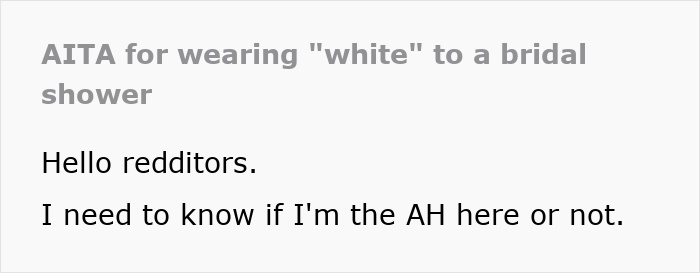
While every happy couple is different, there are a few classic wedding faux pas that are best to avoid, for example, wearing white if you aren’t the bride. But what about tan? Who is to say? Unfortunately, the world is full of entitled people who are perfectly happy to, unprompted, play prosecutor and start interrogating someone over a perceived slight.
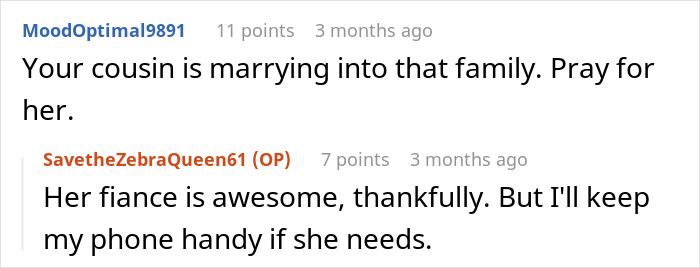
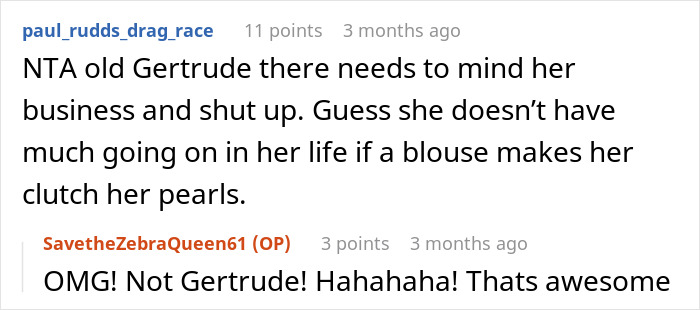
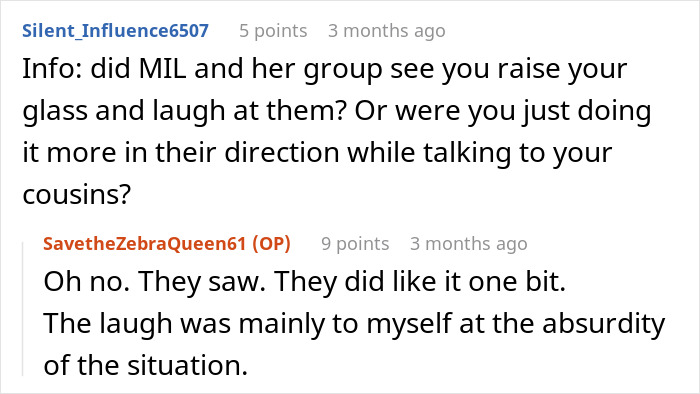
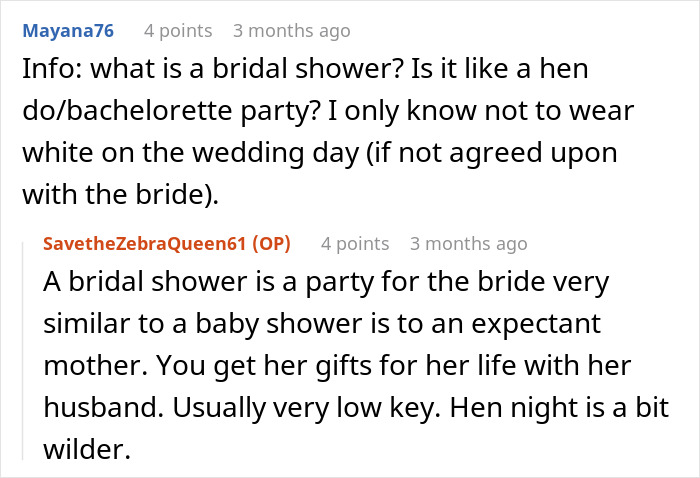
A woman went online to share how her bride cousin’s future MIL decided to be rude and then ended up regretting it at a bridal shower. People called out all the ways the future-MIL was just being absurd and the woman answered some reader questions in the comments.
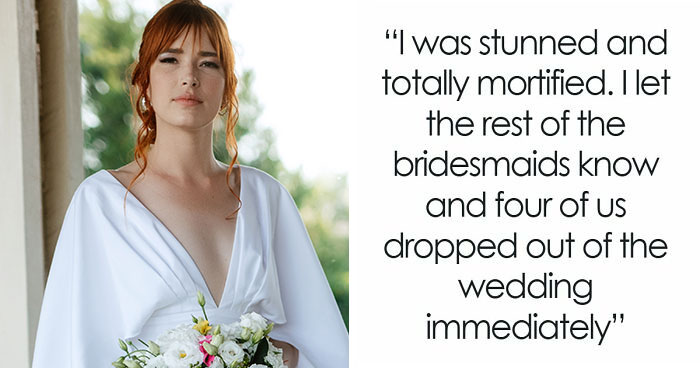
Image credits: Kateryna Hliznitsova / unsplash (not the actual photo)
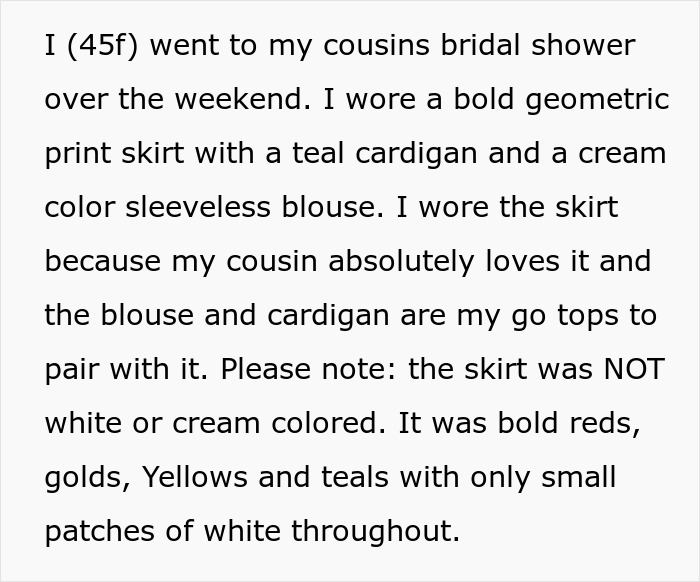
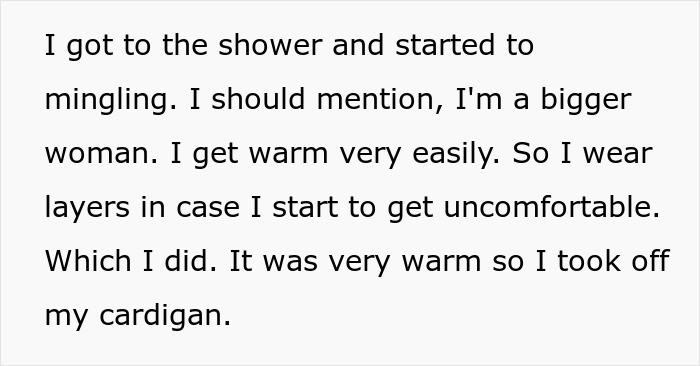
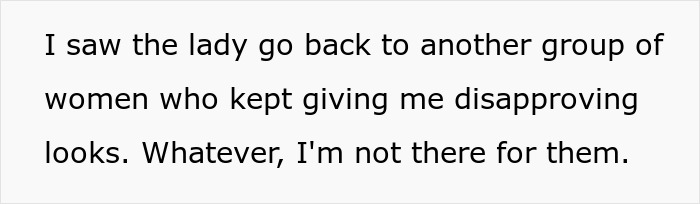
Image credits: SkelDry / freepik (not the actual photo)
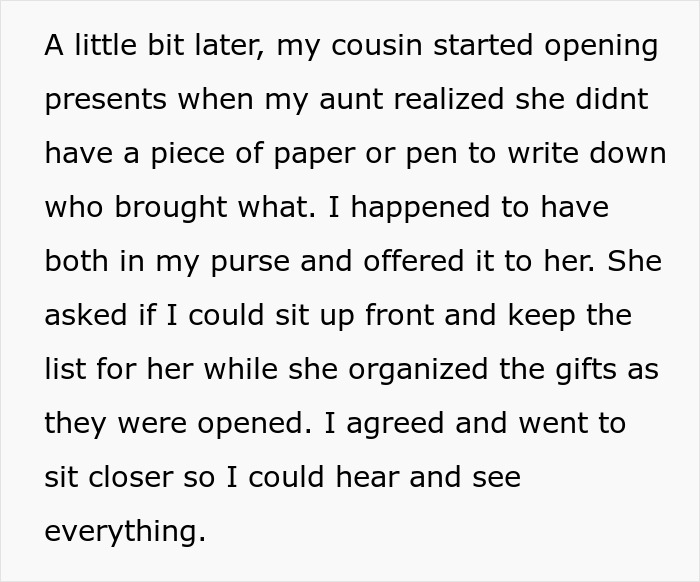
Image credits: SavetheZebraQueen61
Image credits: Getty Images / unsplash (not the actual photo)
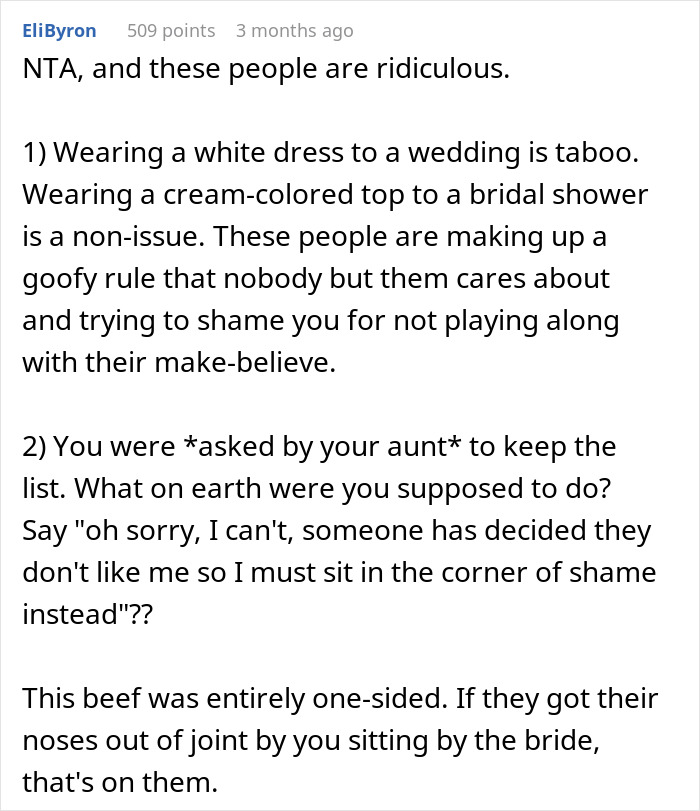
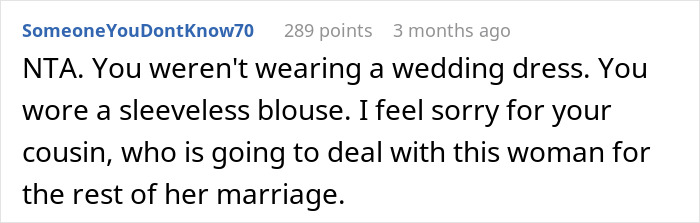
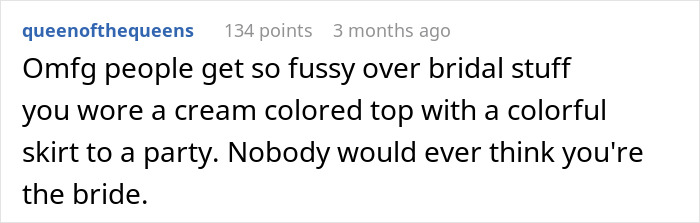
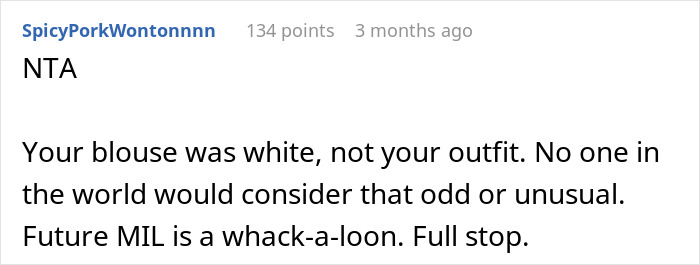
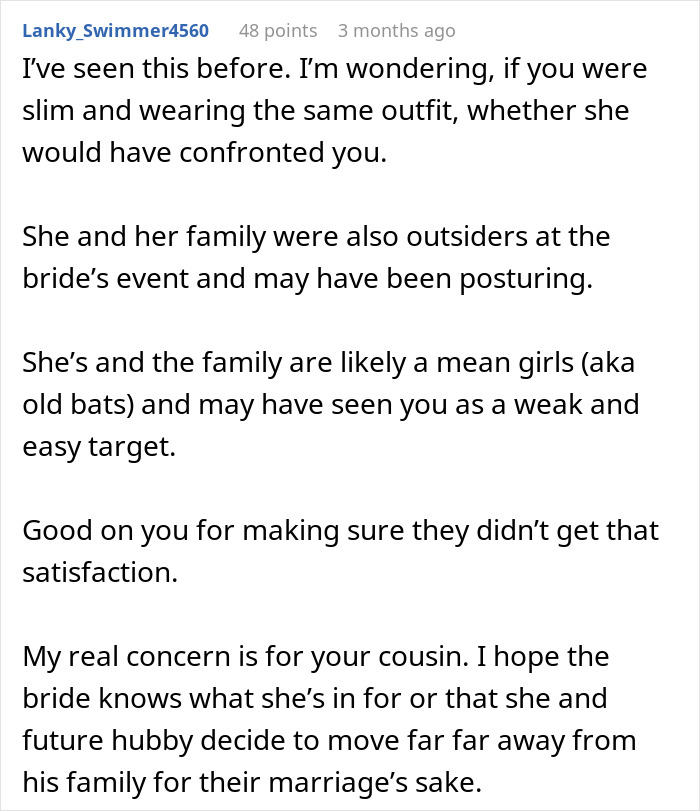
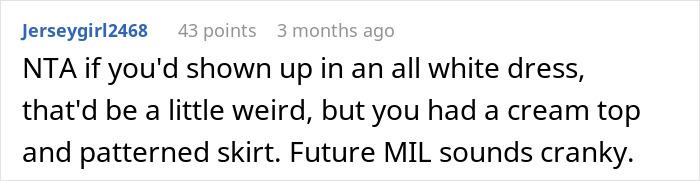
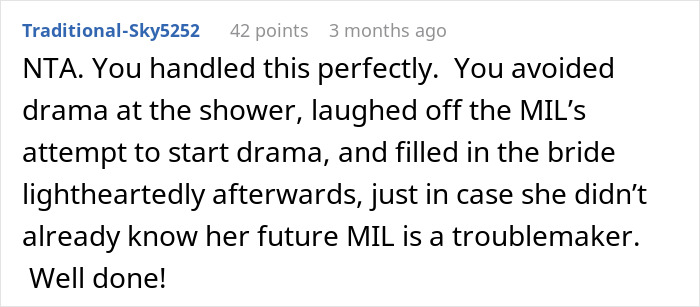
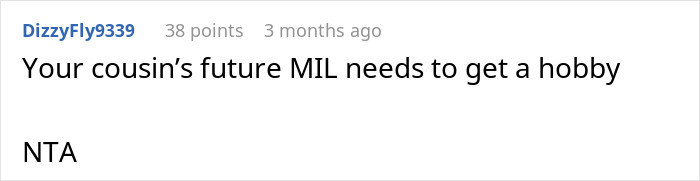
There’s something almost theatrical about how quickly an outfit can become a referendum on someone’s character at these events, and this story captures that perfectly. The future mother-in-law clearly walked into that bridal shower with a mental checklist of rules, and the moment she spotted what she considered a violation, she felt entitled to act as enforcer, even though nothing about the situation actually involved her.
What’s worth unpacking is the assumption baked into her approach. She didn’t just have an opinion about the outfit privately, she sought out a stranger to question their choices, framing it as concern for etiquette when it really came across as a thinly veiled insult about body size and clothing choices. That’s a pretty common pattern. People who feel strongly about unwritten social rules often believe their discomfort gives them permission to confront others, as if good manners suddenly don’t apply to the person doing the confronting.
There’s also an interesting layer here about who gets to claim ownership over an event. The bride’s actual feelings were completely absent from the equation. The mother-in-law wasn’t defending the bride’s wishes, she was defending her own idea of what a “proper” bridal shower guest should look like, and she assumed her standards mattered more than the wishes of the person the party was actually for. That disconnect between whose day it is and who feels entitled to police it is at the heart of so many of these situational conflicts.
The body shaming undertone can’t be ignored either. Comments about whether certain clothing is “appropriate” for someone of a certain size often masquerade as etiquette concerns, but they tend to evaporate when a thinner person wears the exact same style. Plenty of women have experienced this exact scenario, where a sleeveless top or a bold pattern draws scrutiny not because of the actual color or cut, but because of who’s wearing it. That double standard is rarely acknowledged by the person making the comment, who usually believes they’re simply being honest or helpful.
At least the revenge was cathartic
Then there’s the irony of the ending, which a lot of readers seem to enjoy. The same woman who tried to shame someone over an outfit ended up watching that person sit in a position of honor next to the bride, taking down the gift list, completely unaware of the inadvertent poetic justice unfolding. It’s a reminder that entitlement often blinds people to bigger pictures. The mother-in-law was so focused on a perceived dress code violation that she missed the fact that she was about to witness someone she’d just insulted being trusted with an important task by the family she was trying to align herself with.
The debate among the cousins about whether stepping into that gift list role was petty revenge versus an innocent coincidence says a lot about how people read intention into situations. Some readers will see deliberate payback, others will see someone simply being helpful and then privately enjoying an unexpected twist. Either way, it highlights how entitlement can boomerang. When someone feels so confident in their right to judge others that they don’t consider how their behavior will look later, they sometimes end up the butt of the story rather than the moral authority they imagined themselves to be.
At the end of the day, situations like this tend to resonate because most people have encountered a self-appointed gatekeeper at some social event, someone convinced their opinions about appearance, behavior, or “the right way to do things” are universally important.
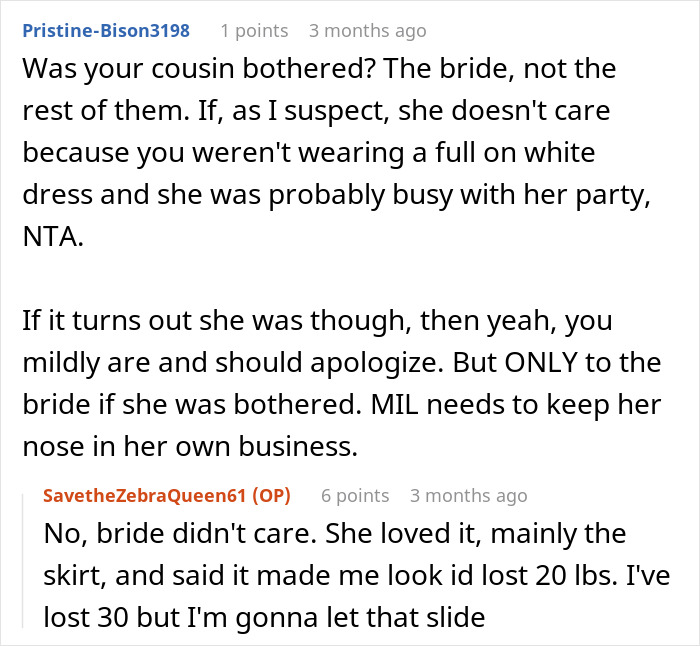
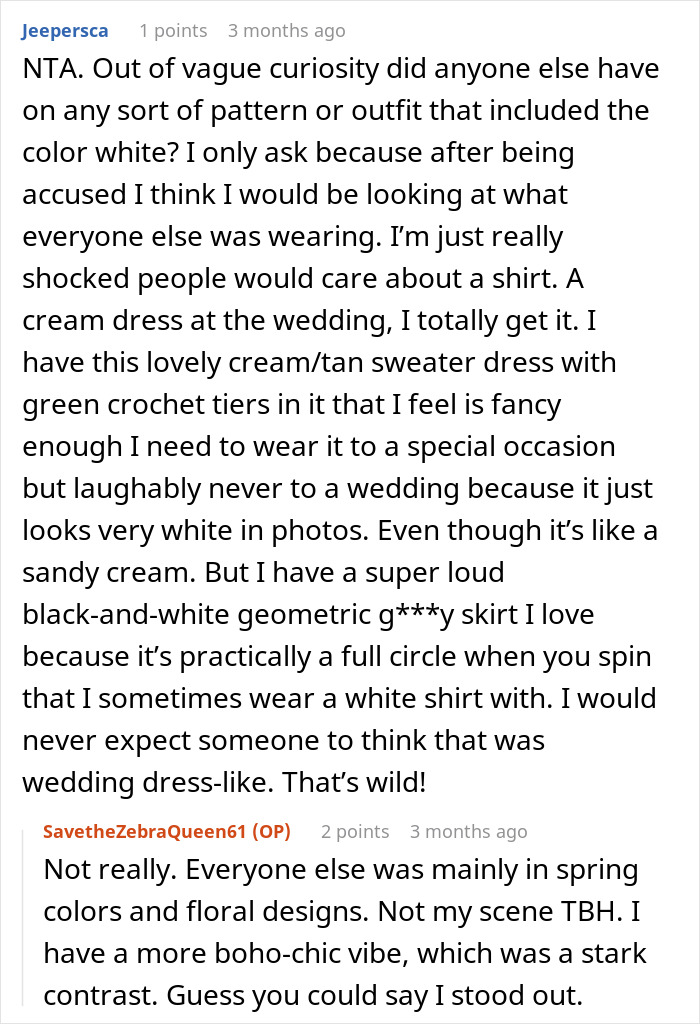
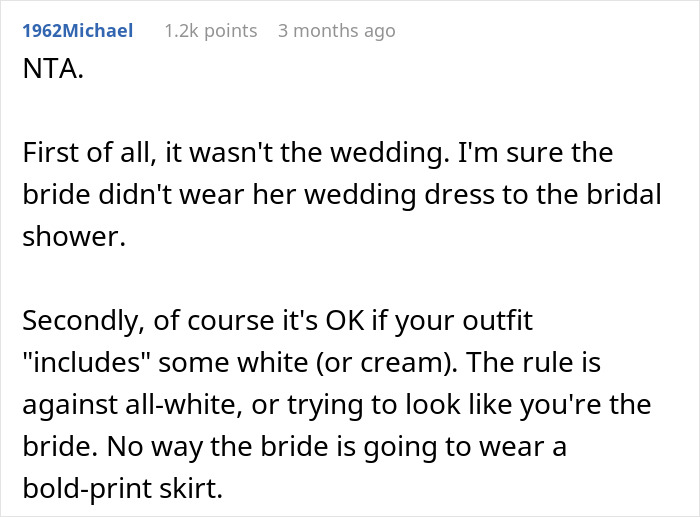
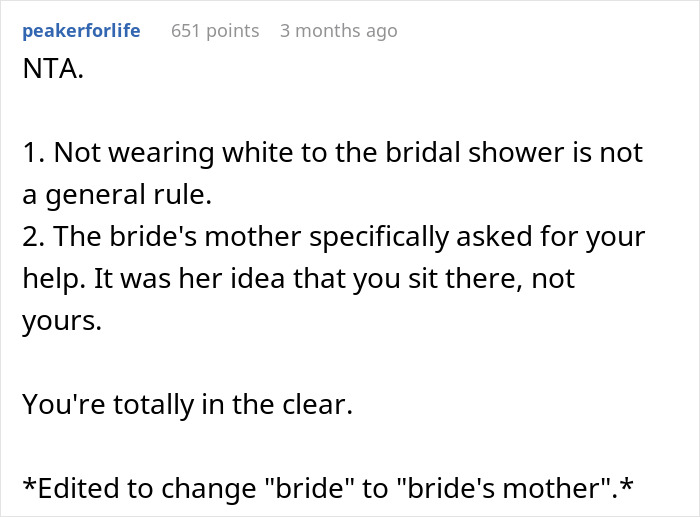
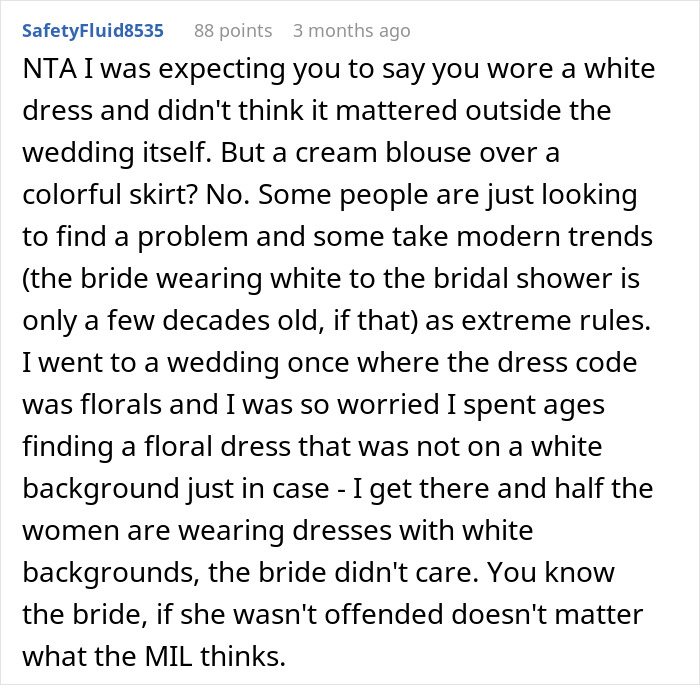
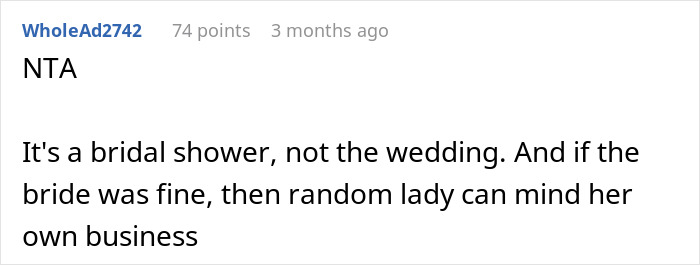
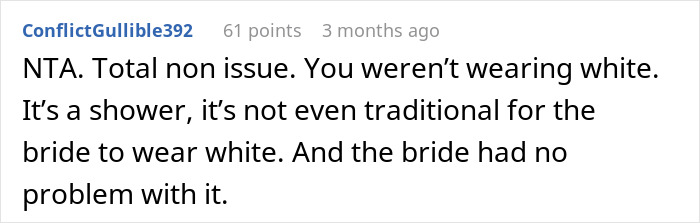

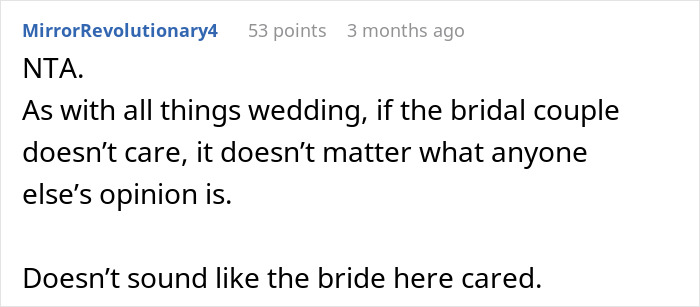

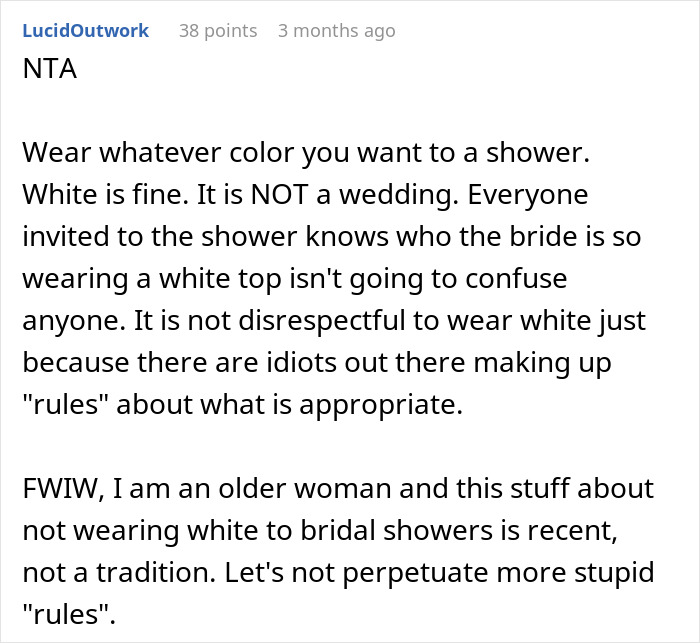
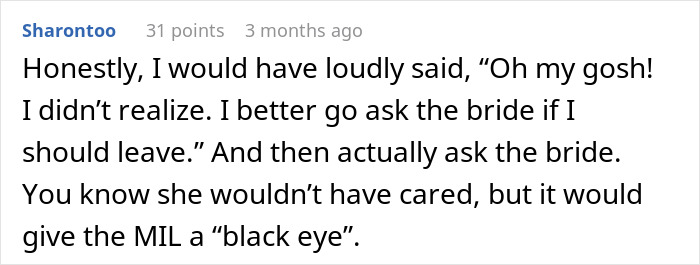

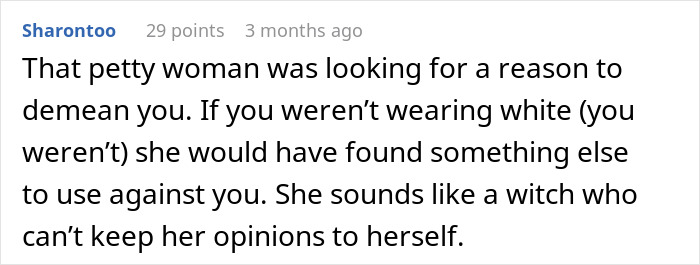
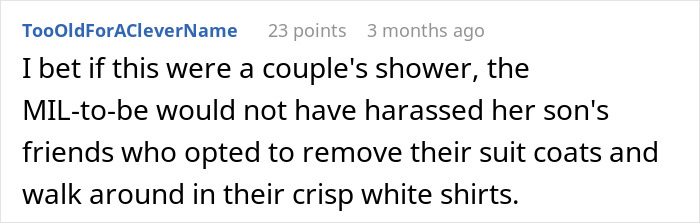
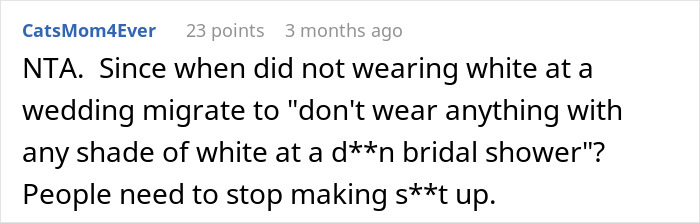
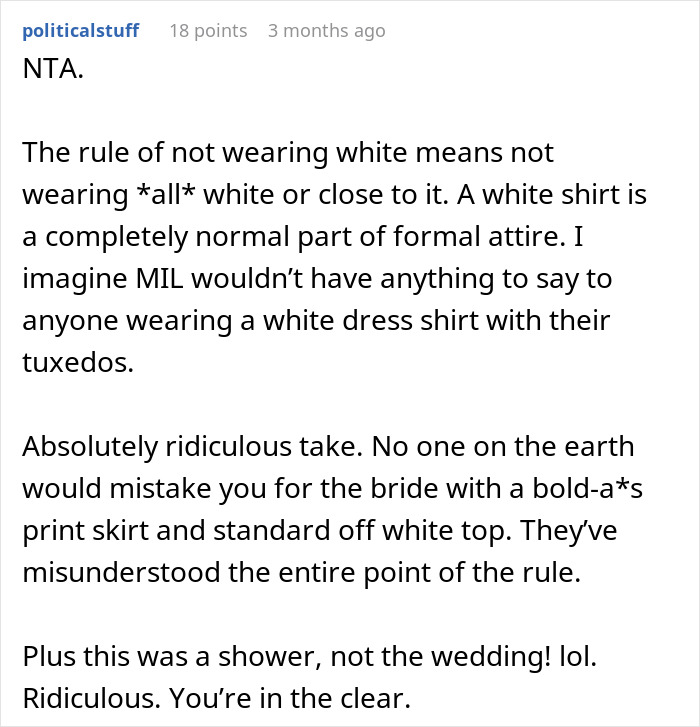
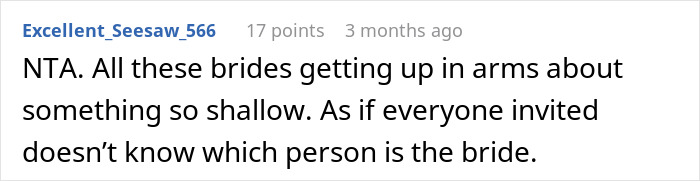
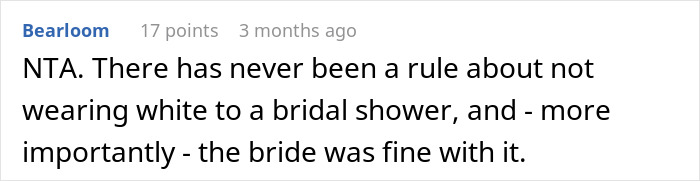
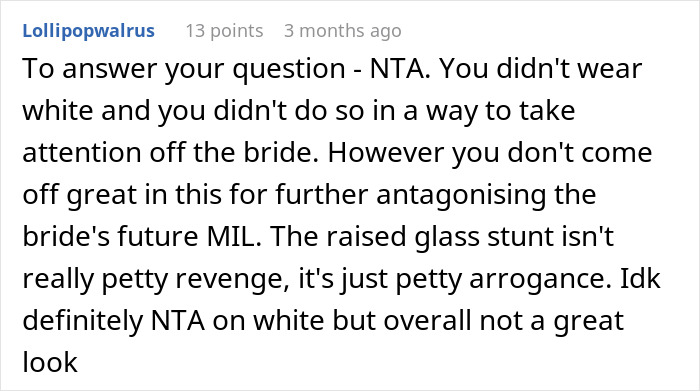
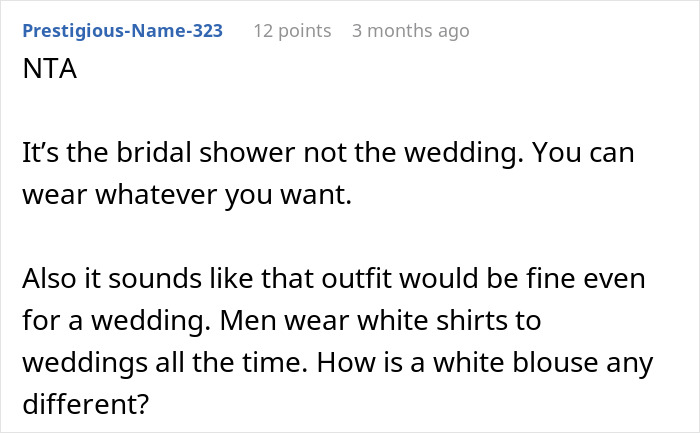
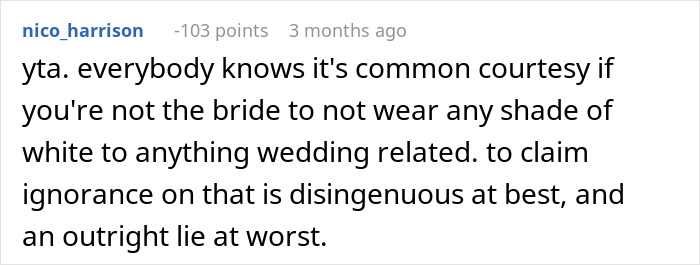
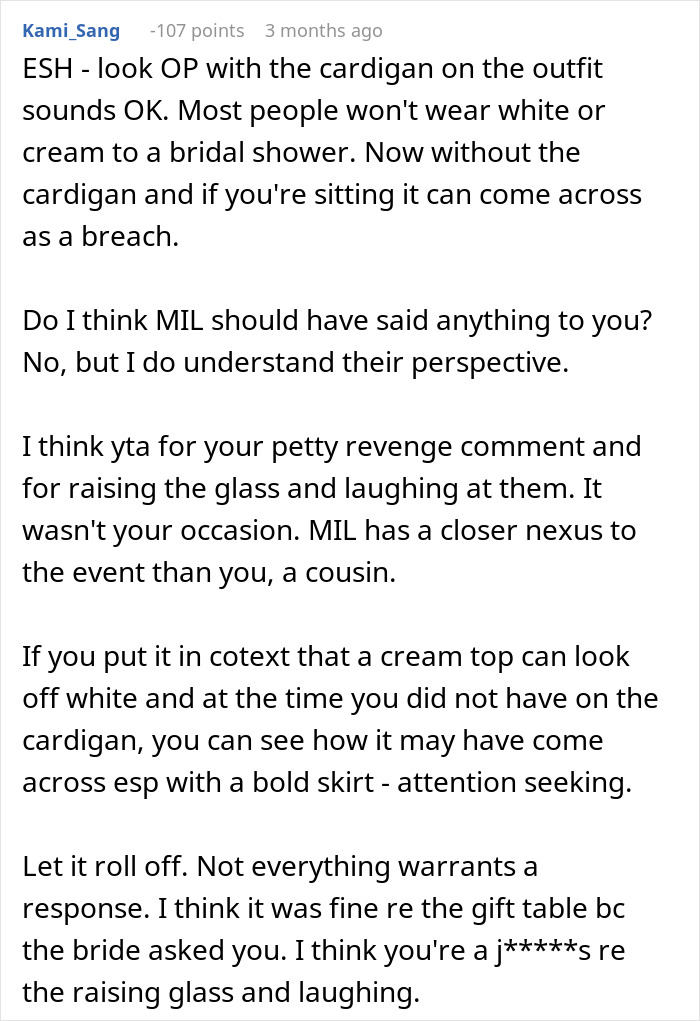
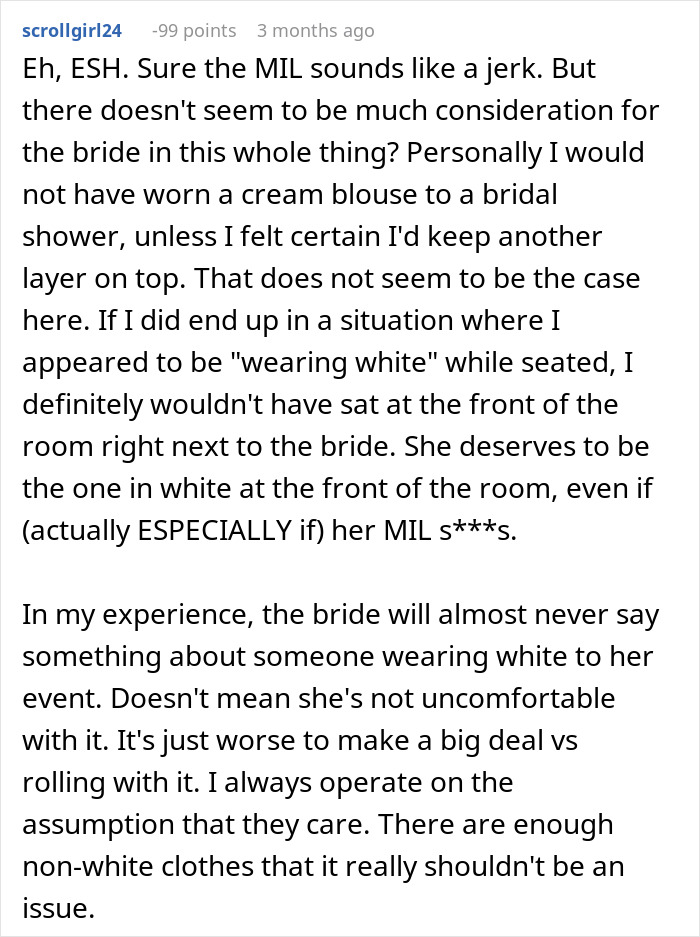
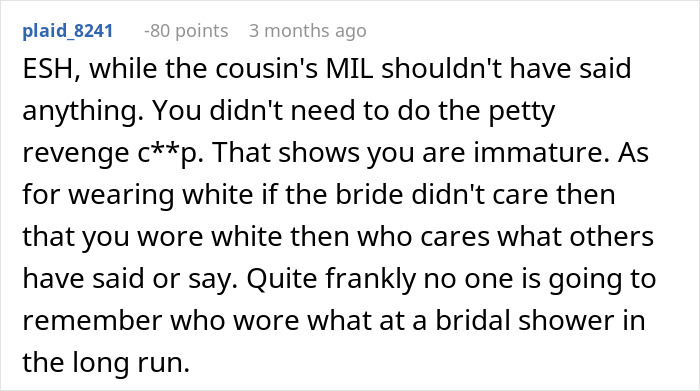
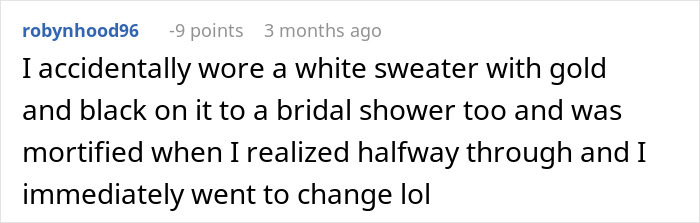


Apparently, once someone gets engaged and has a date set for their wedding, you are not allowed to wear white around them at any point, to any event, not just their wedding itself XD

W*F?! Brides get dips on white for ONE DAY. Not the bridal shower, not some other made-up event connected to the wedding. NOTHING. You get. ONE. DAY.
I am not allowed to write the T in W T F?! It's an ACRONYM. WTH Bored Panda
Load More Replies...
Apparently, once someone gets engaged and has a date set for their wedding, you are not allowed to wear white around them at any point, to any event, not just their wedding itself XD
W*F?! Brides get dips on white for ONE DAY. Not the bridal shower, not some other made-up event connected to the wedding. NOTHING. You get. ONE. DAY.
I am not allowed to write the T in W T F?! It's an ACRONYM. WTH Bored Panda
Load More Replies... 












 No fees, cancel anytime








30
11