Get Premium
Dark mode theme is available exclusively for premium users. Learn more about the benefits of subscribing.
No fees, cancel anytime.

 Dark Mode Ad-Free Browsing Unlimited Content
 Ad-Free Browsing Unlimited Content Dark Mode
Join 1.2 million Panda readers who get the best art, memes, and fun stories every week!
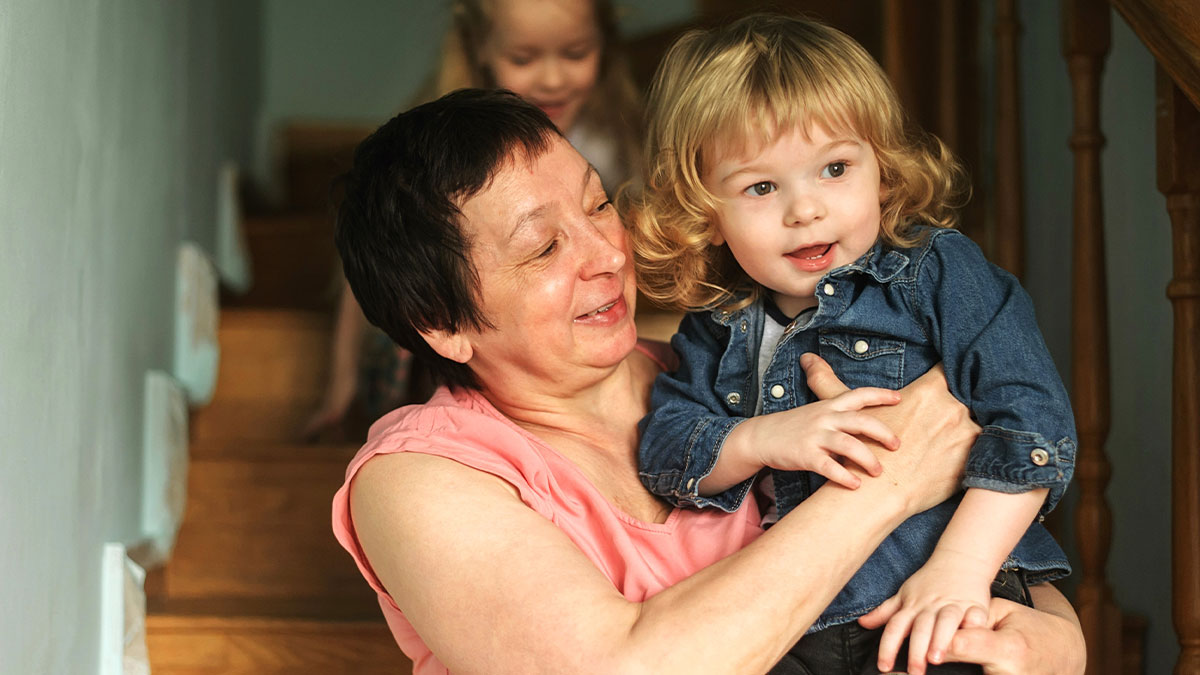
While every relative might have only the best intentions for the little ones running around them, it’s ultimately the parents who carry the responsibility and call the shots.
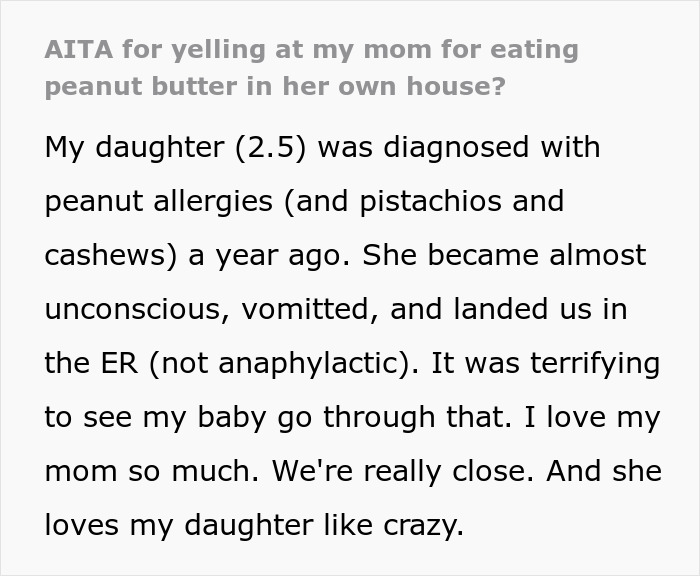
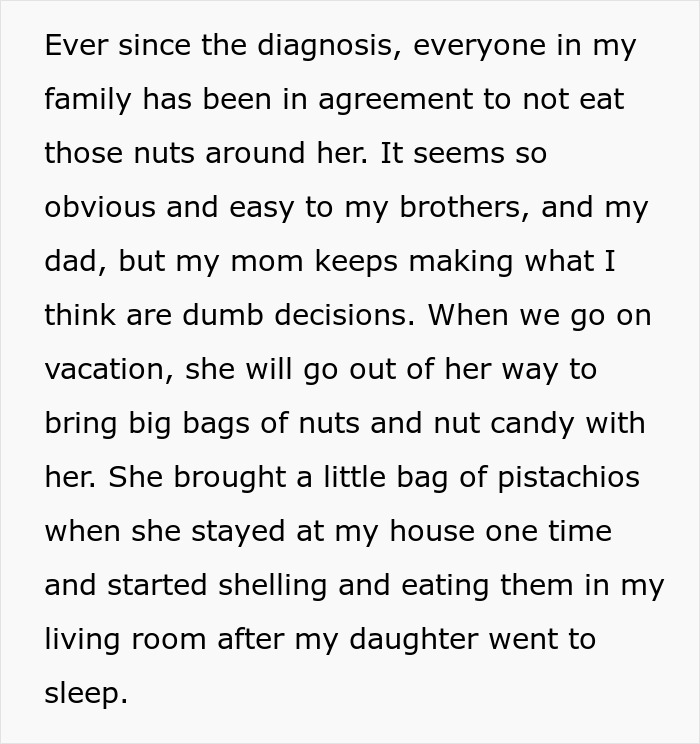
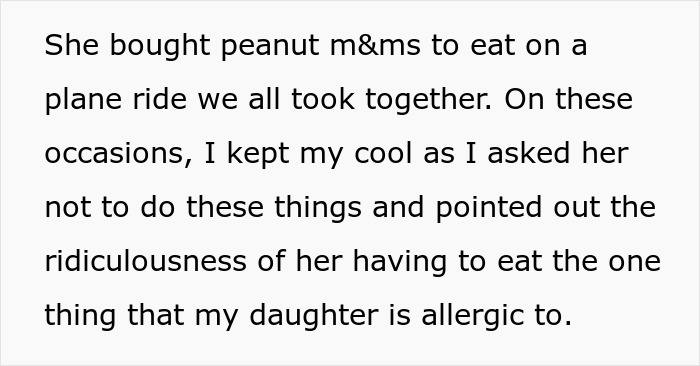
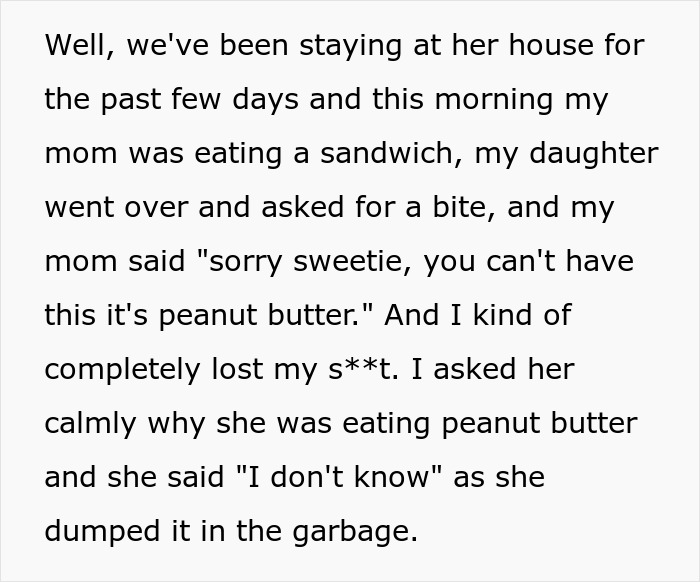
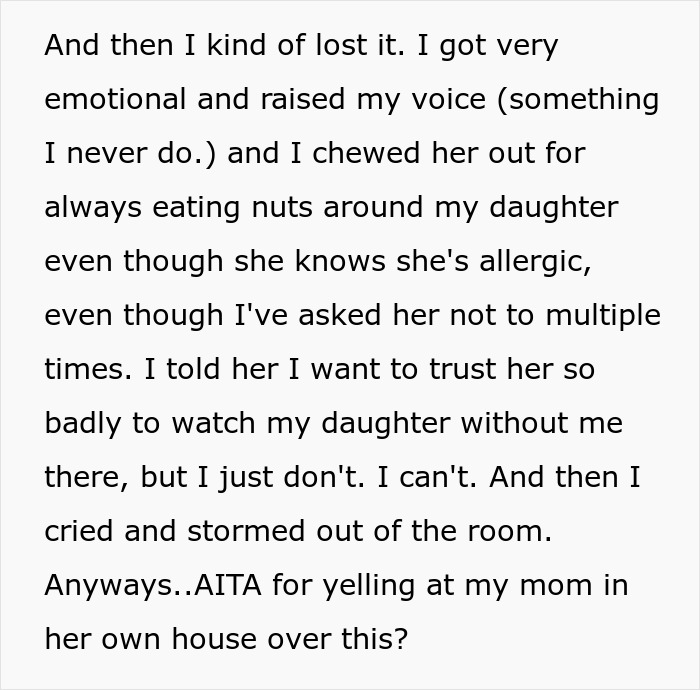
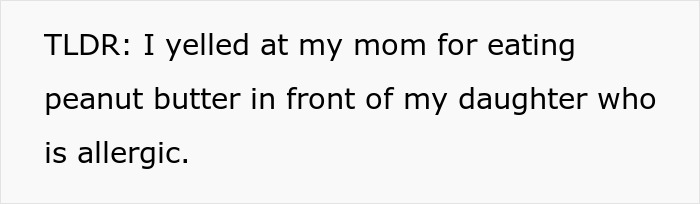
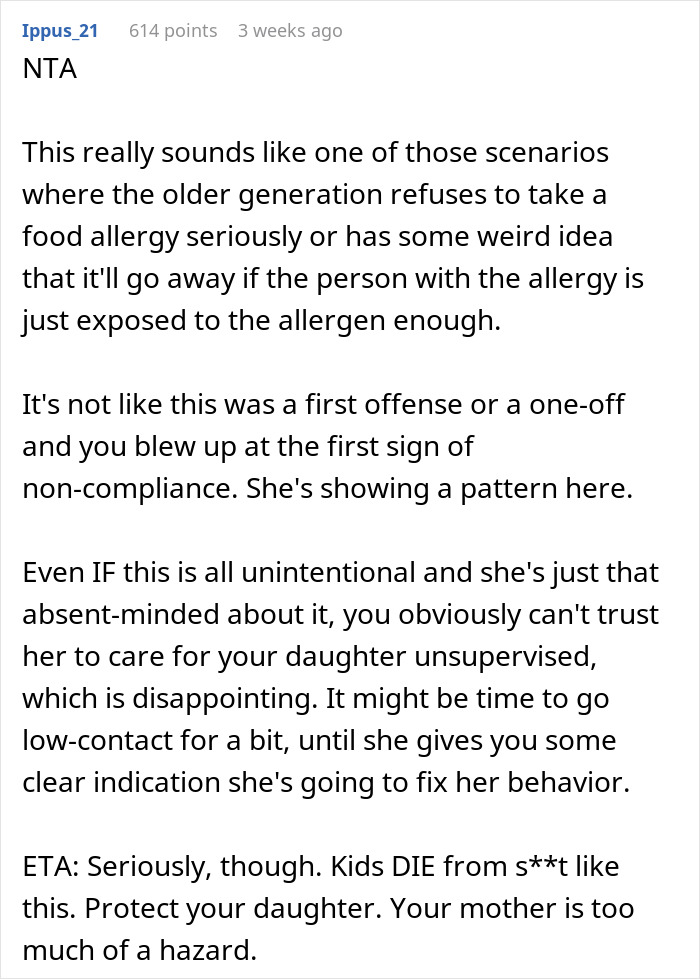
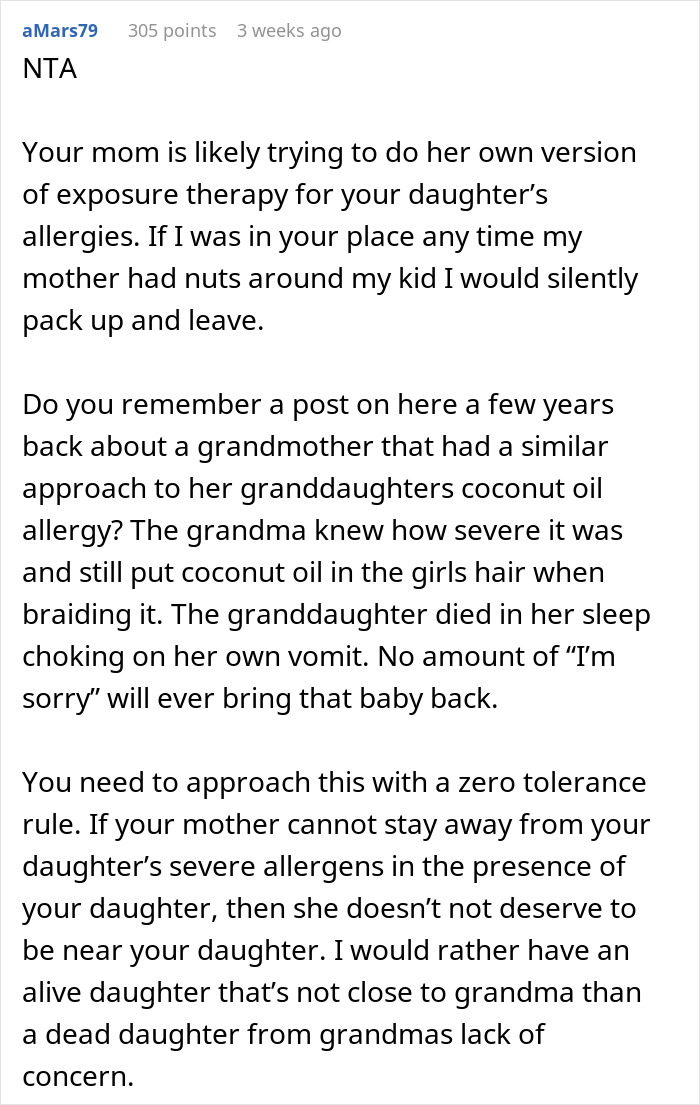
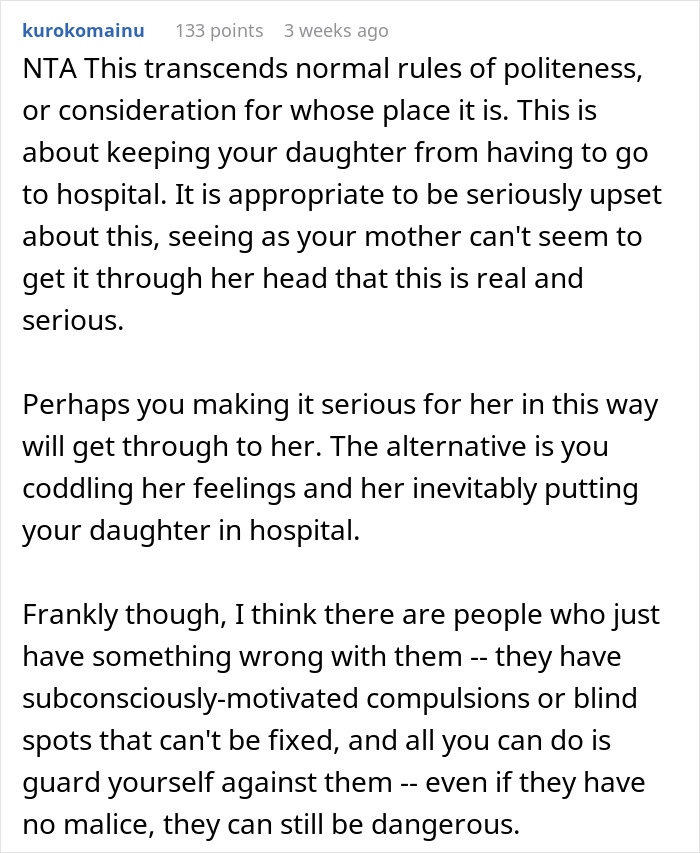
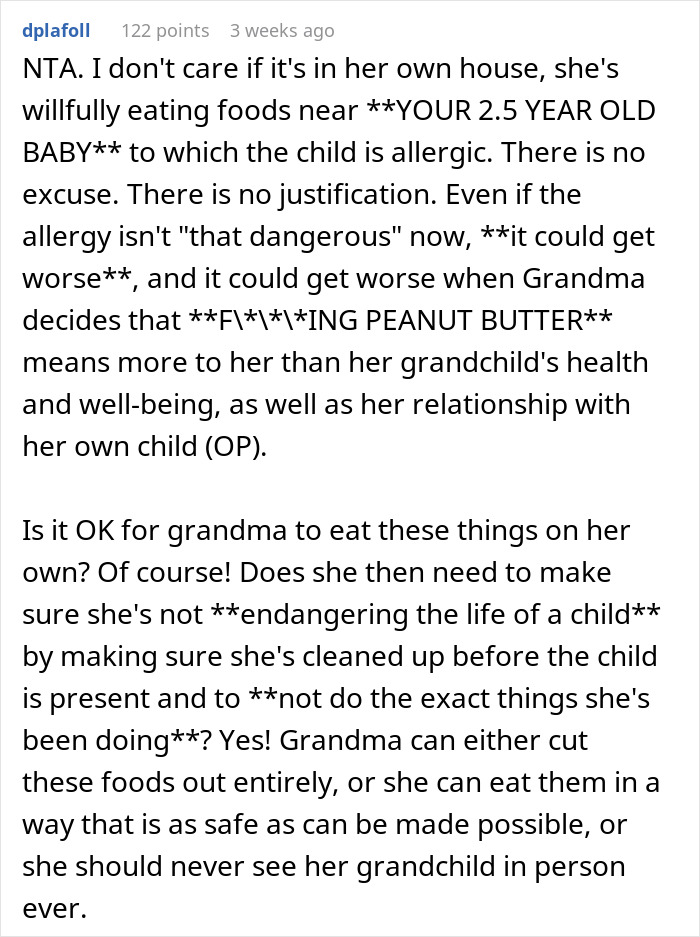
In a now-viral Reddit post, platform user SuchRestaurant8545 shared the emotional toll of managing their toddler’s severe peanut, pistachio, and cashew allergies, made all the more difficult by a beloved grandmother who can’t seem to stop bringing those very nuts around.
The issue started as small, sparse incidents, but over time, it became a continuous conflict over boundaries and trust.
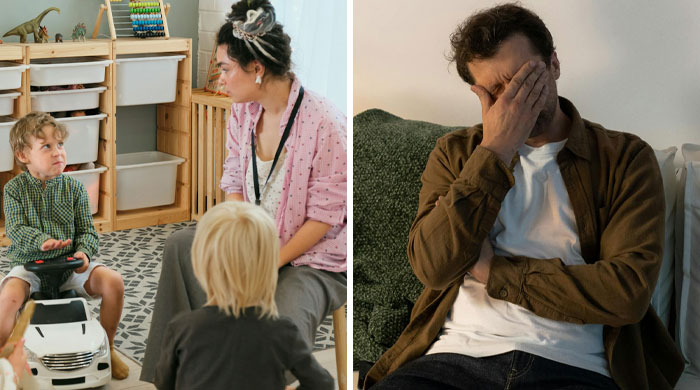
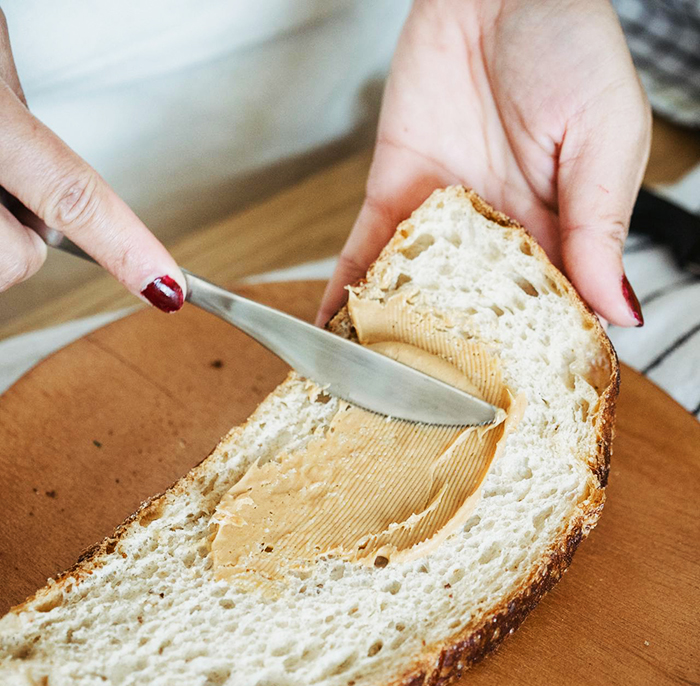
Image credits: astreltsova / envato (not the actual photo)
Image credits: Nicola Barts / pexels (not the actual photo)
Image credits: SuchRestaurant8545
Simply put, a peanut allergy is a condition that arises when your body’s immune system overreacts to proteins found in those peanuts and treats them as a potential threat.
(It’s important to point out that a tree nut allergy isn’t the same as a peanut allergy. Peanuts grow underground and are classified as legumes, like beans and peas. But roughly about a third of people with a peanut allergy are also allergic to at least one tree nut.)
This medical emergency requires treatment with an epinephrine autoinjector (EpiPen, Auvi-Q, others) and a trip to the ER.
Anaphylaxis is no joke and its signs and symptoms can include:
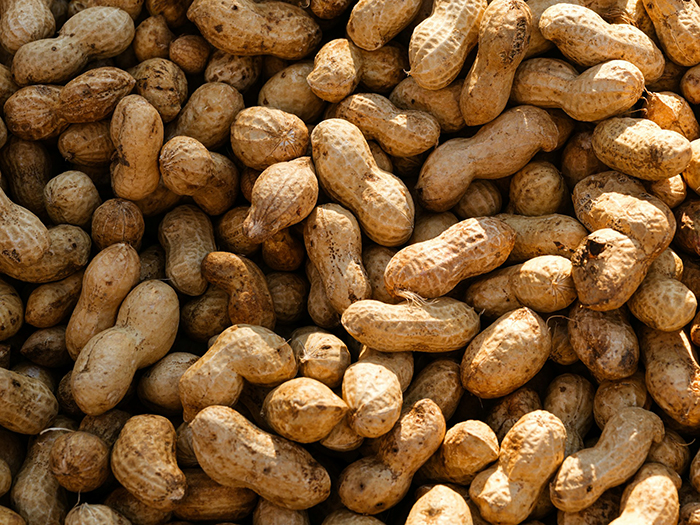
Image credits: engin akyurt / pexels (not the actual photo)
Treating nut allergies often involves a mix of measures aimed at preventing exposure and knowing when to take action and get treatment. That list includes:
Studies show that peanut allergies in children are on the rise. In the United States, for example, the percentage of the adult population living with it has been estimated at 3 percent in 2015–2016, compared to less than 1 percent in 1999. In England, there had been a 72% increase in the number of hospital admissions for children caused by anaphylaxis between 2013 and 2019, from 1,015 to 1,746.
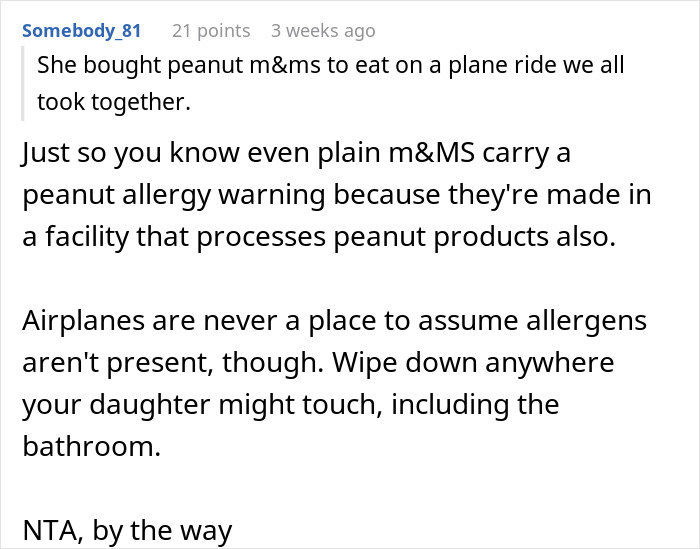
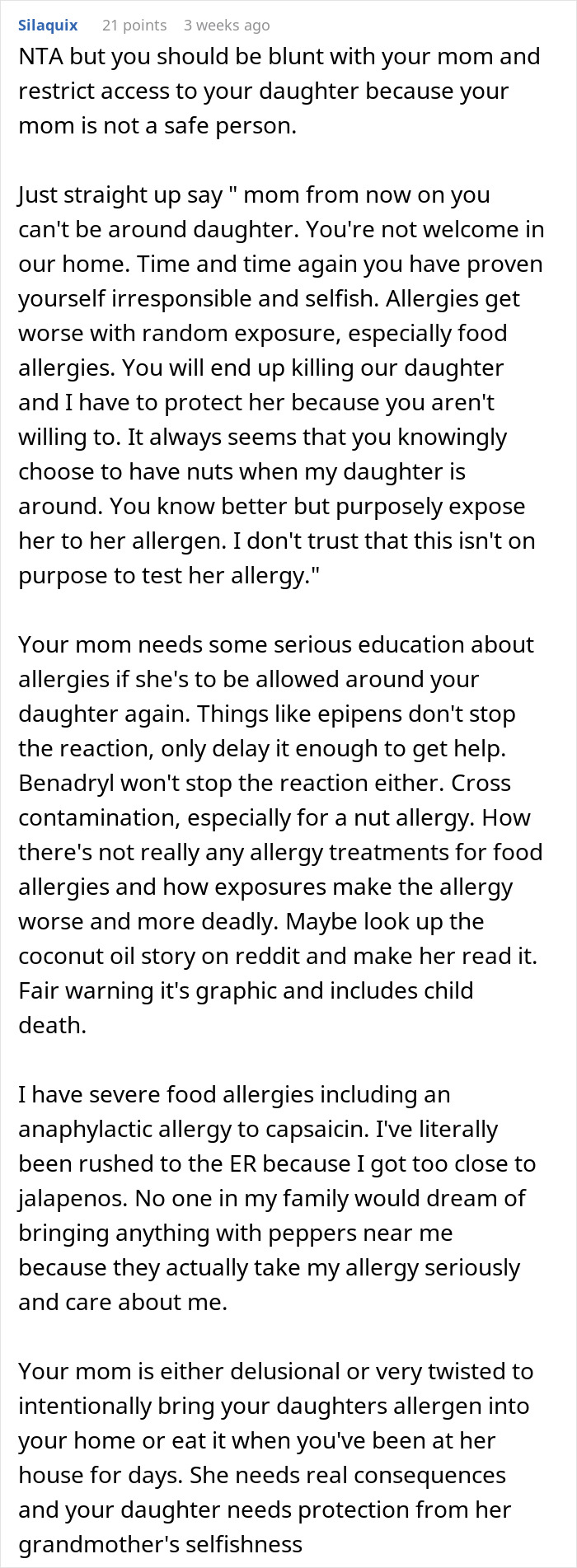
The grandma may have had a hard time adjusting the diet she had been so used to, as nuts can be found in so many of our foods without us even realizing. But it’s the effort that counts, and the author of the post believes it’s missing.

By entering your email and clicking Subscribe, you're agreeing to let us send you customized marketing messages about us and our advertising partners. You are also agreeing to our Privacy Policy.
Thank you! You've successfully subscribed to newsletters!


No, it isn't. She's understood, she just doesn't care. Best case because she thinks they are lying about the allergies, but more likely her inconvenience is weighted more heavily than a child's safety in her decision making.
Load More Replies... An usual the YTAs are psycho cases. There have been two tragic cases in the UK in recent years that illustrate why. One was a young teen girl whose father bought her a prepackaged sandwich from a store and she died from cross-contamination, probably from a single sesame seed. The other was a child who had a piece of cheese thrown at him in the school cafeteria. The cheese hit him in the back of the neck. He must have idly scratched at it and the allergens made it into his bloodstream and kílled him.
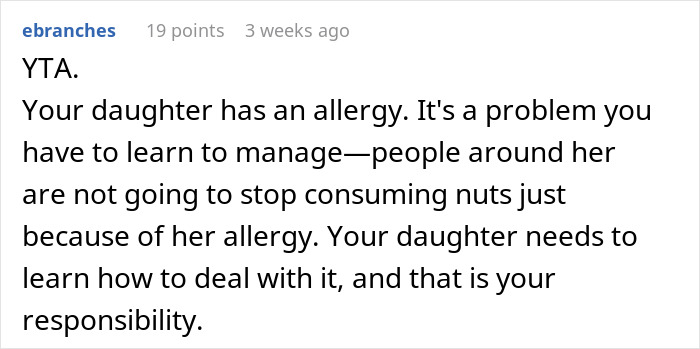
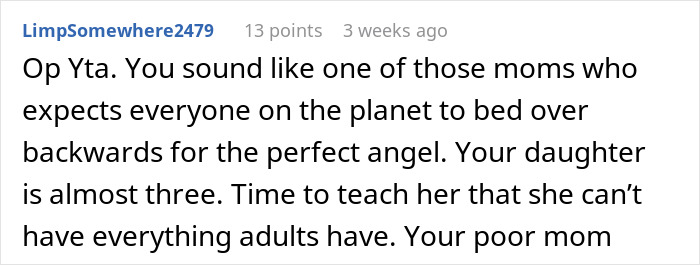
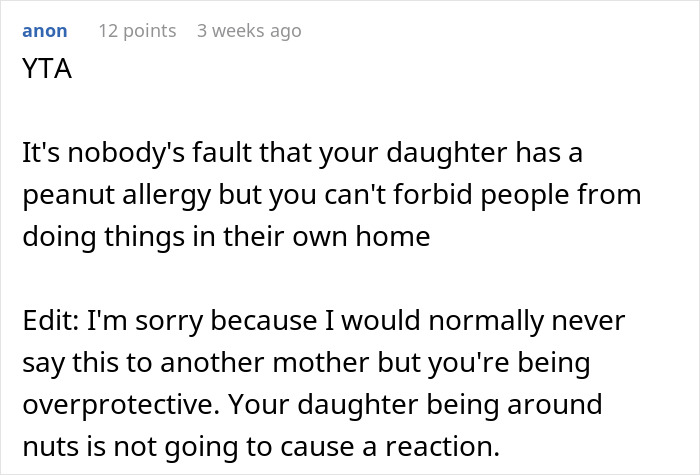
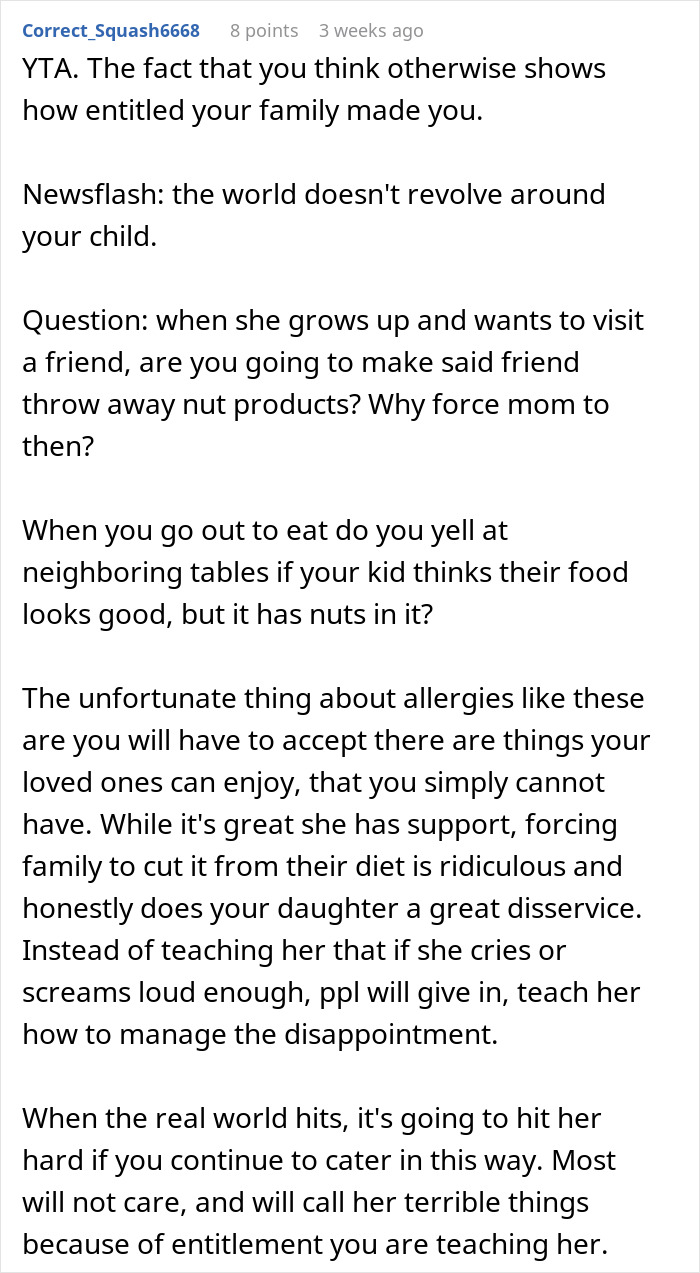
The YTA comment that said "you're daughter needs to learn to manage it"... WTAF?? Just shows how utterly ignorant people are about allergies - which is no excuse.
Load More Replies... One slip up is not good, but understandable if you aren't used to checking ingredients, or didn't realise it wasn't ok in the house, even if the child is in bed. If people haven't been around this type of allergy before, it can be misunderstood because there are so many types of allergies. But repeated examples are malicious. This woman just thinks her snack preferences are more important than her grandchild's health. Don't leave her alone with any of the kids because her convenience is always going to be more important than their safety.
Agreed. The first time is just a mistake while getting used to a new routine around the grandchild, that you don’t have to practice when they’re not around. Forgetting to wash your hands and brush your teeth before giving your grandchild a hug ONCE during the first visit after diagnosis isn’t great, but it’s an understandable mistake in a brand new situation. Takes time to switch gears and get used to a new routine. Sure. But to repeat it so many times, and so blatantly—-who TF brings big bags of nuts with them on vacation?—-is either obtuseness, callousness, denial that there’s a problem at all, or downright cruelty.
Load More Replies... No, it isn't. She's understood, she just doesn't care. Best case because she thinks they are lying about the allergies, but more likely her inconvenience is weighted more heavily than a child's safety in her decision making.
Load More Replies... An usual the YTAs are psycho cases. There have been two tragic cases in the UK in recent years that illustrate why. One was a young teen girl whose father bought her a prepackaged sandwich from a store and she died from cross-contamination, probably from a single sesame seed. The other was a child who had a piece of cheese thrown at him in the school cafeteria. The cheese hit him in the back of the neck. He must have idly scratched at it and the allergens made it into his bloodstream and kílled him.
The YTA comment that said "you're daughter needs to learn to manage it"... WTAF?? Just shows how utterly ignorant people are about allergies - which is no excuse.
Load More Replies... One slip up is not good, but understandable if you aren't used to checking ingredients, or didn't realise it wasn't ok in the house, even if the child is in bed. If people haven't been around this type of allergy before, it can be misunderstood because there are so many types of allergies. But repeated examples are malicious. This woman just thinks her snack preferences are more important than her grandchild's health. Don't leave her alone with any of the kids because her convenience is always going to be more important than their safety.
Agreed. The first time is just a mistake while getting used to a new routine around the grandchild, that you don’t have to practice when they’re not around. Forgetting to wash your hands and brush your teeth before giving your grandchild a hug ONCE during the first visit after diagnosis isn’t great, but it’s an understandable mistake in a brand new situation. Takes time to switch gears and get used to a new routine. Sure. But to repeat it so many times, and so blatantly—-who TF brings big bags of nuts with them on vacation?—-is either obtuseness, callousness, denial that there’s a problem at all, or downright cruelty.
Load More Replies...





















 No fees, cancel anytime











54
67