Get Premium
Dark mode theme is available exclusively for premium users. Learn more about the benefits of subscribing.
No fees, cancel anytime.

 Dark Mode Ad-Free Browsing Unlimited Content
 Ad-Free Browsing Unlimited Content Dark Mode
Join 1.2 million Panda readers who get the best art, memes, and fun stories every week!
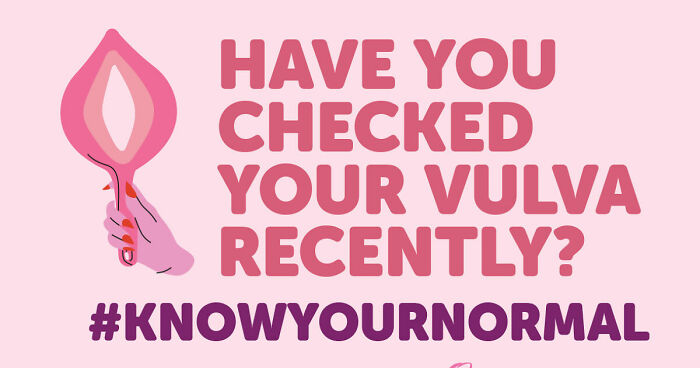
I’m not even going to sugar-coat this: I was 36 years old the first time I properly looked at my vulva.
Not a quick glance. Not a flash while shaving. I mean really looked, with a mirror, a quiet moment alone, and zero judgment.
And the weirdest part? I didn’t even realise I hadn’t looked until someone asked me: “Do you know what your normal is?”
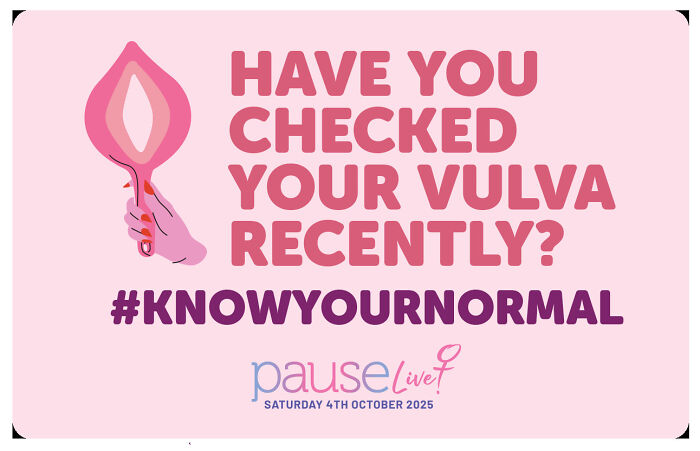
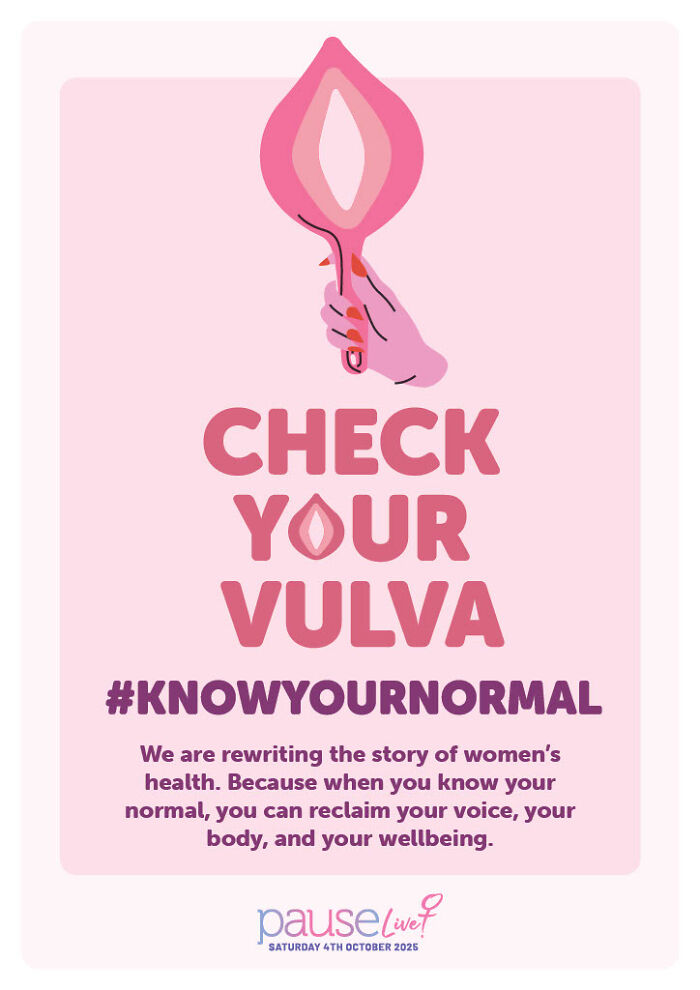
That question came from a campaign launched by PAUSE Live, the UK’s biggest women’s health event. Their latest campaign, “Know Your Normal,” is asking women across the country to do something simple but revolutionary: check your vulva.
Yes. Your actual vulva.
For years, I assumed any weird symptoms were “just hormonal.” Or “just dryness.” Or “just me being dramatic.” I’d been taught, like so many of us, that our intimate health is taboo. Those changes down there are either shameful or just part of being a woman. Something to ignore or push through.
Turns out, that silence? It’s dangerous.
Dr. Shirin Lakhani, the GP fronting the Know Your Normal campaign, is trying to break that cycle. She’s made it her mission to talk openly about conditions like Lichen Sclerosus (LS), a chronic skin condition affecting the vulva that often goes undiagnosed for years.
“Too many women suffer in silence or are told it’s all in their head,” says Dr. Shirin. “We want women to know that effective, non-invasive treatments exist. And nothing about your body is too embarrassing to talk about.”
She’s right. And honestly? After finally getting up-close-and-personal with myself, I saw how little I actually knew about what’s “normal” for my body.
What Even Is Normal?
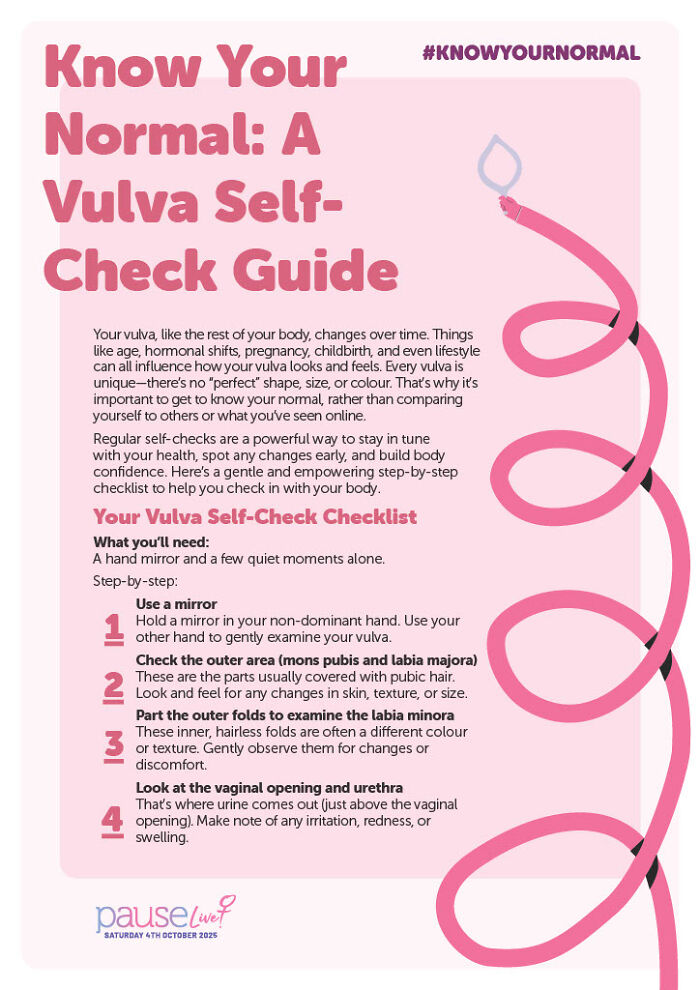
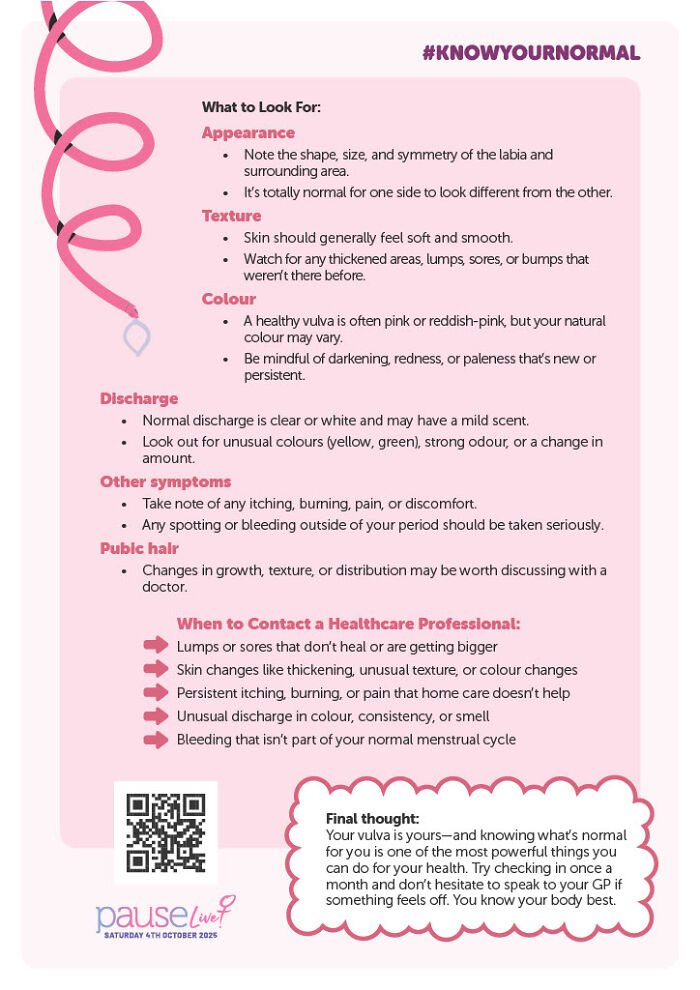
One of the most powerful things PAUSE Live created is their Vulva Self-Check Guide, a beautifully simple checklist that walks you through a monthly self-exam in four steps:
Use a mirror. Hold it in one hand and explore with the other.
Check the outer area (mons pubis and labia majora). Look for changes in skin, size, or texture.
Part the labia majora to see the labia minora. Observe any changes or discomfort.
Look at the vaginal opening and urethra. Check for redness, swelling, or irritation.
That’s it. No med school degree required. Just curiosity, gentleness, and a few minutes alone.
They also guide you on what to look for—things like unusual lumps, colour changes, discharge, itching, or anything that just doesn’t feel quite right. (Spoiler alert: your labia don’t need to match. Symmetry is not the goal.)
The goal isn’t to freak out over every tiny change. It’s to get familiar with your baseline so that when something’s off, you’ll know and you’ll act.
That’s what Dr. Shirin and the campaign are fighting for: a world where women trust themselves enough to speak up. We stop waiting until things are unbearable before asking for help.
And honestly? I wish I’d started sooner.
So I’m telling every woman I know: look at your vulva. Know your texture, colour, and shape. Notice if anything feels off. Do it regularly. Speak up when you need to.
Because this isn’t about vanity, it’s about autonomy.
Download the full Vulva Self-Check Guide and join the conversation with #KnowYourNormal. Your health, your voice, your vulva. It’s all yours.
More info: pauselive.com
293views
Share on Facebook
Back in the 60s, hippie girls like me used to get up on the table without a drape and use a mirror to look at ourselves. We considered it to be taking back the power of an otherwise uncomfortable OB/GYN experience. I think it’s a good idea to look at your vulva.
Back in the 60s, hippie girls like me used to get up on the table without a drape and use a mirror to look at ourselves. We considered it to be taking back the power of an otherwise uncomfortable OB/GYN experience. I think it’s a good idea to look at your vulva.




































 No fees, cancel anytime






7
1