Get Premium
Dark mode theme is available exclusively for premium users. Learn more about the benefits of subscribing.
No fees, cancel anytime.

 Dark Mode Ad-Free Browsing Unlimited Content

 Ad-Free Browsing Unlimited Content Dark Mode

Join 1.2 million Panda readers who get the best art, memes, and fun stories every week!

Sir Patrick Stewart kept much of his personal life away from the spotlight, but news of his health battle following his passing has brought renewed attention to a little-understood neurological condition.
The legendary Star Trek and X-Men actor passed away at 86 on Wednesday, October 28, with his family revealing that he had been living with Alzheimer’s disease and Lewy body dementia.
While his loved ones described the experience as a “brief and poignant journey,” it has prompted questions about how Lewy body dementia differs from other forms of dementia, why it can be difficult to identify, and which early warning signs families should watch for.
Meanwhile, the tragic experience of another beloved Hollywood star, Robin Williams, has resurfaced, bringing further attention to the condition and the challenges patients and their loved ones can face.
Disclaimer: This article is for informational purposes only and is not a substitute for professional medical advice, diagnosis, or treatment.
Sir Patrick Stewart, celebrated for his performances as Captain Jean-Luc Picard in Star Trek and Professor Charles Xavier in the X-Men franchise, passed away at his home in Los Angeles.
His representative confirmed that he had been diagnosed with Alzheimer’s disease and Lewy body dementia.
In a statement shared after his passing, his family described his experience as a “brief and poignant journey” with the two conditions.
They also remembered the support he received from those closest to him, including his wife, Sunny Ozell.
There is currently no publicly confirmed information about the specific symptoms Stewart experienced, when they first appeared, or how long he had been receiving treatment.
His diagnosis remained private until his passing.
The Alzheimer’s Society also acknowledged Stewart’s passing in a statement shared on Facebook.
Its chief executive, Michelle Dyson, said: “Both Alzheimer’s disease and Lewy body dementia are progressive conditions that can affect memory, thinking and behaviour, gradually changing how a person experiences and interacts with the world around them.”
The organization’s message highlighted the broader impact of dementia on individuals and families.
Lewy body dementia, commonly shortened to LBD, is a progressive brain disorder associated with abnormal deposits of a protein called alpha-synuclein inside brain cells.
These deposits, known as Lewy bodies, interfere with normal brain function and can affect several neurological systems.
According to the US National Institute on Aging, LBD is one of the most common forms of dementia after Alzheimer’s disease.
Its symptoms can affect thinking, movement, sleep, mood, and automatic bodily functions.
One particularly distinctive feature is fluctuating alertness.
Someone with LBD may appear attentive and coherent at one point, then become unusually drowsy, confused, or unable to concentrate a few hours later.
These changes can make the condition difficult for families and doctors to recognize.
Visual hallucinations are another important warning sign.
A person may see people, animals, or objects that are not actually present.
These experiences can be vivid and realistic, sometimes leaving the person frightened or uncertain about what they are seeing.
The condition can also cause physical symptoms resembling Parkinson’s disease, including tremors, stiff muscles, slowed movements, a shuffling walk, and problems with balance.
Some people experience repeated falls or difficulty carrying out everyday activities.
Prof. Yildiz Degirmenci, a neurologist specializing in movement disorders, Parkinson’s disease, and dementia at Medicana Zincirlikuyu Hospital, told Bored Panda that the condition can affect people differently.
“In the early stages of DLB, people may hold their own in conversations but have trouble with organizing things and judging distances,” she explained.
Patients “may sometimes appear forgetful but recall recent events relatively well at other times.”
Degirmenci noted that early symptoms can also include “slowness of movement, stiffness, anxiety, reduced interest in activities,” and changes in sleep.
Sleep disturbances can appear before other symptoms become obvious.
One example is rapid eye movement (REM) sleep behavior disorder, in which a person physically acts out dreams by shouting, kicking, punching, or moving their arms and legs while asleep.
Other possible warning signs include anxiety, depression, unusual changes in behavior, difficulty planning or solving problems, constipation, dizziness caused by falling blood pressure, and a reduced sense of smell.
Notably, not everyone develops all these symptoms, and their severity varies considerably.
One of the difficulties with Lewy body dementia is that its symptoms overlap with those of several other neurological conditions.
Degirmenci noted that one important distinction between Alzheimer’s disease and dementia with Lewy bodies is which cognitive abilities are affected first.
“Early Alzheimer’s is characterized by increasing difficulties with new learning and remembering of recent information,” she explained. “Dementia with Lewy Bodies affects attention, processing (such as planning) and perception (especially of visual information) more in the early stages than failing memory.”
However, the two conditions can occur together, and there is no single test that definitively confirms dementia with Lewy bodies.
UCLA neurology professor Dr. Keith Vossel discussed the diagnostic challenges in an interview with the Los Angeles Times following Stewart’s passing.
He explained that Alzheimer’s disease and LBD frequently occur together and that having both conditions can accelerate an individual’s decline.
Vossel told the outlet, “Essentially the only way to really diagnose these conditions together is after an autopsy and to see the hallmark features of the diseases under the microscope.”
Although doctors can assess symptoms and use clinical examinations and other tests to make a diagnosis during a person’s lifetime, the National Institute on Aging explains that a definitive diagnosis of LBD has traditionally been possible only through examination of brain tissue after their passing.
When cognitive changes develop before or within one year of movement problems, the diagnosis may be dementia with Lewy bodies.
When Parkinson’s disease begins with movement difficulties and dementia develops more than a year later, the condition is generally classified as Parkinson’s disease dementia.
Both fall under the broader term Lewy body dementia.
The distinction matters because patients may initially be diagnosed with another condition.
Some symptoms may be mistaken for Alzheimer’s disease, Parkinson’s disease, depression, or other psychiatric problems.
There is currently no cure for LBD.
However, medical care can help manage certain symptoms, and treatment plans may involve medication, physical therapy, and support for sleep or other difficulties.
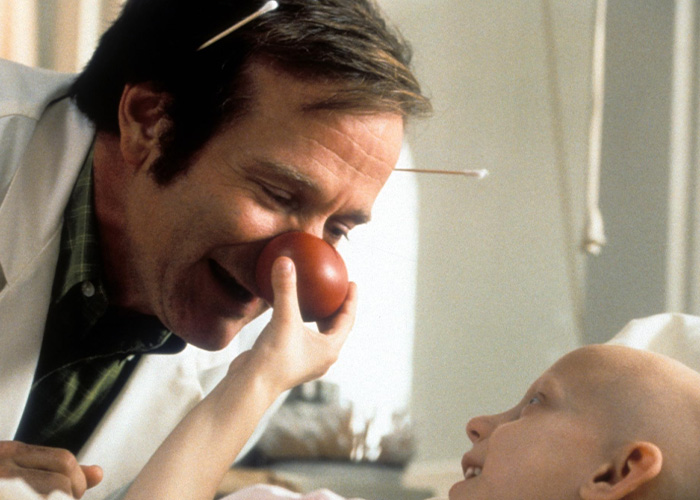
Previously, Robin Williams’ experience with Lewy body dementia brought considerable public attention to the condition and the difficulty of identifying it during life.
The actor and comedian was diagnosed with Parkinson’s disease in the months before he passed away in August 2014.
An examination of his brain after his passing revealed diffuse Lewy body disease, helping explain the complex symptoms he had reportedly experienced.
In a 2016 essay published in the medical journal Neurology, his wife, Susan Schneider Williams, described how his condition had affected him.
She recounted his increasing anxiety, difficulties with memory and thinking, and struggles to understand the changes he was experiencing.
Reports about his final months described severe anxiety, paranoia, sleep disturbances, tremors, and difficulty remembering lines while working.
Williams took his own life at 63.
His widow has publicly discussed how Lewy body disease affected his health and contributed to his suffering.
The Lewy Body Dementia Association has also stated, “What many people do not know is that depression was not the underlying cause of Robin’s s**cide, rather, it was a little-known brain disease called Lewy body dementia.”
However, it has not been medically established that LBD alone caused Williams’ passing.
Patrick is not the only well-known figure whose diagnosis has drawn attention to LBD.
Several public figures have shared their experiences with the condition, helping families and medical professionals better understand its varied symptoms.
Williams remains one of the most widely recognized examples because his diagnosis was discovered after his passing.
CNN founder Ted Turner also publicly disclosed his diagnosis in 2018.
In an interview with CBS’s Sunday Morning, he described feeling “Tired. Exhausted,” and “experiencing forgetfulness.”
Estelle Getty, best known for playing Sophia Petrillo on The Golden Girls, was also diagnosed with Lewy body dementia.
Following her passing in 2008, her son, Carl Gettleman, told Inside Edition that she had been living with an “advanced form” of the condition and required “round-the-clock care.”
Although there is currently no cure for Lewy body dementia, recognizing its symptoms can help people receive appropriate evaluations and access proper support.
If you or someone you know is struggling with self-h**m or s**cidal ideation, help is available. _International Hotlines _provide resources.

By entering your email and clicking Subscribe, you're agreeing to let us send you customized marketing messages about us and our advertising partners. You are also agreeing to our Privacy Policy.
Thank you! You've successfully subscribed to newsletters!







































 No fees, cancel anytime


































32
0