Get Premium
Dark mode theme is available exclusively for premium users. Learn more about the benefits of subscribing.
No fees, cancel anytime.

 Dark Mode Ad-Free Browsing Unlimited Content
 Ad-Free Browsing Unlimited Content Dark Mode
Join 1.2 million Panda readers who get the best art, memes, and fun stories every week!
At roughly 13.8 billion years old, the universe has never exactly been short on mysteries. Countless generations had little means of understanding what lay beyond our world, relying instead on myths to explain the origins of everything. But over the centuries, mathematics, observation, and increasingly sophisticated scientific tools transformed our understanding of the cosmos. Yet for all the breakthroughs that followed, NASA notes that “most of the universe that can be known remains unknown” and “in a cosmic sense, we just got here.”
A researcher analyzing observations from the James Webb Space Telescope has uncovered a puzzling pattern in how distant galaxies rotate—one that puts a new spin on the longstanding question of whether our universe could be inside a black hole.
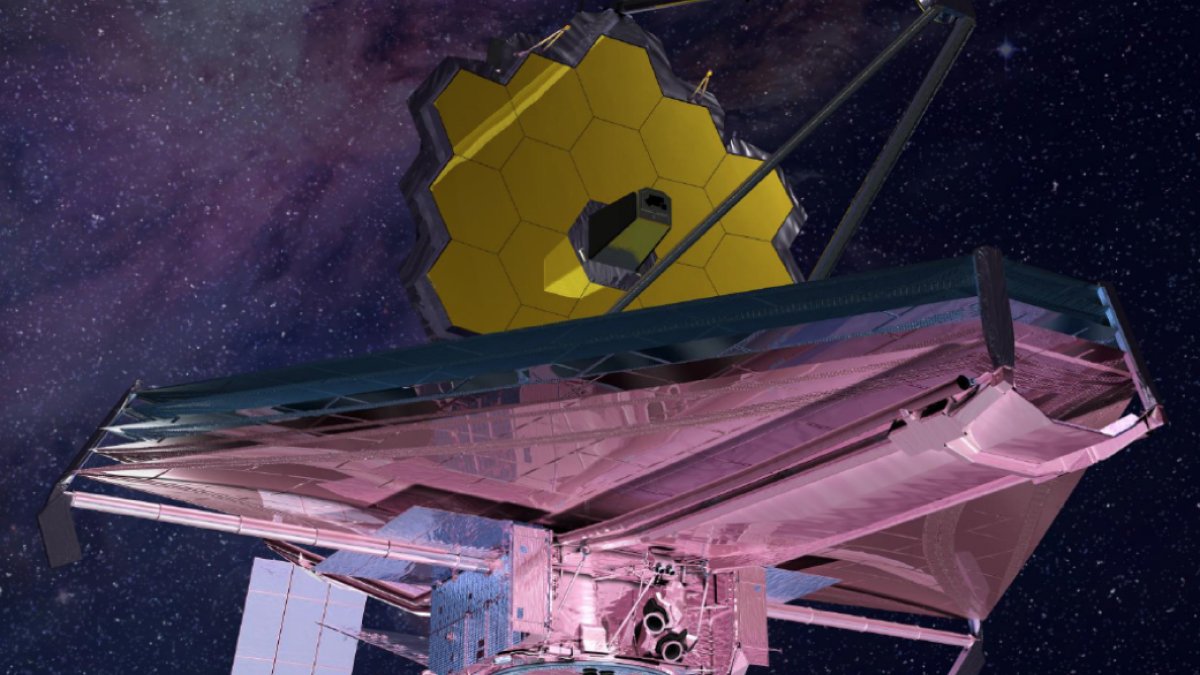
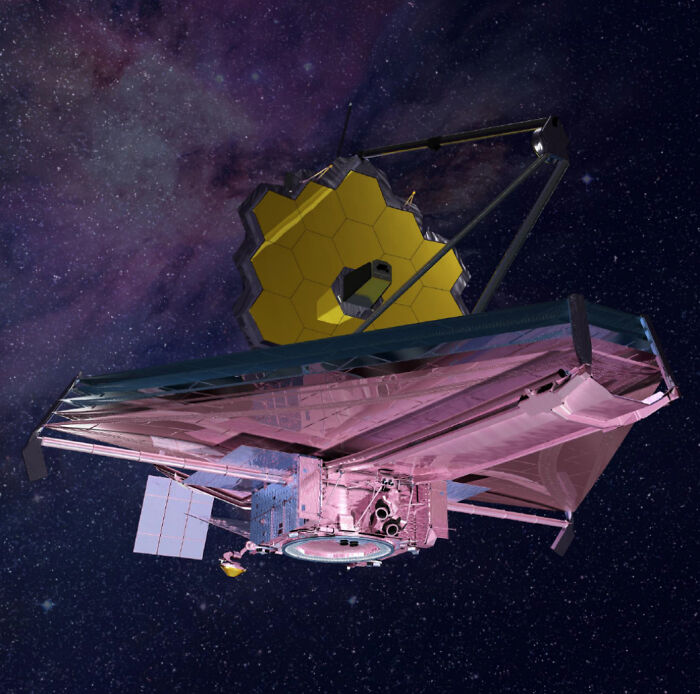
Launched on December 25, 2021, the James Webb Space Telescope (JWST) has revolutionized astronomers’ ability to study the distant universe. Unlike the Hubble Space Telescope, which orbits Earth, the JWST orbits the Sun, about 1 million miles from Earth.
With the JWST, scientists can use infrared technology to peer deep into the universe to observe some of the earliest galaxies and investigate how they formed and evolved. As NASA explains, “Webb studies every phase in the history of our Universe, ranging from the first luminous glows after the Big Bang, to the formation of solar systems capable of supporting life on planets like Earth, to the evolution of our own Solar System.”
One of the surveys taking advantage of those capabilities is the JWST Advanced Deep Extragalactic Survey (JADES), which uses the telescope to study distant galaxies and the early universe. And it was while analyzing observations from JADES that Lior Shamir, a computer scientist at Kansas State University, noticed something unexpected.
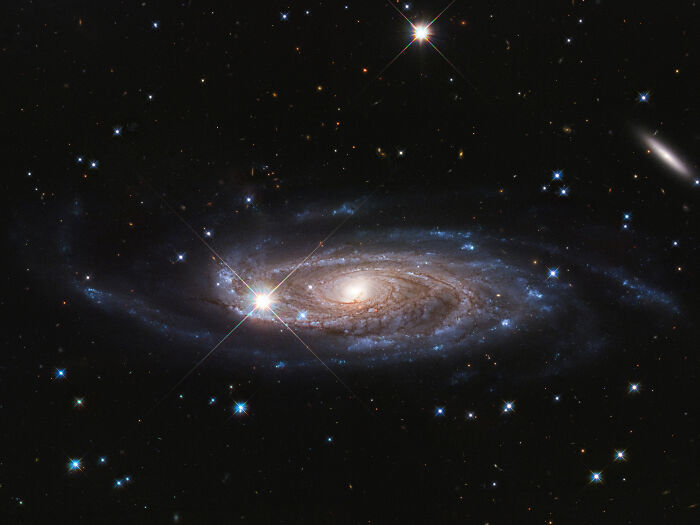
Shamir analyzed 263 galaxies observed by JWST as part of JADES, looking at the direction in which they appeared to rotate. Shamir’s findings, published in a paper titled ‘The distribution of galaxy rotation in JWST Advanced Deep Extragalactic Survey,’ report an asymmetry between galaxies rotating in the same direction as the Milky Way and those rotating in the opposite direction, noting that “the number of galaxies in that field that rotate in the opposite direction relative to the Milky Way galaxy is ~50 per cent higher than the number of galaxies that rotate in the same direction relative to the Milky Way.”
In short, roughly two-thirds of the galaxies in the sample appeared to rotate clockwise, while about one-third rotated counterclockwise.
What’s the significance, you might ask? Well, as Scientific American’s Paul M. Sutter explains, cosmology generally assumes that the universe should look broadly the same in all directions at sufficiently large scales. In other words, astronomers would generally expect the numbers of galaxies rotating one way or the other to be roughly balanced.
That raises the question of why Shamir found an apparent preferred direction for galactic rotation. But he isn’t claiming to have a definitive answer. “It is still not clear what causes this to happen, but there are two primary possible explanations,” he said in a statement.
Shamir says that one possible reason the JWST may have seen an overrepresentation of galaxies rotating in one direction could be the relative motion between the Milky Way and the distant galaxies. Because we observe those galaxies from within our own rotating galaxy, their motion relative to the Milky Way could affect how bright they appear. “The motion makes them brighter, and that is why we see more of them,” he said.
Previously, however, scientists had considered the Milky Way’s rotation too slow to have a meaningful impact on JWST observations, Space.com’s Robert Lea explains. So if Shamir’s suggestion is correct, it could have consequences beyond this particular observation: “If that is indeed the case, we will need to re-calibrate our distance measurements for the deep universe,” he concluded, adding that the re-calibration could also explain “several other unsolved questions in cosmology.”
But Shamir has focused mainly on another possibility—and this one takes the story much further.
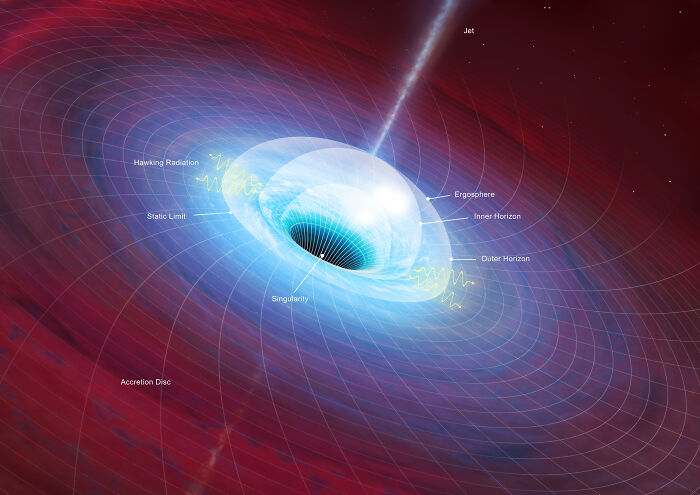
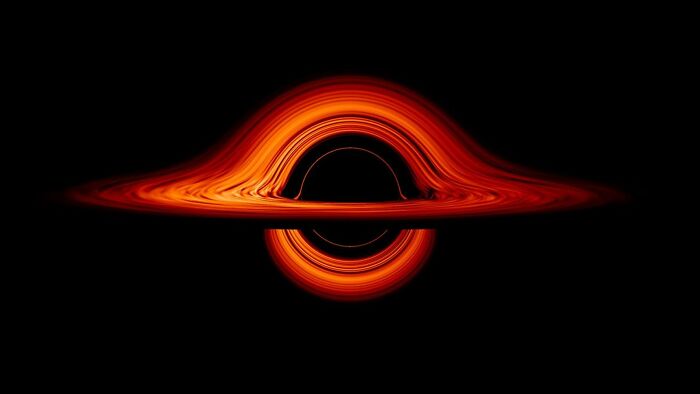
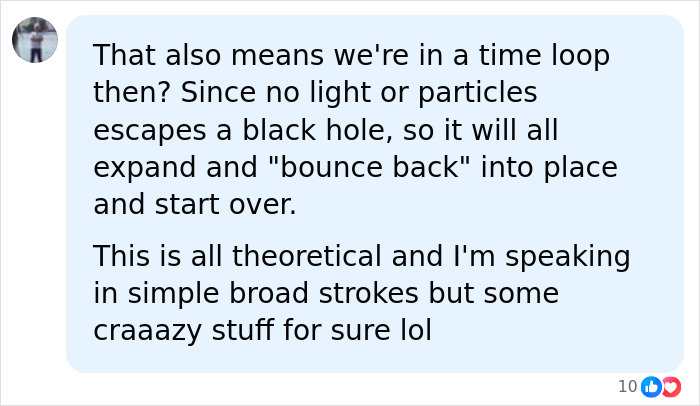
The other possibility is that the universe itself could have been born rotating—an idea that Shamir explains is compatible with black-hole cosmology, a speculative theory that suggests that our observable universe could be the interior of a black hole in a larger “parent” universe.
The idea goes back several decades, and theoretical physicist Nikodem Popławski has developed one version of the theory. In his theory, matter collapsing inside a black hole would eventually stop collapsing and instead “undergo a bounce like a compressed spring,” creating a new, expanding universe rather than a singularity.
And here’s where the rotation comes in. Black holes can rotate, and Popławski suggests that a parent black hole’s rotation could be inherited by the universe it creates, giving that universe a preferred axis. That, in turn, could potentially influence how galaxies rotate.
“I think that the simplest explanation of the rotating universe is the universe was born in a rotating black hole,” Popławski told Space.com. He suggested that a preferred axis inherited from the parent black hole “might have influenced the rotation dynamics of galaxies, creating the observed clockwise-counterclockwise asymmetry.”
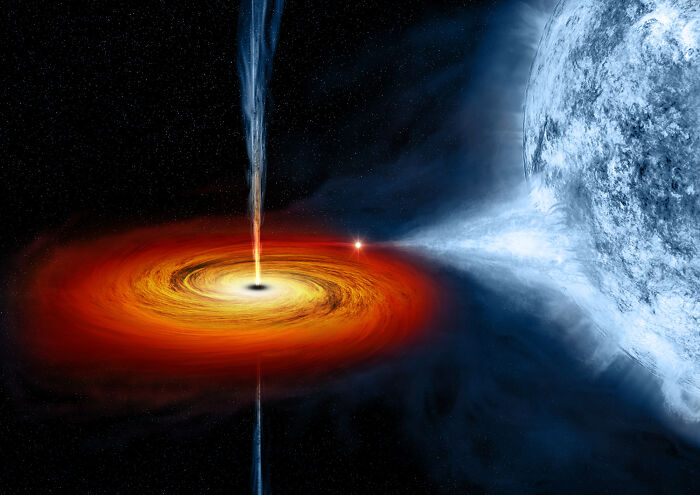
In other words, the striking possibility is that our entire observable universe could be the inside of a black hole in a larger universe.
The finding could have major implications, but Sutter says there are still plenty of reasons to be cautious.
The analysis covers just 263 galaxies, and Sutter also notes that the way they were selected “introduces many opportunities for bias to creep in.” Previous studies using much larger samples have also failed to find the same effect, while some earlier evidence of a preferred rotation direction was later attributed to selection effects.
For now, he says, “we can’t rule it out completely, but so far there is no compelling evidence.”
Then again, as Sutter puts it, “the universe has surprised us before.” If future evidence does lead scientists in that direction, he says, “we’ll just have to admit we were wrong and find a way to cope with living inside a black hole.”
@life_laps_official Black hole explained #science#didyouknow#spacethings#blackhole♬ original sound – Life Laps

By entering your email and clicking Subscribe, you're agreeing to let us send you customized marketing messages about us and our advertising partners. You are also agreeing to our Privacy Policy.
Thank you! You've successfully subscribed to newsletters!

It's as if all the galaxies are dancing, but a couple of them are dancing like Elaine.

My last salary was $8750, ecom only worked 12 hours a week. My longtime neighbor yr estimated $15,000 and works about 20 hours for seven days. I can't believe how blunt he was when I looked up his information, This is what I do..... 𝐍𝐞𝐭𝐏𝐚𝐲𝟏.𝐂𝐨𝐦
Load More Replies...

I think the vastness and unknown science about the universe is like explaining Quantum Mechanics to an neandertal, or perhaps even an earthworm?
It's as if all the galaxies are dancing, but a couple of them are dancing like Elaine.
My last salary was $8750, ecom only worked 12 hours a week. My longtime neighbor yr estimated $15,000 and works about 20 hours for seven days. I can't believe how blunt he was when I looked up his information, This is what I do..... 𝐍𝐞𝐭𝐏𝐚𝐲𝟏.𝐂𝐨𝐦
Load More Replies... I think the vastness and unknown science about the universe is like explaining Quantum Mechanics to an neandertal, or perhaps even an earthworm?






































 No fees, cancel anytime



















29
6