Get Premium
Dark mode theme is available exclusively for premium users. Learn more about the benefits of subscribing.
No fees, cancel anytime.

 Dark Mode Ad-Free Browsing Unlimited Content
 Ad-Free Browsing Unlimited Content Dark Mode
Join 1.2 million Panda readers who get the best art, memes, and fun stories every week!

Bullying can make childhood incredibly difficult, and the effects don’t always disappear when someone leaves school. Globally, roughly one in three students aged 13 to 15 experiences bullying at school each month. Teachers, parents, and classmates can step in to help, but sometimes the person being bullied is left to deal with those memories on their own—and they can stick around for years.
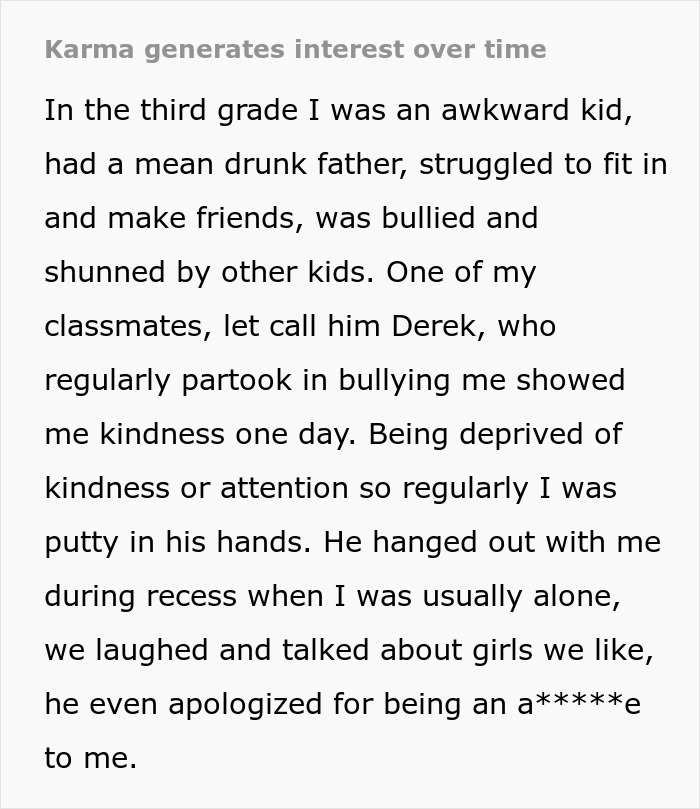
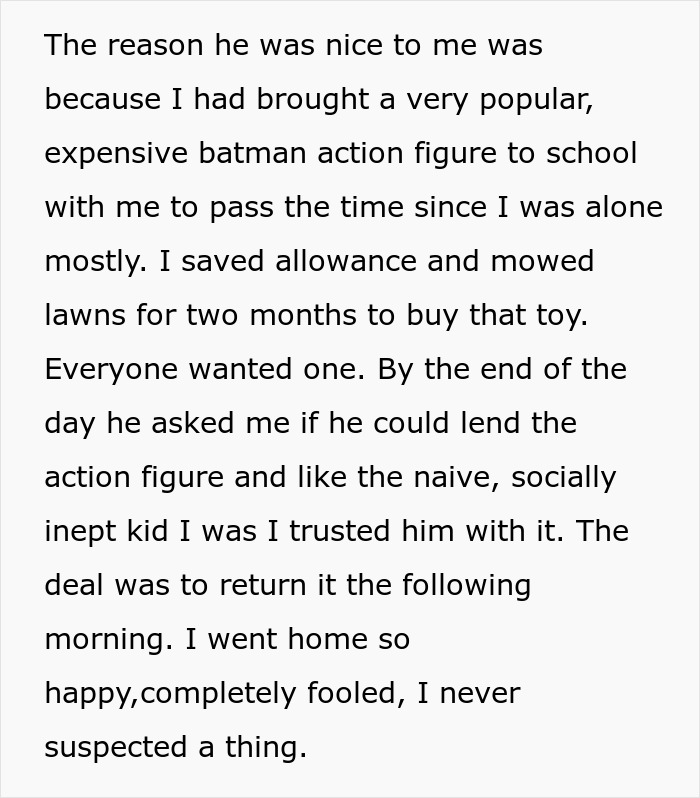
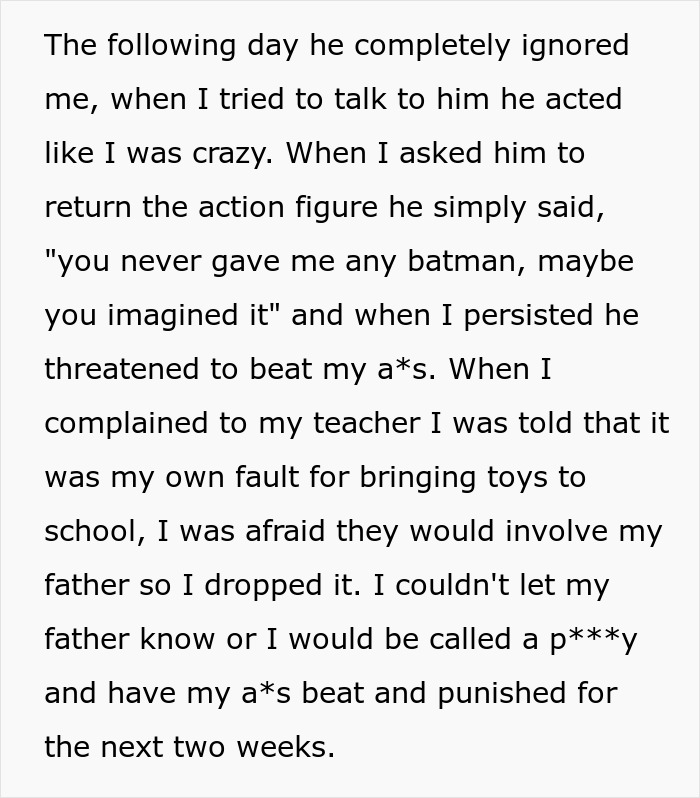
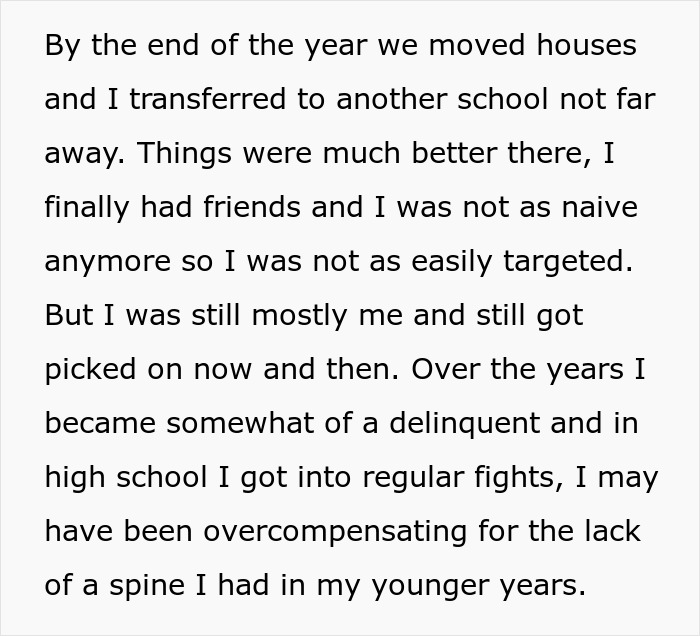
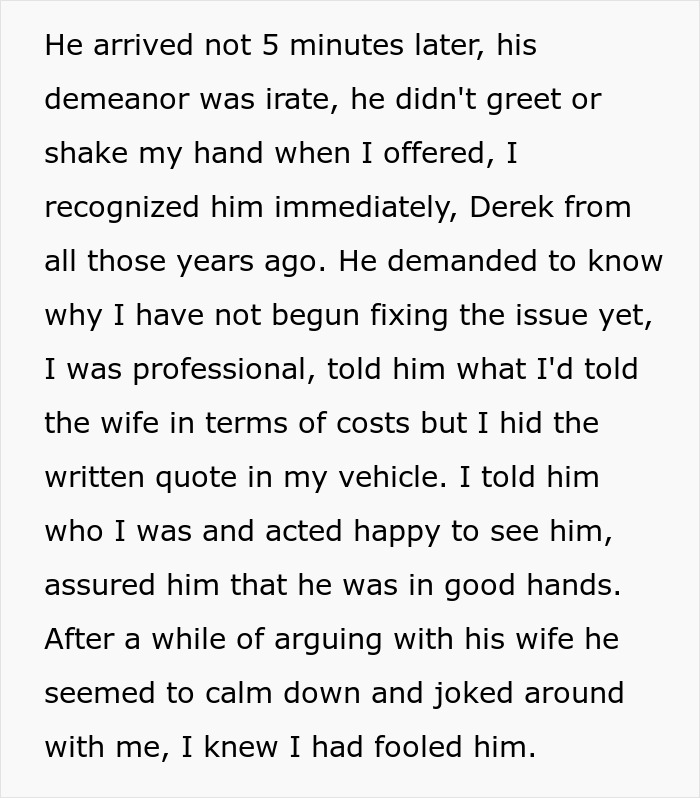
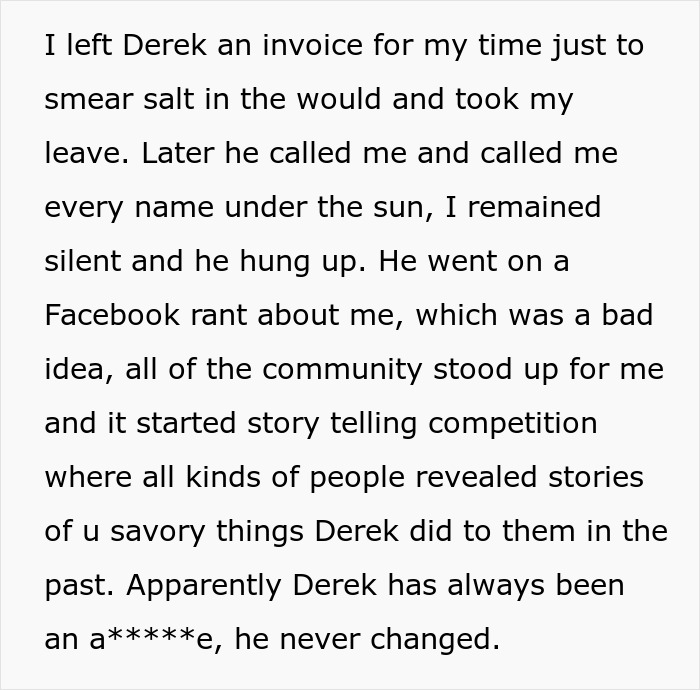
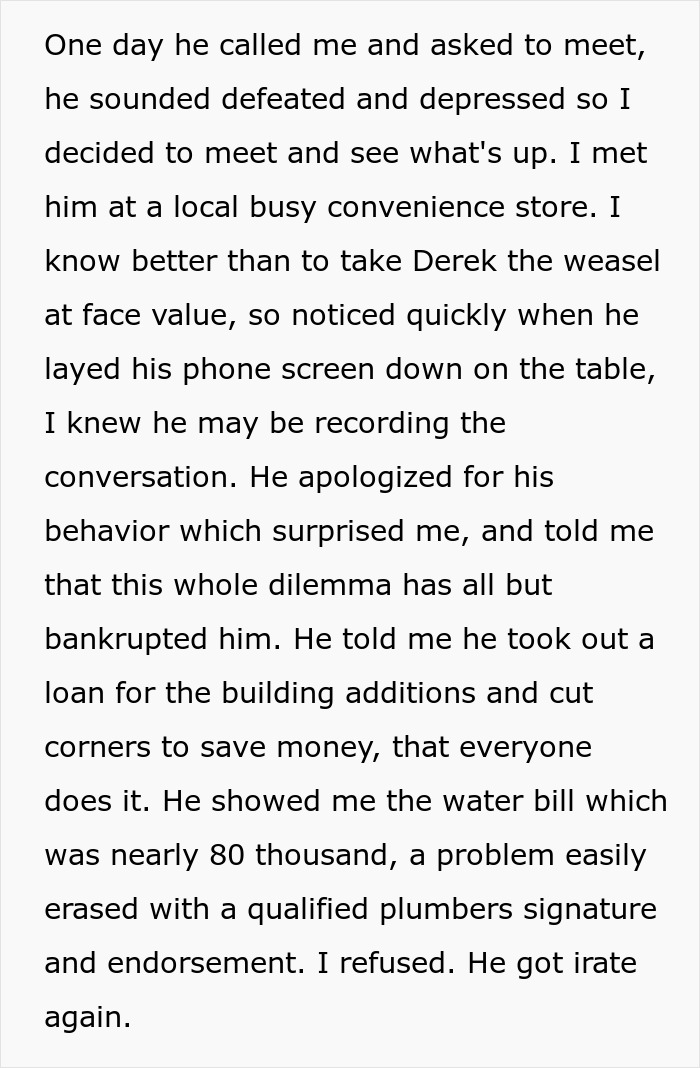
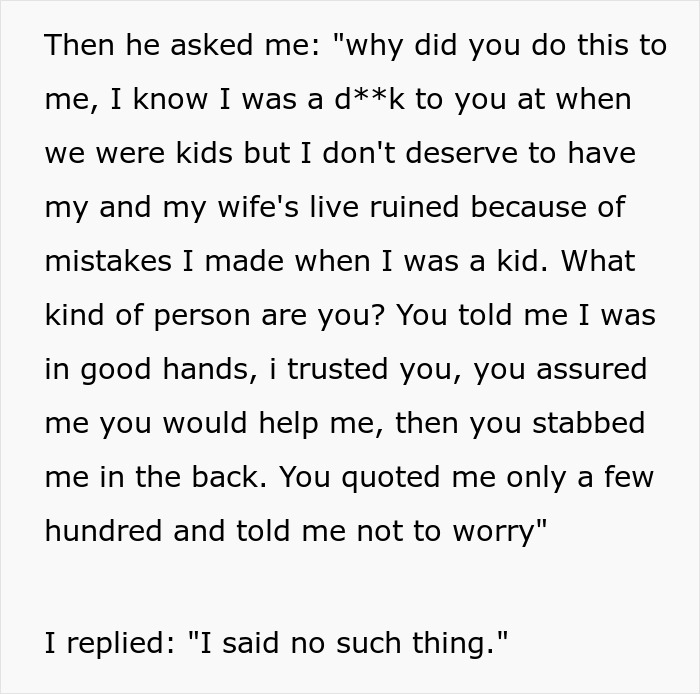
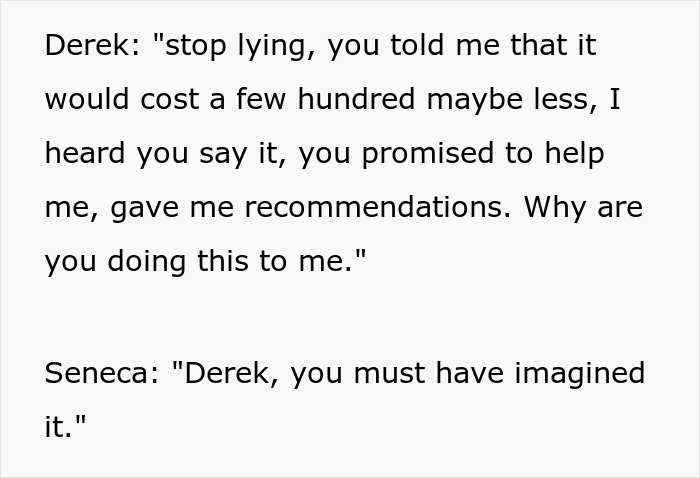
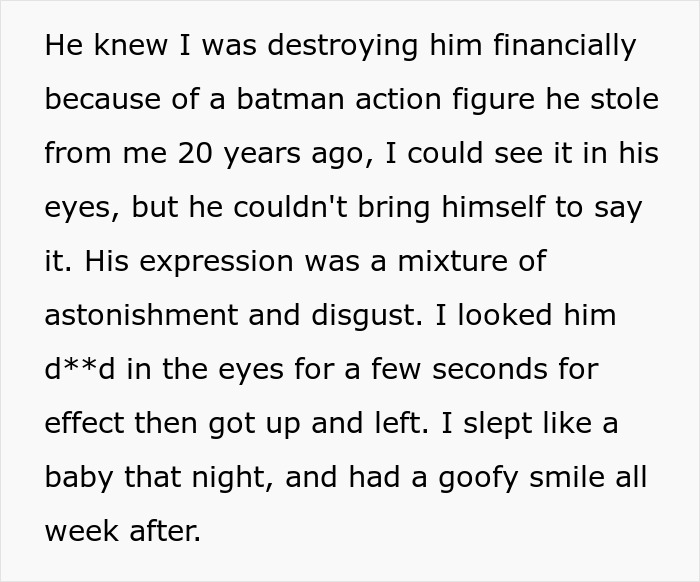
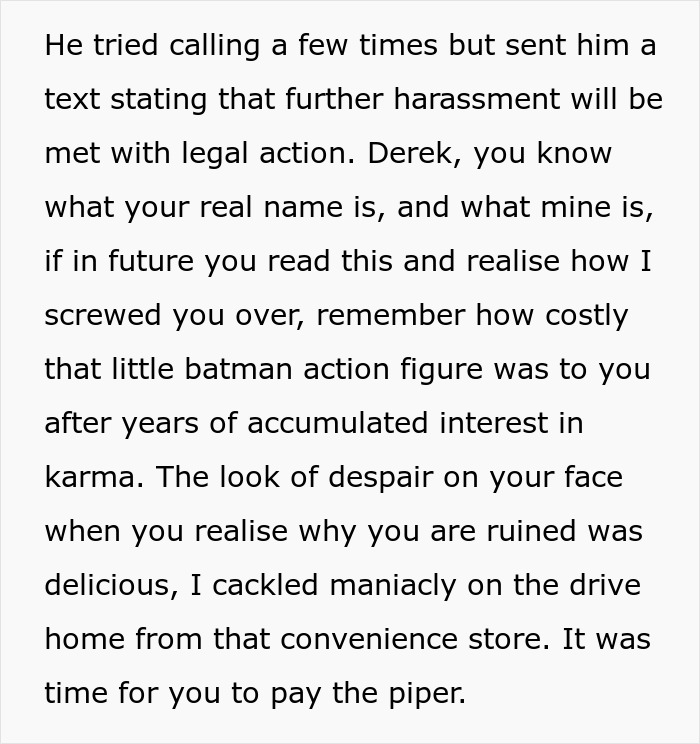
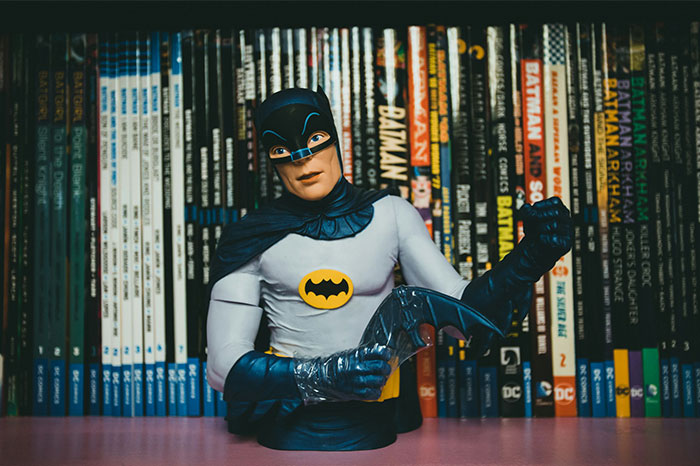
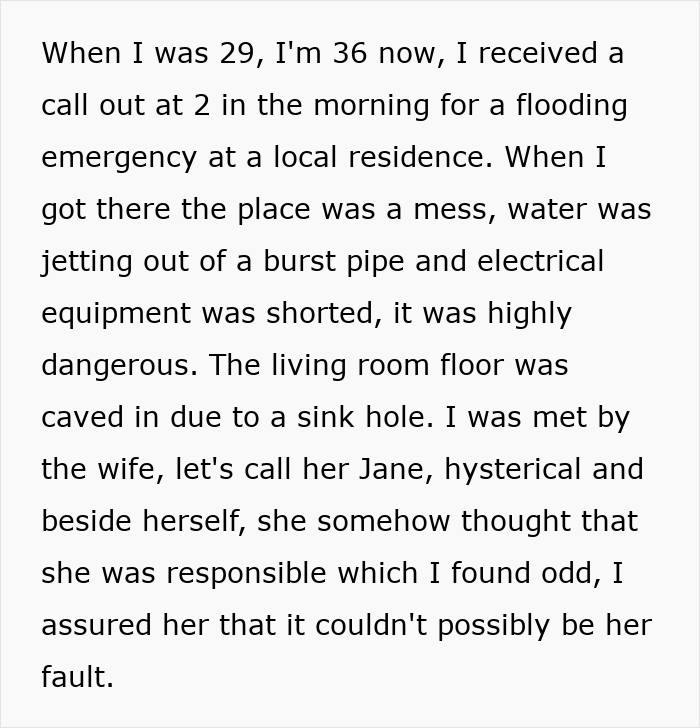
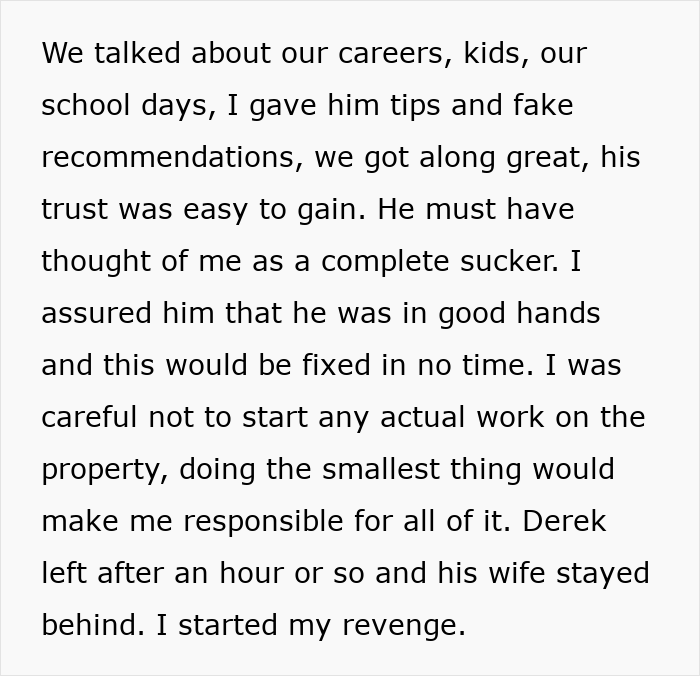
In this story, one man carried the memory of something his school bully did to him for two decades. The bully had borrowed his beloved Batman toy, refused to give it back, and then made the boy’s life even harder. Years later, the two unexpectedly crossed paths again, but this time, their roles were very different. The former victim suddenly found himself in a position to turn the tables and what happened next was anything but ordinary. Keep reading to find out how this decades-old grudge resurfaced—and what happened next.





Whether it happens at school, at work, or even within a friendship group, bullying can make a person’s life miserable. Being constantly picked on, mocked, excluded, threatened, or made to feel like you don’t belong can wear a person down over time. It’s not simply about having a bad day or dealing with one rude comment; repeated bullying can make someone dread going to school or work, second-guess themselves, withdraw from other people, and lose confidence in places where they should feel comfortable. It can affect mental health, physical well-being, relationships, and even academic or work performance. And while the bullying itself may eventually stop, the feelings it leaves behind don’t always disappear so easily. For some people, the experience can stay with them for years, shaping how they see themselves, other people, and even situations that remind them of what they went through.
In recent years, school bullying in particular has become a growing concern. Generally understood as repeated, intentional, and harmful aggressive behavior between peers, bullying is now recognized as a serious public health and social issue affecting children and teenagers around the world. Social exclusion, aggression, malicious teasing, insults, and verbal threats can cause significant emotional distress. According to a United Nations report, around 2.46 billion children and young people experience school violence and bullying each year, highlighting just how widespread the problem has become.
And bullying doesn’t suddenly disappear when someone graduates. Adults can experience it too, whether it’s a colleague repeatedly undermining them at work, a manager humiliating an employee, or someone being deliberately excluded from a social group. Workplace bullying can contribute to anxiety, stress, low self-esteem, burnout, and difficulty concentrating. When someone spends a large part of their day worrying about what a colleague might say or do next, even an otherwise ordinary workplace can start to feel like an exhausting and unsafe environment.
It’s important to remember that the person being bullied isn’t the only one affected. Bystanders can experience their own emotional toll, including guilt, anxiety, helplessness, or fear that they could become the next target. Watching someone else being mocked or mistreated can also make an entire school or workplace feel less safe. When people believe that bullying will go unchallenged, they may become less comfortable speaking up, participating, or simply being themselves.
The effects can also extend to those doing the bullying. Research has linked persistent bullying behavior to a higher likelihood of other risky or aggressive behaviors later in life. These can include substance use, vandalism, aggression, and difficulty managing conflict. Some studies have also found associations between bullying behavior in youth and an increased risk of criminal behavior or troubled relationships in adulthood. Of course, this doesn’t mean every child who bullies someone will grow up to become a criminal, but it does show why addressing the behavior early matters.
There is also plenty to learn from people who have experienced bullying firsthand. Dear Bully: 70 Authors Tell Their Stories is an anthology that brings together 70 personal accounts exploring the lasting effects of bullying. The collection doesn’t focus only on the people who were targeted; it also considers the experiences of bystanders and those who participated in bullying. Together, the stories show how deeply these experiences can affect people long after the original incidents have passed, while also shifting the conversation toward empathy, resilience, understanding, and the possibility of healing.
And while understanding the impact of bullying is important, knowing how to respond to it matters just as much. Children need to know that they don’t have to handle bullying on their own, and adults have a responsibility to take their concerns seriously rather than simply telling them to ignore it. For children experiencing bullying, being able to talk to a trusted adult can make a huge difference. That could be a teacher, parent, school counselor, relative, coach, or another adult they feel comfortable approaching. Speaking up doesn’t always make the problem disappear overnight, but it gives adults a chance to understand what’s happening and take steps to protect the child. Just as importantly, children should know that being bullied isn’t their fault and that asking for help isn’t a sign of weakness.
Adults who find themselves dealing with bullying can also take practical steps to protect themselves and address the situation. If the behavior is happening at work, it can help to keep a record of incidents, including dates, messages, emails, witnesses, and what was said or done. Depending on the circumstances, speaking with a manager, HR representative, union representative, or another trusted person can create a formal record and make it easier to identify a pattern of behavior.
In less formal situations, setting clear boundaries and calmly explaining which behavior is unacceptable may also help, provided it feels safe to do so. Having someone acknowledge that what you’re experiencing isn’t normal or acceptable can make a huge difference, especially when repeated bullying has left someone questioning whether they’re simply being “too sensitive.” At the same time, nobody should feel pressured to confront a bully directly if doing so could make the situation worse. If the behavior continues, becomes threatening, or affects a person’s ability to feel safe at work or elsewhere, seeking help from the appropriate authorities, professional organizations, or support services may be the safest and most effective next step. The important thing is not to suffer in silence or assume that you simply have to put up with it.
In today’s story, the author eventually crossed paths with the person who had bullied him as a child—and found himself in a very different position this time around. His response was certainly unusual, and whether you see it as satisfying revenge or taking things too far, the story shows just how deeply childhood experiences can stay with us. What do you think, Pandas? Was his reaction understandable, or did he take his revenge too far? Let us know in the comments.















By entering your email and clicking Subscribe, you're agreeing to let us send you customized marketing messages about us and our advertising partners. You are also agreeing to our Privacy Policy.
Thank you! You've successfully subscribed to newsletters!


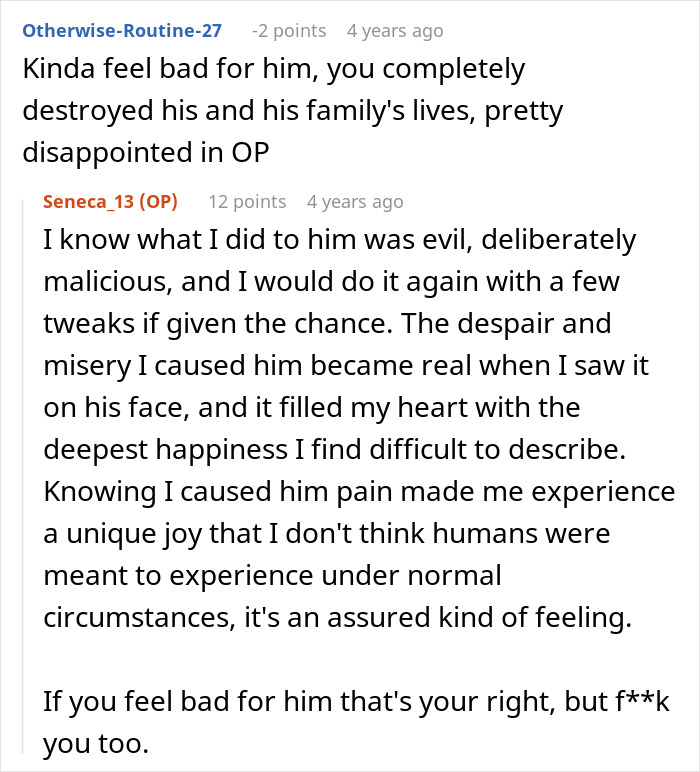
Well, this all seems quite far fetched, the electrical and plumbing? 950K fixing things and then telling his entire story for all to see. I think not, I think the OP wants to seem as if he has done well, when in actuality he most likely has not and this is his fever dream


I don't normally leave comments ever but this one got me. This story is a complete fabrication. in the 90s Batman figures were cheaply made by Kenner; they never had a single toy that came out with new parts every Christmas. also detachable forearms weren't a thing until way later. also, He man, the Hulk and mad max were all owned by different toylines that were fiercely competitive with each other at the time. This is coming from someone who used to regularly read Toyfair magazine as a child in the 90s.

You know this is true for every single place in the world?
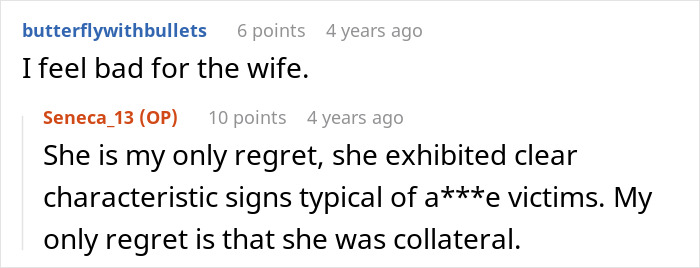
Load More Replies... The guy defines doesn’t understand that forgiveness is not for the bully but for him. The bully still is in his mind and he got the same attitude. He didn’t care about the wife as a collateral. No good guy in that story
No good guys but that itch has needed scratching for a long time. OP might be a better person now.
Load More Replies... Well, this all seems quite far fetched, the electrical and plumbing? 950K fixing things and then telling his entire story for all to see. I think not, I think the OP wants to seem as if he has done well, when in actuality he most likely has not and this is his fever dream
I don't normally leave comments ever but this one got me. This story is a complete fabrication. in the 90s Batman figures were cheaply made by Kenner; they never had a single toy that came out with new parts every Christmas. also detachable forearms weren't a thing until way later. also, He man, the Hulk and mad max were all owned by different toylines that were fiercely competitive with each other at the time. This is coming from someone who used to regularly read Toyfair magazine as a child in the 90s.
You know this is true for every single place in the world?
Load More Replies... The guy defines doesn’t understand that forgiveness is not for the bully but for him. The bully still is in his mind and he got the same attitude. He didn’t care about the wife as a collateral. No good guy in that story
No good guys but that itch has needed scratching for a long time. OP might be a better person now.
Load More Replies...




































 No fees, cancel anytime














20
26