Bored Panda works better on our iPhone app
Continue in app Continue in browser

The Bored Panda iOS app is live! Fight boredom with iPhones and iPads here.

This Guy Explains The Origins Of Words ‘Upper-‘ And ‘Lowercase,’ Others Join In With Interesting Typography Trivia As Well (13 Facts)
User submission
250

This Guy Explains The Origins Of Words ‘Upper-‘ And ‘Lowercase,’ Others Join In With Interesting Typography Trivia As Well (13 Facts)

178

ADVERTISEMENT

People who have studied languages and literature can relate that most don’t understand what’s so fascinating about either of those things. In fact, they end up calling us the grammar police and that’s about it.

But when linguists start talking about etymologies—the origins of words—it’s quite often the case that non-linguists start showing massive interest in it, mostly because things begin making sense in their brains so much that they become giddy with such knowledge and they start to understand just how intricate, logical, and simply interesting language really is.

This kind of situation happened recently when Twitter user Benjamin Molineaux found out the original meaning of upper case and lower case. This was not only absolutely fascinating to others, but also prompted some people to share their own tidbits of etymological knowledge.

RELATED:

    You’d be surprised to learn how many words sound a bit odd, but have very logical origins

    Image credits: benmolineaux

    Image credits: Maggie McCain

    ADVERTISEMENT

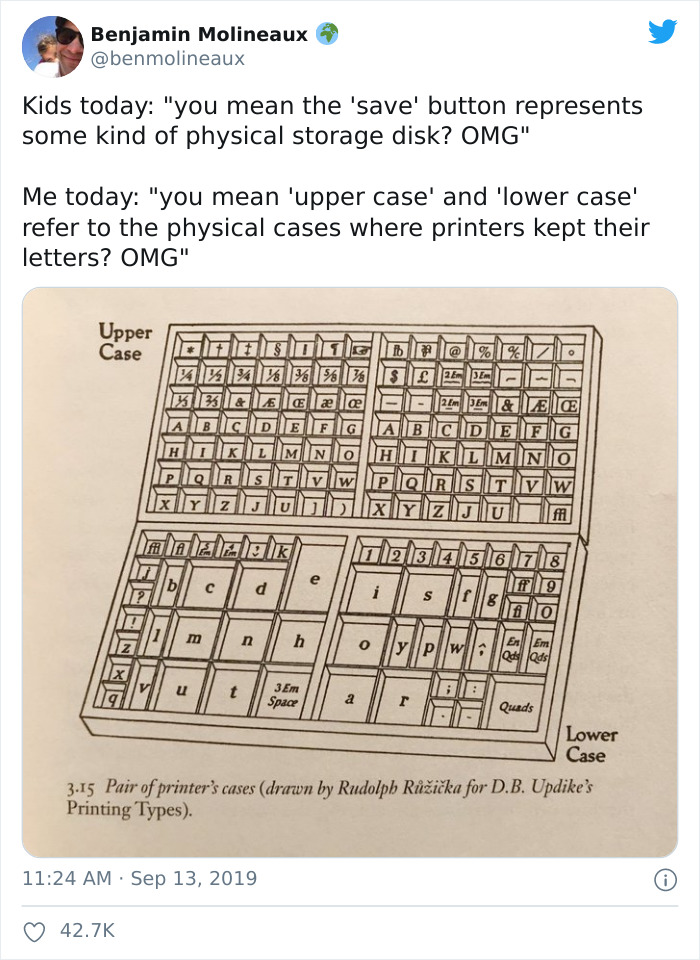
    So, it all started with Twitter user Benjamin Molineaux posting a picture of a pair of printer’s cases (as illustrated in a book of some sort).

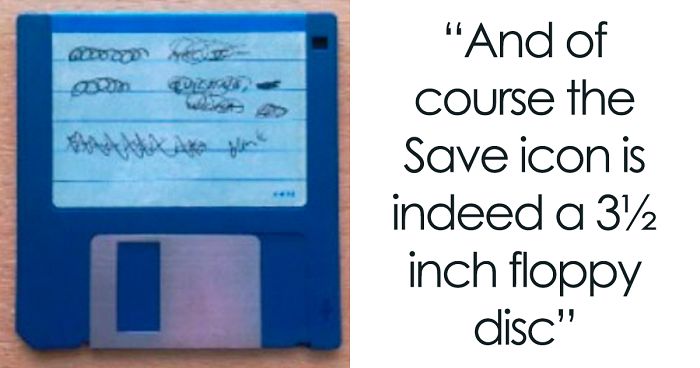
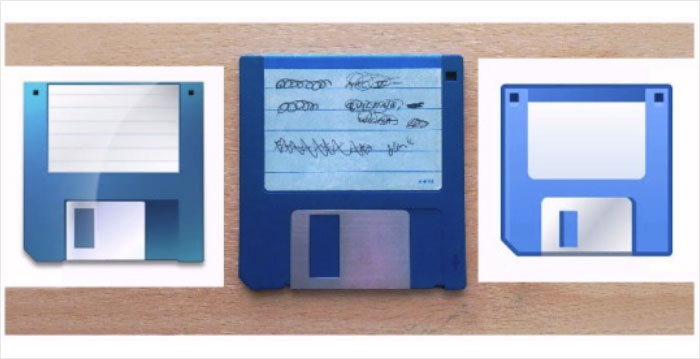
    Jokingly, he said that kids today are surprised to learn that the save icon is actually a 3.5-inch floppy disk—because that’s where we used to save a lot of our digital things before all these terabytes we don’t know what to do with nowadays—and he, today, is surprised to learn that upper and lower case refers to actual cases, boxes.

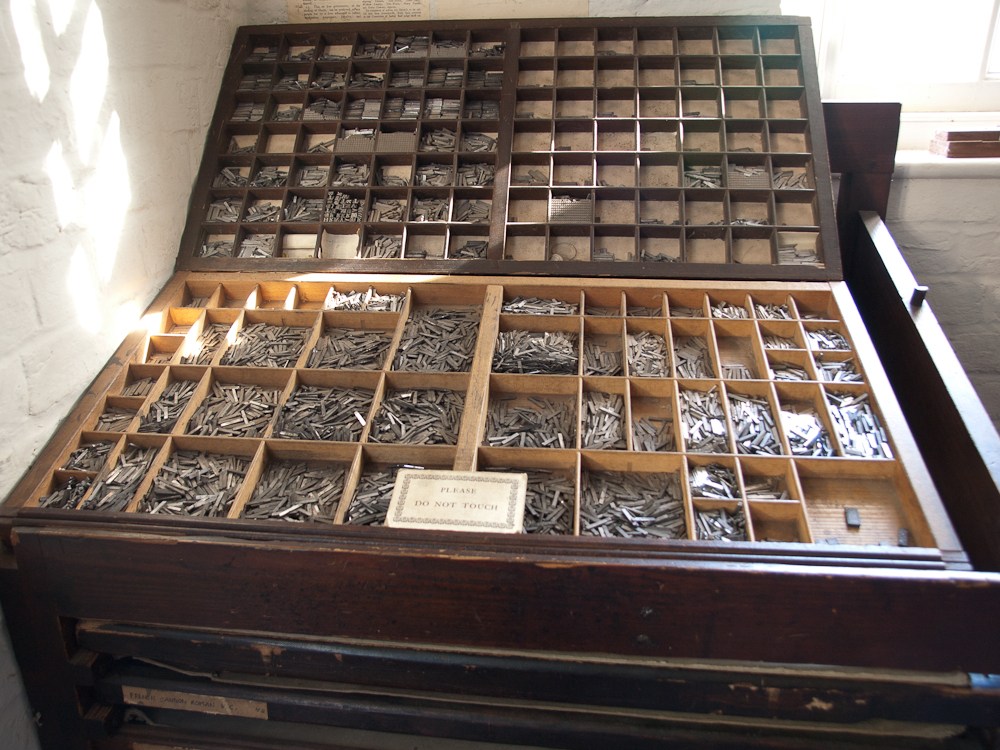
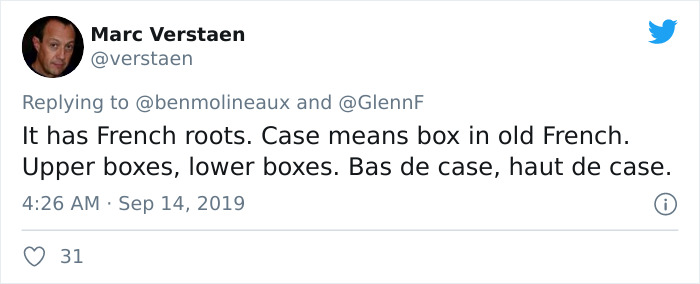
    These were used in old printing presses, with one part of the box containing all of the capitalized letters and the other having the non-capitalized ones. One is, hence, the upper case, the other is the lower case.

    It all started off with one user explaining the origins of upper– and lowercase letters

    Image credits: verstaen

    This led to a number of people sharing similar typography-related terms and providing their etymologies, further blowing the minds of other tweeters.

    ADVERTISEMENT

    And it lead to many others explaining the origins of other typographical terms and icon

    Image credits: miopapio

    Image credits: mackie_don

    Image credits: thorpej

    Image credits: pfarqeu

    ADVERTISEMENT
    ADVERTISEMENT

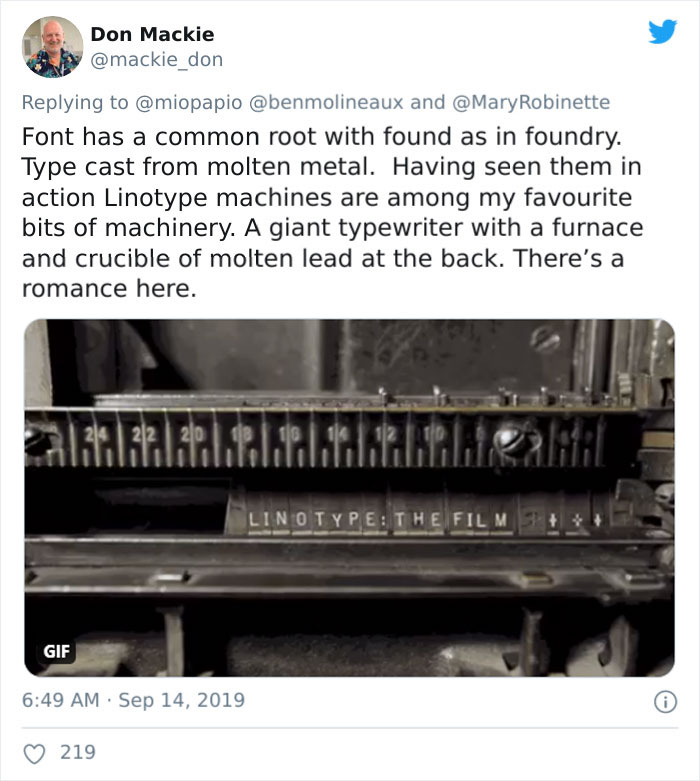
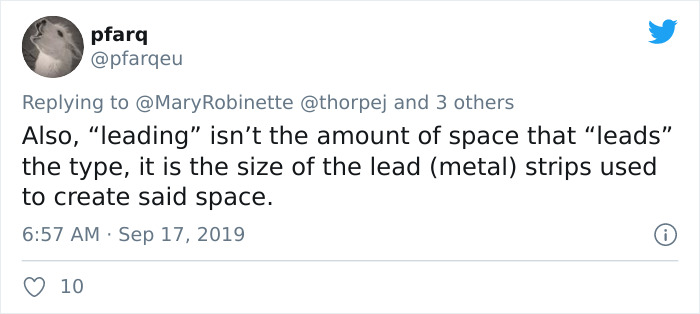
    For instance, the word font has a common root with found and hence foundry, referring to how olden printing used to be done. Also, leading refers to the size of the lead strips used to create the spaces that lead the type.

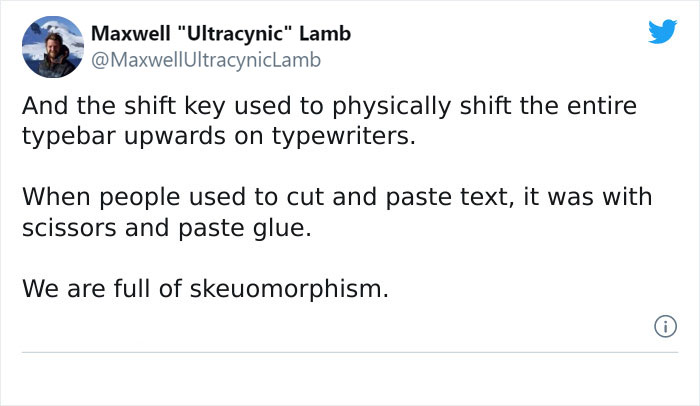
    Another lesser-known fact is that keyboards now have a shift key, which refers to the action of shifting the entire type bar on typewriters between upper and lowercase characters.

    Needless to say, the terms cutting and pasting, while still being used today, refer to actual cutting of the printed text using scissors and pasting it using glue as part of the editing process.

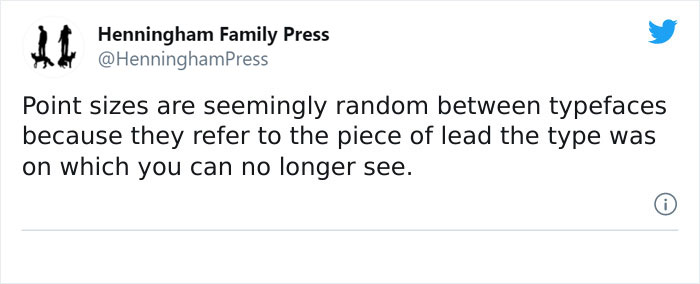
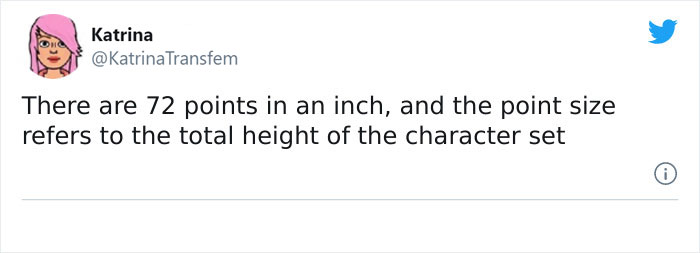
    Everything from fonts and foundries to leading and copy/pasting were mentioned in the thread

    Image credits: HenninghamPress

    Image credits: KatrinaTransfem

    ADVERTISEMENT

    Image credits: MoonfacedAssassin

    Image credits: MaxwellUltracynicLamb

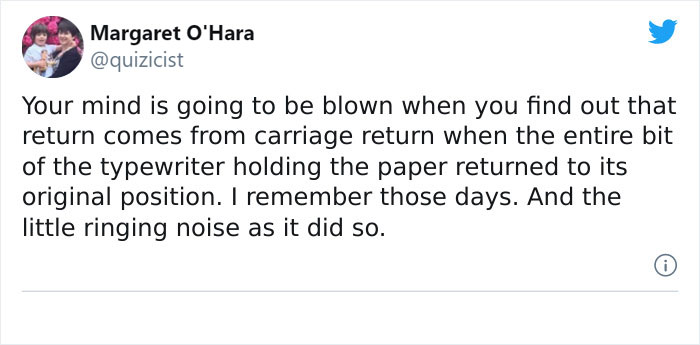
    Image credits: quizicist

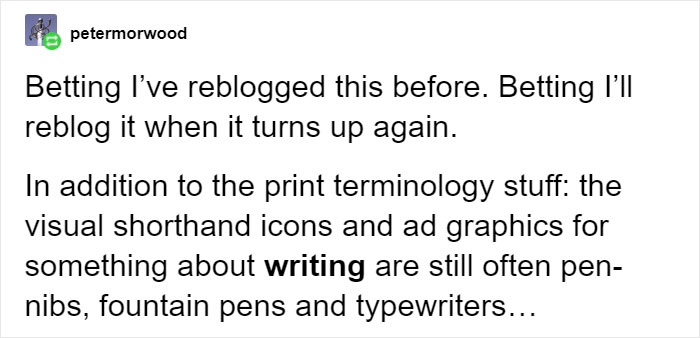
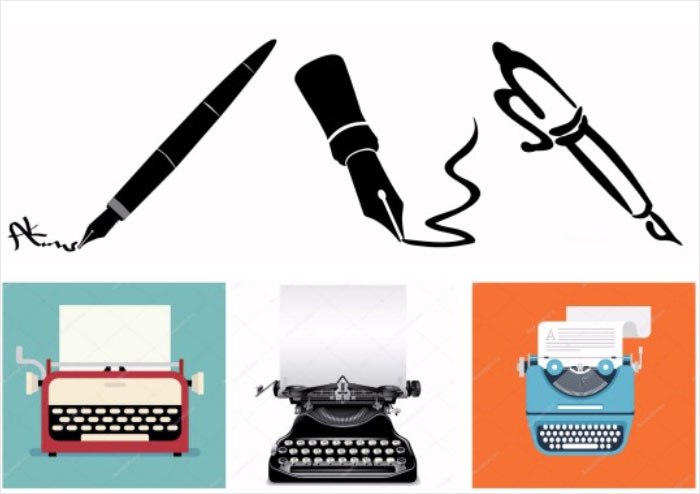
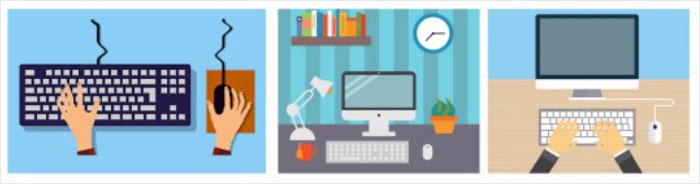
    This little fountain of knowledge quickly shifted to a whole different social media where it was elaborated upon by Tumblr user Peter Morwood with visual shorthand icons and graphics about writing still using fountain pens, typewriters, and the sort—as opposed to monitors, keyboards, and other modern tech actually used today.

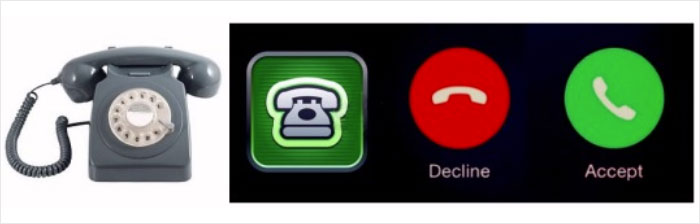
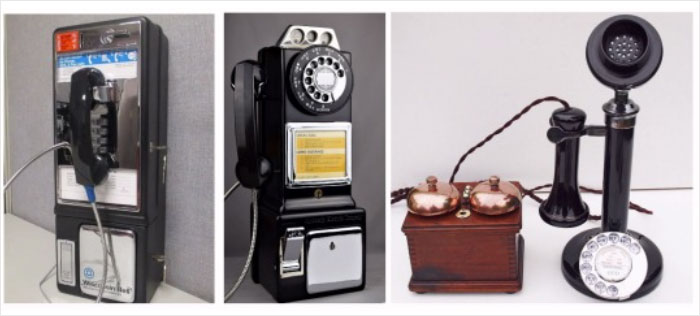
    It also discusses the aforementioned 3.5-inch floppy disks as well as the shape of the phone icon for accepting and ending calls—these are in the shape of a curved phone with a visible speaker and microphone part to it, whereas today’s most commonly used phones are in the shape of a slate.

    The tweets also found their way to Tumblr, where Peter Morwood elaborated on it with writing icons

    Image credits: petermorwood

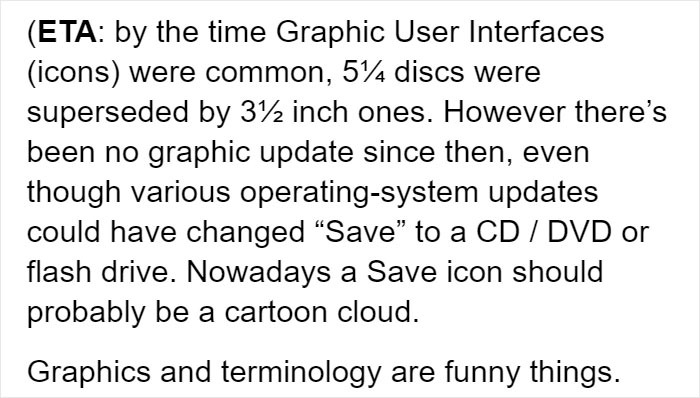
    The post also discussed the origins of phone depictions and elaborated on “save” icons

    Image credits: petermorwood

    People were so hooked on this that the tweet thread went viral. It garnered over 42,700 likes with almost 15,000 retweets on Twitter alone, with another 71,800 notes on Tumblr. Imgur also got a hold of this and the repost got over 91,000 views with almost 4,000 upvotes.

    What are your thoughts on this? Have any interesting etymologies to share with other Pandas? Let us know in the comment section below!

    37Kviews

    Share on Facebook

    Lukas Garnelis

    Lukas Garnelis

    Author, Community member

    Read more »

    Lukas is a photo editor at Bored Panda. 4th year in Vilnius Gediminas Technical University as a graphic designer. Can do whatever he sets his mind to.

    Read less »
    Lukas Garnelis

    Lukas Garnelis

    Author, Community member

    Lukas is a photo editor at Bored Panda. 4th year in Vilnius Gediminas Technical University as a graphic designer. Can do whatever he sets his mind to.

    Robertas Lisickis

    Robertas Lisickis

    Author, Community member

    Read more »

    Some time ago, Robertas used to spend his days watching how deep the imprint in his chair will become as he wrote for Bored Panda. Wrote about pretty much everything under and beyond the sun. Not anymore, though. He's now probably playing Gwent or hosting Dungeons and Dragons adventures for those with an inclination for chaos.

    Read less »

    Robertas Lisickis

    Robertas Lisickis

    Author, Community member

    Some time ago, Robertas used to spend his days watching how deep the imprint in his chair will become as he wrote for Bored Panda. Wrote about pretty much everything under and beyond the sun. Not anymore, though. He's now probably playing Gwent or hosting Dungeons and Dragons adventures for those with an inclination for chaos.

    What do you think ?
    Kay Jursik
    Community Member
    5 years ago

    This comment is hidden. Click here to view.

    And, mind your p's and q's because they are mirror image after they print. As in pq side by side in the case.

    Demongrrrrl
    Community Member
    Premium
    5 years ago Created by potrace 1.15, written by Peter Selinger 2001-2017

    Again, why was this downvoted?

    Load More Replies...
    postboredom
    Community Member
    5 years ago

    This comment is hidden. Click here to view.

    Another piece of info- the raised lines on the letters f and j on a keyboard are for you to place your index fingers on to locate all the keys.

    Lauren Caswell
    Community Member
    5 years ago Created by potrace 1.15, written by Peter Selinger 2001-2017

    Well I didn't know That, and I did wonder. I've worked as a typist btw, so i guess i learned it a different way? I dont know how but my hands seem to know where the letters r, I'm more self taught but still 80-100wpm when I'm out of practice :)

    Load More Replies...
    Randall Reese
    Community Member
    5 years ago Created by potrace 1.15, written by Peter Selinger 2001-2017

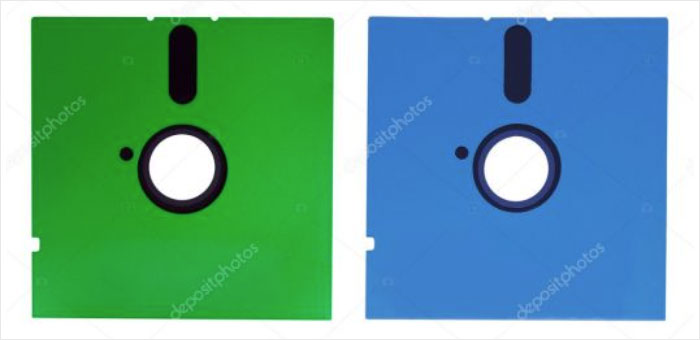
    The floppy disk icon is 3.5 inch disk rather than 5.25 inch because Apple created the icon and at the time Apple used the smaller disks while PCs used the larger version. Many standard icons started as Apple-only images because they were more firmly connected to a graphical interface at a time when PC users were typing command line stuff in DOS. Apple sued Microsoft when they released Windows for copying their look and feel, including most of the icons.

    K.Kobayashi
    Community Member
    5 years ago Created by potrace 1.15, written by Peter Selinger 2001-2017

    If I remember correctly, the "trashcan" icon was judged to be a copyright infringement, which is why Windows still has a "recycling bin" instead of a trashcan.

    Load More Replies...

    Troux
    Community Member
    5 years ago

    This comment is hidden. Click here to view.

    The 5 1/4" floppy disk makes for a terrible icon, as it looks like a power icon (I/O, which represents 1 and 0, or 'on and off' for a singular function in the binary language).

    Virgil Blue
    Community Member
    5 years ago Created by potrace 1.15, written by Peter Selinger 2001-2017

    I would see more of a problem with the icon looking like a weird exclamation mark in a square when used at small sizes like in an icon bar.

    Load More Replies...
    Maggie Smith
    Community Member
    5 years ago (edited) Created by potrace 1.15, written by Peter Selinger 2001-2017

    Many years ago I found one of my grandfather's calligraphy practice books. The copyright was 1899, that was when he was in college. Even back then they were called fonts. I do remember Arial, Serif and Sans Serif, Old English, Helvetica, and more I can't remember. I have been sitting behind computers for 34 years, half of my life. I started with DOS. Maybe because I like to read, I already knew all of these facts. Do you know why it is called an "em" space? Because back in the days of movable typesetting the capital M was the widest spaced letter. The capital I, an "en" space, was the narrowest. Typesetters needed that to be able to plan their set-up.

    Staci bigBolden
    Community Member
    5 years ago Created by potrace 1.15, written by Peter Selinger 2001-2017

    I learned how to type on a typewriter. I loved that return button. Especially on a really heavy one. N

    Lucas
    Community Member
    5 years ago Created by potrace 1.15, written by Peter Selinger 2001-2017

    The old ones had a lever and you had to push it to return the whole carriage.

    Load More Replies...
    Parmeisan
    Community Member
    5 years ago (edited) Created by potrace 1.15, written by Peter Selinger 2001-2017

    Addendum to the one on carriage return: And line feed is when you push the typewriter back to the start of the line. Many programmers will know these, as carriage return and line feed are two different ascii symbols chr(10) and chr(13) and are treated differently in Windows vs Linux (\n or \n\r). If you line feed without carriage return, you start overwriting the text you just wrote, and if you carriage return without line feed, you start your next line most of the way down the page.

    NWB
    Community Member
    5 years ago Created by potrace 1.15, written by Peter Selinger 2001-2017

    Love me some Type nerd info!!!

    K.Kobayashi
    Community Member
    5 years ago (edited) Created by potrace 1.15, written by Peter Selinger 2001-2017

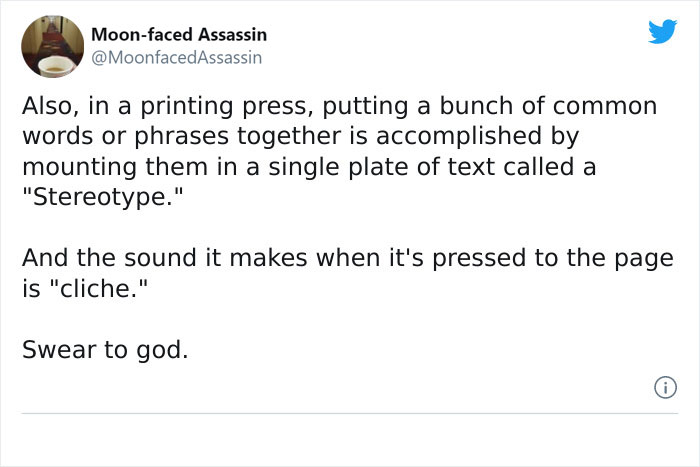
    Also, a "stereotype" is a block of type that's made as a single piece so it can be reused to print the same text. And the French word for it is "cliché".

    Load More Comments
    Kay Jursik
    Community Member
    5 years ago

    This comment is hidden. Click here to view.

    And, mind your p's and q's because they are mirror image after they print. As in pq side by side in the case.

    Demongrrrrl
    Community Member
    Premium
    5 years ago Created by potrace 1.15, written by Peter Selinger 2001-2017

    Again, why was this downvoted?

    Load More Replies...
    postboredom
    Community Member
    5 years ago

    This comment is hidden. Click here to view.

    Another piece of info- the raised lines on the letters f and j on a keyboard are for you to place your index fingers on to locate all the keys.

    Lauren Caswell
    Community Member
    5 years ago Created by potrace 1.15, written by Peter Selinger 2001-2017

    Well I didn't know That, and I did wonder. I've worked as a typist btw, so i guess i learned it a different way? I dont know how but my hands seem to know where the letters r, I'm more self taught but still 80-100wpm when I'm out of practice :)

    Load More Replies...
    Randall Reese
    Community Member
    5 years ago Created by potrace 1.15, written by Peter Selinger 2001-2017

    The floppy disk icon is 3.5 inch disk rather than 5.25 inch because Apple created the icon and at the time Apple used the smaller disks while PCs used the larger version. Many standard icons started as Apple-only images because they were more firmly connected to a graphical interface at a time when PC users were typing command line stuff in DOS. Apple sued Microsoft when they released Windows for copying their look and feel, including most of the icons.

    K.Kobayashi
    Community Member
    5 years ago Created by potrace 1.15, written by Peter Selinger 2001-2017

    If I remember correctly, the "trashcan" icon was judged to be a copyright infringement, which is why Windows still has a "recycling bin" instead of a trashcan.

    Load More Replies...

    Troux
    Community Member
    5 years ago

    This comment is hidden. Click here to view.

    The 5 1/4" floppy disk makes for a terrible icon, as it looks like a power icon (I/O, which represents 1 and 0, or 'on and off' for a singular function in the binary language).

    Virgil Blue
    Community Member
    5 years ago Created by potrace 1.15, written by Peter Selinger 2001-2017

    I would see more of a problem with the icon looking like a weird exclamation mark in a square when used at small sizes like in an icon bar.

    Load More Replies...

    Maggie Smith
    Community Member
    5 years ago (edited) Created by potrace 1.15, written by Peter Selinger 2001-2017

    Many years ago I found one of my grandfather's calligraphy practice books. The copyright was 1899, that was when he was in college. Even back then they were called fonts. I do remember Arial, Serif and Sans Serif, Old English, Helvetica, and more I can't remember. I have been sitting behind computers for 34 years, half of my life. I started with DOS. Maybe because I like to read, I already knew all of these facts. Do you know why it is called an "em" space? Because back in the days of movable typesetting the capital M was the widest spaced letter. The capital I, an "en" space, was the narrowest. Typesetters needed that to be able to plan their set-up.

    Staci bigBolden
    Community Member
    5 years ago Created by potrace 1.15, written by Peter Selinger 2001-2017

    I learned how to type on a typewriter. I loved that return button. Especially on a really heavy one. N

    Lucas
    Community Member
    5 years ago Created by potrace 1.15, written by Peter Selinger 2001-2017

    The old ones had a lever and you had to push it to return the whole carriage.

    Load More Replies...

    Parmeisan
    Community Member
    5 years ago (edited) Created by potrace 1.15, written by Peter Selinger 2001-2017

    Addendum to the one on carriage return: And line feed is when you push the typewriter back to the start of the line. Many programmers will know these, as carriage return and line feed are two different ascii symbols chr(10) and chr(13) and are treated differently in Windows vs Linux (\n or \n\r). If you line feed without carriage return, you start overwriting the text you just wrote, and if you carriage return without line feed, you start your next line most of the way down the page.
    NWB
    Community Member
    5 years ago Created by potrace 1.15, written by Peter Selinger 2001-2017

    Love me some Type nerd info!!!

    K.Kobayashi
    Community Member
    5 years ago (edited) Created by potrace 1.15, written by Peter Selinger 2001-2017

    Also, a "stereotype" is a block of type that's made as a single piece so it can be reused to print the same text. And the French word for it is "cliché".

    Load More Comments
    You May Like
    Related on Bored Panda
    Popular on Bored Panda
    Trending on Bored Panda
    Also on Bored Panda
    ADVERTISEMENT