Get Premium
Dark mode theme is available exclusively for premium users. Learn more about the benefits of subscribing.
No fees, cancel anytime.

 Dark Mode Ad-Free Browsing Unlimited Content
 Ad-Free Browsing Unlimited Content Dark Mode
Join 1.2 million Panda readers who get the best art, memes, and fun stories every week!
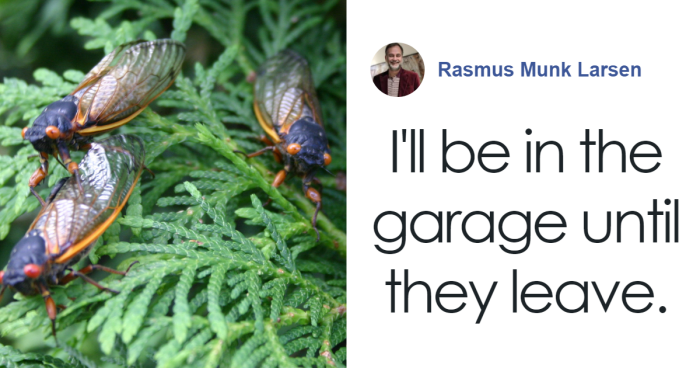
Two families of cicada (known as broods) will emerge simultaneously for the first time in over a century, causing a unique phenomenon across several US states. For the first time since 1803, two broods of cicadas, scientifically known as XIX and XIII, will come out of the ground screaming and flying simultaneously after more than a decade of eating to transform into adults.
There are seven species of periodical cicadas, including three that appear every 17 years and four that appear every 13, CBS News reported.
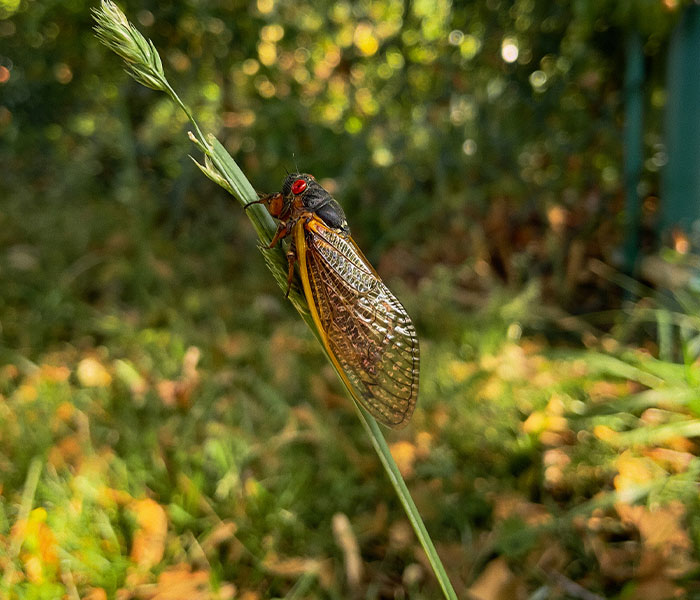
Image credits: Jason Weingardt
Smaller groups of those species, called broods, will reportedly spend those durations underground, where they will spend time eating and growing before they come out of the ground to become adults.
While it’s not uncommon for people to come across the insects every spring, what makes this year different is the fact that two broods, one with a 17-year-span and one with a 13-year-span, will appear at the same time, cicada tracking site Cicada Safari says.
Moreover, it will be the first time since 1803, the year when Thomas Jefferson was president of the US and the Louisiana Purchase was made, that broods XIII and XIX will be seen at the same time, as per CBS News.
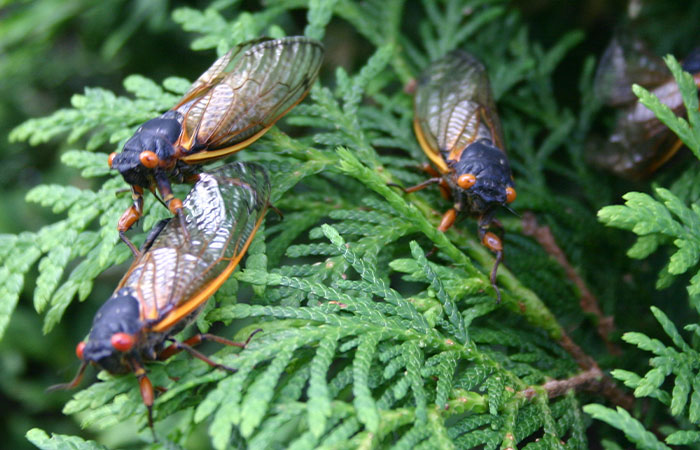
Image credits: Russkiypimp/Wikimedia Commons
Floyd W. Shockley, an entomologist and collections manager at the Smithsonian National Museum of Natural History, told The New York Times: “Nobody alive today will see it happen again. That’s really rather humbling.”
This double emergence, appearing for the first first time in 221 years, won’t happen again until 2245, according to ScienceAlert.com.
“Under just the right circumstances and with just the right number of individuals cross-breeding, you have the possibility of the creation of a new brood set to a new cycle,” Dr Shockley further revealed. He added: This is an extremely rare event.”
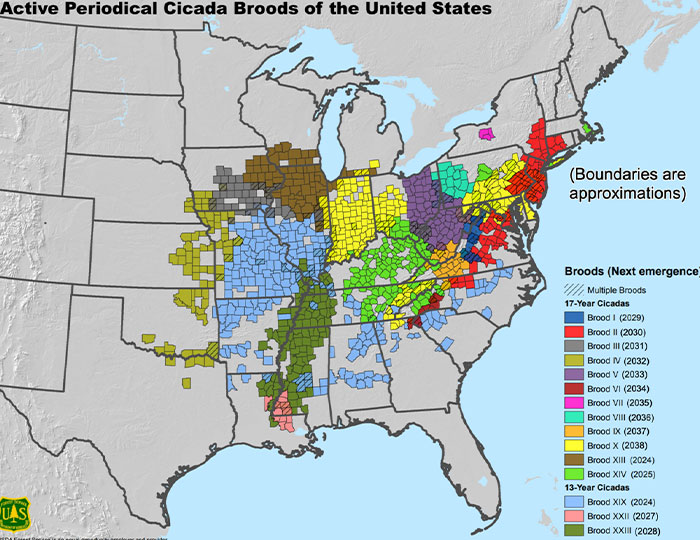
Image credits: Andrew M. Liebhold, Michael J. Bohne, and Rebecca L. Lilja/Wikimedia Commons
The famous sign marking that cicada season has started is the noise males produce, known as a loud buzzing sound that, according to Orkin pest control company, is primarily used to attract mates.
According to Cicada Safari, this year’s broods are expected to surface in late April and early May.
Long-running cicada tracking website Cicada Mania has stated that the unique insects normally come out of the ground when the soil that is 8 inches below the surface reaches 64°F (17.8°C), as that temperature warms their bodies.
The site explained: “A nice, warm rain will often trigger an emergence.”
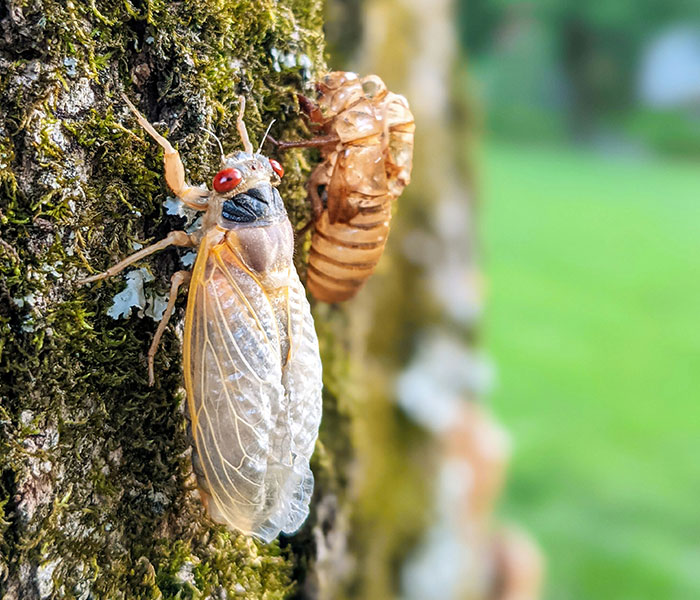
Image credits: Bill Nino
Brood XIII, which was last seen in 2007, is expected to be seen in Iowa, Wisconsin, and potentially Michigan, according to Cicada Mania.
Meanwhile, Brood XIX, which was last seen in 2011, is expected to emerge in Alabama, Arkansas, Georgia, Kentucky, Louisiana, Missouri, Mississippi, North Carolina, Oklahoma, South Carolina, Tennessee, and Virginia.
At least two states (Illinois and Indiana) can anticipate observing both broods at once.




I live in Missouri, so they will be stopping by to pay my state a visit.
I live in Missouri, so they will be stopping by to pay my state a visit.








































 No fees, cancel anytime











65
12