Get Premium
Dark mode theme is available exclusively for premium users. Learn more about the benefits of subscribing.
No fees, cancel anytime.

 Dark Mode Ad-Free Browsing Unlimited Content
 Ad-Free Browsing Unlimited Content Dark Mode
Join 1.2 million Panda readers who get the best art, memes, and fun stories every week!
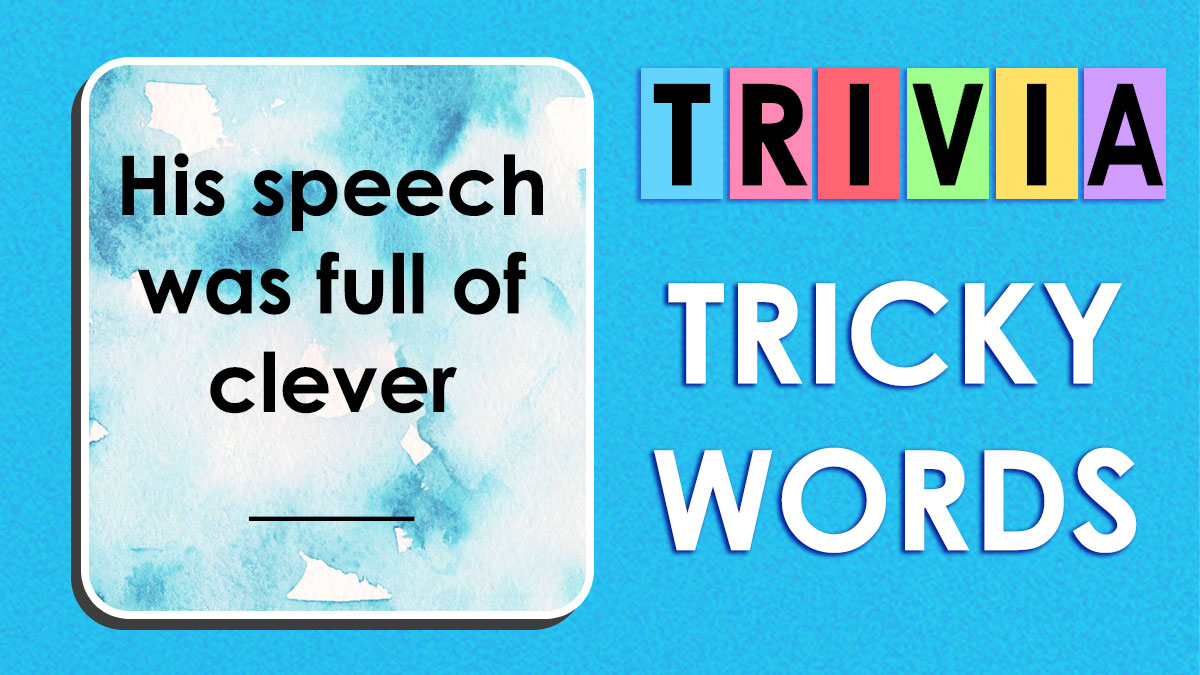
English is full of words that sound alike, look alike, or seem so familiar that we stop questioning how we use them. But even fluent speakers mix up pairs like “imply” and “infer,” “complement” and “compliment,” or “historic” and “historical.”
This quiz is designed to keep you on your toes with 27 carefully chosen “gotcha words” that catch people out every day – from subtle differences to classic spelling traps. Each question is multiple choice, and only one answer is correct.
Let’s find out just how sharp your language instincts really are!
🚀 💡 Want more or looking for something else? Head over to the Bored Panda Quizzes and explore our full collection of quizzes and trivia designed to test your knowledge, reveal hidden insights, and spark your curiosity.💡 🚀
Not Quite Done Yet!
Subscribe Premium to Compare Your Stats with Others
| User | Result | Reward |
|---|---|---|
  | / 27 | |
| | / 27 | |



Q1. All 4 options are correct in British English! Disinterested may be used interchangeably with uninterested. Q14 is codswallop. Q17 - option 1 is correct according to the explanation. And W*F is "Standard English".

Q17 really depends on who is making the statement time/how many people are involved. The antecedent of "she" is very unclear. Was "she" mentioning the time, or "he"? Reading the first statement means that "she" was mentioning the time and it could be more clear with a little restructuring: He inferred that, by mentioning the time, she wanted to go. The other statement would be more clear as: By mentioning the time, he implied that she wanted to go.
Load More Replies...
Artifacts can be historic - the Magna Carta, Declaration of Independence, first human skull. If there were three or more siblings, then "Among the siblings" would be fine, by the definition given. The detective could also imply something if they were hinting to a colleague. It's poor to say "which sentence uses X correctly" where there are answers which don't have X in. It's not clear who "mentioned the time" so inferred or implied could be correct. She could stick to her principal beliefs. In summary, the questions are okay, but some of the answers need rethinking.

This. Some of the questions are obvious; others there are more than one possible (and correct) answer.
Load More Replies... "She literally turned into a pumpkin at midnight." could happen in a fairy tale. Nobody says literally when going for a run.

In a quiz about 'correct' usage it's quite clear what the correct answer would be. Everyday or common misuse of something, such as your first sentence, does not make it correct, and the running one is a perfectly reasonable statement; imagine it for example as a rebuttal of "she never does any exercise".
Load More Replies... Q1. All 4 options are correct in British English! Disinterested may be used interchangeably with uninterested. Q14 is codswallop. Q17 - option 1 is correct according to the explanation. And W*F is "Standard English".
Q17 really depends on who is making the statement time/how many people are involved. The antecedent of "she" is very unclear. Was "she" mentioning the time, or "he"? Reading the first statement means that "she" was mentioning the time and it could be more clear with a little restructuring: He inferred that, by mentioning the time, she wanted to go. The other statement would be more clear as: By mentioning the time, he implied that she wanted to go.
Load More Replies... Artifacts can be historic - the Magna Carta, Declaration of Independence, first human skull. If there were three or more siblings, then "Among the siblings" would be fine, by the definition given. The detective could also imply something if they were hinting to a colleague. It's poor to say "which sentence uses X correctly" where there are answers which don't have X in. It's not clear who "mentioned the time" so inferred or implied could be correct. She could stick to her principal beliefs. In summary, the questions are okay, but some of the answers need rethinking.
This. Some of the questions are obvious; others there are more than one possible (and correct) answer.
Load More Replies... "She literally turned into a pumpkin at midnight." could happen in a fairy tale. Nobody says literally when going for a run.
In a quiz about 'correct' usage it's quite clear what the correct answer would be. Everyday or common misuse of something, such as your first sentence, does not make it correct, and the running one is a perfectly reasonable statement; imagine it for example as a rebuttal of "she never does any exercise".
Load More Replies...



























 No fees, cancel anytime









11
24