Get Premium
Dark mode theme is available exclusively for premium users. Learn more about the benefits of subscribing.
No fees, cancel anytime.

 Dark Mode Ad-Free Browsing Unlimited Content
 Ad-Free Browsing Unlimited Content Dark Mode
Join 1.2 million Panda readers who get the best art, memes, and fun stories every week!

People learn a lot from the ones closest to them. Even when they don’t realize it, they constantly watch the behavior of family members and close friends and try to imitate it. In this way, others' daily actions, successes, and failures often shape people’s sense of what’s normal.
However, sometimes people find that what feels normal to them isn’t acceptable to everyone. Some behaviors that feel usual and familiar can actually be harmful.
Someone asked, “Psychologists, therapists, counselors, etc.: What are some things people tend to think are normal but should really be checked out?” A surge of replies flooded in, explaining common misconceptions and worrying signals.
This post may include affiliate links.
 Therapist here. If you grew up with or currently are a part of a family where the whole family has to work to keep one or more members of the family in a good mood or appeased, that’s not healthy.
People are in charge of their own feelings. It is not your job to appease others so that they can emotionally regulate themselves.
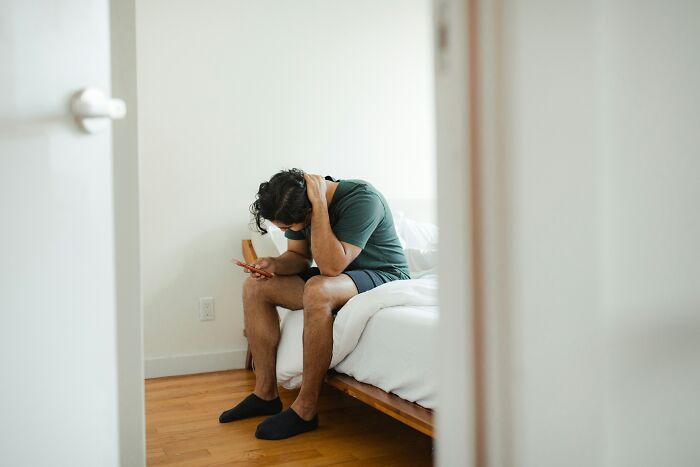 I’ve seen a lot of people dismiss their depression/other mental illness because it’s “not that bad” or “other people have it worse” or “I can/should be able to handle it on my own.”
You shouldn’t have to suffer through mental illness even if you technically can. You deserve to be happy and therapists and psychiatrists are there to help you learn how to help yourself. It’s not a weakness to find someone who can assist you in figuring out coping skills or prescribe you medications to help fine tune your brain’s neurotransmitters.
Edit: Wow, thank you for the platinum kind stranger! I didn’t expect this to blow up but I’m glad it seemed to have helped a few people. And for the purpose of clarity, the lack of financial means is a huge barrier to getting care and we really need to address it on both a local and global level.
What a person believes to be normal often stems from their surroundings. If they see family and friends frequently doing or saying something, they are likely to see it as ordinary and shape their behavior accordingly.
Psychologist Albert Bandura is credited with the broader theory of how people learn behaviors from their surroundings. He first outlined it in a 1963 paper and fully explained it in the 1977 book Social Learning Theory. This theory remains in use and explains behavior today, often alongside other frameworks.
According to Bandura, beyond learning from their own experiences, people also observe and learn from others. When they see someone succeed by taking certain actions, they are likely to copy that behavior in pursuit of success as well. Conversely, if people see someone punished for an action, they are more likely to avoid that behavior.
 For a really long time I thought it was normal to believe catastrophic events happening because I was careless was a completely normal concern. For example I would check the door was locked 5+ times otherwise my mum would be k****d in a home invasion while I’m out lmao.
Turns out I have OCD 🤷🏼♀️.
 Drinking behaviors. Either their own or those of loved ones.
I won't speak to what's "normal," but it is definitely not ideal to:
* Polish off a bottle of wine or a 6 pack every few days (to relax/unwind/deal with stress)
* Need a drink or nightcap in the evenings (can't fall asleep without it)
* Binge drink most weekends (even if you don't drink during the week)
Lots of people don't think twice about these types of drinking habits, especially if they have not suffered any huge negative consequences as a result. But I've noticed that drinking patterns like I've described very often contribute to poor outcomes in people's relationships, careers, and overall well-being.
 I'd actually suggest that it's the opposite: there are many things that are normal that people think aren't.
Social learning happens through four distinct cognitive processes. First, the learner notices someone else’s behavior. Someone the learner sees as a role model will often command more attention. Then the learner remembers the behavior. Next, the learner evaluates whether they can replicate the behavior based on their skills and abilities. Finally, the learner may feel motivated to apply the behavior in their own life depending on whether the role model is rewarded or punished for it.
These processes apply easily to a wide range of learning experiences. For example, a beginner sees someone with their desired physique doing an exercise at the gym. They take a mental note of the proper form and technique. They assess their abilities and experience to adapt the exercise to their skill level. They replicate it and feel motivated to keep using it in their gym routine to achieve the physique, strength, or stamina they are aiming for.
 There are a lot of things people should work on, but the most important answer to this question is this: needing psychological help IS normal. Mental illness IS normal. Wanting to talk through a rough stretch in life with a professional IS normal. One of the biggest problems that we face in society today regarding mental health doesn't even have to do with our own mental state, it has to do with the negative perception society has on not having "perfect" mental health.
If you think you would benefit from psychological help, at least do yourself the favor of giving it a try, in whatever form it may be.
**GETTING HELP IS NORMAL**.
 Research psychologist checking in:
If your toddler is doing socially unusual behaviors such as:
Not responding to name
Not responding to a social smile
Not pointing/ using gestures
Using your hands/arms as if they were a tool or extension of their body
Engaging in repetitive behaviors
Not responding to your use of gaze to direct their attention to distal objects
Check with the pediatrician about getting assessed for autism spectrum disorder.
 People normalize a*****e behaviors by loved ones all the time. Being able to identify your own personal boundaries and then enforce them with others for your own wellbeing is, unfortunately, not innate.
Misconceptions about what is normal can also stem from information bubbles. Psychotherapist Amir Levine, Ph.D., explains that people are more likely to tune into channels, podcasts, and news feeds that reflect their own beliefs. This creates echo chambers that skew their sense of what is normal because the opinions they already hold seem more common.
Levine says this reinforcement of one’s beliefs can lead to various problems. First, it can make an individual more susceptible to misinformation. If they see sources they agree with as more trustworthy, it becomes easy to sell them something that isn’t entirely true, distorting their view of reality.
 The need for some parents to speak with their children about adult problems. No, your young child does not need to be aware that you are struggling financially or that 'daddy slept with the lady next door'.
The parents that tell their children that they are going to 'go and speed my car into a tree purposely', 'k**l myself while you are at school', or 'slit my wrist when I shower tonight'.
And, parents that feel they need their children 'fixed' as it's the child and not the family unit as the whole that needs support and/or assistance.
Just a few recent ones I've heard.
Edit: sorry about format - commenting via mobile phone.
Edit: thanks for the gold! My first one :)
Edit: in regards to financial comments (taken from a previous comment of mine as I've been getting asked to answer this). I'm talking more on the extreme side and towards children that have been extremely hurt and 'money talk' was used as a tool to make the child feel at fault and guilt to some degree.
I'm currently working with a child now that is triggered whenever he hears talk about finances and feels it's his fault they will eventually become homeless. They won't, but this is what he is told. If only he didn't eat so much, if only he didn't have so many school fee's. Not to mention the arguing between carers over finances - this must be his fault to though, they're yelling and shouting because of this.
 Perfectionism. While a spectrum and everyone wants to do good work, an obsession with perfection is not something to be proud of and definitely not healthy. Healthy work ethic is doing your best, and then letting go, as in recognizing no matter how much effort you put in, the result is, to some extent, out of your control, and that's ok. The intent and effort counts more than the end result, if you get obsessed with the end result only you will hurt yourself because you never have full control over your end result, but you do have full control over the intensity and dedication you will put in (even if that doesn't translate well). It is a fact of life sometimes things don't work out, so people who never, and I mean never, have anything less than flawless work all the time are paying for it somehow, burnout or mental stress or overtime or medication/d***s to keep going or etc. It is pathological to want, or to think you can realistically have, such control that your work is flawless all the time.
 Breaking things when you are mad!
Stop. It.
You don't end up feeling any better. You just have to buy the whatever-you-broke twice. And if your reason is "well it's better than hitting someone" it still isn't better than talking like a growna*s adult who can manage their feelings. You are terrifying the people around you because you are smashing them in effigy. Stop. It.
Information bubbles have negative impacts on mental health too, the psychotherapist explains. Overexposure to one media source can cause an increase in anxiety and cognitive dissonance. Fear-inducing content in a person’s information bubble is more likely to lead to a paranoid, non-objective view of the world.
A narrow perspective can isolate individuals and lower self-esteem, causing more tense arguments with friends and family and feelings of loneliness. This can lead people to seek more confirmation in their media sources, creating a negative feedback loop.
The best ways to counteract the information bubble effect are to diversify media sources, be more curious, less judgmental, and open to dialogue. Engaging with varied viewpoints and opinions builds a more objective, open-minded view of the world. This helps align what people perceive as normal with reality.
 Self-sabotaging behavior can ruin your life quickly. If you have an event in your life that has affected you negatively and you seem to find yourself exhibiting irrational or incongruent behaviors- see a counselor.
You don’t have to have any certain pathology to seek mental wellness counseling.
Edit: a word.
 Coping with stress in your relationships by walking away from conversations, saying you've had enough, or going silent.
Coping with feelings of insecurity and anxiety by lashing out at your partner. Eg asking a bunch of questions about one of their acquaintances instead of saying "I feel insecure for these reasons, please talk through it with me"
Been a couples therapist for 10 years, now clinical director of a private practice. So many more but those are two of the most prevalent in couples work.
 I am a very specific psychologist (I am a research psychologist and my area is maternal-infant health) so I am not sure how helpful this is but:
We truly do NOT have a great understanding about what a physiologically normal postpartum mental health experience is versus a pathological one, except on the extreme end (so, if you are having thoughts of harming yourself or others, including your baby, that is a pathological postpartum experience).
I've met with women who went told they had PPD because they were looking forward to going back to work, or were suggested to take medication because they reported feeling "overwhelmed"; I've also had women who were told it was normal to feel unmotivated, detached from the world, or isolated for months after giving birth because that was "just adjusting to motherhood." Perceptions of normal/not normal postpartum wellbeing vary wildly and this makes promoting postpartum wellbeing really difficult.
So my advice is this:
Some about of distress probably is normal (it's a huge life change, a huge physical toll, and a huge shift in hormones), but if that distress is DISTRESSING to you, there are likely many, many different strategies for helping alleviate it, including medication when indicated.
I would also say that postpartum anxiety is something that I actually tend to see are more commonly normalized/not diagnosed; chronic, persistent, debilitating worry about your infant is not normal, but frankly we have socialized it to be an indicator of "good" mothering, even if it decreases overall quality of life.
Neuropsychologist Sam Goldstein, Ph.D., says there’s a huge misconception of what normal even is. Many people think a “normal” person is physically healthy, sociable, emotionally stable, and productive. Someone ideal. However, that is a deviation from what normal people actually are. Normal people are not perfect.
 Rage and anger outbursts. I’m shocked by how much bad behavior during an adult tantrum is written off with little or no concern. “Oh that’s just how he gets when he gets mad. He’ll calm down.” No, adults should be able to regulate their anger anger handle it appropriately.
Everyone gets angry. That is totally normal. But we shouldn’t find ourselves escalating so easily and responding in ways we later regret.
 If you get weak in the knees, all your face muscles relax or your neck goes limp or you feel like you can’t support your body weight for a split second when you are laughing or experiencing other strong emotions. This is called cataplexy. It is a symptom of narcolepsy, a sleeping disorder where you randomly fall asleep during the day and generally feel excessively sleepy all the time.
 I had a client tell me he had a normal amount of panic attacks a day... 15. I got him to describe them, they were full on panic attacks, had to explain that was not normal.
Being outside of what is considered normal isn’t something to be afraid of. It’s just a sign that someone may feel, think, or behave in ways that are different from what most people expect in a certain scenario. It is defined by a large group of people, each with different opinions, feelings, behaviors, and expectations. At the end of the day, no individual is truly normal, and they should not strive to be. People tend to be happier when they learn to accept themselves and others as they are, instead of looking for norms or ideals to compare to.
 Having nightmares pretty often. Or stuff that you wake up in a cold sweat/wake up shouting from. It's usually a symptom of anxiety, or could be a manifestation of PTSD from something traumatic. My mom has had night terrors her ENTIRE LIFE and thinks it's normal. She refuses to see the doctor because she says "What for? I'm going to d*e soon anyway." 🤦♀️🤦♀️🤦♀️.
 Joke? My professor once told us about jokes. Sometimes people use it to hide their mental state. Agreassive or depressed person may use this quite often...
 Being super focussed on eating and being healthy. Obviously it's fine and important to look after your health, eat a balanced diet, get exercise, etc.
But if it's starting to take over your life and is shaping your days, it's worth getting help.
Orthorexia is a term that describes the obsessive pursuit of a healthy diet, and is very much fuelled by the "wellness" industry. It's increasingly being viewed as a form of eating disorder.
Some examples of behaviour that suggest orthorexia are: cutting out more and more food groups in an effort to be healthy; talking obsessively about "bad" or "impure" food; feeling very guilty and ashamed about eating "bad" food and potentially purging (making yourself sick) as a result or restricting further to "make up for it", fasting if "good" food isn't available rather than eating "bad" food, etc. People who have symptoms of orthorexia may also exercise excessively, sometimes past the point of exhaustion or injury.
I want to clarify that I am not saying people shouldn't aim to eat healthily or do exercise. Instead, this is more of a heads up that eating healthily should not be a defining part of your day/life. Moderation is important! And if it is medically recommended that you cut certain things from your diet, please do work with your doctor/medical professionals to ensure you do this in a way that is safe.
Source: I'm a trainee clinical psychologist, this stuff was a big part of our teaching on eating disorders and is a personal interest too.
What feels normal can differ between cultures, friend groups, families, and other environments. It’s important to recognize and respect the various boundaries and norms. That way, your relationships and community will keep running smoothly.
Have you ever felt like something was normal before you found out otherwise? Share your experiences with other readers in the comments below!
 Constant, irrational, automatic distrust of their romantic partner. Many people have normalized paranoia and unhealthy distrust in relationships. It doesn't have to be that way.
 I'm pretty sure Having feelings that change from exstatic to near s******l over the course of mere hours, almost every day, is pretty bad.
 Shadow people. One question we asked was if they ever saw, heard or smelled anything others didnt. This came up more often than you might think.
 New nurse here! Did my rotation for mental health and one patient in particular took quite an interest in me, he was very polite and very kind, he was chatting up a storm, answered everyone’s questions and repeatedly asked my name. Later, we got to look at patients files and I got his. He had a psychotic break and started hearing God. She told him her name was Courtney and that She had chosen him and he was to find Her and marry Her.
Guess what my first name is. Courtney. They ended up moving me to another part of the hospital after that because he was quite interested. Can confirm: I am definitely not God. Way too much responsibility.
 Most people are f****d (or think they are) due to an overload of comparing themselves to others. This has always existed but because of social media it follows us. All day. Every day.
I'm not a psychologist but this makes the most sense to me. I've never seen so many people feel so lost in my life before and this only has happened in the last 5-6 years as social media sites like FB and Instagram blew up in popularity.
Tell me I'm wrong because I seriously think this is one of the biggest reasons.
 Getting stressed every day. Youd be surprised how many people just say "No it's okay my job is just stressful." Or other similar excuses. So many health issues arise from stress.
Or prolonged unmotivation. Not wanting to do things.
 Disassociating with friends. Current friend of mine is having real struggles emotionally and mentally. We’re still talking but he’s been distancing himself from other people. We reach breakthroughs every now and then, but it’s been difficult.
 Trauma reactions - they are very normal for the situation but are not healthy or easy to deal with without help. Our bodies and brains hoard survival responses so I see a lot of people struggling with unhealthy coping skills or habits that at one point kept them safe and helped them survive. This can range from large mood swings, emotional or physical disassociation, difficulty connecting with ones physical or emotional being, and difficulty identifying triggers. I get a lot of childhood a***e survivors who have had issues in therapy before due to this - if your therapist goes in assuming you are able to connect with and name feelings, identify what is weighing on you, etc, they won't be very helpful.
Also my normal therapy PSA is whenever possible please don't wait. There is no such thing as an issue too small for therapy but waiting can cause something to morph into a way bigger issue. I know for a variety of reasons that isn't always feasible but if you can, please do!
 A little different of a response, but still important.
If anyone plays video games, browses social media, watches tv, or does any other form of electronic media for greater than 3 hours a day (days off work are exempt), then there is a high probability of an underlying issue causing the behavior.
A true a*******n to video games is estimated to only be 1% to 5% of people who are already playing 2-3+ hours daily. That means anyone else you think has an a*******n actually has a high chance of comorbid disorders and gaming is the outlet.
This can be a ton of things such as depression, anxiety, escapism, ptsd, extreme introversion, lack of ambition or motivation, work stress, relationship stress, and much more.
Reach out to people you know who may sit in bed watching Netflix for hours, always on social media, or playing lots of games. Chances are extremely likely they don't do that because they are truly wanting to every day.
'If you're lazy, can't keep a relationship, constantly worried about stuff, tired, have self destroying habits you most likely have anxiety and depression'
Oh well, nothing I didn't know then! On another note, it's crazy how many people in their twenties have this state of mind. Like, part of me wanna be out there, doing stuff, heating healthy, going to the gym, study or get an actual good job that doesn't require behing exhausted 24/7 for minimum wage... But the other part of me loves so much staying at home smoking and playing games, eating cheap radioactive food and stay away from the outside people.
I feel mad when IRL friends do plans without me but when they ask me if I wanna go out, I don't want to. And when I do, it's fun for some time but then I want to go back to into my bubble. It's a vicious circle, very hard to break out of.
Psychology student here - it's crucial for people in relationships who feel their personality is being smothered or overshadowed by their partner to seek relationship counseling, this tends to happen with younger couples who spend every waking hour either together or communicating over the phone. That sense of losing your autonomy or identity can create huge cognitive dissonance once the feeling becomes more pronounced, and is a major roadblock for many couples to overcome.
Family based therapist here - it is normal for kids and to annoy, infuriate, disappoint, sadden, and test the sanity of their parents . It is not normal to get no enjoyment out of being a parent. It definitely isn’t all sunshine and rainbows, but if it is chronically miserable with no reprieve, ask for help.
Not being well rested every morning and/ or waking up more than once a night. Please see a sleep specialist if you do this.
I'm curious how much procrastinating and/or lack of motivation to do stuff is normal, and how much isn't.
Thinking that 5 hours of sleep per night is okay.
Rapid weight gain or loss with no obvious medical cause.
Relationship problems, don't get me f*****g started.
The attitudes of their parents. No, really. There are a lot of bad things that current parents do that are just seen as normal, when they're not. And they have long lasting psychological effects from emotional damage.
Inability to regulate your own emotions. Also, negative self-talk. we talk to ourselves way worse than any person could.
I’d like to point out that there are tonnes of things that are normal but are not healthy or ideal. Normal is just what the statistical majority are doing, not what would be best for them. I think the main question should be “what impact is _________ having on my life and relationships?” Rather than wondering how it compares to the average persons experience or behaviours.
Sorry for the messy mobile post! Forgive me, Reddit gods!
TL;DR - Extreme emotions, lack or struggle with impulse control, blackouts, extreme irritability, disrupted sleep, muted or bottled emotions, feeling like an alien, feeling like everyone has an ulterior motive, self-isolation, preoccupation with pleasing others or avoiding conflict, feeling of emptiness, feeling like a part of your identity is missing or you don’t have an identity of your own, subtle tendencies to latch on to others (especially romantic partners or crushes — maybe sometimes you feel like you’re just a tad “too much” or maybe you’ve heard that from some exes).
Went to school for forensic psych before I had to drop out due to my own unchecked mental illness. Turns out my world view has been wrong my whole life and I thought everyone was like this because my family members were like this. Even though I was in and out of therapy my whole life for depression and anxiety, nobody spotted the BPD because I didn’t know these feelings needed talked about. Never caught the Borderline until my head became such a dangerous place I wasn’t sure I’d ever function again or be able to have the relationships I craved with my loved ones.
Another example is my SO. He’s always had muted emotions, not a lot of expressed passion about the things he likes or believes are important — not even enough to vote before we got together. Most people with SPD will feel this detachment and think it’s fine, but they can be really struggling and not know why or even not know that there’s a problem (like heart disease). I won’t lie that, in some cases, having Schizoid is almost encouraged (work of nearly every kind). However, it very seriously impacts the quality of life for the person, sometimes making them feel like they have no place in this world.
Hint: Everyone needs a therapist. There are no exceptions.
Tech here, so bottom of the totem pole, but i'll offer my opinion.
Normal is not the right qualifier in my opinion. Psychology isnt like physiology where you can go in and they can run exploratory tests on you to find out you are sick in a way that hasn't manifest symptoms yet. That's why your doctor will screen you fot certain common or devastating disorders.
The way I learned about mental illness was the 4 d's. Dysfunction, deviation, distress, and danger. Dysfunction means it gets in the way of you doing your job, school, or whatever. Deviation means it's not something everyone is going through. Distress means you're not okay with it. Danger is self explanatory. You come in with some or all of the four d's and we form a treatment based on a set of symptoms that you most closely match. Then we treat the symptoms. The point of all of this is to say, mental illness exists on a spectrum where one end may be so subtle that it only informs a person's personality, whereas the other end is completely debilitating and can get a person k****d.
You may know someone with features of an illness, in fact I'd be surprised if you didnt. But if they don't want or need treatment then they shouldn't be diagnosed.
The best example is autism. Someone high on the functionality side of autism will do quite well in life. In fact, it is actually quite fair to discuss if autistic people live better lives than their counterparts. The answer would be entirely based on what you value in a "good" life.
The next group of people are objectively suffering from their condition. They may have a chemical imbalance in their brain that causes them to be more anxious or sad than their counterparts. However, if it doesn't have enough impact on that individual, then they may go their entire lives without really needing to be "checked out".
To answer your question, if someone feels like their life would benefit from the field of psychology, then they need to get "checked out". The hurdle that professionals face is educating people on what kinds of things psychology can help with.
But for fun let's look at some qualities you can have that are too extreme and what diagnosis that MAY relate to.
Energy
Too much: mania
Too little: depression
Trust
Too much: borderline personality disorder(bpd)
Too little: paranoia, also bpd
Self- esteem
Too much: narcissistic personality disorder
Too little: depression
Fear
Too much: anxiety
Too little: mania
Activities of daily living
Too much: OCD
Too little: anhedonia, psychosis
S*x
Too much: bpd
Too little: anhedonia
Memory
Too much: trauma
Too little: dementia, Alzheimer's, psychosis
Interaction
Too much: hyperverbal
Too little: isolation, catatonia
That is just to say that many different extremes of certain traits can be a symptom. However, you do have to make sure it is abnormal for that person. Not everyone who doesnt like people is clinically isolative. Not everyone who has lots of s*x with multiple partners is hypers*xual and not everyone who doesn't brush their teeth is depressed. It takes no time at all to learn the symptoms of different disorders. The rest of the time at school will be spent finding out how to tell if those traits are a symptom or just who that person is (and of course what to do about it).
Often the question of why is important in mental illness. Not participating in something you used to love may be anhedonia, or you may just have lost interest. Your medical doctor should never have to ask you why you have swollen lymph nodes. You're therapist should absolutely ask why you want to get a divorce. "He cheated on me" is not a symptom but "he's not my husband anymore he is an imposter that looks like my husband, but he is an al Qaeda spy sent to k**l me" is (most likely).
Not any of those yet, but a psychology student. What I find people tend to brush off are the physical symptoms of mental health issues. A sore back is a symptom of Generalized Anxiety Disorder. Headaches and low immunity are symptoms of High-functioning Anxiety. Fatigue and exhaustion are symptoms of Dysthymia or Depression. Don't ignore your body!
Counselor here.
The biggest red flag for me that seems to be more common in depressed people is a sudden drop of interest in or they fully stop participating in things they normally love.
For some that’s the final step before s*****e.
From the patient side, my therapist explained to me that it is not normal to;
- lack the ability to recognise your own face without artificial markers such as glasses or makeup, etc
- have pains in secondary s*x characteristics with no cause and that resist any treatment
- feel completely disassociated with your body, as if it is a separate entity from yourself
- experience anxiety that you can't place during s*x
- experience anxiety that you can't place during specifically gendered events
- experience intense guilt and or shame during specifically gendered events
- be resentful that you were born as your current s*x/gender, even if you accept that it is what it is
If you experience any of the above you may be a trans person in denial.
Licensed Counselor- The length people are willing to go to preserve a relationship, either romantic or friendly. At the far end of course is normalizing a***e or emotional neglect but even just repeated dissatisfying interaction with that person. My best explanation is that people cling so hard to their fantasy that someone will be different or that the last time wasn't as bad as they remember it. Be honest with your selves.
People's behaviour towards mental illnesses shouldn't differ so much from other health issues. If you have really bad cough, a long lasting headache, or your back hurt so much that partially or completely prevents you from completing normal tasks (getting out of the bed, doing groceries, going to work, and so on) you go see a doctor. The same you should do when you have a bad anger episode, long lasting anxiety, or depression bad enough to prevent you from completing normal tasks.
I think the number one misconception is that something being normal means you don't need to/ can't get it checked out. You don't have to be severely mentally ill to get help, the only criterium to get help is to need help.
Verbal a***e/teasing/demeaning. Especially Older/Younger sibling combination. If you have two kids in this situation, pay extra attention to how far it goes. I was the younger son with an older sister, I grew up with intimacy, confidence and trust issues. The upside to this is that I pulled myself out and now I am great at reading people/emotions/intentions but I would much rather take a happier childhood.
Being an a*****e to everyone . Its something that's become a norm due to their anonymity on internet , and carries out in real life.
Most people experience most things, it is when that "thing" interrupts your ability to function that it is considered an issue. So, for example, if you feel depressed, well, we all feel depressed, but does your depression actually keep you in bed? Prevent you from participating in the activities you were planning on going to? Hope that makes sense!
Emotional regulation. I see typical kids that just can’t handle anything. It’s terrifying! They are gonna have a very difficult journey ahead unless they seek help.
Dismissing your own feelings, your own thoughts, and your own internal voice saying “something isn’t right” because others around the world have it worse.
Devaluing your thoughts and emotions is a quick path down to making them louder and more painful.
If you think "it'd be best if a bus run over me while crossing the street", or "maybe while I sleep the AC will fall.on my head" you are s******l and need help.
It might sound kinda obvious but when I was told I was s******l I was like "nah, I'm just a little negative, I would never take mynwon life", but wishing to d*e is the very definition of being s******l lol.
I have Maladaptive Daydreaming Disorder (MaDD) and it took me ages to stop and think, do other people have daydreams like this? Is this normal?
[Here's a link to a wiki article on it because I'm too lazy to explain what it is](https://en.m.wikipedia.org/wiki/Maladaptive_daydreaming).
I don't know if this counts
But I think the girls who fake depression and anxiety have a bigger problem than just faking it, maybe some underlying issues with themselves or they crave too much attention, both could point to some things.
The biggest thing I've run into over and over again is people normalizing their negative/injurious behaviors.
I've seen multiple clients go through what I'd call "bargaining" and say its only jokes, or just this one time, but they are in dire need to assistance before they take those next steps.
Paranoia. Even if you’re not having auditory or visual hallucinations, paranoia can be the gateway to worse underlying issues.
Exhaustion. If you are too tired to get out of bed, or if you literally can't function during the day, even though you may not be consciously aware you are having emotional difficulties yet, your body is shutting you down and MAKING you pay attention to it. The same goes for aches, pains, recurring flus etc. Get it checked!
Being bullied. Amazing the number of people who are afraid to come to work in the morning because of the actions of their co-workers and if the salary is good they put up with it for years. I was the mentor for a department of 20 or so staff, all women, they t******d 1 poor lassie. It affected her health, s*x life everything.
This reminds me of when I was checking back in with my psychiatrist one time and I was telling him how I think I’m doing a lot better and don’t feel as s******l and such and he just asked what I do all day. And I thought and was like well I just sleep and maybe watch a youtube video or just lie in bed or on the couch for hours and not really do anything and he was like yeah you dork sounds like you’re still pretty depressed.
Not one of them but someone with a few mental health concerns.
I used to complain about not sleeping. So did everyone else. Turns out their dramatic exaggerations were the same as my down playing to not sound weird. One week it was particularly bad and I took an emergency appointment with my psyc. Diagnosis and meds got changed on the spot. I now deeply regret those 5 years I didn't talk about one of my most major symptoms because everyone I hinted to made it sound 'normal'.
Bi-Polar (Although it is more like Hypomania when I'm on meds and in a good place.).
Little kids think voices in their head is normal because in the movies they have seen that angel and devil sitting on your shoulders. These voices in their head usually makes their decisions.
Being sad all the time. I've met too many people who act like "that's just how it is". Same with being angry all the time.
Being overly restless is something people could stand to get checked out more often (I know it helped me).
I also feel like too many people think it's normal to have lots of familial conflict. It isn't. If your family is always fighting, especially if your kids never quit fighting, get some family counselling. Would've saved a lot of families I've known.
As a patient... go talk to someone when emotions, feelings, mental states etc that you’d typically classify into a “normal experience”, such as “everyone gets sad”, “everyone gets anxious”, or “everyone gets distracted” are happening more frequently or you’re staying in them longer than you feel comfortable with/it’s harming your quality of life.
Just like having a migraine once or twice in a year isn’t necessarily concerning, but having a migraine almost every day is. Mental health doesn’t always separate into good and bad. More often, experiencing said emotion/mental state is necessary but too much or two little can really hurt.
When someone is controlling, emotionally explosive, and reverts to ultimatums to get their way, and seems to lack empathy, they could be on the narraccistic spectrum.
Also when someone is very clingy and makes you feel the world to them but then there's this tug of war of I hate you and they explode at you. They're most likely bipolar or borderline personality disorder.
If how you feel is causing you distress, go see someone. If you feel ashamed or embarrassed, like you’re failing, wishing you didn’t exist, abnormal or out of control. A normal and healthy emotional response should be balanced and rational. If you find yourself exploding over little things or spiralling; linking a long string of negative thoughts together then therapy can help. Equally if nothing bothers you and you don’t react logically to things then you should also see someone.
I'm a cognitive behavioural therapist. Every way of thinking is normal (we develop thinking patterns based on life experiences) but they are not all effective. Lots of people spend big parts of their lives feeling consistently anxious, of low mood or being very down on themselves. They often shrug this off as "just the way it is". But everyone has a lot of scope for positive change. You don't need to have a full psychological disorder (DSM5 diagnosis) to seek counselling/ therapy. If anybody out there feels they can benefit go for it.
That having a decent childhood still means it's ok to feel upset or dissapointed about the things that may not have been too great.
One thing is when everybody around you seems to be mistreating you. If they always seem to make you sad, or disregard your wants and emotions, or being rude or looking down on you. Your friends, your family, your workmates, the woman at the shop, every one mistreats you.
This is an interesting thing, because it can signify two very different things. It could either mean that you are in a very difficult situation, which you might need help getting out of, or it is actually you who interprets things in a certain way (and acting according to that interpretation), which you might need help to break out of. Either way, it is probably a good idea to get it checked out.
Not a shrink, but obsessive scratching or picking at the skin and hair of your arms. It wasn't me doing it, and the person in question was going to the doctor for an unrelated issue, when the doctor spotted the sores on the crook of her elbow and asked about it.
I’m a psychiatrist and I tend to find the opposite. People terrified they have something wrong with them when the way they feel is completely normal given their circumstances...
Intrusive thoughts that make you believe you are going to act out on them to the point you do anything for a distraction.
I started singing songs in my head, avoided newspapers with awful front covers because I wouldn't see the person on those covers, I'd replace them with "what if I do that?"
Yeah it's a real f****d up type of OCD and I didn't know I had it for five years.
People who keep thinking that nobody likes them or has plans to embarrass them? That isn’t normal and can be really affecting their everyday lives.
An inability to self-reflect without resorting to blame. Another one would be regular overwhelming emotions that result in negative decisions and behaviours. Defensive behaviours.
Not a psychologist, therapist, or councilor but this is something I wished people paid more attention to: going from straight As to Cs and Ds.
My therapist/psychologist recently informed me that no, it's not normal for you to be considered a manipulative mastermind by your parents for being tough to potty train at three years old. Among many, many other things.
ABA therapist here.
Some parents are in denial that kids are on the spectrum. If your kid is high functioning but refuses to p**p in the toilet, that kid still needs treatment.
Excessive self-deprecation, avoidance of everyday situations, and an inability to regulate emotions. I think it is vitaly important for everyone to seek therapy, despite how mentally healthy you are. Therapy tends to bring out issues that people don't realize they have, which helps them live healthier and happier lives.
Feeling taxed or annoyed at having to go do things that other people seem to enjoy; visiting with friends, going shopping, working toward a goal, etc. Also, living in squaller. If someone else says your house is bad, due to old food, trash, pet mess, clothes, etc. then you may have something else going on. Most well adjusted people enjoy a clean and organized living space.
Mental health should be viewed as the same as your physical health and allong with physical health, free treatment should be provided by the government.




























 No fees, cancel anytime