Get Premium
Dark mode theme is available exclusively for premium users. Learn more about the benefits of subscribing.
No fees, cancel anytime.

 Dark Mode Ad-Free Browsing Unlimited Content
 Ad-Free Browsing Unlimited Content Dark Mode
Join 1.2 million Panda readers who get the best art, memes, and fun stories every week!
For as long as anyone can remember, certain products, fashion trends, and everyday items have been labeled as being "for men" or "for women." However, history has a funny way of ignoring those labels. Over time, changing tastes, shifting cultures, and a little practicality have turned plenty of once gender-specific things into staples for the opposite gender.
So when someone asked people to name something that was originally designed for one gender but is now predominantly used by the other, the responses came flooding in. From iconic fashion pieces to surprisingly ordinary household items, these answers prove that the intended audience doesn't always get the final say.
More info: Reddit
This post may include affiliate links.
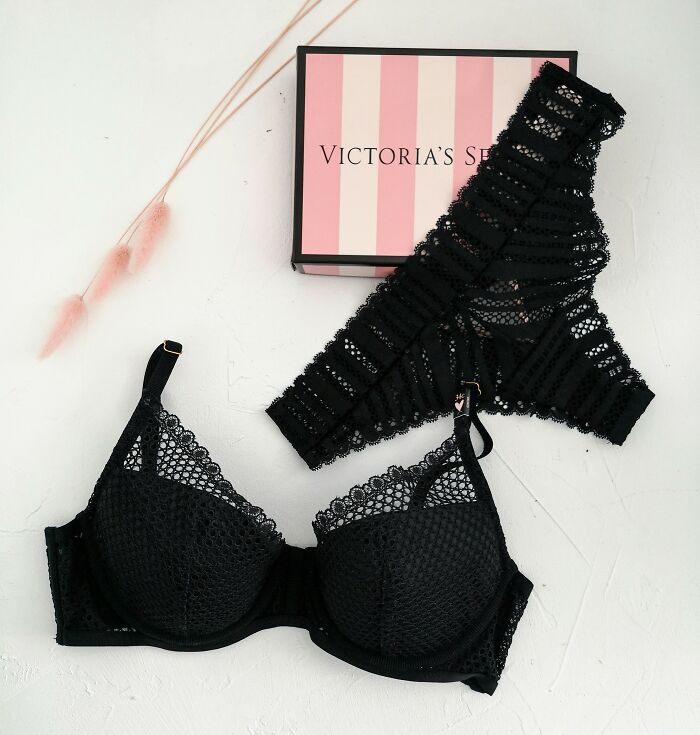 Victoria’s Secret was originally supposed to be a place for men to buy lingerie for their wives and not feel embarrassed, but now it’s almost exclusively shopped at by women.
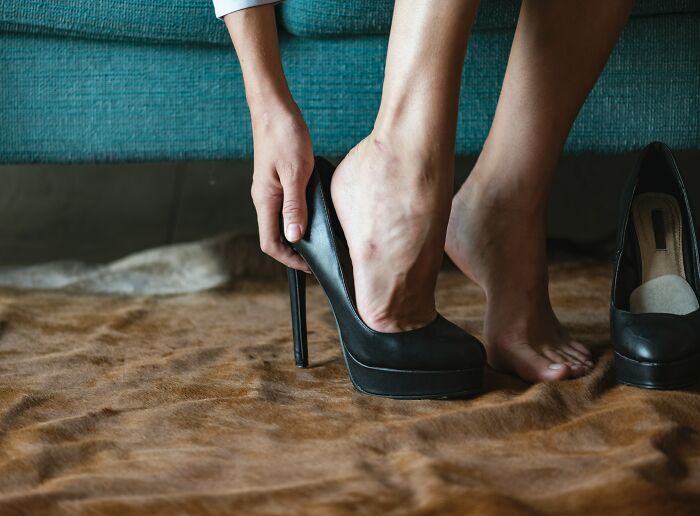 Heels if i remember correctly.

Originally worn by men to give them better grip of the stirrups while riding horses. Later they were worn by royal and aristocratic men in Europe to promote wealth. They were basically a way for rich men to say to the world: "I'm so rich, I don't need comfortable or practical shoes because I don't need to walk far or work for a living."
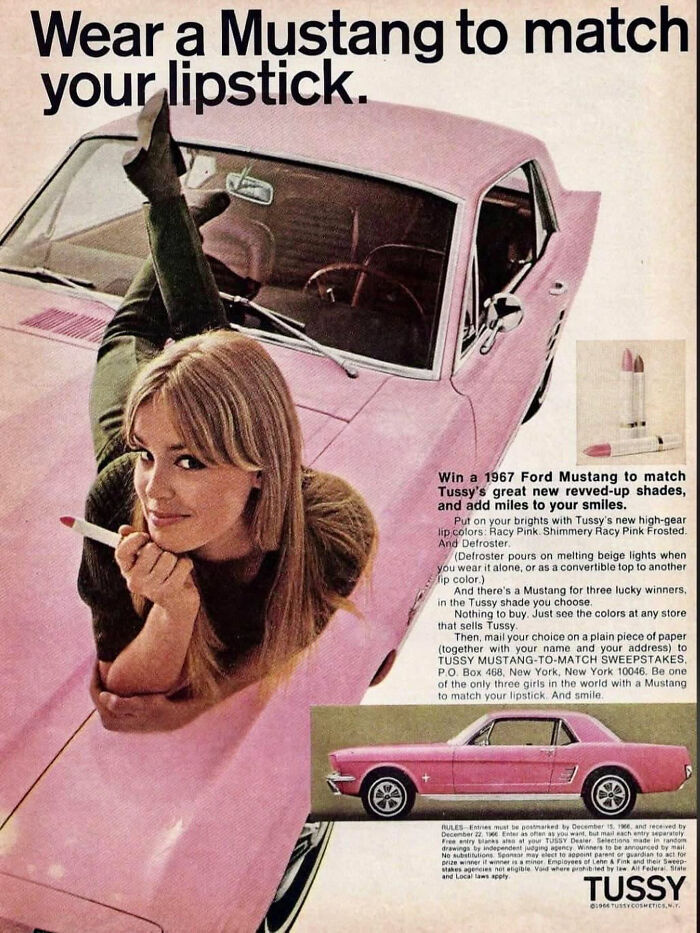 The Ford Mustang. It was supposed to be a car with a big trunk to you could fit all the groceries in it. There was even an ad or article stating that you can own a mustang that matches the color of your lipstick. Makes sense why a lot of old mustangs are red.
Gender associations surrounding everyday objects often feel like they have always existed, but history shows that many of these connections were created over time. According to The Gender, marketing played a major role in shaping the idea that certain products belong to men or women. During the 20th century, companies used packaging, colors, advertising, and language to separate consumers into different groups.
Many products that were once used more broadly became linked to specific identities as brands discovered that gender-based marketing could create stronger recognition, encourage loyalty, and justify product variations. In many cases, these associations were not based on the item itself, but on the stories companies built around them.
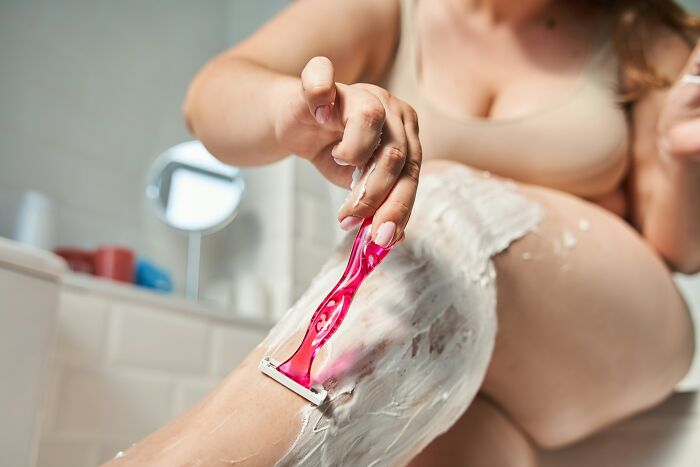 Shaving razors were made for men, but women shave a good bit more now, both in frequency and surface area.
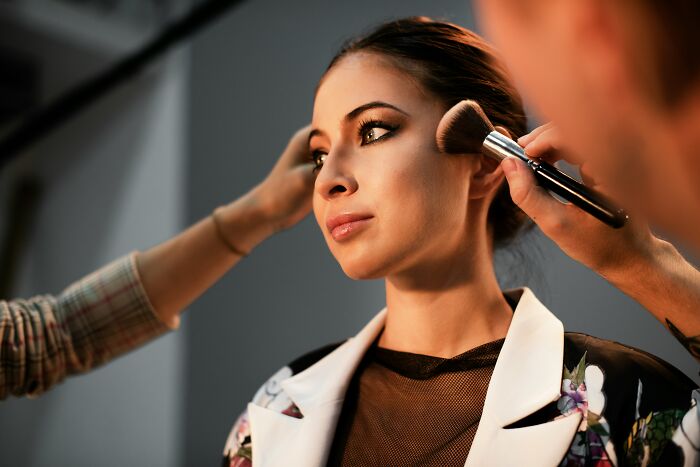 Makeup, also primarily worn by wealthy men back in the day.
 I remember reading somewhere that Kleenex was made for ladies to remove their makeup, but their husbands were blowing their noses in them. And now we all blow our noses in them.

I said, "holds water like Kleenex" in front of my sister and she said, "Have you tried it in the last few decades?" She was right - the official Kleenex brand held a cup of water until I got bored watching it.
Sociology helps explain why these marketing messages became so powerful over time. Objects often gain gendered meanings because societies repeatedly connect them with certain roles, environments, and expectations. Items related to caregiving, appearance, and domestic responsibilities became associated with femininity because women were historically expected to occupy those spaces.
Meanwhile, products connected to work, competition, and public life became symbols of masculinity because men were traditionally given greater access to those areas. These associations became so familiar that they started to feel natural, even though they were shaped by cultural norms, economic systems, and changing social structures rather than any inherent connection between an object and a particular gender.
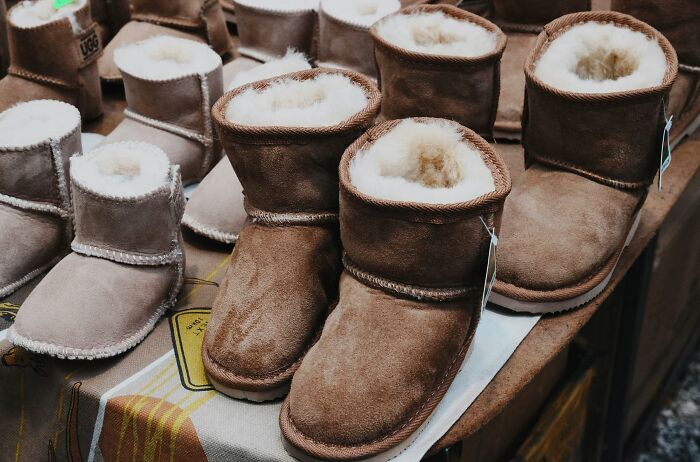 Ugg boots were originally worn by male surfers, with their girlfriends stealing and wearing them like they would a leather jacket.
Edit: I have been educated by my Aussie friends that they’re worn by all down under, as slippers and such. I was speaking of their history here in the US, where they were mostly introduced by surfers on the west coast and now they are (almost) exclusively worn by women here.
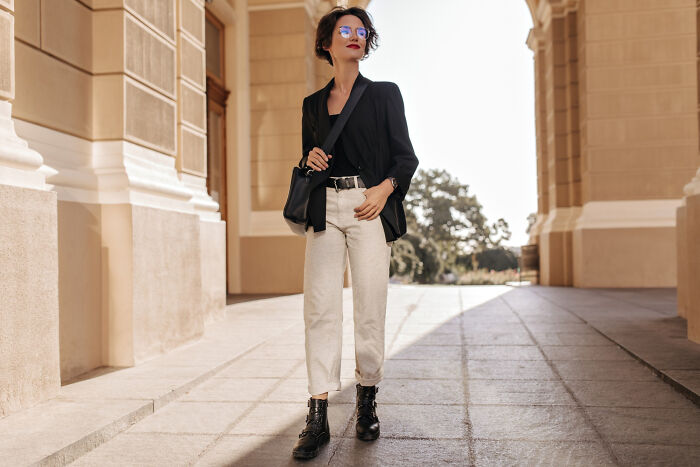 Trousers.
A woman could get arrested and jailed for wearing them under cross dressing laws in the UK. It was still illegal in parts of the US for a woman to wear them well into the mid 20th century, and I believe a student took her school to court because they expelled her for wearing trousers. According to them, the bible says that men shouldn’t wear women’s clothes and women shouldn’t wear men’s clothes, and trousers are men’s clothes (yet another thing Christians seem to be able to to overlook at their convenience, but that’s not a discussion for here).
Historically, women wore trousers, while men wore robes in many parts of the world, like Greece, Persia and Rome, and some parts of Europe. But definitely not in the US, France or England.
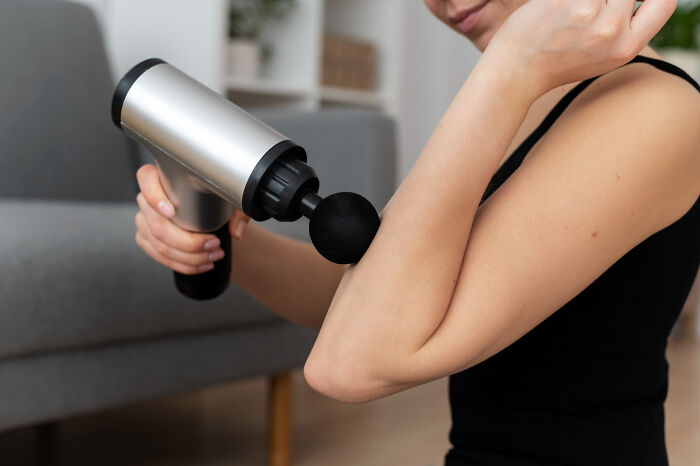 Hitachi Magic Wand. It was originally manufactured for relieving tension and relaxing sore muscles. Often used by athletes.
But now is famous for its use as a s*x toy/industrial strength adult toy.
However, once people began using these products in everyday life, practicality often proved stronger than the labels attached to them. Simple Modern highlights that many products eventually crossed gender boundaries because consumers cared more about whether something solved a problem than whether it was originally marketed toward them.
A person might discover that an item designed for another gender works better for their needs, and that personal experience can gradually challenge the assumptions created by advertising. As more people adopt products for their usefulness rather than their intended audience, the original gender associations can start to feel outdated or unnecessary.
 Leggings.
In the early renaissance, young, fashionable men just... stopped wearing their skirts/robes. The old, religious men were absolutely scandalized.
Sounds familiar, no?
Edit. Of course there's more to it than this, but this is the very simplified jist. :).
 Those leg stirrups they use at the gynocologist were invented for removing ~~kidney~~ bladder stones in men. They used to cut from below the testicles and cut right through the prostate. It had a very low survival rate and was not approved by the medical profession.
The original hippocratic oath had a section on "not cutting for stone" meaning they swore not to surgically remove the stones because of it. They later removed that section of the oath, otherwise a bunch of urologists would be out of a job.
The reason these shifts continue is that ideas about gender itself are constantly changing. Psychology Today explains that gender roles evolve alongside broader social changes, including economic developments, technological advancements, workplace transformations, and cultural movements. As societies move through different stages, the expectations placed on men and women also change.
Today, celebrity influence, fashion cycles, and a greater emphasis on comfort and function continue to reshape how people view products and behaviors. What once seemed like a strict boundary between "for men" and "for women" can eventually become just another outdated assumption waiting to be rewritten.
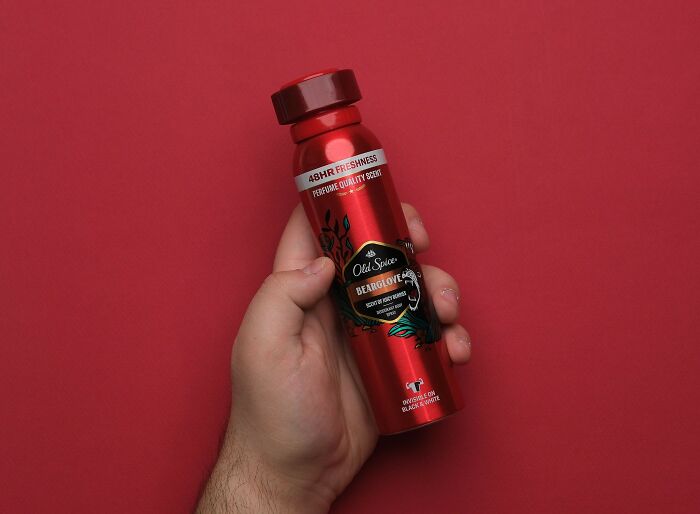 Old Spice was launched by Shulton Inc. in 1937. William Lightfoot Schultz was inspired by his mother's potpourri and as a result, the first Old Spice product in 1937 was a woman's scent called Early American Old Spice. The product was received well, and therefore followed with Old Spice for men in 1938.
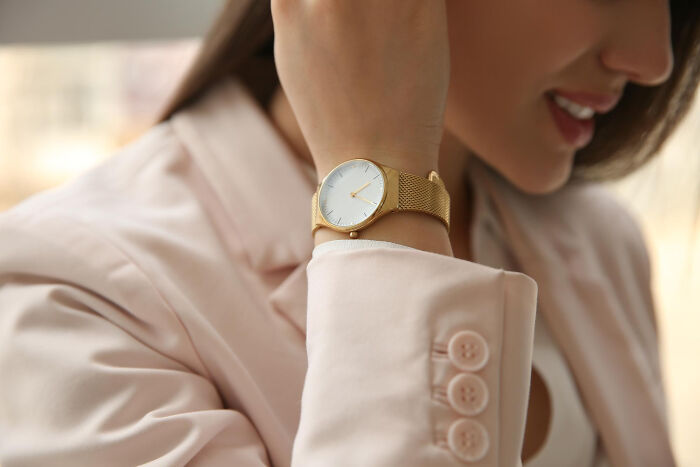 Wristwatches
They were made because most women didn't have pockets for pocket watches. Now I pretty much just see men wear them, though they've started to fall out of style.
Edit: Alright I've had about 500 people tell me wristwatches are soooo in right now. I get it.
In the end, these examples are a reminder that the original purpose of an item doesn't always determine who will embrace it in the long run. As society changes, so do our habits, preferences, and ideas about who should use what. Sometimes practicality wins, sometimes fashion takes over, and sometimes people simply realize that a good idea is a good idea, regardless of who it was originally made for.
I'm not entirely sure that every switch happened for the same reason. Some products evolved alongside changing social norms, while others found a new audience almost by accident. Which example on this list surprised you the most? Or maybe you could also think of something that deserves to be on this list? We would love to hear from you!
 Lager.
When lager was invented, it was pitched towards women - it was superior to beer in ways that it was thought women would like; it was filtered, purer in taste, easy on the palate, and designed to emerge from the bottle like champagne (pale, clear, bubbly, frothy).
Women didn't take to it, but it's now (mainly) drunk by men all over the world.
Just don't tell that gang of skinheads that they're drinking something that was originally a woman's drink.
Absolute nonsense. Lager was "invented" in Pilzen in 1842 and has been the overwhelmingly dominant type of beer in most of Europe for more than 150 years. I have absolutely no idea where, and when, this poster thinks that it was marketed mainly towards women. I just checked, and it had become the dominant type of beer in the US by the 1880s as well.
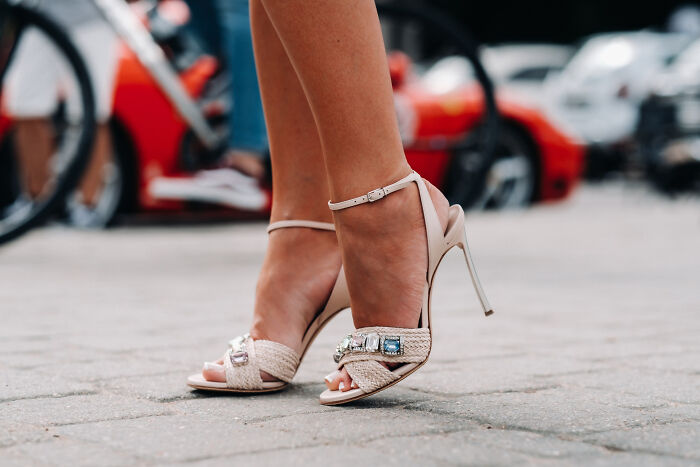 High heeled shoes.
No, seriously. Shoes with high heels were originally developed by Persian cavalry, as the heels helped their feet stay in the stirrups while they rode and fired arrows. In the West, women wore platform shoes to gain height. Catherine De Medici is the first European woman recorded to have worn heels, in the late 1500s, but heels wouldn't come into the general European fashion consciousness for another 200 or so years, and the trend of women wearing any kind of height-enhancing shoes died with her.
In the 1600s, when the Persian Shah sent an envoy of soldiers to Russia, Spain, and Germany to form diplomatic relations, aristocratic European men started emulating the Persian soldiers footwear. By the time of King Louis XIV's reign in the mid 1600s, high heels were very popular among the male aristocracy. As were stockings. In fact, Louis would only allow favored members of his court to wear heels, and especially to wear certain colored heels. A red heel on a shoe was a big deal, as it was a sign of power. You can look at old paintings of the era and actually see who held the King's favor by the kind of shoes they were wearing. Anyone else caught wearing such footwear could risk having their head chopped off. The irony of this would take a little over a century to play out.
In the mid-1700s, men wearing heels would start to fall out of fashion, as they began to become more feminized with the advent of women's shoes starting to grow heels of their own. The French Revolution is what really k****d the male high heeled shoe trend, as any man wearing one was part of the aristocracy, and likely to lose their head. Ultimately, if you wanted to avoid losing height from the top, you had to lose height from the bottom. Best not to dig your heels in on this fashion trend.
 Filtered cigarettes in general, but Marlboro made the biggest leap in terms of gendered marketing. Once that whole conspiracy theory came out that like cigarettes are idk bad for you or something and more people switched to filtered cigarettes (it’s filtered, that means it’s good for you!) was around the time the the salt of the earth classic American Marlboro Man came into existence, trying to distance the brand from its previously woman focused advertisements.
 Holding doors for people
A woman was supposed to hold the door for a man so he could check for any dangers in the building (the thought was mainly for married couples, but it could be done to a total stranger as well). At some point it flipped and turned to just being a polite thing to do.

In South Africa it's still considered culturally acceptable for a man to go in first, in case of, like, lions or something. Meh, dude, go ahead, in case there's a lion.
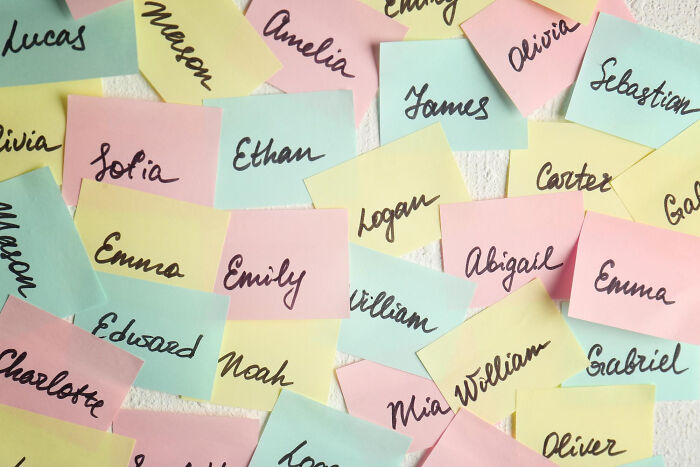 Names like Ashley, Kim, Beverly, Addison, Shelby, etc. Used to be boys’ names, now are mostly girls’. I hope eventually people can just pick the name they like without worrying about which gender is using it more. Boys are going to run out of names otherwise!
EDIT: I wrote Kim twice. I did not include Dana, Harlow, Reagan, Whitney, or McKenzie though. Until now.
Edit 2: Just because it’s interesting; names that are currently tipping over to the girls’ side: Sutton, Oakley, Lennon, Emerson.
And names that are switching back to unisex: Alexis, Brook, Diamond, Hilary, Kelley, Kim, Michele, Quinn, Sandy, and Shannon.
Source: https://nameberry.com/blog/unisex-baby-names-names-that-morphed-from-blue-to-pink.
 Birth colors were originally swapped, with soft blue representing femininity and a deep pink to represent masculinity.
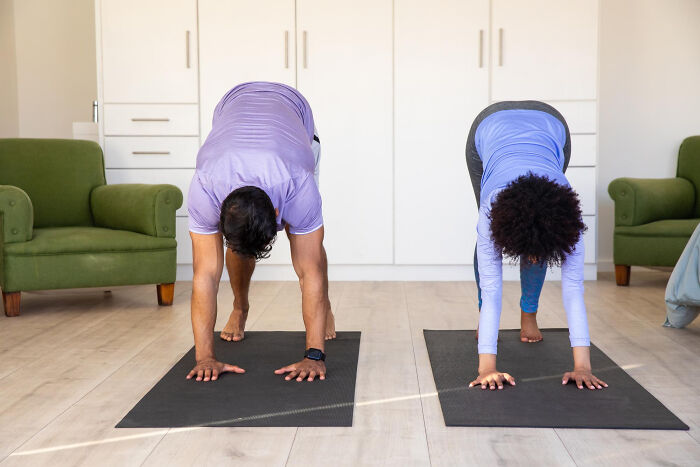 Yoga it was invented by men for men but for some reason it’s mostly women who gravitate towards it at least in the west. Many men are too afraid to try it which is a shame because yoga is enjoyable I really enjoy it and it has a lot of benefits.
 DHT cream. They sell it for use as p***s enlarging cream, which it doesn't do because men already have high levels of DHT in their blood stream.
However, it does actually make clits permanently larger. r/growyourclit is about that.
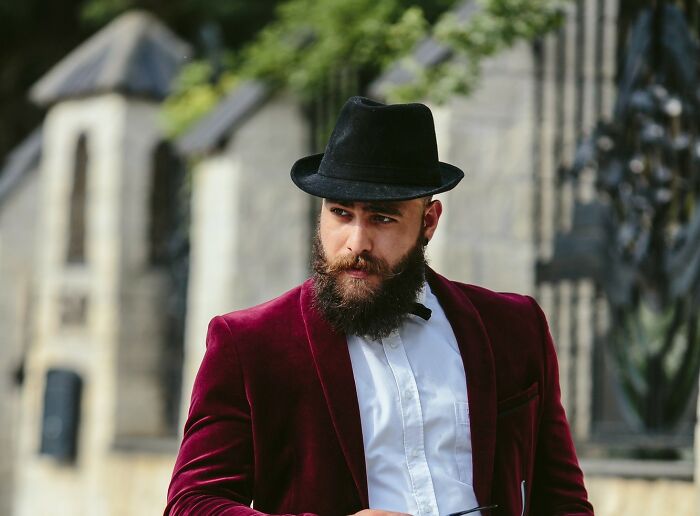 Fedoras and trilby hats. Both hats are named for the (fictional) women who wore them. Now they're worn by gross neckbeards in combination with the cheapest black leather duster and katana they can afford.
 Computers.
> "Tedious" computing and calculating was seen as "women's work" through the 1940s
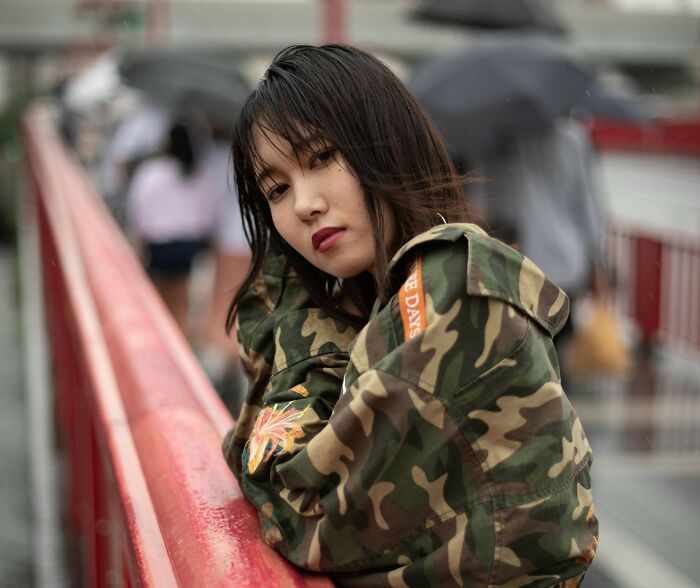 Most fashion inspired by military uniforms (mostly men) are usually worn by women. (combat boots, epaulets on shoulders, olive drab jackets, berets etc.).
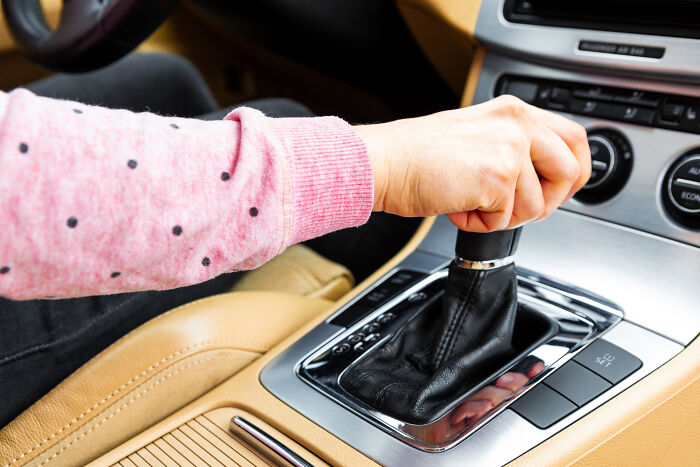 Automatic cars they wear made for women because it was believed women couldn’t or wouldn’t be able to use a stick shift that it was to complicated for them.


















 No fees, cancel anytime